Category Archives: Essay

#CdnPoli | B.C. Family Day, and the Iterations of the Third Monday of February

In most provinces across Canada, the third Monday in February is observed as a regional statutory holiday, known generally as Family Day.

Family Day is celebrated on the third Monday of February in British Columbia, Alberta, Saskatchewan, Ontario and New Brunswick.

Manitobans celebrate the third Monday of February as Louis Riel Day.
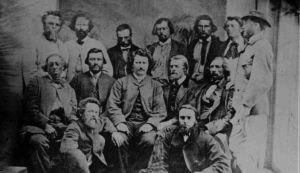

A portrait of Louis Riel hanging in the provincial legislature now recognizes the Métis leader as Manitoba’s first Premier. Premier Wab Kinew and Manitoba Métis Federation President David Chartrand unveiled the updated plaque below the portrait on Monday.

Louis Riel is acknowledged as a founder of the province of Manitoba, and a political leader of the Métis people. Riel led his people in revolt against Canadian sovereignty in two resistance movements leveled against the Government of Canada and our country’s first Prime Minister John A. Macdonald, as he sought to defend Métis rights and identity.

In Nova Scotia the day is celebrated as Heritage Day; while in Prince Edward Island, the third Monday of February is celebrated as Islander Day.

Family Day isn’t a statutory holiday in Yukon, the Northwest Territories, Nunavut, and Newfoundland and Labrador.

Workers in those provinces and territories won’t have Monday, February 19 off work like employees in other parts of the country.

Québec has the lowest number of statutory holidays, tied with Manitoba. Yukon has the most holidays in Canada, celebrating 12 each year. Alberta, Newfoundland, and PEI celebrate 11 holidays, and B.C., New Brunswick, Nova Scotia, the Northwest Territories, Ontario, and Saskatchewan have 10.

Québec doesn’t observe Family Day as a statutory holiday because it celebrates Journée nationale des Patriotes on the Monday preceding May 23, as well as Fête nationale du Québec every June 24.


A very Happy #FamilyDay to all of the diverse one-parent families across Canada!
Today, the third Monday of February, is a day to celebrate and cherish your beautiful families.
?

In modern society, where the pace of life can be relentless and demands on individuals are often overwhelming, the significance of family cohesion and bonding is more pronounced than ever. Amidst the hustle and bustle of daily life, the concept of a dedicated Family Day holiday supported by the government emerges as a beacon of acknowledgment for the pivotal role families play in shaping societies.


Vancouver City Councillor Rebecca Bligh, her partner Laura and their children celebrate Family Day

One of the hallmark benefits of the Family Day holiday is its capacity to foster inter-generational connections. In an era characterized by rapid societal changes and evolving family structures, the importance of preserving traditions and passing down values from one generation to the next cannot be overstated.

Family Day provides a platform for grandparents, parents, and children to come together, exchange stories, and impart wisdom garnered from their respective life experiences. This interplay between different generations not only enriches familial bonds but also instills a sense of continuity and heritage, reinforcing individuals’ identities and cultural roots.

While the intrinsic value of Family Day lies in its promotion of family cohesion and emotional well-being, its ripple effects extend to the economic realm as well.

Studies have demonstrated a strong correlation between employee satisfaction and productivity, with individuals who feel supported in their familial roles exhibiting higher levels of engagement and commitment in the workplace. By affording employees the opportunity to prioritize their families on Family Day, governments contribute to a more motivated and productive workforce, with holiday-related activities and gatherings injecting vitality into local economies, benefiting businesses across various sectors.

By promoting family unity, enhancing emotional well-being, fostering inter-generational connections, and boosting economic productivity, Family Day serves as a cornerstone for building stronger, more resilient communities.

As we navigate the complexities of the modern world, let us cherish and celebrate the bonds that unite us, reaffirming the timeless value of family in our lives.
The History of Musicals | Capturing the Magic of the Stage on the Screen

Movie musicals are often a polarizing topic.

People either love them or hate them, and even those that love them are critical of on-screen adaptations of their favourite stage shows.

In recent years, Hollywood hasn’t had a great track record of adapting musicals from the stage to the screen in a way that works, and many movie musicals in past years have been criticized for not having that certain something that makes the onstage musicals feel so special and unique.

That was the case until three years ago, 2021, which apparently became the year when Hollywood figured out how to make a good movie musical.

As the musicals that were made that year were, sadly, not big box office hits, nor successful streaming, movie musicals have once again faded from our screens, both in our local multiplex, and on Netflix and other streaming platforms.

Still and all, if you love musicals, you can still take heart with the rich and glorious history of the musical, in whatever form it has taken cinematically.

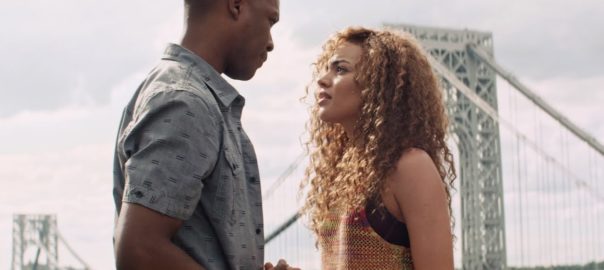
Regardless of their box office success, there were there a great many 2021 musicals that were Oscar nominated — In The Heights, Dear Evan Hansen, tick, tick…BOOM!, West Side Story, and even Encanto (which wasn’t derived from a stage play). For the most part, they were well executed, and loved by critics, if not by a mass, anticipatory audience.

For the past century, the Hollywood musical has been recognized as a distinguished part of our movie history, playing an integral role in the evolution of movies during the 1920s through 1950s, til now.

It wasn’t until 1927 that Warner Brothers first introduced to the big screen singing along with sound in their release of The Jazz Singer; a remake of the Broadway musical of the same name.

The late 1920s brought difficult economic times, and a worldwide Depression.

It was during this time that Hollywood came to the public’s rescue with the dynamically entertaining diversion of the Hollywood musical.

Hollywood studios began to release a plethora of musicals which offered the movie-going public a chance to temporarily escape from the dire economic issues that had the world in its grip.

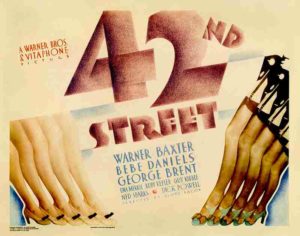
In the 1930s, with Warner Brothers’ acquisition of choreographer Busby Berkeley, the musical genre was truly born with the release of popular musicals like 42nd Street, Bright Lights, and Gold Diggers.

Capping the decade was 1939’s The Wizard of Oz, still one of the classic musicals that continues to entertain audiences today.

It was during the 1940s that the Hollywood musical really came of age, and the popularity of the movie musical continued right through the 1950s.

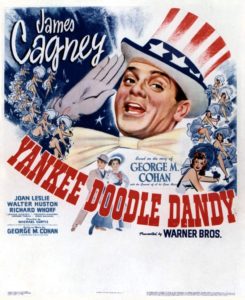
One of the more popular 1940s musicals was Yankee Doodle Dandy, a film that introduced movie lovers to a young James Cagney who gave a performance that earned him an Oscar. Another popular 1940s title, long a holiday tradition, is The Bells of St. Mary’s.

Metro-Goldwyn-Mayer embraced old-fashioned musical films in the ’40s and ’50s, furthering the boundaries of the musicals, with stars like Judy Garland, Fred Astaire and Mickey Rooney leading the way.

Starting with Meet Me in St. Louis (Vincent Minnelli, 1944), MGM began producing some of the most popular films of the era, including Easter Parade (Walters, 1948), An American in Paris (Minnelli, 1951), and Singin’ in the Rain (Kelly and Donen, 1952).

Marilyn Monroe brought a new element to the musical movie during the 1950’s.

This was also the time to bring Broadway to film in movies such as Oklahoma! and Guys and Dolls.

Elvis also started to make the big screen his home, which many believe signalled the beginning of the end for the genre.

Through the 1960s, though, the adaptation of stage material for the screen remained a predominant trend in Hollywood. West Side Story, My Fair Lady, The Sound of Music, and Oliver! were all adapted from Broadway hits and each won the Academy Award for Best Picture.

The genre changed slightly during the 1970’s, where in some cases, such as Saturday Night Fever and Tommy, the stars were not the singers. The movie plot was being driven by song, but in a pre-recorded way.

There were a few musicals to note in the ’80s, like Annie and Purple Rain, but for the most part, the entire genre had changed to musicians supplying the music.

With the arrival of the early 1990s, one of the more successful modern-day musical movements emerged: Disney’s animated musical blockbusters, including such films as The Little Mermaid, Aladdin and The Lion King, all released in rapid succession, amassing an enormous fan base along the way.

In 2000, let us not forget the Coen Brothers’ O Brother, Where Are Thou?

Although the animated musical film has become a popular route for the genre in recent years, the success of musicals like Chicago, Rent, Sweeney Todd, and Les Misérables seems to indicate that large scale, live action musical productions are still very much relevant to film today.

In 2006: John Carney’s début film, Once, with Glen Hansard and Markéta Irglová.

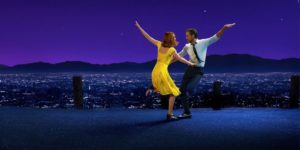
In 2017, three musicals were nominated for Best Motion Picture – Musical or Comedy at the Golden Globes: Florence Foster Jenkins, La La Land, and Sing Street, with La La Land taking home the award (well, sort of).

Although musicals might not necessarily find success in terms of receiving the most awards recognition, they are nonetheless popular and enjoyed by audiences.

Once upon a time, huge, spectacle musicals were the backbone of Hollywood.

The pandemic year of 2021 offered Hollywood a chance to return to the glory days of the 1930s Depression era musical, allowing audiences to reacquire a taste for the musical, to help lift of us out of the malaise that had us in its grip.

The Hollywood musical has always offered viewers a page out of movie history, memories that will forever be captured on film, and musical films that will continue to be enjoyed by audiences around the world.


#ArtsFriday | Artificial Intelligence and Its Impact on the Film Industry

Artificial intelligence (AI) is quickly becoming a game-changer in the film industry. From script writing and casting to special effects and distribution, AI is transforming the way movies are made and seen.

While there are many benefits to using AI in filmmaking, there are also potential downsides that need to be considered.

What impact will AI (artificial intelligence) have on Hollywood?

Who better to answer that question than ChatGPT, a thrilling but scary chatbot developed by OpenAI.

When VanRamblings asked ChatGPT about AI‘s potential impact on the film industry, it made the following points (note: only the single, numbered paragraphs represent the ChatGPT input):

1. Scriptwriting: AI can be used to analyze existing screenplays and create new ones, potentially leading to more efficient and cost-effective screenwriting.

In addition, Netflix co-CEO Ted Sarandos recently told Business Insider’s tech reporter, Stephanie Palazzolo.

“Employing AI to create new scripts will help filmmakers deal with this task more efficiently. Being fed with large amounts of data in the form of movie scripts, machine learning algorithms analyze the data, learn from them, and come up with unique scripts. This makes the process much faster, saving significant time and resources for filmmakers.”

Sarandos went on to state, “Artificial Intelligence will also be used for analyzing scripts that will be made into a film. AI algorithms can study the script storyline, bring forward possible questions, uncertainties, and suggestions, thus making the process of script analysis much easier and faster.”

2. Pre-production: AI can be used to streamline the pre-production process, saving time and resources, including casting, location scouting and storyboarding.

“AI has great potential to simplify the pre-production process by helping to plan schedules, find locations that best fit the storylines and support in other preparatory processes,” says Disney chief, Bob Iger. “Implementing AI will automate the planning of shooting schedules according to the availability of actors that will save time, and increase efficiency.”

In addition, AI systems can analyze the locations described in screenplays and recommend  sites for shooting the scene, saving resources in location scouting.

Even now, AI is being used to improve the accuracy and efficiency of casting decisions. AI-powered platforms can analyze a vast amount of data, including past performance data and social media activity, to predict which actors are most likely to be successful in a given role. This can help casting directors make more informed decisions and save time and resources.

3. Special effects: AI can be used to create more realistic and immersive special effects, potentially reducing the need for practical effects and saving time and money in post-production.

AI is currently being used to enhance visual effects (VFX) in Marvel films. Machine learning algorithms have been trained to recognize and classify different objects in a scene, making it easier and faster to add VFX elements, saving time and money for VFX studios, as well as enhance the overall quality of the film.

4. Audience analysis: AI can be used to analyze audience data and preferences, helping studios make more informed decisions about which films to greenlight and how to market them.

Monica Landers, founder and CEO of StoryFit, acknowledges the peculiarity of using AI to evaluate audience connections with narratives or characters.

Says Landers, “Warner Bros. has turned to Cinelytic AI-based platform to predict the success of its movies and box office receipts. 20th Century Fox has integrated the Merlin system that uses AI and machine learning to match movies to particular genres and audiences, as well as provide complete demographics for any movie.”

5. Distribution: AI can be used to personalize movie recommendations for viewers and optimize distribution strategies, potentially leading to higher ticket sales and revenue.

University of Southern California film professor Siranush Andriasyan, in a recently published research paper, writes …

“Film studios have been using AI for effective advertising and promotion. Analyzing different factors such as audience base, actors’ popularity across the globe, film studios may plan their campaigns according to certain locations where they expect the highest interest from the audience. For example, 20th Century Fox has developed the Merlin Video neural network to predict the success of promotional videos.”

There are, however, potential downsides to the use of AI in the film industry, says retired USC Berkeley film studies professor, Eric Ironside.

One major concern, he states, is the potential for AI to replace human jobs. As algorithms become more advanced, there’s a risk they could replace human casting directors, screenwriters, and VFX artists, leading to film industry job losses.


Response to deal | SAG-AFTRA President Fran Drescher and Duncan Crabtree-Ireland, Chief Negotiator

“If you want to get hired, you have to be ready to consent to be replicated, so there are people who are out there saying that consent at the time of engagement is coercion because they won’t hire you unless you give them those rights,” Shaan Sharma, an alternate member of the Screen Actors Guild negotiating committee told Rolling Stone.

AI cloning set to impact the film industry, and jobs in Hollywood

“And it’s only those with considerable leverage that will have the ability to say no to the replication, but still be hired. That really concerns me because most members don’t have the leverage to say no at the time of engagement.”

Another potential downside is the loss of human creativity and personal touch. While AI algorithms can generate new stories and make accurate predictions, they may lack the unique perspective and emotional depth that comes from human creativity. This could lead to a homogenization of storytelling and a decrease in the overall quality of films.

For years, the idea that computers and data could play a role in filmmaking was considered anathema in Hollywood, where personal taste, charisma and talent were viewed as key to success.

In recent years, film industry skepticism about AI has lessened, suggests Largo.ai founder Sami Arpa, in part because streaming platforms such as Netflix and Amazon have thrived by using technology to guide decision making. Both use complex, jealously guarded algorithms to recommend content for their audiences, and analyze audience data to underpin their commissioning and acquisition decisions.

Make no mistake: AI is set to change the film industry in profound ways, from data analysis to virtual production.

While there are concerns about the impact of AI on the industry, it is clear that AI is here to stay, and it will continue to transform the way films are produced, distributed and consumed by moviegoers.

Those who are willing to embrace AI and learn to work with it will be at the forefront of this transformation, shaping the future of the film industry.

#ArtsFriday | The Digital Revolution in Filmmaking

Human history, since time immemorial, has been undeniably marked by a series of revolutions that helped shape us as modern individuals.

Our whole concept of civilization is determined by a succession of consecutive turning points.

From the early Neolithic Revolution, 12,000 years ago, through the Industrial Revolution of the 18th century and the Jet Age of the 1950s and 1960s, our species has evolved enormously.

In the current age, the Digital Revolution — also known as the Third Industrial Revolution — is the continuous evolution from the previous models of analog, mechanical and electronic technologies to the transformative digital technology with which we have all become familiar in recent years (think: streaming).

In 1993, digital technology revolutionized cinema.

The highest-grossing movie that year was Jurassic Park, whose dinosaurs ironically represented an evolutionary leap. Audiences were wowed by those hyper-realistic digital effects — all six minutes of them.

Leading up to its release, the 2009 movie Avatar promised to be a record-shattering hit.

In order to capitalize on the blockbuster to the fullest extent, movie theatres around the world got rid of their creaky old film projectors and purchased sleek digital replacements.

While projection technology had been available for a decade, it took the promise of a digital smash hit to convince theatres to adopt it at a large scale.

Before long, digital filmmaking and digital projection had become the industry standard. While it was an expensive investment for theatres, it allowed them to be more nimble in what they screened.

“It’s not a surprise that this transition took place: physical film was particularly inefficient. It’s heavy and it’s expensive,” says University of California, Berkeley marketing professor Eric Anderson. “What was more surprising was how this affected the assortments [of movies] offered to consumers.”

“With digital,” Professor Anderson continues, “it’s easier to have time for niche films, because one employee can manage all the screens in a theatre, and can effortlessly switch between one movie and another with the push of a digital button. Digital technology also gives the theatres more flexibility to stream big blockbusters even more. In a study conducted recently, it was interesting that we found these two effects together.”

The very first fully digital film, Star Wars: Episode I — The Phantom Menace, was screened in Los Angeles in 1999. But it took time for theatres to switch over, in part because the new equipment was so expensive.

A single digital projector could cost as much as $150,000 — an eye-popping sum for a theatre with eight screens to convert.

As a result, Anderson says, theatres “fought the change as much as they could until it was shown to them very clearly that the economics made sense.”

Initially, there was little urgency.

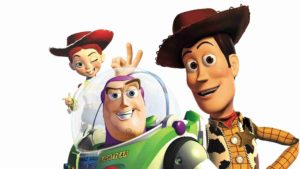
From 1999 until the early 2000s, relatively few films were released in a digital format — mostly big-budget offerings, such as Star Wars and Toy Story 2.

Converting came with a host of benefits: the film era required the creation of costly physical copies of movies. The number of times per day a theatre could screen a hit movie was limited by the number of copies they had.

Film also posed logistical challenges: each movie required several reels that were heavy and hard to manipulate, and the process of switching between movies on a projector was time-consuming.

As a result, theatres tended to show only one movie per screen each day. Digitization changed all that, making it effortless to offer more movie variety to consumers.

Still and all, the financial crisis of 2008 continued to slow the transition to digital by making it difficult for theatres to borrow the capital they needed to upgrade their equipment.

But Avatar “acted as a rallying point to get the industry to transition, which James Cameron pushed very hard for,” Anderson explains.

As the highest grossing movie of all time, Avatar was also the first 100% digitally photographed “film” to win an Academy Award for Best Cinematography.

Not since George Lucas’ Attack of the Clones had a director tried to fundamentally change the cinema-going experience and, love him or hate him, James Cameron meant to do just that.

Cameron immersed audiences in the alien world of Pandora by incorporating ground-breaking 3D along with the digital Fusion Camera System to capture his vision, ushering in the final shift towards digital cinema for the majority of movie productions.

From that point on, the conversion process picked up momentum; 90% of movie screens worldwide had gone digital by 2015.

The true effects of the digital transformation became apparent and overall movie variety increased. Smaller theatres with four or fewer screens saw the most noticeable increases,  about 11%. In larger theaters, the percentage of screens devoted to blockbusters increased during weekend hours, but decreased on the weekdays, resulting in greater variety during these less-popular times.

In other words, theatres prioritized blockbusters during peak periods and “offered slightly more variety or more niche films during off-peak periods,” Anderson observes. “It’s a more efficient use of their screen space, given the ebb and flow of consumer demand.”

As filmmaker John Boorman noted in a 2023 article in The Guardian, “Steven Spielberg’s The Fabelmans was the only Best Picture Oscar nominee this year shot on celluloid.”

“For more than 100 years, films have been made of film,” Boorman observes. “Now, instead of a magazine being loaded on to the camera, a card is inserted that electronically records whatever the camera sees.”

“Today, most ‘films’ are made electronically,” says Boorman. “No film is used in the making of them — not the shooting, editing or projection. So they can’t — or shouldn’t — be called films.”

Change, as most of us know, is constant, and inevitable, if in the eyes of cinema purists, “regrettable.”

Perhaps the time has come to change the language we employ to describe what we see at the cinema, or on our screens at home.

Unless a new picture is actually made of film, it should not be called a film.

Perhaps, going forward, we should refer to it as a