Category Archives: canadian politics

The Job of a Journalist, to Comfort the Afflicted and Afflict the Comfortable

For journalists covering politics, and this very much includes VanRamblings, few tasks are more fraught than writing critically about political figures they have come to know well, respect, or even like.

In recent days, VanRamblings has been critical of Mayor Ken Sim, who we know and — to be perfectly frank, we — like (in the days to come, we will publish a supportive story of Mayor Sim). VanRamblings take no great pleasure in writing critically, or negatively, about a political figure, be it Mayor Sim, or Premier David Eby.

The above said, we acknowledge that the craft of political journalism demands objectivity, independence, and an unwavering commitment to the public interest.

Yet, the human element of this work cannot be denied. Political reporters often spend years in the company of the same politicians — interviewing them in hallways and offices, sharing off-the-record conversations, and at times even developing bonds of mutual trust. Against this backdrop, when a journalist is faced with reporting something unflattering, or deeply critical about a politician with whom they have built a rapport, the weight of the responsibility can feel crushing.

The essence of the journalist’s dilemma is a tension between personal loyalty and professional duty. On one hand, the journalist is human, and to knowingly cause another person pain — especially a hard working public figure who has chosen a career in public office — can feel cruel. On the other hand, journalism’s higher calling is to serve democracy by ensuring that those in power are held accountable.

As Finley Peter Dunne memorably wrote in his 1902 book Observations by Mr. Dooley, the role of the press is “to comfort the afflicted and afflict the comfortable.” That phrase has endured because it distills the moral purpose of journalism: to give voice to the powerless while scrutinizing the powerful. Political figures, by definition, fall into the category of the comfortable.

This mission often collides with the personal relationships that naturally develop between journalists and politicians. When a journalist covers a politician for years, the proximity can foster understanding and even admiration. A journalist may see the long hours, the sacrifices of family life, and the sincere desire by the political figure to substantively improve the lives of constituents who placed them in office.

Such observations humanize politicians, stripping away the caricatures often presented in the media. In turn, politicians may confide in journalists, trusting them with context, nuance, and moments of vulnerability that rarely make it into print, or onto your screen. Out of this closeness, empathy grows. And empathy, while essential in making reporting fair and textured, can also — from time to time — soften a journalist’s willingness to strike hard when the facts demand it.

To manage this tension, ethical journalists rely on principles that act as guardrails.

The first is the unwavering primacy of the public interest. However difficult, the journalist (and that includes VanRamblings) must remember that their ultimate loyalty is not to politicians, but to readers, viewers, and the democratic system itself. The second is transparency: by disclosing potential conflicts of interest and being open about their methods, journalists reinforce their credibility. The third is fairness. Criticism need not be cruel; it must be grounded in facts, and contextualized with nuance. In this way, the journalist can both honour their human empathy and fulfill their professional obligation.

Still, even within ethical frameworks, the emotional toll for the journalist is real.

Journalists who publish critical stories about politicians they respect may face strained relationships, loss of access, or even feelings of guilt. Yet this hardship is part of the profession. Indeed, it is in navigating these very difficulties that journalism earns its claim to being a cornerstone of democracy. If members of the press flinch from their duty, those in power would operate with impunity, and the public would be left in the dark.

The adage attributed to Dunne — “comfort the afflicted and afflict the comfortable” — serves as a guiding light precisely because it acknowledges the discomfort inherent in journalism. It is easier to flatter than to confront, easier to protect relationships than to risk them. But journalism is not meant to be easy. It is meant to be honest, courageous, and unyielding in the face of power.

For the journalist who must write critically about a political figure they admire, the pain is real, but the obligation is greater. In choosing to afflict the comfortable, even when it means hurting someone they know and admire, the journalist ultimately fulfills the noblest promise of their profession.


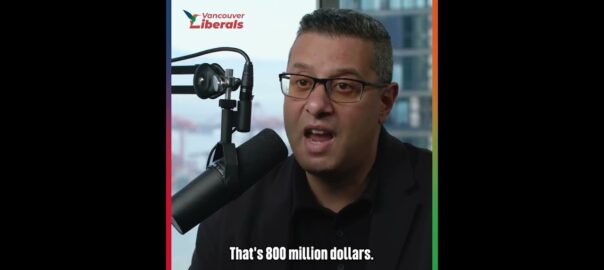
Vancouver’s Next Mayor | Kareem Allam | Priorities | Cancel Ken Sim’s $800 Million City Hall Campus

A Note from Kareem Allam, Vancouver’s Next Mayor

I am seeking the nomination of the Vancouver Liberal Party to be the next Mayor because I think I can do a better job.

As I prepare to launch, I am reaching out to my friends to donate to ensure my campaign has the best launch possible.

I’m running because we need to fix the mess at City Hall.

Vancouver should be a place young people flock to — for great careers and to raise their families. It needs to be more affordable with great public services that just work for people.

And on great services … this week I announced on Day One the Vancouver Liberals would requisition 400 more frontline workers, and we will pay for it by ending the practice of hiring management consultants and managers … who do nothing more than manage other managers.

I want a new rule at City Hall: if it doesn’t help bring young people back, make life more affordable, improve city services, or keep people safe, we’re not doing it.

Period.

So many people have stepped forward to offer their help, to volunteer to run for office, to offer smart ideas to make our city better. You’re one of them — and so I’m writing to ask for your help:

  • Donate as much as you’re able today. You can give as much as $1,402.40 – but whatever you can contribute today will help.
  • Get involved. You can sign up at VancouverLiberals.com — let us know you want to be a part of this project.

Thank you so much — more to come.

— Kareem

VanRamblings Makes Its Triumphant Return, Again

After an interregnum of some 284 days since VanRamblings published last, today — Monday, August 18th, 2025 — marks VanRamblings inglorious return.

In the coming days, weeks and months, as per usual, most Mondays, Tuesdays, Wednesdays and Thursdays, we will publish our thoughts on all things municipal, provincial and federal politics, interspersed with columns on cinema (such as this Friday’s column on film festival season), and on the occasional Saturday, return to our semi-regular feature, Stories of a Life, and on Sundays, Sunday Music, where we will continue writing about our favourite 100 albums of all time.

Most of the next two weeks will be given over to writing about Vancouver’s municipal political scene, this week and part of next focusing on the probable Mayoral aspirants seeking office in order that they might install themselves in the spacious offices and luxurious living quarters located on the third floor at Vancouver City Hall (thank you, Dr. Penny Ballem), a home away from home for the Mayor.

In tomorrow’s column, VanRamblings’ focus will be on who, only a month ago, seemed to be the serious-minded Mayoral aspirants. Much has changed, though, over the past month, and the list of Mayoral aspirants has winnowed considerably, although a few of the usual suspects for Vancouver Mayor remain serious about making a bid for office on Saturday, October 17th, 2026.

A major focus of VanRamblings’ writing beginning next week through until October 12th will be, what for us, is the première arts event of the autumn season, the 44th Vancouver International Film Festival, which this year will run, in a somewhat truncated form, from Thursday, October 2nd through until Sunday, October 12th.

As far as we are able, we’ll attempt to keep the columns short, pithy, informational and full of our somewhat out on the edge opinions, bound to make some folks (usually the ones being written about) unhappy, while enlightening others in what we hope is an entertaining and provocative manner. As far as possible — given our advanced age (we’re 75 years of age now) and our general ill state of health (alas) — we’ll try to stay away from what once was our stock and trade: hyperbole, always fun to write but, perhaps now, a thing of VanRamblings’ ignominious past.

With the exception of Friday, September 5th — when, in the first person, we’ll write about our various health travails — we’ll continue to employ the third person voice on VanRamblings, which we know drives some people crazy, but there it is.

We look forward to your return tomorrow, and in the days, weeks and months hence, as we once again seek to build our loyal, and just plain great, readership — who want to know just what is going on in our municipal, provincial and federal governance, and the who, what and why of the decisions that impact our lives.

#BCPoli | Who Will Eby Appoint to His Cabinet?

As Premier David Eby prepares to announce his new Cabinet on November 18th, the selection process is particularly dynamic, especially pending judicial recounts in three British Columbia ridings that will take place this upcoming weekend.

With a significant reshuffle required due to retirements, re-election losses, and a pressing need to address evolving provincial issues, David Eby’s appointments will shape the next phase of the B.C. New Democratic Party’s (NDP) governance.

Premier Eby must balance geographic and gender considerations following an election in which a record number of women were elected — but the government lost considerable ground outside of the Lower Mainland and Vancouver Island.

The Premier must also find MLAs to replace Cabinet ministers who either retired before the election or were defeated.

Education Minister Rachna Singh; Minister of Water, Land and Resources and Minister Responsible for Fisheries, Nathan Cullen; Agriculture Minister Pam Alexis; Minister of State for Infrastructure and Transit, Dan Coulter; and Minister of State for Sustainable Forestry Innovation, Andrew Mercier, lost their re-election bids.

Finance Minister Katrine Conroy; Forests Minister Bruce Ralston; Indigenous Relations Minister Murray Rankin; Transportation Minister Rob Fleming; Minister of State for Child Care, Mitzi Dean; Labour Minister Harry Bains; and Environment Minister George Heyman are the big names to retire at the end of the past term.

Nearly half of the 27 Cabinet members Eby had before the election are not returning to government.


Former NDP Premier Glen Clark says he’s concerned that Premier David Eby will struggle to give rural B.C. a voice because the party won only five seats outside the Lower Mainland and Vancouver Island. Photo by Jason Payne / PostMedia Group

Glen Clark, NDP Premier from 1996 to 1999, told PostMedia’s Alec Lazenby that he’s concerned that Eby will struggle to give rural B.C. a voice because the party won only five seats outside the Lower Mainland and Vancouver Island. All 15 returning ministers are from those two regions.

Clark said at least two or three of the five NDP MLAs outside the major urban centres will need to be given a role in Cabinet. The five are Steve Morissette of Kootenay-Monashee, Harwinder Sandhu of Vernon-Lumby, Brittny Anderson of Kootenay Central, Tamara Davidson of North Coast-Haida Gwaii, and Randene Neill of Powell River-Sunshine Coast.


Former NDP Premier Mike Harcourt expects Premier David Eby’s Cabinet will be much smaller than his last one. Photo by Arlen Redekop / PostMedia Group

Another consideration has to be the reduced size of the NDP majority, says former NDP Premier, Mike Harcourt, giving Eby a smaller number of MLAs to work with.

Mike Harcourt, who was Premier of British Columbia from 1991 to 1996, said it will be important to place the experienced ministers in key portfolios such as finance, health, public safety and the attorney general’s office.

Harcourt cited Public Safety Minister Mike Farnworth as a prime example and believes Jobs Minister Brenda Bailey would make a “very capable finance minister.”

Based on political signals and Eby’s policy priorities, here’s a look at some of the most likely and impactful Cabinet appointees.

Key Appointments in Vancouver and the Lower Mainland

David Eby’s Cabinet will likely reflect Vancouver’s strong support for the B.C. NDP, where they won 12 out of 13 seats.

A probable first-time appointee is Christine Boyle, who captured a decisive 62% of the vote in Vancouver-Little Mountain. Boyle, with deep ties to the Eby family and significant experience in climate advocacy, is poised to become Minister of Climate Change and the Environment. This would align her environmental background with the B.C. NDP’s efforts to address climate-related challenges.

In Vancouver-Yaletown, retired Vancouver Police Department Inspector Terry Yung secured his seat and is an anticipated addition to the Cabinet as Minister of Public Safety and Solicitor General. Yung’s experience in law enforcement is likely to align well with Eby’s agenda on community safety and public order. Veteran MLA Mike Farnworth, who previously held this role, may take over as Minister of Finance, a shift that would leverage his decades of experience in government.

In Vancouver-South Granville, incumbent Brenda Bailey has proven herself as an effective Minister in Eby’s prior government and is likely to retain her Cabinet position, or become the NDP’s new Finance Minister, as Mr. Harcourt suggests.

Health, a demanding and highly scrutinized Ministry, is expected to see a shift, with longtime Health Minister Adrian Dix moving to another post after overseeing the Ministry since 2017. Bowinn Ma, who has significantly bolstered the B.C. NDP’s presence in North Vancouver, is widely anticipated to take over Health, bringing fresh energy to a complex portfolio.

Regional Diversity and Inclusion of Rising Stars

Beyond the immediate Vancouver area, Eby’s Cabinet will reflect strategic regional representation. In the Interior, Harwinder Sandhu, one of the five BC NDP MLAs to be elected outside the Lower Mainland, Vancouver Island, and the Sunshine Coast, is almost guaranteed a Cabinet role. Her appointment would emphasize the BC NDP’s commitment to rural regions, showcasing representation in government.

Of course, as Glen Clark suggests, consideration must also be given to Steve Morissette (Kootenay-Monashee); two-term MLA for Kootenay Central, Brittny Anderson, who we think may have an inside track to becoming a junior Minister, or Minister of State; newly-elected B.C. NDP MLA, Tamara Davidson, who represents the riding of North Coast-Haida Gwaii; not to mention, retired, high profile broadcaster Randene Neill (Powell River-Sunshine Coast), who we think is a lock for an important portfolio in the first full-term of a David Eby government.

Burnaby, a steadfast NDP stronghold, will likely see several (re)appointments.

Anne Kang, re-elected in Burnaby Centre, could remain as Minister of Municipal Affairs. In Burnaby North, Janet Routledge has a chance to join the Cabinet, while Paul Choi, newly-elected in Burnaby South-Metrotown, could also be considered as Premier Eby aims to add fresh perspectives.

In Delta North, Ravi Kahlon will almost certainly continue as Housing Minister, an area of critical focus for the Eby government given the housing crisis across British Columbia. Housing remains a top issue for Eby, who himself made housing reforms a central part of his platform. A stable and experienced presence like Kahlon will be crucial to advancing these policies, especially in urban centres.

Focusing on Surrey and the Broader Metro Vancouver Region

Surrey, a key battleground in the recent election, remains strategically important to Premier David Eby, especially given the loss of some NDP seats there.

Should Garry Begg retain his seat following the judicial recount in Surrey-Guildford this weekend, he is expected to be a top pick for Cabinet to strengthen representation in this fast growing city. Additionally, newly-elected MLAs Amna Shah in Surrey City Centre and Jessie Sunner in Surrey Newton are strong contenders for Cabinet appointments. Eby’s attention to Surrey signals an understanding of the city’s growing political and economic influence in the province.

Reappointments and Strategic Shifts on Vancouver Island

On Vancouver Island, Grace Lore, who held the Minister of Children and Family Development portfolio, is highly likely to be reappointed given her success in Victoria-Beacon Hill and experience in child welfare issues. Lana Popham, a veteran minister, is also expected to retain a Cabinet position, either continuing in her tourism and cultural portfolio or perhaps taking on a new challenge.

Sheila Malcolmson, who has effectively led the Ministry of Social Development and Poverty Reduction, is another probable reappointment following her victory in Nanaimo-Gabriola Island. Jodie Osborne, in the Mid Island-Pacific Rim riding, will likely be reappointed to the Ministry of Energy, Mines and Low Carbon Innovation, continuing her work on sustainable energy initiatives in British Columbia.

Gender Parity and Representation in Eby’s New Cabinet

With 31 out of 47 elected B.C. NDP members being women, there is a strong case for gender parity within the new Cabinet — with the possibility that two-thirds of the members of his new Cabinet will be women, reflecting their strength within the B.C. NDP caucus — a principle Eby has consistently championed. If the projected appointments proceed, Eby’s Cabinet will reflect a representative cross-section of the province, with an emphasis on female leaders in key ministries.

This commitment to gender parity aligns with Eby’s broader goal of promoting inclusivity within his government, thereby setting a standard for future Cabinets.

Notable Exclusions and Potential Surprises

While Vancouver-based MLAs dominate many of the Cabinet roles, some veterans may be left out. Spencer Chandra Herbert, who has represented Vancouver’s West End since 2009, and veteran B.C. NDP MLA Mable Elmore, representing Vancouver-Kensington, may not secure Cabinet spots due to the high concentration of Vancouver representatives. These omissions may underscore the difficult balancing act Eby faces as he strives to achieve both gender and regional representation.

Langford-Highlands’ Ravi Parmar, a relatively newcomer into the MLA ranks, elected from John Horgan’s former riding, might also be considered for Cabinet. Parmar’s inclusion would help strengthen Vancouver Island’s representation and honour Horgan’s legacy, which remains influential within the BC NDP.

A Cabinet for a New Political Era

In crafting his new Cabinet, Premier Eby aims to assemble a team that can tackle B.C.’s most pressing issues, from housing and health care to environmental sustainability and public safety. The mix of experienced veterans like Farnworth and Popham with rising stars such as Boyle and Ma reflects Eby’s commitment to balancing continuity with innovation.

The emphasis on regional and gender representation, coupled with a focus on critical ministries, positions this Cabinet to address the complexities of governing a diverse province. Moreover, by incorporating leaders from various backgrounds — public safety, municipal governance, environmental activism — Premier Eby’s Cabinet can approach these issues from fresh perspectives, creating policy solutions his government aims to resonate with a broad swath British Columbians.