Category Archives: Canada

#BCPoli | B.C. Conservative Leader Not the Aw Shucks Guy He Bills Himself As

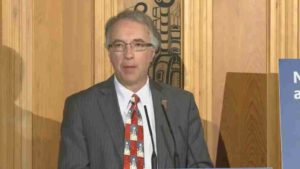
John Rustad, the ‘climate change denying’ (transphobic) leader of the upstart B.C. Conservative party — destined to become, either, British Columbia’s next Premier, or at the very least form the official Opposition in the next session of B.C.’s Legislature — portrays himself as an ‘aw shucks’ kind of guy, a ‘man of the people’ who hails from the hinterland, someone who has your best interests at heart, not to mention, a democrat of the first order, and the furthest thing you could possibly imagine from a died-in-the-wool autocrat, a detestable top down kind of fella.

Don’t you believe his ‘aw shucks’ persona for a second.

John Rustad — long a Cabinet Minister in Gordon Campbell’s and Christy Clark’s B.C. Liberal Party — is very much the autocratic / ‘my way or the highway’ kind of leader of the once moribund, but now seemingly thriving, BC Conservative party.

If Alec Lazenby’s PostMedia article published in the Vancouver Sun yesterday is to be believed — and who is going to question Mr. Lazenby’s well-searched, and well-sourced article? — as the headline of the article reads, B.C. Conservative constituency executive resigns as controversy swirls over party’s nomination process

“In its haste to nominate 93 candidates in time for October’s provincial election, the B.C. Conservative party has angered some rank-and-file members by bypassing grassroots decision-making.

Last week, the president of the party’s Vernon-Lumby association — in charge of raising money and selecting a candidate for the riding — resigned after rumours that party leader John Rustad planned to parachute former federal Conservative hopeful Kevin Kraft into the riding.”

Mr. Lazenby’s article goes on to state …

“Last week, it was revealed the party had held discussions with former B.C. Liberal leadership contestant Gavin Dew about running in Vernon-Lumby, before ultimately deciding to place him in Kelowna-Mission after ousting Alexandra Wright as that riding’s candidate.”

In point of fact, Gavin Dew refused John Rustad’s entreaty to run in the Vernon-Lumby riding, as he makes his home — with his wife, former Vancouver Park Board Commissioner Erin Shum, and their two young children — in the south Okanagan city of Kelowna.

The next shoe to drop?
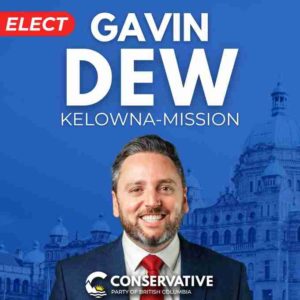
Gavin Dew, a one-time hopeful leader of the BC Liberal party was offered the BC Conservative seat of Kelowna-Mission, following the unceremonious ouster of longtime, loyal conservative Kelowna activist Alexandra Wright — up until Mr. Dew’s latter day ascension as a newly-minted BC Conservative candidate — the once-upon-a-time, but no more, elected by the constituency association to become their local BC Conservative candidate for Kelowna-Mission in the coming provincial election.

Is unhappiness with how John Rustad runs the BC Conservative party limited only to the south Okanagan Vernon-Lumby and Kelowna-Mission constituencies?

Nope. According to Mr. Lazenby …

“On June 7, Kari Simpson, the vice-president of the party’s Langley-Abbotsford association, asked the B.C. Supreme Court to cancel a nomination meeting scheduled for the next day.

Simpson’s complaint centred on party president Aisha Estey threatening to remove the local association’s board members if they didn’t delay the meeting by a week.

There is such a furore within the BC Conservative party, and its membership, that a cadre of party members have called on John Rustad to resign as party leader.

More recently, Mr. Lazenby’s article reads, “the party has had to respond to a group calling itself a “grassroots organization of B.C. Conservative supporters,” which put up a website calling for the firing of John Rustad over his appointment of candidates who were members of other parties, such as recent B.C. United defector Teresa Wat in Richmond-Bridgeport and former NDP MLA Gwen O’Mahoney in Nanaimo-Lantzville.”

Rob Shaw, in an article published in Business in Vancouver on Monday, writes …

“There’s a movement afoot within the BC Conservative party to fire leader John Rustad.

Some party members have been receiving a letter that accuses Rustad of “diluting” the Conservative brand by accepting floor-crossing BC United candidates, as well as candidates previously associated with the BC NDP.

Disgruntled BC Conservative party members write on their hastily published Fire John Rustad website … “We are writing to you today to raise the alarm about John Rustad’s recent welcoming of pro-Beijing and former BC Liberal MLA, Teresa Wat, into the BC Conservative Party with no regards for the voices of grassroots members,” it reads.

“We are a grassroots organization of BC Conservative supporters who have been around long before John Rustad’s appointment as leader, and will be around long after he’s gone.

“While we continue to support the party and look forward to forming government, we must put a stop to John’s diluting of our party.”
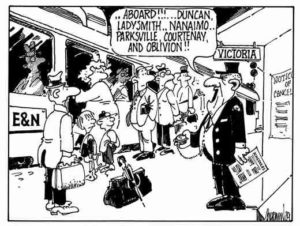
On March 26th of this year, VanRamblings wrote about the “bozo eruptions” that would most assuredly hinder the BC Conservative party from gaining government post the October 19th British Columbia provincial election.

Since that date, the BC Conservative party has jettisoned several nominated candidates over social media posts, including Esquimalt-Colwood hopefuls Jan Webb and Dr. Stephen Malthouse of Ladysmith-Oceanside, both who falsely claimed COVID-19 vaccines make you shed spike proteins and could make you magnetic.

Other BC Conservative candidates have left quietly, such as UFC fighter Jason Day of Columbia River-Revelstoke who made comments in May on social media that accused the World Health Organization of wanting to “achieve world government” by removing “from the minds of men, their individualism, loyalty to family traditions, national patriotism and religious dogmas.”

Constituency nominated BC Conservative Kyle Schell was recently replaced by John Rustad with Tony Luck in the riding of Fraser-Nicola, where Mr. Luck will go up against popular, longtime BC United MLA, Jackie Tegart.

The question arises: Are the wheels coming off the BC Conservative campaign bus, even before the provincial election campaign begins in earnest following the dropping of the Writ on Saturday, September 21st?
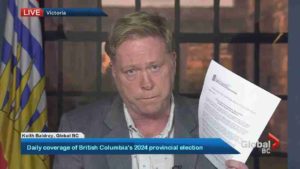
In an article published in the Burnaby Now, Global BC Legislative reporter Keith Baldrey writes …

The B.C. Conservatives, a moribund party for decades, is leading all parties with 81 people named as candidates, in the 93 ridings that will be up for grabs this October.

The NDP is not far behind, with 74 candidates nominated or named so far and another 13 people in the process of becoming one.

As for both the B.C. United and B.C. Green parties, given that they’re having a difficult time finding candidates to fill the 93 open slots, both parties will likely install party or caucus staffers as candidates to fill out their roster, if they need to.

Employing his autocratic style, rather than adhere to democratic engagement and allow ridings to nominate the local candidates of their choosing, instead Mr. Rustad has chosen to appoint his “preferred” BC Conservative candidates, thereby squelching community and local riding association input into who these local riding association members believe will best represent their interests in Victoria.

Sad that. Not to mention, anti-democratic and bullying.

But that’s the BC Conservative party heading into 2024’s B.C. provincial election.
#CdnPoli | Pierre Poilievre Stoking Fear and Blame


Watch The Curse of Politics panel on the inevitability of a Pierre Poilievre government come 2025.

Canadians are 18½ months away from the next federal election, in October 2025.

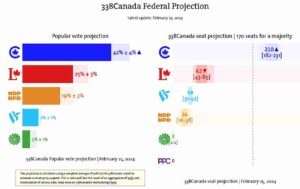
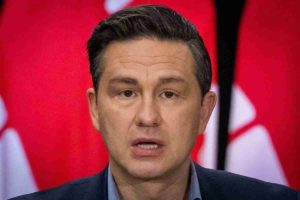
If the polls are to be believed, Conservative Party leader Pierre Poilievre — easily the most far-right leader ever of Canada’s Conservative Party — will sweep to power, to dominate federal governance from November 2025 thru October 2029.

If the 338 projection above is to be believed, Pierre Poilievre will secure somewhere in the neighbourhood of 210 seats in Parliament — for a gain of 91 seats, and a massive majority — while Justin Trudeau’s Liberals will be reduced to a rump caucus of approximately 62 Members of Parliament, with 93 MPs losing their seats.

Although the Curse of Politics panel — consisting of 45-year federal and provincial Liberal political veteran, the always avuncular and engagingly profane, David Herle, with Kory Teneycke representing the forces of evil (oh, we mean, the federal Conservative Party, where he played a central role in the Conservative Party government of Stephen Harper), and longtime New Democratic Party stalwart, Jordan Leichnitz, who as you’ll see and hear when you take in this must-watch / listen to podcast — will leave you convinced Justin Trudeau’s Liberals don’t have a hope in hell of retaining government past 2025.

There are those who might disagree.

https://twitter.com/VoiceOfFranky/status/1763041456959148193

Frank Graves is the founder of one of Canada’s most respected polling companies, EKOS Research, covering every federal campaign since 1980. When Mr. Graves suggests Pierre Poilievre doesn’t have a win in the bag, he’s a man to be listened to.

Of course, only Pierre Poilievre can fix a broken Canada. Or can he?

You’ll want to take the time to read the 68 comment replies on the post above.

#VanPoli | Our Collective Journey Towards Indigenous Reconciliation

In contemporary discourse, acknowledgment of reconciliation at the commencement of gatherings of people — when such gatherings take place in Parliament, the Legislature, or at meetings of municipal Councils, or more informally at other types of political meetings, in churches, at housing co-operative meetings, or even when people gather to take in a screening at the Vancouver International Film Festival’s VIFF Centre — has gained considerable attention and importance.

The land acknowledgment serves as a recognition of past injustices and a commitment to moving forward with mutual respect and understanding.

Today on VanRamblings, we’ll explore the significance of the reconciliation acknowledgment in fostering inclusivity, building relationships, and promoting healing within organizations and communities.

One significant catalyst for the reconciliation acknowledgment was the global recognition of the need to address the historical and ongoing impacts of colonization on Indigenous peoples. This recognition was spurred by advocacy efforts from Indigenous communities, grassroots organizations, and allies pushing for truth, justice, and reconciliation.

In Canada, the Truth and Reconciliation Commission (TRC), established in 2008, played a pivotal role in raising awareness about the legacy of residential schools and advocating for reconciliation between Indigenous and non-Indigenous Canadians. As part of its Calls to Action, the TRC called on governments, organizations, and individuals to recognize and respect Indigenous rights, cultures, and traditions, through the acknowledgment of traditional territories and treaties.

By acknowledging the traditional owners of the land and recognizing the histories of colonization and marginalization, a space is created where all participants feel valued and respected. This acknowledgment extends beyond geographical boundaries, encompassing the acknowledgment of past wrongs against Indigenous peoples, marginalized communities, and minority groups.

The voicing of the land acknowledgment signals a commitment to equity and diversity, creating an environment where everyone’s voice is heard and valued.

Acknowledging reconciliation at the outset of meetings builds trust and strengthens relationships among participants. It demonstrates a willingness to confront uncomfortable truths and engage in meaningful dialogue about the legacy of colonialism, oppression, and discrimination.

The land acknowledgment also opens the door for honest conversations about privilege, power dynamics, and systemic injustices, fostering empathy and understanding among individuals with diverse backgrounds and experiences. Through the reconciliation process, relationships based on mutual respect and solidarity are cultivated, laying the foundation for collaborative action and social change.

Reconciliation acknowledgment is an essential step towards healing historical wounds and addressing intergenerational trauma. By acknowledging past injustices and their ongoing impacts, it validates the experiences of those who have been marginalized and oppressed.

This acknowledgment is not merely symbolic but serves as a tangible commitment to truth-telling, justice, and reconciliation. It provides an opportunity for healing and restoration, allowing individuals and communities to confront the legacies of the past and work towards a more equitable and inclusive future.


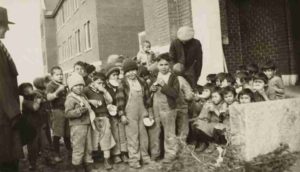
Canadians grieve the finding of the mass graves at the Kamloops Indian residential school, the 215 children lost to their families when they were taken by the government, but also for their lost lives.

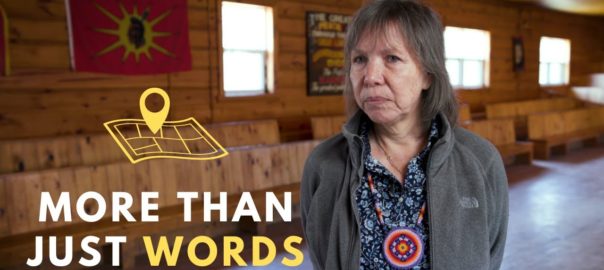
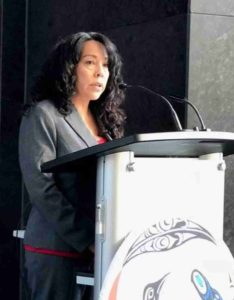
Joanne Mills, the Executive Director of the Fraser Region Aboriginal Friendship Centre, has expressed concern about overuse of the the word reconciliation.

“Reconciliation in Canada is more about the acknowledgement that there were wrongs, but there isn’t a lot of action attached to it. It’s difficult to be talking about reconciliation while one party is in power and another is still asking for rights from the former.

There definitely isn’t an equal power distribution. We’re not coming to the table as peers, we’re still coming to the table as have and have-nots,” she says.

Joanne Mills says for reconciliation to take shape, there needs to be an honest attempt to restore to Indigenous people what was taken at the time of colonization.

“I just don’t want to talk about the stereotypes anymore. People should go and educate themselves and learn the truth,” Mills says.

Mills says inequality remains in areas of provincial jurisdiction, such as the high rates of Indigenous kids in foster care in B.C., access to education and over representation of Indigenous people in prison.

B.C. has seen changes in elementary and secondary school curriculum to include more education about Indigenous people, but there have been bumps along the way. Some teachers say they are at a loss on how to teach Indigenous content. Others say they lack sufficient resources.

The adoption of reconciliation acknowledgments reflects a broader societal shift towards acknowledging and confronting the injustices of the past, promoting dialogue, understanding, and working towards an inclusive and equitable future. While the genesis of the reconciliation acknowledgment vary across contexts, its underlying principles of recognition, respect and reconciliation remain universal.

Know Your Local Ruling Class

#VanPoli | Kareem Allam

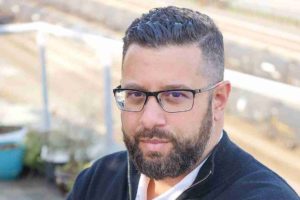
That handsome, despicable fellow you see pictured above is Kareem Allam.

We’re kidding. Honest. Just joshing. Sheesh, no one can take a joke these days.


Afford yourself the pleasure of listening to / watching B.C.’s most accomplished politico, Kareem Allam

Who is Kareem Mahmoud Abbas Allam?

Most political folks will recognize Mr. Allam as the architect of ABC Vancouver’s overwhelming victory at the polls on October 15, 2022, in that year’s decisive municipal election, where every ABC Vancouver candidate was elected to office.

Clearly, Kareem Allam is a master strategist, a superior motivator and a campaign manager par excellence, an individual who means to win, not necessarily at all costs, but still — and, if we might suggest, a man of principle and integrity who fights the good fight, in 2022 on behalf of the beleaguered citizenry of Vancouver.

In 2022, post pandemic, an irritated Vancouver public had become fed up with a do nothing, whiny, Kennedy Stewart-led (if in anyone’s wildest imagination, Mr. Stewart might have the appellation of ‘leader‘ applied to him) administration, where he worked within a disparate and wildly dysfunctional civic administration.  Mr. Stewart is, fortunate for us,  now back at the post from whence he came, as the defrocked and much mocked Simon Fraser University Political Science professor.

If you go to the Fairview Strategy website — where Mr. Allam is employed, Fairview Strategy an integrated public relations company which offers government relations liaison and expertise, communication, media relations, digital communication, Indigenous relations, and market research — you will read this …

With two decades of private and public sector experience in public affairs, Kareem has successfully leveraged his knowledge of people, policy and community into triumphant political campaigns at the municipal, provincial and federal levels.

Kareem managed the winning Kevin Falcon for BC Liberal Leader campaign and the ABC Vancouver municipal campaign, electing 19 out of 19 candidates, including Mayor Ken Sim. In 2023, Kareem achieved #9 status on Vancouver Magazine’s annual Power 50 list.

Kareem has served as a member of the Board of the Fraser Health Authority, and as a member of the Translink Screening Panel, among other appointments which serve the community interest.


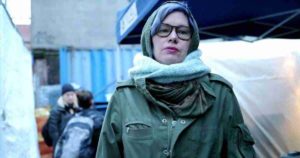
Sarah Blyth, community advocate and organizer, founding member of the Overdose Prevention Society

Did we mention that Sarah Blyth holds Mr. Allam in the highest possible esteem?

One year ago, Mr. Allam left his post as Chief of Staff to Mayor Ken Sim. Suffice to say that Mr. Allam’s leave-taking — he was very unhappy — was none too pleasant.

Well worth watching and listening to the Hotel Pacifico podcast interview with Kareem Allam that you’ll find above — given that Mr. Allam will continue to be long into the future, a British Columbian of wit, intelligence, perspicacity and accomplishment, who will endure as an individual who will make a difference for the better in each of our lives, in the many, many years to come. Best to get to know Mr. Allam a little better now, to help provide a bit of context for your confounding life, and perhaps even inject a smidgen of hope for a better collective future for all of us.