Tag Archives: vancouver international film festival

#VIFF2024 | Four More Films to Be Celebrated at This Year’s Film Festival


The 43rd annual Vancouver International Film Festival, running from September 26th thru October 6th

In this second of a series on the upcoming Vancouver International Film Festival, as we did last Friday, once again today we will present four more films for you to put on your VIFF 2024 film schedule, films to take in and appreciate, films you will love, and films that will change your life immeasurably for the better.
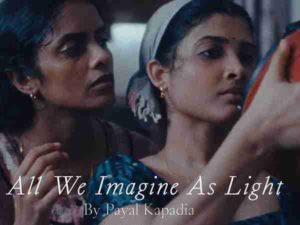
All We Imagine As Light
Saturday September 28th
9:30pm, Vancouver Playhouse

Tuesday October 1st
3pm, Vancouver Playhouse

Tickets available online for the Saturday screening. Just click on this link.

Tickets available online for the Tuesday screening. Just click on this link.

Grand Prix winner, Cannes 2024

In last week’s edition of the IndieWire Screen Talk podcast, co-host Anne Thompson — for 40 years a luminary in the film business, the beloved editor of what was once upon a time the recognized standard in journalistic film coverage,  Premiere magazine, and long Hollywood’s most accurate Oscar prognosticator — Anne Thompson enthusiastically expressed that All We Imagine As Light is her favourite film this year, the film she enthused: “an exquisite, spellbindlingly hypnotic, and poignantly lyrical symphonic film that transcends form and style, and a film of enriching humanity and gentleness, languorous eroticism, joy and sadness, presented throughout with an epiphanic, captivating beauty rarely seen on film.”
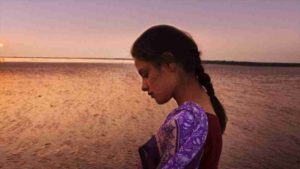
All We Imagine As Light relates the story of the lives of three women nurses who are front and centre in director Payal Kapadia’s luminous Mumbai-set drama. Prabha works long hours to avoid thinking about her husband, who left for Germany long ago and eventually stopped calling, while two of her colleagues are struggling with troubles of their own. Winner of the Grand Prix at Cannes this year (an historic first for an Indian film), the film offers a moving portrait of resistance and camaraderie, and a VIFF 2024 film that finds beauty and solace in the unlikeliest of places.
No Other Land
Saturday, September 28th
3:30pm, SFU Woodwards

Tuesday, October 1st
6:30pm, Fifth Avenue Cinema
Auditorium 3

Tickets available online for the Saturday screening. Just click on this link.

Tickets available online for the Tuesday screening. Just click on this link.

Best Documentary Award, Berlin 2024

A vital and wrenching documentary about Israel’s often barbaric efforts to expel a Palestinian community, co-directed by a collective of Israeli and Palestinian filmmakers, No Other Land offers a ground-level view of an occupation in action in this must-see, award-winning documentary.

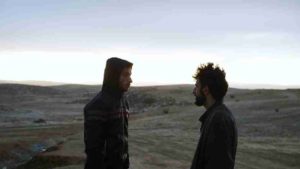
A painfully human story, the film tracks Basel Adra, a young Palestinian activist from Masafer Yatta on the southern West Bank, and the mass expulsion of his community that has been his lifelong reality. Faced with the systematic demolition of homes and schools, carried out to make room for an Israeli military training ground, residents confront a painful choice: either move away and relinquish their land or endure and try to rebuild.
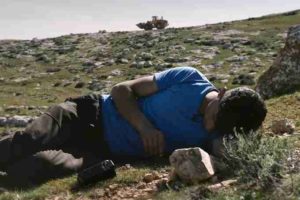
With the help of Yuval Abraham, an Israeli journalist, Adra documents the evictions and organizes protests against them, even as the pair’s unequal personal situations hang over their work together. No Other Land is a vérité project and a witness testimony. It operates within the logic that visual evidence will galvanize the public to acknowledge the brutality faced by Palestinians.

Given the conditions of its production, No Other Land would be vital even in a more ragged form. But the filmmaking here is tight and considered, with nimble editing that captures the sense of time at once passing and looping back on itself. The intense, jolting impact of the film’s intense sequences of Palestinian-Israeli confrontation — often shot on phone cameras, to the consternation of army officials, and violent enough to shock many complacent fence-sitters on the issue into angry awareness — is balanced with more composed, observational scenes of Adra, his family and his neighbours trying to live an everyday life on ground that keeps getting pulled out from under them.

Hope is fading that the next generation might retain their ancestral land; if they do, they’ll likely inherit Adra’s activism with it.
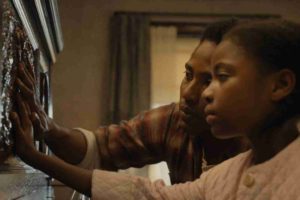

John David Washington and Skylar Smith in Malcolm Washington’s Telluride hit, The Piano Lesson.

The Piano Lesson
Monday September 30
6pm, Vancouver Playhouse

Tickets available online. Just click on this link.

Denzel Washington executive produces an adaptation of a major American play by August Wilson, directed by one son (Malcolm) and starring another (John David).

A world première at the just wrapped 2024 Telluride Film Festival, where the film débuted to an appreciative reception, Wilson’s tome centres around a unique piano currently under the watch of Bernice (Danielle Deadwyler), a single mother who lives in a Pittsburgh home she shares with her Uncle Doaker (Samuel L. Jackson reprising his Tony Award-nominated performance). Her relative peace is disturbed by the arrival of her brother Boy Willie (John David Washington) and his slightly naive friend Lymon (Ray Fisher) from Mississippi. She soon discovers that Boy Willie’s intentions do not align with her own.
At its core, The Piano Lesson is about a family attempting to come to terms with the long repercussions of slavery. Like almost all of Wilson’s work, it is a quintessentially American story peppered with characters that should resonate and spark conversation for decades to come. And, like many of Wilson’s literary contributions, translating it into the medium of cinema was no easy task. That Washington’s adaptation is the most successful so far, and in the context of his first film, no less, should be duly celebrated.
The End
Friday, October 4th
9pm, Vancouver Playhouse

Sunday, October 6th
9pm, Vancouver Playhouse

Tickets available online for the Friday screening. Just click on this link.

Tickets available online for the Sunday screening. Just click on this link.

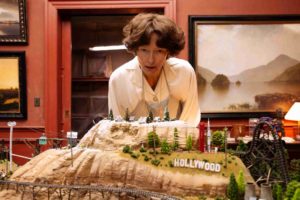
Another hit at the Telluride Film Festival arriving on our shores at VIFF 2024 in early October, Tilda Swinton and Michael Shannon sing for their lives in Joshua Oppenheimer’s post-apocalyptic musical, as the director of the acclaimed and memorably bizarre nonfiction film, 2012’s The Act of Killing — an account of the genocide in Indonesia, in which he famously persuaded the killers to re-enact their crimes on camera in gaudy cinematic vignettes — leaps into fiction with this staggering meditation on how we live with ourselves at the end of the world.
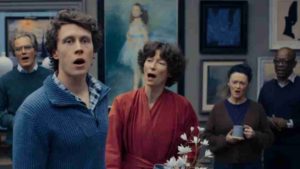
For a film whose slow-accumulating power doesn’t fully sink in until its final moments (a sweet refrain that’s all the more arresting for its anticlimactic conviction), The End doesn’t waste any time to put its cards on the table. The world as we know it is over. Something — or a chain reaction of somethings, most of them presumably climate-related — has spread across the surface of the Earth, destabilizing human civilization and making our planet unlivable. Hey, maybe British Columbia’s climate change denying leader of our province’s Conservative Party, John Rustad, oughta take in a screening of this film — you never know … it could open his eyes, and save us from four interminable years of “There’s no climate emergency. It’s all a hoax” rhetoric, and maybe save our planet, and our children’s lives.


#VIFF2024 | The Glorious 43rd Annual Vancouver International Film Festival

This past Wednesday, at the opening press conference for the 43rd annual Vancouver International Film Festival held at the VIFF Centre of Seymour Street, VIFF Director of Programming Curtis Woloschuk announced the programme of 150 feature films that will screen in Vancouver for 11 days, commencing on Thursday, September 26th, running through until late evening, Sunday, October 6th.

Today on VanRamblings, a brief introduction to VIFF 2024, where I’ll highlight four films. Each Friday for the next five weeks you’ll find full and in-depth coverage of the Vancouver’s upcoming film festival, must-see films, hidden gems, the films VIFF 2024 shares with the 62nd New York Film Festival — which occurs simultaneously to our homegrown festival each year — and more, much more.

See you back here every Friday.

Special Presentations

Of the Special Presentation films to screen at VIFF 2024, Curtis Woloschuk made special mention of four must-see films, the first two of which are …

Both of the films above are Gala Presentations at VIFF 2024.

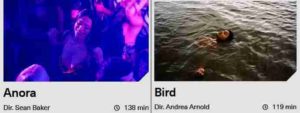
Anora  won the Palme D’or (the top prize) at Cannes.

Put simply, Anora is director Sean Baker’s most searing and shattering film yet, with a breakout performance from Mikey Madison. Not to mention, a thoroughly fun and provocative time at the movies.

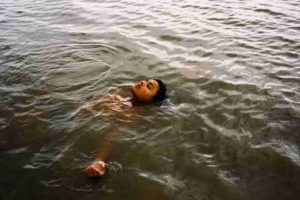
Director Andrea Arnold’s Bird, according to the VIFF programme guide, follows a street-smart 12-year-old girl named Bailey (played by terrific newcomer Nykiya Adams), who lives in a graffiti-tagged squat near the British seaside with her reckless half-brother Hunter (Jason Buda) and her heavily tattooed man-child father, Bug (a perfectly chaotic Barry Keoghan), who’s rushing into a wedding he can’t afford to a woman he barely knows.

The programme guide goes on to state …

This touching coming-of-age drama from three-time Cannes Jury Prize-winning filmmaker Andrea Arnold (American Honey; Fish Tank) matches seasoned actors Keoghan and Rogowski with an authentic cast of first-time performers. With its inventive editing, killer soundtrack, and top-notch cinematography by Robbie Ryan (Poor Things), the film immerses us in the hidden beauty of North Kent through Bailey’s young eyes. The result is a tender portrait of girlhood on the fringes, with a magical realist twist.

In addition to Anora and Bird, cineastes will want to take in screenings of the other two Special Presentation films of distinction and cinematic craft, including …

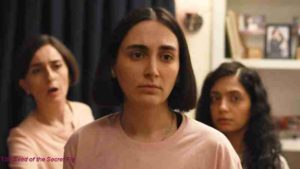
  • The Seed of the Sacred Fig, Iranian director Mohammad Rasoulof’s Special Jury and FIPRESCI Prize winner at Cannes, a mesmerizingly gripping parable in which paranoia, misogyny and rage of the Iranian state are mapped seamlessly onto an ordinary family unit;

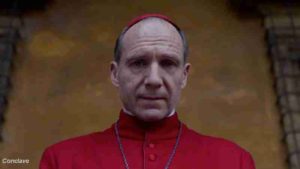
  • Conclave. Oscar nominees Ralph Fiennes and Stanley Tucci lead a brilliant ensemble cast in All Quiet on the Western Front director Edward Berger’s adaption of  Robert Harris’ high-stakes drama, in which Cardinals gather at the Vatican to elect a new Pope, the film emerging as a psychologically complex morality tale.

Much of the information you’ll require to book your tickets, explore the details of the 150 feature films on offer at VIFF 2024 — not to mention, the various Short Series, expertly crafted again this year by programmer Sandy Gow — and the venues where films will screen may be found at VIFF’s online website, viff.org.

Stories of a Life | Redux | Jude, Megan and Me | Movies | 80s and 90s

Cinema | Megan and Jude Tomlin, and their dad, love cinema, love the movies, stories of a life

Film has always been a central, organizing force in my relationship with both my daughter, Megan, and my son, Jude.

Our collective love of the cinema, attending film festivals and discussing what we saw following the various screenings we attended (usually at the Fresgo Inn on Davie, which was alive no matter the time of night or early morning) was, over the years, a central feature of our relationship — the relationship between son and daughter, and dad — that allowed us to delve deep into discussions of the meaning of life, and our collective responsibility to work towards creating a fairer and more just world for everyone.

Heart and deep caring for humanity was at the centre of our love of film, and at the centre of our loving familial relationship, informing the choices we made about how we would conduct ourselves in the world, and the projects and causes to which we would devote our time and our energies.

In the 1980s, when Cathy and I were going through a rancorous divorce, film brought us together.

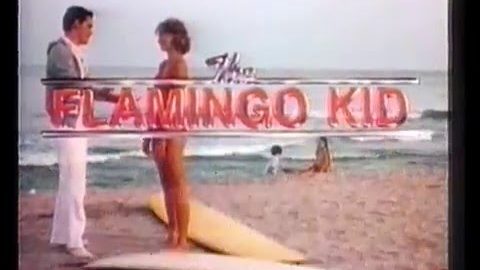
When in Seattle — which we visited frequently, always staying on the non-smoking 33rd floor of the Weston twin towers — in 1984, we took in a screening of Garry Marshall’s The Flamingo Kid — the story of a working class boy (Matt Dillon) who takes a summer job at a beach resort and learns valuable life lessons.

Megan was seven years of age, and Jude 9 — both were uncertain about the efficacy of our trip south (without their mother’s permission — we called her upon arriving at our hotel), but the screening alleviated and, finally, repaired any of their concerns, and all went well that weekend. Fortuitously, too, upon our return, the divorce proceedings inexplicably moved forward into a more reasonable and thoughtful direction, reflective of all our collective concerns.

Whenever there was “trouble” in our relationship — generated, most usually, by their mother — film served to salve the wounds of dysfunction, allowing us to find our collective centre while healing the wounds that rent all of our lives during a decade-long, million dollar custody dispute.

Film spoke to us, made us better, took us out of the drudgery of our too often protean daily and, more often, troubled lives, and engaged us while putting our lives into a broader and more human scale perspective. Never once was there a film that we saw together when we didn’t come out of the screening feeling more whole, and more at one with ourselves and the world.

Such was true, at the screenings of Glenn Close and John Malkovich’s Dangerous Liaisons over the holiday period in 1988, or months later at the screening of Kevin Costner’s Field of Dreams, which we took in at the Oakridge Theatre, a favourite and comforting cinema haunt of ours.

When Megan wanted some “alone time” with me, it almost always revolved around watching a film together, although as Megan matured (and as her love for film matured), Megan made it plain that she was present in the theatre to watch the film, not “share time” with me, choosing always to sit in a whole other section of the theatre (it drove her crazy in the times that we were sitting together in a theatre that I would check in occasionally with her, looking at her to determine how she felt about the film — talking during a film was an unforgivable sin, so that was never going to happen).

Some days, Megan would call and say, “Dad, take me to a film.”

And because I was a film critic at the time, and had a pass to attend at any cinema in North America, off the two of us would traipse to see Kathy Bates’ Fried Green Tomatoes (1991) or Johnny Depp’s Benny & Joon (1993) at the old 12-theatre complex downstairs in the Royal Centre mall.

Other times, post dinner and after Megan had finished her homework, I’d say to Megan out of the blue, “I’m heading out to attend a screening of a film. Do you want to come along with me?” Megan would ponder my question for a moment before asking, “Which film?”

In 1991, one very long film screening we attended was Kevin Costner’s directorial début, Dances With Wolves, about which we knew nothing other than it starred one of our favourite actors, and off the two of us went.

At screening’s end (Megan and I actually sat together at this particular screening, which took place in the huge Granville 7 Cinema 7, because the preview theatre screening room was just packed), Megan turned to me, and said, “Dad, I knew this was going to be a great film.” And it was. “And, you know what else? It’s going to pick up a raft of Oscars this year, too, and be considered one of the, if not the best, films of the year.”

Jude and Megan also attended film festival screenings with me.

Almost inevitably, Vancouver International Film Festival founder, and co-owner of Festival Cinemas Leonard Schein was present with his wife Barbara, and at a screening’s end, Megan would make her way over to wherever Leonard and Barbara were sitting to enquire of him whether or not he intended to book the film into either the Varsity, Park or Starlight.

Following screenings of Neil Jordan’s 1992 putative multiple Oscar award winner, The Crying Game or, that same year, Baz Luhrmann’s Strictly Ballroom, Megan marched over to Leonard, and asked him boldfacedly, “What do you think?”

When Leonard indicated that he thought the films were not quite his cup of tea, that both films would have difficulty finding an audience, and that it was unlikely he’d be booking either film into one of his cinemas, Megan lit into Leonard with a passion and a vehemence I had rarely observed coming from her, saying …

“Are you out of your mind? Strictly Ballroom and The Crying Game are wonderful films, and just the sort of films that not only should you book, but that you MUST book — these are both groundbreaking films that will only serve to reinforce your reputation as an arts cinema impresario, but will also make you a tonne of money, and we all know that you’re all about the money. Either you book these films into The Varsity, or believe me when I tell you that there’ll be hell to pay when you see me next.”

And with that, Megan marched off.

At the 1990 Vancouver International Film Festival, I’d caught a screening of Whit Stillman’s directorial début, Metropolitan, in preview, and knew that this would be a film Megan would just love (and be astounded by, at the revelation of one of the characters, mid-film).

I made arrangements to pick Megan up from University Hill Secondary at 3pm sharp on the day of the festival screening, we drove downtown, found a parking spot, and rushed over to The Studio Cinema on Granville to catch the 4pm screening of Metropolitan — which as I had predicted, Megan loved.

In early December 1993, on a particularly chilly and overcast day, at 10am in Cinema 2 at the Granville 7 theatre complex, I caught a screening of Jonathan Demme’s groundbreaking new film, Philadelphia — a film about which I knew little, and a film that knocked me out (along with the handful of film critics in attendance at the theatre for the screening).

Emerging from the theatre just after noon, making my way onto Granville, I looked for the nearest telephone in order that I might call Megan at school.

I called the office at University Hill Secondary, and asked them to find Megan and bring her to the phone. When Megan asked, “Dad, is everything all right?”, I told her about the film I had just seen, and that when it opened in January, I wanted to take her and Jude to a screening at the Granville 7. We talked about the film for a few minutes, with her saying about 10 minutes in, “I’m holding up the school phone, and calls coming in. Let’s get together after school. Come and pick me up, and we can continue our conversation. I’ll see you then, Dad. I love you.”

There are gifts we give our children. From my parents, it was what would emerge as a lifelong love for country music. For Jude and Megan, my gift was a love of music, a love of the ballet, and an abiding love for film.

Stories of a Life | Redux | Film | A Central Organizing Force In Tomlin Family Life

Film has always been a central, organizing force in my relationship with both my daughter, Megan, and my son, Jude.

Our collective love of the cinema, attending film festivals and discussing what we saw following the various screenings we attended (usually at the Fresgo Inn on Davie, which was alive no matter the time of night or early morning) was, over the years, a central feature of our relationship — the relationship between son and daughter, and dad — that allowed us to delve deep into discussions of the meaning of life, and our collective responsibility to work towards creating a fairer and more just world for everyone.

Heart and deep caring for humanity was at the centre of our love of film, and at the centre of our loving familial relationship, informing the choices we made about how we would conduct ourselves in the world, and the projects and causes to which we would devote our time and our energies.

In the 1980s, when Cathy and I were going through a rancorous divorce, film brought us together.

When in Seattle — which we visited frequently, always staying on the non-smoking 33rd floor of the Weston twin towers — in 1984, we took in a screening of Garry Marshall’s The Flamingo Kid — the story of a working class boy (Matt Dillon) who takes a summer job at a beach resort and learns valuable life lessons.

Megan was seven years of age, and Jude 9 — both were uncertain about the efficacy of our trip south (without their mother’s permission — we called her upon arriving at our hotel), but the screening alleviated and, finally, repaired any of their concerns, and all went well that weekend. Fortuitously, too, upon our return, the divorce proceedings inexplicably moved forward into a more reasonable and thoughtful direction, reflective of all our collective concerns.

Whenever there was “trouble” in our relationship — generated, most usually, by their mother — film served to salve the wounds of dysfunction, allowing us to find our collective centre while healing the wounds that rent all of our lives during a decade-long, million dollar custody dispute.

Film spoke to us, made us better, took us out of the drudgery of our too often protean daily and, more often, troubled lives, and engaged us while putting our lives into a broader and more human scale perspective. Never once was there a film that we saw together when we didn’t come out of the screening feeling more whole, and more at one with ourselves and the world.

Such was true, at the screenings of Glenn Close and John Malkovich’s Dangerous Liaisons over the holiday period in 1988, or months later at the screening of Kevin Costner’s Field of Dreams, which we took in at the Oakridge Theatre, a favourite and comforting cinema haunt of ours.

When Megan wanted some “alone time” with me, it almost always revolved around watching a film together, although as Megan matured (and as her love for film matured), Megan made it plain that she was present in the theatre to watch the film, not “share time” with me, choosing always to sit in a whole other section of the theatre (it drove her crazy in the times that we were sitting together in a theatre that I would check in occasionally with her, looking at her to determine how she felt about the film — talking during a film was an unforgivable sin, so that was never going to happen).

Some days, Megan would call and say, “Dad, take me to a film.” And because I was a film critic at the time, and had a pass to attend at any cinema in North America, off the two of us would traipse to see Kathy Bates’ Fried Green Tomatoes (1991) or Johnny Depp’s Benny & Joon (1993) at the old 12-theatre complex downstairs in the Royal Centre mall.

Other times, post dinner and after Megan had finished her homework, I’d say to Megan out of the blue, “I’m heading out to attend a preview screening of a film. Do you want to come along with me?” Megan would ponder my question for a moment before asking, “Which film?”

In 1991, one very long film preview screening we attended was Kevin Costner’s directorial début, Dances With Wolves, about which we knew nothing other than it starred one of our favourite actors, and off the two of us went.

At screening’s end (Megan and I actually sat together at this particular screening, which took place in the huge Granville 7 Cinema 7, cuz the preview theatre screening room was just packed), Megan turned to me, and said, “Dad, I knew this was going to be a great film.” And it was. “And, you know what else? It’s going to pick up a raft of Oscars this year, too, and be considered one of the, if not the, best films of the year.”

Jude and Megan also attended film festival screenings with me.

Almost inevitably, Vancouver International Film Festival founder, and co-owner of Festival Cinemas Leonard Schein was present with his wife Barbara, and at a screening’s end, Megan would make her way over to wherever Leonard and Barbara were sitting to enquire of him whether or not he intended to book the film into either the Varsity, Park or Starlight.

Following screenings of Neil Jordan’s 1992 putative multiple Oscar award winner, The Crying Game or, that same year, Baz Luhrmann’s Strictly Ballroom, Megan marched over to Leonard, and asked him boldfacedly, “Well, what did you think?”

When Leonard indicated that he thought the films were not quite his cup of tea, both films would have difficulty finding an audience, and it was unlikely he’d be booking either film into one of his cinemas, Megan lit into Leonard with a passion and fury that I had rarely observed as coming from her, saying, “Are you out of your mind? Strictly Ballroom (or, The Crying Game) is a wonderful film, and just the sort of film that not only should you book, but that you MUST book — these are both groundbreaking films that will only serve to reinforce your reputation as an arts cinema impresario, but will also make you a tonne of money, and we all know that you’re all about the money. Either you book these films into The Varsity, or believe me when I tell you that there’ll be hell to pay when you see me next.”

And with that, Megan marched off.

At the 1990 Vancouver International Film Festival, I’d caught a screening of Whit Stillman’s directorial début, Metropolitan, in preview, and knew that this would be a film that Megan would love (and be astounded by, at the revelation of one of the characters, mid-film). I made arrangements to pick Megan up from University Hill Secondary at 3pm sharp on the day of the festival screening, we drove downtown, found a parking spot, and rushed over to The Studio Cinema on Granville to catch the 4pm screening of Metropolitan — which as I had predicted, Megan loved.

In early December 1993, on a particularly chilly and overcast day, at 10am in Cinema 2 at the Granville 7 theatre complex, I caught a screening of Jonathan Demme’s groundbreaking new film, Philadelphia — a film about which I knew little, and a film that knocked me out (along with the handful of film critics in attendance — the Vancouver Sun’s Marke Andrews and the late Michael Walsh, long the lead film critic at The Province, as well as the late Lee Bacchus, soon to join Michael Walsh as a film critic at The Province) all of us at the theatre for the screening.

Emerging from the theatre just after noon, making my way onto Granville, I looked for the nearest telephone in order that I might call Megan at school.

I called the office at University Hill Secondary, and asked them to find Megan and bring her to the phone. When Megan asked, “Dad, is everything all right?”, I told her about the film I had just seen, and that when it opened in January, I wanted to take her and Jude to a screening at the Granville 7. We talked about the film for a few minutes, with her saying about 10 minutes in, “I’m holding up the school phone, and calls coming in. Let’s get together after school. Come and pick me up, and we can continue our conversation. I’ll see you then, Dad. I love you.”

There are gifts we give our children. From my parents, it was what would emerge as a lifelong love for country music. For Jude and Megan, my gift was a love of music, a love of the ballet, and an abiding love for film.