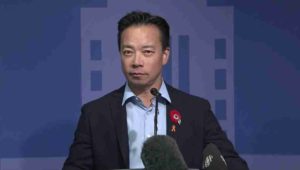
#VanPoli | Ken Sim | Swagger | Bullying, Misogyny & Hubris | Pt. 1


ABC Vancouver Mayor, Ken Sim

What is it with men who lack humility, intellectual heft, or have little character and no experience, and their unwholesome mistreatment of women?

In the case of Mayor Ken Sim, perhaps there is a partial answer to the multiple questions above, deriving from Mr. Sim’s use of the word “swagger”.
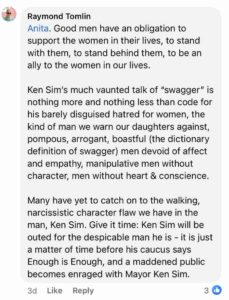
Social media response to former Park Board Chairperson, Anita Romaniuk

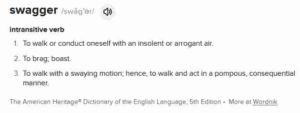
A Definition of Swagger

Pompous, arrogant, boastful. An insolent braggart, and from the definition of insolentdisrespectful, rude, insulting in manner and speech, and deviant.
Swagger. Think: that jerk on the beach in a too small swimsuit who believes he’s God’s gift to women, who moves with a near drunken stagger, on the prowl for a victim of his all-too-visible misogyny and disdain for women, a man who is lacking in fidelity of purpose, and a little man devoid of empathy, and humanity.
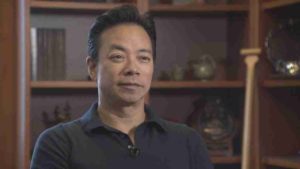

Mayor Ken Sim, the next time he uses the word swagger, think: misogynist, arrogant, pompous, lacking in character, intellect and empathy, boastful, braggart, rude, scornful, with no conscience.

Under the current provincial Police Act, the Mayor of Vancouver upon election becomes the de facto Chairperson of the Vancouver Police Board.

Faye Wightman led several high-profile agencies before Solicitor General Mike Farnworth appointed Ms. Wightman, a well-respected and accomplished member of our community, to the Vancouver Police Board, in September 2020.

In past years, dating back to 1990, Ms. Wightman served as CEO of the Vancouver Foundation, CEO of B.C. Children’s Hospital Foundation, vice-president of the University of Victoria, Board Chair of Inspire Health, and interim CEO of the Canadian Cancer Society, appointed as a B.C. Housing Commissioner, and Coast Capital Savings Executive Director.

“The Vancouver Police Board is guided by the values of independence, fairness, objectivity and accountability in all that it does,” Faye Wightman wrote in a statement she issued last week, following her resignation from the Police Board. “I believe Police Board Chair Ken Sim, and certain directors of the Board have lost sight of these key values, and I resigned.”

Faye Wightman’s departure comes less than a year after Police Board member Rachel Roy resigned in June 2023. Stephanie Johanssen also lost her job as Executive Director in November 2022, after serving three years and seven months in the role. Note should be made that Ms. Johanssen’s departure came the same month Mr. Sim and his ABC Vancouver majority Council were sworn into office.
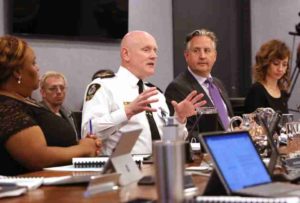

From Mike Howell’s Glacier Media story: “The Vancouver Police Board won’t say why its Executive Director Stephanie Johanssen (far right) is no longer on the job.” File photo Mike Howell.

In a follow-up interview with Glacier Media’s Mike Howell, Ms. Wightman states …

“If the Board is comprised of directors who have a professional reliance on the City of Vancouver for funding, or on maintaining a positive relationship with the Mayor, who also chairs the Police Board, then their objectivity is compromised,” Ms. Wightman said in her statement.

“That is the case with two of our directors at the [police board] and it was becoming clear they were in a position of conflict.”

Ms. Wightman also named Trevor Ford, the Mayor’s Chief of Staff, when asked about her allegation of interference from Mayor Ken Sim’s staff.

“[Trevor Ford] came to an in-camera meeting, he phoned and directed Board members to fire the Executive Director,” Ms. Wightman alleged in the interview.

“He sat in on one-on-one meetings that the Mayor had with individual Board members. If that’s not political interference, I’m not sure what is.”

Vancouver Police Board Executive Director Stephanie Johanssen,  Board member Rachel Roy and now Faye Wightman, who has stated that “Ken Sim, from the outset and throughout our tenure together on the Police Board repeatedly asked for my resignation.”

Gone.

Harassment of Ms. Wightman? Political inference from the Mayor’s Chief  of Staff in the firing of Police Board Executive Director, Stephanie Johannsen?

VanRamblings, in reading Ms. Wightman’s statement, believes so, yes.

Readers. Do you notice a pattern?

Could it be that Mayor Ken Sim demanded the resignation of the three strong women of accomplishment written about above because Vancouver’s current Mayor finds strong women of character, integrity and accomplishment threatening, and as such they must be excised from his circle of influence?

Not to worry, though.

Although B.C. Solicitor General Mike Farnworth has been uncharacteristically silent following the resignation of Ms. Wightman as his chosen appointee to the Vancouver Police Board, fear not …

Premier David Eby in his GlobalBC interview on Police Act reforms, states …

“I understand there’s some concern in Vancouver right now. The reforms (to the Police Act) are clearly needed. We’ll be working with local governments, and with police and the public in terms of the changes that are coming forward. The Solicitor General’s office is working on it right now.”

GlobalBC reporter Catherine Urquhart ends her report, stating …

“Legislation changing the Police Act to remove Mayors from police boards is expected to come as early as the spring session.”
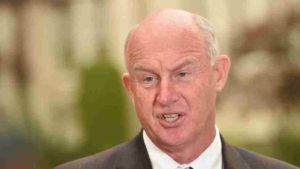

British Columbia Solicitor General Mike Farnworth keeping his powder dry. Buh-bye, Mayor Ken Sim.

Solicitor General Farnworth’s silence thus far = revenge is a dish best served cold.

Stories of a Life | Redux | Marriage For The Better

Megan Jessica Tomlin at age 7 in 1984, black and white photo
Megan Jessica Tomlin, aged 7. Photo credit: Cathy McLean.

When out for a walk in our Kitsilano neighbourhood when Megan was 7 years of age, as we were walking down the street heading towards Jericho Beach, Megan stopped and turned to me, and said in a matter-of-fact and portentous manner, “Dad, when I grow up, I’m going to get married.”

“Good for you,” I said to Megan in response.

As we were nearing McBride Park on that sunny summer 1984 Saturday afternoon, Megan pulled me over to sit on the grass opposite the tennis courts to begin a discourse on her thoughts on marriage …

“I could marry a poor boy, and I would love him, and he would love me, and we would have children together, and be as happy as happy could be every moment of our lives together, for many, many years of wedded bliss, happily raising our children together, all of us loving one another.”

“On the other hand, I could marry a rich boy, someone  I could love with all my heart, and we would have children, and love our children as much as it possible for a parent to love their children — which, if you and mom are any indication as to how much love there is to be given to their children, is a huge love, one of immense and sustaining proportion.”

“Now, if I was to marry the rich boy, and we were to have children together, as we most assuredly would, each of the children would have their own bedroom, and my husband and I would have ours. My children would not want for anything, ever, we could travel, and every day of our lives together would be filled with joy untold, our love for one another carrying us through all of our days, in a life of immense satisfaction and happiness, in comfort and without concern to distract from our lives.”

“Y’know, Dad, if I have a choice, I am going to marry the rich boy.”

Megan’s extemporaneous but thoughtful treatise on marriage was surprising for a number of reasons, the most prominent being that her mother and I were in the midst of an overtly contentious and very ugly divorce and custody battle that had gone on for some years — which both Jude and Megan found themselves precipitously and distressingly in the middle of — so I found it to be a bit more than surprising she would ever want to marry, given what she was experiencing with her own parents, that she had quite obviously given the matter some thought, and how pragmatic she was about whom she might choose to marry, and the — forgive me for saying so, but somewhat mercenary — criteria she had set for her future intended, and the tenor of the married life she felt assured would follow.

Make no mistake, Megan was raised as a feminist and a socialist — at least by me, her mother’s “politics” post marriage reverting to the conservative politics of her parents, and the peers of her distinctly privileged youth.

Over time, Megan and I returned to the topic of her future marriage — still many, many years away — as I took pains to impress upon Megan the necessity of agency, that she should always be true to herself and to her values of compassion and contribution, that love must be a part of her life always, but not if it were to come at the expense of her independence and place in society as a difference maker striving to make ours a better and more just world for all.

From time to time, Cathy would catch wind of my philosophizing and say to me, “Stop lecturing the kids. They don’t like it!”

And Megan?

Yes, Megan married the “rich boy”, the two very happy together, their children perhaps not quite so much (children, as we all know can be, and often are, rebellious, as Megan was with her mother most of the time she was growing up, and as she often was with me — honestly, it’s to be expected), although her children (and her lovely and successful husband, Maz) love her to distraction, Megan in “middle age” quite the sophisticated (if too bourgeoise for my tastes, if I might be so bold as to say so) woman of 46 years of age, her life not having taken the path of her best friend growing up, Kasari Govender (she/her/hers, who took office as B.C.’s first independent Human Rights Commissioner on September 3, 2019), but for Megan, her life still one of meaning and substance, if not quite the degree of societal contribution for which she possesses an unparalleled aptitude.

The History of Musicals | Capturing the Magic of the Stage on the Screen

Movie musicals are often a polarizing topic.

People either love them or hate them, and even those that love them are critical of on-screen adaptations of their favourite stage shows.

In recent years, Hollywood hasn’t had a great track record of adapting musicals from the stage to the screen in a way that works, and many movie musicals in past years have been criticized for not having that certain something that makes the onstage musicals feel so special and unique.

That was the case until three years ago, 2021, which apparently became the year when Hollywood figured out how to make a good movie musical.

As the musicals that were made that year were, sadly, not big box office hits, nor successful streaming, movie musicals have once again faded from our screens, both in our local multiplex, and on Netflix and other streaming platforms.

Still and all, if you love musicals, you can still take heart with the rich and glorious history of the musical, in whatever form it has taken cinematically.

Regardless of their box office success, there were there a great many 2021 musicals that were Oscar nominated — In The Heights, Dear Evan Hansen, tick, tick…BOOM!, West Side Story, and even Encanto (which wasn’t derived from a stage play). For the most part, they were well executed, and loved by critics, if not by a mass, anticipatory audience.

For the past century, the Hollywood musical has been recognized as a distinguished part of our movie history, playing an integral role in the evolution of movies during the 1920s through 1950s, til now.

It wasn’t until 1927 that Warner Brothers first introduced to the big screen singing along with sound in their release of The Jazz Singer; a remake of the Broadway musical of the same name.

The late 1920s brought difficult economic times, and a worldwide Depression.

It was during this time that Hollywood came to the public’s rescue with the dynamically entertaining diversion of the Hollywood musical.

Hollywood studios began to release a plethora of musicals which offered the movie-going public a chance to temporarily escape from the dire economic issues that had the world in its grip.

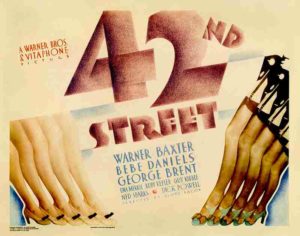
In the 1930s, with Warner Brothers’ acquisition of choreographer Busby Berkeley, the musical genre was truly born with the release of popular musicals like 42nd Street, Bright Lights, and Gold Diggers.

Capping the decade was 1939’s The Wizard of Oz, still one of the classic musicals that continues to entertain audiences today.

It was during the 1940s that the Hollywood musical really came of age, and the popularity of the movie musical continued right through the 1950s.

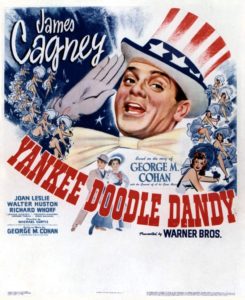
One of the more popular 1940s musicals was Yankee Doodle Dandy, a film that introduced movie lovers to a young James Cagney who gave a performance that earned him an Oscar. Another popular 1940s title, long a holiday tradition, is The Bells of St. Mary’s.

Metro-Goldwyn-Mayer embraced old-fashioned musical films in the ’40s and ’50s, furthering the boundaries of the musicals, with stars like Judy Garland, Fred Astaire and Mickey Rooney leading the way.

Starting with Meet Me in St. Louis (Vincent Minnelli, 1944), MGM began producing some of the most popular films of the era, including Easter Parade (Walters, 1948), An American in Paris (Minnelli, 1951), and Singin’ in the Rain (Kelly and Donen, 1952).

Marilyn Monroe brought a new element to the musical movie during the 1950’s.

This was also the time to bring Broadway to film in movies such as Oklahoma! and Guys and Dolls.

Elvis also started to make the big screen his home, which many believe signalled the beginning of the end for the genre.

Through the 1960s, though, the adaptation of stage material for the screen remained a predominant trend in Hollywood. West Side Story, My Fair Lady, The Sound of Music, and Oliver! were all adapted from Broadway hits and each won the Academy Award for Best Picture.

The genre changed slightly during the 1970’s, where in some cases, such as Saturday Night Fever and Tommy, the stars were not the singers. The movie plot was being driven by song, but in a pre-recorded way.

There were a few musicals to note in the ’80s, like Annie and Purple Rain, but for the most part, the entire genre had changed to musicians supplying the music.

With the arrival of the early 1990s, one of the more successful modern-day musical movements emerged: Disney’s animated musical blockbusters, including such films as The Little Mermaid, Aladdin and The Lion King, all released in rapid succession, amassing an enormous fan base along the way.

In 2000, let us not forget the Coen Brothers’ O Brother, Where Are Thou?

Although the animated musical film has become a popular route for the genre in recent years, the success of musicals like Chicago, Rent, Sweeney Todd, and Les Misérables seems to indicate that large scale, live action musical productions are still very much relevant to film today.

In 2006: John Carney’s début film, Once, with Glen Hansard and Markéta Irglová.

In 2017, three musicals were nominated for Best Motion Picture – Musical or Comedy at the Golden Globes: Florence Foster Jenkins, La La Land, and Sing Street, with La La Land taking home the award (well, sort of).

Although musicals might not necessarily find success in terms of receiving the most awards recognition, they are nonetheless popular and enjoyed by audiences.

Once upon a time, huge, spectacle musicals were the backbone of Hollywood.

The pandemic year of 2021 offered Hollywood a chance to return to the glory days of the 1930s Depression era musical, allowing audiences to reacquire a taste for the musical, to help lift of us out of the malaise that had us in its grip.

The Hollywood musical has always offered viewers a page out of movie history, memories that will forever be captured on film, and musical films that will continue to be enjoyed by audiences around the world.


#VanPoli | The Parlous State of Politics in Our Little Burgh by the Sea


Sam Sullivan, one-term Mayor of Vancouver, 2005 – 2008

On Friday, June 29, 2006, without prior notice, Non-Partisan Association Mayor of Vancouver Sam Sullivan fired all the members of the Board of Variance.

The announcement firing all five members of the Board was made late on the Friday afternoon, in a press release emanating from the Mayor’s office.

The decision to fire the five members of the Board of Variance was contrary to the advice of former Non-Partisan Association Councillor George Puil, who the Mayor and NPA Councillor Peter Ladner had called in to “investigate” the Board, with Mr. Puil reporting back following his exhaustive six month investigation of the Board.

In his report to the Mayor and Councillor Ladner, Mr. Puil told Mayor Sam Sullivan and Councillor Peter Ladner that he had found no wrong-doing on the part of the Board of Variance members and, in fact, in his discussion with dozens of citizens of the community who had appeared before the Board with their appeal of a decision of the City of Vancouver’s Development Services and Planning Departments — citizens ranging from homeowners and members of the community, to developers — they had found the Board to be a fair and thoughftul body, adjudicating the appeals that were brought before the Board with a seriousness of purpose and intent.

Mr. Puil strongly advised Mayor Sullivan and Mr. Ladner against firing the Board.

“Let them finish out their term,” Mr. Puil advised. “The terms of Board members Terry Martin and Jan Pierce will end later this year or early next, with Raymond Tomlin’s term to be completed not too long after, with Quincey Kirschner and Tony Tang’s tenure on the Board to be completed before the next election.

Allow the current members of the Board of Variance to finish out their terms,” Mr. Puil intoned, “and replace them with stalwart members of the NPA to three-year terms on the Board, and should Vision Vancouver gain victory at the polls in 2008, our people will be in place on the Board, which means, we win.


Peter Ladner, Non-Partisan Association Vancouver City Councillor, 2008, NPA Mayoralty candidate

NPA Councillor Peter Ladner maintained the members of the Board were fired because they had “refused to bring legal and administrative spending under control,” to which accusation fired Board Chairperson Terry Martin responded …

“Legal and administrative fees were never discussed with city officials. In fact, the Board had cut its administrative costs by $8,500,” said Mr. Martin, in an interview with CBC Vancouver.

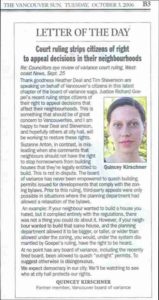
At 6pm on the Friday evening, each of four of the members of the Board of Variance — Terry Martin, Jan Pierce, Raymond Tomlin and Tony Tang — received a hand-delivered letter from the City advising them of the termination of their work on the City’s Board of Variance. Board member Quincey Kirschner (pictured above), 27, had moved recently, and did not receive the letter of termination. Ms. Kirschner was otherwise unavailable on the Friday night. Raymond Tomlin was assigned the task of calling Ms. Kirschner on Saturday morning to advise her of the termination of her work on the Board of Variance.

When contacted on the Saturday morning at 9 a.m., still in bed and groggy, after a night out on the town, Ms. Kirschner was informed by Mr. Tomlin of her “sacking” (as it was referred to in the press).

Ms. Kirschner cried for an extended period of time, and was inconsolable.

Ms. Kirschner had poured her life blood, her passion, her integrity and immense dedication into her work on Vancouver’s Board of Variance, following her appointment as a Board member in late 2005, spending hours each week pouring over the six-inch thick binders Board members received each Thursday or Friday afternoon, and informing herself of the intricacies of development, planning, zoning and community consultation on planning and development and decisions.

Background and history. In the 1950s, by an order of the U.S. and Canadian Supreme Courts, Boards of Variance were created in all communities across the North American continent, communites with 10,000 or more citizens, as independent, lay bodies, protective of and advocates for the community interest, these lay bodies responsible for overseeing all development in the city that did not conform with City zoning bylaws, or in the case of new construction were overheight, lacked the property frontage, where shadowing impinged on a neighbour’s property, or were not otherwise outright approvals of the City’s Planning and Development Services departments — ranging from simple home renovations, to the construction of high-rise towers in their communities, the Board of Variance responsible for hearing appeals from the public on all such related matters.

The arrogance displayed by Mayor Sam Sullivan in his unprecented firing of the members of the Board of Variance, and other matters of misjudgment eventually led to internal dissension in the majority Non-Partisan Association caucus on Vancouver City Council, which in 2008 resulted in Mr. Sullivan being denied the opportunity  to run for re-election that year. Councillor Peter Ladner was chosen as the Non-Partisan Association Mayoral candidate, instead, in 2008.

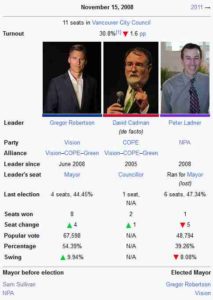
On November 15, 2008, the Non-Partisan Association was all but wiped out at the polls, losing the Mayor’s chair and four seats on Council, losing to novice Vision Vancouver Mayor Gregor Robertson by nearly 20,000 votes, Vision Vancouver securing seven Council seats, giving the party a “super majority” on Vancouver City Council, allowing them to pass budgets and conduct the affairs of government without input from the three-member (two COPE, David Cadman, and Ellen Woodsworth; one NPA, Suzanne Anton) opposition on Vancouver City Council.


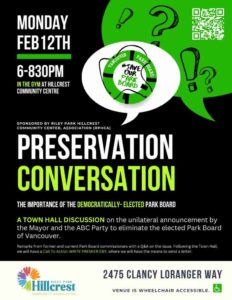
There is a correlation between one-term Non-Partisan Association Mayor Sam Sullivan, and current and certain-to-be one -term ABC Vancouver Mayor Ken Sim, a topic VanRamblings will explore in depth this upcoming Monday, February 12th.