Sundance 2024 | Nostalgia Loomed Large in Park City

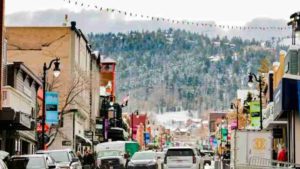
There were a smattering of big sales and buzzy premières at this year’s 40th edition of the Sundance Film Festival, held each January since 1984 in Park City, Utah.

Even so, it’s impossible to ignore the fact that the independent film business Sundance has so long championed is suffering from an identity crisis.

The box office for art-house movies has yet to regain its pre-COVID stride.

Desperate for content, streaming services once paid inflated prices for films débuting at Sundance . Now they’re conservative in their spending.

In this era of economizing, the all-night bidding wars that made Sundance sizzle are a thing of the past, not a great sign of the financial health of the industry.

Yet there was still plenty to celebrate.

Movies like Super/Man: The Christopher Reeve Story and Will & Harper received emotional standing ovations, while A Real Pain and It’s What’s Inside defied the odds to score multimillion-dollar deals.

As it enters its fifth decade, Sundance hasn’t lost its ability to excite audiences.

But, clearly, Sundance needs to make adjustments to the way it conducts itself in order to keep up with the changing times, if the indie festival is going to survive.
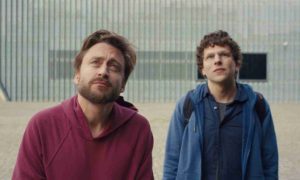
Actor / Oscar nominee, first time director Jesse Eisenberg and Kieran Culkin star in A Real Pain

A Real Pain, starring Jesse Eisenberg and Kieran Culkin as cousins who travel to their grandmother’s native Poland to partake in a Holocaust tour, scored rave reviews and won the Waldo Salt Screenwriting Award for Eisenberg, the film picked up by Searchlight for a whopping $10 million early on in the Festival. A Real Pain will receive a theatrical release later this year, and may be Oscar bound next year.
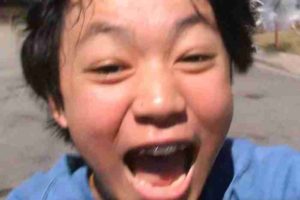
Focus Features snatched up Sundance favourite Dìdi, directed by Academy Award nominee Sean Wang, the film telling the story of a 13-year-old Taiwanese American boy (Izaac Wang) who spends his last summer before high school learning how to flirt, skate, and get along with his mom (Joan Chen). Dìdi, set in 2008, won Sundance’s Audience Award and the Special Jury Prize drama award.
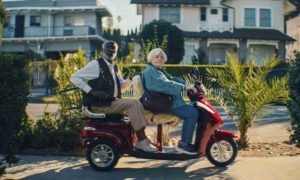
Richard Roundtree and June Squibb star in director Josh Margolin’s ode to his grandma, Thelma

Magnolia Pictures snagged the elderly-buddy comedy Thelma, the tale of a 93-year-old grandma (June Squibb) who endures a harrowing journey across Los Angeles after she’s conned by a phone scammer pretending to be her grandson (Fred Hechinger). The film also stars Richard Roundtree as her companion, as the two seeking retribution. Parker Posey, Clark Gregg, and Malcolm McDowell co-star.

The documentary Super/Man: The Christopher Reeve Story, which sold for $15 million to Warner Bros. Discovery, follows Christopher Reeve on how he found his life’s purpose after he suffered from an equestrian accident that left him paralyzed.
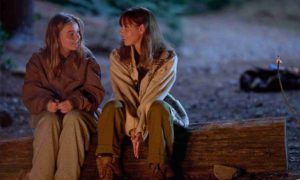
Maisy Stella and Aubrey Plaza star in Canadian director Megan Park’s new film, My Old Ass

Director Megan Park’s My Old Ass will head directly to Amazon’s Prime Video this spring, the film telling the story of high-school senior (Maisy Stella), who meets the adult version of herself (Aubrey Plaza) right before she heads off to college.
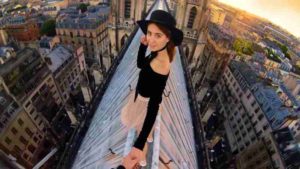
Skywalkers: A Love Story, directed by Jeff Zimbalist, was acquired by Netflix. The documentary follows Angela Nikolau and Ivan Beerkus, a couple from Moscow, who saved their careers and relationship by climbing really tall buildings, specifically the world’s last super skyscraper, to perform an acrobatic stunt.

The Will Ferrell documentary Will & Harper was also picked up by Netflix, the road trip film about two Saturday Night Live alumni, Ferrell and former SNL head writer Harper Steele, who reconnect after Steele comes out as a trans woman. The duo set out together for a cross-country trip, during which they talk in depth about their friendship and the experience of being trans in America.

Sundance hasn’t been a Festival that’s been synonymous with Academy Awards attention, though recent iterations have churned out Oscar favourites like Best Picture winner CODA, Lee Isaac Chung’s semi-autobiographical Minari, and Korean-Canadian director Celine Song’s wistful dramatic début, Past Lives.

Although A Real Pain and Super/Man were critically embraced, there’s a question as to whether they have enough buzz to stay in the conversation until next year.

What Sundance may have lacked in stature this year, it made up for in scares.

Steven Soderbergh’s twisty thriller Presence, which Vulture critic Bilge Ebiri wrote is “the best thing Soderbergh’s done in ages,” is a haunted-house movie seen through the eyes of the ghost. Neon picked up the film’s distribution rights.

Zombie slasher movie In a Violent Nature and other movies about things that go bump in the night were all the rage in Park City.

It’s What’s Inside, a horror story about a pre-wedding party from hell, landed at Netflix in a massive $17 million sale. Along with the haunted psychodrama I Saw the TV Glow — which arrived at Sundance having secured theatrical distribution from A24 — both films became this year’s conversation starters on Main Street.
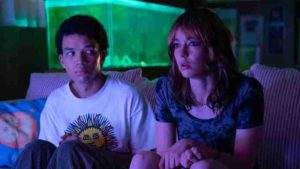

Justice Smith and Brigette Lundy-Paine star in writer-director Jane Schoenbrun’s I Saw the TV Glow

Nothing beats a good fright.
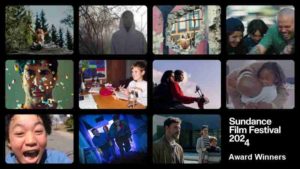
In the Summers, an independent film about two sisters navigating fraught summer visits with their father, won the Grand Jury Prize at this year’s Festival, as well as Best Director for Alessandra Lacorazza.

Shuchi Talati’s début feature, Girls Will Be Girls, about a mother’s intervention in her teenage daughter’s budding romance that creates an unexpected emotional love triangle, landed the Audience Award for World Cinema, as well as the World Cinema Dramatic Special Jury Award for Acting, for Preeti Panigrahi.

Porcelain War landed the award for U.S. Documentary Grand Jury Prize for Brendan Bellomo and Slava Leontyev, the film an intimate reflection on making art in wartime Ukraine.

The U.S. Documentary directing award was awarded to Julian Brave NoiseCat and Emily Kassie for Sugarcane, an enlightening and infuriating look into systematic abuse at an Indian Residential School.
The World Cinema Documentary directing award went to Benjamin Ree for Ibelin, which focuses on Norwegian gamer Mats Steen. Steen’s parents mourned what they thought had been a lonely and isolated life after their son died of a rare, degenerative muscular disease at age 25. They later received messages from online friends all around the world who knew Steen for his beloved World of Warcraft avatar, Ibelin Redmoore.

All the films mentioned in today’s VanRamblings column will find their way onto your local multiplex screen at some point this year, or are scheduled to air on Netflix, Prime Video or another streamer.

#Tech | CES 2024 | Cutting-Edge Products, TVs, Rabbit R1, and More


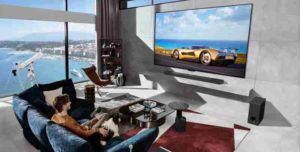
Top left: Rabbit R1 | Bottom: 2024’s LG OLED TV are transparent TV sets you can see — and see through.

Year after year, the annual Consumer Electronics Show held in Las Vegas each January brings with it all sorts of amazing demos, gizmos and hi-tech concepts that you won’t be available to buy for years, if ever.

But if you’re looking to snag some fabulous and futuristic products from CES 2024, don’t fret. In today’s Tech column, VanRamblings has gathered a few cool gadgets you can purchase right now, or put a dent in your bank balance very soon.

CES 2024 Best in Show | Best TV | LG OLED M4 | $3400

When it comes to innovative or life-changing new tech, it takes a lot to be the best of the best. Today we’ll provide some insight into the products that emerged out of CES we think have the power to improve everyday life.

LG’s 2024 OLED TVs come with upgraded AI upscaling utilizing precise pixel-level image analysis, that effectively sharpen objects that may appear blurry.

All driven by the discerning judgment of the AI itself, LG’s signature OLED M4 TV delivers a clearer, more vibrant viewing experience. An ingenious artificial intelligence (AI) processor adeptly refines colours by analyzing frequently used shades that best convey the mood and emotional elements intended by filmmakers and content creators. Dynamic Tone Mapping Pro splits pictures into blocks and fine-tunes brightness and contrast by analyzing variations in brightness where light enters the scene, creating images that look more three-dimensional.

In addition to its 97″, 83″ and 77″ models there’s a more normal-size 65-inch LG OLED M4 version that could actually fit into your home — and cost less, too.

VanRamblings bought CES 2023’s Best in Show Samsung NeoQLED Tizen Smart TV on Black Friday. Priced at $2999 last March, we picked it up for only $1250!

CES 2024 Best in Show | Best Gadget | Rabbit R1 | $199

Set to become all the rage among the tech-forward crowd later this year, and predicted to catch on with the tech-oriented general public soon after, the Rabbit R1 is a lot like a phone in terms of its looks, and in some of its features: it has a camera and a SIM card slot, and it supports Wi-Fi and Bluetooth. What’s different, and what makes the Rabbit R1 special, is the interface: instead of a grid of apps, you get an AI assistant that talks to your favorite apps and does everything for you.

For example, you could get the R1 to research a holiday destination & book flights to it, or queue up a playlist of your favourite music, or book you an Uber. In theory, you can do almost anything you can already do on your phone, just by asking.

We’ve seen next-gen personal assistants depicted in movies like Her, and the R1 is trying to make that a reality — leveraging the latest AI capabilities to replace the traditional smartphone interface with something a lot more intuitive.

CES 2024 Best in Show | Gaming Device | XREAL Air 2 AR glasses | $489


The XREAL Air 2 Ultra AR glasses offer the most advanced augmented reality wearable experience from the brand to date with hand and head tracking meeting spatial anchoring across a full 6DoF (six degrees of freedom).

Augmented reality (AR), mixed reality (MR), extended-reality (XR), whatever you want to call it, 2024 is lining up to be a big year for this tech with the popularity of the Meta Quest 3 expanding and Apple’s release of its Vision Pro headset.

CES 2024 Best in Show | Bemis BB-1200 Bidet Toilet | $399

If you’re less about TVs and AI, and more about something weird (and potentially practical), then there’s always the new Bemis BB-1200 Bidet Toilet. That’s right, it’s a smart toilet seat, capable of supplying unlimited warm water, a heated seat, air dryer alongside a remote and smartphone app to control it all.

You can really control everything from nozzle position to water pressure and seat temperature. There are even two user pre-sets so your preferences are saved and ready to go when you need it most. It sounds silly, but if it makes your bathroom experience a little more comfortable (especially in the cold winter months), then you shouldn’t dismiss it quite so easily.

The BB-1200 will be available this spring, and will set you back $399. Just make sure your bathroom has an outlet near the toilet to power everything.

CES 2024 Best in Show | Best Home Product | Family Hub+ | $2499

Samsung has gone all-in on artificial intelligence across its phones and home appliances. This includes a new AI Family Hub+ technology that is designed to bring together different appliances.

It is initially being built into the new Bespoke 4-door flex refrigerator, unveiled at CES 2024. This includes internal cameras and AI vision capable of identifying individual food items. It can then suggest recipes based on what you have in stock.

CES 2024 Best in Show | Roborock Zeo One | $1699

The Roborock Zeo One is an all-in-one washer / dryer combo machine that pulls double duty. It’s part of a relatively new breed of laundry combo machines that are just beginning to proliferate. Needless to say, the concept is compelling: you pile a load of laundry into a single machine where it’s washed and dried. But the Zeo One adds even more innovation to the mix.

A favourite feature: smart dosing. Instead of adding detergent and fabric softener with each load, you can fill the reservoirs and go for months without worrying about adding anything to your laundry.

The Zeo One also dries clothes using much less heat than a conventional dryer.
The Zeo-cycle drying system uses a large honeycomb-shaped disc with more than 20,000 holes to absorb moisture, using sensors and an AI algorithm to monitor the drying system more than 100 times per minute. By keeping the heat low, the Roborock Zeo One prevents damage to delicate garments like wool sweaters.

The Zeo One even collects lint and disposes of it automatically through a water line, so you never have to clear a lint trap.

CES 2024 Best in Show | Health Device | BeamO | $249

Withings’ BeamO might be the only health checkup device you need in your home, a first-of-its-kind 4-in-1 health checkup device meant to replace four essentials that should be in every home, combining an ECG, pulse oximeter, stethoscope, and thermometer into a single compact device. With it, you can monitor your heart and lung health, as well as your temperature.

There are those in the medical profession who believe the BeamO will revolutionize the measurement of the core vitals carried out during medical visits from the comfort of one’s own home. This crucial data will provide a vital overview of overall health or warning signs of potential areas of concern. Instead of measuring these stats a couple of times a year in a clinical setting, it will be possible to assess them every day. BeamO will be the thermometer of the future, providing the ability to assess temperature and observe the state of the heart and lungs.

Of course, a parent can also use the device to perform a checkup on a child.

In the future, the company says the BeamO will detect signs of infection and even possible cardiovascular issues such as atrial fibrillation (AfiB).

The Withings BeamO will be released this coming June, and will retail for $249.

#VanPoli | Movements Build Slowly, Inexorably


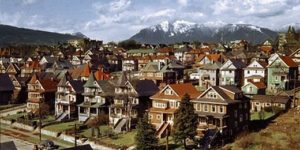
Vancouver’s West End in the 1960s, a comfortable family neighbourhood next to Stanley Park

In the 1960s, when Vancouver was still very much a village rather than the thriving metropolis we know it to be today, in those near soporific, pre-movement times, rare was the occasion when the citizens of our fine city got up on their hind legs to protest the status quo or what seemed like the inevitable, as wealthy old men of circumstance wrought change unchallenged, untrammelled by reflection.


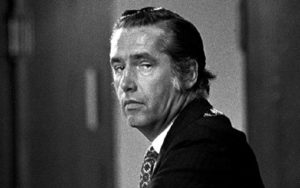
Tom ‘Not So Terrific’ Campbell, controversial Vancouver Mayor, in office from 1966 to 1972

Such was the case in 1971, when Vancouver Mayor Tom Campbell and his Non-Partisan Association Council cohorts decided that the time had come to develop the Coal Harbour site at the entrance to Stanley Park, cherished green space of long duration, but not much longer if Mr. Campbell — and the provincial government, led by 17-years-in-power Socred Premier W.A.C. Bennett — had their way.

The Coal Harbour site, owned by Harbour Park Developments, a politically connected local group with strong ties to the Non-Partisan Association, developer Tom Campbell — who in 1966 ran for Mayor as an independent, and won — and the Socred government, first unveiled their development plans in 1965.

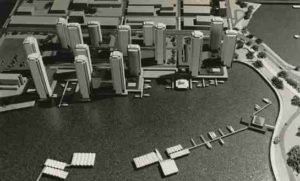
The Four Seasons Hotel chain came forward in 1965 with a $40-million development plan on the Coal Harbour waterfront. The initial plan would house 3,000 people in three 30-storey buildings, including a 13-storey hotel and townhouses.

Over time, the development plan was expanded into an unheard of at the time $55-million massive multi-tower plan, with 15 apartment towers, ranging from 15 to 31 storeys set to be constructed on the then green space, a veritable high-rise forest along the Georgia Street causeway entrance to Stanley Park.

As you might well expect, the massive tower development plan for the 14-acre Coal Harbour waterfront site turned into a contentious issue that lasted for years and years, causing increasing numbers of people to rise up in adversarial opposition. The public wanted the site preserved as green space. Developers, Tom Campbell, the Non-Partisan Association, and the Social Credit government had other ideas.

Each week, for years, the community rose up in high dudgeon.

After all, the West End at the time was a single family dwelling neighbourhood, the tallest structure in Vancouver was the Marine Building on Burrard Street.

In 1966, each weekend for the first couple of months, a rag tag group of community activists — who came to include a young storefront lawyer, Mike Harcourt, and Darlene Marzari, an employee of the City — protested on the deserted site. Over time, their numbers grew to five hundred, and then a thousand, rising up in protest and stark and strident opposition to development plans for the cherished green space.


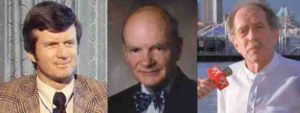
Vancouver City Councillor and then Mayor, Art Phillips; Councillors Walter Hardwick and Harry Rankin

In 1968, a reform-minded Art Phillips and his friend, Walter Hardwick — an Urban Planning professor at UBC, and a community leader whose work would come to shape the city and Metro Vancouver region — ran for Vancouver City Council under the banner of a civic party they had created, The Electors’ Action Movement (TEAM), securing two seats on City Council, joining a young lawyer by the name of Harry Rankin, who had been elected to Council in 1966, sitting in sole opposition to the developer-friendly Non-Partisan Association City Council of the day.

Throughout their campaign for office in 1968, both Art Phillips and Dr. Hardwick stated their clear opposition to the Harbour Parks Development / Four Seasons plan for the green space at the entrance to Stanley Park, standing with the community, and with Vancouver City Councillor Harry Rankin. Would community opposition to the Coal Harbour development plan, in ever increasing numbers, carry the day?

Only the continued opposition of Vancouver citizens could and would tell the tale.


A model of the Harbour Park Developments proposal for the entrance to Stanley Park. The $55-million development would have constructed 15 high-rise towers. Photo: Selwyn Pullan / PostMedia

By the early spring of 1971, hundreds of community activists gathered each weekend on the Coal Harbour site at the entrance to Stanley Park, in protest.


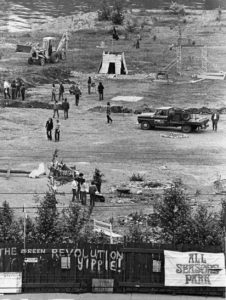
June 7, 1971. All Seasons Park after squatters reclaimed the site. Photo credit: Vancouver Sun

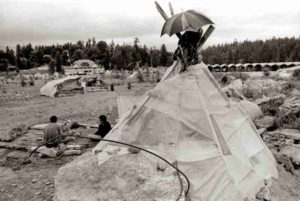
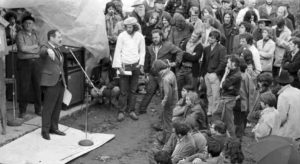
On May 29th, 1971, seventy community activists (hippies they were called by the press) took matters into their own hands, ripping down a fence surrounding the site, storming onto the Coal Harbour waterfront site to plant maple trees, setting up a camp of tents and ramshackle huts, the protest squat sustaining for a year, each subsequent weekend joined by hundreds and hundreds of concerned, mostly young, Vancouver citizens, at what was now called All Seasons Park.


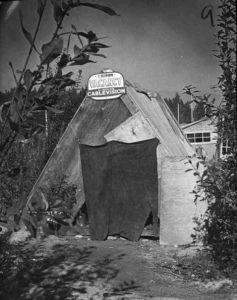
September 23, 1971. An A-frame squatter’s shack in All Seasons Park. Photo: Ross Kenward / PostMedia

In early 1972, bowing to public pressure, a combative Tom Campbell announced there would be a plebiscite on the Four Seasons development, but that only property owners could vote.

This was roundly denounced at a public meeting on June 21, when urban planner Setty Pendakur dubbed the project “the biggest abortion in the history of development in Canada.” Pendakur said the development would create traffic chaos at the entrance to Stanley Park, that Council was confusing people with its plebiscite.

Property owners voted to reject the Four Seasons proposal by 51%. Then the federal government stepped in. On February 10, 1972, Pierre Elliot Trudeau’s government killed the proposal by withholding the transfer of a crucial water lot.


1972.  Alderman Harry Rankin talking to activists at All Seasons Park. Photo: Gord Croucher / PostMedia

With a new Mayor and majority progressive T.E.A.M. (The Electors’ Action Movement) Council voted into office in 1972 by a public eager for change, led by Mayor Art Phillips, with Walter Hardwick, Darlene Marzari, Mike Harcourt and Setty Pendakur securing seats on, perhaps, Vancouver’s most progressive Council ever, in November 1973, the City of Vancouver bought the entire site for $6.4 million.

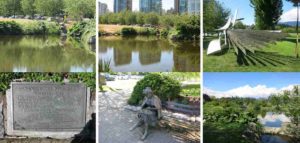
The green space at the entrance to Stanley Park is now known as Devonian Harbour Park, but for some of us, it will always be All Seasons Park.


Some historical source material for this article provided by Vancouver Sun reporter John Mackie.


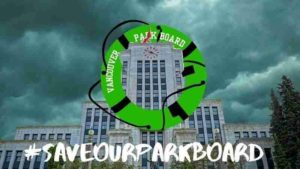
There is a correlation to be drawn between the movement leading to the defeat years ago of the Harbour Park Development project at the entrance to Stanley Park — championed by the City Council of the day — and the movement opposition of, now, 200 informed citizens (and more) who gathered at City Hall two weeks ago, and again this past Monday evening to state their opposition to the initiative of the Ken Sim-led ABC Vancouver City Council to eliminate Vancouver’s cherished, 135-year-old, independent and elected Board of Parks and Recreation.

Movements start off small, with generally only a few of our better informed citizens coming to the fore to state their opposition.

As time passes, more of our citizens become informed, inform themselves, taking the power to change for the better into their own hands, to rise up for the better, to work in common cause with friends and neighbours who share their concern to, in time, elect a more democratically-minded local government committed to the livability of our beloved city.

#SaveOurParkBoard | A Preservation Conversation

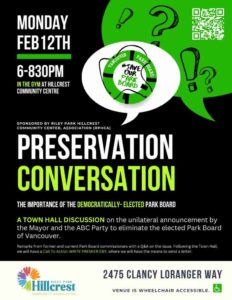
On Monday evening, February 12th, 2024, approximately 100 citizens tried-and-true, almost to a person strong advocates for the preservation of Vancouver’s cherished 135-year-old independent, elected Vancouver Park Board met together.

Why do we say almost to a person?

Because at meeting’s outset, a group of “concerned citizens” were present, who did their best to hijack the meeting, to push their agenda that take our present Park Board to task for failing to “save the trees in Stanley Park.” A righteous cause, for sure (or, perhaps not) but not the reason why the 100, or so, people meeting in the Hillcrest Community Centre gym on Monday evening had gathered together in common cause, which is to say: save Vancouver’s much cherished and beloved 135-year-old independent, elected Board of Parks and Recreation.

The video above pretty much presents the highlights of Monday night’s phenomenally moving meeting of a sterling group of Vancouver’s finest, most activist citizens, persons possessed of uncommon wit and intelligence, heart and conscience, committed to a social democracy that champions the community, the hope of our present and our future, folks who could just as easily stayed at home, but instead gathered in common cause to work together to preserve our elected Park Board.

Terri Clark, in charge of Park Board communications from 1973-2008, was present, as was Erin Shum, a past Park Board Commissioner (and one of our very favourites), in the city, traveling from her home in the Okanagan, and Jerry Fast, the President of the Kitsilano Community Centre — to whom we owe a thousand apologies — as well as former Killarney Community Centre President Ainslee Kwan (another one of our very favourites), and someone who we’ve been asked not to write about — cuz she’s in the employ of the City, and no one, we mean no one (except maybe a dastardly few in the administration and employ of Mayor Ken Sim … hey, it’s politics, and the current folks at City Hall, like many folks in past civic administrations, play hard ball) wants to see this fine woman of character, intelligence and passion for our city have her employment with the City jeopardized.

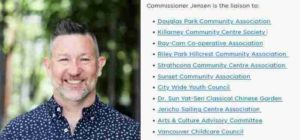
Of course, Scott Jensencurrent Vice-Chair of Park Board — was present.

One wonders if Mr. Jensen ever thought for a moment — when a couple of years back, then ABC Vancouver candidate for Mayor Ken Sim asked him to run for Vancouver Park Board on his party’s slate — whether a couple of years on he’d find himself in the midst of a trying political maelstrom that rather than lead to an enhanced quality of life instead has changed his focus, such that too much of his energy is being directed away from his family, his satisfying career of contribution as an educator, and his very important work as a Park Board Commissioner.

Still, as a nascent #SaveOurParkBoard movement begins to burgeon, how can one not take heart that we are together a small but sturdy group of activists working collectively in common cause, part of a salutary movement for the ages in our little burgh by the sea, destined to be recorded in the history books as a grassroots democratic movement the likes of which we’ve not seen in Vancouver in decades.

Fills one with hope for a better, more democratic and more community-minded city.