
#BCPoli | The Uncommon, Remarkable Genius of Dimitri Pantazopoulos


Dimitri Pantazopoulos, President @ Yorkville Strategies, Inc. | Partner @ Maple Leaf Strategies

Dimitri Pantazopoulos could very well play a determinative role in the outcome of the 2024 British Columbia provincial election.

Should John Rustad’s fledgling B.C. Conservative Party emerge victorious late on the evening of Saturday, October 19th, such an outcome will arise in part from the genius organizing skills of Mr. Pantazopoulos, the pollster / de facto co-campaign manager for the upstart, recently revived British Columbia political party.

Dating back to 2004, Dimitri Pantazopoulos was Conservative Party leader Stephen Harper’s pollster, a role he played through until the defeat of the Harper government in 2015. Mr. Pantazopoulos remains to this day the definitive pollster for Pierre Poilievre’s — certain to be government in 2025 — federal Conservative party.
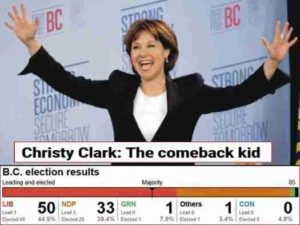
When it comes to British Columbia, Dimitri Pantazopoulos’ myth-making claim to fame arises from B.C. Liberal Premier Christy Clark’s come from behind victory at the polls on Monday, May 13, 2013, in that year’s all-important provincial election.

When Dimitri Pantazopoulos arrived in British Columbia in early 2013, from his home in Ottawa, to survey the political scene in our province on behalf of the B.C. Liberal party, Mr. Pantazopoulos and his crack team from Maple Leaf Strategies set about to conduct intensive polling in the, then, 84 provincial ridings that comprised British Columbia’s tumultuous, voter capricious political landscape.

At the time, an unpopular Premier Christy Clark was mired at 26% in the polls, while newly-minted B.C. New Democratic Party leader Adrian Dix was riding a wave of unprecedented popularity, registering 49% support from British Columbia residents, an electorate eager for change, ready to make Mr. Dix B.C.’s 35th Premier.

In late mid-March 2013, a confident, ebullient Dimitri Pantazopoulos told the Premier, B.C. Liberal campaign manager Mike McDonald, and top B.C. Liberal fundraiser, Bob Rennie that the election could not only be won by Premier Clark, but that she could secure a majority government early in the evening of May 13th.

To say that Premier Clark, Mike McDonald and Bob Rennie were incredulous upon hearing what Mr. Pantazopoulos had to say would be to understate the matter.

Here’s what Dimitri Pantazopoulos told the political trio of disbelieving doubters.

“Having surveyed the province, my team and I believe that the B.C. Liberal party could win 50 seats on election night. We’ve identified those 50 seats. The remaining 34 ridings are write-offs, and represent unwinnable NDP strongholds into which the B.C. Liberals, although you may nominate candidates in those ridings, should not put one plug nickel into supporting the B.C. Liberal candidates running in those ridings.

On the other hand, in the 50 winnable ridings for the B.C. Liberal party, you’ll want to pour all of your resources into those ridings. Maple Leaf Strategies will conduct nightly polling in those 50 ridings, and “meet” with the candidates in those ridings each morning to advise them of the issues — identified in our nightly polling in the riding — that should be the focus of their activity and public pronouncements that day. I guarantee, should the B.C. Liberal party move forward on my recommendation, the party will secure victory in each of those ridings, as we run a hyper-local campaign for office in 2013.”

Premier Clark, Mike McDonald and Bob Rennie thought that Mr. Pantazopoulos had lost his marbles — but what did they have to lose in adopting Dimitri’s electoral strategy? Defeat seemed almost certain at that point. Dimitri Pantazopoulos offered the doleful B.C. Liberal election team a ray of hope that the party would not be wiped out at the polls, as unconvinced as they remained of the prospect of victory at the polls two months hence.


Premier Christy Clark, grinning like the chesire cat that both got the cream, and swallowed the canary

Premier Christy Clark did, indeed, emerge victorious with a comfortable majority government on May 13, 2013 thrilling the Premier, her campaign manager and major fundraiser. Dimitri Pantazopoulos had been right and there was untold joy at B.C. Liberal election headquarters that night.


Conservative Party of British Columbia leader John Rustad. Soon to be 38th Premier of our province?

In 2024, Dimitri Pantazopoulos has returned to British Columbia with a vengeance, working overtime to a secure victory for the band of untested newbies running for office with the embryonic, nascently inchoate British Columbia Conservative party.

Nine years on, Mr. Pantazopoulos and his team have identified 55 winnable ridings for the B.C. Conservatives, a number that may rise now that B.C. United has folded into the B.C. Conservative party. The fly in the ointment in 2024, though? The B.C. Conservative Party is woefully underfunded, having raised a paltry three million dollars, a fraction of the $26 million with which Premier David Eby’s New Democratic Party of British Columbia will fight the upcoming provincial election.

In some measure, the success of the B.C. Liberal campaign in 2013 was due to the 30-second game changing ads that ran incessantly, multiple times during the Global BC, CTV Vancouver and CBC morning, noon, 5pm, 6pm and 11pm newscasts — not to mention, every radio station across the province — that cast Adrian Dix as an ineffectual flip flopper, and a poor choice for Premier of the province. Add to that two botched debates by the NDP leader.

Taking into consideration Dimitri Pantazopoulos’ game plan, together with the devastatingly effective campaign ads run again Mr. Dix, and the poor debate performances by the NDP leader, spelled electoral doom for Adrian Dix’s New Democratic Party, which lost and lost badly to Christy Clark’s B.C. Liberals.

Underfunded or not, Dimitri Pantazopoulos and his team believe a victory for John Rustad’s B.C. Conservative party a near certainty — not, of course, if Premier David Eby’s BC NDP have anything to say about the matter. And they do, and they will.

All said, the wind is at the back of British Columbia’s provincial Conservative party, as they ride the wave of popularity that federal Conservative Party leader Pierre Poilievre currently enjoys in all parts of British Columbia, and across Canada.

Add to that, members of the election teams that helped secure victory for Conservative Premier Tim Houston in Nova Scotia, a second term for Ontario Premier Doug Ford, and last year a surprise victory for far-right-of-centre Alberta Premier Danielle Smith, the outcome of British Columbia’s upcoming election — our provincial election officially gets underway on Saturday, September 21st — may be far from certain, but given, as well, that the B.C. Conservatives, apart from the controversy that some of their soon-to-be-former candidates caused, could win it all on Saturday, October 19th, and form the next government.


Two fine B.C. Conservative candidates, one of whom we’ll endorse, the other who we like very much

Wednesday and Thursday on VanRamblings, we’ll take a look at the Vancouver-Yaletown and Vancouver-Little Mountain ridings, where two strong B.C. Conservative candidates for office are currently vying for elected provincial office.


The Curse of Politics podcast, where the ineffable David Herle, Jordan Leichnitz and Kory Teneycke discuss and debate the shenanigans that have gone on in British Columbia politics this past week.
#BCPoli | David Eby Brings Constitutents Up-To-Date


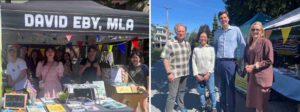
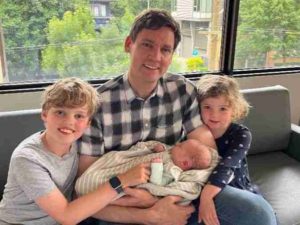
British Columbia Premier David Eby, who serves as a Member of the Legislature representing Vancouver-Point Grey — which he calls home — alongside his 9-year-old son, Ezra, newborn daughter, Gwen, and his 5-year-old scalliwag daughter … Iva, who celebrated her 5th birthday this past Friday.

In what is becoming a contentious upcoming 2024 British Columbia provincial election — set to take place on October 19th — there seems to be a tendency afoot to dehumanize those courageous persons who have come forward to place their name before the electorate to represent not just those persons who live in their riding, but serve to make a constituent difference to the livability of our province.

On this Labour Day 2024, VanRamblings wishes to introduce you to the man we have known since his arrival in our province in 2007 to article with PIVOT Legal in service of completing his law degree, the father and the husband, the friend, the principled man of gregarious good will who means well for our province, and the man who has steadfastly served with compassion and distinction all those, in this particular instance, who reside in his west side Vancouver-Point Grey riding.

VanRamblings has asked David Eby’s senior constituency assistant, Saad Shoaib, for permission to publish excerpts from the quarterly newsletter David Eby posted to those persons who reside in his Vancouver-Point Grey riding. Permission has kindly been granted. Forthwith, David Eby’s most recent constituency newsletter.

Enjoy what we are sure you will find to be an extraordinarily humane document.

Hello Neighbours!

With September comes the real start of the new year for many people in our community, including our family.

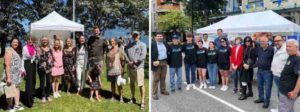
I was excited to attend the Brock House Community Fair again this year. Ezra and Iva bought some beautiful jewelry, and we enjoyed the performance of the Brock House Band as always. I also had a great time at Greek Day in Kitsilano, joining local elected officials for the opening ceremony, and welcoming Greek cultural organizations from across the Lower Mainland.

This year though, for the first time since being elected, I missed attending the Khatsahlano Street Party. While I’m sure this year was as epic as ever, I had what I think is a decent excuse … I missed the party due to the birth of our wonderful new baby girl, Gwen.

Gwendolyn Kay Eby was born at St. Paul’s Hospital on June 27, joining our family of now, amazingly, five! Baby Gwen is happy and healthy and is fitting right in around our busy house.

I’ve also been notified by Barry Leinbach, the “Captain” of the Kitsilano Showboat, that he’s working hard trying to get clarity from the Park Board on the future of this stage that has hosted community performances for almost 100 years, since the Great Depression.

Because of problems at the Kitsilano pool, and a fire two years ago at the site, the existing Showboat was due to be demolished; however, the demolition was stopped by the City since the time of writing this newsletter.

If you have time, please join me in writing to the Park Board to encourage them to work with Barry and identify the next location for this iconic institution. Use the address 2305 Cornwall on the feedback form at this link https://vancouver.ca/your-government/contact-park-board.aspx to share your thoughts.

The Kitsilano Showboat has entertained families for free for generations — it shouldn’t sink on our watch!

In good news for our neighbourhoods, geological testing has begun for the completion of the Broadway subway from Arbutus to UBC. You may see the big rigs drilling in the neighbourhood. The geological information gathered, combined with traffic and population projection studies will be combined into a “business case” which sets out station locations and routing for the project.

In the meantime, an agreement with the Translink mayors means new busses are being purchased to expand express bus service across our fast-growing region.

In other news, a beautiful new rental housing building in our community has been covered extensively by media with some suggesting that government should not have been involved in the project at all. Given that it’s in our neighbourhood I thought I’d share some of the background.

The owners of a closed church at the site in Kits had sold the land to a developer. Because of high interest rates and increasing material costs that are threatening rental housing projects across Canada, without government involvement this site in Kits would be developed for luxury condos or townhomes, both of which were fully allowed under existing zoning.

Instead of luxury condos, our government provided a loan guarantee for the financing of the project, reducing the homebuilder’s interest costs in exchange for an agreement to deliver 68 new rental housing units with 14 of those units (20%) renting at below market rents. On completion of the project, which is imminent, the developer pays back the full loan, and all of the associated interest.

Normally, a below-market unit costs $500,000+ for government to build directly.

In this case, this loan guarantee delivered affordable rental units that cost taxpayers nothing, even the interest on the loan is repaid by the homebuilder, not taxpayers. The remaining rental housing units, with market rents, are desperately needed as we added 180,000 people to our province, 15,000 every month, in 2023.

I look forward to welcoming those 14 families into their new Kitsilano homes.

As we’re gearing up at our house for a return to school on Tuesday, for Ezra — and his sister Iva’s first year of big kid school at Kindergarten!

I hope that you and your family and friends are well, and you’ve enjoyed a restful and relaxing summer in our beautiful Vancouver. We’re so lucky to live in such an amazing city, and this summer I was reminded again of how it’s our neighbours in this community who make so many of these special things we enjoy possible.

See you around the neighbourhood!

David Eby

Music | Top 100 Albums | Azure Ray | Dream Pop

Dream pop duo Azure Ray — composed of Orenda Fink and Maria Taylor — employ graceful harmonies, patient folksy song structures, and touches of electronic production to create otherworldly songs that balance tranquility and intensity.

Their self-titled 2001 début created serene sonic landscapes unusual in the pop idiom, the duo employing piano and guitar, highlighted with cello and violin arrangements, the songs on their eponymous first album presented with delicate vocals, some barely above a whisper, the pain in their vocals ever present in their lyrics as they sing of remembrances and of loss and heartbreak.

The pair met at the age of 15 while attending the Alabama School of Fine Arts in Birmingham. Together, they fronted a band called Little Red Rocket, which released two CDs, Who Did You Pay (1997) and It’s in the Sound (2000), with the band breaking up shortly after the release of the latter album.

Orenda Fink and Maria Taylor decided to head out to Athens, Georgia, striking out to find a career, forming Azure Ray soon after arrival in their new home.

“My boyfriend had just died and we had written all of these songs that were helping us cope with everything. We had a night where all of our friends and family got together. We played those songs, which later would turn into the songs on our first Azure Ray record, which we released shortly thereafter,” says Taylor.

Their self-titled début album is a quiet, gentle set of lovely and soul-searching songs that incorporate elements of folk, pop, and light electronica.

Following the unexpected death of Taylor’s boyfriend, the two musicians used songwriting as a method of coping with their grief. The intensity of that loss informed the mournful tone of the group’s earliest work in 2001, and would carry through in their sound to some degree from that point on.

The song Sleep was later featured in the 2006 Academy Award-nominated movie The Devil Wears Prada, featuring Anne Hathaway.

In February 2015, Taylor Swift included Sleep on a six-song “breakup playlist” made for a fan via her official Tumblr account.

Camilo Arturo Leslie in Pitchfork had this to say about the début album …

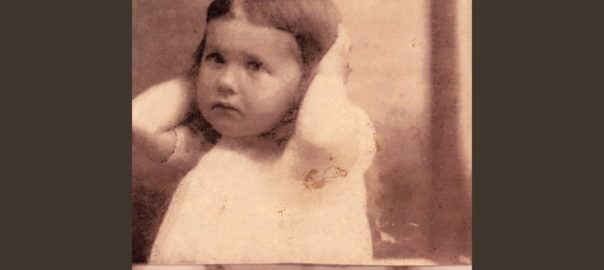
Their album cover is simple: just an old, sepia-toned photograph of a little girl. She looks like my grandmother as a child. Nostalgia and melancholy rub off the liner notes and stain your fingertips. The little girl clutches her palms to her ears and wears an inscrutable expression that vacillates from pouty to fearful to verge-of-tears, depending on what mental angle you hold it at.

Azure Ray’s indie music aesthetic is built on pretty, easy-on-the-tympanum pop acoustic guitar strumming. No fuzz, no indigestible chords, just polished production and evocative arrangements. Lap steel guitar, cello, violin, church bells, piano, brass, and tape loops make appearances on these 11 tracks.

The draw of their music is, of course, the duo’s vocals, Azure Ray’s gentle trills offering a haunting balance between the ethereal and corporeal, as well as an understated,  yet distinct feminine strength, not unlike the early music of Linda Ronstadt.

Indie label-ghetto obscurity has kept Azure Ray from attaining massive popularity.

But an indie-ghetto habitué such as yourself shouldn’t have any trouble digging up a copy of Azure Ray’s début CD, or maybe a vinyl copy.

Red Cat Records on Main Street, or Zulu Records on West 4th Avenue, if they don’t have it in stock, could certainly order it for you.

Beautiful, expertly crafted pop songs keep a room in your heart’s hotel (under an assumed name, naturally).

You could also listen to Azure Ray on Spotify, or Apple or Amazon Music, or purchase their music from either of the two latter providers of digital music.

Stories of a Life | Redux | Chief Cook & Bottle Washer

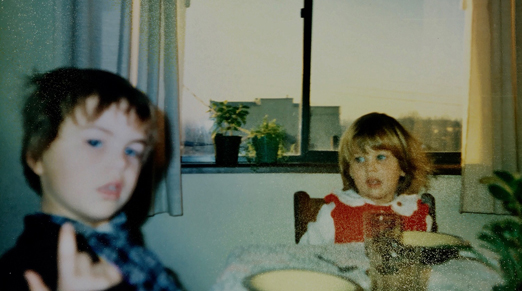
Jude and Megan Tomlin, aged 3 and 16 months, sitting at the kitchen table in 1978
1978. Jude, at age 3½, and Megan at near 2 years of age. At the kitchen table for breakfast.

A couple of weeks ago, when I was extolling the virtues of my Instant Pot to a friend, in a lull in the conversation, she turned to me and said, “You like to cook, don’t you?”

The short answer: I derive pleasure from both cooking and baking.

Here’s the story behind my love for the culinary powers of the kitchen.

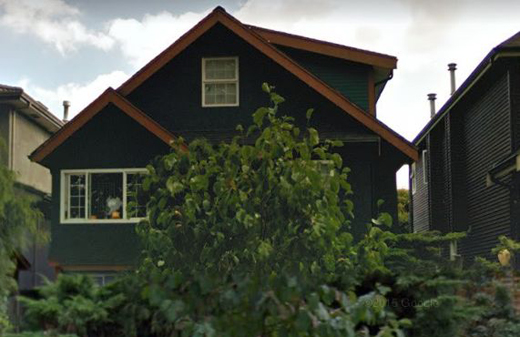
1616 Semlin Drive, and East 1st Avenue, in Vancouver. One of the homes I lived in growing up.
1616 Semlin Drive, at E. 1st Ave. in Vancouver. One of the homes I lived in growing up.

From my earliest days, I fended for myself.

My mother worked three jobs, and my father worked the afternoon shift at the Post Office. When I arrived home from school, although my father often left a stew bubbling away in the slow cooker, from age seven on, for the most part if I wanted to eat, I’d have to make breakfast, lunch and dinner for myself, and for my sister.

So, being somewhat industrious, I learned to cook — well, make sandwiches and, for dessert, Jello, at least for the first few years.

I loved turkey growing up (all that triptiphan), so with the help of my mother, I learned to make her delicious turkey, stuffing, gravy, mashed potatoes and vegetables. For the most part, though, my cooking skills were rudimentary — but I didn’t starve, and more often than not there was food in my belly.

When in 1970, Cathy and I moved in together, marrying soon after, I was responsible for most of the cooking. Cathy’s mom sent her out $1000 a month (she didn’t know we were living together), visiting every three months, taking us to the local Woodward’s grocery floor, where she dropped in excess of $300 at each visit.

With Cathy’s mother money, we ate a fairly staple diet of generously thick T-bone steaks and baked potatoes.

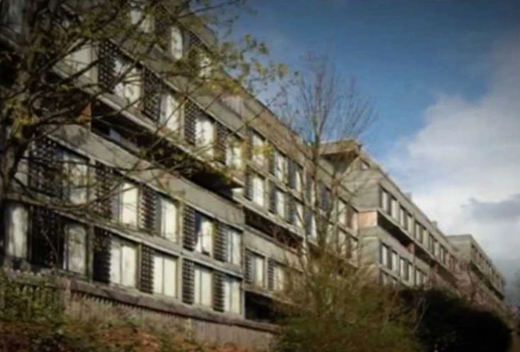
Simon Fraser University's Louis Riel House, a student family one-and-two-bedroom apartment
Simon Fraser University’s Louis Riel House, SFU’S student family 1 + 2 bedroom residence.

Soon after moving into the Louis Riel Student Residence at Simon Fraser University in 1971, Cathy joined a women’s group, who met every Wednesday evening. Among the decisions that were taken by the women’s group was this: men shall participate in all household chores, and share in all food preparation.

As we often ate together with other of the students in the residence, my specialty became salads — all different kinds of healthy, nutritious salads, chock full of vegetables, nuts, sunflower seeds, and more.

At this point, Cathy still hated to cook — there was immense pressure placed on Cathy by her peers to develop culinary skills, but she refused. All that changed in the summer of 1973, which is a story for another day.

2182 East 2nd Avenue, in the Grandview Woodland neighbourhood of Vancouver
2182 East 2nd Avenue, in the Grandview Woodland neighbourhood of Vancouver.

When Cathy and I separated in 1978 — Jude and I lived in the home above, before Jude, Megan and I moved to Simon Fraser University and Louis Riel House, when I began work on my Masters degree — the thought occurred to me one morning when making breakfast that I was now the lone parent, and the sole person responsible for ensuring the children ate nutritious foods at each meal in order that they might grow up into healthy adults.

I took on the task of learning the art of cooking (and baking), in earnest.

There was, however, a quid pro quo involved.

After returning from a day of larnin’ and T.A.’ing at SFU, after picking up the children at daycare at 4:30pm, and walking the relatively short distance to our two-bedroom apartment at Louis Riel House, while the children played with their friends on the lawn in front of our apartment, I prepared dinner, calling them in about 45 minutes after dinner preparation had begun.

The kids were famished, and so was I.

Here’s where the quid pro quo came in: at the end of each meal, each of the children had to turn and say to me some version of, “Daddy that was a good dinner. It was mmmm, delicious. Thank you for making dinner for all of us, and all the work you put in to feeding us healthy and nutritious breakfasts, lunches and dinners, and all those wonderful desserts we love!”

I needed the incentive provided to me by both children, and their gratitude — which, in time, they came to acknowledge as their own. The kids felt good about encouraging me, as I encouraged them in all of their endeavours.

We were a happy family, and all was well with the world for the three of us.

Now, I was an adventuresome cook, and not everything I made turned out to the liking of all of us, or each one of us.

Being a dedicated democrat, Jude, Megan and I made a deal with one another in respect of dinner. Both children had to eat at least two bites of each food item I prepared: after all the work I put into preparing a dish, the least they could do was try out the dish to see whether they might like it.

Most of the time they did, but sometimes not.

One night, I made cream of escargot soup. Honestly, it wasn’t bad. But at the end of the soup entrée, I turned to the children and asked them what they thought, to which they replied almost in unison, “It was all right, tasty enough I suppose, but I’m not sure if I’d ever want to have it again.”

I agreed with them. We never ate cream of escargot soup ever again.

Each of us were allowed to have three foods on a list of our creation, foods we did not have to eat, no matter what.

Megan had three foods, Jude had three foods, and I had three foods — those foods changed over a period of time.

In order to add a food to our individual “nah, I don’t want to eat that food” list, some food on each of our lists had to come off. Took some thought on the part of the children as to whether they wanted to remove a food.

Megan, for a great long while didn’t like avocados — but one day, while placing a new food she didn’t like onto her “don’t eat” list, she took avocados off her list, eventually coming to love avocados, as she does to this day.

Watching me prepare meals all the time he was growing up caused Jude to want to become a chef — he worked in the food industry throughout his late teens and twenties, before getting into teaching, which paid better, and was overall less stressful, with “more honourable people”, he’d say to me.

In her teens, Megan became a vegan — there’s a story there, too, which I’ll leave for another day — and, for the most part, took on the preparation of her own meals, as did Jude over a period of time.

After the summer of 1973, Cathy became a great cook — there’s not much I miss about that tumultuous marriage, but I sure miss Cathy’s avant-garde cooking, her culinary craftsmanship, spicing and phenomenally delicious cooking.

Ah well.