Category Archives: VanRamblings

VanRamblings Makes Its Triumphant Return, Again

After an interregnum of some 284 days since VanRamblings published last, today — Monday, August 18th, 2025 — marks VanRamblings inglorious return.

In the coming days, weeks and months, as per usual, most Mondays, Tuesdays, Wednesdays and Thursdays, we will publish our thoughts on all things municipal, provincial and federal politics, interspersed with columns on cinema (such as this Friday’s column on film festival season), and on the occasional Saturday, return to our semi-regular feature, Stories of a Life, and on Sundays, Sunday Music, where we will continue writing about our favourite 100 albums of all time.

Most of the next two weeks will be given over to writing about Vancouver’s municipal political scene, this week and part of next focusing on the probable Mayoral aspirants seeking office in order that they might install themselves in the spacious offices and luxurious living quarters located on the third floor at Vancouver City Hall (thank you, Dr. Penny Ballem), a home away from home for the Mayor.

In tomorrow’s column, VanRamblings’ focus will be on who, only a month ago, seemed to be the serious-minded Mayoral aspirants. Much has changed, though, over the past month, and the list of Mayoral aspirants has winnowed considerably, although a few of the usual suspects for Vancouver Mayor remain serious about making a bid for office on Saturday, October 17th, 2026.

A major focus of VanRamblings’ writing beginning next week through until October 12th will be, what for us, is the première arts event of the autumn season, the 44th Vancouver International Film Festival, which this year will run, in a somewhat truncated form, from Thursday, October 2nd through until Sunday, October 12th.

As far as we are able, we’ll attempt to keep the columns short, pithy, informational and full of our somewhat out on the edge opinions, bound to make some folks (usually the ones being written about) unhappy, while enlightening others in what we hope is an entertaining and provocative manner. As far as possible — given our advanced age (we’re 75 years of age now) and our general ill state of health (alas) — we’ll try to stay away from what once was our stock and trade: hyperbole, always fun to write but, perhaps now, a thing of VanRamblings’ ignominious past.

With the exception of Friday, September 5th — when, in the first person, we’ll write about our various health travails — we’ll continue to employ the third person voice on VanRamblings, which we know drives some people crazy, but there it is.

We look forward to your return tomorrow, and in the days, weeks and months hence, as we once again seek to build our loyal, and just plain great, readership — who want to know just what is going on in our municipal, provincial and federal governance, and the who, what and why of the decisions that impact our lives.

#BCPoli | VanRamblings Endorses David Eby and a Majority NDP Government


David Eby and his family, baby Gwen, son Ezra, 10, daughter Iva, 5, and David’s wife, Dr. Cailey Lynch

David Eby stands out as a visionary, a once in a generation political leader who is committed to justice, equity, and the well-being of all British Columbians.

As the Premier of British Columbia, David Eby has demonstrated his exceptional skills as a politician, and his unwavering dedication to meaningful social change.

David Eby’s leadership embodies a rare combination of compassion, authenticity, a deep understanding of how government functions and how best to bring about change for the better that serves the interests of all B.C. citizens — young people just starting their lives, vulnerable populations in every community, middle class and those working to join the middle class working people setting a path to establish themselves in the economy, those British Columbians who have already established themselves as the core element of British Columbia’s population that are thriving in our robust economy, members of our mature population and senior citizens in retirement or just about to embark on retirement — and all ethnic and cultural groups who comprise the mosaic of British Columbia’s diverse population.

David Eby’s bold policy vision seeks to address the province’s most pressing issues — health care, the provision of housing to serve the interests of all British Columbians no matter their economic circumstance, crime and public safety — with a well-thought-out action plan to ensure his government’s success.

  • Health care. David Eby has successfully worked with a sometimes intransigent and hide bound federal government to streamline the process to allow doctors and nurses to enter Canada, become accredited and begin their practice in British Columbia. In 2023, David Eby’s government hired 700 new doctors and 1500 new nurses, and will do so again this year and next year — for a total of 2100 new doctors and 4500 new nurses arriving from abroad over a three year period into British Columbia, unprecedented any where else in Canada, many of Canada’s new physicians and nurses arriving from Great Britain, these health care professionals leaving a British health care system in crisis after 15 years of Conservative government. In addition, British Columbia graduates 1500 new registered nurses and 300 new doctors from British Columbia post secondary institutions each year, a figure set to expand;

  • Housing for all. 100,000 new housing co-operative units to be built across the province over the next 10 years, on Crown land, on a 99-year leasehold basis, collective home ownership for 250,000 British Columbians; 25,000 units of supportive housing to be constructed and open by 2030 to house British Columbia’s unhoused and most vulnerable citizens, too many of them currently living in rundown, rat-infested SROs; 25,000 new homes for those getting into the market, 40% of the cost of the new homes borne by government on a 25-year cost recovery basis; the B.C. Builds programme, which will see the construction of 100,000 units of market housing, many of those transit-oriented new homes in Metro Vancouver built around Skytrain stations; and 50,000 units of housing as homes for our burgeoning seniors population;
  • British Columbia Attorney General Niki Sharma and Premier David Eby have over the past two years embarked on a mission to ensure the revolving door system of justice — or injustice, as most British Columbians see it — comes to an end, so that prolific offenders are jailed and off the streets for an indefinite period of time. In addition, Premier David Eby has committed to a system of involuntary care for those addicted, mentally unwell members of our community involved in crime, assault and mayhem as a lifestyle choice, who pose a danger to themselves and others, who will receive  treatment to allow them to become functioning members of our community.

The entire British Columbia New Democratic Party platform may be found by clicking or tapping on this link, and includes information on the B.C. NDP’s proposed transportation policy — which involves full government funding of public transportation, as a priority — expanding school meal programmes; strengthening consumer protection laws; cracking down on housing speculators and flippers; protecting you from the return of MSP premiums and bridge tolls; keeping rent caps in place for B.C.’s residents living in one of British Columbia’s 600,000 rental units; training more doctors;  making B.C. a clean-energy superpower; reducing carbon pollution; moving B.C. closer to our goal of protecting 30% of provincial lands by 2030;  and working with Indigenous peoples to strengthen communities, by taking action on Indigenous housing, education and supports for families and people.

The Future: A Choice for Progress or Regression

As British Columbia heads towards Election Day 2024 — this upcoming Saturday, October 19th — the stakes are high.

David Eby’s B.C. NDP is the only British Columbia political party offering a comprehensive, inclusive vision for our province’s future.

In contrast, the far-right BC Conservative Party, known for its climate change denial and socially regressive policies, not to mention racism and intolerance, threatens to undo much of the progress made under David Eby’s leadership — for instance, the 250,000 British Columbians who might look forward to a residence within one of the 100,000 units of co-op housing David Eby’s government will build, can forget about that as a future prospect, given John Rustad’s regressive Conservatives have no plan to provide any such housing, which they consider to be a radical communist conspiracy, one of the many conspiracies which inform their raison d’être.

The B.C. Conservative Party’s rejection of diversity, inclusivity, and climate science stands in stark contrast to David Eby and the B.C. New Democrats’ commitment to addressing real-world problems with innovative and compassionate solutions.


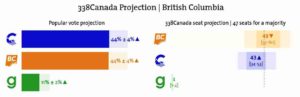
The October 13th Angus Reid poll of 2863 eligible B.C. voters. Want to make it happen? Vote NDP!

For British Columbians, the choice is clear: a vote for David Eby and the British Columbia New Democratic Party is a vote for progress, stability, and the continuation of policies that uplift all citizens, particularly the vulnerable and marginalized.

David Eby’s leadership represents a rare opportunity for the citizens of British Columbia — a chance to build a fairer, more equitable society while tackling the housing, health care, and climate challenges that will define our province’s future.

#BCPoli | Writ Drops on Saturday, September 21st | A 28-Day British Columbia Election Campaign Follows

As the 2024 British Columbia provincial election draws near, the political landscape in the province is charged with intense debate and a host of key issues that will shape the campaign.

Set to officially begin when the Writ drops on September 21st, the 28-day campaign will see Premier David Eby’s B.C. New Democratic Party defend their hold on government against an ascending opposition. The chief challenger in 2024:  the resurgent B.C. Conservatives, led by John Rustad, who, despite their limited war chest, aim to capitalize on voter dissatisfaction with the current government.

Key Issues in the 2024 British Columbia Election Campaign

  • Affordability and Housing: Housing remains the dominant issue in British Columbia politics, especially in urban centres like Vancouver and Victoria. The B.C. NDP under Premier David Eby has placed significant focus on addressing the housing crisis, with legislation proclaimed to increase the supply of affordable homes, streamline permitting processes, and combat speculation in the real estate market. David Eby has framed his party’s housing policy as one that balances affordability with responsible development, but the B.C. Conservatives have criticized the NDP’s efforts, accusing them of exacerbating the crisis by driving up costs with unnecessary regulations.

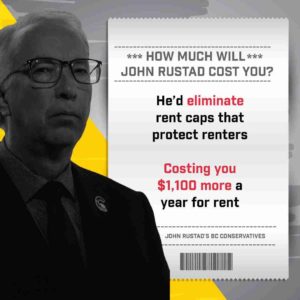
  • Rent Control and Tenant Rights: The B.C. NDP has enacted strict rent controls, limiting annual rent increases to match inflation rates. John Rustad’s B.C. Conservatives have said if elected to government they would remove the cap on rent increases, arguing that rent controls hurt landlords and reduce the incentive to build new rental housing. This proposal is likely to be a key wedge issue, dividing renters, who are primarily concentrated in urban areas, from property owners and real estate investors.

  • SOGI 123 and LGBTQ+ Rights: Socially conservative elements within the B.C. Conservative Party, including leader John Rustad, have rallied against the SOGI 123 curriculum, which promotes inclusivity and understanding of sexual orientation and gender identity in BC schools. While the B.C. NDP and — earlier this year —  B.C. United supported SOGI 123 as a tool for fostering inclusivity, the B.C. Conservatives’ opposition appeals to a more socially conservative base, particularly in rural areas. Note should be made, B.C. Conservative leader Rustad has said that he would remove the programme from B.C.’s public school system, while also removing and banning books from the schools he believes “indoctrinate children”. The issue of the rights of LGBTQ children enrolled in B.C. schools — the programme brought in by the B.C. Liberal Christy Clark administration in 2015, as drafted by current ABC Vancouver City Councillor Lisa Dominato when she was in the employ of British Columbia’s Ministry of Education — has the potential to become a highly polarizing wedge issue, mobilizing both progressives and conservatives in different parts of the province.

  • Climate Change and Environmental Policy: British Columbia’s natural beauty and environmental stewardship are central to its identity, but climate policy has become a contentious issue. The B.C. NDP has taken a middle-of-the-road approach, supporting ambitious climate targets while also backing natural resource industries like LNG. The B.C. Conservatives, however, have been skeptical of aggressive climate policies, focusing instead on economic growth and job creation in resource sectors. This issue may pit environmentally conscious urban voters against rural communities reliant on resource extraction.

  • Public Transportation: Funding for public transportation, particularly in Metro Vancouver, will be a critical issue. The B.C. NDP supports expanding transit infrastructure, including SkyTrain expansions and increased bus service, to reduce congestion and emissions. However, the B.C. Conservatives have suggested prioritizing road infrastructure and reducing reliance on taxpayer-funded transit. This issue will likely divide urban voters who depend on public transportation from suburban and rural voters who prioritize road improvements.

  • Healthcare and Mental Health: The province’s healthcare system, already strained by the COVID-19 pandemic, continues to be a significant issue. With long wait times for surgeries and difficulty accessing family doctors, healthcare is top of mind for many voters. The B.C. NDP has pledged more funding for healthcare and mental health services, while the B.C. Conservatives have focused on increasing private sector involvement to reduce wait times and improve access.

  • Taxes and Fiscal Responsibility: The B.C. NDP has faced criticism for its spending policies, with the B.C. Conservatives and other opponents accusing them of driving up provincial debt and over-taxing residents. The Conservatives have proposed cutting taxes and reducing government spending, appealing to fiscally conservative voters, particularly in the interior and northern regions of the province.

  • Crime and Public Safety: Rising crime rates, particularly in urban centres like Vancouver, Victoria, Nanaimo and Kelowna have made public safety a hot-button issue. The B.C. NDP has promised more funding for police and social services, whle working with the federal government to bring in tougher legislation that would keep repeat offenders and those accused of violent crimes in custody — while the B.C. Conservatives have taken a hardline approach, advocating for tougher sentencing and more resources for law enforcement, which is likely to realized only if Pierre Poilievre’s federal Conservative Party are elected to government next year. This issue will certainly be central to debates in urban and suburban ridings, where concerns about crime are highest.

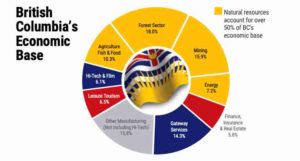
  • Economic Development and Jobs: With economic uncertainty persisting post-pandemic, job creation and economic growth will be key topics. The B.C. NDP has highlighted its investments in green technology and infrastructure — which has proved successful while raising wages across the province. John Rustad’s B.C. Conservatives have emphasized the importance of supporting traditional industries like forestry, mining, and oil and gas, which are crucial to many rural communities. A B.C. Conservative urban economic development plan has yet to be announced.

  • Education and School Funding: Public education will be a key issue, especially as concerns about classroom sizes, teacher shortages, and underfunding persist. The B.C. NDP has committed to increasing education spending, while the B.C. Conservatives have called for reforms to make the system more efficient, including increased support for alternative schooling options, which may resonate with their socially conservative base.

Key Ridings to Watch

Several ridings will be crucial in determining the outcome of the election. Urban ridings in Metro Vancouver, such as Vancouver-Yaletown and Surrey-Newton, will be battlegrounds between the B.C. NDP and the B.C. Conservatives, with housing and public safety as major issues. In the Fraser Valley and Interior, ridings like Chilliwack-Kent and Kamloops-North Thompson will see heated contests between the B.C. NDP and the B.C. Conservatives, where affordability, resource development, and opposition to SOGI 123 may come to the forefront.

Additionally, suburban ridings in regions like Langley, Coquitlam, and Port Moody will be key, with issues such as transportation and crime dominating local discourse. The outcome in these swing areas could determine whether the B.C. NDP can maintain their majority or if the opposition makes significant inroads.

Voter Demographics and Turnout

Polling indicates that British Columbians aged 55 and older tend to support the B.C. NDP. This age group also tends to vote in greater numbers than younger voters, making their support crucial to the NDP’s success. If the B.C. NDP can effectively mobilize this demographic while appealing to younger voters concerned with housing affordability and climate change, they may secure another term in government. However, the B.C. Conservatives’ appeal to disaffected, older, rural voters who feel left behind by the NDP’s progressive agenda could create a potent challenge in key regions.

Wedge Issues and Potential “Bozo Eruptions”

The B.C. Conservatives, under John Rustad, face a significant risk of “bozo eruptions” during the campaign. With a number of candidates espousing socially conservative and conspiracy-laden views, the party could find itself embroiled in controversy throughout the campaign period, providing the B.C. NDP with ample ammunition to exploit. Rustad’s removal of the rent increase cap and his party’s opposition to the SOGI 123 programme are likely to emerge as key wedge issues, polarizing voters and drawing sharp contrasts between the parties. These controversies may help the B.C. NDP rally progressive voters and paint the Conservatives as out of touch with mainstream British Columbians.

The 2024 B.C. provincial election will be shaped by a range of pressing issues, from housing affordability and climate change to education and public safety.

With the B.C. NDP well-funded and and maintaining a slim lead in the polls, and John Rustad’s B.C. Conservatives seeking to channel discontent among socially conservative and rural voters, the stage is set for a fiercely contested election.

Key ridings in the Lower Mainland, the Interior, and northern B.C. will be critical, as will turnout among older voters.

As the campaign progresses, wedge issues like rent control, SOGI 123, and climate policy will likely define the battleground, with both major parties vying to secure their share of the vote.

Stories of a Life | Redux | Cathy and Raymond’s 1970s European Adventure

Traveling on a train across Europe, with a Eurail Pass, in the 1970s

In the summer of 1974, Cathy and I traveled to Europe for a three-month European summer vacation, BritRail and Eurail passes in hand, this was going to be a summer vacation to keep in our memory for always.

And so it proved to be …

On another day, in another post evoking memories of our cross-continental European sabbatical, I’ll relate more stories of what occurred that summer.

Train travel in Spain, in the 1970s, as the train makes its way around the bend

Only 10 days prior to the event I am about to relate, Cathy and I had arrived in Lisbon, Portugal, alighting from a cruise liner we’d boarded in Southampton, England (passage was only 5£s, much cheaper than now).

After a couple of wonderful days in Lisbon, Cathy and I embarked on the first part of our hitchhiking sojourn throughout every portion of Portugal we could get to, finally traveling along the Algarve before arriving in the south of the country, ready to board a train to Spain.

Unfortunately, I developed some intestinal disorder or other, requiring rest and fluids.

Once Cathy could see that I was going to be fine, she left the confines of our little pensão to allow me to recover in peace, returning with stories of her having spent a wonderful day at the beach with an enthusiastic retinue of young Portuguese men, who had paid attention to and flirted with her throughout the day.

Cathy was in paradisiacal heaven; me, not so much.

Still, I was feeling better, almost recovered from my intestinal malady, and the two of us made a decision to be on our way the next morning.

Traveling from the south of Portugal to Spain, in the 1970s

To say that I was in a bad mood when I got onto the train is to understate the matter. On the way to the station, who should we run into but the very group of amorous young men Cathy had spent the previous day with, all of whom were beside themselves that this braless blonde goddess of a woman was leaving their country, as they beseeched her to “Stay, please stay.”

Alas, no luck for them; this was my wife, and we were going to be on our way.

Still suffering from the vestiges of both an irritable case of jealousy and a now worsening intestinal disorder, I was in a foul mood once we got onto the train, and as we pulled away from the station, my very loud and ill-tempered mood related in English, those sitting around us thinking that I must be some homem louco, and not wishing in any manner to engage.

A few minutes into my decorous rant, a young woman walked up to me, and asked in the boldest terms possible …

Do you kiss your mother with that mouth?

“Huh,” I enquired?

“Do you kiss your mother with that mouth? That’s the filthiest mouth I’ve ever heard. You’ve got to teach me how to swear!”

At which point, she sat down across from me, her lithe African American dancer companion moving past me to sit next to her. “Susan. My name is Susan. This is my friend, Danelle,” she said, pointing in the direction of Danelle. “We’re from New York. We go to school there. Columbia. I’m in English Lit. Danelle’s taking dance — not hard to tell, huh? You two traveling through Europe, are you?” Susan all but shouted. “I come from a large Jewish family. You? We’re traveling through Europe together.”

And thus began a beautiful friendship.

Turns out that Susan could swear much better than I could; she needed no instruction from me. Turns out, too, that she had my number, and for all the weeks we traveled together through Europe, Susan had not one kind word for me — she set about to make my life hell, and I loved every minute of it. Susan became the sister I wished I’d had, profane, self-confident, phenomenally bright and opinionated, her acute dissection of me done lovingly and with care, to this day one of the best and most loving relationships I’ve ever had.

Little known fact about me: I love being called out by bright, emotionally healthy, socially-skilled and whole women.

Two-year-old Jude Nathan Tomlin, baby Megan Jessica, and dad, Raymond, in June 1977
The summer of 1974, when Cathy became pregnant with Jude, on the right above.

Without the women in my life, Cathy or Megan, my daughter — when Cathy and I separated — Lori, Justine, Alison, Patricia, Julienne or Melissa, each of whom loved me, love me still, and made me a better person, the best parts of me directly attributable to these lovely women, to whom I am so grateful for caring enough about me to make me a better person.

Now onto the raison d’être of this instalment of Stories of a Life.

Once Susan and I had settled down — there was an immediate connection between Susan and I, which Cathy took as the beginnings of an affair the two of us would have (as if I would sleep with my sister — Danelle, on the other hand, well … perhaps a story for another day, but nothing really happened, other than the two of us becoming close, different from Susan).

J. D. Salinger's Nine Stories, an anthology of short stories published in April 1953


Danelle saw a ragged copy of J.D. Salinger’s Nine Stories peeking out of Cathy’s backpack.

“Okay,” she said. “In rounds, let’s each one of us give the title of one of the Salinger short stories,” which we proceeded to do. Cathy was just now reading Salinger, while I’d read the book while we were still in England, about three weeks earlier.

Cathy started first, For Esmé — with Love and Squalor. Danelle, Teddy. Susan, showing off, came up with A Perfect Day for Bananafish, telling us all, “That story was first published in the January 31, 1948 edition of The New Yorker.” Show off! I was up next, and came up with Uncle Wiggily in Connecticut. Phew — just barely came up with that one! Thank goodness.

Onto the second round: Cathy, Down at the Dinghy; Danelle, Pretty Mouth and Green My Eyes; Susan, showing off again, De Daumier-Smith’s Blue Period, “turned down by The New Yorker in late 1951, and published by the British Information World Review, early in 1952.” Me? Struggling yet again, but subject to a momentary epiphany, I blurted out, Just Before the War with the Eskimos. There we were, eight stories down and one to go.

But do you think any one of us could come up with the title to the 9th tale in Salinger’s 1953 anthology of short stories? Nope.

We thought about it, and thought about it — and nothing, nada, zero, zilch. We racked our brains, and we simply couldn’t come up with the title of the 9th short story.

We sat there, hushed. For the first time in about half an hour, there was silence between us, only the voices of children on the train, and the clickety-clack of the tracks as the train relentlessly headed towards Madrid.

We couldn’t look at one another. We were, as a group, downcast, looking up occasionally at the passing scenery, only furtively glancing at one another, only periodically and with reservation, as Cathy held onto my arm, putting hers in mine, Danelle looking up, she too wishing for human contact.

Finally, Susan looked up at me, looked directly at me, her eyes steely and hard yet … how do I say it? … full of love and confidence in me, that I somehow would be the one to rescue us from the irresolvable dilemma in which we found ourselves.

Beseechingly, Susan’s stare did not abate …

The Laughing Man,” I said, “The Laughing Man! The 9th story in Salinger’s anthology is …” and before I could say the words, I was smothered in kisses, Cathy to my left, Susan having placed herself in my lap, kissing my cheeks, my lips, my forehead, and when she found herself unable to catch her breath, Danelle carrying on where Susan had left off, more tender than Susan, loving and appreciative, Cathy now holding me tight, love all around us.

A moment that will live in me always, a gift of the landscape of my life.