Category Archives: #VanPoli Civic Politics

Hubris | A VanRamblings Apology to Vision Vancouver, Part 1

2014 Vancouver Mayor Gregor Robertson, and CouncilVancouver Mayor Gregor Robertson, with Vancouver City Councillors circa 2015

Long, long overdue, today VanRamblings sets about to right a wrong that, over many years, VanRamblings committed against Vision Vancouver, in failing to properly acknowledge all the good the Vancouver-based political party achieved in their 10 years in power at Vancouver City Hall.
Was Vision Vancouver “perfect” while in power? No, they weren’t. But short of a flower blooming in spring, or the birth of a newborn child, one is not likely to find perfect anywhere on Earth. Vision Vancouver set about to make our city the Greenest City on Earth — towards that end, the members of the Vision Vancouver civic administration did an outstanding job!
Reconciliation with our indigenous peoples, the adoption of a Women’s Equity Strategy, ensuring that the 33 Advisory Committees to Council remained vibrant, the adoption and implementation of a groundbreaking gender variant policy that helped to make ours a fairer and more just city for all of us who reside in our paradise by the sea, constructing hundreds of social housing units, creating the legacy Community Land Trust that will continue in the next civic administration to play a key role in the development of affordable housing for a sometimes beleaguered Vancouver population, declaring Vancouver a sanctuary city, and fighting against racism, xenophobia and intolerance — all of these necessary initiatives barely scratch the surface of all the good that Vision Vancouver was able to accomplish in their 10 progressive years in power at Vancouver City Hall.
First, a bit of perspective on VanRamblings’ apology, where we once again bury the lede. As per usual, a story that we hope helps to provide context.

Prime Minister Jean Chretien, and Liberal Finance Minister Paul MartinPrime Minister Jean Chrétien, and federal Liberal party Finance Minister Paul Martin

After nine years in power, the federal Progressive Conservative Party administration of Prime Minister Brian Mulroney was soundly defeated at the polls in Canada 35th general election on October 25th 1993, leaving the once dominant party with only two seats in the house. The incoming Jean Chrétien Liberal Party government garnered 177 seats and 41.24% of the popular vote, while inheriting a $42 billion annual deficit, and a bankrupting $780 billion long term debt that emerged as a key factor in the unpopularity and eventual defeat of the Mulroney government. It is often said that Liberal and NDP administrations couldn’t manage a popsicle stand, that Conservatives are the fiscally responsible political party — which is so much poppycock and nonsense, and the absolute reversal of the truth.
Incoming Prime Minister Jean Chrétien, and the yet-to-be appointed Liberal party Finance Minister Paul Martin were hardly bosom buddies. Jean Chrétien, le p’tit gars de Shawinigan (“the Little Guy from Shawinigan”) raised in some degree of poverty in Québec in the 1930s and 1940s had little time for the wealthy Canada Steamships scion, raised with a silver spoon in his mouth. The bitter 1990 Liberal Party leadership convention left the political rivals bitter political enemies. Even so, in November 1993, once Paul Martin placed his family holdings in a blind trust, the newly re-elected Paul Martin was appointed to the cabinet and named Minister of Finance.
For Prime Minister Jean Chrétien appointing Paul Martin as Finance Minister was political payback — let Paul Martin garner the opprobrium of provincial governments across Canada, as well as public sector unions, the small business and corporate sector, and the people of Canada as he went about wrestling the $42 billion annual deficit to the ground, setting about to lower Canada’s economically unsustainable long term debt, as well.
Paul Martin did exactly that, but not without controversy. Martin implemented huge budget cuts that almost ground economic growth to a halt, scaling down government to 1951 levels, while cutting transfer payments to the provinces that had paid for social programnes, health care, and public infrastructure, including the construction of affordable housing.
By 1998, Martin introduced a balanced budget, an event that had occurred only twice in 36 years before 1997, while also ushering in a recession.
Even so, the budget was balanced, CPP overhauled, and Employment Insurance taxes were increased to a level that raised an “extra” $20 billion each year to pay down the long term debt — by 2002, Moody’s and Standard and Poor’s restored Canada’s domestic and foreign currency debt ratings to AAA. When Jean Chrétien announced he would be stepping down as Prime Minister, Paul Martin was removed from his position as Finance Minister in order to concentrate on his to run for the Liberal leadership. On November 14, 2003, Martin succeeded Jean Chrétien as leader of the Liberal Party, becoming Prime Minister on December 12, 2003.
Was it necessary for Jean Chrétien to remove Paul Martin as Finance Minister? Nope. That decision by the Prime Minister was yet another arrow aimed at the heart and the political ambition of his longtime political rival.
Soon after Paul Martin became Prime Minister, the Globe and Mail published a story alleging financial wrongdoings by the Chrétien government involving tens of million of federal taxpayers dollars improperly paid to Quebec-based Liberal operatives to secure victory in the 2004 Canadian federal election.
Martin met with now former Prime Minister Chrétien to ask him about the improper expenditures, which improper payment Chrétien readily admitted to, while also advising Martin to “bury it”, and announce to the press that his government would conduct an internal investigation — an investigation that would never see the light of day. Chrétien told Martin he’d successfully buried controversies, repeatedly, as Prime Minister of Canada.
But Paul Martin was a boy scout — and he thought Chrétien a despicable, corrupt, self-serving politician. “We’ll get to the bottom of this burgeoning scandal,” Martin bellowed to the press. Soon after, Martin struck The Gomery Commission (formally the Commission of Inquiry into the Sponsorship Programme and Advertising Activities), the federal Canadian Royal Commission headed by Justice John Gomery for the purpose of investigating the the Québec-based sponsorship scandal, which involved allegations of corruption within the Canadian government.
Justice Gomery released a first report on the scandal on November 1, 2005, which brought down the Martin government. To add insult to injury, after boy scout Prime Minister Paul Martin lost the early 2006 federal election to Conservative Party leader Stephen Harper, in 2008, Federal Court of Canada Judge Max M. Teitelbaum set aside Gomery’s conclusion that Jean Chrétien and Jean Pelletier shared blame for the mismanagement of the programme to boost the federal government’s profile in Quebec, a decision that was appealed and upheld by the Federal Court of Appeal.
From the outset, Chrétien had advised Martin to “bury” the story; if he didn’t, it would bring down his government, and Paul Martin would become the Prime Minister of shortest tenure in Canadian history, all while embroiled in a “scandal” not of his own making. But Paul Martin didn’t listen — he didn’t want to bury the story, he wanted to bury his long time rival Jean Chrétien — but in the process, he destroyed his legacy.
Why did Martin set about on this destructive path? One word: hubris.
Hubris is often defined as “an extreme and unreasonable feeling of pride and confidence in oneself, an overweening presumption that leads a person to disregard the fixed limits on human action, that means to bring shame upon a rival, while asserting the piety of the accuser.”
Proverbs 16:1 reads as follows, “Pride goeth before destruction, and an haughty spirit before a fall. Better it is to be of an humble spirit with the lowly, than to divide the spoil with the proud.”
Outside of the Biblical context, the proverb still has a ring of truth: overconfidence in oneself not only often leads to mistakes, it can lead to one’s downfall — while Paul Martin lost government, by 2008 his bitter rival, Jean Chrétien, had received absolution, leaving Martin as an unfortunate footnote is the politas of Canadian federal politics.

Comox Board of Variance meeting

The Board of Variance at City Hall is the most powerful creature of city government. A quasi-judicial lay body, the Board of Variance possesses the authority to overturn decisions of both the Planning Department, and the City Council itself. In British Columbia, dating back to 1955, the provincial government has required local governments across British Columbia to establish a Board of Variance in their community to oversee all development decisions of the local government, in Vancouver involving not just development — inclusive of applications for property renovations by homeowners to the construction of massive towers, where a relaxation of the applicable zoning bylaw has been granted by either the Planning Department or City Council — but tree removal and signage.
Long story short, the COPE Council in 2005 appointed VanRamblings to Vancouver’s Board of Variance; in 2009, when a vacancy arose, the Vision Vancouver civic administration re-appointed VanRamblings to a new three year term of office — only to fire us two months after our appointment, as we sought to stand up for the central tenets of Board of Variance procedure: independence of Board appointees, and meetings that were open to the public, both of which necessary tenets we felt were breached by the appointed Board of Variance of the day.
We were devastated and bitter when fired by Vision Vancouver.
In response to the firing, VanRamblings made Vision Vancouver, and anyone associated with Vision Vancouver, our bitter enemy — which, as you might imagine, was not a very good look for us, although our bitterness and daily blogging on VanRamblings and thousands of social media posts taking Vision Vancouver to task, whether reasonably or unreasonably, bore fruit in the realpolitik of Vancouver.
As far as we were concerned, Vision Vancouver could do no good.
For years, VanRamblings continued to be bitter and pointed in our criticism of Vision Vancouver, which for the cynics in our community was satisfactory, indeed — human nature seems to take the greatest possible delight in “taking down” politicians. VanRamblings’ readership blossomed — the more bitter our denunciation of Vision Vancouver, the greater our readership.
VanRamblings was successful in creating destructive memes bitterly attacking Vision Vancouver, in the process creating an untoward narrative about Vision Vancouver that saw no good in anyone affiliated with Vision Vancouver, or anything Vision Vancouver did, no matter how laudatory was a Vision Vancouver accomplishment.
The result of all this bitterness? It almost killed us.
As I’ve written many times previously, in August 2016, VanRamblings was diagnosed with hilar cholangeocarcinoma, a deadly, rare form of inoperable cancer that steals the lives of all those who are diagnosed with this terminal form of cancer. In the near eight months we were bed-ridden following our diagnosis, we had a great deal of time to reflect on the meaning of our existence, and both all the good that we had achieved for others, and all the demeaning and destructive acts of hubris we had performed in the community, most directly in respect of Vision Vancouver.
For want of better phraseology, early on in our illness we had a ‘come to Jesus moment’ in respect of Vision Vancouver, and made ourselves a promise (one of several) that were we to survive this terminal and deadly cancer, we would dedicate a portion of our life to making up for the wrongs we had committed against Vision Vancouver.
Hubris. It’s a bitter and ugly thing that can kill you.
Now, we’re not so naïve as to believe that a few words on a screen can make up for the damage we’ve caused. There’s no saying , “please forgive me” for that which is unforgivable. All we can do in the coming weeks and months is present to you all of the successes of Vision Vancouver, while responding to the bitter criticisms of the Vision Vancouver administration that we — much to our shame and regret — helped to foment.
Note: the authors of both linked criticisms of Gregor Robertson’s the Vision Vancouver administration that may be found directly above are friends of VanRamblings — even so, we couldn’t disagree more with their bitter denunciations of, and the meanness of their criticism of the civic government that has held office at Vancouver City Hall these past 10 years.
Of course, the ironic consequence of all the above is, now that Vision Vancouver is out of office, remnants of that civic administration are setting about to destroy us, to take us down, and once and for all silence our voice.
As you might well imagine: we’re not going anywhere. Neither are we bitter towards or about Vision Vancouver — that’s a mug’s game, and we no longer play that game. To do so, we believe, would kill us, snuff out our life.
In 2018, we have a second chance at this thing called life — we’re going to use the opportunity we’ve been given not for ill, but for the common good.

Aquatic Centre: Vision Vancouver Pulls a Fast One

Vancouver Aquatic Centre is Due for Demolition in Sale of City Land
The entire Downtown South Development Site booklet may be accessed by clicking here

On Wednesday, VanRamblings published a story on the proposed sale by Vision Vancouver of 12 parcels of land adjacent to the Granville Street bridge, for the development of 120 units of social housing, a new Aquatic Centre, and a new Qmunity Centre — all without any hint of an open, public consultation by Vancouver’s secretive, developer-friendly municipal Council.

In today’s VanRamblings column, we’ll provide a timeline of events about which we wrote on Wednesday, in which we sought clarification of the issues raised in yesterday’s harrowing Aquatic Centre To Be Demolished post.

Update: VanRamblings learned on Thursday of the City’s Request for Proposal to demolish the Continental Hotel, the RFP closing next Wednesday, August 6th.

Why the undue haste by the City in respect of the development of the 12 parcels of city-owned land being offered up?

Once the hotel has been demolished, the road is clear for the City to move quickly on their ‘non-market’ housing (always amorphous as to what that means, when it comes to Vision Vancouver) / Aquatic Centre development.

In addition, the pedestrian-and-cyclist-friendly Vision Vancouver dominated Council has designs on “renovating” the Granville Street bridge to make it more “active transportation” friendly.

All in due time.

The Vancouver Cedar Party issued a press release Thursday afternoon which asks questions on the issue of the replacement of the Vancouver Aquatic Centre, none of which have been answered to date by the majority party at City Hall, questions which MUST be answered by Vision Vancouver, if the public is to maintain any faith in their elected officials at Vancouver City Council and Park Board.

Also on Thursday, Vancouver Metro News weighed in with information on the proposed development, as did Frances Bula, at the Globe and Mail.

star.jpg star.jpg star.jpg

Vancouver Park Board's John Coupar, Constance Barnes, Sarah Blyth, Malcolm Bromley
Park Board’s John Coupar, Constance Barnes, Sarah Blyth, and GM, Malcolm Bromley

First thing Wednesday morning, VanRamblings made contact with Vision Vancouver Park Board Commissioners Constance Barnes and Sarah Blyth to enquire as to whether each was aware of an “offering for sale” of city-owned land, that included a proposal for the demolition of the current Vancouver Aquatic Centre, and the construction of a new Aquatic Centre facility, on the north-end, and due east of the Granville Street bridge.

The short answer: no.

Commissioners Barnes and Blyth stated that a new or renewed Aquatic Centre was not on the immediate Park Board agenda for consideration.

Both were clear in stating that any proposal for a new / renewed Aquatic Centre would include a public consultation process. Both Commissioners Barnes and Blyth went on to state that consideration of a new / renewed Aquatic Centre was, in all likelihood, some years away.

VanRamblings also made contact with Non-Partisan Association Park Board Commissioner John Coupar, who told us that he’d look into the matter, and would report out to us following the NPA’s campaign announcement of their 2014 sterling slate of Park Board and Board of Education candidates.

Commissioner Coupar told us that he’d spoken with Vancouver Park Board General Manager Malcolm Bromley first thing on Wednesday morning, to seek clarification on issues related to VanRamblings’ Wednesday story respecting a new / renewed Aquatic Centre.

Here’s what Mr. Bromley told Commissioner Coupar: yes, the City Planning Department had approached him respecting a “wish list” for renewed Park Board facilities; Mr. Bromley suggested that a new Aquatic Centre might be high on the Park Board’s agenda for future consideration. Other than that, Commissioner Coupar concurred with the sentiment expressed by Commissioners Barnes and Blyth: there’d likely be no consideration given by Park Board, any time soon, to a remediated Vancouver Aquatic Centre, or a new aquatic facility.

Recent Park Board historical background respecting the Aquatic Centre: in fact, in 2012, Park Board Commissioners did confront an Aquatic Centre remediation proposal wherein Park Board was asked to approve a sum of monies to repair the centre’s heating facility, which structure had become eroded due to the salt content in the Aquatic Centre’s pools, in the early years of its operation.The Aquatic Centre now uses chlorinated water.

Remediation repair monies were approved by Park Board — and note was made by Park Board GM Malcolm Bromley that, perhaps at some future point, consideration might have to be given by Park Board to replacing the Aquatic Centre, should future remediation costs prove prohibitive.

Vancouver Cedar Party, Nicholas Chernen

In the late morning, and again in the mid-afternoon on Wednesday, VanRamblings met with Vancouver Cedar Party campaign chair Nicholas Chernen to discuss the Downtown South Development Site booklet — which was provided to us for our perusal — the cover of which is pictured at the top of today’s VanRamblings’ blog post, the booklet linked to above.

Mr. Chernen told VanRamblings he and his campaign staff ran across the document by accident, when perusing other files at City Hall.

Apparently, there was reference made to the document, but actual discovery of the Downtown South Development Site booklet took some while. When Mr. Chernen and his staff finally located the development booklet, a copy was provided to him — for which he had to sign out, recording all of his particulars.

Curious.

The first few pages of the booklet lay out the details of the obviously-developed-by Vision Vancouver ‘offer for sale’ of 12 parcels of city-owned land adjacent to the Granville Street bridge, which is to say …

  • The City of Vancouver is proceeding with the demolition of the old Continental Hotel building at 190 Granville Street, in 2014. Upon completion of the demolition, the property will be available for redevelopment in concert with the decommissioning and removal of the eastern Granville Bridge off ramp and ‘loop’, the removal of the Blacktop cabs yard, and the opening up for sale of an entire square block of city-owned land (part of the City’s Property Endowment Fund land legacy), for a sale price of $32.9 million;
  • The City, in offering the property for sale, is asking for “some innovative proposals for the delivery of key public benefits” for this area of the City, although offering cash or a combination of cash and amenities will also be considered.Among the amenities listed are “provision of 120 ‘turnkey’ non-market housing units”: 24 studio apartments (20%), 42 1-bedroom units (35%), 42 2-bedroom units (35%), and 12 3-bedroom units (10%);
  • The construction of a renewed Vancouver Aquatic Centre, with a 52-metre pool (no indication as to the number of lanes), a sauna, steam room and jacuzzi, plus gym, the new Aquatic centre situated in a landlocked location away from park land, green space and Burrard Inlet, offering little in the way of parking or ready transit access;
  • The delivery of a “community amenity in the form of built premises of approximately 10,000 square feet for … Qmunity, either on the property or on other land located in the West End;
  • A United We Can bottle depot.

More detail available on the CityHallWatch website, or by clicking on this link.

star.jpg star.jpg star.jpg

Is There Moral, Financial and Ethical Corruption at Vancouver City Hall?

All of the above leaves a few questions unanswered, including …

“Why would a developer purchase one square block of city-owned land upon which a 120-unit social housing unit is to be built, along with the construction of a new Aquatic Centre which upon completion the developer must turn over to the City of Vancouver for $10, a community centre to be built that would also be turned over to the City, and the construction of a bottle depot — none of which properties would turn a profit for a developer, or even offer a return (other than a social justice return) on the developer’s investment of $32.9 million.

Why would a developer, then, make such a sure-to-fail economically purchase of city-owned land, unless …

The City — which is to say, Vision Vancouver — had struck an under-the-table deal with the purchasing developer to acquire the stretch of beach front property along Beach Avenue where the current Aquatic Centre is located, stretching from Burrard Street along the waterfront, almost all the way to English Bay, prime development property where the ‘Granville Loop’ purchasing developer could turn a potential profit that could very well be in the hundreds of millions of dollars.

Who in the media, other than VanRamblings, is asking these questions?

Will the August 15th sale of the 12-parcel Downtown South Development Site one square, city-owned block factor into the conversation in the 2014 Vancouver municipal election race? Who out there, apart from the Vancouver Cedar Party, CityHallWatch, and VanRamblings are expressing concern about the secretive nature of the proposed sale of Property Endowment Fund land, and the possible implications of the sale vis-à-vis the future sale of the current Aquatic Centre, and the surrounding, lands?

At Issue: Form of Development, and the Livability of Vancouver

For VanRamblings the single most important issue that voters will address in the 2014 Vancouver municipal election is: form of development. The key question in this civic election: what kind of city do we want going forward?

Form-based code addresses the issues of land use, urbanism, building structure (i.e. low and mid-rise vs tower), heritage preservation, the scale and types of streets and blocks that we live on, development density, design guidelines and neighbourliness, transportation infrastructure, affordable housing, the development of green space and the accessibility of our community recreation centres, and perhaps most importantly of all, community visioning, neighbourhood consultation, and community planning.

Almost all of the civic issues related to form-based development are addressed by, and are almost solely within the purview of, our city government through the adoption and enforcement of municipal regulation.

The Greening of Our City: Envisioning Vancouver’s Future

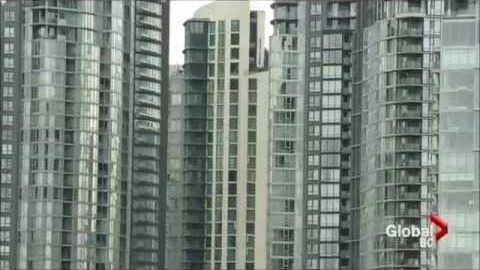
Vancouver ranked 9th for number of towers

At present, with a majority Vision Vancouver government at City Hall, we have a municipal administration that is more strongly tied to the concept and practice of high density, podium and tower high-rise development — as if Vision Vancouver is deep into the pockets of Westbank, Wall Corp., Concord Pacific, Polygon, and a handful of other large development companies — than any Vancouver city government since the woeful days of Terrific Tom Campbell’s ‘development at all costs’ municipal administration.

Under a Vision Vancouver civic administration, over the past six years, our city has become almost unrecognizable from the city we have so long loved as the pace, and podium and tower form, of development has cloaked and distorted the concept of the livability of our city, almost beyond imagining.

star.jpg star.jpg star.jpg

Low-Rise Buildings in Vancouver, a Green Alternative to High-Rises

In 2012, working with a group of fourteen landscape architecture and three planning students, Patrick Condon — University of British Columbia Chair of Urban Design and Landscape Architecture — addressed the question of how Vancouver might reasonably approach the reduction of energy use and consequent greenhouse gas production in the city by at least 80 per cent, by 2050, and how that laudatory & necessary goal might be accomplished.

The answer: the construction of compact, low-rise structures across the city, along its arterials and throughout its neighbourhoods, as a greener, more workable, more energy-efficient alternative to the present form of high-rise development that has so captured Vision Vancouver’s imagination.

Dr. Condon and his students wrote that with the expansion of the footprint of the West End and Yaletown towers into neighbourhoods across the city:

“First, if you follow that approach you end up with two cities. A city of gleaming glass towers spread like beads on the string of the Skytrain line, disconnected with the surrounding areas they overshadow.”

“Second, it sentences neighbourhoods between stations to a future of slowly aging residents, gradually shrinking populations, more empty classrooms, restricted access for young families, fewer commercial services, and an increased dependence on the car to get around.”

Third, “While it is true that high-rises, when combined in large numbers, create GHG-efficient districts, the buildings themselves are not as efficient as mid-rise buildings. High-rises are subject to the effects of too much sun and too much wind on their all-glass skins. And all-glass skins are, despite many improvements to the technology, inherently inefficient. Glass is simply not very good at keeping excessive heat out, or desirable heat in. High-rises, according to BC Hydro data, use almost twice as much energy per square metre as mid-rise structures.”

Fourth, “While high-rises are an attractive option now, how will they age? And how adaptable are they to changes in family circumstances.”

Fifth, “High-rise buildings built largely of steel and concrete are less sustainable than low-rise and mid-rise buildings built largely of wood; steel and concrete produce a lot of GHG. Wood traps it. Concrete is 10 times more GHG-intensive than wood.”

“Sixth and last, our guest lecturers made us painfully aware that people living in single family homes do not appreciate high-rises as neighbours. Politically, it is a nonstarter. So the prospect of supplying the tens of thousands of housing units that our young families and elderly need through the construction of high-rise structures seems naive at best.”

Dr. Condon and his students explored an alternative strategy.

What might happen if the population of the city doubled, and all new residents were placed in areas outside of the downtown core, avoiding wherever possible the problematic high-rise? The outcome?

  • The retention of existing neighbourhood quality, the supply of enough units to house the burgeoning wave of elderly, energy efficiency, housing for young families, housing equity, and neighbourhood preservation through the gentle infill of existing residential streets.

  • The construction of tens of thousands of primarily mid-rise wood frame mixed use commercial / residential buildings on arterial streets.

Typically, four-storey structures replace rudimentary one-storey commercial buildings. When completed, the same or similar commercial enterprises re-occupy the ground floor commercial space. As units are gradually added, neighbourhood commercial services and transit become more viable, as thousands of new potential customers live near bus or streetcar stops, and commercial services. Such a salutary scenario offers particular benefit to (the fastest growing portion of the population) elderly residents, who would have the advantage of walking distance access to transit stops, neighbourhood clinics, inexpensive cafés, and social support facilities.

star.jpg star.jpg star.jpg

Vote for low-rise, human-scale development. And, streetcars.

VanRamblings has just begun the conversation on form of development.

In the coming months, we will be return to the subject again and again and again, as in the next instalment we set about to explore streetcar development as a workable, human-scale alternative to Vision Vancouver’s ‘too developer-friendly for words’ dark-and-dreary tunnel down Broadway.

Patrick Condon. “For the cost of one Skytrain tunnel along Broadway, the city could build a streetcar infrastructure across the entire region.”

Are you listening, Non-Partisan Association (in particular, you, Mr. LaPointe), Coalition of Progressive Electors, Green Party of Vancouver?