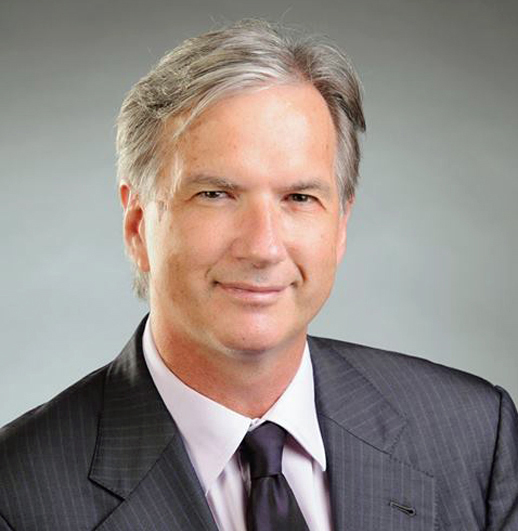
Kirk LaPointe is the mayoralty candidate for the Non-Partisan Association, Vancouver’s oldest municipal political party.
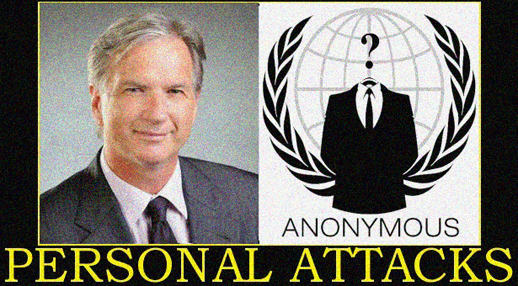
In the past 24 hours, arising from the publication of an unsigned article on the Broadbent Institute’s online publication Press Progress — the article titled Does Vancouver’s conservative mayoral candidate still find picture of gay men kissing distasteful? — a visceral and destructive online controversy was created, the tenets of which was captured by The Straight editor Charlie Smith, in a commentary he published online on Friday afternoon.
In the past, VanRamblings has written about the tendency to viciousness of the Vision Vancouver campaign team, and their penchant (and, seemingly to date, winning strategy) for engaging in the politics of personal destruction, which in 2014 with the emergence of an articulate, relatively charismatic opposition candidate in the form of Kirk LaPointe, bodes ill for those of us who would much prefer that the upcoming Vancouver municipal electoral campaign would be focused on policy over personality.
If wishes were horses, one supposes.
At any rate, please find below Kirk LaPointe’s well-reasoned and thoughtful response to the online provocation of the Broadbent Institute.

Kirk LaPointe | The Vancouver I Want | When context is everything
A campaign is usually nasty. I’ve watched a few dozen of them as a journalist and now I get to experience one from a different place. On Wednesday, VanRamblings published a story on the proposed sale by Vision Vancouver of 12 parcels of land adjacent to the Granville Street bridge, for the development of 120 units of social housing, a new Aquatic Centre, and a new Qmunity Centre — all without any hint of an open, public consultation by Vancouver’s secretive, developer-friendly municipal Council. In today’s VanRamblings column, we’ll provide a timeline of events about which we wrote on Wednesday, in which we sought clarification of the issues raised in yesterday’s harrowing Aquatic Centre To Be Demolished post. Update: VanRamblings learned on Thursday of the City’s Request for Proposal to demolish the Continental Hotel, the RFP closing next Wednesday, August 6th. Why the undue haste by the City in respect of the development of the 12 parcels of city-owned land being offered up? Once the hotel has been demolished, the road is clear for the City to move quickly on their ‘non-market’ housing (always amorphous as to what that means, when it comes to Vision Vancouver) / Aquatic Centre development. In addition, the pedestrian-and-cyclist-friendly Vision Vancouver dominated Council has designs on “renovating” the Granville Street bridge to make it more “active transportation” friendly. All in due time. The Vancouver Cedar Party issued a press release Thursday afternoon which asks questions on the issue of the replacement of the Vancouver Aquatic Centre, none of which have been answered to date by the majority party at City Hall, questions which MUST be answered by Vision Vancouver, if the public is to maintain any faith in their elected officials at Vancouver City Council and Park Board. Also on Thursday, Vancouver Metro News weighed in with information on the proposed development, as did Frances Bula, at the Globe and Mail. First thing Wednesday morning, VanRamblings made contact with Vision Vancouver Park Board Commissioners Constance Barnes and Sarah Blyth to enquire as to whether each was aware of an “offering for sale” of city-owned land, that included a proposal for the demolition of the current Vancouver Aquatic Centre, and the construction of a new Aquatic Centre facility, on the north-end, and due east of the Granville Street bridge. The short answer: no. Commissioners Barnes and Blyth stated that a new or renewed Aquatic Centre was not on the immediate Park Board agenda for consideration. Both were clear in stating that any proposal for a new / renewed Aquatic Centre would include a public consultation process. Both Commissioners Barnes and Blyth went on to state that consideration of a new / renewed Aquatic Centre was, in all likelihood, some years away. VanRamblings also made contact with Non-Partisan Association Park Board Commissioner John Coupar, who told us that he’d look into the matter, and would report out to us following the NPA’s campaign announcement of their 2014 sterling slate of Park Board and Board of Education candidates. Commissioner Coupar told us that he’d spoken with Vancouver Park Board General Manager Malcolm Bromley first thing on Wednesday morning, to seek clarification on issues related to VanRamblings’ Wednesday story respecting a new / renewed Aquatic Centre. Here’s what Mr. Bromley told Commissioner Coupar: yes, the City Planning Department had approached him respecting a “wish list” for renewed Park Board facilities; Mr. Bromley suggested that a new Aquatic Centre might be high on the Park Board’s agenda for future consideration. Other than that, Commissioner Coupar concurred with the sentiment expressed by Commissioners Barnes and Blyth: there’d likely be no consideration given by Park Board, any time soon, to a remediated Vancouver Aquatic Centre, or a new aquatic facility. Recent Park Board historical background respecting the Aquatic Centre: in fact, in 2012, Park Board Commissioners did confront an Aquatic Centre remediation proposal wherein Park Board was asked to approve a sum of monies to repair the centre’s heating facility, which structure had become eroded due to the salt content in the Aquatic Centre’s pools, in the early years of its operation.The Aquatic Centre now uses chlorinated water. Remediation repair monies were approved by Park Board — and note was made by Park Board GM Malcolm Bromley that, perhaps at some future point, consideration might have to be given by Park Board to replacing the Aquatic Centre, should future remediation costs prove prohibitive. In the late morning, and again in the mid-afternoon on Wednesday, VanRamblings met with Vancouver Cedar Party campaign chair Nicholas Chernen to discuss the Downtown South Development Site booklet — which was provided to us for our perusal — the cover of which is pictured at the top of today’s VanRamblings’ blog post, the booklet linked to above. Mr. Chernen told VanRamblings he and his campaign staff ran across the document by accident, when perusing other files at City Hall. Apparently, there was reference made to the document, but actual discovery of the Downtown South Development Site booklet took some while. When Mr. Chernen and his staff finally located the development booklet, a copy was provided to him — for which he had to sign out, recording all of his particulars. Curious. The first few pages of the booklet lay out the details of the obviously-developed-by Vision Vancouver ‘offer for sale’ of 12 parcels of city-owned land adjacent to the Granville Street bridge, which is to say … More detail available on the CityHallWatch website, or by clicking on this link. All of the above leaves a few questions unanswered, including … “Why would a developer purchase one square block of city-owned land upon which a 120-unit social housing unit is to be built, along with the construction of a new Aquatic Centre which upon completion the developer must turn over to the City of Vancouver for $10, a community centre to be built that would also be turned over to the City, and the construction of a bottle depot — none of which properties would turn a profit for a developer, or even offer a return (other than a social justice return) on the developer’s investment of $32.9 million. Why would a developer, then, make such a sure-to-fail economically purchase of city-owned land, unless … The City — which is to say, Vision Vancouver — had struck an under-the-table deal with the purchasing developer to acquire the stretch of beach front property along Beach Avenue where the current Aquatic Centre is located, stretching from Burrard Street along the waterfront, almost all the way to English Bay, prime development property where the ‘Granville Loop’ purchasing developer could turn a potential profit that could very well be in the hundreds of millions of dollars. Who in the media, other than VanRamblings, is asking these questions? Will the August 15th sale of the 12-parcel Downtown South Development Site one square, city-owned block factor into the conversation in the 2014 Vancouver municipal election race? Who out there, apart from the Vancouver Cedar Party, CityHallWatch, and VanRamblings are expressing concern about the secretive nature of the proposed sale of Property Endowment Fund land, and the possible implications of the sale vis-à-vis the future sale of the current Aquatic Centre, and the surrounding, lands? Update: VanRamblings will update the story below on Thursday, with a Wednesday timeline of events and, perhaps, a bit of insight into the character of Nicholas Chernen — who, should he decide to run for Council, goes to the top of our list of preferred candidates (we’ve got a few more, but would be thrilled to add Nicholas’ name). In the meantime, you may wish to read CityHallWatch’s great coverage of the issue addressed below.
On July 19th, Vancouver’s rambunctious civic electoral Cedar Party posted Bridge For Sale, a blog item which suggested … “Vision Vancouver and the Mayor are destroying as much of Vancouver’s transportation infrastructure, and selling off many park commitments for as little as possible before they get voted out of office … It has been found that the land encompassing the Eastern Granville Street Bridge Loop has finally been put up for sale.” Last evening, July 29th, Glen Chernen, Cedar Party mayoralty candidate, made available a Scribd document titled, Aquatic Centre / Granville Bridge Demolition Sale Plans Discovered, in which Mr. Chernen suggests that … “An official City of Vancouver sale package, for the sale and demolition of the Granville Street Bridge off-ramp, for the North side exit to Pacific Avenue, and the pending demolition of the Vancouver Aquatic Centre, to be rebuilt at the base of a new high rise to be located on the present site of the Granville Bridge off-ramp” has been issued, as he goes on to state, “The bidders must submit their final bid in 17 days (August 15th), with their initial deposit on this $32,900,000 assessed property.” VanRamblings will seek clarification of the above contention, respecting the pending demolition of the Vancouver Aquatic Centre, first thing Wednesday morning, both through contact with the City of Vancouver’s Development Services department, and with Mr. Chernen, at his new offices on West Broadway, located across the street from The Hollywood Theatre. In the July 29th Scribd document released by the Cedar Party’s Glen Chernen, he contends, among other things, that … The City suggests a way for the developer to avoid paying cash fees to the city by building a new Aquatic Centre on the off-ramp site and other public works projects, in lieu of cash. Large scale heating systems in Vancouver primarily run through a distribution system owned by Ian Gillespie, the owner of Westbank Projects, a major financial contributor to the Mayor of Vancouver. Damning indictments, if true. Glen Chernen, on behalf of the Vancouver Cedar Party, calls for the establishment of an independent law enforcement department — although he doesn’t suggest where this department would be seated — that would root out fraud and white collar crime at City Hall.
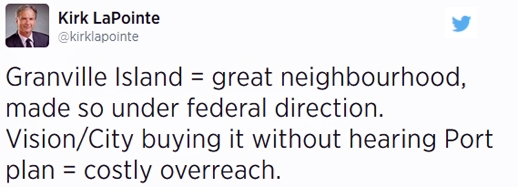
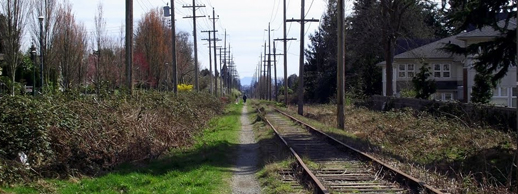
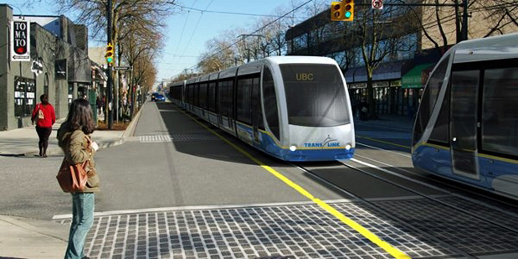
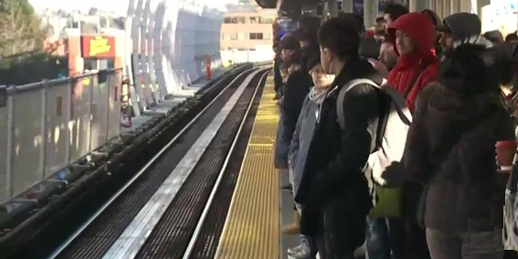
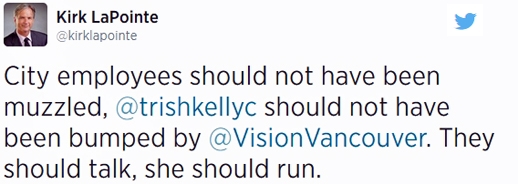
Meanwhile, VanRamblings has heard from a very reliable source that over the past six years, under the stewardship of the Vision Vancouver civic administration, the once huge $3½ billion Property Endowment Fund (PEF) land legacy, consisting of property owned by the City, has been depleted by Vision Vancouver, such that only $300 million remains in the fund. Georgia Straight editor Charlie Smith has written about Non-Partisan Association mayoralty candidate Kirk LaPointe — former Managing Editor of the Vancouver Sun, CBC Ombudsman, and current publisher-editor of Self-Counsel Press — on a couple of occasions, once six weeks prior to his Monday, July 14th candidacy announcement, the other this past weekend. Kirk LaPointe, in The Vancouver I Want: Latest Learnings On the 2nd week of my candidacy, what I am learning and reflecting upon: 1. I may wait for the proverbial cows to come home for my opponents to agree to sign a code of conduct to avoid personal attacks in the campaign. 2. I may wait for the proverbial cold day in Hades for my opponents to open the city’s budget books and permit us a line-by-line examination of how, where and what government spends. Until we get the how, where and what, we have every right to suspect why. 3. Our homelessness issue is not going to be solved on our own in the city. We need a new national conversation on health, justice, income and education, and Vancouver has to lead the discussion. This government makes a mistake by promising to end homelessness (or, as it has reframed the matter in a more modest objective, street homelessness) when it knows it’s an elusive goal on its own. 4. Until we understand how the Port of Vancouver might run Granville Island, Gregor Robertson and the Vision council members should not be pulling out the chequebook to offer to buy it. And if they are serious about it, they have an obligation to consult the community on what they would do and how it would be better than the Port plan. Granville Island became the great neighbourhood under federal watch, not under the city. Ideology should not trump the benefit of the doubt. 5. Until we understand what Gregor Robertson and the Vision council members want to do with the Arbutus corridor, they should not be pulling out the chequebook to buy it from Canadian Pacific Railways. If the asking price is $100 million (which is what it was several years ago), how can that expenditure be justified except through eventual development? And if that’s in the cards, Gregor Robertson and the Vision council members should level with the neighbourhood. 6. Until we understand how Gregor Robertson and the Vision council members intend to finance a subway to UBC, they should not be claiming it is a “new” offering in its literature and commercials. Perhaps “speculative” or “notional” would be the better term to apply to the line. Financial dance partners are required (Ottawa, Victoria, UBC) but the mayor is on the floor alone on this one. It will take billions of dollars from something other than the city, and many years, so “new” is a fib that should be fixed. 7. When did we stop trusting public servants? Bad enough that Gregor Robertson and the Vision council members permit our city executives to forbid public servants to talk directly to the media. But why would we heed the Robertson/Vision call for an independent investigation into two SkyTrain stoppages? TransLink has explained what happened. If there is a reason to distrust this explanation, we should hear it now. If there is a deficient contingency plan, then let’s just fix that. But there would be many more matters deserving of an independent investigation ahead of this. 8. While I might not always agree with Trish Kelly on policy, what happened to her was distressing. She contends she was dumped from the Vision Vancouver ticket on park board and that she didn’t step aside (as Vision Vancouver claimed). Her eight-years-ago performance art video might discomfort a few people, but I had hoped we were well past gendered responses and could also understand how social media shares ideas. Her nomination support indicated immense potential in public life and I hope she finds her way there soon. Her expulsion is an odd move for a party that professes modernity, tolerance and inclusiveness.
I have taught journalism for a decade, where we emphasize that context is everything: when you use a quote, it needs to be fair-minded within wider information and reflective of the overall tone.
I was sideswiped Friday by a story and social media that would have garnered a failing grade in my class.
The Broadbent Institute started the ball rolling with a story based on a 1999 column I wrote as editor of The Hamilton Spectator that branded me a “conservative” mayoralty candidate who might have been and still might be queasy about seeing two men kiss. It raised questions about my commitment to inclusiveness and equality. It pretty well called me a homophobe, and if it didn’t, then the Vision Vancouver clan followed up with Tweets that did.
Before we get any further, let me reproduce the salient part of the weekly column on newsroom decisions so you can understand what was torqued:
“An analysis of what a newsroom covers would show about 30 per cent of it is staged for us: news conferences, photo opportunities, seminars, and other sessions to introduce arguments, ideas, and products.
Another 60 per cent involves events to which we must respond: disasters, breakthroughs, games, reports, and the like.
Only about 10 per cent involves material of our own creation and initiative: the ideas our journalists bring to the job or come upon in the course of their work. They decide there’s a story there and begin to pursue it.
I’m not pleased with this balance, but we’re not alone. That percentage — give or take five points — would hold for every newsroom I know. We are investing heavily in original work and encouraging our reporters to explore. But we spend way too much time covering and not enough time uncovering.
What’s more, we can’t cover nearly as many things as many people and organizations in our communities would like.
Trouble is, what we cover is so often designed purely to appeal to our basic needs for a photo. Stories are helped immensely by illustrations.
A couple of tricky cases this week involved one we decided to publish and one we didn’t.
The new Web site from the Interbrew beer company, appropriately titledbeer.com, staged a media photo opportunity and news conference at SkyDome in Toronto by arranging a zillion beer caps into the shape of its logo on the field.
We went for the bait. Made for a neat photo. Got a reasonable story. But we were used. A novelty photo opportunity lured us into providing valuable space.
Score one for them.
A picture we chose not to publish arose Thursday at a “kiss-in” organized at McMaster University as part of Gay Pride Week.
As it turns out, only one couple kissed for the cameras. We took a few photos of the two men but didn’t run one.
In this case, we determined the event was a basic stunt, and not a significantly attended one. The image itself would be offensive to a number of our readers.
If we are going to risk offending readers — as we have to do from time to time — it should be for exceptional events. On pure news value, this wasn’t one of them.
Our new columnist, Susan Clairmont, wrote extensively on the Mac event. Her words were descriptive enough to help readers understand what happened.
We do not take a hostile view to homosexuality. Our editorial policy has been sensitive, and our portrayal of gays and lesbians has aimed to be informed. But this was a provocative gesture. We were, in effect, dared to not cover the kiss. We decided no.”
So, there you have some context.
There is no sense, as some of the trolls suggest, that I would have found the image distasteful. That is a manufactured word, and anyone without access to the original article would have been easily misled.
I know all about the theories of media manipulation; the people who constructed this were rank amateurs, as were the folks who commissioned it.
By the way, the Broadbent Institute has some meaning in my life. Most probably unlike the anonymous author of the piece about me, I happen to have known Ed Broadbent.
I covered him as a reporter and news editor in his years as NDP leader and beyond. I interviewed him dozens of times and was a friend of many of his MPs, too. He always had a grounded point when he rose in the Commons, he was a figure of integrity, and I cannot recall ever calling him out on slipshod information. I think he’d find disgraceful what his institute produced Friday. (In his highly understandable French, he would have cried: “Je suis outré!”)
Of course, there is much more behind the production of this. As the Georgia Straight reported, the Vancouver-based director of strategic partnerships for the Broadbent Institute is an integral Vision advisor. This piece didn’t happen by chance. It was orchestrated as a tandem job. The institute was merely the vehicle.
That the piece arrived during Pride Week was no coincidence, either. I know enough of the media bag of tricks to realize it was manufactured to scare people and distort my character at a critically newsworthy time as the city learns about me and demonstrates its inclusiveness.
Fear, as those in the LGBT community know, is a remarkable motivator.
The Tweets that followed were intriguing, in that some came from youth executive members of a political party I have long respected for its inclusiveness. The father of its current leader is without doubt the most iconic politician I covered, and I doubt the leader would believe that his ranks should be indulging in such graceless attacks. If I get a chance to see him in town this weekend, I would like to ask him if he condones something like this.
I am not naive about campaigns. All involved have much power and resources to gain and lose from the result, so I will concede people aren’t always at their finest in fighting for the victory. And quite interestingly, I am learning that politicians often don’t do the bidding themselves but conscript others to enter the line of fire. Third-party clamour, particularly in the social media age, is extensive.
I will Tweet and blog in this campaign, but I suspect I will be the only one doing so.
These are early campaign days, but I am starting to experience that form of personal attack that I sought to quell at the outset, and it’s increasingly apparent my opponents have little intention of civil discussion, inquiry or reflection. They have an army of helpers who spread a form of hate. They’re known in the business as trolls.
I feel sorrow and some compassion for these people, because I doubt in their hearts they really believe what they say. They are paid to do it or they are volunteers with hopes of one day entering the inner circle. I don’t suspect they construct their lives with such hostility. I hope they don’t see the world in such black-and-white frames. I give them the benefit of those doubts.
And I recognize it sounds naive, too, when I call for some civility. Our NPA campaign is an uphill battle against a very powerful, well-resourced machinery that spends a lot of money and time constructing a compelling front end in part to disguise what is behind the curtain.
For instance, I would like my opponents to sign a code of conduct to avoid personal attacks. Haven’t heard anything from them on it.
Instead, the response is that smears have started. And, to create plausible deniability, not one political figure has commented in three weeks of campaigning. Only the hired hands and trolls are doing the dirty work.
Let’s be entirely clear: We do not permit intolerance in our association. We are resolute about it.
When our association expelled two elected officials for their assertions on a school board LGBT policy, it sent a clear signal of our way forward. When I criticized Vision Vancouver for expelling one of its candidates for her expression on sexuality, it also sent a clear signal that her candidacy would be welcomed with us.
We were maligned for a private email that Vision chose to made public. I was unhappy about that email and made it quite clear it would not be countenanced as I moved into the mayoralty campaign.
I grew up with bullies all around, so I am used to the attacks and have compassion for those who experience discrimination, anger, shame and exclusion. Those who know me know my heart and mind are open.
Let me also be clear for those (like councillor Tim Stevenson, it seems) who missed the Tweet on Monday: I missed, with regret, the proclamation ceremony Monday for Pride Week. I didn’t have information about it, wasn’t happy I didn’t have that information, and let people around me know so. As a newcomer, in an organization that doesn’t have party status or vast machinery, I’m not privy to every last bit of information out there. We are still assembling our team. So I was sorry I didn’t get there. Didn’t “skip” it, didn’t “choose” not to go, as the Tweeps charged. “Missed” it and regret so. If you think there is a community event I should attend, my email is
Aquatic Centre: Vision Vancouver Pulls a Fast One
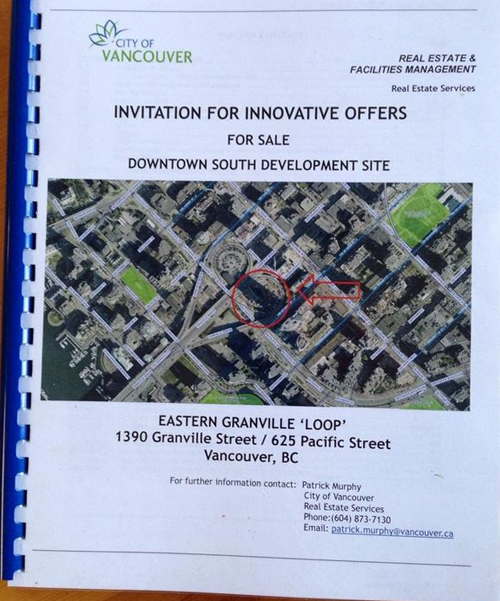
The entire Downtown South Development Site booklet may be accessed by clicking here 
Park Board’s John Coupar, Constance Barnes, Sarah Blyth, and GM, Malcolm Bromley
Vancouver Aquatic Centre To Be Demolished: Bids Close in 17 Days
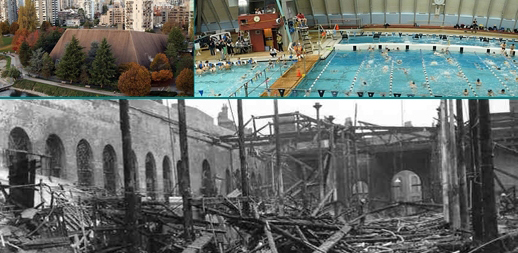
Non-Partisan Association Park Board Commissioner John Coupar is looking into the matter. VanRamblings has contacted Vision Vancouver Park Board Commissioners Constance Barnes and Sarah Blyth seeking comment.

One would have to think that the Fraud Division of the Vancouver Police Department would attend to matters of fraud and white collar crime. As we say above, VanRamblings will seek clarification of Mr. Chernen’s contentious allegations respecting the Mayor and his Vision Vancouver civic party.
Part II of the Aquatic Centre / ‘sale of city land’ story may be found here. 
In 2007, the Non-Partisan Association administration of Mayor Sam Sullivan turned over 14 city-owned sites (part of the PEF) for the development of social housing by the provincial government. Approximately 1,637 new and livable social housing units are now on stream, the most significant social justice legacy of the Sullivan administration, a feat unmatched by the Vision Vancouver administration of Mayor Gregor Robertson, and his colleagues.
If, in fact, the allegations by the Cedar Party prove to be true — that the Vision Vancouver administration of Mayor Gregor Robertson trades development favours with their developer supporters, in exchange for the funding of the Vision Vancouver civic party — and, if it is proven true that, in fact, the Property Endowment Fund has been depleted by Vision Vancouver over the course of the past six years — perhaps as city-owned land given away to their developer backers, or simply sold off to replenish the City’s diminished coffers, such activity, and its consequences, could very well prove to be the story of the 2014 Vancouver civic election.
Little wonder that Kirk LaPointe, the Non-Partisan Association’s mayoralty candidate, is challenging Mayor Robertson to open the books.
NPA’s Kirk LaPointe: A Democrat, Thinks For Himself, On Your Side
Throughout the 2014 electoral campaign, Mr. LaPointe will post to The Vancouver I Want, his 2014 Vancouver civic election campaign blog.
Earlier today, in light of the fact that Charlie Smith makes reference to The Vancouver I Want blog post in his weekend piece, VanRamblings requested permission to re-post Mr. LaPointe’s blog post, supplemented by a re-posting of a few of Mr. LaPointe’s Twitter offerings — which, it should be pointed out, on both counts, Mr. LaPointe wrote himself, sans intervention from the NPA’s Communications team (not that the team isn’t helfpul or competent, but rather that Mr. LaPointe is his own man, and when words appear in print under his name, they’ll be words he has actually written).