
Category Archives: News

#SaveOurParkBoard | Tender Moments of Change at Park Board, Pt 1


The mandate of the elected Vancouver Park Board: building a bridge to a better tomorrow

As the last bastion for civic democracy in our city, the Vancouver Park Board has played a vital role in serving the best environmental, recreational and family interests of the community for more than 133 years, since its founding in 1889.

For many years, members of the community who attended Park Board meetings to address an issue or a “cause” sat at the same table as the elected Park Board Commissioners while addressing their concern, and were successful in having a direct impact on the livability and humanity of our beloved home by the ocean.

Today on VanRamblings, the first of two “stories” revolving around humanity at the Park Board table, specifically involving past Park Board Chairperson John Coupar, as well as Park Board Commissioners Trevor Loke and Constance Barnes, who sat on the 2014  Vancouver Park Board with Commissioners Sarah Blyth, Melissa De Genova and current British Columbia Attorney General, Niki Sharma.

Vancouver Park Board Adopts an Inclusive Trans & Gender-Variant Policy
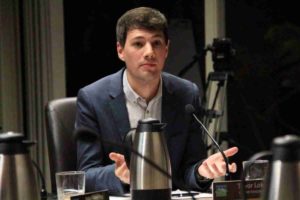

Trevor Loke, Vision Vancouver Park Board Commissioner

At the  May 12, 2013 meeting of Park Board, Commissioner Trevor Loke moved a motion to establish a trans and gender-variant working group, aimed at creating more inclusive spaces for members of the trans and gender-variant communities.

The Park Board Commissioners unanimously supported the motion, drawing a standing ovation from the dozens of supporters of the motion, present in the Park Board meeting room that night, many of the attendees sharing trenchant stories with the Commissioners about their experiences of feeling unwelcome in city facilities, such as recreation centres, swimming pools, and washrooms.

“There are days when with the best intents I’m off to the gym or off to the pool, and I turn around and I go back,” said Drew Dennis, a member of the City of Vancouver’s LGBTQ advisory committee.

One year later, on Monday, April 28, 2014, the Vancouver Park Board’s Trans* and Gender-Variant Inclusion Working Group reported back to the seven Park Board Commissioners gathered at the table, on their engagement findings and priority recommendations, aimed at enhancing service quality and access to facilities.

On that warm, early spring evening, 150 members of the trans and gender-variant community were present in the Park Board meeting room to address the recommendations of the working group, a good number of whom who would come to sit at the Park Board table while speaking to the Commissioners: incredibly articulate physicians employed by Vancouver Coastal who identified themselves as gender-variant persons on the spectrum, who spoke movingly and with spirit.

Young persons, high school students, members of the business community, teachers, lawyers, construction workers, actors and entertainers, seniors, a broad and representative spectrum of members of the cultural and ethnic mosaic communities that comprise and have long defined the Vancouver we know and love.
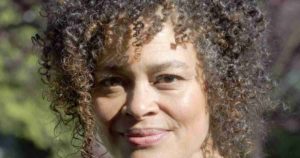

Constance Barnes, elected Chairperson of the Vancouver Park Board, on December 5, 2011

When it came time for the Commissioners to vote to adopt and establish a 2SLGBTQIA+ policy, the first Commissioner to speak was Vision Vancouver Park Board Commissioner Constance Barnes, who spoke with eloquence in her support of each of the members of the 2SLGBTQIA+ who were present in the room, down the long hallway outside the meeting room, and who had been standing outside the office listening to the speakers, now ready to hear Ms. Barnes’ words.

Constance Barnes’ address to the community gathered in the room, and to her fellow Commissioners, was heartbreakingly poignant, as she spoke of “righting an historical wrong”, of how — as a member of a minority community — she had often found herself excluded and even demeaned, and of how important it was to her that the Board unanimously adopt the motion to establish a 2SLGBTQIA+ policy that, among other initiatives, would construct all new change rooms, including three separate change rooms: Universal (U), Women (W) and Men (M).
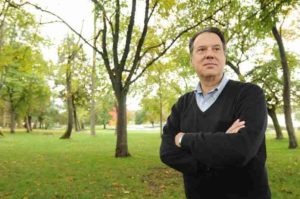

John Coupar, long-serving Non-Partisan Association Vancouver Park Board Commissioner

Next to speak: Non-Partisan Association Park Board Commissioner, John Coupar.

“Sitting at the Park Board table this quite wondrous evening, as was clearly the case with my fellow Commissioners, I was heartened and stirred by all that I heard, of the grace and vivid evocation of spirit of all the speakers, your pointed, poignant and potent argumentation for necessary change to establish a fairer and more inclusive society, and the role that the Vancouver Park Board has to play in realizing a more inclusive community for all.

Listening to the speakers who sat at the Park Board table this evening, I was moved. I am changed, forever. For me, the best part of being a Park Board Commissioner is how I am afforded the opportunity to learn about aspects of life about which I was not fully aware. I want to thank you for helping to make me a better, a more whole person, and for working with us to help create a fairer and more inclusive city for all.

2014 is an election year. If I should be so fortunate to  be re-elected to Park Board this autumn, and should I become the Chairperson of the Board, I commit to you tonight, that my first priority will include the construction of the new change rooms that Commissioner Barnes spoke about, but more: I will establish, as was requested this evening, a gender variant swim at the Templeton and Lord Byng pools, and during my next term in office, I will work with the 2SLGBTQIA+ community to create a welcoming environment in our community and aquatic centres, to work with you towards the creation of a fairer community for all.”

Indeed, John Coupar was re-elected as a Park Board Commissioner on Saturday, November 15, 2014, and was soon after inaugurated as Chairperson of the Board at a ceremony held at the VanDusen Botanical Gardens, on December 1, 2014.

Park Board Chairperson John Coupar’s first priority?

Establish a gender-variant swim at each of the Templeton and Lord Byng pools.

Next, Chairperson Coupar instructed Park Board General Manager Malcolm Bromley to begin work on the construction of inclusive change rooms and washroom facilities for members of the trans and gender variant communities.
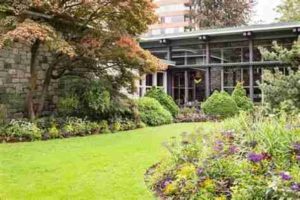
In the 50+ years VanRamblings has covered the work that takes place at the Vancouver Park Board table, never have we been more moved than was the case this hallowed evening of change for the better, never before or since have we experienced as moving and eloquent a speaker than was the case with Constance Barnes on that particular late evening of April, 2014, and never, ever have we been more proud of an elected official than was the case that halcyon evening, and since, in the person of John Coupar, a true hero in our fair city by the sea.
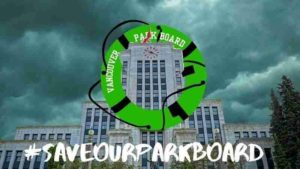

Click / tap on the graphic above to sign  the Save Our Park Board Petition started by Sarah Blyth
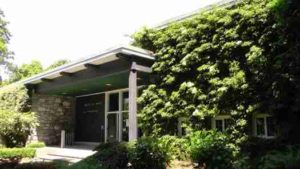
#SaveOurParkBoard | Park Board History & Mandate

Vancouver Park Board History + Commissioners’ Mandate & Compensation

Established by an 1889 amendment to the Vancouver Incorporation Act, 1886 (later the Vancouver Charter). The Vancouver Park Board is unique not just across Canada, but across North America, as well (and the globe, for that matter), as the sole elected body of its kind, and as British Columbia’s Attorney General, Niki Sharma — herself, a former celebrated Vancouver Park Board Commissioner — recently told VanRamblings, “the Vancouver Park Board is a cherished institution.”

Correction, sent in by a reader. Vancouver is one of many jurisdictions in North America to have a semi-autonomous elected Park Board. It’s not unique, though it is the largest city in North America to have an elected Park Board. Although Vancouver, B.C., is the only major city in Canada with an independently elected Park Board, Minneapolis, MN, is a major U.S. city with a similar, long-standing, semi-autonomous elected board. While Vancouver’s board is unique in Canada, elected park boards exist in various U.S. municipalities, including Oregon, Illinois, North Dakota, and local districts in California and Washington.

Vancouver Park Board has seven elected commissioners who are charged with determining the policy direction of the institution. The Board’s mandate: “provide, preserve and advocate for Vancouver’s parks and recreation system … to the benefit of the citizens of Vancouver, the many neighbourhoods that comprise our beloved home, the City of Vancouver, and to advocate for the environment, as our parks represent the lungs of our city, contributing to the health of the community.”

Commissioners are elected at large every four years, with a chair and vice-chair elected by the Commissioners each December, their term to begin at the first meeting of Park Board Commissioners, in January, following the holiday break. At present the Vancouver Park Board Chairperson is Brennan Bastyovanszky, the Vice-Chairperson Scott Jensen, Park Board Committee Chairperson (the body which hears public presentations, and where all the “real” work of the Commissioners takes place), Laura Christensen, with Scott Jensen Vice-Chair.


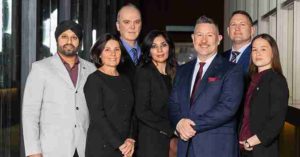
Vancouver Park Board Commissioners | L-R: Jas Virdi (ABC), Marie-Claire Howard (ABC), Tom Digby (Green), Angela Haer (ABC), Independents: Scott Jensen, Brennan Bastyovanszky, Laura Christensen

Park Board Commissioners served without remuneration until a 1972 amendment to the Vancouver Charter allowed them an annual honorarium of $1000. At present, for a not unusual 45-hour work week (this apart from the Commissioners’ regular employment in their professions), the Park Board Chairperson earns $23,428.65 per annum, with Commissioners earning $18,743.38 annually, or about 12.5% of the compensation afforded the average City Councillor at Vancouver City Hall.

The Vancouver Park Board oversees 242 parks and gardens, including major park “attractions” such as  the 1,000 acre / 406 hectare Stanley Park, the VanDusen Botanical Garden on Oak Street, and the Bloedel Conservatory atop Queen Elizabeth, 24 active community centres located in each neighbourhood across the city, the Park Board also responsible for Vancouver’s pools and water park system, and well-maintained skating rinks and playing fields, as well as three non-profit, well-used-and-enjoyed public golf courses, Langara, McCleery and Fraserview.

Today and tomorrow, we’re taking a break from the politics of Vancouver City Councillors making the horrendous, anti-democratic decision to eliminate the elected 133-year-old Vancouver Park Board, the last bastion of civic democracy in Metro Vancouver, where members of the public are listened to and respected, and have a direct impact on the setting of public parks and recreation policy.

On Wednesday, we’ll write about tender moments around the Park Board table — involving past Park Board Chairpersons John Coupar and Aaron Jasper, once on opposite sides of the political spectrum and avowed “enemies”, but who thanks to the shocking decision of the ABC Vancouver Councillors at Vancouver City Hall to attempt to abolish Vancouver’s elected Park Board have, in common cause, become new best friends, with John Coupar saying to VanRamblings recently ..

“I can’t believe how skilled Aaron is at organizing. Each and every time we get together I am more and more impressed with his intelligence, his dedication, and his love and commitment to Vancouver’s parks and recreation system, and the preservation of Vancouver’s elected Park Board. Working with Aaron is a joy!”

As you can see from the commentary above, some good is coming out of the Ken Sim-led fiasco to eliminate Vancouver’s elected Park Board. In addition to John Coupar and Aaron Jasper’s newfound friendship, former Vancouver Park Board Commissioners Sarah Blyth (a city hero, and founder of the Overdose Prevention Society) and Melissa De Genova, a two-term Vancouver City Councillor, have also now become new best friends, working together in common cause to ensure going forward, and long into the future, Vancouver will enjoy an elected Park Board.

Click / tap on the graphic above to sign  the Save Our Park Board Petition started by Sarah Blyth
Save Our Park Board GoFundMe Display Campaign
Click / tap on the graphic above to donate to the Save Our Park Board GoFundMe display campaign

#SaveOurParkBoard | Council Moves to Abolish Elected Park Board

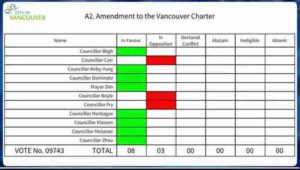
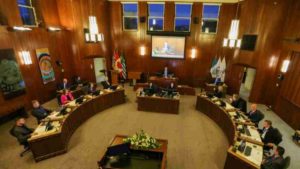
On Wednesday, December 13th, the eight members of the elected majority on the ABC Vancouver City Council — led by Mayor Ken Sim — voted unanimously to a eliminate an elected Vancouver Park Board, the most successful elected Park Board on the continent which, dating back to its creation in 1889, has overseen the growth of a parks system in the City of Vancouver that is the envy of the world.

In the coming days weeks, months and years, VanRamblings will explore why this electoral abomination occurred, what this wrong-headed decision means electorally for the elected Councillors who comprise the “super majority” ABC Vancouver holds at City Council, and what impact the decision of Council has had and will have on the provincial government led by Premier David Eby — whose government is compelled to review and entertain the motion passed by Vancouver City Council requesting that the government enact the necessary change to the Vancouver Charter that would abolish the elected Park Board.

As Vancouver City Councillor Christine Boyle states in her tweet above, ABC Vancouver did not run on a promise to eliminate the elected Vancouver Park Board. From a July 28, 2022 article written by CBC civic affairs reporter Justin McElroy …

The Vancouver mayoral candidate who promised to get rid of the city’s independent park board is now saying he’d like to keep it.

“Vancouverites deserve well run parks now. We can’t wait three to four years to make an administrative change,” said A Better City (ABC) mayoral candidate Ken Sim, who announced his party’s park board candidates and platform Thursday morning.

The candidates are Brennan Bastyovanszky, Laura Christensen, Angela Haer, Scott Jensen, Marie-Claire Howard and Jas Virdi.

They will be running on a platform of repairing aging infrastructure, doing a financial audit of the park board, improving the Stanley Park bike lane, and making permanent the pilot allowing drinking in parks, expanding it to all major parks and starting a separate pilot for drinking at beaches.

A Done Deal | Council Votes to Eliminate Elected Vancouver Park Board


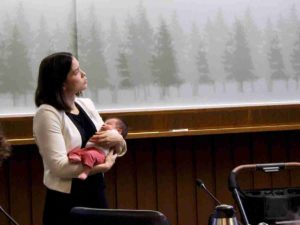
Vancouver Park Board Commissioner at Vancouver City Hall, holding her new, month old baby

A statement from Laura Christensen, Vancouver Park Board Commissioner …

Click on this link to hear duly elected (now former) ABC Vancouver Park Board Commissioner Laura Christensen address the whole of Vancouver City Council on December 13, 2023 —  including her ABC Council running mates —  on the initiative of the political party she ran with to eliminate the elected Vancouver Park Board.


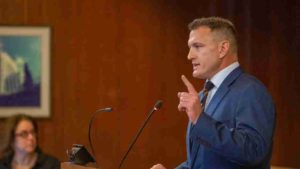
Brennan Bastyovanszky, elected chair of the Vancouver Park Board, urged Mayor Ken Sim and Councillors, Wednesday, December 13, 2023 not to begin the process to abolish the elected Park Board

In point of fact, 82 members of the Vancouver public —  including more than 20 past, elected Park Board Commissioners, as well as dozens of citizens who have appeared before the Vancouver Park Board to argue their case in respect of Vancouver’s parks and recreation centres —  spoke passionately to the members of Vancouver City Council, to protect “the last bastion of civic democracy in the Metro Vancouver region, and a cherished institution that has made Vancouver not only the parks capital of North America, but the envy of the world, across our globe.”

Next week, VanRamblings will set about to refute the notion espoused by Mayor Ken Sim that the Vancouver Park Board is “broken” or the — forgive us for saying so, the ludicrous, and utterly unsupportable — notion that there are “millions in savings” to be had by eliminating the elected Vancouver Park Board, by turning over the responsibility of governance to an already over-extended and far-too-busy-by-half Vancouver City Council, wherein VanRamblings will refute the (unintended) disinformation contained in Emily Lazatin’s Global BC news report on the proposal by Vancouver City Council to abolish Vancouver’s elected Park Board.

Make no mistake, no matter what the speakers had to say who presented to Vancouver City Council on preserving an elected Vancouver Park Board, no matter how reasoned their arguments, no matter how articulate and passionate their presentation,  ABC Vancouver Councillors had made their minds up well in advance of hearing speakers in Council chambers, arising from an imposed caucus “solidarity” issued by the Mayor’s office directing ABC Councillors to eliminate the elected Park Board — note should be made that ABC Councillors were not even informed of the change of direction in respect of the elected Park Board by Mayor Ken Sim prior to his announcement in the press to abolish the elected Park Board — it was a “done deal”, no matter the information presented to ABC Vancouver  Councillors.

The difference between the Vancouver Park Board and Vancouver City Council?

At the Vancouver Park Board table, members of the public can change the mind of Park Board Commissioners, and affect the direction and priorities of Park Board — on Wednesday, VanRamblings will present two cogent examples of the public effecting a meaningful policy change at Park Board — whereas at Vancouver City Hall, more often than not, the minds of Councillors have been made up long in advance of hearing from the public. Autocracy reigns at Vancouver City Hall.

Democracy, on the other hand, reigns long at the Vancouver Park Board table.

Click / tap on the graphic above to sign  the Save Our Park Board Petition started by Sarah Blyth
Save Our Park Board GoFundMe Display Campaign
Click / tap on the graphic above to donate to the Save Our Park Board GoFundMe display campaign

#CDNPoli | Canada’s New Dental Care Programme


Don Davies, NDP member of Parliament for Vancouver Kingsway, since 2015.
Father of Canada’s new Dental Health Care Programme, and Dental Care for Canadians.

On Monday, December 11, 2023, the Canadian government announced a new Dental Care Programme that will cover the 9 million Canadians who do not, at present, have dental coverage.

“Far too many people have avoided getting the care that they need simply because it was too expensive, and that’s why the Dental Care Programme is essential to the health of Canadians,” federal Health Minister Mark Holland told the news conference held in early December 2023, introducing the new programme.

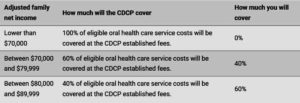
The Canadian Dental Care Programme when fully implemented will provide dental care to families whose annual net income is less than $90,000, and who don’t have access to private insurance. Full coverage, with no co-pay will be available to families whose annual net income falls below $70,000, while Canadian families with an income between $70,000 and $90,000 will pay a co-pay fee, as per the chart above.

Canada’s federal Finance Minister, Chrystia Freeland, set aside and has budgeted $13 billion over a five-year period, commencing in early 2024, to pay for Canada’s new Dental Care Programme, introduced in her most recent budget, on Tuesday, March 28, 2023, or $2.6 billion per year drawn from Canada’s current annual federal budget of $497 billion dollars, which is to say, 0.523139 per cent of our annual federal budget, just a tad over half a per cent to fully cover the 9 million Canadians across our land who currently suffer without any dental coverage.

The introduction of Canada’s new Dental Care Programme occurs as a consequence of the Supply and Confidence Agreement struck on March 22, 2022 between the governing Liberals and the opposition New Democrats, that since its implementation has affected legislation introduced by Justin Trudeau’s federal Liberal party, ranging from legislation that bans the use of replacement workers (scabs) in federally regulated workplaces during a strike or lockout; Bill C-58 preventing employers from hiring “scabs” to do the work of unionized employees on strike or locked out, to the implementation of a groundbreaking dental care programme that will cover 9 million Canadians currently without dental care coverage.

Negotiation for an inclusive Canada-wide dental care programme began shortly after the signing of the Supply and Confidence Agreement, the negotiation involving then federal Liberal Health Minister Jean Yves-Duclos, and the New Democratic Party’s well-respected Health Care critic, Vancouver-Kingsway MP, Don Davies.

For much of the past two and a half years, the negotiation for an expansive and inclusive, publicly-funded Canadian dental care plan was an uphill battle for NDP Health Care critic Don Davies, as Jean Yves-Duclos and Mr. Davies parried back and forth, the process of realizing the new programme an at times arduous, unresponsive and unforgiving one. All that changed for the better, though, in recent months.

Don Davies is, indeed, Canada’s dental health care warrior, and the father of publicly-funded dental health care in Canada, as Tommy Douglas was the father of Medicare. For Don Davies, patience and persistence has paid off for all Canadians.

Final negotiation for the introduction and implementation of Canada’s new Dental Care Plan began in earnest when Don Davies’ good friend, former Liberal House Leader Mark Holland was appointed as Canada’s Health Minister, in September.

Mark Holland and Don Davies are known on Parliament Hill as Batman and Robin, are very good friends, and on the same page when it comes to social legislation. When making the announcement of Canada’s new dental care programme last month, very much together on the same stage, at the same podium, you could see their obvious affection for one another, as well as pride and joy at a job well done.

Canada’s new Dental Care Plan will be phased in over the course of the next year.

Now: the details of the phase in strategy, how and how much dentists will be paid, and what the new Dental Care Plan will cover, as told to VanRamblings by Don Davies at a Town Hall conducted in his riding, in November, just prior to the federal government’s announcement of the implementation of one of the largest, most inclusive pan-Canadian social programmes legislated into being in the past 50 years.

Mr. Davies told those assembled at the Town Hall that in 2022 – 2023 an exhaustive search took place to identify an insurance corporation that could efficiently and effectively administer Canada’s proposed new Dental Care Programme.

In June 2023, Mr. Duclos and Mr. Davies made the decision to turn over the administration of Canada’s proposed new Dental Care Plan to Sun Life Canada, one of our country’s largest public companies, and at present one of the world’s largest multi-national life and health insurance, and asset management companies.

The following is the mandate of Sun Life, the task they have been charged with by the federal government that will lead to the realization of Canada’s new Dental Care Plan, covering the 9 million Canadians currently without dental insurance …

  • Sign up 90% of Canadian dentists to the country’s new Dental Care Plan. Dentists will be paid 85% of their province’s Dental Fee Schedule. Sun Life is to reimburse dentists within 48 hours of dentists submitting their claim to Sun Life Financial;
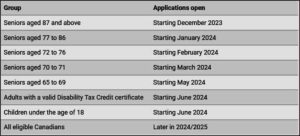
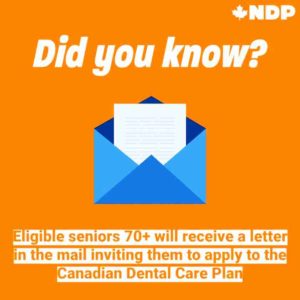
  • In December 2023, Sun Life began signing up all eligible Canadians aged 87 and older, with eligible seniors set to be contacted and signed up in March 2024. Dental coverage for the former group is set to begin as early as May 2024;
  • Effective June 2024, Sun Life will begin to sign up all eligible Canadian children, birth to 18 years of age, dental coverage for this cohort to begin this late summer;
  • All remaining eligible Canadians will be registered for Canada’s new Dental Care Programme effective this autumn, with implementation of coverage for this cohort to start at the beginning of, or early in 2025.

Thus far, the roll-out of Canada’s new Dental Care Programme moves on apace, with the sign-up of Canadian dentists moving ahead as projected, with the sign-up of Canadians also moving ahead as projected, the Dental Care Programme set to be fully realized by the end of 2024, covering the 9 million eligible Canadians.

Applications will open in phases, starting with seniors aged 87, which began in December 2023, followed by other age groups as per the chart above.

Coverage under the Canada’s new Dental Care Plan will commence as early as May 2024, with seniors being the first group eligible. The actual start date for accessing oral health care will depend on the specific group you belong to, the timing of your application, and when your enrolment is processed.

Now for the part you’ve been waiting for: what dental procedures will be covered ?

  • Oral surgery services, including tooth extractions;
  • Restorative services, including fillings for cavities, cracks, and broken teeth;
  • Crowns, but as Mr. Davies told VanRamblings last week, “only if medically necessary.” As an example, if you have a crown, but the gums beneath the crown become infected and in order to resolve the infection, the existing crown must be removed, and replaced, such would be considered “medically necessary”, and the expense involved in the dental work, taking an impression of the crown/tooth, and the manufacture and subsequent Crown placement in your mouth would be fully covered;
  • Repairing a chipped tooth, bonding the most likely repair route your dentist will likely recommend;
  • Root canals (endodontic therapy), the dental treatment for infections in tooth pulp, the innermost layer of your teeth;
  • A full and in-depth teeth cleaning, including scaling, sealants, a flouride treatment (if so desired) and polishing;
  • Dental X-rays, to evaluate your dental health;
  • General anesthesia, also known as deep sedation dentistry, if required;
  • Partial and complete dentures;
  • Orthodontic services, including braces and retainers, and much more;
  • Periodontal care, the branch of dentistry that focuses on the health of your gums and jawbone — the tissues that support your teeth. A periodontist is a gum specialist.

At present, the only dental procedures that will not be covered — unless they are considered medically necessary — are veneers and tooth implants, which are considered to be cosmetic dentistry, rather than a medically necessary procedure.

In somewhat related good news, federal Conservative Party leader, Pierre Poilievre, who last spring in Parliament, and in front of crowds at the Trump-like rallies he holds, was adamant that the first two “fiscally prudent” measures he would take upon becoming Prime Minister would be to cancel $1.3 billion in annual funding for the CBC, cutting as well the annual $2.6 billion funding for public dental care, has for the latter — according to Lisa Raitt, former Minister of Transport / Labour / Natural Resources during the 10-year term of the Stephen Harper government — in a recent discussion on CTV News Channel’s Power Play with Vassy Kapelos, told Ms. Kapelos that Mr. Poilievre, recognizing that by the time the next federal election rolls around in the fall of 2025 that Canada’s new Dental Care Programme will be fully implemented and popular with Canadians across the land, and because becoming Prime Minister is of paramount importance to him, has reversed himself on his commitment to cancel the Dental Care Programme

” … as Erin O’Toole did in 2019, when initially he told Canadians that a key plank in his platform would be to cancel the wildly popular Canada Child Benefit, reversing himself on the matter before the 2021 federal election, lest it become an issue that would cause his defeat. Canada’s new Dental Care Plan is here to stay,” Ms. Raitt told Ms. Kapelos, and her fellow panel members.

Once enrolled, Canadian residents who qualify will be sent a welcome package by Sun Life, with a member card and a starting date for when their oral health care services will be covered. Those Canadians who are eligible for enrolment in the new Dental Care Plan will be able to start experiencing oral health-care as early as May 2024, as above, commencing with coverage for Canada’s seniors population.