Category Archives: Music

Music Sundays | Rickie Lee Jones | The Girl at Her Volcano

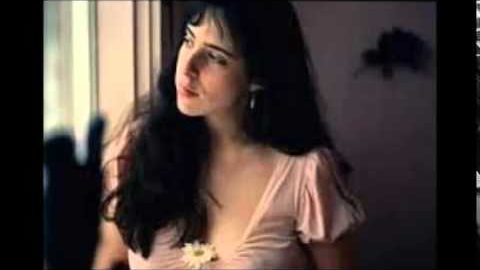
Rickie Lee Jones, The Girl at Her Volcano

At age 15, a young Rickie Lee Jones dropped out of school and ran away from her Pacific Northwest home in search of her father, an itinerant jazz musician, who had abandoned her family when she was 10 years of age. After spending time living in a barrio in Los Angeles, once on the road again, Rickie Lee finally located her father in Kansas City, Missouri — but didn’t end up staying very long, instead returning to her Puget Sound home, writing her GED, enrolling first at a small college in Tacoma, and afterward, at age 18, moving south to Huntington Beach, California.

Tom Waits’ interpretation of the classic Bernstein/Sondheim song, Somewhere, from the 1961 musical West Side Story, the song on the 1978 Tom Waits album, Blue Valentine.

While in L.A., Rickie Lee played in bars and coffee houses in L.A., and at the age of 21 she began to play in clubs in Venice, sitting in with various jazz bands. Soon after Rickie Lee moved to Venice, where she met local piano player and songwriter Alfred Johnson, the two of them in time setting about to compose the songs Weasel and the White Boys, and Company, both songs later included in Rickie Lee’s eponymous début album.

By 1977, Rickie Lee was playing original material at Hollywood’s Ala Carte Club, when she came to the attention of Tom Waits, who was particularly impressed with her interpretation of a song her father had written, The Moon is Made of Gold. By early 1978, Rickie Lee found herself in the studio where Tom Waits was recording his latest album, Blue Valentine.

Towards the end of the Warner Bros. Blue Valentine recording session, with all the musicians in the room, Rickie was asked if she wanted to record some tracks on the master tape, whereupon she laid down four tracks: Weasel and the White Boys, Company, Easy Money, and The Last Chance Texaco — and thought nothing more of it, until Warner Bros. executive and producer Lenny Waronker was listening to the master tape in his office one day, and was floored when he heard Rickie Lee Jones for the first time.

A year later, in March 1979, Rickie Lee Jones was released and became a hit, buoyed by the chart success of the jazz-flavoured single Chuck E.’s In Love, which hit No. 4 on the Billboard Hot 100. Rickie Lee became an overnight sensation, touring the album across North America and Europe.
I saw Rickie Lee in Vancouver, at The Orpheum, in the summer of 1979.
Rickie Lee followed up her début album with Pirates, considered by many to be her masterpiece, the album returning her to the upper echelons of the charts, along the way garnering a rave five-star review in Rolling Stone.

Long story short, success proved a challenge for Rickie Lee. Behind the scenes, by late 1982 Rickie Lee was struggling with intense addictions, ranging from alcohol, to heroin and cocaine. The authorities were aware of her drug usage, as a Reagan administration set about to make an example of her, and charge and jail her. An oft told tale in the music industry.
Prior to her being charged, Warner Bros. made arrangements to spirit Rickie Lee out of the country, to the south of France — but before leaving, Rickie Lee insisted on recording a 10″ EP, 1983’s jazz-infused Girl At Her Volcano, a virtually unknown album in Rickie Lee’s vast discography, but by far my favourite Rickie Lee recording, and the music which became the soundtrack of my children’s lives in their early, and most formative years.

Lush Life (Girl at Her Volcano), recorded live at L.A.’s Perkins Palace, April 16, 1982

Cobbling together a recording as best they could before spiriting a troubled Rickie Lee out of the country and to safety, the Girl At Her Volcano EP, while highlighting Rickie Lee’s propensity for jazz material, given that the recording is evenly split between classic pop studio and live jazz material actually reveals itself to be a surprisingly cohesive recording.

The studio material, arrangement and production-wise, balances the atmospherics of 1981’s Pirates with the impressionistic, airy tone of The Magazine, which also was to display a return to a more upbeat, joyous jazz-pop style. The lone original is the beautiful two-minute Hey Bub, which, as the liner notes reveal, was the first song written for Pirates in September 1979 but was left off the LP. It’s similar to those lonely, sad, forlorn ballads from the album like Skeletons or The Returns, and similarly gorgeous.

The brief, electric piano-fuelled So Long is a Girl At Her Volcano highlight.

The real highlights of Girl At Her Volcano, though, have to be her sublime live renditions of some notable jazz standards. Rickie Lee’s interpretations of Lush Life and My Funny Valentine breathe new life into familiar material; her emotive vocals and inventive phrasing completely rejuvenate and revitalize the songs. She puts in a passionate vocal performance, certainly, but also a technically superb performance — with dazzling range, precision, and control. Rickie Lee’s voice is not especially big but she wows with her incredible feeling and ability. Those two recordings are from consecutive nights in Pasadena’s Perkins Palace and the LA’s Roxy on April 17-18, 1982, and, along with a September 1979 recording of Something Cool from Amsterdam’s Theater Carre, represent three of Rickie Lee Jones’ career best vocal performances, simply moving and spine-chilling in their intensity.
All of six years of age, when Megan first heard Girl At Her Volcano, and Rickie Lee’s interpretation of Richard Rodgers’ My Funny Valentine — Jude and Megan and I were on our way back home from Seattle, where we’d spent the weekend, as we did once a month throughout the 1980s, and where I’d pick up a cassette of the as-yet-unreleased-in-Canada Girl At Her Volcano EP, late in the day, the night sky dark, clear and purple, Megan sitting nestled in the passenger seat, Jude sound asleep in the back seat, she turned to me and quietly asked, “Daddy, how can someone say …

Your looks are laughable
Unphotographable.

Is your figure less than Greek?
Is your mouth a little weak?
When you open it to speak
Are you smart?

“… isn’t Rickie Lee being cruel when she sings those lyrics? Are those the words you use to say to someone you love, that you really love them?”
From that chill 1983 autumn night until this pandemic-infused mid-autumn November, My Funny Valentine remains a Rickie Lee Jones unfavourite song for Megan, however much she loves everything else that Rickie Lee has recorded over the years, the soundtrack of a young girl’s life growing up, and now the mother of three children, living over on Vancouver’s east side.
Have a listen, and see what you think of Rickie Lee’s My Funny Valentine.
Music Sundays | Sorrowfulness | Burt Bacharach & Elvis Costello

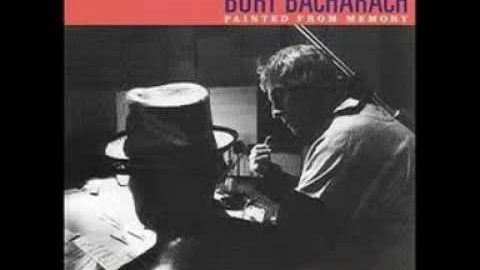
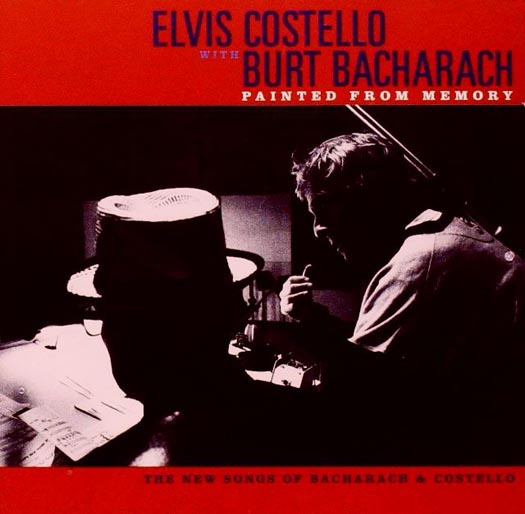
Elvis Costello and Burt Bacharch's heartbreaking 1998 collaboration, Painted From Memory.jpg

The perfectly matched, heartbreaking, heavenly collaboration between Elvis Costello and Burt Bacharach, Painted from Memory, the pop-music masterpiece, was released on the 29th of September 1998 — slightly old-fashioned, yet insistently clear and capable of flooding the heart with all the awful beauty of love’s highs and lows … mostly lows … “In the darkest place,” it all begins, “I know that is where you’ll find me” — remains to this day one of my favourite albums ever, one I go back to again and again.

The people we meet on the album who move through these 12 perfect pop songs aren’t teenagers tasting first-love tears.
They’re grownups who know what they’ve done to themselves, their hearts broken, who are now enveloped in a realm we’ve all visited from time to time, a dimension where time ticks away just a bit more slowly and the world passes by at a remove. They are displaced and disconnected, seen only in fine silver frames, distant cities or watching from afar. They live in empty houses, waiting for sleep to come to take them somewhere else, and all this they do to music meticulously crafted by two experts of the form.

Neither producer Burt Bacharach nor composer Elvis Costello is a stranger to collaboration, but together they are a singular pairing, as Costello brings discipline and edge to Bacharach’s lush melodic outpourings, while Bacharach returns the favour by setting Costello’s exacting progressions and taut wordplay in soundscapes that are both intricate and silky smooth.
Take, as a spectacular example, the gorgeous ballad What’s Her Name Today?, a Costellian pondering on the ruin brought about by those in pain that’s not so much backed by Bacharach’s purposeful grand piano as admonished — you’re a fool it declares, before sweeping up the whole affair into a whirlwind of strings and human wreckage.

Other times, they’re more sympathetic, deploying Bacharach’s famous mellow trumpet to harmonize with the vocals on the tricky tale of infidelity Toledo, or winking at the conceit of The Sweetest Punch by threading the tune with chimes, a lovely instrument you have to hit, with mallets.

In the song above, the horns say a little prayer, below … the bells chime.

The sum of this artistic one + one is more than strictly musical. By coming together when they did, each man underwent a kind of recalibration whereby the sheen of kitsch acquired by Bacharach’s body of work since his ’60s heyday was stripped away, and Costello, then in his mid-40s, shed the last lingering remnants of his image as an angry young man.
In turn, Painted from Memory itself became a bridge, connecting classic works of love and loss — think Frank Sinatra’s ninth studio release, 1955’s concept album, In the Wee Small Hours — to the wave of pop-jazz new schoolers (Norah Jones, Michael Bublé) that followed closely in its wake.

Costello and Bacharach know that opening yourself up to the sentimental side of life exposes you to its cruelties as well; it takes courage, so Painted from Memory concludes with a plea for fortitude and grace.
God Give Me Strength — which they wrote over the phone lines — is the first of the pair’s dual efforts and it remains one of the best, an achingly gorgeous last-stand waltz through the end stages of grief. “That song is sung out,” it concedes, “this bell is rung out.” Except that it isn’t, because there’s something in all of us, the part Painted from Memory renders so well, that will always wait for the bell to ring. That damned, beautiful bell.

Music Sundays | Laura Nyro, and Christmas & The Beads Of Sweat

The music of American singer-songwriter, Laura Nyro

On this post election Sunday, a needed and necessary break from politics.
Last Sunday, October 18th, would have been beloved American singer-songwriter Laura Nyro’s 73rd birthday, born Laura Nigro on that date in The Bronx, New York. Ms. Nyro passed far too early on Tuesday, April 8, 1997.
Years ago, for me, one of the great joys of my life was playing the breadth of Laura Nyro’s music library during my regular afternoon shift on Simon Fraser University’s CKSF radio, when I was in love with her music, and simply couldn’t get enough of the albums she released, and I softly spun.

Laura Nyro, the song Up on the Roof, from her 1970 LP Christmas & The Beads Of Sweat


A bit of background on Ms. Nyro: As a child, she spent summers in the Catskills with her family, where her father played trumpet at various resorts. She credited the Sunday school at the New York Society for Ethical Culture with providing the basis of her education; she also attended Manhattan’s High School of Music & Art. While in high school, she sang with a group of friends in subway stations and on street corners.
Her father Louis Nigro’s work brought him into contact with record company executive Artie Mogull, and his partner Paul Barry, who in 1966 auditioned a young Laura Lyro, then all of 20 years of age, subsequently going on to become her first manager. Mogull then set about to negotiate a recording and management contract for his young protégé. On November 29, 1966, Laura Nyro released her début album, More Than a New Discovery, for the Verve Folkways label. A song from the album, Wedding Bell Blues / Stoney’s End became a minor hit for Nyro, especially on the west coast.

Later, other songs from the album became hits for The 5th Dimension, Blood, Sweat & Tears, and Barbra Streisand.
On Saturday, June 17, 1967, Laura Nyro appeared at the Monterey Pop Festival. Soon afterwards, impresario David Geffen approached Mogull about taking over as Nyro’s agent. Geffen became her manager, and together the two established a publishing company, Tuna Fish Music, under which the proceeds from her future compositions would be divided equally.
Geffen also arranged Nyro’s new recording contract with Clive Davis’ Columbia Records, and purchased the publishing rights to her early songs.
The new contract allowed Nyro more artistic freedom and control. In 1968, Columbia released Eli and the Thirteenth Confession. Eli was followed in 1969 by New York Tendaberry, another highly acclaimed work which cemented Nyro’s artistic credibility. Nyro’s fourth album, Christmas and the Beads of Sweat, was released at the end of 1970. The set contained Upstairs By a Chinese Lamp and Been on a Train (one of my all time favourites), and featured Duane Allman and other Muscle Shoals musicians.
In the early 70s, there was no greater reflection to be had on a rainy autumn afternoon up on the fog-bound hill at Simon Fraser University than to be snugly sequestered, and warm inside the tiny broadcast studio at CKSF, lights down, experiencing Laura Nyro’s melancholy Been on a Train.

The following year’s album release, Gonna Take a Miracle was a collection of Nyro’s favourite “teenage heartbeat songs”, and was recorded with the blues vocal group Labelle (Patti Labelle, Nona Hendryx, and Sarah Dash).

In 1976, Ms. Nyro released an album of new material, Smile, after which she embarked on a four-month tour with a full band, which resulted in the 1977 live album Season of Lights. After the 1978 album Nested, recorded when she was pregnant with her only child, she again took a break from recording, this time until 1984’s Mother’s Spiritual.
Between 1968 and 1970, a number of artists had hits with her songs: The 5th Dimension with Blowing Away, Wedding Bell Blues, Stoned Soul Picnic, Sweet Blindness, and Save the Country; Blood, Sweat & Tears and Peter, Paul and Mary, with And When I Die; Three Dog Night and Maynard Ferguson, with Eli’s Comin’; and Barbra Streisand with Stoney End, Time and Love, and Hands off the Man (Flim Flam Man). Nyro’s best-selling single was her recording of Carole King’s and Gerry Goffin’s Up on the Roof.

Laura Nyro’s final album release, Walk the Dog and Light the Light came in the late summer of 1993, with the song, Oh Yeah Maybe Baby. I remember going down to Zulu Records, when it was located at the corner of 4th and Burrard, with my friend J.B. Shayne, who all but took my hand as he led me into the store, and to the bin where Walk the Dog and Light the Light lay, the album becoming the soundtrack of my life in 1993.

Nyro passed away April 8, 1997, at the age of 49.
She was posthumously inducted into the Songwriters Hall of Fame in 2010, and into the Rock and Roll Hall of Fame in 2012.

Stories of a Life + Music Sundays | Three Resonant Love Songs

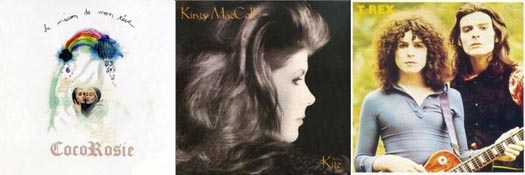
Three love songs, one each from CocoRosie, Kirsty McColl, and T-Rex

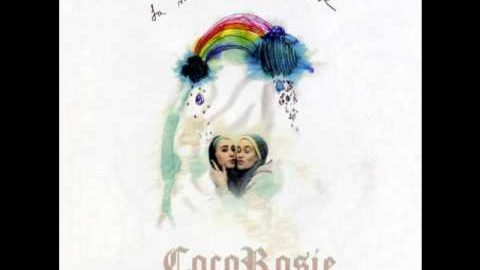
The first of the three love songs on VanRamblings today is sung by an American avant-garde musical group formed in 2003 by sisters Sierra Rose “Rosie” and Bianca Leilani “Coco” Casady, and may be heard on their 2004 album release, La Maison de Mon Rêve.
Having lead a nomadic life, in 2000 after residing in in New York City for two years, Sierra moved into a tiny apartment in the Montmartre district of Paris to pursue a career as an opera singer. Meanwhile, Bianca had moved to Brooklyn in 2002 to study linguistics, sociology, and visual arts. Neither sister had seen one another for a period of ten years.
In early 2003, Bianca made an impromptu visit to Paris to rejoin Sierra, and the two ended up spending months together creating music in Sierra’s bathroom which, according to them, was the most isolated room in the apartment and had the best acoustics, adopting a lo-fi, experimental approach to production, utilizing a distinct vocal style, traditional instruments, and various improvised instruments (like toys), recording with just one microphone and a broken pair of headphones.
By late 2003, the sisters had named themselves CocoRosie and created what would become their début album, La Maison de Mon Rêve, releasing the recording only to friends. However, word got out about the album, and by February 2004 CocoRosie was signed to the independent record label Touch and Go Records, and the album was released on March 9, 2004 to unexpected critical acclaim. The rest, as they say, is history.
The song Good Friday has meaning for me, as I sent it to Lori (who I’ve written about previously), expressing in the note I sent her that the song had particular resonance because it reminded me of her. After not having communicated with one another for almost a decade, posting the following song to Lori caused the two of us to, briefly, rekindle our relationship.

If 1988, the year I met Lori, was one of the great years of my life, the next great year in my life was 1995, and the summer of the gregarious 22-year-old Australian twins Julienne and Melissa, now all nicely married with great husbands, and two children apiece. That the three of us still communicate today I consider to be one of the great achievements of my life. I love them as much now as I did 25 years ago — both women (who I will write about someday, but employing pseudonyms) hold a special place in my heart.
1995 was also the year that my friend J.B. Shayne introduced me to the music of British singer-songwriter Kirsty McColl, whose 1989 album Kite became the soundtrack of my life that particularly warm and loving summer. I remember alighting from the #9 bus at Macdonald and West Broadway, as Julienne and Melissa were rounding the corner onto West Broadway, having just come from the Kitsilano library.
Spotting me, the two ran down the street towards me, jumping into my arms and wrapping themselves around me — the same thing happened later that summer, when I had just entered the west entrance of the Macdonald and Broadway Safeway, with Justine Davidson — then all of 15 years of age, and someone to whom I’d been close, and in whose life I had played a fatherly role for years — having entered from the east entrance, upon spotting me ran across the Safeway, jumping into my arms, wrapping herself around me, clearly happy to see me. There is no other time in my life when I felt more loved than was the case in the summer of 1995.

I was first introduced to the music of T. Rex (initially known as Tyrannosaurus Rex), the English rock band formed in 1967 by singer-songwriter and guitarist Marc Bolan, when working at LG-FM, by Bob Ness, one of the great all time radio announcers in Vancouver, and more than anyone else of my memory, the father of alternative music radio in Vancouver, when he brought the music of Marc Bolan to my attention.
By the early 1970s, I was a student up on the hill at Simon Fraser University, and arts and entertainment editor at the student newspaper, The Peak — where among my myriad endeavours, I was afforded the opportunity to review five albums a week, one of which was, in early 1971, T. Rex’s eponymous fifth album, and the first under the name T. Rex.
If you haven’t guessed, I am a romantic, always have been, always will be. For me, there is no greater joy than being in love — in which respect I have been very lucky, in platonic and other kinds of love (and even a marriage) with incredibly bright and empathetic women, who are responsible for all the best parts of who I am, and how I have brought myself to the world.
My first great love, of course (and the mother of my children) was Cathy Janie McLean, a striking 18-year-old blonde Amazon of a woman, possessed of a keen intelligence, and the woman more than any other who shaped me, in the early years loved me, and created the somewhat sophisticated wordsmith and bon vivant I’ve been for nigh on 50 years now.
T. Rex’s song Diamond Meadows was a song that was particularly resonant in Cathy’s and my life, a song we returned to for years, when I was at university, and later teaching in the Interior. For me, listening to Diamond Meadows reminds me of a time when I was truly loved, when everything was going well in my life, when I was surrounded by friends, politically and socially active, and a young man of promise and capable of much good.