Category Archives: Music

Music | Top 100 Albums | Azure Ray | Dream Pop

Dream pop duo Azure Ray — composed of Orenda Fink and Maria Taylor — employ graceful harmonies, patient folksy song structures, and touches of electronic production to create otherworldly songs that balance tranquility and intensity.

Their self-titled 2001 début created serene sonic landscapes unusual in the pop idiom, the duo employing piano and guitar, highlighted with cello and violin arrangements, the songs on their eponymous first album presented with delicate vocals, some barely above a whisper, the pain in their vocals ever present in their lyrics as they sing of remembrances and of loss and heartbreak.

The pair met at the age of 15 while attending the Alabama School of Fine Arts in Birmingham. Together, they fronted a band called Little Red Rocket, which released two CDs, Who Did You Pay (1997) and It’s in the Sound (2000), with the band breaking up shortly after the release of the latter album.
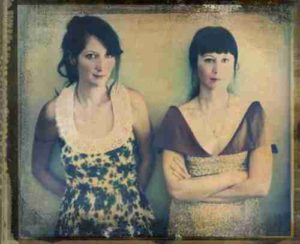
Orenda Fink and Maria Taylor decided to head out to Athens, Georgia, striking out to find a career, forming Azure Ray soon after arrival in their new home.

“My boyfriend had just died and we had written all of these songs that were helping us cope with everything. We had a night where all of our friends and family got together. We played those songs, which later would turn into the songs on our first Azure Ray record, which we released shortly thereafter,” says Taylor.

Their self-titled début album is a quiet, gentle set of lovely and soul-searching songs that incorporate elements of folk, pop, and light electronica.

Following the unexpected death of Taylor’s boyfriend, the two musicians used songwriting as a method of coping with their grief. The intensity of that loss informed the mournful tone of the group’s earliest work in 2001, and would carry through in their sound to some degree from that point on.

The song Sleep was later featured in the 2006 Academy Award-nominated movie The Devil Wears Prada, featuring Anne Hathaway.

In February 2015, Taylor Swift included Sleep on a six-song “breakup playlist” made for a fan via her official Tumblr account.

Camilo Arturo Leslie in Pitchfork had this to say about the début album …

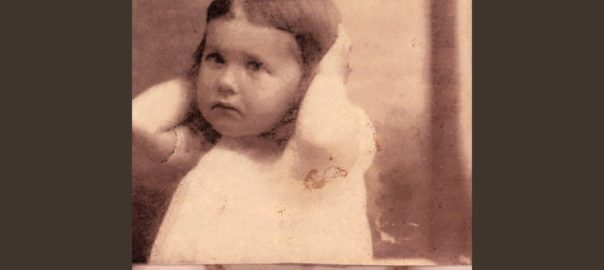
Their album cover is simple: just an old, sepia-toned photograph of a little girl. She looks like my grandmother as a child. Nostalgia and melancholy rub off the liner notes and stain your fingertips. The little girl clutches her palms to her ears and wears an inscrutable expression that vacillates from pouty to fearful to verge-of-tears, depending on what mental angle you hold it at.

Azure Ray’s indie music aesthetic is built on pretty, easy-on-the-tympanum pop acoustic guitar strumming. No fuzz, no indigestible chords, just polished production and evocative arrangements. Lap steel guitar, cello, violin, church bells, piano, brass, and tape loops make appearances on these 11 tracks.

The draw of their music is, of course, the duo’s vocals, Azure Ray’s gentle trills offering a haunting balance between the ethereal and corporeal, as well as an understated,  yet distinct feminine strength, not unlike the early music of Linda Ronstadt.

Indie label-ghetto obscurity has kept Azure Ray from attaining massive popularity.

But an indie-ghetto habitué such as yourself shouldn’t have any trouble digging up a copy of Azure Ray’s début CD, or maybe a vinyl copy.

Red Cat Records on Main Street, or Zulu Records on West 4th Avenue, if they don’t have it in stock, could certainly order it for you.

Beautiful, expertly crafted pop songs keep a room in your heart’s hotel (under an assumed name, naturally).

You could also listen to Azure Ray on Spotify, or Apple or Amazon Music, or purchase their music from either of the two latter providers of digital music.
Music Sundays | Top 100 Albums | Todd Rundgren’s Auspicious 1972 Début

Dating back to the late 1960s, through until today, I have often found employment as a music critic.

One of the great delights of my young life was to walk onto the property of Warner Bros. or Capitol Records, and be taken into the warehouse in behind the offices, leaving the premises with one hundred or more new albums, all ready to return to the home Cathy and I shared at Simon Fraser University.

From those days til today, my love for music, for discovering new music has known no bounds, as will remain the case through the end of my days.

Of course, I was very lucky — as were all members of the boom generation — to grow up in the era of The Beatles, and the rush of new music coming out of the UK, and down south out of Los Angeles. These were halcyon days of discovery, more often than not enhanced by the intake of cannabis (there is hardly any greater joy than listening to music stoned).

One of my early discoveries was Todd Rundgren, whose music career began in 1967 at the age of 19 with the Philadephia-based garage rock band, Nazz.

Over the next four years, Nazz released three albums, all to little acclaim, prompting Rundgren to leave the group, move to New York, and educate himself in the fine arts of audio engineering and production.

Upon arriving in New York, Rundgren was soon signed by Ampex Records, where he began work producing for various rock groups of the day.

1972 proved to be a critically important year for Todd Rundgren.

After signing with Bearsville Records — a recording studio started in 1969 by legendary music impresario Albert Grossman, manager of Bob Dylan, The Band, and Janis Joplin — Rundgren’s musical career took off into the stratosphere.

A few years back, a friend asked me, “So, what kind of music do you like?”

Today’s post constitutes one of a series of columns I’ve been writing on the Top 100 début albums of the past 75 years, music that has both changed and informed my life, my love of almost all musical genres also knowing no bounds.

I love life. I love music.

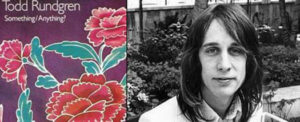
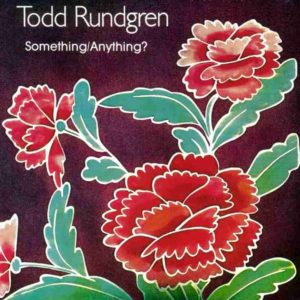
Today’s Music Sunday column tracks the early work of Todd Rundgren, and his multi-platinum solo, self-produced début album, Something/Anything?

Early in 1972, soon after signing on with Albert Grossman, one Friday afternoon early in the year, Todd Rundgren was in the Bearsville Studio offices for a pre-production meeting for his upcoming album the studio intended to record. All went well at the meeting, and at the 5 o’ clock hour, as the cleaning crew arrived, Grossman prepared to close the studio for the weekend.

Rundgren said, “I’ll have the cleaners let me out. I’m heading to the washroom.” Everyone bid their adieu, going home to their families.

But not Todd Rundgren. Instead, Rundgren hid out in a closet and slept for four hours, readying himself for the marathon production weekend ahead.

The cleaners left shortly before 9pm, when a sleepy Todd Rundgren emerged from his closet home. What occurred over the next fifty-seven and one half hours is part of rock and roll history.

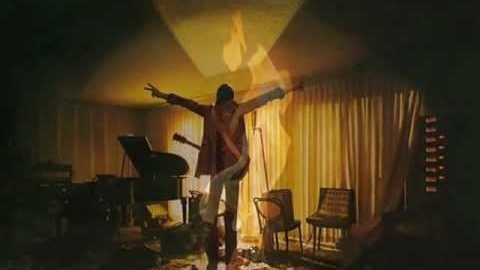
From 9pm on that Friday night, until 6:30am Monday morning, Todd Rundgren wrote, produced, mixed, sang and played guitars, keyboards and all other instruments to produce the groundbreaking multi-platinum, multi-Grammy award winning hit machine, Something/Anything?

Every voice is Rundgren’s, every instrument played by the nascent songwriter-singer-producer, Rundgren over the weekend innovating on the recently acquired 8-track production studio equipment in ways previously unheard of and unimagined, writing a new chapter in the ongoing history of rock ‘n roll.

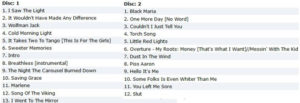
Twenty-five songs on a two disc album, recorded at a rate of under one fully produced song every three hours. When Bearsville Studio staff and executives arrived at their offices on Monday morning, they found Rundgren passed out, a master tape, track list and album cover art work on the console.

Over the next three weeks, working with Rundgren, studio engineers fine-tuned the 25 songs, the double Something/Anything? album released to critical acclaim in April 1972, out-selling every other album that year.

Something/Anything? spawned a half dozen chart topping hits, including I Saw the Light, and a remake of the Nazz near-hit Hello It’s Me, which shot to No. 5 in the week it was released. As a reminder: both songs featured Todd Rundgren producing, as well as on all vocals and instruments.

It Wouldn’t Have Made Any Difference was the third smash hit off Something / Anything? to top the Billboard charts in the early autumn of that year.

A dozen years later my children and I lived together at SFU with a woman, a younger doppelgänger for my now ex-wife, dubbed by my friends, and referred to by my children as Cathy 2 — as my friends said, “the sane Cathy,” and so she was.

One day when I was off teaching class, Cathy 2 put on the Rundgren album.

When I arrived home to our two-bedroom apartment at Louis Riel House, Cathy 2 greeted me, smothering me in kisses, excitedly exclaiming …

“Raymond, Raymond, I’ve spent the entire afternoon listening to Todd Rundgren’s Something/Anything? It’s gorgeous, it’s groundbreaking, I’ve never heard anything like it. I think I’m in love with Todd Rundgren!”

And so she was, and so should we all be.

On a closing note, and to provide a bit more background on Todd Rundgren.

In 1972, Rundgren began a relationship with model Bebe Buell. During a break in their relationship, Buell had a brief relationship with Aerosmith’s Steven Tyler, which resulted in an unplanned pregnancy.

On July 1, 1977, Buell gave birth to Liv Tyler, the future model and actress.


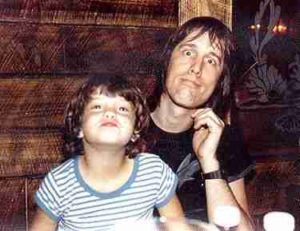
Todd Rundgren raised actress Liv Tyler as his daughter for the first 18 years of her life. Even when she became aware that Steven Tyler was her father, she maintained Rundgren as one of her two fathers.

To protect the child from Tyler’s drug addiction, Buell claimed that Todd Rundgren was the biological father, and named the child Liv Rundgren, Todd Rundgren raising her as his daughter.

At age fifteen, Liv learned that Steven Tyler was her biological father.

Even so, Liv Tyler still calls Todd Rundgren her father, and still maintains a very close relationship with the now 76-year-old musician.

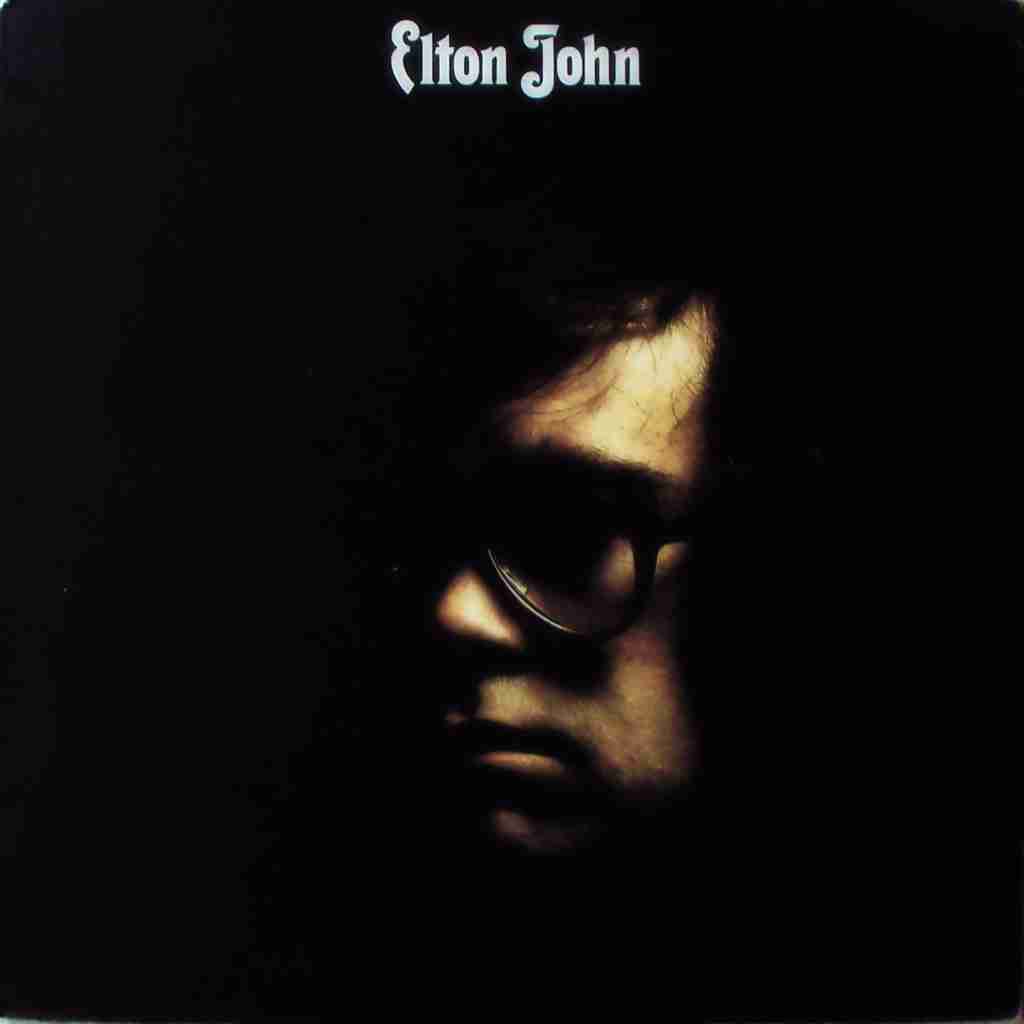
Sunday Music | Elton John | 1970 | Eponymous Album

Each summer, from the late 1960s through the 1980s, legendary broadcaster Terry David Mulligan traveled to Great Britain, in search of new music, breaking artists, and the “next big thing.”

In 1970, the next big thing was Reginald Kenneth Dwight aka Elton John.


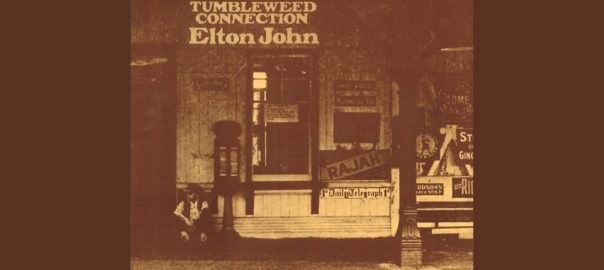
Love Song, side2, track 7, my favourite Tumbleweed Connection song, that got lots of radio play from me

Elton John’s self-titled début constituted his introduction to North American audiences. Tumbleweed Connection was his first British release, and went on to (lesser acclaim than his 1970 album) become his second North American album release.

At the time, Terry was employed by CKVN (that station had been, and would be again, be CFUN, a giant of pop radio in Vancouver).

Arriving back in Vancouver, Terry was excited to spin Elton John’s disc for all the jocks at the station, who — in the main — were as enamoured with the then unknown Elton John, as was the case with a gregariously enthusiastic TDM.

The number one smash hit off the album was Your Song, which became a staple at weddings of the era — including mine to Cathy, on December 19, 1970.

To this day, Elton John’s eponymous début remains my favourite Elton John album, a serious, incredibly well-composed, almost operatic album, much at variance with the more pop-oriented albums and songs Elton John would compose and release — with lyrics by Taupin — over the next 50 years.

“The album which I am quite proud of is the very first one [I did with Elton]. The ‘black album’ was all done in a week. If I could go through that week again, I would just love it to death.”

Gus Dudgeon, Producer

Elton John is a classic, Top 100  album in the pantheon of rock music.

John and lyricist Bernie Taupin’s songwriting had an immediacy ingrained in the music, sharper and more diverse than Tumbleweed Connection, or any music the two released after 1970.

Taupin is all about American mythology and old men’s regrets. Elton likes his harps and harpsichords. Together they gaze beyond England.

Listen to the music. Elton and Taupin clearly have their hearts in the South.

Take Me to the Pilot, a rocking gospel piece where John’s driving piano takes centre-stage over the strings may not make much sense lyrically, but John’s good sense ground its willfully cryptic words with a catchy blues-based melody.

Next to the increased sense of songcraft, the most noticeable change on Elton John is the addition of Paul Buckmaster’s grandiose string arrangements.

“It only took the first hearing for me to call Elton’s manager and express my enthusiasm. I heard the potential of what he and Bernie had written. I had already begun to hear what I was going to do with Your Song, for a start. It was the sort of thing that I was dying to have a go at.”

Paul Buckmaster

Buckmaster’s orchestrations are never subtle, but they never overwhelm the vocalist, nor do they make the songs schmaltzy.


First Episode At Hienton, one of my favourite songs on Elton John, one I often sing to. I know that I am still alive and thriving, when  I can hold the extended note (wwwooooommmaaannnn) at 4:13 in.

Instead, they fit the ambitions of John and Taupin, as the instant standard Your Song illustrates.

Even with the strings and choirs that dominate the sound of the album, John manages to rock out on a fair share of the record. Though there are a couple of underdeveloped songs, Elton John remains one of his best records.

In a rather uneventful period in rock music, John’s music emerged as so staggeringly original that it wasn’t obvious that he was merely operating within a given musical field (such as country or blues or rock) but, like Randy Newman and Laura Nyro among others, creating his own field, borrowing from country, rock, blues, folk and other influences, but mixed in his own way.

Aretha Franklin would hardly have covered Border Song — a great gospel tune with a bombastic arrangement — if she’d sensed an artificiality.

The resulting songs are so varied in texture that his music defied classification.

While his voice, in those days, mostly resembled Jose Feliciano, there were also detectable touches of Leon Russell and Mick Jagger.

Sitting behind his own piano, with Nigel Olsson on drums and Dee Murray on bass, John’s new sound was much earthier than his earlier work, even if there was an essential sweetness to his heavily orchestrated North American début album.

All these years later, in 1970 and fifty-four years on, with Elton John’s arrival on the music scene, the sense existed then that in Reginald Kenneth Dwight here was a legendary artist destined to play a featured role in the history of rock ‘n roll.

Sunday Music | Azure Ray | 2001 | Dream Pop Artists

Dream pop duo Azure Ray — composed of Orenda Fink and Maria Taylor — employ graceful harmonies, patient folksy song structures, and touches of electronic production to create otherworldly songs that balance tranquility and intensity.

The pair met at the age of 15 while attending the Alabama School of Fine Arts in Birmingham. Together, they fronted a band called Little Red Rocket, which released two CDs, Who Did You Pay (1997) and It’s in the Sound (2000), with the band breaking up shortly after the release of the latter album.

Orenda Fink and Maria Taylor decided to head out to Athens, Georgia, striking out to find a career, forming Azure Ray soon after arrival in their new home.

“My boyfriend had just died and we had written all of these songs that were helping us cope with everything. We had a night where all of our friends and family got together. We played those songs, which later would turn into the songs on our first Azure Ray record, which we released shortly thereafter,” says Taylor.

Their self-titled début album is a quiet, gentle set of lovely and soul-searching songs that incorporate elements of folk, pop, and light electronica.

Following the unexpected death of Taylor’s boyfriend, the two musicians used songwriting as a method of coping with their grief. The intensity of that loss informed the mournful tone of the group’s earliest work in 2001, and would carry through in their sound to some degree from that point on.

The song Sleep was later featured in the 2006 Academy Award-nominated movie The Devil Wears Prada, featuring Anne Hathaway. In February 2015, Taylor Swift included Sleep on a six-song “breakup playlist” made for a fan via her official Tumblr account.

Camilo Arturo Leslie in Pitchfork had this to say about the début album …

Their album cover is simple: just an old, sepia-toned photograph of a little girl. She looks like my grandmother as a child. Nostalgia and melancholy rub off the liner notes and stain your fingertips. The little girl clutches her palms to her ears and wears an inscrutable expression that vacillates from pouty to fearful to verge-of-tears, depending on what mental angle you hold it at.

Azure Ray’s indie music aesthetic is built on pretty, easy-on-the-tympanum pop acoustic guitar strumming. No fuzz, no indigestible chords, just polished production and evocative arrangements. Lap steel guitar, cello, violin, church bells, piano, brass, and tape loops make appearances on these 11 tracks.

The draw of their music is, of course, the duo’s vocals, Azure Ray’s gentle trills offering a haunting balance between the ethereal and corporeal, as well as an understated,  yet distinct feminine strength, not unlike the early music of Linda Ronstadt.

Indie label-ghetto obscurity has kept Azure Ray from attaining massive popularity.

But an indie-ghetto habitué such as yourself shouldn’t have any trouble digging up a copy of Azure Ray’s début CD, or maybe a vinyl copy.

Red Cat Records on Main Street, or Zulu Records on West 4th Avenue, if they don’t have it in stock, could certainly order it for you.

Beautiful, expertly crafted pop songs keep a room in your heart’s hotel (under an assumed name, naturally).

You could also listen to Azure Ray on Spotify, or Apple or Amazon Music, or purchase their music from either of the two latter providers of digital music.