Category Archives: Cinema

VIFF 2021 | 40th Annual Vancouver International Film Festival, Oct. 1st – 11th

After going online in 2020, the Vancouver International Film Festival (VIFF) returns on Friday, October 1st thru Monday, October 11th — to celebrate its 40th annual edition with a vibrant hybrid in-person and streaming lineup, with 85% of the VIFF 2021 film slate available online not just for loyal VIFF fans locally, but for patrons throughout British Columbia and across Canada, through the VIFF Connect online streaming web portal.

Although the Vancouver International Film Festival has traditionally commenced in late September with a two-week run, the somewhat truncated 2021 hybrid edition running from Friday, October 1st thru Monday, October 11th, will still feature 113 groundbreaking and celebrated original films, with 80 narrative and 33 documentary features arriving from 50 countries across the globe, 24 of which are world premières, 26 North American and 28 Canadian feature film premières, 6 of which are made by BC filmmakers. Eighty curated short films are also featured in the VIFF 2021 lineup, 36 of which are Canadian.

Strict British Columbia COVID-19 public health and safety protocols will be in place for in-person screenings, including mandatory mask wearing in screening rooms and common areas, and BC Vaccine Card proof that cinephile patrons have been vaccinated, before patrons will be granted access to the eight VIFF cinema venues.

VIFF executive director Kyle Fostner says he believes there’s a growing group of patrons who are ready to return to the theatre.

“Culturally, as an organization and as a community VIFF needs to have some kind of statement of intent around returning to cultural activity and to cinema,” Fostner says, pointing out that two local independent theatres, the Rio and the Cinematheque, have already been open for some time and attracting audiences.

Meanwhile, VIFF Expanded has partnered with two B.C. venues to present films in-cinema to British Columbians outside of the Lower Mainland, with 8 screenings scheduled at the Tillicum Twin Theatres in Terrace, and 12 VIFF films set to screen at the newly renovated Patricia Theatre in Powell River.

(Note: each film title — and more — throughout this column links to the VIFF website page)

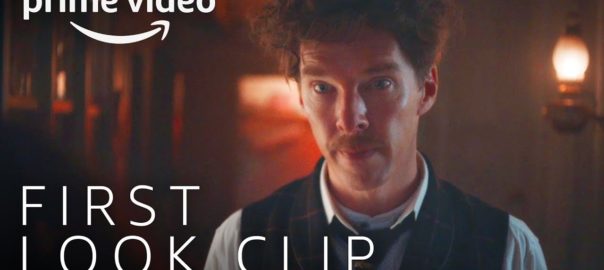
Japanese-English director Will Sharpe’s The Electrical Life of Louis Wain, a whimsical Victorian biopic starring Benedict Cumberbatch and Claire Foy, was selected by VIFF Associate programmer Curtis Woloschuk as VIFF’s opening night film —  on Friday, October 1st, with Céline Sciamma’s exquisite Petite Maman — which débuted at the Berlinale earlier this year acclaim — and a favourite of Mr. Woloschuk’s, selected as VIFF’s closing night film, on Monday, October 11th.

The array of titles given special presentations assembles a collection of works by leading filmmakers spanning the globe, from …

    • One Second (China) by Fifth Generation filmmaker Zhang Yimou;

https://youtu.be/Ej7FSmzijNE

    • Memoria (Thailand/Colombia/U.K.) by Thai indie director Apichatpong Weerasethakul;

    • Drive My Car (Japan), Ryusuke Hamaguchi’s adaptation of a short story by author Haruki Murakami, available only as an in-person screening. A favourite of VIFF International Films programmer, Alan Franey;

    • Belfast (U.K.), an autobiographical film by British filmmaker Kenneth Branagh, recent winner of the Audience Award at the Toronto International Film Festival;

    • The Power of the Dog (Australia/New Zealand), the “other” Benedict Cumberbatch film at VIFF this year, and winner of the Silver Lion for Jane Campion as Best Director, at Venice 2021;

    • Bergman Island (France/Sweden) by French writer-director Mia Hansen-Løve;

“Seventeen VIFF films will be available as in-person screenings only,” VIFF’s International Films programmer Alan Franey told VanRamblings.

“And that includes Drive My Car, Ryûsuke Hamaguchi’s sombre drama about love and loss, that was for me an engrossing and exalting film experience, and a film not to be missed. Arising from concerns about piracy, I was unable to move various studios to release their films to our secure streaming VIFF Connect platform.”

As part of VIFF’s 40th anniversary celebrations, the festival will present a free online tribute talk. VIFF Leading Lights will spotlight Japanese auteur Kore-eda Hirokazu (Like Father, Like Son) in conversation with South Korean filmmaker Bora Kim (House of Hummingbird), whom Kore-eda chose as an emerging director to discuss filmmaking with.

Other speaking engagements at VIFF Talks will feature film professionals sharing their expertise, including documentary filmmakers Julie Cohen (My Name is Pauli Murray) and Jonas Poher Rasmussen (Flee).

On the industry side, online events include master classes with Mare of Easttown director Craig Zobel and The Suicide Squad editor Fred Raskin, as well as a talk by The Green Knight’s production designer Jade Healy.

Canadian productions receiving special presentations include the Indigenous sci-fi drama Night Raiders (Canada/New Zealand) by Cree-Métis director Danis Goulet, starring Vancouver’s Elle-Máijá Tailfeathers, and All My Puny Sorrows (Canada), director Michael McGowan’s adaptation of Miriam Toews’ 2014 novel.

More  VIFF 2021 highlights include VIFF AMP , the annual forum for music in film, which runs from October 8 to 10; VIFF Totally Indie Day on October 2nd, devoted to independent filmmakers and cinema; and the VIFF Immersed exhibition, October 1 to 11, to showcase virtual reality and augmented reality storytelling.

VIFF Ticket Info | VIFF Connect | In-Person | Passes | Tickets & Ticket Packs

As has long been the case, VIFF will offer a wide array of different ticket packages and passes: patrons can purchase an all-festival, all-access in-person pass for $725, while the VIFF Connect pass will be available for $110 for a household, $80 for an individual, with a $60 student rate. The four-ticket in-person pass price is set at $48, seniors $44, students, $32. Regular in-person admission will cost $15 – $17.

In 2021, patrons may enjoy the big screen cinematic experience, or watch from the comfort of their home, or mix and match to create a personal festival journey.

“VIFF’s lineup offers a plurality of perspectives, with powerful narratives from Indigenous filmmakers, poignant stories from female perspectives, and bold work that confronts critical issues such as colonialism, racism, and the climate crisis,” says Woloschuk. “The films VIFF programmers have selected testify to the power of creativity, reminding us: even when it’s darkest, we can dream.”

“I think the minute I see a VIFF screening of 100 appreciative audience members rapt in attention watching a VIFF film in-cinema it will be a victory,” enthuses Fostner, who adds that despite the ravages of the pandemic, VIFF remains strong.


The Vancouver International Film Festival is presented on the traditional and unceded territories of the Coast Salish peoples, and the xʷməθkʷəy̓əm (Musqueam), Skwxwú7mesh (Squamish), and səl̓ílwətaʔɬ (Tsleil‑Waututh) Nations.

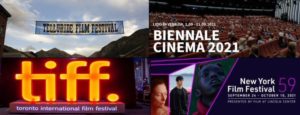
Arts Friday | The Much Anticipated Autumn Film Festival Season Underway

In 2021, wherever a film festival may take place, appropriate COVID protocols will be in place, including mandatory masks in the screening rooms and common areas, and proof that cinephile patrons have been vaccinated.

The pandemic – particularly given the ravages of the COVID-19 fourth wave – will probably mean, and has meant at the Telluride and Venice film festivals, prejudiced attendance numbers at fall film festivals. As was the case in 2020 – and once again will be so in 2021 – films on offer will be made available for home viewing, with a small number of films  available exclusively for in-person screenings. In other words, in order for film festivals to “work” in 2021, festival directors have adopted a “hybrid model” to satisfy the viewing demands of their loyal patrons.

At Telluride and Venice, major film studios made their star-driven, Oscar contending film slates available to these two prestigious film festivals, as will be the case in Toronto – which got underway yesterday – and later this month in Gotham City, at the 59th annual New York Film Festival, which will share half their slate with VIFF.

At Telluride and Venice, Hollywood stars turned out in all their finery, engaging in post screening discussions with audiences, sitting in rapt & appreciative attention.

Above is a clip of Japanese-English director Will Sharpe’s The Electrical Life of Louis Wain, a whimsical Victorian biopic starring Benedict Cumberbatch and Claire Foy which, it was announced at the annual Vancouver International Film Festival media conference has been selected as VIFF40’s opening night film, on October 1st.

“Movies are a distraction from reality,” says a character in Paolo Sorrentino’s Hand of God — which débuted at Telluride a sprawling, funny-sad, autobiographical coming-of-age story. That’s a good thing. Reality is drab and painful — “lousy,” according to the film’s English subtitles — and film provides a much needed respite.

The break-out Oscar contenders that débuted at Telluride include …

Cyrano, a lovely new telling of the classic story of Cyrano de Bergerac, which had its world première at Telluride, and took that film festival by storm with guaranteed Oscar nods all around;

https://youtu.be/MUnsoxe7K4g

The North American première of Spencer, the mesmerizing new drama starring Kristen Stewart (a guaranteed Best Actress Oscar nominee) as Princess Diana; and

The crowd-pleasing King Richard, a drama charting the rise of tennis superstars Venus and Serena Williams, expected to launch Will Smith into the Oscar race for his portrayal of the girls’ demanding dad and coach, Richard Williams — a loving, egocentric father who, it turns out, did know what was best for his daughters.

Céline Sciamma’s exquisite Petite Maman — which débuted at the Berlinale, and has been set as VIFF40’s closing night film (cuz it’s VIFF programmer, Curtis Woloschuk’s, favourite film at VIFF this year, he told VanRamblings earlier in the week — don’t tell anybody, though, cuz it’s a secret) — a delicate film full of surprises. Sciamma, whose Portrait of a Lady on Fire was a VIFF standout in 2019 (at the pre-pandemic VIFF festival), examines female intimacy from a different angle.

Nelly and Marion (played by young twins named Joséphine and Gabrielle Sanz) are 8-year-old girls living in similar houses in the woods. They strike up a friendship tinged with elements of fairy-tale supernaturalism, magical realism and time travel. The twists packed into the film’s compact 72 minutes arrive gently and matter-of-factly. The intense emotions they leave behind — this is one of the quietest tear-jerkers you’ll ever see — are at once familiar and wholly new.

Soon, the sane and responsible among us will be fully vaccinated and in possession of our province-issued vaccine card — making attendance at movie theatres, restaurants, bars and pubs safer and more enjoyable for the vast majority of us.

As much as COVID’s fourth wave will keep us in its troubling grip, for the most part it is the anti-social unvaccinated amongst us who will bear the malignant brunt of the coronavirus — for the rest of us, a return to a near normal state of being holds promise for our immediate future, and the prospect of an autumn movie-going season sitting amongst our brothers and sisters inside a darkened movie theatre.

Arts Friday | Netflix Debuts ‘Worth’ Today

A week Saturday marks the 20th anniversary of the tragedy that was 9/11.

Sara Colangelo, the award-winning writer and director of the 2018 film, The Kindergarten Teacher, brought her latest film, Worth, to the Sundance Film Festival in January 2020, Now, some 19 months later, Netflix makes Worth available on their service — the film starring Michael Keaton and Amy Ryan.

Following the horrific 2001 attacks on New York City’s World Trade Centre and the U.S. Pentagon, Congress appointed attorney and renowned mediator Kenneth Feinberg (Michael Keaton) to lead the September 11th Victim Compensation Fund.

Assigned to allocate financial resources to the victims of the tragedy, Feinberg and his firm’s head of operations, Camille Biros (Amy Ryan), faced the impossible task of determining the worth of a life to help the families who had suffered incalculable losses. When Feinberg locks horns with Charles Wolf (Stanley Tucci), a community organizer mourning the death of his wife, his initial cynicism turns to compassion as he begins to learn the true human costs of the tragedy.

Available now on Netflix.

The State of Cinema | Women, Misogyny and The Old Boys Club

Angry women fighting sexism and misogyny in our culture

From the earliest days of Hollywood, women were stage managed and manipulated by older men in powerful positions.

And it remains clear that, although Harvey Weinstein, Les Moonves, John Lasseter, Luc Besson and James Toback, among a host of other male predatory Hollywood executives have been outed, little has changed.

In the Hollywood dream factory, trauma surfaces as light entertainment.

In 2013, introducing the list of Best Supporting Actress nominees during the Oscar ceremony, comedian Seth MacFarlane quipped: “Congratulations, you five ladies no longer have to pretend to be attracted to Harvey Weinstein.” What was chilling in that moment was that no one got the joke.
The idea that female stars and aspiring actresses are required to accept the attentions, at the very least, of older male studio executives, producers and prominent male stars, is as old as the Hollywood hills.

Feminist | A person who believes in the social, political, and economic equality of the sexes

Given the profile that the #MeToo movement has brought to sex discrimination, why does sexism continue to prevail in Hollywood?

According to San Diego’s State’s Centre for the Study of Women in Television and Film, women made up only 7% of directors on the top 250 films of 2019, which was actually a 2% decline from 2018.
The San Diego State study found that while women made up higher percentages of other fields in the industry – 24% of producers, or 17% of editors, for example – they only accounted for 17% of the workforce of all the jobs surveyed. And that too, was a 2% decline from the year before.

The University of Southern California’s Viterbi School of Engineering’s Signal Analysis and Interpretation Lab (SAIL) revealed how sexism is embodied by characters on the silver screen. If female characters are taken out of the plot, it often makes no difference to the story the study found.

Men’s language was linked with achievement, while their conversations contained more coarse language and was associated with sex and death. “Writers consciously or subconsciously agree to established norms about gender that are built into their word choices,” Anil Ramakrishna, one of the San Diego study’s researchers, said in a Los Angeles Times report.

Upon analysis of 1000 scripts, the study found that there were 7x more male than female writers and 12x more male directors than women.

The biggest impact in counteracting the gender imbalance was if female writers were present at script meetings. If this was the case, female characters on screen was around 50 per cent greater, the study found.

Inherent in these observations of the film industry are powerful messages about what it means to be female.

In our “post-feminist” era, where we are frequently told the problems of girls are yesterday’s news — that girls are awash in the largesse of civil rights, and it is boys who really require our attention — it is worthwhile to consider the conduct of male Hollywood writers and executives.

Actress Geena Davis, founder of the Geena Davis Institute on Gender in MediaActress Geena Davis, founder of the Geena Davis Institute on Gender in Media

The problem is so glaring that in 2005 actress Geena Davis, who would go on to start her own gender institute, commissioned researcher Stacy Smith, from the University of Southern California, to study the issue and help push the studios beyond the staid male-centred film industry. From 2007 through 2019, according to Smith’s ongoing research, women made up only 30.2% of speaking or named characters in the 100 top-grossing fictional films.

Female lead films make more money than films led by males.

The Geena Davis Institute on Gender in Media reports that films featuring women are financially profitable. “Guess what, Hollywood? Female-led films consistently make more money, year over year,” reported Madeline Di Nonno, the Institute’s chief executive, in a 2021 interview with Variety.
Hollywood actor Charlize Theron has criticized the movie industry for gender bias. Promoting her film Atomic Blonde, she told feminist Bustle magazine: “Fifteen, ten years ago, it was almost impossible to produce female-driven films, in any genre, just because nobody wanted to make it.”

The Bechdel Test

A quiz that was designed to find out how sexist a film might be was developed by Alison Bechdel and Liz Wallace in 1985.

To pass what has become more commonly known as the Bechdel test, the film needed three positive answers to these questions: Does it have more than two named female characters? Do those two women talk with one other? Is that conversation about something other than a man?

The Hollywood Reporter applied the Bechdel test to the top-selling films in 2019, finding that only around half of the films passed the test.

The sheer scale of Hollywood sexism is daunting, the stories of what actresses have to put up with disturbing, the tales of pay inequity and pushing for more female-led stories instructive.

Actress Zoe Kazan (‘The Big Sick’) told IndieWire reporter, Kate Erbland, “There’s so much sexual harassment on set. And there’s no HR department, right? We don’t have a redress. We have our union, but no one ever resorts to that, because you don’t want to get a reputation for being difficult.”

In the lead up to this year’s Oscar ceremony, actress Emmy Rossum sounded off during a Hollywood Reporter roundtable about her experience with overt sexism in the industry.

“I’ve never been in a situation where somebody asked me to do something really obviously physical in exchange for a job, but even as recently as a year ago, my agent called me and was like, ‘I’m so embarrassed to make this call, but there’s a big movie and they’re going to offer it to you. They really love your work on Shameless. But the director wants you to come into his office in a bikini. There’s no audition. That’s all you have to do.'”

If the dynamic of older men and younger, submissive women greases the wheels of Hollywood production offices repeats itself on screen, it is not an accident, but the desires of the producers and directors who create these films played out on the biggest stage of all: Hollywood cinema, the world’s most effective propaganda machine.