Category Archives: Cinema

The Best in World Cinema | Film Festival Season Has Arrived

40th annual Vancouver International Film Festival, October 1st thru 11th

Film festivals are a vital link in the chain of global film culture.
Week in, week out, in pre-pandemic times most of us were bombarded with marketing messages extolling the virtues of mainstream movies.
But the films that make it into film festivals are a whole different kettle of fish than the blowed-em-real good, blockbuster films that make it into our local multiples. In point of fact, a good and vibrant film festival screens films that are as resistant as possible to the commercial pressures of standard mainstream fare. It is through independent films from across the globe, films that are made by independent voices that new ideas are expressed, new genres of film are created, and new, important directors emerge who serve to create a whole new cinematic landscape.

40th annual Vancouver International Film Festival front page photo

Great film festivals champion these ideals and filmmakers at their core.
Many festivals, including our own homegrown and much celebrated Vancouver International Film Festival, feature engaging panel discussions and masterclasses on aspects of filmmaking, bringing in diverse members of the film industry of interest to both filmmakers and to the general public. Events such as these offer a critical way to promote the filmmakers and their films, as well as to help film festival attendees learn about what goes on behind the mysterious black curtains shrouding the film industry.
A good series of learning events at a festival also strives to create debate about important issues facing not only filmmakers, but humanity in general. VIFF festivals past have engaged in panel and post screening audience discussions on a wide range of general interest topics — everything from climate change, to racial and sexual prejudices and social injustices.
Any community with a successful film festival prides itself on the artistic, cultural and commercial kudos a festival brings.
For local community film festivals like VIFF, it’s not just the red carpet and all the hype surrounding the festival. It’s also the jobs the festival creates, the hospitality provided to visitors, and the buzz around the commercial establishments in the festival area. Not to mention the hotels, snacks and meals of which festival attendees partake.

The Vancouver International Film Festival's Vancity Theatre, in the evening

With 20,000 unique attendees in 2019, the Vancouver International Film Festival estimates that the boost to the Vancouver economy to be in excess of $1,500,000, engaging with local businesses to amplify the festival, and bringing business to the Vancouver’s central core.
Film festivals also serve to unite a community.
Festival staff reach out to a wide range of ethnic, gender and other diverse communities to enjoy the films on offer, engage with the filmmakers, as well as celebrate the stories told with the verve and enthusiasm of the filmmakers. Festivals serve to create a sense of community, where local audiences are afforded the opportunity to mingle with visiting filmmakers and share their experiences, and react to the work they have seen.

protests

We live in very troubled times.
Polarization is a trend best opposed. And what better way to break down prejudices than through cinema. Is it not that most of today’s troubles are caused by misunderstanding of how different people live? Or how they love, work or play in different cultures with different religions?
And what better way to break down this misunderstanding than to take an audience to these different worlds and show how life really is?

“We love cinema at VIFF,” says VIFF associate programmer Alan Franey.

“And we love when an audience comes out from a screening feeling as if they have seen something cutting edge, something culturally informing, or something just plain straight entertaining. VIFF is known for showcasing issues and ideas that cannot be mass-communicated due to local laws and cultural taboos. And that’s why we continue, year after year, to bring the very best of independent cinema to the heart of our province.”

In fact, the 40th annual Vancouver International Film Festival is set to get underway in October, and will run for 11 days from Friday, October 1st thru Thanksgiving Monday, October 11th.
Roughly 110 feature films and 100 shorts will screen in Vancouver venues — with a selection of films also available for online viewing via the VIFF Connect streaming platform — at this year’s festival.
VIFF 2021 will showcase a vibrant programme of films and events, including a kaleidoscopic collection of revelatory Canadian work, visionary East Asian cinema, powerful and provocative documentaries, narrative cinema from some of the world’s leading lights, and elevated genre fare.
Curated short film programmes will allow audiences to discover inventive storytellers, while VIFF Talks aims to take viewers behind the camera. The Totally Indie Day, VIFF AMP, and VIFF Immersed conferences provide extraordinary support for local creative communities.
Every film in the 40th annual Vancouver International Film Festival lineup to be screened in-cinema this year will follow strict COVID-19 health and safety protocols, with seating capacity in the well-ventilated venues reduced to 50%, or a figure mandated by B.C.’s Public Health Officer.
As per usual, in-person VIFF box office will open at the VIFF Centre, located at 1181 Seymour Street just across from Emery Barnes Park, noon to 6pm daily, beginning Thursday, September 16th.
Before VIFF40 kicks off, though, there are four important film festivals which will precede ours.

Cannes Film Festival

Following on the success of the 73rd annual Cannes Film Festival in July, programmers with the Telluride Film Festival (September 2nd through Labour Day, September 6th) will programme some of Cannes’ best, as will the prestigious Venice Film Festival (September 1st through 11th), many of which films on their programmes will make it to the 40th annual Vancouver International Film Festival programme, as well, in early October.

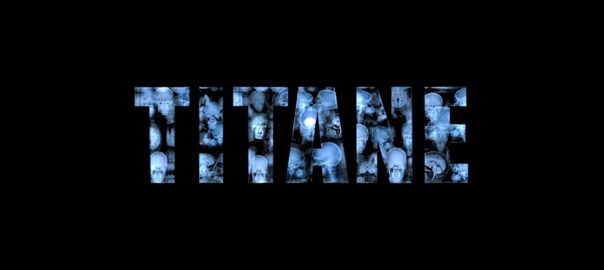
Titane, Palme d’Or winner at Cannes this year, and rock solid to make it into VIFF40.

Titane, the Palme d’Or winner at Cannes this year is all but certain to screen at all festivals this late summer and early autumn. David Chase’s Sopranos prequel The Many Saints of Newark, Clint Eastwood’s Cry Macho, King Richard with Will Smith, Wes Anderson’s The French Dispatch and Michael Showalter’s The Eyes of Tammy Faye are all festival bound, and certain Academy of Motion Picture Arts & Sciences Oscar contenders.

The Toronto International Film Festival

The Toronto Film Festival (September 9th to 18) is probably the world’s most prestigious film festival, not only celebrating world cinema, but presenting most of the films that will feature in the Oscar race early next year. The 59th and heavily curated New York Film Festival (September 24th thru October 10th) always shares half of their programme lineup with Vancouver’s homegrown film festival — something to anticipate in 2021.

Jessica Chastain, the odds on favourite for Best Actress, for The Eyes of Tammy Faye.


Ottawa at night, all lit up in colour

Even though VanRamblings is taking a three-day break from coverage of the exceedingly dull, verging on enervating 40th Canadian federal election, as they become available, we’ll still provide you with the latest edition of David Herle, Scott Reid and Jenni Byrne’s Curse of Politics podcast.

The David Herle, Scott Reid & Jenni Byrne Curse of Politics podcast for August 20, 2021

Arts Friday | Can Hollywood and Cineplexes Survive Coronavirus?

popcorn.jpg

Movie theatres have endured world wars, depressions and recessions, and the advent of everything from television to streaming. But COVID-19 and the public health crisis it has generated this year around the globe represents an existential threat to the cinema business like no other.
The novel coronavirus pandemic is upending the movie business.
Once upon a time, a handful of big studios spent billions of dollars making movies, and marketing and distributing those movies to theatres across the globe. But over the past two decades, with a surge in content and streaming delivery services, the old way of doing things has been shifting.

Then, in early March of this year, COVID-19 started spreading across the globe in a big way. The first thing that happened was a bunch of blockbusters got moved: Black Widow Disney’s latest Marvel superhero adventure, was bumped from its May 1, 2020 release date to May 7 2021. That followed news Disney had delayed Mulan, originally slated for March 27, the film moved to Disney Plus — at $29 a pop for young families.

Ditto Warner Brothers’ Wonder Woman 1984, which was moved from this year to who knows when, and No Time to Die, the 25th 007 movie, about which there’s speculation that it, too, will soon become a VOD title.

Paramount’s A Quiet Place Part II (April 23 2021), and Universal’s F9, the latest in the Fast & Furious franchise were also moved (May 28, 2021).
Together, it was estimated that those movies would have brought in somewhere north of $1 billion at the box office in 2020.
“There’s never been a situation like this,” says IndieWire film critic, Eric Kohn. “Fear of the unknown is never a good thing. We’ll return to normalcy at some point, but as we ride this out, there’s going to be near-term pain.”
As Hollywood traverses uncharted territory, studio executives are pleading for patience. “We will get to the other side,” Jim Orr, president of domestic distribution for Universal Pictures, recently told respected industry trade publication Variety. “How long is all of this lasting? Nobody knows.”

Theatre owners believe that after two years of declining box office sales, business will return to normal, and they will see record high box office in 2021, as Hollywood releases a truckload of franchise sequels. The haul includes four films from the Marvel universe — Shang-Chi and the Legend of the Ten Rings (July 9, 2021); Doctor Strange in the Multiverse of Madness (tbd); Spider-Man 3 (tbd) and Thor: Love and Thunder (February 18, 2022) — as well as Jurassic World: Dominion (June 10, 2022)The Batman (March 4, 2022), Mission: Impossible 7 (tbd), Guardians of the Galaxy Vol. 3 (August 6, 2021) and Avatar 2 (December 16, 2021).
“When the 2021 box office eventually is reported, we believe it will be the pessimists and the naysayers who will turn out to have been wrong,” AMC chief Adam Aron told industry analysts in a zoom call earlier this month..
“This year’s box office is going to look like the biggest asterisk you’ve ever seen,” says Kohn. “You’ll never be able to compare 2020 to any other year and have it mean anything. It’s simply going to be a lost year.”

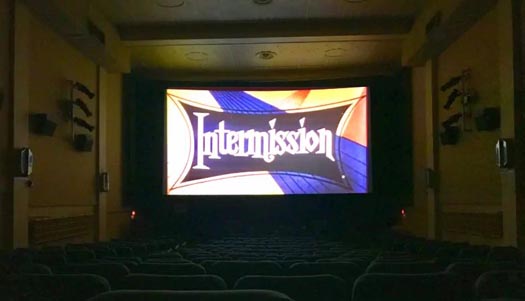
intermission.jpg

As Barry Hertz wrote in the Globe and Mail earlier this year, “All audiences can do now is hold out hope for a Hollywood ending.”

Arts Friday | The Impact of Cinema in Pre-Pandemic Times

watching-movies.jpgNostalgia for a Time When Going to the Movies Was a Pleasure We All Enjoyed
Each and every one of us possess within us memories of our experiences visiting the cinema: as a child of attending at the movies with our parents; our first foreign or independent film with a group of friends; or simply visiting our local multiplex cinema to catch the latest superhero blockbuster, or making the pilgrimage to one local film festival or another.
Pre-pandemic, going to the movies was still a popular past-time, even in an age when media consumption and “film viewing” has radically changed (think of the Netflix revolution). In North America in 2019, there were 1.3 billion cinema admissions — a not-insignificant, nor surprising figure.

An art deco cinema in the 1930s

In 1930, more than 65% of the population went to the movies weekly. That means for every 5 people you knew, 3 of them went to the movies weekly.
Can you even imagine that?
Eighty-five years ago, cinema-going remained astoundingly popular across the continent, reaching a peak of 1.64 billion admissions in 1946 — even though the North American population was less than half of what it is today.
Why was cinema so popular in times past?
Some of the reasons are fairly straightforward: there was limited opportunity long ago for inexpensive recreational activities outside of the home, television had yet to assert its power, and film was an established medium which exposed millions to different worlds and alluring cultures (or, more often, to the vicissitudes of North American culture).
There was, however, a deeper and perhaps more fundamental reason for movie-going’s immense popularity in North America mid-20th century.
Recent research on movie-going habits in the twenty and 21st centuries has focused on the interplay between space and emotion, and how cinemas act as facilitators of emotional experiences in ambiguous spaces.
Over the years, movies have aided people in helping to reveal new insights into their lives, while allowing a better understanding of the lived experiences of people across the globe, and in their own neighbourhood. Cinema has not only traced our conception of life, but has also served to affect our outlook on life and the lives of others.
Watching a film in the presence of others is different from watching a film alone, or with our family: the collective constellation affects the way viewers experience a film, made all the more obvious once strong emotions and affective expressions come into play: laughter, sadness, shame, anger, screaming, and more often than not (if we’re lucky) being moved to tears.
Different times in history — and different spaces — have served to create new affective landscapes and altered existing ones, making cinema a useful category for historians to study changes in society and culture over time.
The history of cinema has been integrated alongside other sociological methodologies to help form a more refined and complex picture of the past, and in consequence has offered a valuable way of introducing new insights into the establishment of popular culture, and societal development.
The darkness of the cinema environment presents the opportunity to experience a strong shared emotional experience in a public setting, in the anonymous environment of the auditorium. No other public space has facilitated this to such a degree, and this uniqueness reveals how the life of our society developed in specific contexts and in precise locations.
The enclosed and defined space of the cinema auditorium, containing a distinct group in the form of an audience, is an obvious example of community. Patrons in the cinema are aware of both their own emotional response to what they are viewing onscreen, and the feelings of those around them, providing reassurance that our emotional responses to a film are being mirrored by our fellow patrons.
Respected film critic Leslie Halliwell recalled in his memoir on cinema-going that film took “people furthest out of themselves, into a wondrous and beautiful world which became their Shangri-La”.

the-rialto.jpg

This utopia was reflected in the very names of cinemas — the Orion, the Rialto, the Plaza, the Regal — and in the architecture of the buildings which encompassed a range of styles including the clean lines of Art Deco and the high theatrics and excess of the “atmospherics”.

The Grandview Theatre, Commercial Drive at East 1st Avenue in Vancouver, in the 1950sThe Grandview Theatre, Commercial Drive at East 1st Avenue in Vancouver, in the 1950s

Evidence suggests that many people viewed their local movie-house, whether a stand-alone, second-run neighbourhood movie house or a first-run super-cinema, as a reassuring and familiar space characterized by a hazy emotionality fluctuating between the individual and the group, in the process offering a sense of connection with those who surrounded us.
This ambiguity — the individual vs the collective experience — lies at the heart of what attending at the cinema signifies to people. In few other areas of life are the landscapes of our lives softened to such a degree, in turn making attendance at the cinema a welcoming experience.

cineplex-cinemas.jpg

Cinemas have long occupied a position on the boundary between the domestic and the public, allowing our emotional experience of a movie concurrently as both communal and private, the evolving emotional landscapes which were crafted by cinema patrons in the mid-20th-century serving to break down anomie while creating a sense of connection.
The fundamentals of our affective experience at the movies has changed little over the past 100 years.
The price of popcorn, however, most definitely has.

Arts Friday | Netflix Takes Over the Oscars in 2021

Netflix to overtake the Oscar ceremony in 2021

In 2019, Netflix landed its first Oscar nomination for Best Picture with the release of Alfonso Cuarón’s critically acclaimed Roma. A year later, the streaming service was leading the field with 24 Oscar nominations, including Best Picture nods for both The Irishman and Marriage Story.
As Netflix’s impact on the world of cinema became increasingly undeniable, the younger and more diverse film academy was no longer prepared to shun the streaming service as the old Hollywood guard tried to do. Earlier this year, on April 28th, responding to the changes that COVID-19 had wrought, the Academy of Motion Picture Arts & Sciences removed the stipulation that a movie must be shown in a theatre before it could become eligible for the coveted Best Picture Oscar nomination.
And thus the stage was set for an Oscar ceremony in 2021 the likes of which no one will have ever seen before, with at least seven Netflix releases eligible for a Best Picture nomination, with each of those films set for Oscar nominations, ranging from Best Actor and Actress, Supporting Actress and Actor, to Best Director, Music, Sound and technical awards.
Today on VanRamblings, the Netflix features set to dominate Oscars 2021.

For the upcoming Academy Awards — delayed due to the pandemic until Sunday, April 25th — Netflix has pulled out all the stops. Already streaming, there’s Spike Lee’s Best Picture contender Da 5 Bloods, Gina Prince-Bythewood’s well-mounted action thriller The Old Guard, and Charlie Kaufman’s screenplay contender, I’m Thinking of Ending Things.
And, available today on Netflix, there’s writer-director Aaron Sorkin’s The Trial of the Chicago 7 which is, as Variety lead critic Owen Gleiberman writes, “a knockout, and the rare drama about the 1960s that’s powerful, authentic and moving enough to feel as if it were taking place today, a briskly paced and immersive film bristling with Sorkin’s distinctive verbal fusillades, a cinematic powder keg of film with a serious message that seamlessly blends a conventional yet compelling courtroom procedural with protest reenactments and documentary footage, the film offering an absorbing primer of a ruefully meaningful period in American history.”

Due to arrive on Netflix on Tuesday, November 24th — on the eve of American Thanksgiving — director Ron Howard’s big budget film adaptation of J.D. Vance’s autobiographical best-seller, Hillbilly Elegy offers a powerful account of growing up in a poor Rust Belt town, that also provides broader, probing insight into the struggles of America’s white working class.
A passionate and personal analysis of a culture in crisis, Glenn Close and Amy Adams are at the centre of Howard’s film, and solid prospects for Best Actress and Best Supporting Oscar nods. Howard will be in the mix, as well.

Netflix will release David Fincher’s Mank in select theatres in November before the black-and-white film begins streaming on December 4th.
The Hollywood-centric period piece follows alcoholic screenwriter Herman J. Mankiewicz (certain Best Actor nominee Gary Oldman) as he races to finish the screenplay for Orson Welles’ 1941 masterpiece Citizen Kane. That classic picture was fraught with behind the scenes drama, as Mankiewicz and Welles argued over credit and who wrote what, which became even more important once the film won the Oscar for Best Original Screenplay.
The original script for Mank was written by Fincher’s father, Jack Fincher, so this project certainly means a lot to the filmmaker. Mank boasts a running time of 2 hours and 11 minutes, so it won’t be quite as long as Zodiac or The Curious Case of Benjamin Button, not that Fincher ever wastes a single frame. The film is expected to be a major awards contender for Netflix.

Ma Rainey’s Black Bottom. George C. Wolfe directs, Denzel Washington produces, and Oscar-winner Viola Davis (Fences) stars as Ma Rainey in Ruben Santiago-Hudson’s adaptation of the hit August Wilson Broadway play. The late Chadwick Boseman and If Beale Street Could Talk star Colman Domingo play members of Rainey’s ’20s jazz band.
Awards prospects: Ambitious trumpeter Levee was 43-year-old Boseman’s final role before succumbing to his private battle with colon cancer in August; he looks rail thin in film stills. Posthumous Oscars went to Heath Ledger (The Dark Knight) and Peter Finch (Network) among others. In this case, with the beloved Black Panther star also in the running for his supporting role as a U.S. Army soldier in Vietnam in the Spike Lee joint, Da 5 Bloods, many believe that it’s likely Boseman will wind up in the Best Actor category for Ma Rainey, with Davis as Best Actress. Like Mank, the elaborate period setting should be attractive to Academy craft branches.
Release date: In theatres early December, streams on Netflix December 18.

The Midnight Sky, director-star George Clooney's new sci-fi film for Netflix

Oscar-winner and Hollywood icon George Clooney directs The Midnight Sky, a sci-fi thriller with a script by Mark L. Smith (The Revenant) based on the Lily Brooks-Dalton novel about an Arctic scientist (Clooney) attempting to warn a NASA spaceship astronaut (Felicity Jones) not to return to doomed planet Earth. Awards prospects: Netflix took advantage of the London Film Festival this month (October 2 – 18) with a tribute to Clooney, complete with clips. Critical reaction will determine whether The Midnight Sky will figure in the Oscar sweepstakes, but Clooney (Syriana) has delivered in the past, as has Oscar-nominated Jones (Theory of Everything).
Release date: In theatres early December, Netflix début to be announced.