
Category Archives: Canada

#BCPoli | Election 2024 | Riding Breakdown Analysis | Vancouver Island

In the 2024 British Columbia provincial election there are 93 ridings, six more than in the 2020 B.C. election, thanks to the redistribution recommendation of the Independent Electoral Commission which was charged to make voting in British Columbia fairer and more representative of the population of the province.

In British Columbia, there are 25 ridings in the Interior (the Okanagan and the Kootenays), 16 ridings across Vancouver Island, and 52 ridings across Metro Vancouver, reaching out into the Fraser Valley, and extending to Chilliwack.

In total, there are approximately 30 ridings that will tell the tale on Election Night,  October 19th. The outcome in these ridings will determine whether incumbent Premier David Eby’s New Democratic Party will hold onto government, or will be replaced by John Rustad’s insurgent Conservative Party of British Columbia.

Today, VanRamblings will focus on the Vancouver Island ridings in contention.

For the past couple of provincial elections Vancouver Island has proved to be a New Democratic Party fortress, with the party winning every riding on the Island. Following the October 19th election, we could witness a return to the days when a handful of Socred  / B.C. Liberal candidates held sway in five or six Vancouver Island ridings.

VanRamblings will publish three additional riding analysis columns covering the Interior and the North, a good portion of Metro Vancouver (focusing on Vancouver / Burnaby / Richmond / Delta / New Westminster / Surrey), and a final riding by riding analysis column covering the Tri-Cities, the north side of the Fraser River, Langley, and into the Fraser Valley through to Chilliwack.

Today, VanRamblings is focused on the Vancouver Island ridings that could allow David Eby to hold government, or thrust John Rustad into the Premier’s chair.

Vancouver Island | Five Ridings in Contention in Election 2024

(Click on the underlined text for more information on the candidates running in the riding)

  • Victoria-Beacon Hill . Held by former B.C. NDP leader / Finance Minister Carole James from 2005 to 2020, upon resigning for health reasons, popular Victoria City Councillor Grace Lore ran in her stead in the 2020 B.C. election and won. During her first term, Ms. Lore’s four-year-old son was diagnosed with a brain tumour, which saw his mother cut back on some of her political activities in the riding, also gaining her family much sympathy and support. Upon her son’s return to health, Grace Lore was appointed as the Minister of Children and Family Development, a job she has excelled at, gaining much recognition for competence in the post, as well as for her caring and compassion. Ms. Lore’s challengers in 2024: Green Party of B.C. leader Sonia Furstenau, who moved from her Cowichan riding after redistribution, and B.C. Conservative candidate, Tim Thielmann. According to the most recent internal party polling, this will be a tight three-person race, with the very real possibility that there could be as little as half a percentage point in the vote separating the winner from the two politicos who fail to secure victory on the evening of October 19th.
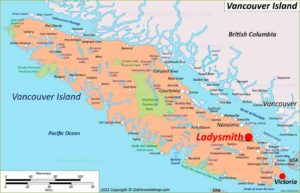
  • Ladysmith-Oceanside . Adam Walker was elected as the NDP candidate in the riding in the 2020 B.C. election. For reasons that have never been revealed, Mr. Walker was removed from the NDP caucus on September 18, 2023, and since that date has sat as an Independent. Mr. Walker is running for office in 2024 as an Independent, with the endorsement of the Green Party, and the on the ground support of the party’s supporters. Stephanie Higginson, a past president of the B.C. School Trustees’ Association, is the B.C. NDP candidate. The B.C. Conservative candidate, Brett Fee, is a relative unknown. There’s also a second Independent candidate, Lehann Wallace, who is seeking the seat. The outcome in the riding is unpredictable. Ordinarily, the riding would be solidly NDP, but the candidacy of Adam Walker throws a spanner into NDP expectations for a win. This one’s gonna be a nailbiter come election night.
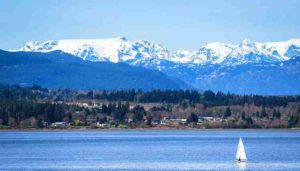
  • Courtenay-Comox . Both Courtenay-Comox and North Island are in the federal riding of North Island-Powell River, where Aaron Gunn — whose claim to fame was being removed from the B.C. Liberal party leadership race in 2021 for being too far right — is the federal Conservative Party candidate. In 2017, Ronna-Rae Leonard — who is running for re-election in 2024 — won Courtenay-Comox by a hair’s breadth. For the previous two decades, the riding had been a B.C. Liberal stronghold. With support for the Green Party in the basement, political pundits suggest that Courtenay-Comox will be a tight two way race, with B.C. Conservative candidate Brennan Day set to win the riding come October 19th. Not for no reason was John Rustad front and centre in the riding on the opening day, and again on Sunday for a big rally, of Election 2024.

  • North Island. As far as North Island is concerned, the riding oughta be another pick up for the B.C. Conservatives, their candidate physician Anna Kindy, who was an organizer with the Trucker Convoy, who brought hundreds of her future (anti-vaxx) constituents to the B.C. Legislature to protest Health Minister Adrian Dix, and Provincial Health Officer Dr. Bonnie Henry’s edicts on how to fight COVID. In a change election, the pundits’ smart money is on Dr. Kindy to put the riding in the win column for the B.C. Conservatives — who will fire Dr. Henry as a first order of business should they form government.
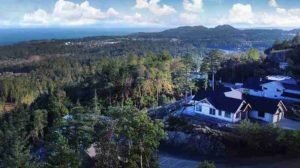
  • Saanich North and the Islands. B.C. Liberal from 1991 to 2013. A bare NDP victory in 2013, with B.C. Green Party candidate, Adam Olsen — who is not running again in 2024 — securing victory in 2017 and 2020. With former Islands Trustee Rob Botterell running with the Greens, lawyer David Busch with the B.C. Conservatives and Sarah Riddell, elected to Central Saanich City Council in 2022, the B.C. NDP candidate — a riding that has voted Conservative federally for decades — it’s anyone’s guess as to the outcome of this tight three way race come election night.

The 11 remaining Vancouver Island ridings oughta vote solidly NDP come election day. C’mon back tomorrow for more riding analysis, as we move to the Interior and the North, after which we’ll analyze Metro Vancouver and the Fraser Valley.


The Hotel Pacifico podcast will broadcast daily, Monday thru Friday, throughout the 2024 election

The good folks at Air Quotes Media’s Hotel Pacifico podcast — featuring Mike McDonald, Christy Clark’s campaign manager in 2013; Geoff Meggs, Premier John Horgan’s Chief of Staff; and Kate Hammer, a former Globe and Mail British Columbia legislative reporter — will “broadcast” on the B.C. Election each day, Monday through Friday.

VanRamblings will post the podcast, for your edification and enjoyment.

#VIFF2024 | A Celebration of Global Cinema

The Vancouver International Film Festival (VIFF) is set to return for its 43rd edition in 2024 — September 26 thru October 6 — promising once again to bring together film enthusiasts, industry professionals, and storytellers from around the world.

Since its inception in 1981, VIFF has established itself as one of the most prestigious film festivals in North America, known for showcasing an eclectic mix of international cinema, Canadian talent, and innovative documentaries.

Held annually in one of Canada’s most cosmopolitan cities, VIFF is not just a film festival — it’s a cultural celebration that embraces global perspectives, storytelling, and cinematic innovation. With its innovative programming and commitment to discovering fresh voices, the always scintillating Vancouver International Film Festival remains a key destination for cinephiles seeking thought-provoking films.

Each year, VIFF brings a curated selection of films that have already made waves at some of the world’s most prestigious film festivals, including Sundance, Berlin, Tribeca, Telluride, Venice, and Toronto. These films arrive in Vancouver having received critical acclaim, awards, and audience recognition when they made their début earlier this year, making VIFF a key destination on the awards circuit, on the road to greater international exposure, and broader recognition, often concluding with Academy Award nominations and wins.

For the 2024 edition, several high-profile, award-winning films will make their way to Vancouver, having already garnered significant attention at earlier festivals.

Award Winning Films To Screen at VIFF 2024 | Part 3

Here are six more of the most anticipated films that will screen at VIFF 2024 (note: each highlighted film title, should you click on it, will take you to the VIFF page providing more detail on the film, allowing  you to purchase tickets for the film, too).

  • A Different Man. Silver Bear for Best Leading Performance. Berlin 2024. Aaron Schimberg, USA, 2024. By refracting Brian De Palma’s self-reflexiveness and the Coen brothers’ mordant fatalism through the prism of his most personal obsessions, Schimberg creates a house of mirrors so brilliant and complex that it becomes impossible to match any of his characters to their own reflections, and absolutely useless to reduce the movie around them to the stuff of moral instruction.

  • A Traveler’s Needs. Silver Bear Grand Jury Prize, Berlin 2024. Yeohaengjaui pilyo / 여행자의 필요. Hong Sangsoo, South Korea, 2024.  A Traveler’s Needs is just the tonic: a film that passes through you like a breath of fresh air. With an endearingly scatty, offhand performance from Isabelle Huppert that lends the proceedings a veil of comfy familiarity,  A Traveler’s Needs nonetheless finds the indefatigable Korean auteur at his most puckishly cryptic.

  • Black Dog. Un Certain Regard Prize, Cannes 2024. Gou Zhen / 狗阵. Guan Hu, China. Written by Hu and longtime collaborator Rui Ge, Black Dog embraces the same premise of countless a noir before it: a lone drifter comes home to start afresh, only to face the ghosts of his troubled past. What’s sensational about Hu’s latest is the way it undercuts that dread to land on an engrossing note that rings wholly, convincingly earned.

  • Dahomey. Golden Bear for Best Film, Berlin 2024. Mati Diop’s captivating, fabulistic documentary Dahomey confronts the reality of how modernity has been shaped by the West’s theft of cultural heritage. An invigorating, agile, cerebral, strange and enlivening film, an all at once captivating and rigorously intellectual film that will leave you with a mighty impression well beyond the film’s compact length.

  • Gloria!. Grand Jury Prize: Official Competition, Seattle 2024. With the possible exception of Tora! Tora! Tora!, any film with an exclamation point in the title should by rights be a spangly, full-scale musical. A frothy tale of warring classical music sensibilities in a Venetian girls’ refuge, Gloria! stops short of complete commitment to that rule — but it’s when it fully suspends reality for all-singing, all-stamping choral ecstasy that Margherita Vicario’s début is most exciting.

  • Holy Cow. Youth Award: Un Certain Regard, Cannes 2024. North American Première. The début feature of Louise Courvoisier, who also grew up on a farm in the Jura, Holy Cow is a small but likeable coming-of-age tale that reeks of dung, grilled sausages, sweat and diesel oil. Lovingly shot in warm natural light, and accompanied by a gentle, lilting soundtrack, Holy Cow is shot through with compassion for its rascally yet vulnerable protagonist, 18-year-old Totone (Clement Faveau), a mop-haired lad who just wants to have fun with his mates, get drunk and get laid. But then his father dies and he is left with a failing farm and a little sister to look after.

VIFF Award Winning Films | Part 1 (just click on the preceding link to access page)

VIFF Award Winning Films | Part 2 (just click on the preceding link to access page)

#BCPoli | Former BC United MLAs & Candidates to Run as Independents

In the aftermath of the dissolution of B.C. United, formerly known as the B.C. Liberal Party, several incumbent B.C. United members of British Columbia’s Legislative Assembly, and former candidates, have this past week decided to run as Independents in the upcoming 2024 British Columbia provincial election.

This rise of Independents running for election — or, re-election — follows B.C. United leader Kevin Falcon’s decision to endorse B.C. Conservative leader John Rustad and shutter the party, leaving centrist voters without a clear political home. The choices made by these MLAs and former candidates to run as Independents reveal a divergence of political philosophy from Kevin Falcon’s strategy, and reflect concerns about the lack of moderate representation in provincial politics.

The Independent Candidates: Incumbent Members of the Legislature

Several incumbent B.C. United MLAs have announced they will be running as Independents. Each brings their own rationale for breaking away from the party and running independently:

  • Karin Kirkpatrick (West Vancouver-Capilano): A staunch advocate for centrist policies, Kirkpatrick has expressed discomfort with B.C. United’s decision to merge its support with the B.C. Conservatives. Her primary concerns centre on the erosion of moderate voices, particularly regarding social policy issues like LGBTQ rights and environmental policies, which she sees as being disregarded by the decidedly more right-wing Conservative Party of British Columbia. MLA Karin Kirkpatrick aims to continue representing her constituents with hard work, and a centrist approach.

  • Coralee Oakes (Cariboo North): Ms. Oakes — a former B.C. Liberal Minister of Community, Sport and Cultural Development — with a deep history of public service in her rural riding, has also similarly distanced herself from the merger. She has criticized the B.C. Conservatives alt-right stance, as she emphasizes her commitment to pragmatic, community-based governance that is neither aligned with the socially democratic B.C. NDP nor the far-too-right-wing for her, B.C. Conservatives. Oakes’s focus remains on rural issues such as forestry and infrastructure.
  • Mike Bernier (Peace River South): Mr. Bernier — a former B.C. Liberal Minister of Education — has long advocated for resource development and economic growth, but believes that the endorsement of the B.C. Conservative Party by Kevin Falcon represents a step too far toward the political right. Running as an Independent allows Mr. Benier to maintain a balance between economic conservatism and moderate social policies that he believes reflect the values of his constituents.
  • Dan Davies (Peace River North): Mr. Davies has taken a similar stance, underscoring the importance of responsible fiscal policy without compromising on social issues like education and healthcare. His departure from B.C. United reflects his unease with the B.C. Conservatives extreme positions, particularly regarding climate change and Indigenous relations, which are key issues in his resource-rich riding.
  • Tom Shypitka (Kootenay-Rockies): Mr. Shypitka, known for his work in mining and natural resource sectors, has voiced concerns about how Kevin Falcon’s endorsement of the John Rustad-led B.C. Conservative Party could alienate voters who are interested in economic development, but who also value progressive stances on issues like environmental sustainability. By running as an Independent, Mr. Shypitka hopes to represent a balance that the B.C. Conservative Party does not embrace.

Former B.C. United Candidates Turning Independent in 2024

Several former B.C. United candidates are also taking the Independent route:

  • Jackie Lee (Richmond-Steveston) and Wendy Yuan (Richmond Centre).  A long-time advocate for immigrant communities and small businesses, Jackie Lee has voiced frustration over the lack of moderate representation, most particularly Conservative’s socially intolerant stances. Meanwhile, Wendy Yuan is a three decade resident in the Richmond Centre riding, who has expressed concern about escalating crime, open drug use, and a relentless surge in the cost of living.
  • Karen Long (Langley-Abbotsford), Ashley Ramsay (Kelowna-Mission), Dr. Michael Humer (Kelowna Centre) and Tracy St. Claire (Penticton-Summerland). All four former — well known in their communities — B.C. United candidates, now running as Independents, have expressed similar concerns regarding social policies and a desire to represent their ridings with a more balanced platform, reflecting frustration with the direction taken by John Rustad’s B.C. Conservative Party.

  • Kevin Acton (Vernon-Lumby) and Greg McCune (Salmon Arm-Shuwap): These candidates, who have championed rural issues like farming and resource management, have expressed concerns about the polarizing impact of the B.C. Conservative Party on voters who may not agree with their stance on climate change or social issues, but still want robust support for local economies.
  • Meiling Chia (Burnaby South-Metrotown): Ms. Chia has positioned herself as a voice for urban issues like housing affordability and transit. She believes that neither the B.C. Conservatives nor the B.C. NDP offers real solutions for these problems, particularly in fast-growing urban areas where centrist solutions are needed

The Impact of Independent Candidates on B.C.’s Provincial Election

The decision by these former B.C. United MLAs and candidates to run as Independents will have significant implications for both the B.C. Conservative Party and the B.C. New Democratic Party (NDP) in the upcoming election.

  • Impact on B.C. Conservative Party: With B.C. United’s former base splintering, the B.C. Conservatives under John Rustad are poised to gain support, especially in rural ridings where conservative values are popular. However, the presence of high-profile Independents like Bernier, Oakes, and Davies could split the vote in these regions, potentially reducing the chances of a B.C. Conservative victory. These Independents may appeal to voters who are fiscally conservative but uncomfortable with the B.C. Conservatives’ positions on social issues like LGBTQ rights and climate change.
  • Impact on B.C. NDP: The splintering of the centre-right vote could benefit the B.C. NDP, especially in urban ridings like Richmond-Steveston, Burnaby South-Metrotown, and Kelowna-Mission. Without a strong centrist party, the B.C. NDP may face less competition from a unified right, allowing them to consolidate support in key battlegrounds. However, if Independent candidates gain enough traction, they could draw away moderate voters who would otherwise have supported the NDP as a strategic choice.

Kevin Falcon’s decision to endorse John Rustad and close B.C. United has left a significant void in British Columbia’s political landscape. VanRamblings has been told by folks in the know that come the 2028 British Columbia provincial election voters will see the revival of a vibrant new, well-funded B.C. Liberal party, offering a fiscally responsible, and socially progressive approach to B.C. politics.

In 2024, by running as Independents, the former B.C. United MLAs and candidates we write about today are aiming to fill that gap, providing voters with a centrist option they believe no longer exists within B.C.’s formal party system.

Their presence in the election is likely to reshape the dynamics in key ridings, creating new challenges for both the B.C. Conservatives and the B.C. NDP.

Whether this strategy will succeed remains to be seen, but it underscores the shifting political terrain in British Columbia as voters navigate between the increasingly polarized political options on offer in the British Columbia provincial election.

#BCPoli | Affordable Housing Plan | Part 2 |
BC New Democratic Party

Premier David Eby and the B.C. New Democratic Party (NDP) have developed a comprehensive housing plan aimed at addressing British Columbia’s escalating affordability crisis. The second plank in the B.C. NDP’s housing plan specifically targets individuals and families earning between $30,000 and $88,000 annually, aiming to provide affordable co-operative housing on a large scale.

The B.C. New Democrats’ housing plan emphasizes the use of municipal, provincial, and federal Crown land for the construction of housing co-ops, offering long-term leases — typically on a 66-or-99 year leasehold basis — to keep costs down.


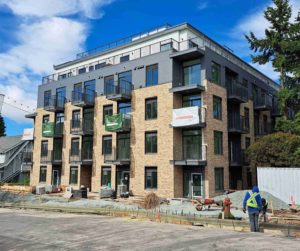
The Railyard Housing Co-operative, built on Crown land, 135-units, with bachelor-1-2-3-and-4 bedroom units, priced well below the market. Includes two child care centres, with spaces for up to 130 children.

Additionally, municipalities would forego development fees — saving up to $1.5 to $4.5 million, depending on the size of the housing co-op, and number of units — significantly reducing the cost of building, thereby allowing these newly-built housing co-op homes to remain affordable for middle-income earners.

The strategy to build co-operative housing on government land is a notable aspect of the B.C. NDP’s approach to solving the housing crisis.

Co-operative housing, which offers more stability and community engagement than traditional rental housing, is a model where residents collectively own the housing but do not own individual units.

This model has proven successful in other parts of Canada and Europe, providing long-term affordability and community-driven management.

One of the key elements of the plan is its focus on affordability through leasehold arrangements on public land.


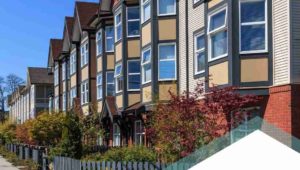
A town house-style housing co-operative built on Crown land in Vancouver’s River District

By leasing land rather than selling it outright to developers, the government can ensure that the affordability of these homes is maintained for generations. The 66- or 99-year lease term provides security for families and individuals, allowing them to build long-term roots without the fear of skyrocketing rent or property values.


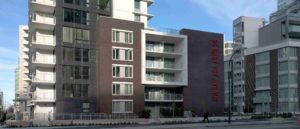
The 65-unit purpose built rental building at 2nd and Larch in Vancouver, with 14 studio, one, two and three-bedroom units set aside at CMHC’s median market rental rate, at $1000 – $1250 per month

The B.C. NDP has also introduced a provincial mandate that requires all new purpose-built rental housing to allocate 20% of units at the Canada Mortgage and Housing Corporation (CMHC) median market rental rates.

These CMHC rates are typically much lower than the market rates in hot real estate markets like Vancouver and Victoria.

By ensuring that a portion of new rental units are priced affordably, the provincial government hopes to address the growing rental affordability gap.

This is particularly significant as purpose-built rental housing often commands higher rents than older rental stock, leaving many renters — especially families — struggling to find affordable, stable homes.

In addition to building new housing, the B.C. NDP has a long-standing policy of purchasing existing apartment buildings to preserve affordable housing.

By acquiring older buildings, the government prevents private developers from converting them into luxury condos or raising rents beyond the means of current tenants. This approach has been lauded for ensuring that affordable housing remains available across municipalities, where market pressures often push lower-income residents out of desirable urban areas.

Premier David Eby has stated that the B.C. NDP will continue this strategy, helping to protect vulnerable renters from displacement due to real estate speculation.

In stark contrast, John Rustad’s B.C. Conservative Party has yet to present a comprehensive housing plan. The absence of a clear policy to address the affordability crisis leaves many wondering how the party intends to tackle one of the most pressing issues facing British Columbians.


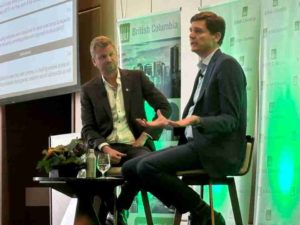
Premier David Eby addresses a gathering of real estate and urban development professionals Thursday, Sept. 12, 2024, at the Paradox Hotel Vancouver | Photo: Rachel Thexton

Premier David Eby believes the B.C. Conservatives should release more particulars of their housing policies, with the October 19th election just over one month away.

Speaking at a meeting of real estate and urban development professionals last Thursday, the B.C. NDP leader said voters deserve to know what exactly the Conservatives intend to do on housing if they win a majority in the upcoming vote and form a new government.

“I would like to know what the Conservative housing plan is,” Eby told the audience at an industry event hosted by Urban Land Institute BC. “I think for housing to be on the ballot for people, they have to actually understand what their choices are that are coming forward.”

While Rustad has criticized the B.C. NDP for their housing initiatives, he has offered little in the way of a concrete solution. The B.C. Conservatives’ silence on this issue is particularly concerning given the housing crisis’s impact on the province’s middle- and lower-income families.

Moreover, the B.C. Conservative Party’s proposals related to rental housing would exacerbate the housing affordability problem.

Rustad’s party advocates for removing the cap on rent increases, a move that would disproportionately harm renters, particularly those on fixed or lower incomes.

Without rent control, landlords would have the freedom to increase rents at will, further straining families who already struggle to afford housing. This policy would worsen inequity in a rental market that already heavily favours landlords.

Additionally, the B.C. Conservatives have proposed further empowering landlords, potentially reducing tenant protections and making it easier for landlords to evict tenants or raise rents. This shift would create an even more unequal dynamic between landlords and tenants, where renters — many of whom are low- or middle-income families — would have little recourse against rent hikes or evictions.

Families relying on affordable rental housing would be hit hardest, with fewer options to find stable, affordable homes.

— David Eby (@Dave_Eby) September 16, 2024

In contrast, Premier David Eby’s B.C. NDP housing plan aims to strike a balance between affordability and housing supply, ensuring families earning between $30,000 and $88,000 can access housing without being priced out of the market.

David Eby’s emphasis on co-operative housing, along with the mandate for affordable rental units in new developments, represents a long-term strategy to combat housing unaffordability in British Columbia. This stands in direct opposition to the B.C. Conservatives’ pro-landlord, anti-renter policies, which would likely lead to higher rents, more evictions, and an exacerbation of the housing crisis.

The contrast between the B.C. NDP and the B.C. Conservatives on housing is stark.

While the B.C. NDP have laid out a multi-faceted plan that seeks to provide affordable housing to middle-income families, protect renters, and increase housing supply, Rustad and the B.C. Conservativesoffer a vision that favours landlords, weakens tenant protections, and risks pushing more families into housing insecurity.

As the housing crisis continues to dominate the political landscape in British Columbia, voters will need to decide which approach best addresses their needs — an inclusive, affordable, multi-faceted housing strategy, or a hands-off market approach that prioritizes developers and property owners over renters.


The B.C. NDP’s Housing Plan, Part 1 — Dignified Supportive Housing