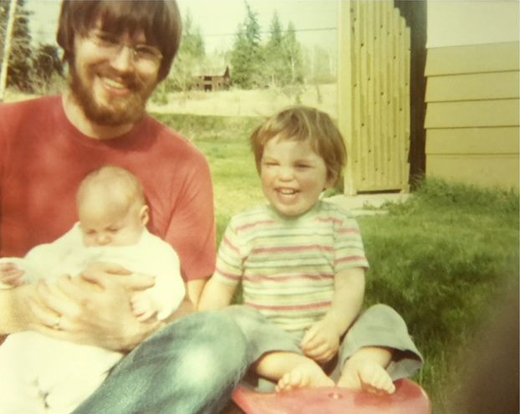
When Megan Jessica Tomlin was born on a Saturday night, March 26th, 1977, at Burnaby General Hospital at 10:26pm, given that she was a breach birth, the hospital room was filled with a harried collection of nurses and doctors & an anesthesiologist who’d been called to assist with the birth.
As a medicated Cathy lay peaceful, laying stock still on her white-sheeted hospital bed — given that she was infused with anaesthetic drugs to aid in the birth, to keep her sedated for what turned out to be her second, very difficult birth — upon delivery, a nurse gathered my new daughter, Megan, and brought her over to me, as I stood to Cathy’s left, just behind where her head lay, and handed my hushed newborn daughter into my arms.
For the 10 minutes that followed, a seeming lifetime of remembrance and love, Megan her eyes all blue peered directly into my eyes and deep into my soul, and for those few brief moments I into hers, as my daughter imprinted on me as the father who would become in her early years, and in succeeding years through to her late teens, the single most transformative person in her life, a father she trusted & loved with all her generous heart.
In the weeks that followed Megan’s birth, the wheels began to fall of the bus that was my marriage to Cathy, as Cathy seemed to lose herself, quitting her job at the Ministry of Human Resources office, drinking, staying out all night long, and otherwise engaging in self-destructive behaviour.
Why?
Given my position as the British Columbia Teachers’ Federation Learning and Working Conditions Chair for the Interior, and my long years of work previous with the Federation, and the great relationship I’d developed with Linda Shuto — working with her to form the first Status of Women office within an NGO anywhere on the continent — as well as BCTF President Jim McFarlane and, more especially with BCTF VP Don Walmsley, as you might well expect from a Federation comprised of mainly older members, Executive plans were afoot for Federation generational leadership change — and I targeted as the person who would become a future BCTF President.
Don Walmsley visited Cathy and me multiple times throughout 1977, in our newly acquired Interior home, to advise the both of us that plans were in process to, at the spring BCTF AGM in 1978, run me as a second vice-president of the Federation, with an eye to soon becoming BCTF President.
Here’s how the Federation saw it, Don explaining to the both of us: my organizing bona fides in the Interior had gained provincial attention, Cathy and I were a young couple “from the Interior” (the left on the Federation liked the idea of running candidates from rural areas), Cathy was a professional, was sophisticated and presented well, we had two children — we were, as far as the Federation was concerned, “the perfect couple”.
Here’s what Don Walmsley told Cathy and I …
“Next year, Raymond, we’ll run you for 2nd VP. Cathy, you can run as a Board of Education COPE trustee candidate for Vancouver School Board. Raymond, we’ll find you a job in Vancouver, find you a house, and Cathy we’ll make sure you’re employed, as well, finding you a job in the city similar to what you’re doing up here. Next year (1978), once you’re on the Executive, Raymond, and have moved down to the city, you’ll be closer to the Federation offices. In 1979, we’ll run you for 1st VP, and depending on how the election goes for President of the Federation, if our candidate loses, we’ll run you for President in 1980. If our candidate wins, and serves a three year term, we’ll run you for President in 1983.”
Sounded good to me — and not so good to Cathy, as elucidated above.
Once Don had left our home, Cathy told me that she had no intention of having the next 20 years of her life being planned by the teachers’ federation, nor was she enamoured of the idea of living in my shadow. Understandable.
You know how when you’re watching an awards show on TV, and the winner is (almost invariably) a man, the first person he thanks, whom he gushes over, is his wife, saying ardently, “I couldn’t have done it without her — she’s been my rock, and has stood by my side throughout the entire journey that has led to tonight. I will love you for always, my beloved.”
Believe me when I write: Cathy was having none of that arrant palaver.
Long story short, by early 1978, I had been awarded custody of both Jude and Megan, Cathy was off gallivanting around the globe with a drinking & carousing rock ‘n roll band — and I was left to raise two infant children.
From the outset, Megan was a bright and engaged child, far ahead of her milestone maturational markers — walking at 9 months, speaking at age 1, reading at 18 months — and by the time she was two years of age, as in control of her environment as any 11-year-old child of my acquaintance.
Where Jude — 21 months Megan’s senior — wanted to be out and about all the time, one of the friendliest, most gregarious and social children you’d ever want to meet, Megan was quiet, reserved, pensive and thoughtful, as big a “daddy’s girl” as could possibly be imagined, by my side throughout the day, and separated from me only when she was in daycare, or asleep.
As Cathy and I often remarked to one another as Megan was growing up, “Whose child is this, anyway? Megan certainly can’t be ours — she’s just so much brighter & more capable than either of us, or both of us combined.”
For me, there has never been anyone to whom I have been closer, who has understood me and “had my number”, with whom my relationship has proved more loving & honest than has long been the case with Megan & I.
We acknowledge — as if we have known each other across many lifetimes — that we have found one another on this Earth, in this lifetime, and as I josh Megan by referring to her as her very own diety, in this life the two of us take succour in the knowledge that we love one another, know one another, that as we live lives that are separate, Megan now married with children, and me in my west side home spending hours each day writing stories just like this, that as we run across one another from time to time, as we often do in my Kitsilano neighbourhood, that the first words each of us will utter will be, “I love you” — as we set about to continue our day.
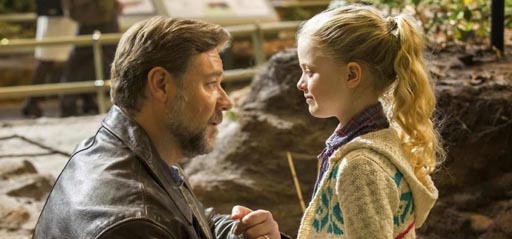
</ br>The knowing glance tells you everything you need to know about fathers & daughters
All animation, whether it depicts a whistling mouse, a walking dinosaur, or a leaping superhero, is a kind of magic trick. It’s right there in the name of one of the earliest devices used to project slides: the magic lantern.
If you take an image of an open hand and an image of a fist and project the two in sequence, you’ll convey the illusion of a clench.
“What happens between each frame is more important than what happens on each frame,” Scottish-Canadian experimental animator, the late Norman McLaren — a director and producer with the National Film Board of Canada (NFB), and a respected pioneer of hand-drawn animation and drawn-on-film animation — once explained, stating that ‘Animation is the art of manipulating the invisible interstices between frames.”
Arising from VanRamblings’ coverage this week of the meaning behind the majority BC NDP win in the recent provincial election, we failed to make mention of International Animation Day — which occurred this past Wednesday, October 28th — celebrated by the National Film Board of Canada through the streaming of 12 films, all of which are permanently available now – for free viewing – on the National Film Board website.
As Mercedes Milligan wrote this past Tuesday in Animation Magazine …
Now in its 14th year, this annual NFB event gives Canadian audiences the opportunity to explore a host of new works by Canadian and European filmmakers working in the National Film Board’s cutting-edge, internationally renowned studios. The rich 2020 selection puts women in the spotlight — both female directors and strong female characters — and features a wealth of different animation techniques.
</ br>Vancouver-based animator Ann Marie Fleming’s new animated short, Old Dog
Made by world-renowned animators, the outstanding animated films in this year’s International Animation Day programme have won prestigious awards and screened throughout the global festival circuit.
Long one of VanRamblings’ favourite arts and culture writers, Katja De Bock is now a publicist with the NFB (lucky, lucky them!). Here’s what she wrote to VanRamblings earlier in the week on one particular film she cherishes …
Old Dog, the latest film by Vancouver’s Ann Marie Fleming, started off as a way of talking about aging, inspired by Ms. Fleming’s namesake, Ann-Marie Fleming, whom she often gets mixed up with in Internet searches.
Ann-Marie has a company in 100 Mile House, B.C., that makes technologies for aging dogs, and also for their humans. Animator Ann Marie was struck by the compassion her namesake has for these vulnerable animals, as she helped them to navigate the latter stages of their lives, and by how much dogs have to teach human beings.
The COVID-19 pandemic made Ms. Fleming (the animator), whose elderly parents live overseas, reflect on how we take care of our elders and how our global values are being put to the test.
According to Ann Marie, animation is the perfect medium to tell this story. It makes the experience of the human and the dog more universal and helps us understand the unbearable lightness of being.
Now, as it happens Ms. De Bock informs us — and now, you — Old Dog is also featured at this year’s SPARK Animation Festival in Vancouver — which, by the way, began yesterday, and is set to run through Sunday, November 8th, and in addition to films will feature workshops, panels and talks by the world’s most talented artists, directors, and studio luminaries.
This year’s SPARK Animation Festival pass is only $25 — which will give you access to the dozens of films SPARK has on offer in 2020.
Guess what VanRamblings is going to be doing for the next nine days!
On Arts Friday, VanRamblings will leave you with this special treat …
In today’s wrap-up coverage of Decision 2020, in the main, we’re going to turn the column over to the reflections of others who’ve weighed in on the recently-completed, but not yet over, British Columbia provincial election.
That said, before we move to the observations of others, VanRamblings would like to weigh-in on what we consider to be the historic re-alignment of politics in British Columbia, and what that means for us going forward.
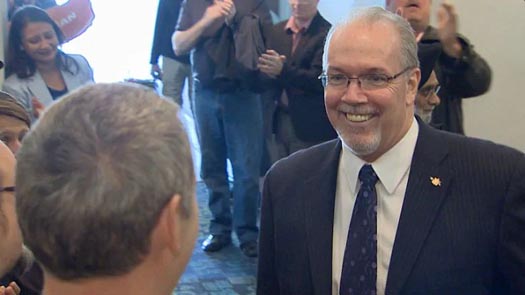
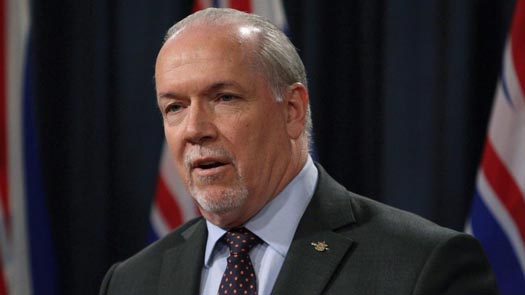
John Horgan assumes the leadership of the B.C. NDP on Thursday, May 1st, 2014
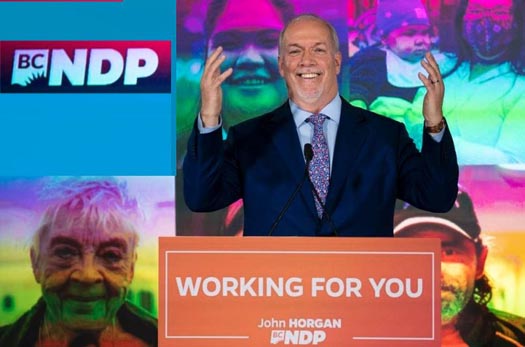
Since being acclaimed the leader of the B.C. NDP on May 1st 2014 — replacing Adrian Dix, who had failed miserably in the 2013 provincial election — John Horgan has taken the British Columbia New Democratic Party to the centre of the political spectrum, assuming the ground occupied by the B.C. Liberals as a resource extraction, pro-LNG, Site C dam loving, moving at a snail’s pace on promised social programmes like $10-a-day child care, and as a balanced budget loving provincial political party.
In other words, the B.C. NDP have become what the B.C. Liberals should have become following the defeat of the Christy Clark government in 2017 — as Wilkinson moved the party to the right, as a coalition of right-of-centre federal Liberals, and far right-of-centre Stephen Harper Conservatives, all the while failing to take the pulse of British Columbians, who in 2020 are no longer enamoured of the anti-union, corporate-backed politics British Columbians largely supported over the past 70 years, from the era of Wacky Bennett, to “Son of Bennett,” former Mayor and Premier Gordon Campbell — who on election tore up dozens of negotiated collective agreements — and vapid talk show host made good, Christy Clark.
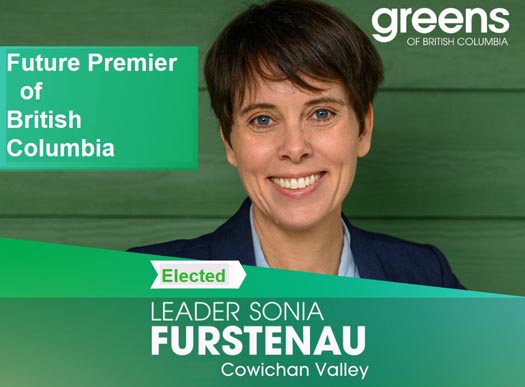
With the BC NDP now occupying the centre of the political spectrum, and the B.C. Liberal Party set to transform into a Brad Wall-Scott Moe Sask-Party-style right-of-centre B.C. Party, as we wrote yesterday, the left side of the political spectrum in British Columbia has been ceded to Sonia Furstenau and Adam Olsen’s re-imagined eco-socialist B.C. Green Party.
VanRamblings is predicting that Premier John Horgan will step down in late 2023, with the leadership of the B.C. NDP going to his preferred successor, David Eby, or to the charismatic member for the Stikine riding, Nathan Cullen. With either leader, the B.C. New Democratic Party will be returned to government in 2024, for a third term of office in the province’s capital.
All governments have a shelf life, though — and that will be the case with the B.C. NDP when the 2028 provincial election is called.
By that time, B.C. Green leader Sonia Furstenau will have had ample time to define her party in the eyes of British Columbians.
Upon completion of the 2024 provincial election, VanRamblings predicts that the B.C. Greens will have picked up another half dozen seats in the Legislature, and in 2028 will have added more, for a total seat count that includes all of the following ridings: Victoria-Beacon Hill, Oak Bay-Gordon Head, Saanich and the North Islands, Saanich-South, Esquimalt-Metchosin, Parksville-Qualicum, Nanaimo, Nanaimo-North Cowichan, Cowichan, Courtenay-Comox, North Island, Powell River-Sunshine Coast, Vancouver-False Creek, West Vancouver – Sea to Sky, New Westminster, Nelson-Creston, and Kootenay West, with the B.C. Greens holding the balance of power in a coalition-style British Columbia minority NDP government.
In the eventuality outlined directly above, by 2028, now a well-seasoned politico, B.C. Green leader Sonia Furstenau will hold the whip hand, in support of minority NDP government — given there’s no way a B.C. Green Party could support a right-of-centre B.C. Party, although she could hold the potential for that possibility over the heads of the B.C. New Democrats.
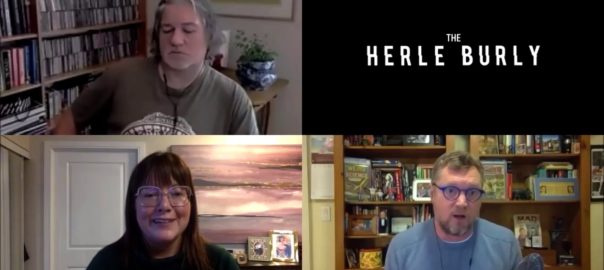
Now onto the observations of others, including the political strategists who comprise the endearing and engagingly foul-mouthed, beloved by many (including me), and well-experienced political difference makers — the rumpled David Herle, the good looking Scott Reid, and the swears-like-a-drunken sailor, Jenni Byrne — who over the course of the past 40 years have helped shape Canadian politics, mostly at the federal level, but often enough, too, at the provincial level: the wily, riotously humourous, utterly non-rancorous, incredibly bright, truth-telling, and — believe it or not — non-partisan panel who comprise The Herle Burly podcast, a must-listen for anybody who has a life, cares even a whit about the state of our nation, and gives a good galldarn about how the sausage is made, and how decisions are arrived at in government that determine how our lives are lived in this country we call Canada — surely, that must be you.
David Herle, Scott Reid & Jenni Byrne on British Columbia’s Decision 2020 provincial election — guaranteed to be the best thing you’ll hear all day.
Let’s excerpt a number of comments made by political pundits published on The Tyee post-election, in a story titled, So, What Does BC’s Election Outcome Really Mean? Here a few of the more provocative insights …
UBC Political Science prof, Max Cameron
Several conditions contributed to the success of John Horgan’s NDP. First, the world is going through a social democratic moment. Social democracies in other places have managed the COVID-19 pandemic effectively, in part because they have invested in universal health care and economic security …
Second, the NDP government has shown that it pays to listen to science and make policies informed by evidence. Elected officials — notably Adrian Dix — worked closely with public health officers — especially Dr. Bonnie Henry — to win the trust of the public and mobilize support for public health directives …
Third, the NDP benefited from a minority Parliament. Minority situations encourage governments to be cautious, responsive and to hew closely to public opinion. Working within a historic Confidence and Supply Agreement with the BC Greens, the NDP ran a government that made few errors and suffered few scandals.
Finally, new campaign finance rules introduced by the NDP eliminated corporate and union donations and capped contributions from individuals. This levelled the playing field.
Karen Ward: With your majority, NDP, ‘choose to be brave.’
British Columbians rejected the vicious politics of Wilkinson’s Liberals. They don’t like it when you use people in trouble as a weapon to punish them further. I hope the message to the NDP is clear: Be brave.
Alex Shiff, former BC Liberal spokesperson
While the BC Liberals needed to win back suburban Metro Vancouver swing ridings that they lost in 2017, the BC NDP was able to defend those ridings while pushing deeper into the Fraser Valley. The BC NDP was able to scoop up voters who decided that John Horgan’s first term as premier was not the radical activist administration that some had predicted, and a change in government in the middle of a pandemic was ultimately not what the doctor ordered.
The results represent an inflection point for the BC Liberals. The party needs to find a way to regain their appeal to suburban and urban ridings in Metro Vancouver, who, along with the party’s dominance in rural communities, were key to a pathway to the premier’s office.
Mario Canseco, Research Co, B.C. polling firm
The BC Liberals have a monumental dual task ahead: a need to reconnect with federal Liberal Party voters who did not feel uncomfortable voting for the BC NDP in this election, and ensuring that voters do not see the BC Conservatives as a more palatable option in 2024 or during any byelections that happen before then.
It was going to be a daunting task for any opposition party to erase the emotional edge that the handling of COVID-19 had bestowed upon the BC NDP. This is the first provincial election in this century where the incumbent premier had an approval rating higher than 60 per cent heading into election day. The BC Liberals certainly faced difficulties adapting to a campaign that minimized their natural strengths: the ability to fill rooms of supporters who wanted to hear the leader speak and an effective get-out-the-vote operation when more than half a million voters requested packages to vote by mail.
George Abbott, former BC Liberal MLA and Cabinet Minister
The Liberal campaign struck me as largely tone deaf around the issue that dominates public concern: the pandemic. If a BC Liberal government was prepared to offer up $10 - 11 billion in stimulus spending (a short-term elimination/reduction of provincial sales tax), a more imaginative platform might have embraced, for example, a billion dollar program for climate-proofing communities from wildfire and flood. The best stimulus programs deliver a “triple word score:” create or protect jobs, generate spin-off economic activity and enhance community safety and services.
As we bring VanRamblings’ post-mortem coverage of Decision 2020 to a close, we’ll leave you with this thought, that will likely gladden the heart of Sharon Gregson, as well as the working moms who’ve had to remain at home during the pandemic to care for their children: the biggest mistake made by the NDP in this election was in not identifying child care as both an economic and a feminist issue, and promising dramatically increased funding and near immediate movement towards $10-a-day and greatly expanded child care, allowing mothers to return to work while building the economy — which is a critical concern going forward — while showing a greater degree of caring and compassion for the children of the province.
While John Horgan promised free transit for children 5 – 12 years of age, that initiative failed to meet the needs of working families with teenage children who, as is the case in Surrey, must walk 5.8 kilometres, as the crow flies, to their school before becoming eligible for busing. At the very least, the John Horgan government could have promised to halve the fare for children aged 12 – 18 — a necessary initiative they failed to implement.
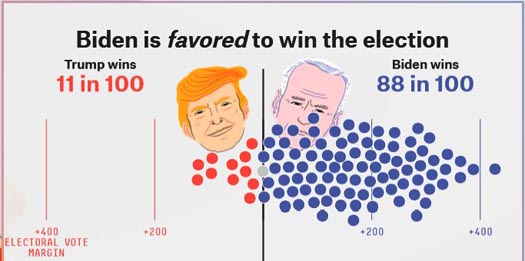
C’mon back Monday & Tuesday for VanRamblings’ take on the November 3rd U.S. Presidential election, where Democrats hope to win the Presidency, and both houses of Congress — and return sanity to all of our lives.
Growing up on Vancouver’s eastside, as a child living in poverty, with a tough-as-nails mother who was the family’s main breadwinner — even if she was earning only 35¢ an hour — resident in a neighbourhood in the post-World War II period, when immigrants — who we called DP’s, which unkindly stood for Deported Persons, what the uneducated, lower and working class folks in the neighbourhood used as a pejorative to describe “outsiders” — for me attending school at Lord Nelson, and later Templeton Secondary, my classmates were mainly rough-and-tumble members of the Chinese community — because, let’s face it, Grandview Woodland is not too much east of Vancouver’s Chinatown — Indo-Canadian, Filipino, black, Asian and other persons of colour, as well as recent Italian emigrés, meant that this polygot assortment of multiple cultures and ethnicities were my friends, my best friends, with whom I played rugby and brutal football games in the rain during our three-times a week “Games” block, means that for most of my life, as we discovered during the recent mid-election debate of political party leaders that, as is the case with Premier John Horgan, VanRamblings “didn’t see colour” — we just took it for granted that this is the world we lived in, and didn’t see or acknowledge any differences.
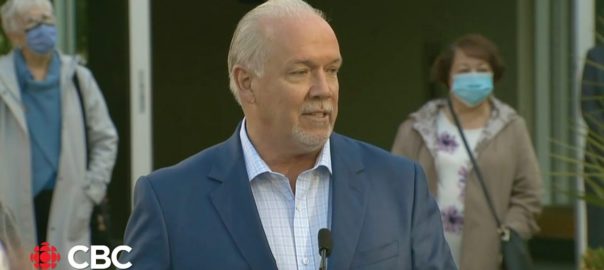
BC NDP leader John Horgan apologizes for answer to question about white privilege
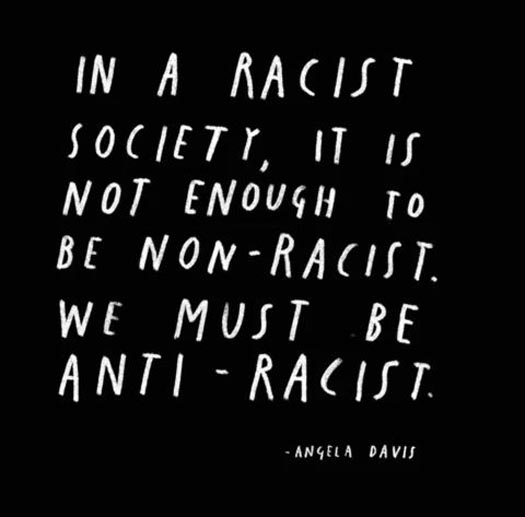
Now, this is 2020, and saying that you don’t see colour is verboten, is tantamount to saying that you have had no reason to reflect on the lived experience of minority members of the community you have been elected to serve, that as non-racist as you may be, you are not anti-racist.
In the 21st century we are witnessing necessary generational change in B.C. political leadership, that during the course of Decision 2020 was best personified by B.C. Green Party leader Sonia Furstenau, who spoke with clarity and with heart. Here is how, in an uncompromising manner, Ms. Furstenau answered the question, “How have you personally reckoned with your own privilege and unconscious bias as a white political leader?”
Of the three British Columbia political leaders on the debate stage that chilly, overcast Tuesday, October 13th evening, only Sonia Furstenau answered the question authentically and well, with compassion and grit.
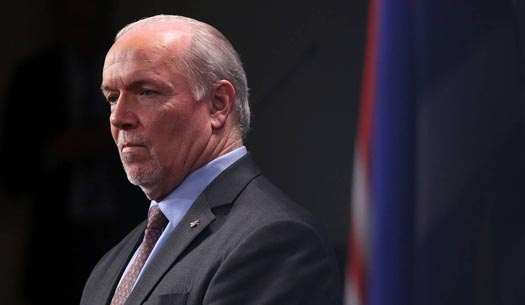
There’s a rationale for VanRamblings opening today’s column as we did, as our way of saying that VanRamblings understands Premier Horgan on a visceral, lived experience level, and recognizes that — as is the case with us — underneath that veneer of sophistication lies the heart of a street fighter, one of whose goals in the recently-completed election was to vanquish his foes, and destroy his enemies, who represent a threat to all that he has achieved, and the quiet, deserving enjoyment of his life.
Make no mistake, for Premier John Horgan in the year 2020, B.C. Green Party leader Sonia Furstenau represented an evil force incarnate, who would seek to take from him everything he has gained in the first 61 years of his life. With down and dirty street fighter Geoff Meggs in place as John Horgan’s chief of staff, the British Columbia New Democratic Party was prepared to do whatever it took to wipe those damnable Greens off the British Columbia political stage, to consign them to the dustbin of history.
For Premier Horgan, that his campaign to eliminate Sonia Furstenau from the B.C. political stage failed, and failed miserably, caused him on election night to be something he had not been since calling an election on Monday, September 21st: generous, to Ms. Furstenau and to the Greens, in a way that he’d not shown at any time since he called his snap election, nor during the unusually becalming 32-day election period that followed.
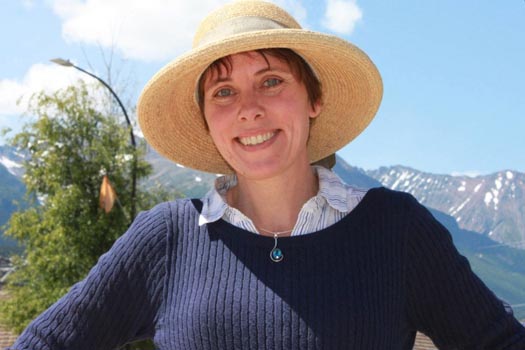
One can understand why Sonia Furstenau, on election night, was full of anger and disapprobation for the re-elected Premier: John Horgan, who she had liked and trusted, and had worked with collaboratively and well during the three year Confidence and Supply period of coalition government, dating back to 2017 — had set about to destroy her, had visited her Cowichan riding many times — with the province’s beloved Adrian Dix, as well as federal NDP leader, Jagmeet Singh, in tow — and made promises to the voters in Cowichan that were designed to wipe her off the political map.
As Ms. Furstenau states at the end of her address to the press and to the people of British Columbia, late on that chill October 24, 2020 election night, “We know you’re looking for us to put this election behind us and getting to work on the issues that matter. And we will not let you down.”
So, where to now for the gentle Ms. Furstenau, and her B.C. Green Party?
A provincial election called only one week after she’d won the contest for the B.C. Green Party leadership, caught Ms. Furstenau off guard and scrambling to put an effective election campaign in place, identify and nominate candidates across the province for her B.C. Green Party, set out a campaign itinerary, and develop an all important party platform — all of which she accomplished with steely determination, and uncommon élan.
Before we continue, a necessary bit of history on the evolution of the Green Party movement across the globe. In Europe, the Green movement arose out of the work of the far left Baader-Meinhof gang of the 1970s, who gave up violent direct action — industrial sabotage, blowing up buildings and infrastructure, and other forms of political violence — in favour of creating a Green movement that would enter government & fight against restrictions on immigration, advocating for women’s reproductive rights, supporting the legalization of marijuana, fighting for LGBTQ rights, having the state draft “anti-authoritarian” concepts of education and child-rearing, fighting against the dual threats of air pollution in the cities and the acid rain then destroying forests across Europe, fighting for civil rights, fighting against military incursions into developing states, and against state-sanctioned imperialism — well, you get the idea. The European Green movement is a progressive, far left-of-centre, multi-faceted civil rights and eco-socialist environmental movement — was in the 1980s, and remains so to this day.
The Green parties of Europe have held the balance of power, and more often than not sat in government for near 40 years, realizing substantive change as an activist movement well able to articulate the conditions necessary to create a fair and just state to serve the interests of all.
Not so in Canada. The Green movement at the federal level was founded by Jim Harris, formerly a far right member of the Conservative party, who was found to be so extremist that he was kicked out of the party, only to emerge as leader of the Green Party of Canada. In and across Canada, the Green Party has drawn candidates and support from two groups: the well-intentioned but politically naïve (with a surfeit of young, apolitical members), and those who are disenchanted with the old line parties (or parties that have an infrastructure, a broad and all encompassing raison d’être, and are committed to Canada as a diverse, inclusive nation).
For much of their life in Canada, the Green Party has lived up to and reinforced its billing as is often said about them, “Conservatives who ride bicycles.” And such was the case with former B.C. Green Party leader, Andrew Weaver, who was more than happy to join with then Premier Christy Clark in 2017 to have his Green Party form a coalition with the B.C. Liberals. Fortunate for all of us, Sonia Furstenau was having none of it, stating to Mr. Weaver that if he attempted to do so, she would cross the floor and join the NDP caucus. Adam Olsen, the then newly-elected MLA for Saanich North and the Islands told Mr. Weaver that he would sit as an Independent, should Mr. Weaver follow through on his intentions.
Thus we have the root of now former B.C. Green Party leader Andrew Weaver’s “dissatisfaction” with his re-elected Green Party colleagues,
But that was yesterday, and today is a whole new day, an opportunity for Sonia Furstenau to establish the British Columbia Green Party as a social democratic climate justice political party committed to the Green New Deal.
“To provide all people of British Columbia with high-quality health care; affordable, safe, and adequate housing; economic security; and access to clean water, clean air, healthy and affordable food, and nature.”
Which is to say, challenge the B.C. New Democratic Party on its left flank, while inspiring a new generation of voters, along with all other British Columbians who are committed to climate justice, and a fairer, more welcoming, inclusive and socially just British Columbia that meets the core needs of all of our citizens, from the bustling cities to B.C.’s suburban and vast rural communities, in every part of our province where opportunity and a safe, just, and sustainable future are what people are clamouring for.
Sonia Furstenau and Adam Olsen, and perhaps their West Vancouver-Sea to Sky Green colleague Jeremy Valeriote, have four years to re-invent the Green movement in Canada, to position the party as a viable and electable political force right across the province, to next time out, in 2024, steal a few seats from both the NDP and the B.C. Liberals, and grow the party.
After the writ was dropped and during the campaign, Premier John Horgan stated that he would not recognize the B.C. Green Party as deserving of party status, with all the financial and research supports that are available to a recognized political party, in the British Columbia Legislature. Should Premier Horgan fulfill his election commitment that four seats would be required to afford the B.C. Green Party status in the people’s house, Ms. Furstenau’s work to establish the B.C. Green Party as a truly viable political force across the province will be made that much more challenging.
Still, regardless of the decision Premier Horgan takes, Sonia Furstenau knows what she must do to gain seats in the house when the next provincial election is called four years from now: establish active constituency associations in all 87 ridings across the province, bring credible and electable candidates like Canadian marine biologist Alexandra Morton and energy and climate policy activist and academician Dr. Devyani Singh into the fold, to ensure that in 2024, the B.C. Green Party will field a slate of undeniable candidates who will win their ridings, and join Ms. Furstenau and Mr. Olsen with seats in the British Columbia Legislature.
Rarely has there been a more exciting time in B.C. politics — the closest we can recall is Dave Barrett’s activist government of the early 70s — when change and hope for a better, and a more sustainable future are not just the political agenda, but on the agenda of all progressive citizens.
As B.C.’s young climate justice activists, so inspired by Swedish environmental activist Greta Thunberg, go to the polls in ever increasing numbers in the years to come — as young people across the U.S. are doing now, in greater numbers and with greater force than at any time since the 1960s — hope for better is on the agenda, a hope that is best realized through broad support for the only political party in our province committed to a sustainable future that meets the needs of the present without compromising the ability of future generations to meet their own needs …
to maintain and improve human capital in society through increased investments in our health and education systems, with access to services, nutrition, knowledge and skills;
to preserve social capital by investing and creating services that constitute the framework of our society, focusing on maintaining and improving social equality with concepts such as cohesion, reciprocity and honesty, and the importance of collaborative relationships amongst people, encouraged and supported by laws, information and shared ideas of equality and rights, and recognizing that the economy and society and the ecological system are mutually dependent;
to maintain high and stable levels of economic growth as a key objective of sustainable development, and recognizing that abandoning economic growth is not an option, but that sustainable development is more than just economic growth, that the quality of growth matters as well as the quantity; and to improve human welfare through the protection of natural capital (e.g. land, air, water, minerals etc.), with initiatives and programmes that are defined as environmentally sustainable when they ensure that the needs of British Columbia’s citizens are met without the risk of compromising the needs of future generations.
By identifying and implementing the principles of the four pillars of sustainability through, as elucidated above, strategically sustainable initiatives, British Columbians might come to realize both a vibrant economic and an environmentally sustainable future for all of our citizens, in every town, city and village across every region of our natural province.