#BC Poli | New Provincial Government About to be Sworn In

Premier John Horgan talks to voters in the midst of a 2020 pandemic election

In two days, the eight-seven new, and in most cases returning, members of the British Columbia legislature will be sworn into office for the next term.
The newly-elected British Columbia New Democratic Party caucus is comprised of a record 29 distaff members, which means that more than half of the NDP’s 57 member caucus are women — good on the BC NDP, and a hearty congratulations to all new female members of the NDP caucus.

Premier John Horgan announces that the legislature will be called back into session

John Horgan has made various announcements leading up to Wednesday …

  • Cabinet, part 1. The new Cabinet, as was the case with the NDP’s most recent Cabinet, will be comprised of 50% women and 50% men — for which we have Prime Minister Justin Trudeau and his trusted advisors, Gerald Butts and his continuing Chief of Staff, Katie Telford to thank.

  • Cabinet, part 2. The new BC NDP Cabinet will be sworn in on Thursday. Here’s what we know for sure as of this writing. Contrary to VanRamblings speculation last month that David Eby would become the new Minister of Housing — well, that’s off the table, given that Premier Horgan let it slip that Selina Robinson will maintain her dual role as Minister of Municipal Affairs and Minister Responsible for Housing. Now, we know for sure that David Eby will not continue as Attorney General and Minister of Justice, given that Mr. Horgan let it slip that newly-elected NDP MLA for Oak Bay-Gordon Head would take on that role. Where does that leave the NDP caucus’ beloved David Eby? We’ll know on Thursday.

Meanwhile, though, this morning, the hapless B.C. Liberal party will be leaderless, given that Andrew Wilkinson stepped down from that role over the weekend. Update: Shirley Bond was selected as the Interim leader of the B.C. Liberals in a vote of the 28 Liberal caucus, early afternoon Monday.


As for the Greens, the party didn’t achieve their much-desired first seat on the Lower Mainland, with the Green candidate for West Vancouver Sea-to-Sky going down to defeat to incumbent B.C. Liberal, Jordan Sturdy, in a close race, confirmed in a recount. Still, there’s good news for B.C. Green Party leader Sonia Furstenau, and her Green Party colleague, Adam Olsen — John Horgan has agreed to afford the Green Party official party status in the B.C. Legislature, which means millions of dollars in funding to the party.

vote-bcndp.jpg

How Elections Are Won | Some Reasons for NDP Success

  • Nominated candidates in all 87 electoral districts.

  • Created more than 2,000 online ads (in 9 languages).

  • Earned more than 47,000,000 views on their digital ads.

  • Sent more than 300,000 text messages to British Columbians.

  • Trained 750 volunteers to call people all over B.C. and got out the vote during 2,479 volunteer-driven shifts!

  • Distributed more than 10,000 lawn signs.

  • Printed more than 150,000 leaflets.

  • Ran 5 television ads non-stop for a month.

A great deal of work goes into mounting a successful political campaign.

cash.jpg

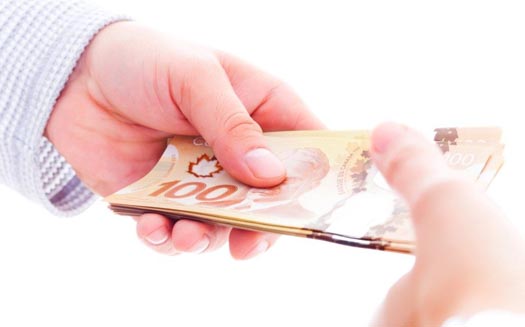
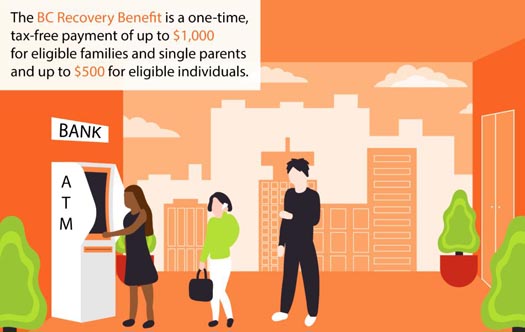
Now onto the stuff you really care about: the $1,000 for couples, and the $500 for individuals that Mr. Horgan had promised during the recent election campaign. Good news? The money is on its way. When the Legislature is called back into session on December 7th, the first order of business will be to enable the government to shovel that money out the door. In the spring, the BC NDP government gave most British Columbians $180 in a non-taxable Climate Action grant to households with a combined of under $125,000, money that was either deposited directly into your bank account, or mailed to you. The expectation is that monies will be deposited into your bank account on Christmas Eve (and, no, we’re not kidding), or will arrive by January 5th by snail mail — happy, happy days!

Stories of a Life | Late, Late for a Very Important Date

late-late-date.gif

In the 1980s, I was perpetually late on almost every occasion where I was depended on to be on time. Now, as many would say, lateness is a sign of passive-aggressive behaviour, and a statement to those who are waiting for you to arrive that your time is more valuable than theirs — while others believe that being late is a barely concealed power play on the part of the person who is late, designed to “put you into your place.”
Most people won’t bear a grudge if you’re 5 minutes late — but to be more than 5 minutes late, when people might start getting annoyed with you is a whole different kettle of fish. Lateness betrays a lack of respect and consideration for those who you are inconveniencing with your lateness.
In the inverse, although being late insults others, it also undermines the person who is late, because it may betray a lack of intelligence, self-knowledge, will power, or empathy. Or, it may be that the person who is late has set unrealistic goals and over-scheduled her day, or underestimated the time that it takes to travel from one place to another.
But there may be more perfidious and faithlessly treacherous reasons for being late than mere mediocrity. Some involve anger and aggression, and others self-deception. Anger expressed as passive-aggressive behaviour is a vigorous means of expressing aggression covertly, and doing so without incurring the full emotional and social costs of a more overt aggression.
As written above, being late, especially egregiously or repeatedly late, sends out the message, “I am more important than you”. Of course, one can, and often does, send out a message without it being true.
A person may be late because she feels inferior or unimportant, and being late is a way for her to impose herself on a situation, attracting attention, even going so far as to “overtake” an event, situation or proceeding.
At this point, it should be pointed out that being late is not necessarily an unhealthy trait, or pathological in nature.
Sometimes, being late is your unconscious (intuition) telling you that you don’t actually want to be there, or that it would be better for you not to be there — for instance, it could be that a meeting (or even a job) is not the best use of your time, or will inevitably work against your own best interests. Note should be made that headaches can serve a similar function.
There are few habits as infuriating as someone making us wait, though.
But, despite what may be running through your mind as you’re kept waiting again, it’s unlikely your friends or colleagues who are persistently late are just being selfish. It is only when the latecomers make the decision to be punctual that they change. It must be a conscious decision, though — if they merely make a woolly attempt to “try” to be on time, they won’t be.

“Lateness is really a commonly misunderstood problem,” says Diana DeLonzor, author of Never Be Late Again, who has conducted her own research on the perpetually tardy. “Yes, it’s a rude act, but I’ve interviewed hundreds of people and the vast majority of late people really dislike being late, they try to be on time, but this is something that has plagued them throughout their lives.”

In 1982 an event occurred in my life that ended my lateness forever.
Now, in my contemporary life and with rare exception, I always arrive on time — or early, but hold back on knocking on the door or depressing the buzzer until the exact minute of my proposed arrival time occurs — and over the course of the past 38 years, I’ve felt all the better for it.

Oscar Wilde: Punctuality is the thief of time

In the autumn of 1982, having finished work on my Masters, I found myself employed in a suburban Metro Vancouver school district as a secondary school English and Drama teacher. When I’d visited my mother on a mid-autumn weekend, she invited me for dinner in her North Vancouver condominium apartment, in the coming week. “Arrive at 5pm, Raymond,” she said to me. “You know I like to eat dinner early.”
On the mid-week day of the appointed dinner date, I skeddaddled out of the school at 3:45pm, a little later than I’d planned, but I figured that 75 minutes to travel from the Tri-Cities to North Vancouver should get me to my mother’s house in good time. Such, however, proved not to be the case. Traffic was particularly bad on the Highway One that day, there was an accident on the Ironworkers Memorial Bridge that slowed my travels, as traffic moved along at a crawl. Now, this was in pre-cell phone days.
So, there I was stuck in traffic with no way to contact my mother to let her know I’d likely be a few minutes late. Long story short, I arrived at my mother’s door at 5:20pm — late for sure, but I had a good reason, or so I thought. I knocked on the door. My mother’s newest boyfriend, a tall and imposing husky bear of a man, a retired commander in the Canadian Armed Forces Navy, as it happens, looked at me standing in the hallway, and as I made my way into my mother’s condo, he grabbed me, lifted me off my feet, and shoved me up against a wall, my feet dangling below me, and set about to lecture me on how rude I’d been in arriving late, that on behalf of my mother, he simply wasn’t having any of it.

“This is the last time you’ll be late for any event, ever, for any reason,” he roared at me, my feet still dangling below me. “From here on in, not only will you arrive on time, you will arrive early — but wait until the appointed time to make contact with those with whom you are to meet. You will plan all of your excursions and travels, and in so doing will always leave more than enough time in order that you might arrive at your destination not just on time, but early. Do I make myself clear to you?”

I nodded my head meekly, and said quietly, “Yes sir, I do.”
And, you know what? From that day to this, I have always made a point of leaving early, allowing myself at least an extra half hour of travelling time, often more — whether I’m travelling over to Vancouver’s east side from my Kitsilano home to visit newly-acclaimed author Jak King, as I did yesterday, or my friend who lives nearby Jak, the kind and generous Patrick Mokrane — or meeting someone for lunch or dinner, or a couple of beer, or for any other reason I am to meet with someone of my valued acquaintance.

Podcast Friday | Pandemic History | COVID | U.S. Politics | Oscars

Podcasts Raymond Tomlin listens to

Today on VanRamblings four easy to access, and readily available podcasts I listen to regularly and religiously, two weekly and two daily, must-not-miss podcasts that offer a thought-provoking reflection on the times in which we live, produced and hosted by welcoming and informed voices.
Something to listen to while driving in your car, or while you’re on the bus, doing a wash or ironing, tidying up, or when you’re out for a walk or run.
Easy to listen to, even if the subject matter is sometimes emotionally challenging — the content of the 4 podcasts below are always intellectually challenging, tho, which serves to keep your mind active, and you engaged.
CBC Ideas | ‘Civilization is a very thin veneer’: What the plague of Athens can teach us about dealing with COVID-19

athens-plague-ideas.jpgThe painting by artist Michael Sweerts, circa 1652, represents the plague of Athens. The plague struck Athens in 430 BC, killing by some estimates up to half its population. Thucydides was on hand to document the grim events and aftermath.

Back in 430 BC, a plague gripped Athens, killing by some estimates up to half the Greek city’s population. The chronicler Thucydides meticulously recorded the physical symptoms of the gruesome disease in a few pages of his tome about the Peloponnesian War fought in ancient Greece between Athens and Sparta. His vivid account holds enduring lessons for those of us living through the coronavirus pandemic today. More, in the podcast below.

NY Times’ The Daily | When the Pandemic Came to Rural Wisconsin

Rural Wisconsin in the winter

As the coronavirus spread unchecked throughout the mid-western state of Wisconsin, and most particularly in the rural areas of the state, Patty Schachtner, a nurse and until recently an elected state official, tried her best to remain several steps ahead of the spread of COVID-19, preparing for the worst — an approach which was met with resistance from many of those who live in the conservative community where her family resides.
Now the worst-case scenario has arrived — cases and deaths are on the rise across the state, and most particularly in the state’s rural areas. Over the course of the pandemic, Patty spoke with The New York Times, who charted her journey over the months since March, and what happened when the pandemic reached her family.

Political Gabfest | Making Sense of What’s Going on in the U.S.
Slate’s Political Gabfest, where sharp political analysis meets informal and irreverent discussion. Co-hosted by David Plotz, CEO of City Cast, Emily Bazelon, a staff writer at the New York Times Magazine, and author of Charged and Sticks and Stones, and John Dickerson, a 60 Minutes correspondent, host of the Whistlestop podcast, and author of On Her Trail. Plus, there’s a special treat at the end of this week’s podcast, a must-hear interview with journalist & author, the incomparable Ta-Nehisi Paul Coates.

IndieWire’s Screen Talk | The State of the Pandemic Oscar Race

screen-talk.jpg

To end on a lighter note …
For months, it has been clear that Oscar season would take an unusual shape. While most of the big contenders are qualifying before the end of the year, the season will continue through the first two months of 2021 — which means there’s a ways to go before films or performances solidify as true frontrunners. In the meantime, the international and documentary contenders are starting to take shape, and in some cases, overlap.
In Episode 310 of IndieWire’s Screen Talk, chief film critic Eric Kohn and film writing’s eminence gris, Anne Thompson weigh in on Oscar season.

Investigative Journalism | Why We All Must Subscribe to Media

subscribe.jpg

The future of journalism will increasingly depend on you paying for the news directly. Subscribing to newspapers, magazines and online journals represents nothing less than your essential duty to your fellow citizens, a necessary act of good citizenship, particularly when the algorithms developed by social media feeds like Facebook knowingly publish what can only be considered as “fake news”, and a true diminishment of knowledge.
The genesis of today’s VanRamblings derives from this tweet by longtime, respected Globe and Mail labour reporter, Rod Mickleburgh …


For those who don’t know: I love short form writing, have for almost 60 years now. As this is my blog, and in some sense an expression of what I care about, it is also (increasingly) about who I am, and how I have arrived at where I am in my life, psychologically, spiritually, philosophically and intellectually at the age of 70 years, and a few more COVID-19 months on.

Vancouver Public Library, at Burrard and Robson, circa 1963

As I’ve written previously, from age 6 on, I pretty much raised myself — my father worked the afternoon shift til 1 a.m. at the post office, and my mother worked evenings at Canada Packers / Swift Meats on Lulu Island. After making myself some dinner, or eating some stew that was bubbling away in the slow cooker, I was left to my own devices. Sometimes that involved going to the movies, sometimes in the 1960s that meant rehearsing for a play at Templeton Secondary school, but mostly it meant spending evenings at the Vancouver Public Library, at Robson and Burrard (pictured above). In some measure, librarians helped to raise me.
The library opened up previously unimaginable possibilities about what the future held, not only introducing me to the great works of literature, but providing me with insight into history, politics, development, and the arts.
Amidst the many tens of thousands of books, there was a newspaper and magazine room, where I would spend the better part of an hour each evening, reading through Time magazine, the London Times, the New York Times, the Manchester Guardian, the Toronto Star, and in time, the “gang of activists” folks who began publishing This Magazine, Canadian Forum and Canadian Dimension. I read newspapers from across the globe, and consumed magazines as if I was starved for information about the beauty and breadth of the world around me. I carried on that tradition of magazine and world newspaper reading while attending school at Simon Fraser University in the 1970s, and carry on that tradition thru until this very day.
At present, I subscribe to the following newspapers, magazines and …

News subscriptions

The Globe and Mail sets me back $29.36 each month, by far my most expensive subscription, I subscribe to the news channels through TELUS Optik TV. The annual subscription to the LA Times is $71.01 (or $5.92 a month), the Washington Post, $76.08 ($6.34 monthly), Slate Plus is $35.86 annually, while Vulture / New York magazine comes in at $27.36 for the year. The New York Times is $8.40 per month, and The Guardian is an even $5. The total monthly subscription to the news channels, and all the magazines above comes in at a whopping, easy-to-digest $67.28 a month.
Each morning when I arise to Stephen Quinn and The Early Edition, sometimes at 7 a.m., sometimes at 5 a.m., I immediately flip open the iPad Mini beside my bed, and click on the morning digest of news on my Flipboard app, a free and indispensable source of news.

Next, I surf through the New York and Los Angeles Times, then Slate, The Guardian, the Washington Post, and Vulture. Then, it’s up to make some breakfast while listening to the New York Times’ Michael Barbaro podcast, The Daily. Over breakfast I catch up on the news on CBC Network, the CTV News channel, CNN and MSNBC. After breakfast, it’s to my computer to continue with an hour of reading of the Globe, and the NY Times, the Washington Post and LA Times in depth, with a gander at Slate, and checking out Vulture / the New York magazine — and whatever I’ve found on Flipboard that I found interesting, in The Atlantic, Esquire, Vanity Fair, after which it’s off to Twitter and Facebook.
And then, after all that, I’m ready to begin my day.
Okay, okay, I can hear you say, “It’s alright for you to read and subscribe to so many news outlets, but not all of us have money to spend burning a hole in our pocket,” which will now lead to the following graph of my total income for 2019. I have an extra $75 in tax taken off, so I’ve got a bit of money, usually $900 in a tax return, each spring — thanks to my good friend (who knows how he puts up with me?) and accountant for nigh on 30 years, the spectacularly kind Patrick Mokrane, who’s kept me afloat financially thru his on the up-and-up derring do on my annual tax return.

Raymond Tomlin's 2019 tax return

A friend of mine tells me that he believes I live better on $1870.75 a month than anyone he knows. I have created an Excel spreadsheet that tracks every penny I spend, so that helps keeps me focused. My housing co-op monthly charge comes in at around $600, my bills (Internet, TV, mobility, home phone and Hydro, Netflix, Prime, etc.) comes in at around $245 — which leaves me with $67 for my subscriptions, $350 for food and household products, $75 a month on dining out or ordering in, another $75 a month for clothes and shoes — which, ordinarily, would leave me $400 each month left over to pay for dental, books, tech, insurance, hair cuts, donations to various causes (oh yes, I forgot, I donate $100 each month to the NDP provincially and federally, as well as to a faith organization, and various “causes”). Unfortunately, when in 2018 I came into a windfall arising from a 30-year-old union grievance I filed and won (for me, and hundreds of others locally), Canada Pension deducted that windfall from my annual income (economics - the dismal science), but in 2019 I had no such windfall, so in July Canada Pension cut my pension by $172.50 a month!
All of the above is by way of saying, if I can live relatively well on $1698 a month, or so, and can still prioritize subscriptions to various online news organizations, and donate monies to political parties I support, so can you.

digital-subscribe.jpg

As all of us are aware, it costs money to create content, and it costs a lot of money to fund good investigative journalism, as the nonprofit-run Mother Jones pointed out this year during a fundraising effort.
These past few years, we’ve also become aware of the controversy surrounding Mark Zuckerberg; the indifferent Facebook CEO claimed it was “crazy” that fake news on Facebook could have influenced the recent U.S. election results, or that his social media site has anything to do with aiding the repression of citizens across the globe. Sadly, that’s far from the truth.
Awhile back, Facebook eliminated the human editors who curated trending news; now an algorithm handles this — but the algorithm often gets it wrong, as stories from Russian bot sites present themselves as credible news organizations, make the rounds and trend on Facebook, feeding conspiracy theories and misinformation. Little wonder that, at last count, Facebook remains the world’s #1 purveyor of false or inaccurate news.
All of which is to say that you have an obligation to yourself, to those around you, and to society in general to keep yourself well-informed, and read credible news sites that are, in actuality, truly “fair and balanced.”
If you believe the newspapers and magazines above are a little too “conservative” for your liking, in Canada, there’s always rabble.ca, the public affairs journalism of richochet.ca, This Magazine, and Canadian Dimension, as well as down south, In These Times, Mother Jones, Crooks and Liars, and so many other left-of-centre journals and magazines that may be found online. There are places online where you can get credible, well-thought-out and researched, witty & engagingly written truthful news.

newspapers-magazines.jpg

Do yourself a favour today: subscribe to one or more online, or home delivery, newspaper, journal or magazine. You’ll feel better for it. Honest.