#SaveOurParkBoard | 80s Redux | Greed is Good

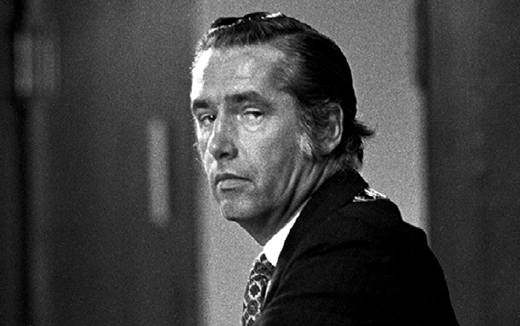
Tom Campbell, Mayor of Vancouver, 1966 - 1972
Tom ‘Not So Terrific’ Campbell, controversial Vancouver mayor, in office from 1966 to 1972

In 1966, running as an independent, a brash Tom Campbell defeated sitting Non-Partisan Association Mayor Bill Rathie to become Vancouver’s 31st mayor.

From the outset, Campbell’s ascension to the Mayor’s office heralded a pro-development ethos that would make even our current ABC Vancouver-dominated City Council blush, with Campbell — and his now ‘on board’  NPA colleagues — advocating for a freeway that would cut through a swath of the Downtown Eastside, require the demolition of the historic Carnegie Centre at Main and Hastings, and bring about the construction of a luxury hotel at the entrance to Stanley Park.
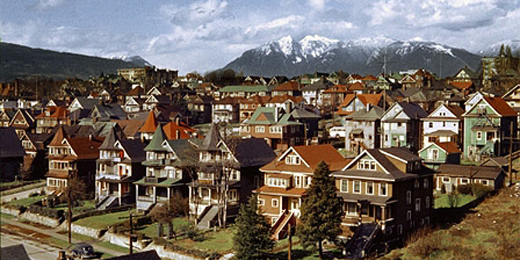
Vancouver's West End, 1960s, pre high-rise development
Vancouver’s West End neighbourhood, 1960, pre-high-rise construction. Photo, Fred Herzog.

In the West End, where Campbell owned substantial property — a wealthy, successful developer, Campbell was reputed to own one-third of the land located between (south to north) Davie and Georgia streets, and east to west, Denman Street and Stanley Park — the newly-elected Mayor all but ordered the demolition of almost the entirety of the well-populated West End residential neighbourhood — housing mostly senior citizens in their single detached homes — as he set about to make way for the rapid construction of more than 200 concrete high-rise towers.

In six short years, Mayor Tom Campbell and the Non-Partisan Association transformed a single family dwelling West End neighbourhood, irrevocably and forever.

That all of these “changes” augered controversy among large portions of the populace was a given, leading to regular, vocal and sometimes even violent protests throughout Campbell’s treacherous tenure as Mayor, finally lead to his overwhelming defeat at the polls in the November 1972 Vancouver “change” civic election.


Oct. 22, 2022 | Newly-formed civic party, ABC Vancouver, wins an overwhelming victory at the polls

Why raise ancient history now?

Not since the late 1960s / early 70s have Vancouver voters — seemingly, unknowingly — elected a more greed-inspired (this, on behalf of their financial backers), and wildly pro-development slate of lock step Vancouver City Councillors to office, at the heart of our city’s seat of municipal government at 12th and Cambie.

In early 2024, Vancouver sits on the wary edge of massive tower development, as promulgated by the “super majority” ABC Vancouver civic administration installed by Vancouverites at City Hall only 15 short months ago today. If Tom Campbell’s greed was able to destroy a single family-oriented West End neighbourhood 50+ years ago over six short years in power, imagine what the current ABC Vancouver-led municipal government can achieve over the course of the next 32 months?
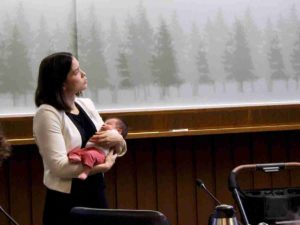

Vancouver Park Board Commissioner at Vancouver City Hall, holding her new, month old baby

Click on this link to hear (former, and now independent) ABC Vancouver Park Board Commissioner Laura Christensen address the whole of Vancouver City Council on December 13, 2023 —  including her ABC Council running mates —  on the initiative of the political party she ran with to eliminate the elected Vancouver Park Board.

In her address to Council, Ms. Christensen pointed out to her now former ABC Vancouver City Council colleagues that there are 242 parks in the City of Vancouver, only 142 of which are designated as parks — leaving these latter non-designated “parks” open for development, including such beloved parks as Burrard Inlet’s Sunset Beach, Locarno Park, and Spanish Banks East and West.


Fans enjoy the Vancouver Canadians at Nat Bailey Stadium. Could the city-owned stadium be put up for sale? A report suggests sport & cultural venues should be shed by the city. Photo: Jason Payne /PNG

In an article published in the Vancouver Sun on Saturday, the Sun’s civic affairs reporter Dan Fumano writes that a …

“… budget task force assembled last year by ABC Vancouver Mayor Ken Sim delivered its report with 17 recommendations on how the city could improve its financial health while reducing pressure to increase on property taxes.

One recommendation suggests the city look at divesting some of its “non-core assets.”

When Fumano asked ABC Vancouver Councillor Brian Montague, one of two ABC Councillors who served on the task force’s advisory panel, if the “non-core assets” in the report would include include community centres, libraries, civic theatres, and sports facilities, Montague replied …

“I think it’s something we need to talk about, because there might be assets where divestment is the best approach.”

Former Vancouver Park Board Chairperson John Coupar clarified the matter on X:

Former Vancouver City Councillor Colleen Hardwick, and 2022 TEAM Mayoral candidate writes …

So, that’s it.

The reason for dismantling an elected Park Board?

A cynical and egregious land grab, a decision demanded by ABC Vancouver’s avaricious financial backers, who fancy adding billions of dollars more to their already ungainly wealth, all at the cost of: environmental devastation and climate change unchecked, a degraded quality of life in Vancouver for decades to come, reduced access to our public beaches — or, in some cases, no access at all to what were once but would no longer be “public beaches”— and long dark corridors of black towers lining the arterials and Vancouver’s beach fronts, all across the city.


Click / tap on the graphic above to sign  the Save Our Park Board Petition started by Sarah Blyth
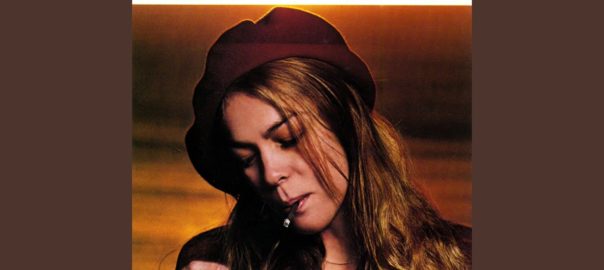
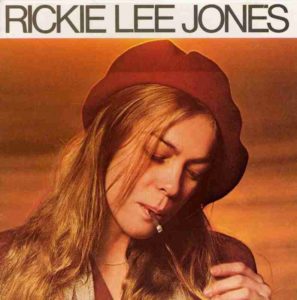
Music Sundays | Top Début Album of the Past 45 Years

With the lights down in the Orpheum Theatre, all you heard for the first 20 minutes of the Rickie Lee Jones concert in 1979, in support of her eponymous début album, was the street-wise, near angelic voice of Rickie Lee Jones as it filled the venue, investing itself deep within the souls of the thousands who had gathered to see and hear the performer they had come to love, and love through and up until this day.


Rickie Lee Jones in New York City, 1979

A fractured childhood, years as a hippie drifter, her incredible adventures before she found fame — and of her intense relationship with Tom Waits in the 1970s — fill her life story.

Rickie Lee Jones was just three years old when she made her début as a performer, appearing briefly as a snowflake in a ballet recital of Bambi.

“I heard the audience’s applause and took it personally,” she writes in Last Chance Texaco, a vivid memoir that traces the arc of her often turbulent life from unsettled childhood to uneasy fame. “I remained bowing long after the other snowflakes had melted and left the stage. The dance teacher had to escort me off, but the audience was delighted and the die was cast. I liked it up there.”

An outsider by temperament, Jones has long walked to her own slightly off-kilter rhythm.


This song catapulting Rickie Lee Jones—winner of the 1980 Best New Artist Grammy—into prominence

In 1979, when she gatecrashed the mainstream with her self-titled début album and the buoyant, jazz-tinged hit single, Chuck E’s in Love, her sudden celebrity left her feeling all at sea.

“That was the biggest test,” she says, “For someone who always felt on the outside to suddenly have everyone treat me like I was above them, that was really hard. It was difficult to know how to be a person when that was going on.”

Back then, she was marketed as a boho songstress in a beret. A brief but intense relationship with Tom Waits, whose creative sensibility fleetingly chimed with her own, added to her cachet of cool. As a couple, they seemed to have emerged fully formed out of their own creative imaginations.


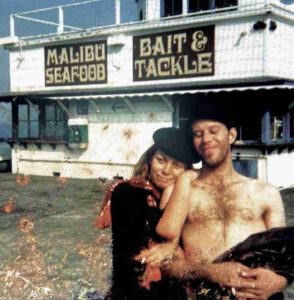
Rickie Lee Jones with Tom Waits, her partner at the time, on Santa Monica Pier, in the late 70s

If Waits’ stumblebum persona relied to a degree on creative method acting, she was the real deal: a survivor who had, as she puts it in the prologue of Last Chance Texaco, “lived volumes as a young girl long before I was famous”.

Now, aged 69, Rickie Lee Jones has finally settled in New Orleans, an easy-going, music-haunted city that suits her temperament.

“I’ve been here ten years, which is a kind of a record,” she says, laughing, in an interview she gave to The Guardian’s Sean O’Hagan. “I think it’s a good town for me. It’s still a bit weird. There’s lots of music and not so much celebrity. I guess I’ll stay here for a while if it doesn’t get washed away in the flood.”

Jones was born in 1954 in working-class Chicago, where her mother, Bettye, hailed from. Bettye was taken into care as a child and raised in state institutions after her father was jailed for stealing chickens. She added the “e” to the end of her first name on her release, aged 16, to symbolize a new beginning.

In Chicago, she met Richard Loris Jones, a struggling musician whose father was a vaudeville entertainer who went by the name of Frank “Peg Leg” Jones, his fame exacerbated by his violent streak. Survivors both, the couple moved from state to state during Rickie’s childhood.

“What were they running from? From cities, houses, and eventually, themselves, but they never got away from their difficult childhoods or their love for each other.”

For all its uncertainty, her childhood was often magical. When she was four, the family settled for a time in the ‘quiet town’ of Phoenix, Arizona, where she roamed freely in the desert, rode horses, and had adventures with her imaginary friends.

As a young girl, music was a conduit to another world of possibility. She saved up her pocket money to buy the soundtrack of West Side Story, whose street-opera dynamics would later find their way into her songs. When she sang songs from the album to herself as she played on the street, other children, and sometimes adults, would stop to listen.

“I drew a crowd! Music had built an accidental bridge between me and the world.”


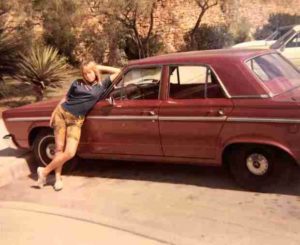
A young Rickie in 1968: ‘I spent most of my life in cars, vans, and buses.’

Jones has described her own teenage adventuring as “a little bit Oz, a little bit Huck Finn”. That barely does it justice.

Aged 14, she lived in a cave as part of a commune, hitchhiked on her own from Big Sur to Detroit when not much older, and risked a lifetime in jail driving to Mexico and back with hippie outlaw dope smugglers.

“How could I have done all those things? But I did. Kids are wily.”

Nevertheless, there were times when she sailed too close to the wind, winding up in jail more than once, usually on suspicion of being an underage runaway with a false ID — which she was. On the Canadian border, she was arrested for “being in danger of leading a lewd and lascivious life” — she was braless under her T-shirt. She recalls several tearful calls to her parents, who, more often than not, travelled vast distances to take her home.

While living in Mexico with a boyfriend, she was abducted by a rogue cab driver who drove her into the jungle intending to rape and possibly kill her. She was saved by the sudden appearance of a bus load of Federales.

“There were some bad things that cast a long shadow.” she says. “They seemed to have living darkness about them that made me feel really frightened all over again.”

Jones eventually gravitated to Venice Beach in California, working menial jobs and singing in local bands to pay the rent. It was there in 1976 she began writing her own songs, the likes of Easy Money and Weasel and the White Boys Cool, peopling them with characters based on the maverick souls she had met along the way.

Jones first encountered Waits at the Troubadour in Los Angeles in 1977, where he watched from the shadows as she sang a handful of songs to a near-empty club. Soon afterwards, they had a one-night stand that ended abruptly with Waits cold-shouldering her the following morning.

“I was still standing on the step when he closed the door and walked away. The sun was up and it was already too hot. I was wearing high heels. I wanted to hide in a bush. I may have hidden in a bush.”

A few months later, she signed to Warner Brothers and “things started warming up again with Tom Waits”. Their romance was all-consuming.

“We fed a craving so sharp that we wanted to become each other.”

The romance lasted barely a year, and his departure left her devastated just as her sudden celebrity swept her along in its tidal sway. In his absence, she drifted into the orbit of other wayward creative mavericks, including the supremely gifted songwriter and guitarist Lowell George, lead singer of Little Feat.

“It’s hard to say what he was really like, because I never knew him when he was not on cocaine. He was out there all night long taking drugs. He didn’t seem to be making any head road into hanging around.”

A year after they met, George collapsed and died of a heart attack, aged 34.

There’s a reason people get addicted to heroin. There is something they like, some kind of solace, some kind of numbing

For a time, too, she became friends with the talismanic Mac Rebennack, AKA Dr John, whom she refers to as “a dubious character in my life; a creator and a destroyer”. In his company, she began using heroin, which she had tried just once before as a young hippie drifter.

“It’s not good to blame everything on my relationship with love,” Jones writes in her biography, “but, when I was younger, love was everything to me. I didn’t really have a self to hold on to when things turned bad. So, back then if a boyfriend said, ‘I don’t love you any more,’ I might go hurt myself. I wouldn’t try to kill myself, but I might go take drugs.”

“I think that we construct our personalities out of our family environment and mine was pretty unsettled. I was very loved, but that was probably the only healthy thing going on, but it’s possible that was not enough to keep me from being curious about the bad things in life, the forbidden things.”


Rickie Lee Jones, aged 69, living a quiet life in New Orleans, when not on a concert tour.

In the late 1970s, when car mechanics was a dirtier, oilier, greasier business, Jones’s eponymous début album of a singer-songwriter featured a jazzy, bluesey, heartfelt song about a truck stop that contained a multitude of references to the timing being wrong, dead batteries, disconnected plugs and cables, and looking under the hood to see what the trouble was.

Here was a woman who had hit on a metaphor for the heart as a malfunctioning piece of metal that could still be rescued in the right hands.

The mournful, elegiac song is strummed at a slow, sighing pace: the last chance to refuel before you run out of gas for many, many miles. There are references to Standard, Mobil and Shell, as well as to the man with the star. At the end Jones transforms her voice into the desolate howl of a passing vehicle, first approaching and then receding into the great American landscape.

On this muscular yet vulnerable track, which concludes the first side of the album, she sounds like she has all the time in the world — or at least all night. And you find yourself thinking: maybe Waits will be just around the corner, bouncing along in his old 55, with the sun coming up.

With her expressive soprano voice employing sudden alterations of volume and force, and her lyrical focus on Los Angeles street life, on Rickie Lee Jones’ self-titled début album she comes on like the love child of Laura Nyro and Tom Waits.

Given the population of colourful characters who populate her songs, she also might have had Bruce Springsteen in her bloodline (that is, the Springsteen of his first two albums) — although the prose poetry of Jones’ lyrics and music are all her own — and her jazz boho sensibility suggests Mose Allison as a grandfather. Producers Lenny Waronker and Russ Titelman, who knew all about assisting quirky singer / songwriters with their visions, instructed the jazz-credentialed musicians in the recording studio to follow Jones’ stop-and-start, loud-and-soft vocalizing, after which they overdubbed string parts here and there.

The music has a sprung rhythmic feel that follows the contours of Jones’ impressionistic stories about scuffling people on the streets and in the bars. There is an undertow of melancholy that becomes more overt toward the end, as the narrator’s friends and lovers clear out, leaving her.

“Standing on the corner/All alone,” as she sings in the final song, “After Hours (Twelve Bars Past Goodnight).” It’s a long way, if only 40 minutes or so, from the frolicsome opener, “Chuck E.’s in Love,” which had concluded that he was smitten by “the little girl who’s singin’ this song.”

But then, the romance of the street is easily replaced by its loneliness.

Rickie Lee Jones produced an astounding début album that simultaneously sounds like a synthesis of many familiar styles and like nothing that anybody’s ever done before, heralding the beginning of a pivotal career of great and lasting importance, and a singular and enduring contribution to the American song book.

Stories of a Life | Redux | Do You Kiss Your Mother With That Mouth?

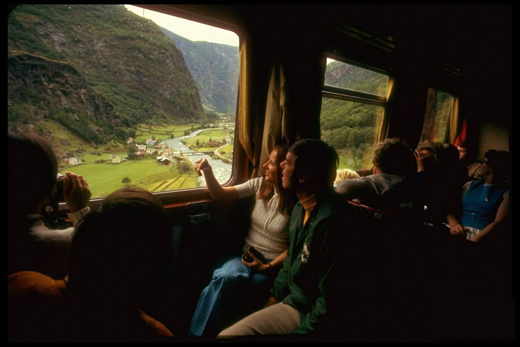
Traveling on a train across Europe, with a Eurail Pass, in the 1970s

In the summer of 1974, Cathy and I travelled to Europe for a three-month European summer vacation, BritRail and Eurail passes in hand, this was going to be a summer vacation to keep in our memory for always.

And so it proved to be …

On another day, in another post evoking memories of our cross-continental European sabbatical, I’ll relate more stories of what occurred that summer.

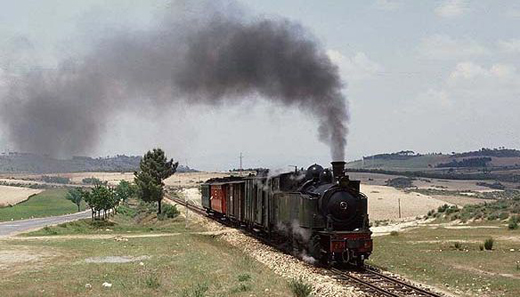
Train travel in Spain, in the 1970s, as the train makes its way around the bend

Only 10 days prior to the event I am about to relate, Cathy and I had arrived in Lisbon, Portugal, alighting from a cruise liner we’d boarded in Southampton, England (passage was only 5£s, much cheaper than now).

After a couple of wonderful days in Lisbon, Cathy and I embarked on the first part of our hitchhiking journey throughout every portion of Portugal we could get to, finally traveling along the Algarve before arriving in the south of the country, ready to board a train to Spain. Unfortunately, I developed some intestinal disorder or other, requiring rest and fluids. Once Cathy could see that I was going to be fine, she left the confines of our little pensão to allow me to recover in peace, returning with stories of her having spent a wonderful day at the beach with an enthusiastic retinue of young Portuguese men, who had paid attention to and flirted with her throughout the day. Cathy was in paradisiacal heaven; me, not so much.

Still, I was feeling better, almost recovered from my intestinal malady, and the two of us made a decision to be on our way the next morning.

Traveling from the south of Portugal to Spain, in the 1970s

To say that I was in a bad mood when I got onto the train is to understate the matter. On the way to the station, who should we run into but the very group of amorous men Cathy had spent the previous day with, all of whom were beside themselves that this braless blonde goddess of a woman was leaving their country, as they beseeched her to “Stay, please stay.” Alas, no luck for them; this was my wife, and we were going to be on our way.

Still suffering from the vestiges of both an irritable case of jealousy and a now worsening intestinal disorder, I was in a foul mood once we got onto the train, and as we pulled away from the station, my very loud and ill-tempered mood voiced in intemperate English, those sitting around us thinking that I must be some homem louco, and not wishing in any manner to engage.

A few minutes into my decorous rant, a young woman walked up to me, and asked in the boldest terms possible …

Do you kiss your mother with that mouth?

“Huh,” I asked?

“Do you kiss your mother with that mouth? That’s the filthiest mouth I’ve ever heard. You’ve got to teach me how to swear!”

At which point, she sat down across from me, her lithe African American dancer companion moving past me to sit next to her.

“Susan. My name is Susan. This is my friend, Danelle,” she said, pointing in the direction of Danelle. “We’re from New York. We go to school there. Columbia. I’m in English Lit. Danelle’s taking dance — not hard to tell, huh? You two traveling through Europe, are you?” Susan all but shouted. “I come from a large Jewish family. You? We’re traveling through Europe together.”

And thus began a beautiful friendship. Turns out that Susan could swear much better than I could; she needed no instruction from me. Turns out, too, that she had my number, and for all the weeks we traveled together through Europe, Susan had not one kind word for me, as she set about to make my life hell — and I loved every minute of it. Susan became the sister I wished I’d had: profane, self-confident, phenomenally bright and opinionated, her acute dissection of me done lovingly and with care, to this day one of the best, most loving relationships I’ve ever had.

Little known fact about me: I love being called out by bright, emotionally healthy, socially-skilled and whole women.

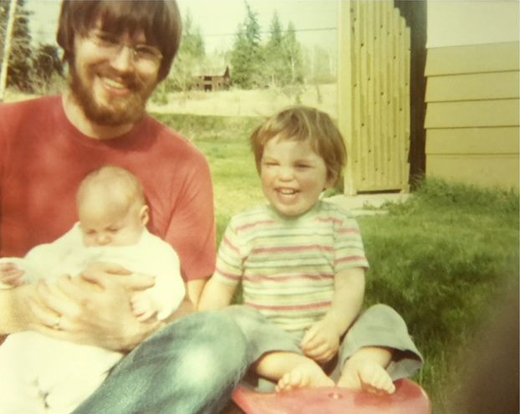
Two-year-old Jude Nathan Tomlin, baby Megan Jessica, and dad, Raymond, in June 1977
The summer of 1974, when Cathy became pregnant with Jude, on the right above.

Without the women in my life, Cathy or Megan, my daughter — when Cathy and I separated — Lori, Justine, Alison, Patricia, Julienne or Melissa, each of whom loved me, love me still, and made me a better person, the best parts of me directly attributable to these lovely women, to whom I am so grateful for caring enough about me to make me a better person.

Once Susan and I had settled down — there was an immediate connection between Susan and I, which Cathy took as the beginnings of an affair the two of us would have (as if I would sleep with my sister — Danelle, on the other hand, well … perhaps a story for another day, but nothing really happened, other than the two of us becoming close, different from Susan).

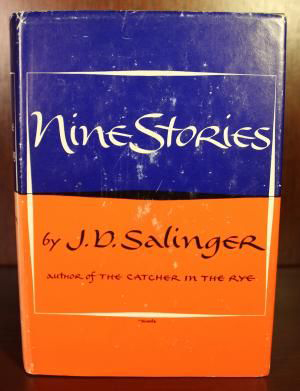
J. D. Salinger's Nine Stories, an anthology of short stories published in April 1953


Danelle saw a ragged copy of J.D. Salinger’s Nine Stories peeking out of Cathy’s backpack. “Okay,” she said. “In rounds, let’s each one of us give the title of one of the Salinger short stories,” which we proceeded to do.

Cathy was just now reading Salinger, while I’d read the book while we were still in England, about three weeks earlier.

Cathy started first, For Esmé — with Love and Squalor. Danelle, Teddy. Susan, showing off, came up with A Perfect Day for Bananafish, telling us all, “That story was first published in the January 31, 1948 edition of The New Yorker.” Show off! I was up next, and came up with Uncle Wiggily in Connecticut. Phew — just barely came up with that one! Thank goodness.

Onto the second round: Cathy, Down at the Dinghy; Danelle, Pretty Mouth and Green My Eyes; Susan, showing off again, De Daumier-Smith’s Blue Period, “turned down by The New Yorker in late 1951, and published by the British Information World Review, early in 1952.”

Me? Struggling yet again, but subject to a momentary epiphany, I blurted out, Just Before the War with the Eskimos. There we were, eight stories down and one to go.

But do you think any one of us could come up with the title to the 9th tale in Salinger’s 1953 anthology of short stories? Nope. We thought about it, and thought about it — and nothing, nada, zero, zilch. We racked our brains, and we simply couldn’t come up with the title of the 9th short story.

We sat there, hushed. For the first time in about half an hour, there was silence between us, only the voices of children on the train, and the clickety-clack of the tracks as the train headed relentlessly towards Madrid.

We couldn’t look at one another. We were, as a group, downcast, looking up occasionally at the passing scenery, only furtively glancing at one another, only periodically and with reservation, as Cathy held onto my arm, putting hers in mine.

Danelle looking up, she too wishing for human contact.

Finally, Susan looked up at me, looked directly at me, her eyes steely and hard yet … how do I say it? … full of love and confidence in me, that I somehow would be the one to rescue us from the irresolvable dilemma in which we found ourselves.

Beseechingly, Susan’s stare did not abate …

The Laughing Man,” I said, “The Laughing Man! The 9th story in Salinger’s anthology is …” and before I could say the words, I was smothered in kisses, Cathy to my left, Susan having placed herself in my lap, kissing my cheeks, my lips, my forehead, and when she found herself unable to catch her breath, Danelle carrying on where Susan had left off, more tender than Susan, loving and appreciative, Cathy now holding me tight, love all around us.

A moment that will live in me always, a gift of the landscape of my life.

Most Anticipated Films of 2024’s First Six Months

Summer blockbusters, action-packed thrillers, sweet rom-coms, and much-anticipated sequels are all on the upcoming movie slate for 2024.

2024 at the movies promises to be one for the books, especially with the long-awaited releases of a surfeit of films that were delayed for release until 2024, as a result of the strike of WGA and SAG-AFTRA members last spring and summer.

From dramatic biopics like Bob Marley: One Love and the Amy Winehouse film Back to Black to epic sequels like Dune: Part Two, as well as a surfeit of movies pushed back from 2023, this new year is already shaping up to be a wild year in film.

Here’s a list of the 26 most anticipated Hollywood releases set to hit your local multiplex in 2024, between now and the end of June.

Argylle (Feb. 2). Matthew Vaughn returns to the espionage genre in a new movie that follows a spy novelist (Bryce Dallas Howard) who, unbeknownst to her, is writing real-life events into her beloved books series. Sam Rockwell, Henry Cavill and Bryan Cranston also star, alongside pop star Dua Lipa.

Lisa Frankenstein (Feb. 9). The campy, young adult take on the Mary Shelley classic sees a high schooler re-animate a corpse who turns out to be a love interest. The movie is the feature début from Zelda Williams and features a screenplay from Jennifer’s Body scribe Diablo Cody.

Madame Web (Feb. 14). Dakota Johnson leads this Spider-Man spinoff as a clairvoyant who becomes entangled with multiple superheroes.

Bob Marley: One Love (Feb. 14). The biopic of Jamaican singer-songwriter Bob Marley comes from King Richard director Reinaldo Marcus Green and stars Kingsley Ben-Adir as Marley, the film following the singer’s rise, and personal and political journey.

Dune: Part Two (March 1). This follow-up to Denis Villeneuve’s first Dune was originally set for release in 2023. The sequel picks up with Paul Atreides (Timothée Chalamet) looking to avenge his family line. Austin Butler and Christopher Walken join the cast that is also led by Zendaya.

Road House (March 21). Patrick Swayze’s 1989 action flick is getting a 2024 re-do thanks to director Doug Liman, with Jake Gyllenhaal taking over the starring role as an ex-UFC fighter turned bouncer.

The American Society of Magical Negroes (March 22). Set for a Sundance 2024 début later this month, this featurefrom comedian and satirist Kobi Libii follows a young man who’s recruited into a secret society of Black people who are meant to make white people’s lives easier. Justice Smith leads this Focus Features project.

Ghostbusters: Frozen Empire (March 29). After revitalizing the franchise with 2021’s Ghostbusters: Afterlife, stars Carrie Coon, Finn Wolfhard, Mckenna Grace and Paul Rudd return to team up with original Ghostbusters stars Bill Murray, Dan Aykroyd, Ernie Hudson and Annie Potts as they attempt to save New York.

Mickey 17 (March 29). The new film from director Bong Joon-ho, his first since his Oscar-winning Parasite, stars Robert Pattinson as a “expendable” employee sent to colonize a foreign world.

The First Omen (April 5). Nell Tiger Free stars in the prequel to the classic Richard Donner film. The project kicks off when a young American woman moves to Rome in service of the church, only to encounter a mysterious darkness. Tawfeek Barhom, Sonia Braga, Ralph Ineson and Bill Nighy also star in the project, from.filmmaker Arkasha Stevenson.

Godzilla x Kong: The New Empire (April 12). Godzilla vs. Kong filmmaker Adam Wingard returns with a film that teams Godzilla and Kong set to face off against previously hidden monstrous Titans. Rebecca Hall, Brian Tyree Henry and Dan Stevens are on board as the human stars.

Challengers (April 26). Another holdover from 2023 pushed due to the actors strike, this Luca Guadagnino film stars Zendaya as a tennis star turned coach in a love triangle with competing champions. Josh O’Connor & Mike Faist co-star.

Civil War (April 26). This Alex Garland movie is set after the United States has fallen into a state of civil war, and follows reporters as they try to traverse the fractured and increasingly dangerous country. Kirsten Dunst, her husband Jesse Plemons, Nick Offerman and Priscilla’s Cailee Spaeny co-star.

Idea of You (May 2). The beloved romance novel is turned into a romantic comedy. Michael Showalter directs and Anne Hathaway stars as a single mom who goes to a concert with her daughter where she begins a relationship with the lead singer of a beloved boy band (think Harry Styles). Nicholas Galitzine stars as the love interest in the feature which will stream on Amazon.

Fall Guy (May 3). This feature film version of the 1980s TV series follows a Hollywood stuntman who gets embroiled in a real-life crime plot that will require him to use his skills to save the day and the movie he is working on. Ryan Gosling and Emily Blunt co-star in this feature film directed by David Leitch.

Back to Black (May 10). Marisa Abela stars as the late Grammy winner Amy Winehouse in the biopic from Sam Taylor-Johnson.

https://youtu.be/MbvonXc8QjI?si=xElVFjFFSzC3ZPLl

IF (May 17). John Krasinski directs and acts in this feature centering on a young girl (Cailey Fleming) who can see imaginary friends (also known as IFs) and must help IFs who have been abandoned by their kids. Ryan Reynolds leads the Paramount feature that voice stars Steve Carell as an IF named Blue.

Garfield (May 24). Chris Pratt voice stars as the classic comic strip cat, who goes on a heist with his feline father (Samuel L. Jackson) and canine pal Odie (Harvey Guillén). Nicholas Hoult voices Garfield and Odie’s owner, Jon, while Chicken Little filmmaker Mark Dindal directs.

Furiosa (May 24). Nearly a decade after George Miller’s Fury Road was heralded as one of the greatest action films of all time, the filmmaker returns with a prequel centered on the early days of Furiosa, played by Anya Taylor-Joy.

Kingdom of the Planet of the Apes (May 24). Set 300 years after the trilogy of Apes films, this new film, like the classic 1968 Planet of the Apes installment, is set in a time when apes have taken over Earth and humans are subjugated.

Ballerina (June 7). John Wick 4 grossed a series-best $440.1 million. Ballerina will be a new test of the franchise’s strength, with this feature spinoff movie starring Ana De Armas as a ballet dancer / assassin named Rooney.

Inside Out 2 (June 14). The gang is back in this animated follow-up to the beloved Pixar movie that follows the anthropomorphized emotions of a young girl led by Amy Poehler’s Joy. Joining for this round is Anxiety, voiced by Maya Hawke.

Bad Boys 4 (June 14). In many ways, Bad Boys 4 is a much-needed palette cleanser for those involved. For one, it marks Will Smith’s return to the summer blockbusters following his infamous Oscars slap in March 2022, the film arriving nearly 30 years after the 1995 original, directed by Michael Bay.

The Bikeriders (June 21). Disney opted not to release The Bikeriders amid the SAG-AFTRA strike. Focus Features will release this Jeff Nichols-directed movie focusing on the culture of a 1960s Midwestern motorcycle club, the film’s stars: Tom Hardy, Jodie Comer and Austin Butler.

A Quiet Place: Day One (June 28). Six years after John Krasinski launched a new franchise for Paramount, the studio is releasing its first spinoff. Set in New York City on the first day of an alien invasion, the feature originated from an idea Krasinski. Pig’s Michael Sarnoski directs a cast that includes Lupita Nyong’o, Joseph Quinn, Alex Wolff, Djimon Hounsou and Denis O’Hare.

Horizon: An American Saga Chapter 1 (June 28), Chapter 2 (Aug. 16). Kevin Costner’s multi-film western saga has been in the works since 1988, with the star-filmmaker putting at least $20 million of his own money into the project.

star.jpg star.jpg star.jpg

The cinematic landscape of 2024 promises a kaleidoscope of experiences, from the grandeur of Hollywood blockbusters to the intimacy of independent gems discovered at film festivals.

As audiences prepare for a year filled with visual spectacles, emotional journeys, and thought-provoking narratives, the global film industry stands ready to captivate, challenge, and inspire.

Whether it’s the excitement of summer blockbusters or the anticipation of the autumn Oscar season, 2024 is poised to be a remarkable chapter in the ongoing saga of cinema.