
Sunday Music | Kacey Musgraves | 2018’s The Golden Hour Album | Top 100 of the Past 75 Years

Kacey Musgraves, born on August 21, 1988, in Golden, Texas, is one of contemporary music’s most original and respected voices, known for her ability to craft lyrics that are witty, vulnerable, and unflinchingly honest.

Musgraves’ unique blend of traditional country roots, modern sensibilities, and genre-defying experimentation has positioned her as a standout in both the country and pop music scenes.

Musgraves’ breakthrough came with her major-label début album Same Trailer, Different Park in 2013. The album featured the single Merry Go ‘Round, a melancholy portrayal of small-town life, and the cheeky, rebellious anthem Follow Your Arrow, which encouraged people to live authentically regardless of societal norms.

Her lyrics, which tackled themes of non-conformity, marijuana use, and same-sex relationships, were bold for the country genre, known for its traditional values. However, her authenticity resonated with listeners, earning comparisons to past pioneers like Willie Nelson and Dolly Parton.

Musgraves’ rise to prominence in the early 2010s established her as a sharp lyricist and a trailblazer in country music, and her 2018 album Golden Hour cemented her status as a cross-genre force, earning her critical acclaim and commercial success.

While Musgraves had already earned significant acclaim with her earlier albums, it was Golden Hour that catapulted her to a new level of fame.

Released in March 2018, Golden Hour marked a departure from her previous work, blending country with elements of pop, disco, and electronic music. The result was a dreamy, genre-blurring collection of songs that felt both fresh and timeless. Musgraves has referred to the album as her “space country” project, reflecting its expansive sound and experimental approach.

Much of Golden Hour was influenced by Musgraves’ personal life, particularly her relationship with then-husband Ruston Kelly.

The album’s themes of love, heartache, and self-discovery resonated with listeners across genres. Songs like Slow Burn and Butterflies captured the warmth of new love, while tracks like Space Cowboy and Happy & Sad explored the bittersweet and often contradictory nature of human emotions.

Kacey Musgravesthird album goes down so smoothly that it might not even scan as a total reinvention. Throughout Golden Hour, the East Texas singer-songwriter is radiant, awestruck, taking the scenic route to the bar just for the hell of it.

After Musgraves’ previous two albums, which felt like they were cut from the same home-sewn flannel cloth, in 2018 she ventured beyond the front-porch hum of country music. On Golden Hour, Musgraves employed strings, vocoders, disco beats. And if this sounds like a left turn for the lovable cynic who once characterized the world as an absurd beauty contest, a bad party, and a toxic boys’ club, well, that’s kinda the point.

Since 2015’s Pageant Material, the then 29-year-old singer-songwriter has changed her perspective.

On Golden Hour, everything sprawls and swells and gushes, a gaping sky that makes the sonic landscapes of her previous albums feel like mere set dressing. The result is Musgraves’ most accessible record and her most ambitious, a magnetic, comfortable culmination of her pop and country instincts.

The album’s production, handled by Musgraves alongside Daniel Tashian and Ian Fitchuk, was a critical element of its success.

The lush arrangements, ethereal synths, and subtle country flourishes created a sonic landscape that felt both intimate and expansive.

Golden Hour was a striking departure from mainstream country music, which at the time was dominated by bro-country and pop-country trends. Instead, Musgraves embraced a more eclectic and nuanced sound that allowed her to transcend genre boundaries.

This genre fluidity was key to Musgraves’ crossover success.

Kacey Musgraves stands out in the crowded landscape of modern music arising from her ability to remain true to herself while pushing boundaries. Her lyrics are clever, often laced with humour, but they never shy away from exploring the depths of human emotion.

In a world where many artists feel pressure to conform to commercial trends, Musgraves’ authenticity is refreshing. Her refusal to be boxed into any one genre has allowed her to build a diverse fan base, and her music continues to resonate with listeners across demographics.

As a result, she has become a symbol of creative freedom and artistic integrity in an industry that often prioritizes marketability over originality.

In Golden Hour, Kacey Musgraves created a work of art that transcended the limitations of genre, and in doing so, she solidified her place as one of the most innovative and respected artists of her generation.
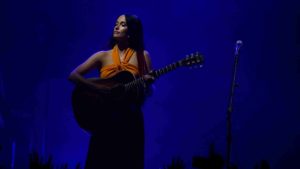
Now, here’s some good news: Kacey Musgraves will play Rogers Arena in Vancouver this upcoming Thursday, September 19th, with the concert getting underway at 7:30pm. Ticket prices range from $73.80 to $247.40.
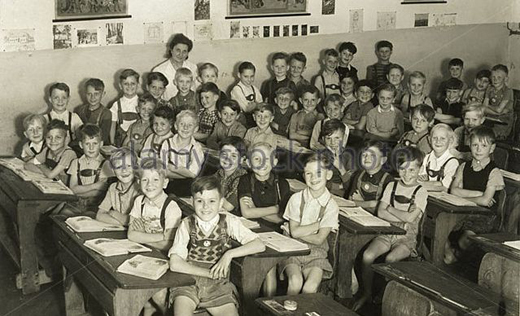

Stories of a Life | Redux | Failing Grade One as a Pivotal Moment in My Life

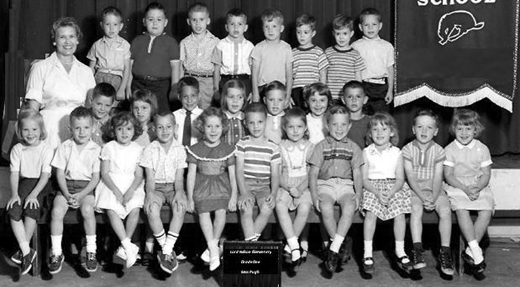
Lord Nelson Elementary School, on Vancouver's east side, circa 1957

For the first five years of my life, I didn’t speak. I sang, but I didn’t speak.

Early childhood trauma, I expect — neglect, a lack of love, and darker goings on I won’t write about today — but there was nonetheless joy in my young life, the Sunshine Bread truck that would situate itself in the park at the end of Alice Street, over by Victoria and 24th, providing the young children who lived in the neighbourhood an opportunity to ride on the tiny merry-go-round on the back of the truck, the children running home to their mothers saying, “Mom, oh mom, you’ve got to buy some Sunshine Bread.”

At age five, I began to speak, first haltingly and then in full sentences. For anyone who knows me, they’d probably say that for many years now, I have been making up for the lost words of the first five years of my life.

Mother reading her son a bedtime story

In my home, there were no bedtime stories.

Not that either of my parents were inclined to read to my sister and I.

My father had a Grade One education, and couldn’t read. My mother had a Grade Three education, and she could read — but not to either me or my sister. Not that she was ever around the house long enough to read stories to us, even if she was so inclined — which she wasn’t.

My mother was the breadwinner in my family, working three jobs simultaneously, always, 16 hour days six days a week, with one 24-hour day. Those were in the days of the 1950s and 1960s when women were paid 35¢ an hour, hardly enough to live on.

Class picture, Grade One class, Lord Nelson Elementary School, Vancouver's east side, circa 1957

In September 1956, I entered Grade One. My mother was actually present to enroll me my first day of school at Lord Nelson Elementary, at Templeton Drive and Charles.

Grade One was, for me, a blur.

I was, I suppose, unmanageable, full of life, although I don’t have any strong memories of my attendance at Lord Nelson Elementary school, from September 1956 through June of 1957 — I had never been socialized, no one had ever made demands of me in regards of my conduct, although I would receive hard spankings at home if I got out of line.

My most cogent memories of September 1956 to June 1957 are this …

    • Walking to school alone through billowy white fog, so thick you couldn’t see your hand in front of you, arriving at school on time, and settling into a day where I would learn nothing;
    • Spending occasional afternoons at my best friend John Pavich’s home, his mother with fresh-baked, warm cookies at the ready, a glass of milk on the table. I would often stay for only a half hour, after which I would walk down Charles Street in the rain, towards Nanaimo, rumbling thunder and lightning in the steel blue skies a wondrous delight for me.

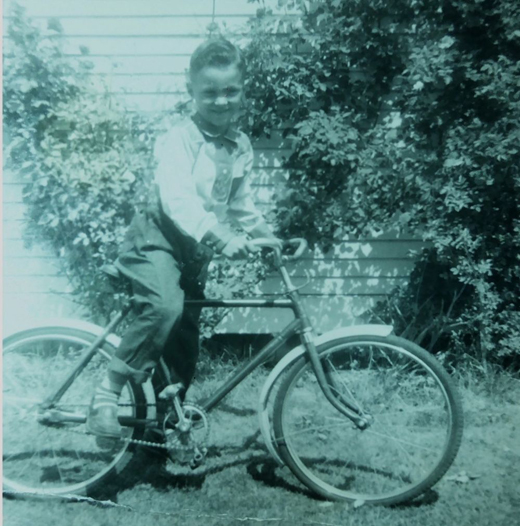
Raymond Tomlin on his bike, spring 1957, at 2165 East 2nd Avenue, in VancouverSix-year-old me, Raymond Tomlin, on my bike, outside my home, in the spring of 1957

As the school year was ending, the sports day complete, the warm summer days having now just begun, on the last day of school in June 1957, I received my report card, taking it directly to my home as instructed by my Principal and my teacher.

There was no one home.

I played make believe all on my own. I left my report card on the kitchen table. Alone, I felt fatigued, and went to bed early on that June 30th afternoon, unsure of what the summer would bring, and what life held in store for me.

Early the next morning, following 12 hours of fitful sleep, upon opening my eyes, I was surprised to see my mother standing over my bed. She looked at me, seething, her lips pursed and tight, her face purple with rage — next thing I knew, she hit me across the face, hard. “You failed Grade One. No son of mine is going to fail Grade One. You are in for a summer of hell!”

And so it proved to be.

For the only time in all the years I lived at home, my mother left her employment, staying home with me through July and August, the renters in the downstairs suite evicted that summer, my days of hell beginning at 8am, tied to a chair in the kitchen of the downstairs suite, from 8am til 8pm Monday through Friday of each week of summer 1957, for near on 60 days — save my birthday, on August 11th, when I was given a day off.

Hour upon hour upon hour.

Over the course of the thirty-one days of July 1957, something of a miracle occurred amidst the tears, and the now lessening screams of the day: I learned to read. I learned arithmetic. I learned to print. I learned everything I had not learned in ten months of enrollment in Grade One.

By summer’s end — as would soon be discovered — I knew how to print and to write in cursive longhand, my arithmetic skills progressing far beyond basic addition and subtraction into fractions, and elementary algebra and geometry. I learned to read, I read for hours every day.

That summer I learned to love learning.

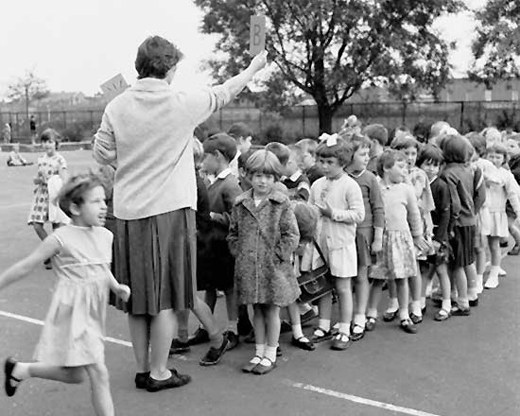
Children lined up, ready to go into the school to begin their day, circa 1957

On the first day of school in September 1957, my mother — as you may have gathered, a force of nature — marched me into the school office, confronting the Principal, an anger in her that had transmogrified into rage, my mother fierce and unrelenting in a barrage of hate-filled words that filled the room, fear and dread also filling the room, the Principal clearly unsettled, teachers running towards the office to see what this mad woman who had taken control of the office wanted, was demanding.

“My son is ready for Grade 2,” my mother bellowed at my Principal, whose complexion now was ruddy, his face shuddering, his eyes wary, wide, concern — perhaps for his safety, perhaps for me – spilling out of his eyes.

“But Mrs. Tomlin, your son can’t read, he doesn’t even know the letters of the alphabet, and he doesn’t know how to do even the most basic addition and subtraction, not even one plus one equals two. I cannot place your son in Grade Two, just because you wish it to be so.”

My mother looked around the office. There was a large plaque on one of the walls, with 20 or so lines of print on the plaque.

Turning to me, pointing to the plaque, she roared, “Read it.” And I did. While I was reading the dozens of words on the plaque, my mother looked around the office, spotting a Grade 5 Math book.

Handing the Math book to the Principal, her eyes now in a squint, she demanded of the Principal, “turn to any page, ask him to solve any problem on that page.

Now!

The principal did as he was instructed to by my mother, asking me one question after another, as he flipped through page after page of the Math book. I answered every question correctly — and quickly, as I had been instructed in my basement dungeon at home.

The Principal turned to me and said, “Wait here son, take a seat over there. Mrs. Tomlin, please come with me to my office.”

Twenty minutes later I entered Mrs. Goloff’s Grade Two class, in a portable outside along Charles Street, beginning what would be one of the best years of my life. The school had spelling bees. I won every time, not just for Grade 2, but for the whole school.

I breezed through Grade 2. Somehow, over the summer, I had gained a love of learning that resides in me still, and informs my life each and every day. I loved to read, spending hours in the school library reading whatever I could get my hands on.

The summer of 1957.

A pivotal summer in my life, not just my young life, but the whole of my life, the most impactful summer of my near 68 years on this planet since 1957. In retrospect, looking back on that summer of what began as misery and pain, and what it has meant to me over the course of the next 68 years of my life — I love my mother for what she did for me.

As I have written previously, and as I will write again, I am who I am because of the tough, caring women who have come into my life, who have been demanding of me to be my best, to give all that I can give.

As is the case with most of the women with whom I have shared my life, my mother was a tough, bright, brooked no nonsense and driven woman, someone you did not want to cross, ever, who was also — not to put too fine a point on the matter — crazy (a consequence of childhood trauma), but a survivor nonetheless, and was in her own way, loving, but in terms of the woman who was supposed to raise me, in large measure and for the most part, absent — save one particular summer, the summer of 1957.

#VIFF24 | VanRamblings’ Vancouver International Film Festival Column

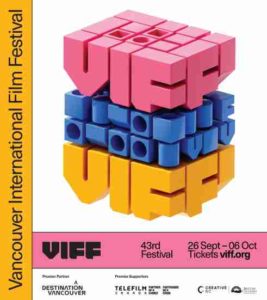
The 43rd Annual Vancouver International Film Festival

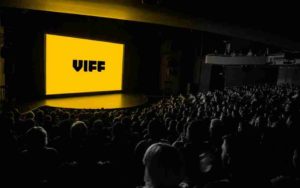
Since opening in 1981, with a handful of films in just one theatre — the lost and lamented Ridge Theatre, at 16th and Arbutus — the Vancouver International Film Festival has taken on a vital role for local filmmakers and film lovers.

As it celebrates its 43rd anniversary this year, today VanRamblings will provide insight into the award-winning films that will screen at VIFF this year, as well as provide information on this year’s venues, ticket acquisition, and more.

With 150 feature films running over 11 days, although VIFF 2024 isn’t as complex as once was the case — as it runs from September 26th thru October 6th, it’s now shorter than the 16 day length it maintained for many years — navigating the sprawling festival can still be a little daunting.

VIFF is best approached like a multi-country overseas vacation: with pre-planning, and lots of it.

What movies to choose?

On viff.org , you’ll find films organized by programme (Showcase, Panorama, Vanguard, Northern Lights, Insights, Spectrum, Portrait and Altered States) by country of origin, by genre, and  by director. See what intrigues you!

Also, check to see which films have a guest attending (noted on each film’s individual page), which might mean an interesting Q&A.

You can also peruse the hard copy VIFF guide, which will soon be available at your favourite local bookstore, at regional and neighbourhood libraries and the nine venues where films will be screened, as well as at coffee shops across the Metro Vancouver region. Note should be made that the most accurate and up-to-date  information about guests is available online only.

Award-Winning Must-See Films

(Underlined titles of films link to the VIFF page for the film, which will provide you with more information on the film, as well as allow you the opportunity to buy tickets for the film, if you’re of a mind to do so).

Anora. Sean Baker’s Anora won the Palme d’Or at Cannes, in the director’s most searing and shattering film yet, with a breakout performance from Mikey Madison. Not to mention, a thoroughly fun and provocative time at the movies.

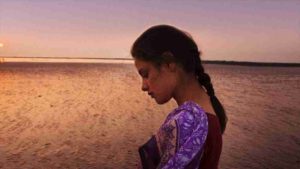
All We Imagine as Light. Grand Prix winner, Cannes 2024. IndieWire’s Anne Thompson says this film is her favourite this year, as she exclaims: “All We Imagine is an exquisite, spellbindingly hypnotic, a poignantly lyrical film that transcends form and style, full of enriching humanity and gentleness, joy and sadness and languorous eroticism, with a captivating beauty rarely seen on film.”

The Seed of the Sacred Fig. Iranian director Mohammad Rasoulof’s Special Jury and FIPRESCI Prize winner at Cannes offers a mesmerizingly gripping parable in which paranoia, misogyny and rage of the Iranian state are mapped seamlessly onto an ordinary family unit.

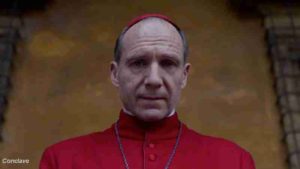
Conclave. Oscar nominees Ralph Fiennes and Stanley Tucci lead a brilliant ensemble cast in All Quiet on the Western Front director Edward Berger’s adaption of Robert Harris’ high-stakes drama, in which Cardinals gather at the Vatican to elect a new Pope, the film emerging as a psychologically complex morality tale.

The End. Tilda Swinton and Michael Shannon sing for their lives in Joshua Oppenheimer’s post-apocalyptic musical, with the director offering a staggering meditation on how we live with ourselves at the end of the world.

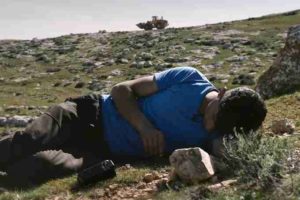
No Other Land. Best Documentary Award, Berlin 2024. A vital and wrenching documentary about Israel’s often barbaric efforts to expel a Palestinian community, co-directed by a collective of Israeli and Palestinian filmmakers, No Other Land offers a ground-level view of an occupation in action.

How and where do I buy tickets?

The easiest way to purchase tickets is to go online to viff.org, put the name of the film you’re interested in in the search engine, and click on Buy — from there it’s easy, allowing you to print your tickets at home. Or, you can call the Festival Infoline at 604-683-3456 from noon til 6 p.m. daily through October 6th. (Online is quicker.) Note that there is a service charge for online and phone orders: $1 per single ticket, up to $8 per order.

Required by the provincial government (because VIFF films screen unrated) you’ll need to purchase a one-time $2 VIFF membership.

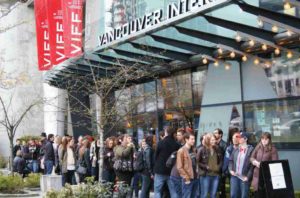
Tickets can be purchased at the venues, as well, during operating hours. As of September 26th, all festival venues (VIFF Centre, The Chan Centre for Performing Arts, The Cinematheque, Fifth Avenue Cinemas, Cineplex International Village, The Orpheum, The Rio Theatre, SFU Goldcorp, and The Vancouver Playhouse) will have a box office open daily, one hour before the day’s first screening.

How early do I have to show up?

If you’re picky about where you sit, the earlier the better: An hour isn’t too early for a film that’s popular. But even if you don’t mind being in the back (or front) row, show up at least 15 minutes before showtime: At the 10-minute mark, unoccupied seats are counted and sold to those in the standby line.

What line do I stand in?

Each VIFF screening will have three separate queues: a pass-holder line (for those with passes hanging around their necks), a ticket-holders line (for those with tickets in hand) and a rush line. Standby tickets, for screenings that are sold out, go on sale 10 minutes before showtime, at full price.

Stand in the wrong line at your peril. (There will be signage, and helpful VIFF volunteers in VIFF T-shirts, if you’re confused.)

Can I bring my lunch?

Technically, no; VIFF venues do not allow outside food. Theoretically, yes, if you’re discreet about it. (Or just eat while waiting in line.)

Can I save a seat for a friend?

If you’re saving a seat at a sold-out screening, you might be asked to relinquish it if your friend is late, so tell them not to be.

What about bus routes and parking?

Translink / Coast Mountain buses are the best way to get around, although most of the venues are within walking distance of one another. Skytrain will whisk you to The Rio in no time flat. There’s parking at Cineplex International Village, but you’re going to want to check in with Festival staff (they’ll be wearing bright yellow VIFF T-shirts) to register your vehicle.

What about crowds?

There will be crowds, particularly at the better-known films; not a lot you can do about that. Maybe you’ll meet somebody nice in line; it happens often. Weekday screenings generally have shorter lines, particularly for less well-known films.

#BCPoli | Polarization A Defining Feature in B.C.’s Upcoming Election


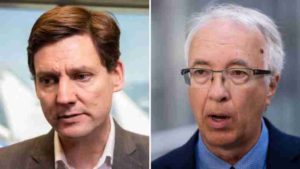
B.C. Premier David Eby has attacked the B.C. Conservatives over abortion, race and gender identity. B.C. Conservative Leader John Rustad has been critical of Eby and the ‘radical NDP.’ | Photo: CBC.

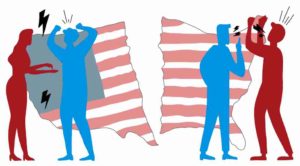
On Tuesday evening, those who tuned into the contentious Kamala Harris-Donald Trump debate on ABC-TV witnessed the division and polarization that has come to frame realpolitik in the United States, and an ever more impactful defining feature of American politics over the past eight years, since Donald Trump first came down the elevator at New York City’s Trump Tower in 2015 to announce his Presidential bid to secure the Republican Party nomination.

If polarization and division have become a defining feature of American politics, in the 2024 British Columbia provincial election, with an alt-right / far right, climate change skeptical Conservative Party of British Columbia emerging as a serious contender for government over the current centre-left B.C. New Democratic Party government led by Premier David Eby, this year’s provincial election is poised to be one of the most contentious in the province’s history.

The deep polarization between the B.C. New Democrats and the B.C. Conservatives reflects a broader national and global trend, with political forces on the left and far right dominating the discourse.

The NDP is often seen as a left-leaning, socialist party, while the B.C. Conservatives, as we say above, have gained a reputation for being alt-right or far right, especially on social issues.

As both parties position themselves on opposite ends of the political spectrum, the rhetoric, contentious statements, and ideological battles between them have intensified, creating an atmosphere of division.

Polarization in British Columbia Politics

British Columbia has long been a politically diverse province, with both urban and rural areas reflecting distinct priorities and values.

Traditionally, the province has seen competition between the NDP, representing progressive, labour-oriented interests, and the B.C. Liberals, a more centrist / centre-right party. However, the resurgence of the B.C. Conservatives the last couple of years, combined with the decline of the B.C. Liberals / B.C. United, has created a new dynamic.

The NDP has consolidated its hold on progressive voters, while the Conservatives have catered to socially conservative and populist sentiments, giving rise to a polarized political landscape.

The B.C. NDP, under Premier David Eby, champions policies focused on climate action, the construction of affordable housing for various economic stratas, public transportation, social welfare programmes, and expanding public services.


A B.C. Conservative Party government would walk away from the province’s commitment to protect 30% of British Columbia’s wilderness land base by 2030, says party leader John Rustad .

These priorities resonate with urban voters, particularly in Vancouver and other metropolitan areas.

The NDP’s approach to addressing issues like affordable housing, health care, and environmental sustainability has been lauded by progressives but criticized by opponents as being overly ambitious and fiscally irresponsible.

On the other side, the B.C. Conservatives have positioned themselves as defenders of traditional values — for instance, the province’s SOGI 123 programme, which protects the interests of LGBTQ students — and individual freedoms.

The B.C. Conservative Party has gained traction among rural voters and those disillusioned with the political establishment.

With rhetoric that often borders on populism, the B.C. Conservatives, under the leadership of John Rustad, have campaigned on issues like opposing carbon taxes, promoting resource extraction, and resisting what they view as “woke” progressive policies, including LGBTQ+ rights and climate change initiatives.

This sharp ideological division has made co-operation and compromise between the two parties seem increasingly unlikely.

Contentious Statements from the B.C. NDP and B.C. Conservatives

Both current British Columbia political parties have made highly charged statements about one another, fueling the perception that this election is about more than just policy — it’s a battle over the future direction of the province.

The following was tweeted out by a retiring B.C. United MLA …

The B.C. NDP has painted the B.C. Conservatives as being out of touch with modern British Columbia, accusing them of aligning with far-right extremism.

Premier Eby and his colleagues have criticized the B.C. Conservatives for their stance on climate change, with NDP officials often labeling them as “climate change deniers” and suggesting that their policies would set the province back decades in the fight against global warming.

Furthermore, the B.C. NDP has accused the B.C. Conservatives of being hostile to diversity and inclusion, particularly regarding LGBTQ+ rights, with some NDP members framing the B.C. Conservative agenda as “regressive” and “intolerant.”

In response, the B.C. Conservatives have launched attacks on the NDP, framing the ruling party as being out of step with the needs of ordinary British Columbians.

B.C. Conservatives have characterized the NDP’s policies as “socialist overreach,” arguing the government is infringing on individual freedoms and burdening taxpayers with excessive regulations and taxes.

The B.C. Conservatives have taken aim at the NDP’s environmental policies, particularly the implementation of carbon taxes and clean energy initiatives, which they argue hurt the economy and disproportionately affect rural communities dependent on resource industries.

The B.C. Conservative Party leadership has also criticized the NDP for what they see as pandering to special interest groups, claiming the government is more focused on identity politics than on addressing inflation, crime, and economic growth.

As such, the B.C. Conservatives have taken a page out of Donald Trump’s MAGA Republican playbook, which has proved successful in the United States. We’ll have to wait until the evening of Saturday, October 19th to see whether the Trump-like B.C. Conservative electoral strategy bears fruit at the polls, and allows them to form government.

The 2024 B.C. Election May Become The Most Contentious On Record

Several factors make the upcoming election in British Columbia particularly contentious. First, the ideological gulf between the B.C. NDP and the B.C. Conservatives is wider than ever.

While previous elections in the province have often involved debates over centrist policies, this election is shaping up to be a choice between two starkly different visions for the future. On one side is the NDP’s progressive, environmentally conscious, and socially inclusive platform, and on the other is the B.C. Conservatives’ economically libertarian, socially conservative, and resource-focused agenda.

Second, the stakes are high for both parties.

The B.C. NDP is seeking a mandate to continue its transformative policies, particularly around climate action and social justice, while the B.C. Conservatives are eager to capitalize on voter discontent.

For many voters, the upcoming election is about more than just political leadership — it’s about the soul of British Columbia itself.

Urban voters, particularly in Vancouver and Victoria, may see the election as a referendum on progressive policies, while rural voters view it as a chance to push back against what they perceive as an out-of-touch government.

Broader national & global trends are influencing B.C.’s upcoming election

Across Canada and other Western democracies, political polarization has increased, with far-right and far-left parties gaining ground as centrist parties struggle to maintain relevance.

In British Columbia, this trend is magnified by the province’s unique political landscape, where environmental concerns and social issues intersect with a resource-based economy.

With the B.C. Liberals / B.C. United Party having abandoned its bid for government, the resulting fight between the B.C. NDP and the B.C. Conservatives represents a new era in provincial politics, one where compromise seems unlikely, with the stakes being higher than ever.

As the election approaches — the Writ will be dropped on Saturday, September 21st, at which time the election will be officially underway — the rhetoric between the two parties is intensifying, with each accusing the other of being out of touch with the province’s needs.

With so much at stake — climate action, housing, economic development, social justice, and the future direction of British Columbia — B.C.’s upcoming election is likely to prove to be a pivotal moment in the province’s social and economic history, setting the stage for B.C.’s political trajectory for years to come.