
#BCPoli | Election 2024 | Riding Breakdown Analysis | Vancouver Island

In the 2024 British Columbia provincial election there are 93 ridings, six more than in the 2020 B.C. election, thanks to the redistribution recommendation of the Independent Electoral Commission which was charged to make voting in British Columbia fairer and more representative of the population of the province.

In British Columbia, there are 25 ridings in the Interior (the Okanagan and the Kootenays), 16 ridings across Vancouver Island, and 52 ridings across Metro Vancouver, reaching out into the Fraser Valley, and extending to Chilliwack.

In total, there are approximately 30 ridings that will tell the tale on Election Night,  October 19th. The outcome in these ridings will determine whether incumbent Premier David Eby’s New Democratic Party will hold onto government, or will be replaced by John Rustad’s insurgent Conservative Party of British Columbia.

Today, VanRamblings will focus on the Vancouver Island ridings in contention.

For the past couple of provincial elections Vancouver Island has proved to be a New Democratic Party fortress, with the party winning every riding on the Island. Following the October 19th election, we could witness a return to the days when a handful of Socred  / B.C. Liberal candidates held sway in five or six Vancouver Island ridings.

VanRamblings will publish three additional riding analysis columns covering the Interior and the North, a good portion of Metro Vancouver (focusing on Vancouver / Burnaby / Richmond / Delta / New Westminster / Surrey), and a final riding by riding analysis column covering the Tri-Cities, the north side of the Fraser River, Langley, and into the Fraser Valley through to Chilliwack.

Today, VanRamblings is focused on the Vancouver Island ridings that could allow David Eby to hold government, or thrust John Rustad into the Premier’s chair.

Vancouver Island | Five Ridings in Contention in Election 2024
(Click on the underlined text for more information on the candidates running in the riding)

  • Victoria-Beacon Hill . Held by former B.C. NDP leader / Finance Minister Carole James from 2005 to 2020, upon resigning for health reasons, popular Victoria City Councillor Grace Lore ran in her stead in the 2020 B.C. election and won. During her first term, Ms. Lore’s four-year-old son was diagnosed with a brain tumour, which saw his mother cut back on some of her political activities in the riding, also gaining her family much sympathy and support. Upon her son’s return to health, Grace Lore was appointed as the Minister of Children and Family Development, a job she has excelled at, gaining much recognition for competence in the post, as well as for her caring and compassion. Ms. Lore’s challengers in 2024: Green Party of B.C. leader Sonia Furstenau, who moved from her Cowichan riding after redistribution, and B.C. Conservative candidate, Tim Thielmann. According to the most recent internal party polling, this will be a tight three-person race, with the very real possibility that there could be as little as half a percentage point in the vote separating the winner from the two politicos who fail to secure victory on the evening of October 19th.
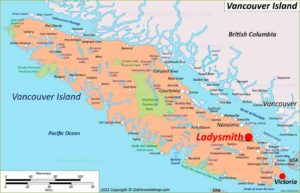
  • Ladysmith-Oceanside . Adam Walker was elected as the NDP candidate in the riding in the 2020 B.C. election. For reasons that have never been revealed, Mr. Walker was removed from the NDP caucus on September 18, 2023, and since that date has sat as an Independent. Mr. Walker is running for office in 2024 as an Independent, with the endorsement of the Green Party, and the on the ground support of the party’s supporters. Stephanie Higginson, a past president of the B.C. School Trustees’ Association, is the B.C. NDP candidate. The B.C. Conservative candidate, Brett Fee, is a relative unknown. There’s also a second Independent candidate, Lehann Wallace, who is seeking the seat. The outcome in the riding is unpredictable. Ordinarily, the riding would be solidly NDP, but the candidacy of Adam Walker throws a spanner into NDP expectations for a win. This one’s gonna be a nailbiter come election night.
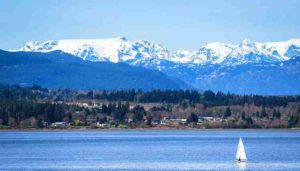
  • Courtenay-Comox . Both Courtenay-Comox and North Island are in the federal riding of North Island-Powell River, where Aaron Gunn — whose claim to fame was being removed from the B.C. Liberal party leadership race in 2021 for being too far right — is the federal Conservative Party candidate. In 2017, Ronna-Rae Leonard — who is running for re-election in 2024 — won Courtenay-Comox by a hair’s breadth. For the previous two decades, the riding had been a B.C. Liberal stronghold. With support for the Green Party in the basement, political pundits suggest that Courtenay-Comox will be a tight two way race, with B.C. Conservative candidate Brennan Day set to win the riding come October 19th. Not for no reason was John Rustad front and centre in the riding on the opening day, and again on Sunday for a big rally, of Election 2024.
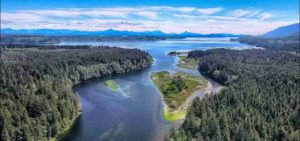
  • North Island. As far as North Island is concerned, the riding oughta be another pick up for the B.C. Conservatives, their candidate physician Anna Kindy, who was an organizer with the Trucker Convoy, who brought hundreds of her future (anti-vaxx) constituents to the B.C. Legislature to protest Health Minister Adrian Dix, and Provincial Health Officer Dr. Bonnie Henry’s edicts on how to fight COVID. In a change election, the pundits’ smart money is on Dr. Kindy to put the riding in the win column for the B.C. Conservatives — who will fire Dr. Henry as a first order of business should they form government.
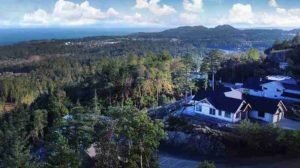
  • Saanich North and the Islands. B.C. Liberal from 1991 to 2013. A bare NDP victory in 2013, with B.C. Green Party candidate, Adam Olsen — who is not running again in 2024 — securing victory in 2017 and 2020. With former Islands Trustee Rob Botterell running with the Greens, lawyer David Busch with the B.C. Conservatives and Sarah Riddell, elected to Central Saanich City Council in 2022, the B.C. NDP candidate — a riding that has voted Conservative federally for decades — it’s anyone’s guess as to the outcome of this tight three way race come election night.

The 11 remaining Vancouver Island ridings oughta vote solidly NDP come election day. C’mon back tomorrow for more riding analysis, as we move to the Interior and the North, after which we’ll analyze Metro Vancouver and the Fraser Valley.


The Hotel Pacifico podcast will broadcast daily, Monday thru Friday, throughout the 2024 election

The good folks at Air Quotes Media’s Hotel Pacifico podcast — featuring Mike McDonald, Christy Clark’s campaign manager in 2013; Geoff Meggs, Premier John Horgan’s Chief of Staff; and Kate Hammer, a former Globe and Mail British Columbia legislative reporter — will “broadcast” on the B.C. Election each day, Monday through Friday.

VanRamblings will post the podcast, for your edification and enjoyment.
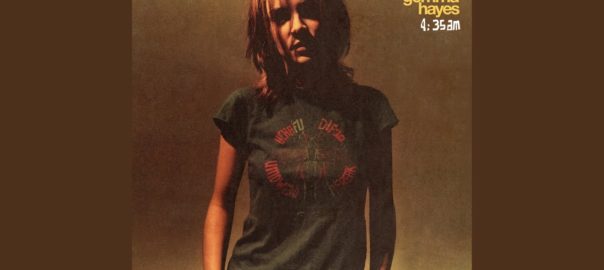
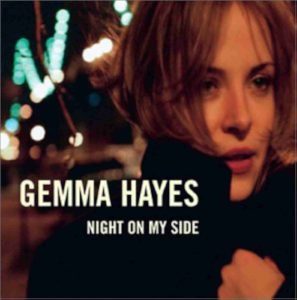
#SundayMusic | Top 100 Albums | Gemma Hayes | 2002’s ‘Night on My Side’

Gemma Hayes has more than the night on her side.

Born in the tiny village of Ballyporeen in Ireland’s Tipperary county, Hayes leaned on music and poetry from an early age to combat the inevitable feelings of small-town isolation. While she relocated to Dublin to attend the city’s University College following her stint at boarding school, she ultimately abandoned her studies to focus squarely on her true life’s calling to write and perform songs.

Hayes soon became a turn of the century staple in the raucous Dublin music scene, and her steadfast devotion to her craft was rewarded when Source Records signed her to a recording contract in 2001.


Gemma Hayes’ EP 4:35am, released in 2001. This is the title song.

A pair of extended play releases followed before the year was over, with the fragile acoustics of 4:35am and Work To A Calm setting the stage for the arrival of her début album in her native Ireland and the UK in May of 2002.

Recorded at the famed Tarbox Road Studios in Western New York State, Night On My Side was produced by acclaimed soundsmith, Mercury Rev co-founder and Tarbox proprietor Dave Fridmann (The Flaming Lips, Luna, Sleater-Kinney), with co-production duties handled by Dave Odlum who has helmed the boards for Hayes’ last three albums.

Harnessing inspiration from the likes of My Bloody Valentine and PJ Harvey, among other influences, Hayes’ inaugural LP unfurled as a dynamic dichotomy of sounds, all underpinned by her reassuring, hypnotic vocals and heart-laid-bare introspection devoid of pretense.

With the release of 2002’s Night on My Side, Fridmann blended 4:35am’s acoustica with, well, noise, as he set about to layer Hayes’ melodic sonic texture, filling the nooks and crannies of her songs with intriguing swirls.

While a handful of standout tracks are stormers awash in multi-layered, enveloping sonic dissonance, it is their juxtaposition with the sparser, acoustic compositions that produces a gorgeous mélange of melodies, tones and flourishes that can’t help but seduce the listener’s sensibilities with each subsequent listen.


Day One, the lead-off song on Gemma Hayes’ Night on My Side

Night on My Side opens with the dreamy intro Day One that quickly enchants you with its soothing melody, but before you know it you’re given a wake up call with the first single off the album, Hanging Around. Full of juicy guitar riffs and a great chorus its a cool n’ catchy pop song.


Over and Over, from Gemma Hayes’ 2002 début LP, Night on My Side.

And so, after the first two tracks, you’re given a clear idea of what to expect for the rest of the album. There are the softly spoken acoustic guitar songs that can transfix you with their beauty, as with the gorgeously well-wrought Over and Over, the harmonizing strings just make the song for me totally. Wait until you hear them, it feels like giving your brain a sonic bath. This song maked me think of comparisons to PJ Harvey; it’s more apparent in the way she sings some of the lines.


Ran for Miles. Gemma Hayes | Night on My Side. Far and away, my favourite song on the album.

Then there’s my favourite song on the album, which kept me alive in 2002.

Ran for Miles. I don’t know how Dave Fridman did it, but he managed to make something as simple as a bass drum beat totally blow me away. It hits me every time. The song is another of the more acoustic songs from the album and it is simply outstanding. I used to run from Jericho Beach through Locarno Beach towards Spanish Banks East, full speed until I collapsed onto the grass, a testament to the fact that I was still alive — if barely, as I struggled to catch my breath — that I still existed on this planet, that my too often fragile health — both physical and mental — remained as strong and vibrant as was necessary.


Tear on My Side. Another rocker on Gemma Hayes’ Night on My Side.

There are the indie rock songs like Tear in My Side that will force your head to nod, your legs to tap and your mouth to smile. Every part of this song makes me want to sigh in that life-is-great-the-sun-is-shining kind of way. The chorus. The second verse when the male harmony comes in. The middle eight.


What A Day | Gemma Hayes | Night on My Side.

There is, of course, the exception to the rule; What A Day is guitar free. In their place are electronic beats and synthesised vocals that echo around your head.


Let A Good Thing Go | Gemma Hayes | Night on My Side.

Let A Good Thing Go, the final track on the album, arguably rocks hardest on the album, with thrashing, discordant guitars and a fevered percussion soundtracking of Hayes’ examination of romantic stagnation and the harbouring of regret. The memorable guitar riff is sure to stick in your mind for hours after hearing the song, which is exactly what a great song should do, this song a counterpoint to the more delicate acoustic songs on the album.

The album’s more subdued songs may not keep your heart racing and ears buzzing to the extent that many of the albums louder tracks do, but what they lack in frenetic energy, they more than make up for by way of their emotional resonance.

Not to mention, Hayes’ crystalline vocals and confessional lyrics are elevated to the forefront, allowing her raw vulnerability to shine through, rather than being overpowered by a dense wall of sound.

First and foremost, the Irish singer-guitarist has a gorgeous, sultry and hypnotically intoxicating voice that bridges melancholy fragility and emotional intensity in a manner that evokes comparison to Joni Mitchell and Beth Orton.

Secondly, Gemma Hayes puts it to work in the service of songs that mix a sort of strummy introspective folktronica with crunchy alt-pop songcraft.

And last but certainly not least, on her dozen-track Night On My Side début — which was released in 2002 in a slightly different, and I would say better form  in the UK (I ordered the much preferable British CD at the time, the layout of the songs more organic and listenable) from the album release in North America.

Final thought.

There’s an innocence about Night on My Side that’s like slow dancing at twilight, which most decidedly sets Night On My Side apart from all the rest.

Stories of a Life | Redux | Curiosity About Life | Joy

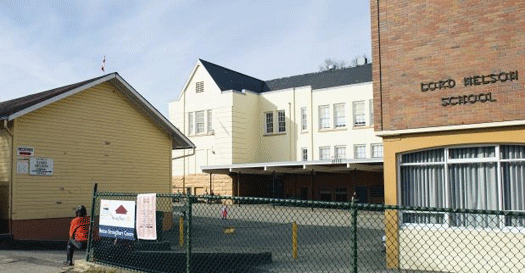
Lord Nelson Elementary School in Vancouver
Lord Nelson Elementary School, on Vancouver’s eastside, where I attended Grades 1 thru 3.

The summer of 1959, after I’d completed Grade 3 at Lord Nelson School in Vancouver, in August of ’59, my parents moved from Vancouver to Edmonton to be closer to family — on both my mother’s and father’s sides of the family.

In Alberta at the time, the provincial government had adopted what they called an “Enterprise Programme,” a focused academic programme meant to engage students intellectually while providing them with the tools they would require to compete successfully at post-secondary university.

While all other Canadian provinces had adopted a two stream programme, one academic (university bound), the other vocational (meant to prepare students to work in the trades), Alberta was having none of that — educational achievement at the highest possible level was Alberta’s goal, the curriculum requirements rigorous, demanding and challenging, and consistently above grade level.

The Enterprise Programme was defined by competition and the striving to become the best possible student — failure was never an option, doing your best was expected and required, academically and socially.

Future leaders were being trained in Alberta.

“The provincial government meant to produce the best and the brightest, informed by a progressive educational ideology that Alberta was the first Canadian province to adopt in the 1950s, an educational philosophy that was child-centred, subject-integrated, with an activity-based approach, known in Alberta as the Enterprise Programme, focused on content centered courses in History, Geography, and Civics integrated into a new course: Social Studies, which was taught across all grade levels, this new subject emphasizing the development of democratic, co-operative behaviour, and inquisitiveness through experiential learning.”
Lynn Speer Lemisko & Kurt W. Clausen, Connections, Contrarities and Convolutions: Curriculum & Pedagogic Reform in Alberta; Faculty of Education, SFU, March, 2017

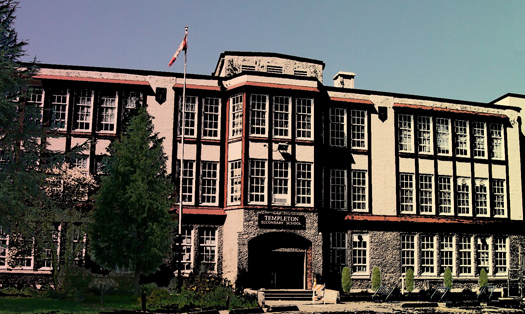
In the summer of 1962, my parents made the decision to return to Vancouver — the reasons unclear to me, but whatever the case, in the summer of ’62, living at 2136 Venables Street, I was enrolled at Templeton Secondary School, then the toughest school in Vancouver (that mantle would soon be claimed by VanTech — but in 1962, Templeton was the school where all the toughest “juvenile delinquents” were enrolled, although truth to tell, many of those students found themselves behind lock and key at the Brannen Lake Juvenile Correctional Facility).

Templeton Secondary School in Vancouver circa 1963

From Grades 7 through Grade 12, I attended Templeton Secondary School.

Based on my experience in Alberta, I was enrolled in the academic programme at Templeton, whereas every person I’d attended Grades 1 thru 3 with at Lord Nelson found themselves enrolled in the vocational stream.

Odd, I thought to myself at the time.

Another odd thing I found: from the spring of 1963 on, my grades never soared about a C-average — whereas in Alberta, I’d been a straight A student.

Unlike most other students enrolled in the academic programme, I was required to take vocational classes — and from Grade 8, I was enrolled in typing and secretarial classes, unlike any other student in the academic stream.

Although a typing speed of 160wpm would serve me well later in life, I still found it odd, and just a bit concerning, that I was required to take three clerical classes each year through to graduation.

From Grade 8 on, I was also concerned that when I submitted an essay in Social Studies or one of my English classes, it either came back to me with a C, a D or a fail — with a comment from my teacher that someone other than me had written the essay, or I had either plagiarized or copied directly the work of someone else.

By the time I reached Grade 12, where I had achieved an A- average in French, was taking the lead in the school plays, and editing the student newspaper, I was disappointed to receive a D in English, and a fail in History and Geography.

I recall one spring afternoon in 1968, the teacher having turned down the lights, with soft music playing in the background, the teacher asking the students in my Grade 12 English class to write a stream of consciousness essay, which I was only too happy to do.

When I submitted the essay to the teacher, she took a glance at the essay and tore it up, saying to me, “You didn’t write this. You either copied it from someone else or had the essay prepared in advance (note. there had been no notice of a stream of consciousness essay taking place in class that day). You receive a fail for the essay. I’m disgusted with you.”

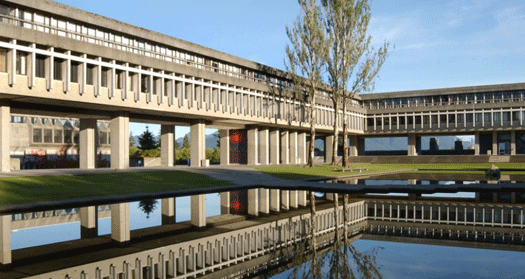
Simon Fraser University, Burnaby Mountain campus

A dozen years later, I was the Assistant Director of Teacher Training, PDP 401-402 at Simon Fraser University (a position I held while working on my Master’s degree).

The English teacher referred to above had taken a seconded position as a PDP Faculty Associate — in essence I was her boss.

When we first connected, in September, at the outset of the 1980 academic school year, almost the first words out of her mouth were, “I had a student with your name at Templeton Secondary. How odd that you should both have the same name,” at which point I informed her that the Raymond Tomlin she had taught, and the person standing in front of her was one and the same person. She looked aghast, stammering, “But how?”

I told her I had a 3.8 grade point average and two undergraduate degrees, and was currently enrolled in a Master’s programme at the university, letting her in on what I am about to write and record for posterity now …

In June of 1968, when I was about to graduate, as was the case with all of the other graduating students, I met with Ken Waites, the patrician, white-haired Principal at Templeton Secondary School, in his office with the door closed, and this is what he said to me …

“Well, Raymond, even though you’re a couple of courses short of graduation, given your failing grades in History and Geography, I am nonetheless going to graduate you anyway — because any kind of academic future is clearly not in the cards for you. I want to tell you something that we’ve kept from you for the past five years: for each of those years, you were recorded as having the lowest IQ of any student enrolled in the Vancouver school district, not just at Templeton, but city wide. Your teachers and I had often wondered, given your low IQ, how it is that you locomoted yourself from point A to point B. Someone with as low an IQ as you shouldn’t even be able to speak — but here you are.

You’ve probably wondered to yourself, why you were required to take three clerical courses each of the past five years. The answer is easy: you spell well, and it was clear early on that you had an aptitude for secretarial work, your typing speed and accuracy superior. Your guidance counsellor and I determined a long time ago that the best course in life for you would be to enter the clerical field, to be a secretary — because, clearly, you are possessed of no academic skill whatsoever, although you seem to have done well in French.

I have had these meetings with all graduating students, providing what I believe to be sound advice on how each student should proceed with his life following graduation. In your case, your best — and I would say, your only — hope is as a secretary. Thank you for meeting with me this afternoon, Raymond. All the best in your future.”

In 1970, my new wife insisted I enroll at Simon Fraser University, where students with an inferior academic record were being accepted, in order to build the student body.

In my first semester at SFU, I achieved 3 C’s and two B’s. In my second semester, 3 B’s and 2 A’s — and every semester after that, straight A’s (not that I ever cared about grades, as did many of my fellow students — I was just hungry for knowledge, and curious about the world, eager to learn as much as I could, at one point early on not leaving SFU’s Burnaby campus over an 18-month period).

I loved to read, I loved to write, I loved to learn, I was curious about everything — being at Simon Fraser University and hanging out with and being challenged by the best and the brightest was like a dream come true for me.

My curiosity about life, about all aspects of our existence on Earth remains to this day — I want to read all of the papers of record every day (and I do!), to engage with nation builders and city builders, to work with persons of conscience, to work towards better, fairer, more just.

And I am afforded that opportunity each and every day, surrounded (outside of my plangent housing co-op life) by strong-willed persons of conscience who mean to build a better and more just world. As such, my life is near filled with joy!

#VIFF2024 | A Celebration of Global Cinema

The Vancouver International Film Festival (VIFF) is set to return for its 43rd edition in 2024 — September 26 thru October 6 — promising once again to bring together film enthusiasts, industry professionals, and storytellers from around the world.

Since its inception in 1981, VIFF has established itself as one of the most prestigious film festivals in North America, known for showcasing an eclectic mix of international cinema, Canadian talent, and innovative documentaries.

Held annually in one of Canada’s most cosmopolitan cities, VIFF is not just a film festival — it’s a cultural celebration that embraces global perspectives, storytelling, and cinematic innovation. With its innovative programming and commitment to discovering fresh voices, the always scintillating Vancouver International Film Festival remains a key destination for cinephiles seeking thought-provoking films.

Each year, VIFF brings a curated selection of films that have already made waves at some of the world’s most prestigious film festivals, including Sundance, Berlin, Tribeca, Telluride, Venice, and Toronto. These films arrive in Vancouver having received critical acclaim, awards, and audience recognition when they made their début earlier this year, making VIFF a key destination on the awards circuit, on the road to greater international exposure, and broader recognition, often concluding with Academy Award nominations and wins.

For the 2024 edition, several high-profile, award-winning films will make their way to Vancouver, having already garnered significant attention at earlier festivals.

Award Winning Films To Screen at VIFF 2024 | Part 3

Here are six more of the most anticipated films that will screen at VIFF 2024 (note: each highlighted film title, should you click on it, will take you to the VIFF page providing more detail on the film, allowing  you to purchase tickets for the film, too).

  • A Different Man. Silver Bear for Best Leading Performance. Berlin 2024. Aaron Schimberg, USA, 2024. By refracting Brian De Palma’s self-reflexiveness and the Coen brothers’ mordant fatalism through the prism of his most personal obsessions, Schimberg creates a house of mirrors so brilliant and complex that it becomes impossible to match any of his characters to their own reflections, and absolutely useless to reduce the movie around them to the stuff of moral instruction.

  • A Traveler’s Needs. Silver Bear Grand Jury Prize, Berlin 2024. Yeohaengjaui pilyo / 여행자의 필요. Hong Sangsoo, South Korea, 2024.  A Traveler’s Needs is just the tonic: a film that passes through you like a breath of fresh air. With an endearingly scatty, offhand performance from Isabelle Huppert that lends the proceedings a veil of comfy familiarity,  A Traveler’s Needs nonetheless finds the indefatigable Korean auteur at his most puckishly cryptic.

  • Black Dog. Un Certain Regard Prize, Cannes 2024. Gou Zhen / 狗阵. Guan Hu, China. Written by Hu and longtime collaborator Rui Ge, Black Dog embraces the same premise of countless a noir before it: a lone drifter comes home to start afresh, only to face the ghosts of his troubled past. What’s sensational about Hu’s latest is the way it undercuts that dread to land on an engrossing note that rings wholly, convincingly earned.

  • Dahomey. Golden Bear for Best Film, Berlin 2024. Mati Diop’s captivating, fabulistic documentary Dahomey confronts the reality of how modernity has been shaped by the West’s theft of cultural heritage. An invigorating, agile, cerebral, strange and enlivening film, an all at once captivating and rigorously intellectual film that will leave you with a mighty impression well beyond the film’s compact length.

  • Gloria!. Grand Jury Prize: Official Competition, Seattle 2024. With the possible exception of Tora! Tora! Tora!, any film with an exclamation point in the title should by rights be a spangly, full-scale musical. A frothy tale of warring classical music sensibilities in a Venetian girls’ refuge, Gloria! stops short of complete commitment to that rule — but it’s when it fully suspends reality for all-singing, all-stamping choral ecstasy that Margherita Vicario’s début is most exciting.

  • Holy Cow. Youth Award: Un Certain Regard, Cannes 2024. North American Première. The début feature of Louise Courvoisier, who also grew up on a farm in the Jura, Holy Cow is a small but likeable coming-of-age tale that reeks of dung, grilled sausages, sweat and diesel oil. Lovingly shot in warm natural light, and accompanied by a gentle, lilting soundtrack, Holy Cow is shot through with compassion for its rascally yet vulnerable protagonist, 18-year-old Totone (Clement Faveau), a mop-haired lad who just wants to have fun with his mates, get drunk and get laid. But then his father dies and he is left with a failing farm and a little sister to look after.

VIFF Award Winning Films | Part 1 (just click on the preceding link to access page)

VIFF Award Winning Films | Part 2 (just click on the preceding link to access page)