Stories of a Life | Raymond’s Ongoing Battle of the Bulge

Raymond and Joy, April 1970. Photo taken by Cathy McLean, at her house near Edmonton UofA.Joy, one of Cathy’s University of Alberta roommates & Raymond. Photo taken April 1970.

For much of my life, I have a fought an unsuccessful campaign with my weight, with the exception of the period from 1969 to 1975, where early on I was preparing “meals” for myself (and hardly eating), and in the period after marrying Cathy in 1970, when my weight hovered around 135 pounds, as you can see in the picture above, taken by Cathy at a house she shared with fellow University of Alberta students, just off the campus on Edmonton’s southside. A happy go lucky person without a care in the world.
Following graduation from SFU in 1975, after settling into jobs in the Interior, with Cathy taking on a job as a Financial Aid worker cum social worker, and me at the beginning of my teaching career, Cathy and I settled down to life as working nine to five citizens, a quick and hardly nutritious breakfast in the morning, a bagged lunch, and at the end of the work day — given that by 1975 Cathy had developed into a gourmet cook (a story for another day), a sumptuous meal and homemade dessert. Mmmm, good.
Although Cathy and I jogged, went cross-country skiing in the winter, with me taking judo classes while Cathy attended Okanagan College two evenings a week, somehow during my teaching tenure in the Interior in the mid-to-late 1970s, the pounds started to pile on for me. Cathy — an athlete always, throughout her life has run 5 miles each day seven days a week, plays volleyball & basketball in the evening, and tends to walk everywhere, while Cathy stayed fit and trim, alas such was not the case with me.
I have never been profoundly obese (the most I’ve ever weighed was 225, while 195 – 200 is my usual weight). In middle age, through my forties, fifties and early sixties, if I thought about it, worked out and was careful about what I ate, I often managed for a year or two to settle in at a weight of 175 pounds. A comfy and healthy weight for me, I think.
Weight has always ceased to be an issue when I’m head-over-heels in love, which fortunately has occurred relatively frequently over the years: with Cathy 2 (the woman I lived with when working on my Master’s, when it became clear that Cathy, my wife, and I were finis), in the late 1980s and early 90s when I was head-over-heels in love with Lori (who I consider to be the love of my life, although I am given — despite the ugliness of many of the post years of my marriage to Cathy — to thinking that Cathy, too, is one of the great loves of my life), with Anne in the mid-90s, and with Janaya in the late 90s. Oh there were a great many other women in my life over the years, but I would say that Cathy, Cathy 2, Lori, Anne and Janaya stand out as the women who, when I was in love (and I would have to say, too, lust) with them, the pounds just melted away, as during my entire time with each of them, my weight always hovered around 145 – 150 pounds.
While raising my children, I often continued the battle with my weight, in the periods between significant relationships with women I loved.
As I have written before, my relationship with my children growing up was honest and forthright. Jude was a happy-go-lucky kid, while Megan tended to the more pensive, take charge and opinionated (as she is to this day).
One late spring weekend, around 1986, when I had decided that it was time for me to once again begin a workout regimen to help me lose the pounds, the kids and I walked on over to the spiffy new Sportif on West 4th Avenue, where I proceeded to try on a variety of shirts and shorts.

Megan Tomlin, age 9, in 1986Megan Jessica Tomlin, age 9, spring of 1986. Kitsilano neighbourhood of Vancouver.

One particular outfit consisted of a mesh acrylic top, and matching billowy blue shorts (which were exactly that). Upon exiting the dressing room and presenting myself to Jude (who really couldn’t have cared less) and Megan, my loving daughter looked at me with a wary eye, from head to toe, at the outfit I’d chosen, and with a serious expression on her face said to me …
“Dad, you look like a beached whale,” then burst into a fit of giggles.
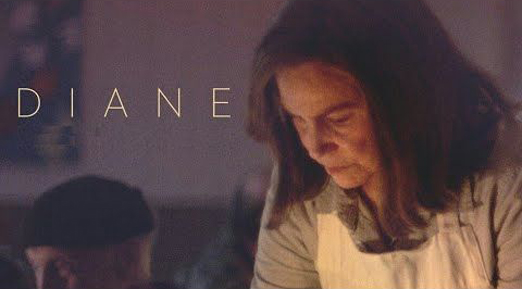
Arts Friday | Diane | Teen Spirit | Finest Films Released This Year

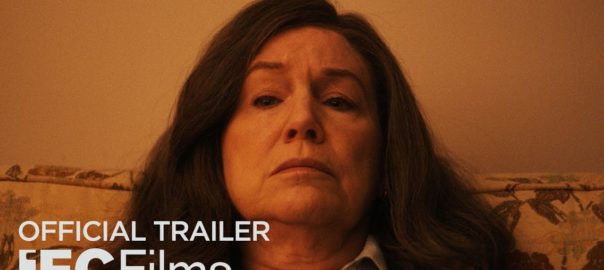
Diane, a new film by writer-director Kent Jones, starring Mary Kay Place as the titular character

Opening today for an eight day run at the Vancouver International Film Festival’s well-loved Vancity Theatre (on Seymour, just north of Davie Street, and across from Emery Barnes Park), the film considered by many film enthusiasts to be the best 2019 film released in what, to date, has pretty much been a fallow year for those among us who love cinema — and that special film of which we write is Diane, a certain awards winner come year’s end, most especially for the film’s star, Mary Kay Place, who according to Vancity programmer Tom Charity, “gets the role of a lifetime.”
As Variety’s lead film critic Owen Gleiberman writes

“Diane is a tender, wrenching, beautifully made movie, a haunting first dramatic feature from Kent Jones, and the most accomplished dramatic feature screening at this year’s Tribeca Film Festival, a majestic film and a vision of turmoil, peace, mystery and memory, built around Mary Kay Place’s remarkable performance, along with something that hasn’t always accompanied this generation’s journey into old age: a glimpse of God.”

Hollywood Elsewhere’s Jeffrey Wells has been raving about Diane since the beginning of the year — seems that he’s not alone in his enthusiasm, what with the 94% Rotten Tomatoes score the film has achieved.
Ty Burr, in the Boston Globe writes that Diane is “a quiet a tour-de-force”.

Part of Mick La Salle’s review in the San Francisco Chronicle reads …

“When I was a kid, my grandfather said something to me that I never forgot and that applies to this movie. ‘I’m 67,’ he said. ‘Twenty years ago, I was still a young man, and now I’m an old man.’ Diane is about something like that. It’s about the experience of early old age, the point in life where the memory and the identity of being young remain as fresh as ever, but the realities of aging are beginning to kick in.”

Some films you want to discover for yourself, without reading too much about it in advance, so that the film is fresh on the screen for you, and the process of discovery and revelation becomes deeply invested in you.
Diane, now screening at The Vancity, is one such film.

star.jpg star.jpg star.jpg

Teen Spirit. Starring Elle Fanning.

Teen Spirit, which only a handful of people will see (alas), is VanRamblings favourite film of 2019, and certain to make our year end ‘best of’ list, an entirely revelatory and transformative, if small, British independent film starring the actress of her generation, the luminous Elle Fanning, who unlike Rami Malek in Bohemian Rhapsody actually does her own singing.
Ms. Fanning plays Violet, a sensitive British 17-year-old who lives with her mother (Agnieszka Grochowska), a Polish immigrant, on the Isle of Wight. Aside from a beloved horse and her long disappeared father, not much defines Violet beyond her passion for music.
Violet’s days revolve around school, being mocked by the Island’s pretty-girl jerkettes, a dreary after school job at a local restaurant, helping her financially strapped and sullen mom manage their small family farm, and occasionally sneaking out to sing at a local pub.
Signing up to audition for a British pop show called “Teen Spirit,” director Max Minghella (an actor himself and the son of the late director Anthony Minghella of The English Patient, and The Talented Mr. Ripley) and cinematographer Autumn Durald Arkapaw during the film’s 92-minute running allow the audience to witness the beginnings of a young woman’s dreams of music making, giving a reluctant Violet the star treatment.
As Jesse Hassenger writes in his review in Slate

Teen Spirit may be about a singing competition, but this raw, slice of life film never devolves into the cynical undertaking you might expect. It’s refreshing, too, that Teen Spirit doesn’t view its heroine exclusively in terms of gatekeeping credibility, nor does it romanticize Violet’s life or the journey she’s on, which is to say that fortunate for us, Teen Spirit never sacrifices complexity on the altar of poptimism.”

Jeanette Catsoulis in her Critics Pick New York Times review writes of Violet, “the music might belong to Robyn and Ellie Goulding, but the journey from insecure child to tentative adult is all hers.”
Playing once daily, at 9:55pm, at Cineplex International Village.

Music & Film | Bedroom Pop, Tribeca and Skate Kitchen

Bedroom pop, a lo-fi genre of indie music popular with teens and twenties
Bedroom pop. Who’da thunk that such a thing even exists?
Bedroom pop is a sub-genre of Lo-fi (“low fidelity”), defined in 2019 as a DIY musical genre or aesthetic in which artists record at home on their own equipment, rather than in traditional recording spaces, the music characterized by contemplative lyrics, bedroom pop a contemporary indie re-invention of the once popular emo or dream pop musical genres.
There are a great many bedroom pop artists, but the most celebrated is Claire Cottrill (born August 18, 1998), known professionally as Clairo, an American recording artist from Carlisle, Massachusetts who wrote Pretty Girl, a lo-fi-produced song that attracted over 30 million views on YouTube.

At 16 years of age, Clairo wrote and produced Pretty Girl employing studio equipment in her bedroom (the equipment sometimes referred to as a digital audio workstation), as well as Pro Tools production software, while also recording and editing the video before uploading it to YouTube.
Home studios have been popular for decades, but have become ever more refined as computer technology has become increasingly sophisticated, enabling ever higher quality music production. One of VanRamblings favourite artists, Imogen Heap (who we interviewed and wrote about in 1997, at the outset of her career) records all of her music in her kitchen, where she’s set up a home studio that revolves around the use of Pro Tools.

As it happens, VanRamblings discovered bedroom pop during our recent bout of illness, when all we could manage to do most days was plunk ourselves down in front of Netflix — where we were very pleased to see that Crystal Moselle’s acclaimed Sundance and Tribeca award-winning film, Skate Kitchen, simply appeared out of the blue (and unheralded, but not by us) one very fine day, as one of the varied viewing options.

Vibrant, alive, poetic, superby shot and and richly informed, Ms. Moselle’s follow-up to her award-winning, one of a kind documentary, The Wolfpack, her fiction début emerges as the most accomplished film about skater culture since Catherine Hardwicke’s 2005 American biographical drama, The Lords of Dogtown (which is also available on Netflix).
The story goes that Moselle spotted two of the girls on the subway, introduced herself as a filmmaker, and asked if there were more girls like them. Indeed there were, all forming a feminist, sex-positive, shred-happy collective called the Skate Kitchen. Some time later, Moselle’s film arrived in Park City, with all the kids playing a version of themselves.
And who do you think the featured music artist on the soundtrack might be? Yep, you got it — none other than Clairo, who wrote and produced Heaven for the Skate Kitchen soundtrack.

So, while VanRamblings reveled in our discovery of Skate Kitchen on Netflix, we were also introduced to Clairo, and the contemporary musical genre known as “bedroom pop.” And now, you are familiar with Skate Kitchen (a must, must watch!), the work of Crystal Moselle, the musical genre of bedroom pop, and its most acclaimed progenitor, Clairo.
You know what’s exciting about life? That you get to discover something new, something that just yesterday you knew nothing about, every day.

Health and Wellness | The Low FODMAP Diet a Digestive Wonder

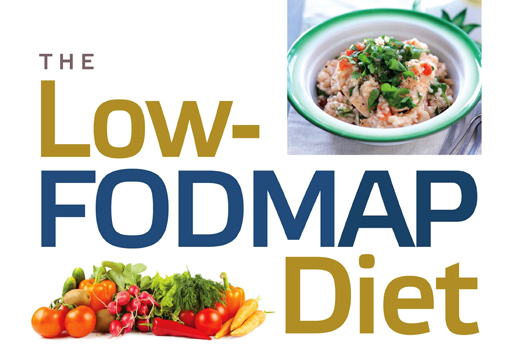
The Low FODMAP Diet | The Natural Remedy to Digestive and Gastrointestinal Disorders

Do you suffer from the occasional bout of gastro-intestinal distress? Most people do, and at best find it to be uncomfortable and discomfiting.
At times, that gastro-intestinal distress can flare up to such an extent, a person becomes bed-ridden, as was woefully the case in February and March with VanRamblings, in the process gravely depleting one’s energy.
Some years back, research scientists at Melbourne, Australia’s Monash University developed an eating regimen called the “low FODMAP diet”. Simply eliminating and reducing specific, high FODMAP foods proved to be such a salutary resolution to the alleviation of gastro-intestinal distress in patients with digestive disorders that many years later, the low FODMAP diet has become the default treatment for most digestive disorders.

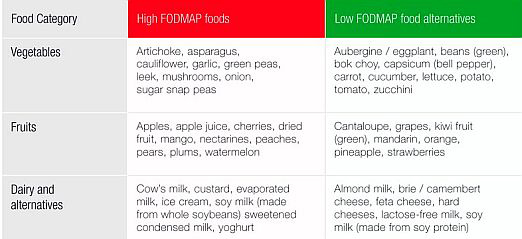
High (not good for you) and low (very good for you, and your digestive system) FODMAP foodsHigh FODMAP foods are not well tolerated by most people’s digestive system, and should certainly not be consumed by persons who suffer with digestive disorders, whereas low FODMAP foods are well tolerated, lessening or even eliminating gastrointestinal distress

FODMAP is an acronym that stands for Fermentable Oligosaccharides Disaccharides Monosaccharides and Polyols.
In plain language?
FODMAPs are specific carbohydrates that are poorly digested by the vast majority of people (that’s you and me). Since these foods are not absorbed by the body, these short chain, sugar-laden carbohydrates travel through the digestive tract where they become fermented, resulting in painful gastro-intestinal distress, severe lower abdominal pain and discomfort, bloating, inflammation and a range of bacterial disorders that cause severe gastric distress in a person’s digestive system, more often than not resulting in discomfiting stomach cramps, bloating and problems with a person’s elimination system. In other words, not a lot of fun.
Twenty years ago, at the strong suggestion of our family physician, we eliminated dairy from our diet (probiotic lactose free yogurt, and Daiya coconut cream yogurt are just fine, though). Brad, our doc for the past 36 years, has also long been on our case to eliminate wheat from our diet — which we’ve now done, fortuitously and much to the benefit of our health.
We’re now consuming products, and baking and cooking at home with foods made with buckwheat (there’s no wheat in it!), brown rice, tapioca, almond and other non-wheat flours. We made a great, fluffy Strawberry Cinnamon Dutch Baby (with organic brown rice flour, eggs, raw turbinado sugar, and almond milk) yesterday morning for breakfast — mmmm, good.

Low FODMAP Strawberry Cinnamon Dutch Baby German Pancake

Here’s a pdf of the definitive list of low and high FODMAP foods.
A month ago, VanRamblings had never heard of the low FODMAP diet (you’ll want to watch the Monash University produced video available in the preceding link). Fortunately, VanRamblings’ friend (and saviour, as it happens) Maureen Bayless — we’ll be writing much about Maureen in the months to come, given her pivotal role in seeing us through our seven month cancer journey back in late 2016 and early 2017 (quite simply, we wouldn’t be here without her) — came to our rescue with information on and a suggestion to adopt the low FODMAP diet (which had worked wonders for friends of hers, she said), and one month later, our energy has returned and the symptoms of our digestive disorder have been reduced by 80%; most days, anyway. We really are feeling much, much better.

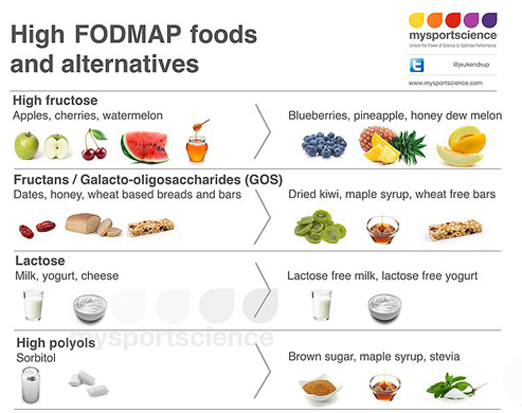
High FODMAP alternative foods

All and all, the low FODMAP diet has been a snap to adopt, resulting in little change to our daily eating habits. Oatmeal — love it, and that’s still on the menu. Peanut butter on rice cakes. Almond milk rice pudding made in our Instant Pot (which, by the way, is on sale for half price at Best Buy this week, with the sale ending tomorrow, so you’ll want to rush right out to acquire this must, must, must, must have kitchen appliance).

Instant Pot, with a sous vide function, on sale at Best BuyThe latest 10-function (with sous vide!) Instant Pot on sale at Best Buy til Thursday

Cantaloupe, pineapple, strawberries (organic, of course, cuz non-organic strawberries are at the top of the Environmental Working Group’s Dirty Dozen list of pesticide-ridden, cancerous foods), blueberries and every other berry, save blackberries, are also on the approved low FODMAP list.
There are a great many low FODMAP beverages that are readily available. Lots of approved low FODMAP sweeteners are also on the list.
SPUD.ca have hundreds of gluten free / low FODMAP foods available. Save On Foods carries dozens of gluten free products, and has in fact dedicated a whole long aisle and refrigeration case to gluten free and low FODMAP foods. The same is true for Real Canadian Superstore, and most bulk food stores (for years, we’ve visited regularly at Kitsilano Natural Foods, now located at 1st Avenue and Yew, open 365 days a year, with a friendly staff).
We sorta miss apples, and have found a way to get around not being able to eat garlic (which we love!) and onions — most recipes that require garlic and onions also require oil, so we just cook the garlic and onions in the oil, infusing the oil with the taste we love, then remove these allium foods. It’s a small price to pay to not eat celery, cauliflower, and some mushrooms — when, in fact, if one is careful, one can eat small amounts of each of these foods, including wheat-based foods (but only one slice of bread a day).
Still, long term use of the low FODMAP diet is not recommended, even by those who developed the diet at Monash University, and as you’ll read in the article by respected holistic nutritionist, Julie Daniluk.
In fact, Monash University scientists make changes to their recommended list of low FODMAP foods weekly, while suggesting that one acquire their low FODMAP app to stay on top of their latest findings, and as a helpful and necessary aid when out grocery shopping.
Their scientists also recommend adding back high FODMAP foods, one by one, after 8 weeks on the diet to determine their impact on your health.
Monash University scientists are also big proponents of adopting a vegan diet, and eliminating sugars, as Ms. Daniluk recommends. As a supplement to the low FODMAP diet, VanRamblings’ doc also recommends a regimen of Align Probiotic, should one’s digestive disorder rear its ugly head.
So that’s what been happening on the health front in VanRamblings’ life since the beginning of the year. Fortunately, we’re now feeling much better, and as we’ve written earlier, as long as our health holds out — and we’re doing pretty darn good, we think — our intention is to continue to publish daily on VanRamblings through the end of June, more sporadically in the summer, while ramping up our federal election coverage full steam ahead throughout the months of September and October, until year’s end.