Oshawa Ontario-based dream pop group, Dizzy, winner of the 2019 Juno award for Best Alternative Album, Baby Teeth. Dizzy was also up for the Best Alternative Group Juno.
Mid-week last week, I was listening to Gloria Macarenko’s afternoon CBC show, On the Coast (I will say, I much preferred Stephen Quinn in the afternoon, alas). Ms. Macarenko was speaking with frequent guest, Andrea Warner, who was in the studio to discuss a Canadian music group of some note, all but anonymous to the uninitiated (that’s you and me), but as presented by the erudite Ms. Warner, worthy of your time & consideration.
This past week, Ms. Warner wished to tell all of us how much she loved recent Juno award winners, Oshawa’s dream pop group Dizzy, who recently picked up the Alternative Album of the Year Juno award for their absolutely outstanding début album, Baby Teeth. Dizzy had been up for the Breakthrough Group of the Year Juno at the Halifax-based celebration, but lost to bülow, who VanRamblings also loves and has long been on our iTunes playlist. Quite honestly, the Breakthrough group award oughta have been a tie. Just below, you can hear music from bülow.
Not to confuse you, above is bülow, winners of Breakthrough Group of the Year at this year’s Juno awards ceremony. We’ll get back to writing about Dizzy in just a moment.
Since the release of Dizzy‘s début album, Baby Teeth in 2018, fans in rapture have fallen for Dizzy‘s distinctive vibe (the group has received a great deal of play on CBC Radio 2, as well as on CBC Music). Dizzy‘s lush and low-key sonic landscape paired with evocative lyrics that run the gamut from confessional, specific and heartfelt to esoteric, universal and wry has captured the imagination of those who became aware of Dizzy‘s distinctive brand of music, and then became fans.
Vocalist / songwriter Katie Munshaw and Charlie Spencer started playing together in high school and were more of an acoustic folk-pop duo than anything fully resembling Dizzy. Over time, the two novice but ambitious musicians sought to stretch their musical chops, the two going on to form a larger, more diverse band that came to include the latter’s three siblings, all one year apart: Charlie, Alex and Mackenzie Spencer.
All the band members grew up in and around the ‘burbs of Oshawa, a city that backs onto Lake Ontario. In an interview with New Music Express last year, Alex told the interviewer that the environment in which he grew up “does have its beauty and its little moments of innocence — it’s very quiet and secluded, and that helps nurture our sound in some way.”
On Baby Teeth, it’s obvious how much creativity the band draws from their sleepy hometown. Bleachers and Pretty Thing are intricate compositions that place as much value on hushed moments as on memorable, prickly guitar parts and swooning choruses. Swim, however, bucks the trend with imaginative lines that see the band plead for some escapism: “You are the athlete / I am the astronaut, for thousands of miles I float / Still, you carry me home” | New Music Express, 2018.
So now I imagine, you want to hear what Dizzy sounds like. Here goes …
In the winter of 1988, I was hired to teach English literature and writing at the Broadway campus of Vancouver Community College, located on the eastside of the city, about a block west of Clark Drive.
The head of the College Foundations Programme in which I would be employed was a gregarious, erudite fellow in his mid-50s. I went in for the interview in early February of that year, and what started out as your run-of-the-mill confab, turned into a 3-hour gabest, where the two of us spoke about our lives and the various experiences of our lives over the years.
While I was a flaming, long-haired radical, the button-downed department head was a staunch Conservative party member. Now, in those days that meant Progressive Conservative party, with the emphasis on progressive. Turns out we had much in common, agreed on many issues (particularly human rights), felt the same way about the English language (always, always use the English spelling, never the bawdlerized American spelling).
During the course of our three hour discussion, he informed me of a number of issues for my consideration respecting my pending job …
Vancouver Community College’s College Foundations Programme was a provincially funded high school completion programme for adults who wished to go on to a post-secondary education;
The student drop-out rate for College Foundations classes was 75% by the end of the term, as had long been the case, with a full 50% of the students generally withdrawing from classes in the first 3 or 4 weeks;
Arising from the high drop-out rate, class sizes were set at 30. Of the 30 students enrolled in each class, all were working class with troubled backgrounds, a full third (sometimes more) of the class were sex trade workers still active in the profession, while the remaining two-thirds worked at minimum wage jobs, if they could find employment at all;
The mid-19th century novel I was to teach for the summer semester (to begin in May), was Thomas Hardy’s Tess of the D’Urbervilles. I told the department head that under no circumstance could I teach the anti-feminist Tess, all the moreso because of the makeup of the class I was to teach. The creation of Tess was entirely a male construct, I argued, the lead character passive and accepting of a guilt that was not her own, hardly an inspiring figure for the women students enrolled in my class.
Instead, I told him I would wish to teach my favourite novel, George Eliot’s The Mill on the Floss, the protagonist, Maggie Tulliver, the strongest feminist heroine in 19th century literature, as passionate and bright, as obstinate and loving, as imaginative and sympathetic, and intoxicatingly beautiful a woman — for her mind, and the world of ideas in which she lived, with a sensuousness that charmed all in her world — as one could hope to find in the novel. Not to mention which, George Eliot was just a pen name, the working class author’s true name, Mary Ann Evans, presenting her characters as social outsiders subject to small-minded persecution, with Maggie triumphing throughout the book.
My argument carried, with permission granted to teach Eliot’s fine novel.
When classes started in early May, my first impressions of the members of the class was that, as a whole, here were a group of mostly young people in their early to mid-twenties who had been beaten down by life, who had been subject to much abuse, and an utter lack of love and support.
As we got to know one another, I learned of the dreams that my students held for themselves: one wanted to be a police officer, another an airplane mechanic, yet another a day care supervisor, another a social worker, and yet another a university professor. I also learned that the friends and families of the students did not offer their support to my students in their “trying to better themselves,” rather their friends and families experienced the ambitions of my students as their being “too big for their britches”, as a disloyalty to their working class roots, as a pulling away, a desertion.
I also learned that a feature of my students’ lives was a propensity to have their friends argue with them, which inevitably — in many cases — often meant coming to blows, a decidedly unsatisfactory end to a dispute.
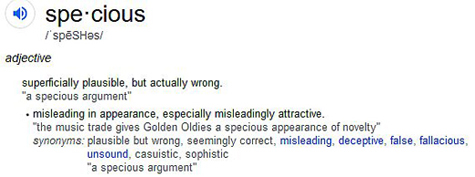
I decided to begin each of the two three-hour evening classes each week by teaching the students a new word. The first word I taught was specious …
After discussing the word specious with my students, its connotative and denotative meaning, I suggested to my students that the next time they found themselves in an argument with a friend, rather than appear to disagree with their antagonist, instead say something — with a big, almost revelatory smile on their faces — along the lines of, “Thank you. What a wonderfully specious thing to say,” that all the time their friend was thinking you were saying something kind, thoughtful and seemingly agreeable, in actuality you were calling him or her a fool — but only my students would know that, as it was unlikely that their friends knew the meaning of specious, and the implications of employing that word.
Unsurprisingly, several of my students did exactly as I prescribed above, returning to class a few days later with shit eating grins on their faces, saying, “I tried it out. It worked perfectly! I didn’t have to get into an argument with my friend, and what was even better, I felt that I’d won the argument, defended myself, allowing us to enjoy our evening and to have a good time out drinking at a bar, with the both of us feeling just great!”
Ah, the power of language — it’s just a wonderful thing, don’t you think?
Now on to teaching The Mill on the Floss. Early on my students could not make hide nor hare of Eliot’s novel, they protested that they didn’t understand the flowery British language of 1860, and that as far as they were concerned, the novel I’d chosen was a no go — they couldn’t and they wouldn’t read it, and that was all there was to it. The students were adamant (another word I taught them the meaning of, and gratefully so).
Little wonder, I thought to myself, that students long out of school would experience some difficulty with deriving meaning from mid-19th century British literature. I asked my students how many of them had been read to when they were young children. Not one had had a parent, an aunt or a teacher read to them at any point in their lives. I decided to change that.
“Ah, my child, you will have real troubles to fret about by and by,” is the consolation we have almost all of us had administered to us in our childhood, and have repeated to other children since we have been grown up. We have all of us sobbed so piteously, standing with tiny bare legs above our little socks, when we lost sight of our mother in some strange place; but we can no longer recall the poignancy of that moment and weep over it, as we do over the remembered sufferings of five or ten years ago. Every one of those keen moments has left its trace, and lives in us still, but such traces have blent themselves irrecoverably with the firmer texture of our youth long since past; and so it comes that we can look on at the troubles of our children with a smiling disbelief in the reality of their pain. Is there any one who can recover the experience of her childhood, not merely with a memory of what she did and what happened to her, of what she liked and disliked when she was in a pinafore but with an intimate penetration, a revived consciousness of what she felt then, when it was so long from one Midsummer to another; what she felt when her school chums had shut her out of their game because she would pitch the ball wrong out of mere wilfulness; or on a rainy day in the holidays, when she didn’t know how to amuse herself, and fell from idleness into mischief, from mischief into defiance, and from defiance into sulkiness; or when her mother absolutely refused to let her have a tailed cape that “half,” although every other girl of her age had the cape she so desired? Surely if we could recall that early bitterness, and the dim guesses, the strangely perspectiveless conception of life, that gave the bitterness its intensity, we should not pooh-pooh the griefs of our children.”
When we were to begin the teaching of The Mill on the Floss, I asked the students to read Book One, Chapter One, for the next class.
At the beginning of that class, I turned down the lights, and from the lectern at the front of the class, I proceeded to read cogent passages from Chapter One, injecting meaning and emotion into the words. When I was done, the lights were turned up, and I could see that there was hardly a dry eye among the students in the class, who’d found the passages I’d read moving beyond anything they’d experienced in their school years to date, as many of the students exclaimed to me. We went on to discuss what occurred in Chapter One, the meaning that could be derived from the chapter, and why I had chosen the passages that I did to read to the class.
As the Wednesday evening class was drawing to a close, I assigned one of the students (who I had consulted with in advance, in my office, and during the mid-class break) to read passages from, and present Chapter Two to her fellow students at the next class, and to do as I had done, reflect on the meaning of Eliot’s words, why they were moving, what we learned about Maggie, her brother Tom, her parents and aunts and uncles and cousins, about where she lived, and what she and they thought of her parents and who, perhaps, was the more loving and supportive parent.
After the mid-class break at the next class, the student I had assigned to read passages from Chapter 2 did just that, coming up to the lectern, the lights now dimmed. Again, reading for meaning, when the lights were undimmed, there was not a dry eye among the students. All of the students came to love George Eliot’s Maggie Tulliver (as for me, both Cathy and I called Megan “Maggie” all the time she was growing up, and still do).
We read through the thirteen chapters of Book One of The Mill on the Floss, just as we had for chapters one and two.
In the third week of May 1988, the head of the College Foundations Programme — the man who had hired me — took a leave. Three weeks later he was dead, the first person I’d been close to who had died of AIDS.
A new department head was put into place, a feminist woman and left wing activist of some note, who proved to be very much the authoritarian (rather than a humanist, as her antecedent had been) and proved, as well, to be much less open than had been her predecessor to my approach to teaching. She scolded me for teaching The Mill on the Floss rather than the assigned 19th century novel I was teach for the summer semester, Thomas Hardy’s Tess of the D’Urbervilles, also frowning on the dimmed lights for the reading of passages of the first Book of Eliot’s 1860 novel; neither was she particularly enamoured of the easygoing camaraderie that had developed between the exhilarated members of the class and myself.
“Unprofessional,” she harrumphed, telling all of her administrative colleagues at VCC of what a terrible teacher I was, how I had demeaned my students both by reading to them, and allowing them to read to one another, which imprecations by her, and more, carried over into my involvement with members of the civic party of which I was a member, the Coalition of Progressive Electors, prominent members of whom taught at Vancouver Community College, and who made no bones about the fact that they knew me to be a terrible teacher, a teacher who demeaned his students, treated them improperly and with unconscionable disrespect.
Sometimes, youse just gotta love the authoritarian, holier-than-thou left.
Thing is, though, while students dropped out in droves from the classes taught by my colleagues in the department — as the now deceased head of the department had said had been a common circumstance for years — not one of my students withdrew from my class before semester’s end.
Over the years, I have run across more than a dozen students from the class the students and I shared at VCC in the summer of 1988.
During that summer semester of 1988, and beyond, I provided out of class assistance to the student who wished to be a police officer, which he is today, having gone on to a baccalaureate degree in criminology, and then a Masters degree, both from Simon Fraser University. The student who wished to become an airplane mechanic? Ran into him at a Dollar Store on Commercial Drive — he told me he had taken specialized training, and now travels the globe providing service that only he and very few others are able to provide. The woman who wished to attain a degree in Early Childhood Education did just that, only recently retiring from her work at the child care centre where she was a supervisor for a near quarter century.
The young woman who wished to be a university professor?
Well, she has long worked as a consultant in the federal corrections system, directly with offenders, and on the way to attaining her PhD in Psychology was hired first as an instructor at a British Columbia university and then as a professor, all the while raising her family and running a successful private therapeutic practice, for which work she has received much recognition.
Teaching? I loved teaching.
But as anyone who knows me soon realizes, I can be obstinate, and when I believe myself to be in the right, no one and nothing will direct me away from the path that I have chosen, a path always in the service of others.
On VanRamblings yesterday, we wrote about Selina Crammond, all around good person, community activist, person of principle, and someone who keeps VanRamblings on the straight and narrow (as must appear obvious to anyone, VanRamblings needs all the help we can get — particularly when it comes from persons of conscience like Selina).
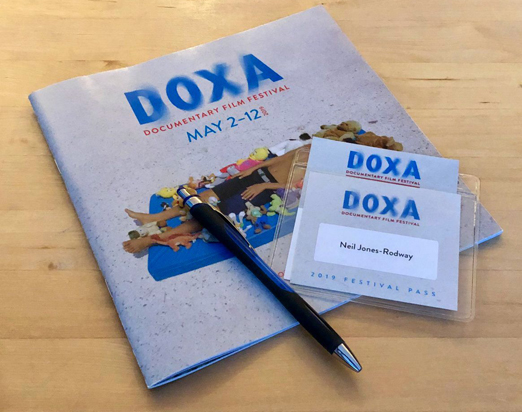
In addition to Selina Crammond’s community activism and commitment to change for the better, her ace drumming in the feminist four-piece moody-pop buddy-rock band supergroup Supermoon (see the video above), growing up in the chilly, rural climes of The Pas (630 km northwest of Winnipeg, and considered to be the Gateway to the North), Selina’s sterling work over the years with the good folks at the Vancouver International Film Festival, her longtime membership in Vancouver’s progressive, working class, roots-based political party, the Coalition of Progressive Electors, and by very dint of her presence in our lives just generally bringing a sense of joy, optimism and activism into people’s lives, the aforementioned 34-year-old Selina Crammond is also the Director of Programming (this is her second year in that capacity, although she’d worked with Dorothy Woodend and the fine staff and volunteers at DOXA, for years and years and years) with Vancouver’s prestigious, groundbreaking spring film festival, the acclaimed DOXA Documentary Film Festival, which kicked off last night, and gets fully underway tomorrow, although there’ll be screenings this evening at 6pm of Chilean director Nicolás Molina’s Flow, followed by an 8pm screening of Emmanuelle Antille’s A Bright Light: Karen and the Process, both films screening at The Cinematheque, located at 1131 Howe Street.
DOXA Documentary Film Festival Director of Programming Selina Crammond (left), and DOXA’s Operations & Volunteer Manager, Gina Garenkooper. Photo credit: Milena Salazar.
After a full year of preparing for DOXA 2019, VanRamblings believes that Selina Crammond is deserving of recognition for her critically important work in the arts, and across our community to makes ours a better world, and a more understanding love-based world. Therefore, VanRamblings officially declares today, Friday, May 3rd 2019 Selina Crammond Day (we’re sure our Vancouver City Council will be on board for next year!).
Here are a couple of the DOXA 2019 Programmer’s Picks …
Selina Crammond’s pick … Midnight Traveler
After receiving threats from the Taliban, filmmaker Hassan Fazili, his wife and their two young daughters are forced to flee their home in Afghanistan and seek refuge in Eastern Europe. Intimate, and often shaky, footage shot by the family on their iPhones captures a wide range of moments, from startling racism in eastern Europe – to meditative reflections on Fazili’s love of cinema. The result is a portrait of a resilient family that offers a very human face to the ongoing refugee crisis.
Joseph Clark’s pick … Instructions on Parting
Prepare to be devastated. Instructions on Parting is an emotionally challenging film, that is at once hand-crafted and cinematically stunning. Rarely has such an intimate film demanded to be seen on the big screen.
Amy Jenkins | US | 2018 | 95 minutes
Wednesday, May 8, 2019 - 8pm
Vancity Theatre (1181 Seymour Street)
Click on the graphic above to be taken to the #DOXA2019 Twitter account.
#DOXA2019 will present 82 films from across Canada and around the world, representing the very best in contemporary documentary cinema. Get your tickets at www.doxafestival.ca. Better hurry. Quite a few #DOXA2019 screenings are already sold out, or have limited tickets remaining for the scheduled screenings.
Here’s the full schedule. See ya at #DOXA2019. Bring your dancin’ shoes!
Alexandra Morton, featured in Twyla Roscovich’s documentary, Salmon Confidential, is a Canadian American marine biologist best known for her 30-year study of wild killer whales in the Broughton Archipelago in British Columbia. Since the 1990s, her work has shifted toward the study of the impact of salmon farming on Canadian wild salmon.
Some years ago when attending the annual press conference for the Vancouver International Film Festival fall film fest, upon entering the Vancity Theatre, my young lefty feminist friend (at the time a VIFF film traffic co-ordinator), the multi-talented Selina Crammond — who at present is the hard-working, year-round Director of Programming at DOXA, Vancouver’s spectacular homegrown documentary film festival, which kicks off tomorrow, by the way! — approached me the moment I walked through the open doors to the theatre, excitedly stating to me, “Raymond, you’ve got to see Twyla Roscovich’s documentary, Salmon Confidential, it’s the best doc at VIFF this year!” (there is nothing more in life that I like than having my interests taken care of by women of conscience — and, let me tell you, Selina has long kept me on the political straight and narrow, reinforcing always the principled way I must conduct the affairs of my life).
From a political perspective, what struck me most about about the issues uncovered in Salmon Confidential was that the Stephen Harper government, aided by the Christy Clark government had muzzled scientists for both levels of government, and rather than address the problems that were destroying the salmon population along British Columbia’s coast, accepted significant amounts of money from the fish farming industry in exchange for not acting to remedy a problem that was destroying the wildlife ocean population along British Columbia’s once pristine coast.
What does the above recitation on the failure of government have to do with the headline of today’s VanRamblings post? Simple.
Who we elect to power in Ottawa, and across the water in Victoria, has a dramatic effect on the environment, on the livability of our towns and cities, and on our coast — and arising from the plangent work of Jody Wilson-Raybould this past four months, uninformed, apolitical Canadians would appear to be on the brink of re-installing (this time) a far-right Andrew Scheer-led government in Ottawa, which like all far right governments will move legislation to protect the interests of Big Oil and their corporate donors, at the expense of the preservation of our planet, and the quality and viability of the economic lives of the vast majority of Canadians.
In early January of this year, Prime Minister Justin Trudeau’s popularity was at an all-time high, supported by 56% of Canadians (15% more than his Liberal Party), with the Conservative Party’s Andrew Scheer stuck back at 28%, the same as his party (the base of the Conservative party is redolent of the Trump base, or as Hillary Clinton referred to them, “the deplorables”), with the NDP at 15%, Elizabeth May’s Greens at 8%, and Maxime Bernier’s People’s Party and the Bloc Québécois tied at 4%.
As of earlier this week with the publication of the Léger poll …
Just 27% of respondents said they’d vote for Trudeau’s Liberals — 13 points behind Scheer’s front-running Conservatives, who, at 40%, were in the range needed to win a majority of seats in the House of Commons.
The Tories led in every region except Québec, where the Liberals enjoyed an eight-point lead with 31% support; the Conservatives and Bloc Québécois were tied at 23 per cent.
Nationally, the NDP had 12% support, one point ahead of the Greens; Maxime Bernier’s fledgling People’s Party of Canada registered just 3%.
Now, we’re still about six months out from the federal election (Monday, October 21st), but it ain’t lookin’ good for those us who give a good galldarn about the environment, about transit, affordable housing, diversity, Canada’s policy on refugees and immigrants, and in British Columbia, our dwindling salmon stock and the viability of our coastal waters.
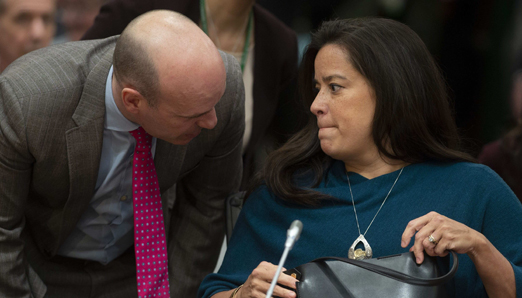
A great deal has been written about Jody Wilson-Raybould running to become our next Prime Minister. “Saint Jody,” people across the nation have written, “We want Jody as our next Prime Minister. We need a person of principle at the helm of our government.” ‘Ceptin, one thing.
Jody Wilson-Raybould doesn’t speak French. Not a word — showed absolutely no interest in learning Canada’s “other” official language when in Ottawa, the mother tongue of 7.2 million Canadians (that’d be 20.6% of Canada’s population), and the millions more for whom French is a fluent second language. In 2019 or beyond, what is the possibility that a majority of Canadians would vote for a unilingual English-speaking Prime Minister? And what would be the divisive Trumpian impact, if Canadians were to cast their ballot for a unilingual English Jody Wilson-Raybould as Prime Minister (at the head of the Green Party? — watch your back, Elizabeth May)?
Vidkun Quisling (on the left, above) was a Norwegian military officer and politician who nominally headed the government of Norway during the occupation of the country by Nazi Germany during World War II. The derogatory term “quisling” is usually meant to mean “traitor” or collaborator. He was shot for treason after the war.
As we wrote above, four months ago, Prime Minister Justin Trudeau was sitting pretty in the polls, and well on his way to re-election. Sunny ways had carried the day. In early May 2019, his political prospects would appear to be foundering. How did this change of circumstance occur?
A well-respected commenter, a former, much-beloved and admired elected official and Professor Emeritus in UBC’s School of Community and Regional Planning, wrote on VanRamblings’ Facebook timeline yesterday the following about Canada’s former Attorney General, Jody Wilson-Raybould, “A team player at her worst who played gender politics, who perceived herself to be ‘not answerable to the PM’, and figured she could act out.”
As this series about Jody Wilson-Raybould draws to a close, let us review Ms. Wilson-Raybould’s conduct over the past four months …
Following the resignation of Treasury Board President Scott Brison, Prime Minister Trudeau announced a Cabinet shuffle on Monday, January 14. In the week prior to the shuffle, Mr. Trudeau met with Jody Wilson-Raybould to tell her he was moving her to a newly-created, senior portfolio, where she would become the new Minister of Indigenous Affairs, allowing her free reign to redefine the state and nature of the relationship of Canada’s indigenous peoples to the federal government. Ms. Wilson-Raybould refused Mr. Trudeau’s assignment. One of VanRamblings’ correspondents wrote yesterday, “He should have fired her right then and there.” Instead, Ms. Wilson-Raybould accepted the post of Minister of Veterans Affairs. On February 12th, Ms. Wilson-Raybould resigned from her Ministerial post.
1. In leaking to the Globe and Mail the alleged PMO efforts to intervene in the SNC-Lavalin case while still a Cabinet Minister, one would have to ask, “Where would be the integrity in that?” And although she says she felt inappropriately “pressured” to suspend the criminal proceedings against SNC-Lavalin and instead have the firm pay a fine, the “pressure” turned out to be just 10 meetings and 11 phone calls over a four-month period. Some pressure! Importantly, at the end of the day she was still allowed to make the decision on SNC-Lavalin.
2. Following her resignation from Cabinet, Jody Wilson-Raybould accused the Prime Minister and PMO staff of “interference” on the SNC-Lavalin file, in the process creating a constitutional crisis that carried through the two succeeding months.
3. On March 6th, Ms. Wilson-Raybould said “Trudeau’s offer of Indigenous Services was like asking Nelson Mandela to administer apartheid,” going on to state, “My fear and disappointment is that despite sounding the alarm providing advice, pushing and challenging, sharing perspectives of lived Indigenous experience, providing a lens into the reality of being Indigenous, the federal government has fallen back once again to a pattern of trying to ‘manage the problem’ with Indigenous Peoples. In my view it is never appropriate or proper to have as a goal managing the challenges and the byproducts of colonialism. The goal must be to right the wrongs, to address the wrongs, to change patterns, transform the foundations and all that we do must be framed to achieve these goals.”
Subsequently, the nine remaining indigenous members of the Liberal caucus publicly expressed support for the Prime Minister, stating that “over the course of the past four years, Canada has seen a generational restorative change in the relations of Canada’s indigenous people’s to the federal government. We fundamentally disagree with Ms. Wilson-Raybould’s construction of the government’s accomplishments over the course of the past four years — or as Ms. Wilson-Raybould has stated, lack of accomplishments — in re-defining the relationship of Canada’s aboriginal peoples to the state.”
4. Ms. Wilson-Raybould has made the story about herself and has displayed no concern that she threw her fellow Liberals MPs under the bus, many of whom will lose their seats and their jobs because of her damning testimony against Trudeau and members of the PMO, and ongoing, vengeful conduct towards the Prime Minister.
5. As Attorney-General, Ms. Wilson-Raybould sought to appoint a conservative justice of Manitoba’s Queen’s Bench into the position of Chief Justice of the Supreme Court of Canada, an entreaty that was soundly rejected by the Prime Minister.
6. During her tenure as Attorney General, Jody Wilson-Raybould failed to appoint Supreme Court justices to fill the 48 vacancies on Canada’s high courts in the provinces and territories across Canada, and for her term as AG was consistently called out for failing to do so, all the while impeding the judicial process and the rights of Canadians to a timely hearing of charges leveled against them by the state, and arising from the Jordan ruling of the Supreme Court of Canada (mandating a maximum 30-month period for a case to be heard by Supreme Court justices in the provinces and territories), the creation of a circumstance that resulted in tens of thousands of cases being stayed or dismissed, with the courts having to release accused murderers, rapists, child sex offenders, and the worst of the worst among Canada’s criminal element.
Further, Ms. Wilson-Raybould failed to reverse the mandatory minimums legislation brought in by the Harper government, as stipulated as a priority in the mandate letter she was given by the Prime Minister upon being appointed Attorney General, on November 4, 2015.
7. Over the course of the past four months, Ms. Wilson-Raybould has turned to retired Supreme Court Justice Thomas Cromwell, long the most conservative member of Canada’s Supreme Court, for advice and counsel, refusing from the outset to meet with her fellow British Columbian, lecturer at UBC’s Law School when Ms. Wilson-Raybould was enrolled in the university’s law school programme, the retired Honourable former Chief Justice of the Canadian Supreme Court, Beverly McLachlin.
Again we ask, is Jody Wilson-Raybould a quisling? In substance and effect, has Ms. Wilson-Raybould’s public conduct this past four months, and longer, been at the behest of members of the Conservative Party of Canada? Have members of the Opposition directed or had a hand in Ms. Wilson-Raybould’s public statements about the Prime Minister, and the Liberal Party?
From the outset, journalists have asked, and politicos have wondered, “What is Jody Wilson-Raybould’s endgame?”
The answer to that would appear abundantly clear to anyone with open eyes, and to be perfectly frank would seem to be the only logical conclusion one could draw from Jody Wilson-Raybould’s public conduct over the course of the past four months: destroy the reputation of the Prime Minister and important members of the PMO staff, bury the prospects of the re-election of her (now former) Liberal caucus members so deep under the ground that they’ll never see the light of day again, paint herself as Canada’s new patron saint of principled Canadian politics, as Saint Jody the Saviour of All That is Right and True, and bide her time til the day when she can place her name forward as a candidate to become Prime Minister of Canada.
History may be unkind to Prime Minister Justin Trudeau — but there is no question that in the fullness of time, Jody Wilson-Raybould will not fare well, and 100 years from now her contribution to Canadian politics will be viewed as self-serving, destructive, disloyal and utterly at variance with the interests of Canada’s indigenous population, and the people of Canada.

 Oshawa Ontario-based dream pop group, Dizzy, winner of the 2019 Juno award for Best Alternative Album, Baby Teeth. Dizzy was also up for the Best Alternative Group Juno.