Category Archives: Web & Tech

#ArtsFriday | The Digital Revolution in Filmmaking

Human history, since time immemorial, has been undeniably marked by a series of revolutions that helped shape us as modern individuals.

Our whole concept of civilization is determined by a succession of consecutive turning points.

From the early Neolithic Revolution, 12,000 years ago, through the Industrial Revolution of the 18th century and the Jet Age of the 1950s and 1960s, our species has evolved enormously.

In the current age, the Digital Revolution — also known as the Third Industrial Revolution — is the continuous evolution from the previous models of analog, mechanical and electronic technologies to the transformative digital technology with which we have all become familiar in recent years (think: streaming).

In 1993, digital technology revolutionized cinema.

The highest-grossing movie that year was Jurassic Park, whose dinosaurs ironically represented an evolutionary leap. Audiences were wowed by those hyper-realistic digital effects — all six minutes of them.

Leading up to its release, the 2009 movie Avatar promised to be a record-shattering hit.

In order to capitalize on the blockbuster to the fullest extent, movie theatres around the world got rid of their creaky old film projectors and purchased sleek digital replacements.

While projection technology had been available for a decade, it took the promise of a digital smash hit to convince theatres to adopt it at a large scale.

Before long, digital filmmaking and digital projection had become the industry standard. While it was an expensive investment for theatres, it allowed them to be more nimble in what they screened.

“It’s not a surprise that this transition took place: physical film was particularly inefficient. It’s heavy and it’s expensive,” says University of California, Berkeley marketing professor Eric Anderson. “What was more surprising was how this affected the assortments [of movies] offered to consumers.”

“With digital,” Professor Anderson continues, “it’s easier to have time for niche films, because one employee can manage all the screens in a theatre, and can effortlessly switch between one movie and another with the push of a digital button. Digital technology also gives the theatres more flexibility to stream big blockbusters even more. In a study conducted recently, it was interesting that we found these two effects together.”

The very first fully digital film, Star Wars: Episode I — The Phantom Menace, was screened in Los Angeles in 1999. But it took time for theatres to switch over, in part because the new equipment was so expensive.

A single digital projector could cost as much as $150,000 — an eye-popping sum for a theatre with eight screens to convert.

As a result, Anderson says, theatres “fought the change as much as they could until it was shown to them very clearly that the economics made sense.”
Initially, there was little urgency.

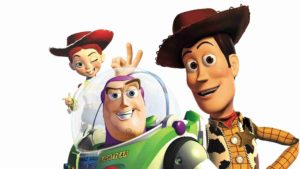
From 1999 until the early 2000s, relatively few films were released in a digital format — mostly big-budget offerings, such as Star Wars and Toy Story 2.

Converting came with a host of benefits: the film era required the creation of costly physical copies of movies. The number of times per day a theatre could screen a hit movie was limited by the number of copies they had.

Film also posed logistical challenges: each movie required several reels that were heavy and hard to manipulate, and the process of switching between movies on a projector was time-consuming.

As a result, theatres tended to show only one movie per screen each day. Digitization changed all that, making it effortless to offer more movie variety to consumers.

Still and all, the financial crisis of 2008 continued to slow the transition to digital by making it difficult for theatres to borrow the capital they needed to upgrade their equipment.

But Avatar “acted as a rallying point to get the industry to transition, which James Cameron pushed very hard for,” Anderson explains.

As the highest grossing movie of all time, Avatar was also the first 100% digitally photographed “film” to win an Academy Award for Best Cinematography.

Not since George Lucas’ Attack of the Clones had a director tried to fundamentally change the cinema-going experience and, love him or hate him, James Cameron meant to do just that.

Cameron immersed audiences in the alien world of Pandora by incorporating ground-breaking 3D along with the digital Fusion Camera System to capture his vision, ushering in the final shift towards digital cinema for the majority of movie productions.

From that point on, the conversion process picked up momentum; 90% of movie screens worldwide had gone digital by 2015.

The true effects of the digital transformation became apparent and overall movie variety increased. Smaller theatres with four or fewer screens saw the most noticeable increases,  about 11%. In larger theaters, the percentage of screens devoted to blockbusters increased during weekend hours, but decreased on the weekdays, resulting in greater variety during these less-popular times.

In other words, theatres prioritized blockbusters during peak periods and “offered slightly more variety or more niche films during off-peak periods,” Anderson observes. “It’s a more efficient use of their screen space, given the ebb and flow of consumer demand.”

As filmmaker John Boorman noted in a 2023 article in The Guardian, “Steven Spielberg’s The Fabelmans was the only Best Picture Oscar nominee this year shot on celluloid.”

“For more than 100 years, films have been made of film,” Boorman observes. “Now, instead of a magazine being loaded on to the camera, a card is inserted that electronically records whatever the camera sees.”

“Today, most ‘films’ are made electronically,” says Boorman. “No film is used in the making of them — not the shooting, editing or projection. So they can’t — or shouldn’t — be called films.”

Change, as most of us know, is constant, and inevitable, if in the eyes of cinema purists, “regrettable.”
Perhaps the time has come to change the language we employ to describe what we see at the cinema, or on our screens at home.

Unless a new picture is actually made of film, it should not be called a film.

Perhaps, going forward, we should refer to it as a

Arts Friday | Netflix Takes Over the Oscars in 2021

Netflix to overtake the Oscar ceremony in 2021

In 2019, Netflix landed its first Oscar nomination for Best Picture with the release of Alfonso Cuarón’s critically acclaimed Roma. A year later, the streaming service was leading the field with 24 Oscar nominations, including Best Picture nods for both The Irishman and Marriage Story.
As Netflix’s impact on the world of cinema became increasingly undeniable, the younger and more diverse film academy was no longer prepared to shun the streaming service as the old Hollywood guard tried to do. Earlier this year, on April 28th, responding to the changes that COVID-19 had wrought, the Academy of Motion Picture Arts & Sciences removed the stipulation that a movie must be shown in a theatre before it could become eligible for the coveted Best Picture Oscar nomination.
And thus the stage was set for an Oscar ceremony in 2021 the likes of which no one will have ever seen before, with at least seven Netflix releases eligible for a Best Picture nomination, with each of those films set for Oscar nominations, ranging from Best Actor and Actress, Supporting Actress and Actor, to Best Director, Music, Sound and technical awards.
Today on VanRamblings, the Netflix features set to dominate Oscars 2021.

For the upcoming Academy Awards — delayed due to the pandemic until Sunday, April 25th — Netflix has pulled out all the stops. Already streaming, there’s Spike Lee’s Best Picture contender Da 5 Bloods, Gina Prince-Bythewood’s well-mounted action thriller The Old Guard, and Charlie Kaufman’s screenplay contender, I’m Thinking of Ending Things.
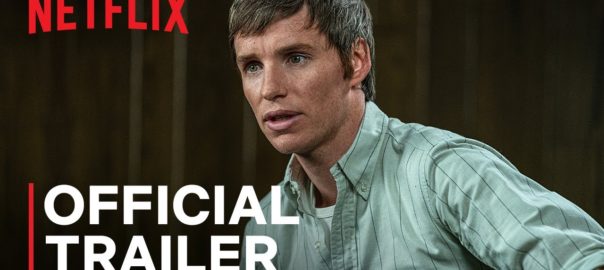
And, available today on Netflix, there’s writer-director Aaron Sorkin’s The Trial of the Chicago 7 which is, as Variety lead critic Owen Gleiberman writes, “a knockout, and the rare drama about the 1960s that’s powerful, authentic and moving enough to feel as if it were taking place today, a briskly paced and immersive film bristling with Sorkin’s distinctive verbal fusillades, a cinematic powder keg of film with a serious message that seamlessly blends a conventional yet compelling courtroom procedural with protest reenactments and documentary footage, the film offering an absorbing primer of a ruefully meaningful period in American history.”

Due to arrive on Netflix on Tuesday, November 24th — on the eve of American Thanksgiving — director Ron Howard’s big budget film adaptation of J.D. Vance’s autobiographical best-seller, Hillbilly Elegy offers a powerful account of growing up in a poor Rust Belt town, that also provides broader, probing insight into the struggles of America’s white working class.
A passionate and personal analysis of a culture in crisis, Glenn Close and Amy Adams are at the centre of Howard’s film, and solid prospects for Best Actress and Best Supporting Oscar nods. Howard will be in the mix, as well.

Netflix will release David Fincher’s Mank in select theatres in November before the black-and-white film begins streaming on December 4th.
The Hollywood-centric period piece follows alcoholic screenwriter Herman J. Mankiewicz (certain Best Actor nominee Gary Oldman) as he races to finish the screenplay for Orson Welles’ 1941 masterpiece Citizen Kane. That classic picture was fraught with behind the scenes drama, as Mankiewicz and Welles argued over credit and who wrote what, which became even more important once the film won the Oscar for Best Original Screenplay.
The original script for Mank was written by Fincher’s father, Jack Fincher, so this project certainly means a lot to the filmmaker. Mank boasts a running time of 2 hours and 11 minutes, so it won’t be quite as long as Zodiac or The Curious Case of Benjamin Button, not that Fincher ever wastes a single frame. The film is expected to be a major awards contender for Netflix.

Ma Rainey’s Black Bottom. George C. Wolfe directs, Denzel Washington produces, and Oscar-winner Viola Davis (Fences) stars as Ma Rainey in Ruben Santiago-Hudson’s adaptation of the hit August Wilson Broadway play. The late Chadwick Boseman and If Beale Street Could Talk star Colman Domingo play members of Rainey’s ’20s jazz band.
Awards prospects: Ambitious trumpeter Levee was 43-year-old Boseman’s final role before succumbing to his private battle with colon cancer in August; he looks rail thin in film stills. Posthumous Oscars went to Heath Ledger (The Dark Knight) and Peter Finch (Network) among others. In this case, with the beloved Black Panther star also in the running for his supporting role as a U.S. Army soldier in Vietnam in the Spike Lee joint, Da 5 Bloods, many believe that it’s likely Boseman will wind up in the Best Actor category for Ma Rainey, with Davis as Best Actress. Like Mank, the elaborate period setting should be attractive to Academy craft branches.
Release date: In theatres early December, streams on Netflix December 18.

The Midnight Sky, director-star George Clooney's new sci-fi film for Netflix

Oscar-winner and Hollywood icon George Clooney directs The Midnight Sky, a sci-fi thriller with a script by Mark L. Smith (The Revenant) based on the Lily Brooks-Dalton novel about an Arctic scientist (Clooney) attempting to warn a NASA spaceship astronaut (Felicity Jones) not to return to doomed planet Earth. Awards prospects: Netflix took advantage of the London Film Festival this month (October 2 – 18) with a tribute to Clooney, complete with clips. Critical reaction will determine whether The Midnight Sky will figure in the Oscar sweepstakes, but Clooney (Syriana) has delivered in the past, as has Oscar-nominated Jones (Theory of Everything).
Release date: In theatres early December, Netflix début to be announced.

Music Sundays | Billie Eilish | The Beatles for a New Generation

Billie Eilish, youngest ever multiple Grammy award winner, including album of the year

On March 29th of last year, 17-year-old Billie Eilish entered the public consciousness, and the Billboard charts, with her self-produced début album, When We All Fall Asleep, Where Do We Go?, the 2nd-biggest album of 2019, and the third-largest streaming week for an album by a woman, with six Billboard Hot 100 top 40 songs: When the Party’s Over, Bury a Friend, Wish You Were Gay, Xanny and Bad Guy, the last of which became her first number one single stateside, in the U.K., Mexico, and Australia.
The rest, as they say, is utterly unique, groundbreaking rock ‘n roll history.
Billie Eilish’s accolades include 5 Grammy Awards, 2 American Music Awards, 2 Guinness World Records, 3 MTV Video Music Awards, and one Brit Award. Eilish is the youngest person and second person ever to win the four main Grammy categories — Best New Artist, Record of the Year, Song of the Year and Album of the Year — in the same year. No mean feat that.
The daughter of teacher, actress, and screenwriter Maggie Baird, and construction worker and part-time actor, Billie Eilish and her older brother / producer and co-songwriter, Finneas O’Connell hail from decidedly working class roots. Both parents encouraged the siblings — who were homeschooled — to express themselves and explore whatever they wanted, including music, art, dancing and acting.

In October 2015, at age fourteen, Billie recorded the song Ocean Eyes, co-written and produced with Finneas, after his sister’s dance teacher asked them to record a song for a dance routine. In 2015, releasing the song on SoundCloud, and the next year on YouTube (at present, Ocean Eyes has 293,733,254 views), coinciding with a deal Finneas had made to sign Billie with Apple Music, Billie’s budding music career began to kick into high gear.

In March 2017, Billie recorded songs for the soundtrack to the Netflix series 13 Reasons Why — one song, Lovely, recorded with Khalid, was certified platinum in North America — and that same month, Billie was showcased at the South by Southwest music festival. In February 2018, Billie, Finneas and their parents embarked on the Where’s My Mind World Tour, where they débuted the songs constituting the tracks on Billie’s first album. By January 2019, Billie reached an unprecedented one billion Spotify streams.

Billie kicked off her When We All Fall Asleep World Tour at the Coachella Festival in Indio, California in April 2019, travelling across the U.S. and Canada, and then the globe, before returning to the Americas and concluding her world tour on November 17, 2019 in Mexico City.

Why does VanRamblings write in the headline that Billie Eilish (and her brother Finneas) constitute the new Beatles? Watch the videos directly above, and feel the emotional reactions of Billie’s fans, how those in attendance know the lyrics to the songs, and are clearly moved. In more than 50 years writing about music, aside from the reaction to the Beatles that could be observed in the mid-1960s, no other artist or group has come along with stronger album sales, and a larger, more devoted fan base. Although radio doesn’t quite know what to do with her, Billie Eilish is making her own career, and together with Finneas, making decisions about her career. And, fortunate for all of us, in the summer and fall of 2020, that means Billie’s full-throated support for the Democratic Party in the United States, and the candidacy of Joe Biden, no matter the impact on her career. Woebetide the right-wing, Trump-supporting political candidates and QAnon-supporting conspiracy theorist journalists who take Billie Eilish on.

star.jpg star.jpg star.jpg

And, finally for today, we’ll leave you with a bit of human-scale Finneas and Billie, and all the painstaking work the two of them put into recording the first track for the When We All Fall Asleep album release. When you watch the video below, you’ll also come to realize that Billie and Finneas are, very much, the 21st century John Lennon and Paul McCartney for our new age.

Holiday Season Gift Giving | Hacking Amazon to Save Big Bucks

Amazon Prime delivery boxes

With the holiday season coming up, gift giving is on the minds of a great many people, gifts for family, friends and colleagues, and gifts for oneself.

Given the uncertain nature of the economy and the scarce dollars available to most folks, a bargain is always appreciated — and make no mistake, with Black Friday coming up on November 29th and Christmas sales at the ready across our land to entice you to spend, there’ll be plenty of bargains to rein in whatever disposable income you’ve set aside for gift acquisition.

Retail online sales, if projections are correct, will top $40 billion Canadian this holiday season, with total world sales expected to exceed $3.5 trillion for 2019 — most of which monies will be spent acquiring products made available on the Amazon website (or app, as the case may be). Latest figures published by Statistics Canada indicate that 3 out of 5 Canadians do most of their non-food shopping on the Amazon.ca website — cuz it’s less expensive than the retail stores as well as reliable, and if you’ve acquired an Amazon Prime membership, goods delivery is free within 12 – 36 hours.

Amazon Warehouse categories

If you’re not in the market for anything in particular — say you’re just looking for gift ideas or killing time during your lunch break — you can get to the Amazon Warehouse Deals landing page by heading to Amazon.ca and search for “Amazon Warehouse” or “Warehouse Deals.” From there you can browse the categorized listings just as you would at any online retailer.

Amazon Warehouse Deals

Most people who shop on Amazon, though, know exactly what they’re looking for. If you already have something specific in mind but want to see if there’s a discounted Amazon Warehouse option available, this is where your sleuthing, money-saving skills come into play, saving you up to 50%.

The bottom line: why pay full retail when there’s a perfectly fine — and much cheaper — alternative?

In much the same way that VanRamblings does most of our clothes and shoe shopping at consignment stores (Turnabout is our current favourite, where we save up to 80% on new sweaters and jackets), the Amazon Warehouse has perfectly fine ‘used’ goods at 50% off or better savings.

Dash Compact 1.2 Litre (2 Quart) Air Fryer

For instance, we recently acquired a Dash 1.2 L Compact Electric Air Fryer (which we’ll write about later in the month) for $42, when the retail price on Amazon.ca and at Walmart was a much steeper $101.67, plus tax. The Dash Air Fryer arrived in the original box, in pristine condition, in 48 hours.

All we did when arriving on the Amazon web page for the Dash Air Fryer was scour the page, keeping our eyes peeled for words like “New & Used,” “Buy Used,” “New & Used Offers” or just plain “Used” — and with the click of a couple of buttons, our ‘new’ Dash 1.2 Litre Compact Air Fryer was on its way, at a cost saving of pretty darn close to 60 per cent.

Why’s Amazon Warehouse stuff so cheap? Just like other major retailers such as Walmart or Costco, Amazon takes in a lot of customer returns, which it can no longer sell as new-in-box, regardless of why the buyer sent the item back or whether it’s even been opened.

That’s why everything Amazon Warehouse sells is listed as used, even if the product itself has never been touched. Regardless of its condition, used stuff is just worth less — sometimes a lot less. And that, most often, is very good for you.

Amazon delivery box

Amazon has five different grades it assigns to items it resells. Here they are with brief explanations of what Amazon means by them.

Renewed: This is the highest grade an Amazon Warehouse item can receive and is on par with what other companies might call “refurbished.” Renewed items have been closely inspected and tested and determined to look and function like new and come with a 90-day replacement or refund guarantee.

Used, Like New: No noticeable blemishes or marks on the item itself, although the packaging may be damaged, incomplete or missing all together. All accessories are included, and any damage to the package will be described in the listing.

Used, Very Good: Item has been lightly used, with minor visible indications of wear and tear, but otherwise in good working order. Packaging might be damaged, incomplete or the item repackaged. Any missing accessories will be detailed on the listing.

Used, Good: Item shows moderate signs of use, packaging may be damaged or the item repackaged and could be missing accessories, instructions or assembly tools.

Used, Acceptable: Very well worn, but still fully functional. Major cosmetic defects, packaging issues and/or missing parts, accessories, instructions or tools.

How to choose the right grade? If there are multiple listings with different grades available for the product you want to buy, think about what you’re going to use it for. If it were something purely functional and you couldn’t care less about its cosmetic condition, like hair clippers or a cordless drill, our suggestion: go with the cheapest option, period.

Honestly, a low enough price on just about anything can woo most folks into dealing with some scratches or scuffs. Not to mention, Amazon tends to err on the side of caution, marking items as Good or Acceptable that the average person would consider Very Good or Like New. One of the benefits of purchases made through Amazon Warehouse is that

Amazon’s standard 30-day replacement or refund return policy applies, which comes in handy if you wind up with a lemon. Amazon does caution that because these products are considered used they don’t come with the manufacturer’s original warranty — but you can, in fact, register the product online with the manufacturer for the full two year, or better, warranty.

And remember: Amazon Prime members still get free shipping. Subscribing to Amazon Prime won’t get you a bigger discount on Amazon Warehouse Deals, but you’ll get free shipping just as you would for any other Prime-eligible item, which is why it remains a good deal, at $90 Canadian a year to sign up for Amazon Prime (which also gives you access to Amazon Prime TV, for most folks a pretty good deal when you get right down to it, and applicable to all Amazon Warehouse purchases, as well).

As above, most stuff you buy through Amazon Warehouse ships and arrives within the same one- to two-day window you get with new items, although some orders do take longer to fulfill. If that’s the case, the extra handling time is usually indicated on the listing, so you know what to expect.

Of course, Amazon will be participating in this year’s big Black Friday and Cyber Monday sales too, with some deals starting as early as Nov. 22nd, with all current Amazon.ca Black Friday deals available here.