Category Archives: Stories of a Life Redux

Stories of a Life | Redux | Jude, Megan and Me | Movies | 80s and 90s

Cinema | Megan and Jude Tomlin, and their dad, love cinema, love the movies, stories of a life

Film has always been a central, organizing force in my relationship with both my daughter, Megan, and my son, Jude.

Our collective love of the cinema, attending film festivals and discussing what we saw following the various screenings we attended (usually at the Fresgo Inn on Davie, which was alive no matter the time of night or early morning) was, over the years, a central feature of our relationship — the relationship between son and daughter, and dad — that allowed us to delve deep into discussions of the meaning of life, and our collective responsibility to work towards creating a fairer and more just world for everyone.

Heart and deep caring for humanity was at the centre of our love of film, and at the centre of our loving familial relationship, informing the choices we made about how we would conduct ourselves in the world, and the projects and causes to which we would devote our time and our energies.

In the 1980s, when Cathy and I were going through a rancorous divorce, film brought us together.

When in Seattle — which we visited frequently, always staying on the non-smoking 33rd floor of the Weston twin towers — in 1984, we took in a screening of Garry Marshall’s The Flamingo Kid — the story of a working class boy (Matt Dillon) who takes a summer job at a beach resort and learns valuable life lessons.

Megan was seven years of age, and Jude 9 — both were uncertain about the efficacy of our trip south (without their mother’s permission — we called her upon arriving at our hotel), but the screening alleviated and, finally, repaired any of their concerns, and all went well that weekend. Fortuitously, too, upon our return, the divorce proceedings inexplicably moved forward into a more reasonable and thoughtful direction, reflective of all our collective concerns.

Whenever there was “trouble” in our relationship — generated, most usually, by their mother — film served to salve the wounds of dysfunction, allowing us to find our collective centre while healing the wounds that rent all of our lives during a decade-long, million dollar custody dispute.

Film spoke to us, made us better, took us out of the drudgery of our too often protean daily and, more often, troubled lives, and engaged us while putting our lives into a broader and more human scale perspective. Never once was there a film that we saw together when we didn’t come out of the screening feeling more whole, and more at one with ourselves and the world.

Such was true, at the screenings of Glenn Close and John Malkovich’s Dangerous Liaisons over the holiday period in 1988, or months later at the screening of Kevin Costner’s Field of Dreams, which we took in at the Oakridge Theatre, a favourite and comforting cinema haunt of ours.

When Megan wanted some “alone time” with me, it almost always revolved around watching a film together, although as Megan matured (and as her love for film matured), Megan made it plain that she was present in the theatre to watch the film, not “share time” with me, choosing always to sit in a whole other section of the theatre (it drove her crazy in the times that we were sitting together in a theatre that I would check in occasionally with her, looking at her to determine how she felt about the film — talking during a film was an unforgivable sin, so that was never going to happen).

Some days, Megan would call and say, “Dad, take me to a film.”

And because I was a film critic at the time, and had a pass to attend at any cinema in North America, off the two of us would traipse to see Kathy Bates’ Fried Green Tomatoes (1991) or Johnny Depp’s Benny & Joon (1993) at the old 12-theatre complex downstairs in the Royal Centre mall.

Other times, post dinner and after Megan had finished her homework, I’d say to Megan out of the blue, “I’m heading out to attend a screening of a film. Do you want to come along with me?” Megan would ponder my question for a moment before asking, “Which film?”

In 1991, one very long film screening we attended was Kevin Costner’s directorial début, Dances With Wolves, about which we knew nothing other than it starred one of our favourite actors, and off the two of us went.

At screening’s end (Megan and I actually sat together at this particular screening, which took place in the huge Granville 7 Cinema 7, because the preview theatre screening room was just packed), Megan turned to me, and said, “Dad, I knew this was going to be a great film.” And it was. “And, you know what else? It’s going to pick up a raft of Oscars this year, too, and be considered one of the, if not the best, films of the year.”

Jude and Megan also attended film festival screenings with me.

Almost inevitably, Vancouver International Film Festival founder, and co-owner of Festival Cinemas Leonard Schein was present with his wife Barbara, and at a screening’s end, Megan would make her way over to wherever Leonard and Barbara were sitting to enquire of him whether or not he intended to book the film into either the Varsity, Park or Starlight.

Following screenings of Neil Jordan’s 1992 putative multiple Oscar award winner, The Crying Game or, that same year, Baz Luhrmann’s Strictly Ballroom, Megan marched over to Leonard, and asked him boldfacedly, “What do you think?”

When Leonard indicated that he thought the films were not quite his cup of tea, that both films would have difficulty finding an audience, and that it was unlikely he’d be booking either film into one of his cinemas, Megan lit into Leonard with a passion and a vehemence I had rarely observed coming from her, saying …

“Are you out of your mind? Strictly Ballroom and The Crying Game are wonderful films, and just the sort of films that not only should you book, but that you MUST book — these are both groundbreaking films that will only serve to reinforce your reputation as an arts cinema impresario, but will also make you a tonne of money, and we all know that you’re all about the money. Either you book these films into The Varsity, or believe me when I tell you that there’ll be hell to pay when you see me next.”

And with that, Megan marched off.

At the 1990 Vancouver International Film Festival, I’d caught a screening of Whit Stillman’s directorial début, Metropolitan, in preview, and knew that this would be a film Megan would just love (and be astounded by, at the revelation of one of the characters, mid-film).

I made arrangements to pick Megan up from University Hill Secondary at 3pm sharp on the day of the festival screening, we drove downtown, found a parking spot, and rushed over to The Studio Cinema on Granville to catch the 4pm screening of Metropolitan — which as I had predicted, Megan loved.

In early December 1993, on a particularly chilly and overcast day, at 10am in Cinema 2 at the Granville 7 theatre complex, I caught a screening of Jonathan Demme’s groundbreaking new film, Philadelphia — a film about which I knew little, and a film that knocked me out (along with the handful of film critics in attendance at the theatre for the screening).

Emerging from the theatre just after noon, making my way onto Granville, I looked for the nearest telephone in order that I might call Megan at school.

I called the office at University Hill Secondary, and asked them to find Megan and bring her to the phone. When Megan asked, “Dad, is everything all right?”, I told her about the film I had just seen, and that when it opened in January, I wanted to take her and Jude to a screening at the Granville 7. We talked about the film for a few minutes, with her saying about 10 minutes in, “I’m holding up the school phone, and calls coming in. Let’s get together after school. Come and pick me up, and we can continue our conversation. I’ll see you then, Dad. I love you.”

There are gifts we give our children. From my parents, it was what would emerge as a lifelong love for country music. For Jude and Megan, my gift was a love of music, a love of the ballet, and an abiding love for film.
Stories of a Life | Redux | Raised By My Aunt Freda

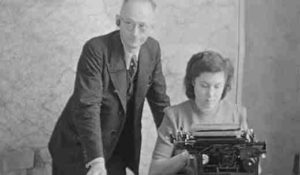
My aunt Freda was a vagabond, but a vagabond who typed at 80 words a minute, and took shorthand at up to 120 words a minute — her stenographic skills much in demand across all of Canada, for many many years.

For 50 years, my aunt traveled the country — there was no city or medium-sized town where she didn’t work, and given her skill set, jobs were easy to come by, references at the ready from previous employers.

My aunt would work two or three jobs a year for two to three months each time — in St. John’s Newfoundland (the only place she ever worked twice), Regina, Edmonton, Hamilton, Windsor, Saskatoon, Halifax and Victoria.

My aunt Freda would write to me from these far flung places across Canada where she’d taken employment, promising always to return in “just a few weeks.”

Vancouver's crown jewel, the 1000 acre Stanley Park, this photo taken in 1958
Vancouver’s crown jewel, the 1000 acre Stanley Park, the photo above taken in 1958

Throughout my young life, my primary caregiver was my aunt Freda.

Given that my mother, almost throughout the entirety of my life, worked three jobs at the same time, 16 hour days six days a week and a 24-hour day on the seventh day, I rarely saw her, she simply wasn’t a presence in my life or in my home, with the exception of summer, when we — my sister, my mother and I — would travel for a two-week vacation to wherever my aunt was located.

During the first 10 years of my life, my Aunt Freda cared for my sister and I, fed us, bathed us, took us to Stanley Park in the years we lived in Vancouver, took us on summer vacations, made sure that we enjoyed ourselves, and would learn about the world during the days, weeks and months that she cared for us, and otherwise provide love for the both of us.

Generally, my aunt would stay in our family home three times a year, sometimes more, for an average of six weeks on each visit.

In fact, my Aunt Freda was the only person who ever told my sister and I that she loved us. My father didn’t do that or even hint at it, love seeming to be a word not in his vocabulary, and most certainly my mother never told my sister and I that she loved us — although I think she showed it in many ways — and neither did anyone other than my Aunt Freda.

Aunt Freda was, for all intents and purposes, my mother — that’s the role she chose to play.

I was her favourite — any depth of insight into life, I gained from her.

Our conversations lasted hours — she wanted to introduce me to the world, to make me aware of my environment, to help me to see that I was part of a human collective of those who lived around me, and as the years went by, farther afield, as she helped me to see that I was part of the world community.

In the summer months, as I write above, my mother, sister and I would travel to whichever western Canadian city she was working in — in the summer, she always took employment in an easily accessible by rail western Canadian city .

My mother, sister and I would stay with her in her small, one-room “apartment” (more like a tiny hovel, but still), in order that we might attend Klondike Days in Edmonton, or the Calgary Stampede, or the Red River Exhibition in Winnipeg, or whichever town had a fair that summer that my aunt felt was recommendable and worthy of my family — always sans my father — visiting and staying with her, always enjoying our truncated time together.

Passenger rail train travel in the 1950s and 1960s with Canadian National Railways

Of course, part and parcel of that was the train ride to and from whichever western Canadian city we were visiting, but that’s a story for another day.

When my family — including my father — moved to Edmonton in the summer of 1959, I spent the month of July in High River, Alberta staying with my grandfather on his massive family farm, and much of August in Lethbridge with my aunt Anne, uncle Dave and their children, my cousins, before moving into the rental home my parents had found for us in Edmonton, where I began Grade 4 in September 1959 — a fortuitous circumstance that would change my life.

In the late 1950s, Alberta had legislated an academic programme of excellence for students into which I was enrolled. In British Columbia, the province had adopted two educational streams: academic and vocational.

If you happened to live in a working class area of Vancouver, you were almost automatically streamed into the vocational programme.

When I returned to Vancouver for Grade 7, in the late summer of 1962, as I had been enrolled, and done well in Alberta’s Enterprise Programme of Excellence — as it was called at the time — upon my return to Vancouver to attend Templeton Secondary school, of all my friends with whom I had attended Grades One through Three, I was the only child / student who now found himself enrolled in the academic programme at Templeton.

I recall at the graduation ceremony in 1968, how disappointed many students were to find that graduating in the vocational programme did not make them eligible for entry into college or university, that they’d have to start all over again.

Rank class discrimination, that’s what it was plain and simple — kids came from poor families, and they’d become the “worker bees” as we were so often told while attending Templeton Secondary.

Two stories about my aunt, both of which are Edmonton-based.

Borden Park, in northwest Edmonton, at 148 acres one of the city's largest parks
Borden Park, in northwest Edmonton, at 148 acres one of the city’s largest parks

In the summer of 1960, after my family had moved to north Edmonton from the inner city, on my August 11th birthday that year, my parents had taken my sister and I down to play at Borden Park, in northwest Edmonton, not too far from where we lived, a massive green space in that area of the city, sometimes used as fairgrounds, with a community centre, tennis courts, a pool, and two outdoor pools, one for younger children, another for teenagers and adults.

The day was sunny and bright, the sky a deeper and richer blue that I can ever recall having seen prior to that date.

As it happened that year, my aunt Freda had not come to stay with us during the first seven months of the year — her services were required in St. John’s, as she found herself working on an inter-governmental project of some great import to both the province and the federal government. Of course my aunt wrote to me frequently, but beautifully handwritten letters aside, I missed the dickens out of her, and in my letters to her, I begged her to come and stay with us in Edmonton.

But it was not to be, for all the reasons she explained in her correspondences.

A roundabout, a sort of self-propelled merry-go-round you used to find on many playgrounds

While playing on the park’s roundabout, along with a number of other children pushing the roundabout to go faster, despite the hot sun beating down from above, I felt a chill run through my body, a pang that was so chilling as it shot through my veins that I alighted from the roundabout, and moved away onto a quieter green space nearby, just standing there shivering, for a moment wondering what was happening to me.

Turning away from the screaming children on the roundabout I began, alone, to walk north, away from my sister. Neither my younger sister Linda nor I had seen my parents in awhile, who’d told us they had some business to attend to, that we’d be fine in their absence, and I was to take care of my sister Linda.

I continued to move north along the green grasses, at first slowly, hesitatingly, when looking off into the far distance, I saw three figures walking closely together, indefinable figures, the sun obscuring my vision, the distant figures almost apparitions, as another pang of cold shot through my body, at which point I began to run, to run faster in the direction of the three apparitions than I had ever run in my life, because I knew who the middle person of the three was, even if I could not properly see who it was.

And I began to cry, running across the green field sobbing, running as fast as I could in the northerly direction of the three figures who I could not quite make out, but I knew were my parents and my aunt, and I ran and ran and ran, tears now gushing down my cheeks on that 10th birthday summer’s afternoon in August of 1960, on a day I will never ever forget.

And when I was upon my parents and my aunt, I jumped into my aunt’s arms, wrapping myself around her, my head on her right shoulder, the two of us holding each other as tightly and closely as we could, both of us now crying, my parents standing back in wonderment, their faces lit up smiling.

Placing me back on my feet, my aunt looked at me and said, “Raymond, I have arrived in Edmonton just this day, only an hour or so ago, so that I could be here for your birthday, to take you and your parents and Linda to dinner tonight. And I have presents for you, as well, which I will give you when we return to your home, and before we go to dinner tonight.”

1960: The Give-a-Show 8mm projector, and a portable Underwood typewriter

The presents? There were two, as promised: an Underwood typewriter that would allow me to type ever longer letters to my aunt as she found herself in some far flung location in Canada — with the facility to type easily and well, a salutary talent and much-used skill I employ to this day — the second present, a toy 8mm movie projector that both reinforced my love for film, and a device that would bring me much joy in the months to come.

Running across that green field in Borden Park on the day of my 10th birthday resides in me still as a much cherished event in my young life, making me aware, if I was not already, that there are more than three dimensions in our existence — because I knew that my aunt was in the park minutes before I saw her and ran into her arms, when she told me she loved me, as I knew she did, and as I loved her.

My aunt stayed with my family to the beginning of my Grade 5 school year at Eastglen Elementary School, after which she was off again, this time to Saskatoon, where she worked through until February, when she returned to Edmonton for three weeks, then after traveling back to Saskatoon, where my mother, sister and I would spend the better part of July 1961 with her.

In the winter of 1962, my aunt made one of her now more infrequent visits to stay with my family, my mother working three jobs still, my father working at the Post Office, my sister and I alone at night.

One near frozen mid-winter February evening, after making and serving dinner to my sister and I, a dinner almost needless to say in which a delicious salad was featured prominently in the dinner — having arranged with a neighbour for babysitting for my sister, my aunt asked me if I’d like to go to see a film with her on the south side of Edmonton, near the University of Alberta campus.

Of course, I said yes.

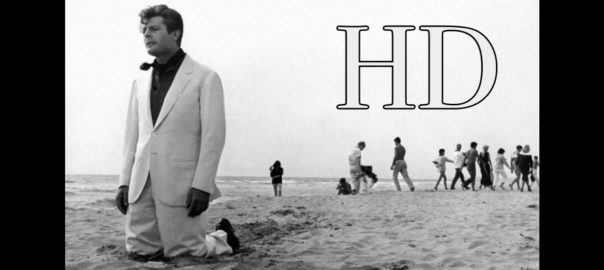
That evening, I saw my first foreign film, my first Fellini film, and a film that would go on to win the Best Foreign Language Film Academy Award late the very next month: La Dolce Vita, a film I fell in love with, as did my aunt, a film my aunt and I talked about all the way home on the bus, a film that began my life long love affair with sensuous European women onscreen, with foreign language & world cinema.

In all the years of my young life there was love in my life only when my aunt Freda would arrive to stay with us in our home. Not until I met Cathy in late 1969 did I feel love from anyone other than my beloved aunt Freda.

My aunt remained a fixture in my life through all the years of my attendance at university and throughout the years of my marriage, my aunt Freda the woman I look upon as my “real” mother, the mother who loved me, and cared for me, who knew me better than any other person in this world, and the person — along with each of my two children — I will always love most.

Stories of a Life | Redux |
A Mexican Adventure

Simon Fraser University in the 1970s

I loved university. In the 1970s, I loved attending classes at Simon Fraser University, talking hours on end with classmates sharing obscure insights into arcane literature, or why anarchism is the most humanist political philosophy, or spending hours in the library, or finding some quiet corner to type out the dozens of essays that were due each semester.

I was so curious about the world around me, so committed to learning everything I could on any given subject presented to me by my various approachable and erudite professors and radicalized teaching assistants, in the books I was reading or from folks in the pub at whatever stage of their university career, who over a beer would good-naturedly engage with me in philosophical arguments, whatever the topic of the moment.


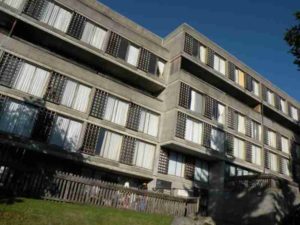
Louis Riel House family student residence at Simon Fraser University on Burnaby Mountain, circa 1972

Attending classes and living at Louis Riel House — sometimes not leaving Burnaby Mountain for months on end — attending Simon Fraser University was for me the happiest and most rewarding time of my life.

Not so much for Cathy, my long-suffering wife.

Cathy made no secret of the fact that she wanted to get away, to explore new lands, to be adventurous and anonymous thousands of miles away.

In February 1972, I was enrolled in my 5th consecutive semester at SFU, having identified my areas of interest for my studies — political science, sociology and anthropology, part of SFU’s radical PSA department — as well as English literature.

Much to my astonishment, I was achieving straight A’s in school, my grade point average past my first year 4.0, and in this fifth semester I was on a roll, most of my course work completed by early February, as I prepared to ready myself with the reward of five more A’s, bursaries and scholarships, and further down the academic road enrollment in a Master’s programme.

Arriving home mid-afternoon Tuesday, February 8th, 1972, opening the door and walking into our student apartment, Cathy standing in the living room, rather than approaching me to give me a kiss, she stood stock still, looking down, then looking up and directly at me, and said,

We’re leaving for Mexico next Monday, for two months.

Get your head around it.”

Cathy and I traveling along the Oregon coast on our way to Los Angeles, and then Mexico
Cathy and I traveling along the Oregon coast, headed to California, and then Mexico

I knew there was no arguing with her about her dictum. Cathy had sacrificed so much for me that it was quite clear: it was her turn now.

The next Monday morning we jumped into our 1970 Datsun 510 — a wedding gift from her mother. Hours later we found ourselves barrelling down the coast of Oregon heading towards Los Angeles, where arrangements had been made to stay with our friend, Bachi — with whom I had attended almost all my classes my first four semesters, and who was my best friend, Manuel Vittorio Esquivel, handsome, swarthy, adventuresome, and the best friend anyone could wish for.


While in Los Angeles, Cathy  and I listened to KRLA, southern California’s rock ‘n roll giant

Cathy didn’t like driving, so I drove the entire 1500 miles (I love driving!) to our L.A. destination, arriving two days after we’d left our Burnaby Mountain home, as we found our way to the Chicano area of Los Angeles, a Latino and Latina East L.A. of boom boxes and low-riders, a vibrant Mexican community with which we fell in love, as we did Bachi’s mother’s cooking — eating mole chicken and lime-cilantro rice for the first time while consuming gallons of fresh-squeezed orange juice available at farmer’s markets in two quart containers, for only a dollar, driving along the freeways in the jasmine-scented night air, KRLA radio at full volume blasting into the warm night air, free and in love, and enjoying the time of our young lives.

Santa Monica, California
The sunny open air shopping mall located in wealthy, beach-fronted Santa Monica

All was not perfect, though.

One afternoon while awaiting dinner and sitting in the living room, Bachi’s 18-year-old sister, Maria — one of the most beautiful and self-possessed young women I’d ever met, who was enrolled in her second semester at a nearby college, and who worked as a sales clerk at a department store in a mall in the wealthy Santa Monica neighbourhood to help pay for her tuition — came home crying, sobbing, inconsolable, wracked with pain, broken and disconsolate, collapsing onto the sofa, curled up into a heaving ball of sobs and pain, bereft of hope, for the moment not of this world, not of any world, alone and withdrawn.

Maria worked in the shoe department at Macy’s. Earlier that afternoon, a wealthy woman in her early 30s had arrived at the shoe department, miserable, abusive, racist, on the attack and demanding service — pointing at Maria — to “that dirty Chicana over there, who oughta be sent back to where she came from, but if she’s gonna be here, she damn well better serve me, and get her ass over here. Now!

The manager stood nearby, but didn’t come to Maria’s aid, instead directing the abusive woman over to where Maria stood, now quivering, saying to the irate-for-no-good-reason shopper, “Of course, ma’am. Maria is here to serve you. She will find you anything you need. Now hop to it, Maria.”

The situation devolved from there, with Maria finding one pair of shoes after another for this abusive woman, responding to the demands of the woman to …

“Get down on your knees, don’t look at me, put those shoes onto my feet now, don’t look up, and you better be careful when fitting those shoes, or I’ll have your job.”

The woman remained in the shoe department for an hour, loudly and abusively making Maria’s life a hell on earth, before finally leaving the department store harrumphing, having made no purchase. Maria finished her shift, and drove home.

Once home, after her mother intervened, Maria spent the rest of the evening in her bedroom, while Bachi, Cathy and I left his home, leaving Maria — whose young life had been a litany of the kind of abuse she had suffered that afternoon — in the care of her mother, as the three of us drove to a nearby drive-in for a burger and fries, staying away until late.

That evening, Cathy and I decided we would leave for Mexico the next day.

After an early breakfast of heuvos rancheros prepared by Bachi’s mom, Maria still in her bedroom, not wishing to join us at the kitchen table, leaving our car in the garage attached to Bachi’s home, Bachi drove us in his own vehicle to the Mexican border, just north of Tijuana.

Cathy had mapped out our journey, which involved us taking a bus to Mexicali, where we would board a train for the 2,000 kilometre journey to Guadalajara.

Train travel in Mexico, in the 1970s, a rickety old wooden car
The above, very much like the train Cathy and I traveled on throughout Mexico

Both Cathy and I, once we’d boarded the train in Mexicali for the first leg of our Mexican adventure — we were planning on staying in Guadalajara for a few days, then planned to make our way over to the west coast, and come back to Guadalajara before heading to Mexico City.

Ours was, though, a largely unplanned adventure, where we both felt secure that we’d meet good folks, and learn something about a country about which knew little — were surprised that there were 20 young Americans traveling in the same car as us, hippies who’d shorn there hair, as I had, in order to get a visa, the men letting their hair and beards grow once we’d made it across the border.

As is almost always the case when traveling in a group — not that any one of us knew one another, or anyone else in our car — one of our 20 ‘fellow travelers’, in this case a gaunt young man with an adventurous spirit who had traveled to Mexico previously, suggested to us all that upon arriving in Guadalajara, we immediately make our way over to La Peñita, along the coast, 72 kilometres north of Puerto Vallarta, where we could stay for a dollar a day, swim, get to know the townspeople, and enjoy ourselves away from the hubbub of Puerto Villarta.

Sounded good to all of us — we now had a destination.

Now, traveling as a financially itinerant train and bus traveler in the 1970s was fraught with adventure. Why fraught?

Well, because revolution was the order of the day, throughout Europe, throughout central and South America, and most certainly in Mexico, where guerilla groups fought with the Mexican army, farmers led by ex-teacher Lucio Cabañas fighting against landholder impunity and oppressive police practices in rural Mexico, the guerillas carrying out ambushes of the army and security forces, and blowing up train tracks throughout northern Mexico — as proved to be the case on the first leg of our collective journey into the heart of Mexico.

A contemporary photo of Benjamin Hill, in the in the Mexican state of Sonora
Above, a contemporary photo of Benjamin Hill, in the northern Sonora state of Mexico

Upon arriving in Benjamin Hill, in the northern Mexico state of Sonora, approximately 714 kilometres south of Mexicali, the train conductor informed us that there would be a day or two layover in Benjamin Hill, as the tracks 30 kilometres to the south had been blown up by guerillas. When we arrived in Benjamin Hill, midday, the sun was bright, the day sweltering.

We all alighted from the train to take a look around at the dusty little village.

We debated whether or not we’d each rent a room in one of the mud shacks off the main street. One of our companions, who had kept a close watch on me since we’d boarded the train in Mexicali, a ‘sexual freedom leaguer’ traveling with her boyfriend, she a stunningly gorgeous young Asian woman, her boyfriend a nerdy-looking, quiet guy, looked at me and looked at Cathy, and then set about to announce to everyone gathered around in the boldest possible fashion …

“I want to fuck him,” then looking at me said, “I want to fuck you. Let’s go find a room in that building over there.”

I looked over at Cathy, who was rolling her eyes, looking heavenward, then looking at me, exclaiming …

“You want to fuck her, go ahead.

I’m not fucking her boyfriend, though.”

Me, I’m not good in situations such as the one I was now being confronted with.

Would I liked to have gone off with this beautiful young woman for a sweaty afternoon of sexual frolic?

Sure — but that would mean leaving Cathy behind, and I wasn’t prepared to do that, so I just said, “You’re invitation is very kind, and I appreciate it, but I’m going to stay with Cathy,” at which statement the young sexual freedom leaguer grabbed her boyfriend’s hand, marching off to rent a room in a sun-baked mud building.

As it happens, the twenty-two of us remained in Benjamin Hill for only about six hours, as the authorities had identified an alternative route to get around the tracks that had been destroyed. By late evening, we were all on our way again, the night chill, Cathy wrapped securely in my arms, under a blanket we’d purchased in town for about three dollars.

Two days later, we arrived in Guadalajara, the twenty-two of us alighting from the train, seeking food and drink. “No water,” our appointed leader told us — “Stay with Coke, you’ll be better off. You can trust it because it’s bottled by Americans under strict standards. Drink the water, or anything washed in local water, and you’re going to find yourself in trouble.”

So, we found a street food cart — all along the way from Mexicali to Guadalajara, we’d fed ourselves from the food carts at stops along our journey south.

We looked for, and found the bus station, all of us purchasing tickets to La Peñita for the five-hour, 262 kilometre pilgrimage to our coastal village destination, arriving around 7pm,  night and dark, although the near full moon above shone bright.

Once in La Peñita, we secured our accommodation — spacious houses about 200 yards back from the beachfront water, several of us staying in each of three houses we rented for what would be our one-week stay in the rural village, our new home.

Having left our pack sacks in our new domiciles we all went back into town, where we were accosted by a group of 6, 7, 8 and 9-year-old boys who wanted us to play foosball with them, for a peso a game — if they won, we gave them a peso (equivalent to about one cent), the game free to play.

The first game I played was with one of the 6-year-old boys, who wasn’t tall enough to even see the top of the foosball table. “This is gonna be easy,” I thought to myself, “Poor kid.” I meant to win, and show this boy how it’s done — although I’d never played foosball before. Five minutes in, the game was over, I hadn’t scored once, the boy’s facing beaming, looking up at me saying, “De nuevo, señor, de nuevo.” Over the course of the next hour, I played each of the boys, as did the men in our group, losing each game successively more quickly, as was the case with each of my companions, now 20 pesos poorer than when I’d begun the night, the women standing nearby by shaking their heads, going off to look at the “shops” nearby (stalls, really), the young boys now gleeful.

Going for a naked night swim under a near full moon in the tiny village of La Peñita, in Mexico

Our leader, the gaunt young American man, rounded us all up, and said, “Let’s go for a swim,” and we did, some of the women going back to our new homes to find blankets to lay on the sand, but not swim suits, as this was to be a naked swim in the ocean, all twenty-two of us running toward and splashing in the warm, sparking water, the moon above glistening in the purple night sky, the light of the moon reflecting off the gentle waves of the ocean water.

Stories of a Life | Redux | Marriage For The Better

Megan Jessica Tomlin at age 7 in 1984, black and white photo
Megan Jessica Tomlin, aged 7. Photo credit: Cathy McLean.

When out for a walk in our Kitsilano neighbourhood when Megan was 7 years of age, as we were walking down the street heading towards Jericho Beach, Megan stopped and turned to me, and said in a matter-of-fact and portentous manner, “Dad, when I grow up, I’m going to get married.”

“Good for you,” I said to Megan in response.

As we were nearing McBride Park on that sunny summer 1984 Saturday afternoon, Megan pulled me over to sit on the grass opposite the tennis courts to begin a discourse on her thoughts on marriage …

“I could marry a poor boy, and I would love him, and he would love me, and we would have children together, and be as happy as happy could be every moment of our lives together, for many, many years of wedded bliss, happily raising our children together, all of us loving one another.”

“On the other hand, I could marry a rich boy, someone  I could love with all my heart, and we would have children, and love our children as much as it possible for a parent to love their children — which, if you and mom are any indication as to how much love there is to be given to their children, is a huge love, one of immense and sustaining proportion.”

“Now, if I was to marry the rich boy, and we were to have children together, as we most assuredly would, each of the children would have their own bedroom, and my husband and I would have ours. My children would not want for anything, ever, we could travel, and every day of our lives together would be filled with joy untold, our love for one another carrying us through all of our days, in a life of immense satisfaction and happiness, in comfort and without concern to distract from our lives.”

“Y’know, Dad, if I have a choice, I am going to marry the rich boy.”

Megan’s extemporaneous but thoughtful treatise on marriage was surprising for a number of reasons, the most prominent being that her mother and I were in the midst of an overtly contentious and very ugly divorce and custody battle that had gone on for some years — which both Jude and Megan found themselves precipitously and distressingly in the middle of — so I found it to be a bit more than surprising she would ever want to marry, given what she was experiencing with her own parents, that she had quite obviously given the matter some thought, and how pragmatic she was about whom she might choose to marry, and the — forgive me for saying so, but somewhat mercenary — criteria she had set for her future intended, and the tenor of the married life she felt assured would follow.

Make no mistake, Megan was raised as a feminist and a socialist — at least by me, her mother’s “politics” post marriage reverting to the conservative politics of her parents, and the peers of her distinctly privileged youth.

Over time, Megan and I returned to the topic of her future marriage — still many, many years away — as I took pains to impress upon Megan the necessity of agency, that she should always be true to herself and to her values of compassion and contribution, that love must be a part of her life always, but not if it were to come at the expense of her independence and place in society as a difference maker striving to make ours a better and more just world for all.

From time to time, Cathy would catch wind of my philosophizing and say to me, “Stop lecturing the kids. They don’t like it!”

And Megan?

Yes, Megan married the “rich boy”, the two very happy together, their children perhaps not quite so much (children, as we all know can be, and often are, rebellious, as Megan was with her mother most of the time she was growing up, and as she often was with me — honestly, it’s to be expected), although her children (and her lovely and successful husband, Maz) love her to distraction, Megan in “middle age” quite the sophisticated (if too bourgeoise for my tastes, if I might be so bold as to say so) woman of 46 years of age, her life not having taken the path of her best friend growing up, Kasari Govender (she/her/hers, who took office as B.C.’s first independent Human Rights Commissioner on September 3, 2019), but for Megan, her life still one of meaning and substance, if not quite the degree of societal contribution for which she possesses an unparalleled aptitude.