Category Archives: Pop Culture

Arts Friday | Netflix and the Death of the Theatrical Experience

Netflix and the Death of Hollywood

With movie theatre attendance at a two-decade low and profits dwindling, with revenues hovering slightly above $10 billion, Hollywood is on the verge of experiencing the kind of disruption that hit the music, publishing, and related cultural industries a decade ago and more.
Hollywood once ruled the world with must-see movies that would entice people to head to the nearest cinema every weekend. But movie crowds have been declining as more people opt to “Netflix”, and chill at home.
Like other industries, entertainment is feeling the shock of technology and scrambling to adapt to sharply shifting economics. Studios are increasingly banking on big-budget franchise films to bring in bucks. But is that enough?
Wall Street Journal reporter Ben Fritz considered those issues in his book, The Big Picture: The Fight for the Future of Movies.

“Netflix is having a massive impact on Hollywood,” Fritz writes. “They’re disrupting all the traditional economics of television and movies. It’s inescapable how much Netflix has become the TV diet for so many people. Now it’s happening to movies.”

“The movie industry is going through what the record industry has gone through. Subscription streaming is changing the movie business. The music business has had to adapt to people streaming, and that’s going to happen in the movie business. A lot of traditionalists are saying, ‘No, a movie is made to be seen in a theatre.’ That may be what Hollywood wants, but that is not what a lot of consumers want.”

As we wrote in a column published in 2018, in recent years Hollywood has been gun shy about producing romantic comedies.

Netflix, though, has proven just how durable the romcom formula is.
When Lara Condon and Noah Centineo’s To All the Boys I’ve Loved Before débuted last August, it set Netflix streaming records, with over 45 million viewers tuning in. Needless to say, a sequel will be released later this year, as is the case with Joey King’s breakout hit, The Kissing Booth.
Meanwhile, Rose McIver’s The Christmas Prince also spawned a much-anticipated sequel on Netflix this past holiday season.
In 2019, Netflix is set to spend around $18 billion on original programming, most of which is slated for movie production and documentaries, consisting of a 121 movie and documentary slate. Warner Bros.will release 23 films this year, while Disney (Hollywood’s most profitable studio) will début a mere 10. All the Hollywood studios combined in 2019 won’t spend $18 billion on production, and will release only a mere fraction of Netflix’s titles.
Looking into the financial crystal ball, investment firm Goldman Sachs predicts that Netflix could have an annual spending budget of $22.5 billion in 2022, a staggering number that would see Netflix far outstrip the total spending by all of the Hollywood movie studios combined.
With Netflix boasting 139 million subscribers, and growing by millions every month, according to tech mogul Barry Diller, a former senior member of the executive team at Paramount and 20th Century Fox and current Chairman of the Expedia group, “Hollywood is now irrelevant.”
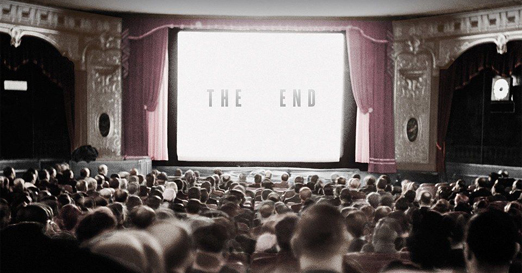
The rise of Netflix may spell the end of the theatrical experience, and trips to your local multiplex

Having disrupted the model for TV broadcasters by making schedules extraneous and grabbing millions of viewers at the same time, Netflix is now making a run at Hollywood. “I think it’s going to be fascinating to watch,” says US journalist Gina Keating, author of Netflixed: The Epic Battle for America’s Eyeballs.
Netflix’s deep pockets have lured Hollywood stars such as Will Smith (Bright), Joel Edgerton, Sandra Bullock (Bird Box), Ben Affleck (Triple Frontier), Kevin Costner and Woody Harrelson (The Highwaymen), Anne Hathaway, Robert DeNiro, Al Pacino and Harvey Keitel, the latter three of whom will star in Martin Scorcese’s $150 million epic, The Irishman, arriving day and date on Netflix and a handful of theatres across the continent this upcoming autumn season, just in time for the Oscars.
And talking about the Oscars, Netflix’s Roma won a slew of Oscars this past Ocotber, winning Best Director, Cinematographer and Foreign Language Film for Alfonso Cuarón, while Period, End of Sentence won Best Documentary. Both films have been available on Netflix since December.
Although Netflix has been around for over two decades, the company’s rise to the top of Hollywood happened in a remarkably short period of time.
House of Cards, Neflix’s first foray into original content, débuted only six years ago. By expending monies to produce more shows and movies, it has managed to grow so rapidly that even its own executives are surprised.

“We’ve outperformed the business in a way we didn’t predict,” David Wells, Netflix’s (now former) chief financial officer, told The Hollywood Reporter in late February, after the company announced that its subscriber base had increased by over seven million in the first two months of 2019, its largest increase ever.

While Hollywood could take control of its fate, it’s very difficult for mature businesses — ones that have operated in similar ways for decades and where the top players have entrenched interests — to embrace change.
One can imagine the future looking something like this: You come home (in a driverless car) and say aloud to Alexa, Siri, Google Home or some A.I. assistant that doesn’t exist yet, “I want to watch a comedy with two female actors as the leads.” Alexa responds, “O.K., but you have to be at dinner at 8pm. Should I make the movie one hour long?” “Sure, that sounds good.” Then you’ll sit down to watch on a screen that resembles digital wallpaper.
At the Consumer Electronics Show this year Samsung débuted a flexible display that rolls up like paper.
There are other, more dystopian theories which predict that film and video games will merge, and we will become actors in a movie, reading lines or being told to “look out!” as an exploding car comes hurtling in our direction, not too dissimilar from Mildred Montag’s evening rituals in Fahrenheit 451.
When we finally get there, you can be sure of two things.
The bad news is that many of the people on the set of a standard Hollywood production won’t have a job anymore. The good news?
You’ll never be bored again.
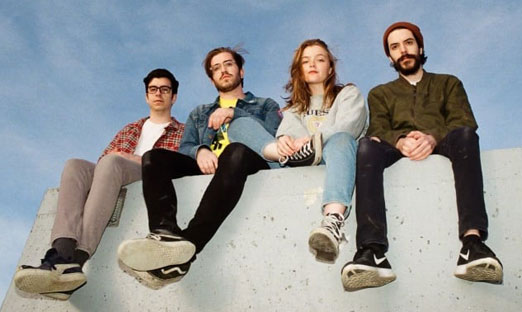
Music Sundays | Gorgeous Dream Pop Canadian Music | Yeah!

Dizzy, Oshawa Ontario-based dream pop group, winner of the 2019 Juno award for Best Alternative Album, for Baby TeethOshawa Ontario-based dream pop group, Dizzy, winner of the 2019 Juno award for Best Alternative Album, Baby Teeth. Dizzy was also up for the Best Alternative Group Juno.

Mid-week last week, I was listening to Gloria Macarenko’s afternoon CBC show, On the Coast (I will say, I much preferred Stephen Quinn in the afternoon, alas). Ms. Macarenko was speaking with frequent guest, Andrea Warner, who was in the studio to discuss a Canadian music group of some note, all but anonymous to the uninitiated (that’s you and me), but as presented by the erudite Ms. Warner, worthy of your time & consideration.
This past week, Ms. Warner wished to tell all of us how much she loved recent Juno award winners, Oshawa’s dream pop group Dizzy, who recently picked up the Alternative Album of the Year Juno award for their absolutely outstanding début album, Baby Teeth. Dizzy had been up for the Breakthrough Group of the Year Juno at the Halifax-based celebration, but lost to bülow, who VanRamblings also loves and has long been on our iTunes playlist. Quite honestly, the Breakthrough group award oughta have been a tie. Just below, you can hear music from bülow.

Not to confuse you, above is bülow, winners of Breakthrough Group of the Year at this year’s Juno awards ceremony. We’ll get back to writing about Dizzy in just a moment.

Since the release of Dizzy‘s début album, Baby Teeth in 2018, fans in rapture have fallen for Dizzy‘s distinctive vibe (the group has received a great deal of play on CBC Radio 2, as well as on CBC Music).
Dizzy‘s lush and low-key sonic landscape paired with evocative lyrics that run the gamut from confessional, specific and heartfelt to esoteric, universal and wry has captured the imagination of those who became aware of Dizzy‘s distinctive brand of music, and then became fans.
Vocalist / songwriter Katie Munshaw and Charlie Spencer started playing together in high school and were more of an acoustic folk-pop duo than anything fully resembling Dizzy. Over time, the two novice but ambitious musicians sought to stretch their musical chops, the two going on to form a larger, more diverse band that came to include the latter’s three siblings, all one year apart: Charlie, Alex and Mackenzie Spencer.
All the band members grew up in and around the ‘burbs of Oshawa, a city that backs onto Lake Ontario. In an interview with New Music Express last year, Alex told the interviewer that the environment in which he grew up “does have its beauty and its little moments of innocence — it’s very quiet and secluded, and that helps nurture our sound in some way.”

On Baby Teeth, it’s obvious how much creativity the band draws from their sleepy hometown. Bleachers and Pretty Thing are intricate compositions that place as much value on hushed moments as on memorable, prickly guitar parts and swooning choruses. Swim, however, bucks the trend with imaginative lines that see the band plead for some escapism: “You are the athlete / I am the astronaut, for thousands of miles I float / Still, you carry me home” | New Music Express, 2018.

So now I imagine, you want to hear what Dizzy sounds like. Here goes …

Arts Friday | Diane | Teen Spirit | Finest Films Released This Year

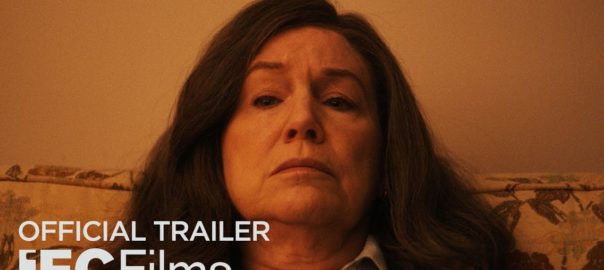
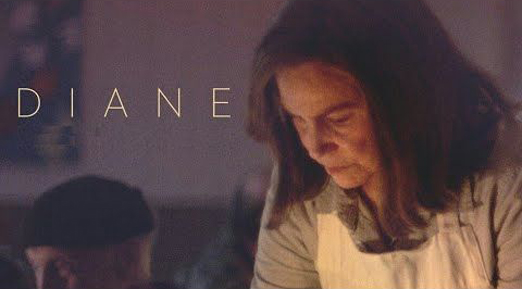
Diane, a new film by writer-director Kent Jones, starring Mary Kay Place as the titular character

Opening today for an eight day run at the Vancouver International Film Festival’s well-loved Vancity Theatre (on Seymour, just north of Davie Street, and across from Emery Barnes Park), the film considered by many film enthusiasts to be the best 2019 film released in what, to date, has pretty much been a fallow year for those among us who love cinema — and that special film of which we write is Diane, a certain awards winner come year’s end, most especially for the film’s star, Mary Kay Place, who according to Vancity programmer Tom Charity, “gets the role of a lifetime.”
As Variety’s lead film critic Owen Gleiberman writes

“Diane is a tender, wrenching, beautifully made movie, a haunting first dramatic feature from Kent Jones, and the most accomplished dramatic feature screening at this year’s Tribeca Film Festival, a majestic film and a vision of turmoil, peace, mystery and memory, built around Mary Kay Place’s remarkable performance, along with something that hasn’t always accompanied this generation’s journey into old age: a glimpse of God.”

Hollywood Elsewhere’s Jeffrey Wells has been raving about Diane since the beginning of the year — seems that he’s not alone in his enthusiasm, what with the 94% Rotten Tomatoes score the film has achieved.
Ty Burr, in the Boston Globe writes that Diane is “a quiet a tour-de-force”.

Part of Mick La Salle’s review in the San Francisco Chronicle reads …

“When I was a kid, my grandfather said something to me that I never forgot and that applies to this movie. ‘I’m 67,’ he said. ‘Twenty years ago, I was still a young man, and now I’m an old man.’ Diane is about something like that. It’s about the experience of early old age, the point in life where the memory and the identity of being young remain as fresh as ever, but the realities of aging are beginning to kick in.”

Some films you want to discover for yourself, without reading too much about it in advance, so that the film is fresh on the screen for you, and the process of discovery and revelation becomes deeply invested in you.
Diane, now screening at The Vancity, is one such film.

star.jpg star.jpg star.jpg

Teen Spirit. Starring Elle Fanning.

Teen Spirit, which only a handful of people will see (alas), is VanRamblings favourite film of 2019, and certain to make our year end ‘best of’ list, an entirely revelatory and transformative, if small, British independent film starring the actress of her generation, the luminous Elle Fanning, who unlike Rami Malek in Bohemian Rhapsody actually does her own singing.
Ms. Fanning plays Violet, a sensitive British 17-year-old who lives with her mother (Agnieszka Grochowska), a Polish immigrant, on the Isle of Wight. Aside from a beloved horse and her long disappeared father, not much defines Violet beyond her passion for music.
Violet’s days revolve around school, being mocked by the Island’s pretty-girl jerkettes, a dreary after school job at a local restaurant, helping her financially strapped and sullen mom manage their small family farm, and occasionally sneaking out to sing at a local pub.
Signing up to audition for a British pop show called “Teen Spirit,” director Max Minghella (an actor himself and the son of the late director Anthony Minghella of The English Patient, and The Talented Mr. Ripley) and cinematographer Autumn Durald Arkapaw during the film’s 92-minute running allow the audience to witness the beginnings of a young woman’s dreams of music making, giving a reluctant Violet the star treatment.
As Jesse Hassenger writes in his review in Slate

Teen Spirit may be about a singing competition, but this raw, slice of life film never devolves into the cynical undertaking you might expect. It’s refreshing, too, that Teen Spirit doesn’t view its heroine exclusively in terms of gatekeeping credibility, nor does it romanticize Violet’s life or the journey she’s on, which is to say that fortunate for us, Teen Spirit never sacrifices complexity on the altar of poptimism.”

Jeanette Catsoulis in her Critics Pick New York Times review writes of Violet, “the music might belong to Robyn and Ellie Goulding, but the journey from insecure child to tentative adult is all hers.”
Playing once daily, at 9:55pm, at Cineplex International Village.

Music & Film | Bedroom Pop, Tribeca and Skate Kitchen

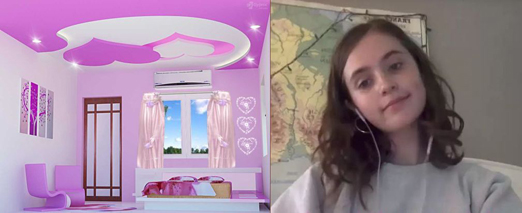
Bedroom pop, a lo-fi genre of indie music popular with teens and twenties
Bedroom pop. Who’da thunk that such a thing even exists?
Bedroom pop is a sub-genre of Lo-fi (“low fidelity”), defined in 2019 as a DIY musical genre or aesthetic in which artists record at home on their own equipment, rather than in traditional recording spaces, the music characterized by contemplative lyrics, bedroom pop a contemporary indie re-invention of the once popular emo or dream pop musical genres.
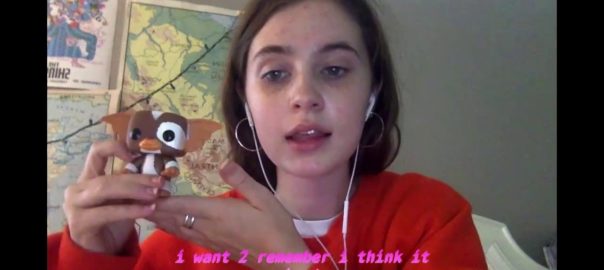
There are a great many bedroom pop artists, but the most celebrated is Claire Cottrill (born August 18, 1998), known professionally as Clairo, an American recording artist from Carlisle, Massachusetts who wrote Pretty Girl, a lo-fi-produced song that attracted over 30 million views on YouTube.

At 16 years of age, Clairo wrote and produced Pretty Girl employing studio equipment in her bedroom (the equipment sometimes referred to as a digital audio workstation), as well as Pro Tools production software, while also recording and editing the video before uploading it to YouTube.
Home studios have been popular for decades, but have become ever more refined as computer technology has become increasingly sophisticated, enabling ever higher quality music production. One of VanRamblings favourite artists, Imogen Heap (who we interviewed and wrote about in 1997, at the outset of her career) records all of her music in her kitchen, where she’s set up a home studio that revolves around the use of Pro Tools.

As it happens, VanRamblings discovered bedroom pop during our recent bout of illness, when all we could manage to do most days was plunk ourselves down in front of Netflix — where we were very pleased to see that Crystal Moselle’s acclaimed Sundance and Tribeca award-winning film, Skate Kitchen, simply appeared out of the blue (and unheralded, but not by us) one very fine day, as one of the varied viewing options.

Vibrant, alive, poetic, superby shot and and richly informed, Ms. Moselle’s follow-up to her award-winning, one of a kind documentary, The Wolfpack, her fiction début emerges as the most accomplished film about skater culture since Catherine Hardwicke’s 2005 American biographical drama, The Lords of Dogtown (which is also available on Netflix).
The story goes that Moselle spotted two of the girls on the subway, introduced herself as a filmmaker, and asked if there were more girls like them. Indeed there were, all forming a feminist, sex-positive, shred-happy collective called the Skate Kitchen. Some time later, Moselle’s film arrived in Park City, with all the kids playing a version of themselves.
And who do you think the featured music artist on the soundtrack might be? Yep, you got it — none other than Clairo, who wrote and produced Heaven for the Skate Kitchen soundtrack.

So, while VanRamblings reveled in our discovery of Skate Kitchen on Netflix, we were also introduced to Clairo, and the contemporary musical genre known as “bedroom pop.” And now, you are familiar with Skate Kitchen (a must, must watch!), the work of Crystal Moselle, the musical genre of bedroom pop, and its most acclaimed progenitor, Clairo.
You know what’s exciting about life? That you get to discover something new, something that just yesterday you knew nothing about, every day.