Category Archives: Pop Culture

Saving the Environment | Fast Fashion vs the ‘Thrift’ Economy

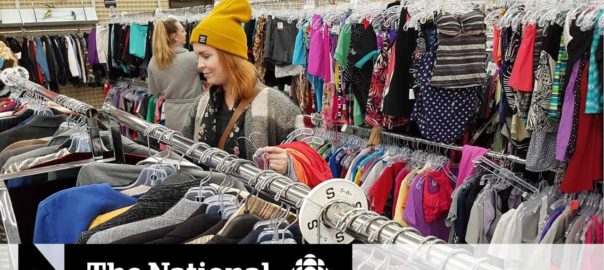
Consignment clothes shopping as a thrifty means to save the environment

Fashion is today the second most polluting industry in the world, following only the oil business.
For altruistic and ecological reasons, the shopping attitude of Canadians towards second-hand clothes has been changing, and consignment stores are bustling with their newfound clientele, and consequent increased sales.
What was once a $12 billion North American market only a few short years ago is now a thriving $24 billion consignment clothing market, with the marketplace expected to top $50 billion by the middle of the next decade.
In other words, the ‘second hand economy’ is thriving.

A consignment clothing shop

Consignment stores are not what they used to be, offering quality like never before, carefully curated collections, and an elevated shopping experience for their burgeoning customer base.
A recent published study shows that in 2018, 64% of women and men were willing to buy pre-owned consignment store clothing — clothing which often has never been worn, and acquired from businesses which have gone bankrupt — up from 45% in 2016. The clothing retail industry believes that by 2028, up to half of the clothes in women’s and men’s wardrobes are likely to be ‘secondhand’. Fashion circularity, a new term referring to the recycled life of a garment, as indicated above is projected to reach $51 billion in five years, up from the current $24 billion.
In discussion with consignment store operators across Vancouver, proprietors told VanRamblings that where there was once “a stigma attached” to purchasing consignment store clothing — conjuring images of the yellow sweat patches, clothes strewn casually and confusingly hung (if at all) and emotional baggage people often associate with used clothing …
“Now, thankfully, purchasing clothing from consignment stores is not just acceptable — it’s cool and has completely captured the fashion zeitgeist,” one consignment clothing proprietor recently told us.
A recent study published by the Raymond James Financial Centre reports that 56% of women and men aged 18-29 prefer the consignment second hand market over conventional retailers of new clothing. Shopping in a thrifty manner guarantees shoppers the uniqueness of their own style. Most of the pieces in a consignment clothing shop are one of a kind, and allow endless possibilities of matching and styling in a creative and unique way.
All of which is to say, no longer is there a taboo about consignment clothes shopping. The rise of the sharing economy has also helped — it’s taken the stigma out of resale and removed the need to own something forever.

Forever 21 fashion retailer closes its doors

In September, fast fashion chain Forever 21 announced it was closing all its international locations, including 44 stores in Canada, amid flagging sales.
According to a recent interview conducted with the CBC finance guru Diane Buckner, British Columbia retail consultant Bruce Winder told her fast fashion’s target market — young, style-conscious shoppers on a budget — are also among those most concerned about the health of the planet.

“The younger millennial specifically, along with Gen Z, are incredibly environmentally conscious,” he said. “And they look at every brand and every product in terms of what is the impact on society, but also what is the impact on the employees and the environment.”

Not only do consignment stores benefit from the fact that the city’s stylish set are clearing out their closets like never before, a return to quality over quantity in the minds of most shoppers means visits to consignment stores for quality designer goods that will last (i.e. not end up in a landfill) and not break the bank will only continue to rise.

One third of millennials do the vast majority of the clothes shopping at thrift and consignment shops

How does consignment clothing store shopping save the environment while also saving you money? Thrift shopping at consignment stores offers a viable solution for anyone looking to help out the environment.

  • Saving Money. Thrifted clothing is far more affordable than new clothes of comparable quality.

  • Smarter Buys. You tend to spend more time looking over each item instead of buying it outright.
  • Unique Finds. It’s highly unlikely that anyone else is walking around in the same clothes as you.
  • Creative Potential. You might be inspired to try new combinations, or even some DIY reconstruction!

If that isn’t enough incentive, as promised above, here are seven ways Erich Lawson writes thrifting helps the environment …

1. Consignment clothing shopping lowers your carbon footprint. A great deal of energy goes into clothing manufacture, right from the transportation of raw materials to the production process. Then, there’s the energy required to transport clothing to stores, and dispose of unwanted pieces. When shoppers buy from consignment stores, we prevent wastage of energy & resources on production of new clothes.

2. Aiding in Water Preservation. In addition to energy, water consumption is extremely high at every stage of clothing production. For instance, growing one kilogram of cotton requires 5,300 gallons of water, while wet processing and printing use 18 and 21.6 gallons respectively, per pound of cotton. Manufacturing, packaging and transportation processes add to this cost as well.

3. Reducing Chemical Pollution. The production of cotton is highly pesticide-intensive, causing soil acidification and water contamination. Textile manufacturing processes also involve the use of harmful dyes, caustic soda and crude oil by-products. These chemicals are generally dumped into areas around manufacturing units, contaminating surface and ground water through soil runoff.

4. North Americans throw out anywhere from 60 to over 80 pounds of textile waste annually, and only about 10% of this makes it to consignment stores. If more people start shopping for consignment clothes, less fabric ends up being dumped in landfills. That’s not all. Packaging material is also reduced, keeping plastic, paper and metal out of the waste stream.

5. Inspiring Green Living. Thrifting is an essential part of green living, in more ways than one. When you buy consignment clothing, you keep them from being sent to a landfill and reduce manufacturing demand as well. Also, by donating consigning clothes you no longer wish to wear, you encourage others simply by giving them something they can use.

6. Boosting Community Development. Shopping at consignment stores means support for local business instead of multinational corporations. Consignment stores provide employment in retail outlets, creating more jobs and boosting the local economy. Many hire disabled workers and support local community programming projects as well.

7. Encourages Recycling. Did you know that recycled cotton clothing uses less than 3% of the energy that would have gone into producing new clothes? When you reuse or recycle clothes, you’re decreasing the demand for production & encouraging sustainabity. It may not seem like much, but every item that doesn’t end up in a landfill counts as a win!

In the 1990s, when VanRamblings was charged with training Statistics Canada employees on how to conduct the annual Survey of Household Spending, during the role play portion of the training exercise, in answer to the question as to how much we spent on clothing and shoes each year, we responded with: $500. Senior staff at Statistics Canada guffawed loudly when VanRamblings offered this bit of information, saying to us at days’ end, “Raymond, suggesting that you spend only $500 a year on clothing and shoes is the funniest thing I think I’ll ever hear. How clever of you. Good for you. It brought lightness to the day’s proceedings.”

Men's jackets to be found at a consignment clothing shop

Little did senior staff know that, in fact, VanRamblings was acquiring most of our clothing from Arthur’s for Men on West 1st Avenue just west of Burrard Street, where fashionable wool sweaters could be had for $15, shirts and pants for $10, and jackets and shoes for $25, or less.
VanRamblings’ children had long encouraged shopping at consignment stores.

“Dad, not only are you colour blind, you have no fashion sense. In the past, you’ve bought your clothing at The Bay, and you’ve tended to shop for the store brands. You are much better off shopping for name label clothing at a consignment store: those clothing items are priced less expensively than what you’re buying now, the clothes are of invariably better quality — and will hold their nap in a way your current shirts, sweaters and pants will never do, meaning the clothing will last longer.”

“Buying name label consignment clothing assures quality, assures — at least in most cases — proper colour and design that will match the remaining items in your wardrobe, and as long as you shop at Arthur’s for Men, the owners will know what clothing items you have in your wardrobe at home, because they have a list of what you’ve purchased, so will be able to recommend complementary items.”

And now to the present.
Recently, we purchased an Italian suede jacket we’d seen at a neighbourhood Italian clothing boutique that had now gone out of business.
The jacket was retailing for $380.
When Turnabout (our consignment clothing shop of choice, these days) purchased almost the entire stock of the bankrupt Italian clothing boutique, that $380 suede jacket was put on sale for $40!

Turnabout Luxury Clothes Consignment Shop on West Broadway in Vancouve

When walking into the store the morning the jacket was put on sale, staff approached me to say, “Mr. Tomlin, we’ve just put a jacket out on the floor that we think you’ll love,” directing me to the suede jacket. “You’d better buy it now, or it’ll be gone by noon.”
So, we did — and enjoy wearing it today!

One third of millennials do the vast majority of the clothes shopping at thrift and consignment shops

Now, it may be a lark that our former employers at Statistics Canada thought our voiced annual clothing expenditure to be a laugh, but in our current scarce and uncertain economy, if sales at the consignment store we most often attend is any indication — where only a decade ago, we could wait for an item to drop 80% in price were we to wait six to eight weeks — when an item we like now appears in the shop, we purchase it immediately, because if we don’t, it’s almost a certainty that it’ll be gone the next day.

Music Sundays | VanRamblings’ Love of Popular Music Remixes

Remixes of popular tunes

There is nothing we love more than to walk along Spanish Banks, ear phones snuggly tight in our aural canal, powering down the beach listening to beat music remixes to energize our appreciation of the great outdoors.
Dating back to the late 1960s, we have written a regular music column, first for the city wide Vancouver student newspaper, then as arts & review editor of Simon Fraser University’s student newspaper, The Peak, and after that in mainstream media, and since the turn of the century online, both on VanRamblings and a raft of other online non-affiliated online publications.
Today, four of our favourite remixes, which we listen and dance to again and again on our slidey living room floor (and elsewhere) …

Cake | Rhianna | Sweater Beat Remix

Cloud Number 9 | Bryan Adams | Chicane Remix | (long my ringtone)

Need U (100%) | Duke Dumont | Skreamix | (80s funk done up right)

That Thing | Golden Boy | Eton Messy Remix | (thank you Lauryn Hill)

2019 Year in Review | The Best Films of 2019, Part 1 | Cinema

2019 Year in Review, Best Films of the Year, Part 1

In the coming weeks, VanRamblings will publish a list of our top 20 films of 2019, from Teen Spirit (now available on Amazon Prime) back in February through all the films yet to screen in Vancouver — from Clint Eastwood’s new film, Richard Jewell (December 13) to director Jay Roach’s story of the takedown of Fox News’ Roger Ailes, Bombshell (December 20), plus Greta Gerwig’s all-star cast adaptation of Louisa May Alcott’s Little Women, and Sam Mendes’ epic WW1 blockbuster, 1917, both set to open Christmas Day.
Now, two of VanRamblings’ top 20 films of 2019 that demand to be seen …
Best Propulsive Good Time Hollywood Popcorn Flick of 2019

The first Hollywood film of 2019 that offers movie patrons a guaranteed good time inside a darkened movie theatre, a film for the whole family, the last film made by 20th Century Fox before they sold the company to Disney, a glorious barn burner of a film redolent with heart-in-mouth and tug-at-the-heart emotion, not only one of the greatest racing movies ever made, but an infectious, engrossing true life drama that features some of the finest onscreen performances of the year, Matt Damon as you’ve never seen him before and Christian Bale sympathetic and at top of form, with a supporting cast who will pull you into this audience-pleasing story like mad.
In other words, a must-see film at the multiplex. And it opens today!
Ford v Ferrari is expected to win the weekend box office handily with as much as $31 million at 3,528 venues across the continent (and, likely, another $20+ million in foreign markets over the first weekend, with China and the rest of Asia set to screen Ford v Ferrari in the weeks to come — all of which oughta make the film a solid 2019 Oscar contender). The Disney-Fox film follows an eccentric team of American engineers and designers, led by automotive visionary Carroll Shelby (Matt Damon) and his British driver, Ken Miles (Christian Bale), who are dispatched by Henry Ford II (Tracy Letts) and Lee Iacocca (Jon Bernthal) to build a new vehicle to defeat the dominant Ferrari at the 1966 Le Mans world championship in France.


Ford v Ferrari reviews on the Rotten Tomatoes critics reviews aggregation website


Click on the graphic above to access reviews for Ford v Ferrari on Rotten Tomatoes

star.jpg star.jpg star.jpg

The Probable Best Picture Academy Award Winner for 2019

Opening today for two weeks only in exclusive engagement at the Vancouver International Film Festival’s Vancity Theatre on Seymour Street — where advance tickets for the three screenings each day this weekend are already sold old — Martin Scorsese’s gangster opus, the capper of a directorial career that spans fifty years, the film that opened the New York Film Festival to rave reviews, a film that clocks in at 209 minutes that will seem like half that time the film is so enthralling, one of the five films that will garner the most Oscar nominations — a probable Best Picture Academy Award winner come Sunday evening, February 9th — The Irishman is, as Boston Globe critic Ty Burr enthuses, “a masterpiece”, a film Richard Roeper in the Chicago Sun-Times says is “the best film of the year and one of the best films of the decade,” and as other critics have written …

… a genuinely new, deeply satisfying, serenely confident film presented with subtlety, wit and resonance, a sumptuous film that tells an epic, extraordinary tale of organized crime’s grip on American life as seen through the eyes of one outwardly ordinary man, a film that is a revelation throughout, intoxicating, history-making cinema, a melancholy eulogy for growing old and losing your humanity, a film to be savoured in every one of its 209 minutes, a knockout story that is surprisingly, surpassingly delicate, told by a master filmmaker with heart and sombre introspection, a film that takes a deep dive into the darkest of souls but manages to remain engaging, lively, funny, full of grace, tender, reflective, mournful, a film of grandeur and bloody memories, a heartbreaking film that presents Joe Pesci as you’ve never seen him before, with superb performances from Al Pacino and Robert De Niro — together for the first time in a Scorsese film — and an absolute must-see at the cinema.”

So, that’s it: two of the best films of 2019, both deserving of your time and scarce dollars, both films (in their own way) epic and unforgettable cinema.

Music Sundays | Early ’60s | Phil Spector | The Wall of Sound

Phil Spector's Wall of Sound, employing musicians commonly referred to as "The Wrecking Crew"

Growing up in the ’60s, in the era of Phil Spector and the Wall of Sound, The Beachboys, The Beatles — and all the groups who were a part of The British Invasion — was to feel vibrant and alive, hopeful for a better world for all, within a revolutionary era of societal change that spanned the globe.
Music served to awaken a younger generation to the possibility of change, to define an era for themselves, and be moved to work collectively for the betterment of society. And as anarchist Emma Goldman was wont to say, “If I can’t dance, I don’t want to be part of your revolution.” There was no music better to dance to than the music of Phil Spector’s Wall of Sound.

An excerpt from Danny Tedesco’s very fine 2008 documentary, The Wrecking Crew, in which Cher, American record producer and recording engineer, Bones Howe, bassist Carol Kaye, drummers Hal Blaine, and more, exclaim about Phil Spector and the Wall of Sound.

To attain the Wall of Sound, Spector’s arrangements called for large ensembles (including some instruments not generally used for ensemble playing, such as electric and acoustic guitars), with multiple instruments doubling or tripling many of the parts to create a fuller, richer tone.
For example, Spector would often duplicate a part played by an acoustic piano with an electric piano and a harpsichord. Mixed well enough, the three instruments would then be indistinguishable to the listener.
Additionally, Spector incorporated an array of orchestral instruments (strings, woodwind, brass and percussion) not previously associated with youth-oriented pop music. Reverb from an echo chamber was highlighted for additional texture, which he characterized as “a Wagnerian approach to rock & roll: little symphonies for the kids”. The intricacies of the technique were unprecedented in the field of sound production for popular music

Imagine being 12 years old, turning on the radio and hearing Darlene Love and The Crystals, The Ronettes, Smoky Robinson and The Miracles, The Beatles, Marvin Gaye, The Zombies, The Righteous Brothers, The Kinks, The Beach Boys, Diana Ross and The Supremes, Mary Wells, The Drifters, Chris Montez, Dionne Warwick, Martha and the Vandellas, Otis Redding, Roy Orbison, Ray Charles, and more, so much more — in the early ’60s, the hits really did ‘keep on comin‘, Vancouver’s CKLG part of the musical revolution.
Today on VanRamblings, a musical tribute to Phil Spector’s Wall of Sound, which in an era of one track studios embodied a revolutionary approach to the recording of music, setting a standard that prevails to this day, in the complex arrangements of your very favourite progressive bands and artists.