Category Archives: Pop Culture

Arts Friday | The Impact of Cinema in Pre-Pandemic Times

watching-movies.jpgNostalgia for a Time When Going to the Movies Was a Pleasure We All Enjoyed
Each and every one of us possess within us memories of our experiences visiting the cinema: as a child of attending at the movies with our parents; our first foreign or independent film with a group of friends; or simply visiting our local multiplex cinema to catch the latest superhero blockbuster, or making the pilgrimage to one local film festival or another.
Pre-pandemic, going to the movies was still a popular past-time, even in an age when media consumption and “film viewing” has radically changed (think of the Netflix revolution). In North America in 2019, there were 1.3 billion cinema admissions — a not-insignificant, nor surprising figure.

An art deco cinema in the 1930s

In 1930, more than 65% of the population went to the movies weekly. That means for every 5 people you knew, 3 of them went to the movies weekly.
Can you even imagine that?
Eighty-five years ago, cinema-going remained astoundingly popular across the continent, reaching a peak of 1.64 billion admissions in 1946 — even though the North American population was less than half of what it is today.
Why was cinema so popular in times past?
Some of the reasons are fairly straightforward: there was limited opportunity long ago for inexpensive recreational activities outside of the home, television had yet to assert its power, and film was an established medium which exposed millions to different worlds and alluring cultures (or, more often, to the vicissitudes of North American culture).
There was, however, a deeper and perhaps more fundamental reason for movie-going’s immense popularity in North America mid-20th century.
Recent research on movie-going habits in the twenty and 21st centuries has focused on the interplay between space and emotion, and how cinemas act as facilitators of emotional experiences in ambiguous spaces.
Over the years, movies have aided people in helping to reveal new insights into their lives, while allowing a better understanding of the lived experiences of people across the globe, and in their own neighbourhood. Cinema has not only traced our conception of life, but has also served to affect our outlook on life and the lives of others.
Watching a film in the presence of others is different from watching a film alone, or with our family: the collective constellation affects the way viewers experience a film, made all the more obvious once strong emotions and affective expressions come into play: laughter, sadness, shame, anger, screaming, and more often than not (if we’re lucky) being moved to tears.
Different times in history — and different spaces — have served to create new affective landscapes and altered existing ones, making cinema a useful category for historians to study changes in society and culture over time.
The history of cinema has been integrated alongside other sociological methodologies to help form a more refined and complex picture of the past, and in consequence has offered a valuable way of introducing new insights into the establishment of popular culture, and societal development.
The darkness of the cinema environment presents the opportunity to experience a strong shared emotional experience in a public setting, in the anonymous environment of the auditorium. No other public space has facilitated this to such a degree, and this uniqueness reveals how the life of our society developed in specific contexts and in precise locations.
The enclosed and defined space of the cinema auditorium, containing a distinct group in the form of an audience, is an obvious example of community. Patrons in the cinema are aware of both their own emotional response to what they are viewing onscreen, and the feelings of those around them, providing reassurance that our emotional responses to a film are being mirrored by our fellow patrons.
Respected film critic Leslie Halliwell recalled in his memoir on cinema-going that film took “people furthest out of themselves, into a wondrous and beautiful world which became their Shangri-La”.

the-rialto.jpg

This utopia was reflected in the very names of cinemas — the Orion, the Rialto, the Plaza, the Regal — and in the architecture of the buildings which encompassed a range of styles including the clean lines of Art Deco and the high theatrics and excess of the “atmospherics”.

The Grandview Theatre, Commercial Drive at East 1st Avenue in Vancouver, in the 1950sThe Grandview Theatre, Commercial Drive at East 1st Avenue in Vancouver, in the 1950s

Evidence suggests that many people viewed their local movie-house, whether a stand-alone, second-run neighbourhood movie house or a first-run super-cinema, as a reassuring and familiar space characterized by a hazy emotionality fluctuating between the individual and the group, in the process offering a sense of connection with those who surrounded us.
This ambiguity — the individual vs the collective experience — lies at the heart of what attending at the cinema signifies to people. In few other areas of life are the landscapes of our lives softened to such a degree, in turn making attendance at the cinema a welcoming experience.

cineplex-cinemas.jpg

Cinemas have long occupied a position on the boundary between the domestic and the public, allowing our emotional experience of a movie concurrently as both communal and private, the evolving emotional landscapes which were crafted by cinema patrons in the mid-20th-century serving to break down anomie while creating a sense of connection.
The fundamentals of our affective experience at the movies has changed little over the past 100 years.
The price of popcorn, however, most definitely has.

Stories of a Life + Music Sundays | Three Resonant Love Songs

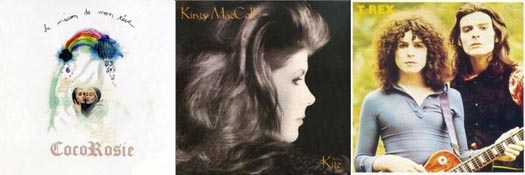
Three love songs, one each from CocoRosie, Kirsty McColl, and T-Rex

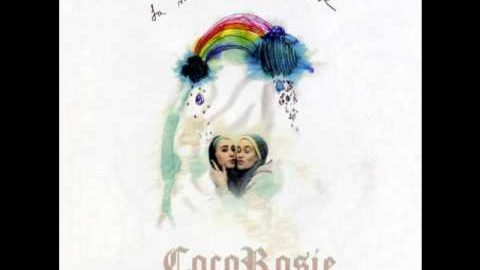
The first of the three love songs on VanRamblings today is sung by an American avant-garde musical group formed in 2003 by sisters Sierra Rose “Rosie” and Bianca Leilani “Coco” Casady, and may be heard on their 2004 album release, La Maison de Mon Rêve.
Having lead a nomadic life, in 2000 after residing in in New York City for two years, Sierra moved into a tiny apartment in the Montmartre district of Paris to pursue a career as an opera singer. Meanwhile, Bianca had moved to Brooklyn in 2002 to study linguistics, sociology, and visual arts. Neither sister had seen one another for a period of ten years.
In early 2003, Bianca made an impromptu visit to Paris to rejoin Sierra, and the two ended up spending months together creating music in Sierra’s bathroom which, according to them, was the most isolated room in the apartment and had the best acoustics, adopting a lo-fi, experimental approach to production, utilizing a distinct vocal style, traditional instruments, and various improvised instruments (like toys), recording with just one microphone and a broken pair of headphones.
By late 2003, the sisters had named themselves CocoRosie and created what would become their début album, La Maison de Mon Rêve, releasing the recording only to friends. However, word got out about the album, and by February 2004 CocoRosie was signed to the independent record label Touch and Go Records, and the album was released on March 9, 2004 to unexpected critical acclaim. The rest, as they say, is history.
The song Good Friday has meaning for me, as I sent it to Lori (who I’ve written about previously), expressing in the note I sent her that the song had particular resonance because it reminded me of her. After not having communicated with one another for almost a decade, posting the following song to Lori caused the two of us to, briefly, rekindle our relationship.

If 1988, the year I met Lori, was one of the great years of my life, the next great year in my life was 1995, and the summer of the gregarious 22-year-old Australian twins Julienne and Melissa, now all nicely married with great husbands, and two children apiece. That the three of us still communicate today I consider to be one of the great achievements of my life. I love them as much now as I did 25 years ago — both women (who I will write about someday, but employing pseudonyms) hold a special place in my heart.
1995 was also the year that my friend J.B. Shayne introduced me to the music of British singer-songwriter Kirsty McColl, whose 1989 album Kite became the soundtrack of my life that particularly warm and loving summer. I remember alighting from the #9 bus at Macdonald and West Broadway, as Julienne and Melissa were rounding the corner onto West Broadway, having just come from the Kitsilano library.
Spotting me, the two ran down the street towards me, jumping into my arms and wrapping themselves around me — the same thing happened later that summer, when I had just entered the west entrance of the Macdonald and Broadway Safeway, with Justine Davidson — then all of 15 years of age, and someone to whom I’d been close, and in whose life I had played a fatherly role for years — having entered from the east entrance, upon spotting me ran across the Safeway, jumping into my arms, wrapping herself around me, clearly happy to see me. There is no other time in my life when I felt more loved than was the case in the summer of 1995.

I was first introduced to the music of T. Rex (initially known as Tyrannosaurus Rex), the English rock band formed in 1967 by singer-songwriter and guitarist Marc Bolan, when working at LG-FM, by Bob Ness, one of the great all time radio announcers in Vancouver, and more than anyone else of my memory, the father of alternative music radio in Vancouver, when he brought the music of Marc Bolan to my attention.
By the early 1970s, I was a student up on the hill at Simon Fraser University, and arts and entertainment editor at the student newspaper, The Peak — where among my myriad endeavours, I was afforded the opportunity to review five albums a week, one of which was, in early 1971, T. Rex’s eponymous fifth album, and the first under the name T. Rex.
If you haven’t guessed, I am a romantic, always have been, always will be. For me, there is no greater joy than being in love — in which respect I have been very lucky, in platonic and other kinds of love (and even a marriage) with incredibly bright and empathetic women, who are responsible for all the best parts of who I am, and how I have brought myself to the world.
My first great love, of course (and the mother of my children) was Cathy Janie McLean, a striking 18-year-old blonde Amazon of a woman, possessed of a keen intelligence, and the woman more than any other who shaped me, in the early years loved me, and created the somewhat sophisticated wordsmith and bon vivant I’ve been for nigh on 50 years now.
T. Rex’s song Diamond Meadows was a song that was particularly resonant in Cathy’s and my life, a song we returned to for years, when I was at university, and later teaching in the Interior. For me, listening to Diamond Meadows reminds me of a time when I was truly loved, when everything was going well in my life, when I was surrounded by friends, politically and socially active, and a young man of promise and capable of much good.

VIFF 2020 | Creating Quite the Stir at Vancouver’s Film Festival

Stir, Vancouver's new arts and culture online magazine

There’s a new online arts & culture magazine in Vancouver that’s creating quite the stir. Staffed mostly by former (and recent) arts staff at The Georgia Straight — said the weekly’s new owners, MediaCentral (a condition of employment: management must show their horns at all times) “Nah, we’re not cutting arts coverage. We’re just rationalizing it, by dumping a whole lotta staff, and refocusing editorial categories by eliminating any focus whatsoever on venues and the arts”) — the glorious new Stir is the illustrious new home for arts & culture coverage in our city.
Where to find beloved Straight arts & entertainment editor, the kindly but tough Janet Smith, or bon vivant, Adrian Mack, and acclaimed journalist, Gail Johnson? Vancouver’s nascent Stir magazine is the place where you’ll find Janet, Adrian and Gail, as well as a number of other former Straight staffers, and first-rate British Columbia-based arts & culture journalists, who in Stir have created the place to be for arts coverage in our city.
And isn’t that what makes a city, culture? Otherwise, what are we but an amalgam of greenhouse gas spewing towers, and windy roads laden with too many carbon emitting vehicles. Vancouver’s many and varied arts & culture institutions breathe life and meaning into our paradise by the ocean.

Stir, Vancouver's newest online arts & culture magazine, with great coverage of VIFF 2020

In 2020, at the virtual Vancouver International Film Festival, Stir has emerged as the place for coverage of VIFF 2020.
For instance, in her enthusiastic review of Jimmy Carter: Roll and Roll President (which VanRamblings just loved when we screened it at 3 a.m. yesterday morning), Ms. Smith writes …

Jimmy Carter was cooler than you ever knew — even more so when he’s put up against the presidential candidates for the 2020 U.S. election. Turns out the man once derided as the Peanut Farmer was besties with the likes of Bob Dylan and Willie Nelson, both of whom sing his praises here. He also hosted regular concerts, first at the guv’nah’s mansion in Georgia, and later at the White House, after the Allmann Brothers helped propel him to election. In her fun, well-researched, and zippily edited documentary, director Mary Wharton connects Carter’s open-minded approach to music to his political achievements.

The review above is just one of many VIFF 2020 reviews you’ll find on the Stir Vancouver online website, from Janet Smith, Adrian Mack and Gail Johnson, in 2020, your go-to website for Vancouver’s finest VIFF coverage.
Here’s hoping Stir thrives long, long into the future, that Ottawa’s modernized Canadian Periodical Fund provides sustaining monies to aid Stir in its necessary endeavours, and that readers (and advertisers) flock by the thousands to Stir Vancouver, such that Stir becomes a west coast institution, a Canadian version of New York Magazine’s Vulture website.

Music Sundays | Regina Spektor | A Cinematic, Tender Storyteller

Celebrating the music of Regina Spektor

Some years ago, as I have written previously, my friend J.B. Shayne was in my home, and scanning my vast CD collection (we’re talking the early ’90s here), he commented, “Do you realize that 80% of your record collection features female vocalists?” In fact, the percentage of female singer-songwriters in my music collection is probably closer to ninety per cent.
Today, I present a couple of songs from my iTunes / Spotify music collection by artist Regina Spektor, who although she hasn’t achieved the mainstream success of a Fiona Apple or a Tori Amos, nonetheless deserves much more recognition for her weighty, low key 19-year career than it’s earned to date.
Whimsical, with great melodies and brilliant songcraft, Regina Spektor’s music is simply beautiful, both lyrically and musically, with an almost angelic quality to them, showcasing always her distinctive vocals and winsome piano talents, a storyteller of the first order, a singer-songwriter brimming with personality, and more than capable of conjuring up moments of wisdom, maturity and magic, in a career deserving of celebration and recognition, that is uniquely — and unmistakably — hers and hers alone.

star.jpg star.jpg star.jpg

Samson was initially recorded as the first track for Regina Spektor’s second album, Songs, which she recorded in one take on Christmas Day 2001. In 2006, Ms. Spektor re-recorded the song for her album Begin to Hope, which, unlike Songs, had a major label backing. And, the rest is history.

Regina Spektor’s best songs tweak inviting melodies with bits of eccentricity in rhythm and vocal cadence, resulting in music that skilfully hits emotional buttons without coming across as formulaic. Laughing With, which was the first single released from her fifth album, Far, doesn’t quite play to those strengths, but instead opts for a modern balladry that is, as you will hear, ideally suited to our trying and most difficult pandemic times.