
Category Archives: Pop Culture

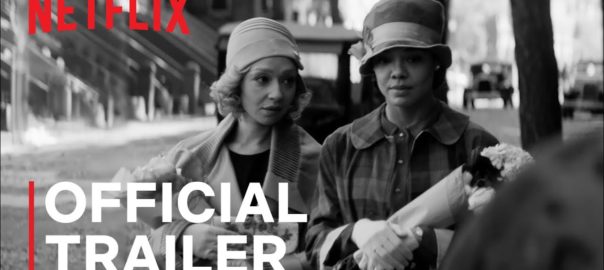
#ArtsFriday | Passing | Searing, Heartbreaking, Tragic Cinema | #Netflix


Début film by Rebecca Hall (left), Passing, stars Tessa Thompson (centre) & Ruth Negga

A complex examination of race and sexuality set against the backdrop of a 1920s-era Harlem Renaissance that celebrated Black novelist Nella Larsen captured in her seminal 1929 novel, Passing, marks British actress Rebecca Hall’s assured feature directorial début — a certain 2022 Oscar contender, having taken New York by storm last month at their annual New York Film Festival, and already up for a passel of Gotham Awards — will be available on the Netflix streaming service this coming Wednesday, November 10th. “We’re all of us passing for something or other, aren’t we?” muses Tessa Thompson’s melancholy character, Irene Redfield.

Ms. Hall’s choice of material for her début as writer-director is elevated by her evident personal investment in the story, having learned years ago that her American maternal grandfather was Black passing as white for most of his life. That intense personal connection pervades every lovingly composed shot of a work that takes a subtle, unwavering approach to the film’s subject matter, that resonates at a moment Black Lives Matter has exposed the simmering racial divides within society.

The story takes place in 1929, as Harlem resident Irene (Thompson) carefully navigates her way through a sweltering New York City summer day, tucking her face inside her hat so as to all the better, well, maybe not hide exactly, but at least obscure her face so that her black skin isn’t as evident to the privileged white locals surrounding her. Feeling self-conscious about being out of place, she’s shocked to run into Clare (Negga), a school friend with whom she had lost contact, now married to a wealthy (and avowedly racist) white man, John (Alexander Skarsgård), who has no idea that his wife is black. Clare “passes” for white, allowing her entree into an upper-crust American society that contemptuously shuns people of colour.

Inviting Irene up to her hotel room, upon returning to her home, there’s a marked visual switch from Clare and John’s suite, an airy space drenched in white light, to the more textured look inside the Harlem brownstone where Irene lives with her doctor husband Brian (André Holland) and their two boys. The action flashes forward to the autumn, when a letter from Clare, postmarked New York, indicates she has moved back to the city as she had hoped. Irene is hesitant to open it, but Brian is more curious, arching his eyebrows at Clare’s florid description of “this pale life of mine,” as she gently chides Renie for exposing her “wild desire” for another life.

Shot in luminous black-and-white by cinematographer Eduard Grau (a choice that, given the material, might sound gimmicky, and is not), Ms. Hall also opted for a boxed-in 4:3 aspect ratio, all the better to heighten the film’s constant tension and the sense that its piercingly sad characters can’t escape the confines of their lives.

From the very first frame, Passing grabs your attention with its striking aesthetics. Most notably, as mentioned above, the desaturated black-and-white cinematography and 4:3 aspect ratio that recalls both vintage photography and classic cinema. The period-appropriate costumes and production design — stylishly rendered by the production designer Nora Mendism, and the costume designer Marci Rodgers — gives a strong sense of a time and place when flappers lived their best life. To add an elegant finishing touch, the intermittent piano refrain of Emahoy Tsegué-Maryam Guèbrou’s Homeless Wanderer, and the gorgeous score composed by Black composer Devonté Hynes, provides a further nostalgic nod to the Jazz Age.

Passing tingles through the vulnerability of Irene and Clare’s smallest gestures and experiences, delicately conveyed by Thompson and Negga and magnified by Eduard Grau’s judicious close-ups. A tear rolling down a cheek. The slight bow of a hatted head in the presence of a white man. A stolen glance of desire. Under the genteel mask these women show to the world lies a roiling unease about their true desires, their obvious and barely hidden secrets, and their place in the world.

And it’s through this discomfort that Passing transcends its mannered trappings to resonate with us as a poignant and powerful exploration of the human condition.

#Netflix | Oscar Fare Rolling Out in November

Although Red Notice is the blockbuster film Netflix is bringing to the streamer on Friday, November 12th — starring a Hollywood A-list cast that includes Dwayne Johnson, Gal Gadot and Ryan Reynolds —  it is the “smaller films” that will prove to be the celebrated Gotham, Indie Spirit, Oscar and critics’ awards fodder come December and into 2022, when early in the morning of Tuesday, February 8th, the 2022 Oscar nominations will be announced.

As we all return to some semblance of “normal” —  whatever that means these days? —  now that British Columbia’s Public Health Officer, Dr. Bonnie Henry, has lifted all indoor capacity limitations in movie theatres, arenas and elsewhere, in communities where full vaccination rates are on track to hit 90% or better at some point in November, and COVID infection rates are low, we can all look forward to a surfeit of serious-minded film fare to help us celebrate the coming holiday season.

On Friday, November 5th, VanRamblings will publish our full review of Passing —  already nominated for a raft of east coast film critic, ‘indie’ Gotham Awards, including Best Director, her first-time in that role, and a simply outstanding outing for British actress, Rebecca Hall, garnering, as well, a Best Screenplay nomination for her adaptation of Nella Larsen’s 1920s novel; Tessa Thompson, for Outstanding Lead Performance (take our word for it, Ms. Thompson’s performance is more than well-deserving of all the accolades she will receive in the weeks and months to come); and the always luminous Ruth Negga (Loving), for Outstanding Supporting Performance, much-deserved recognition for her breathtakingly fine work here.

A complex examination of race and sexuality set against the backdrop of the same ’20s-era Harlem that Larsen was so keen to be part of, Passing will be available on the Netflix streaming service come Wednesday, November 10th.

Not to be missed!

Music Sundays | Nine Chill Songs to Quieten Your COVID Week

A chill VanRamblings' Spotify PlaylistStarting on the top left: The Cinematic Orchestra, Brooke Fraser, Azure Ray, Love, Allison Moorer (in the middle), Andy Gibb, Bebel Gilberto, Crash Test Dummies, and Billie Eilish.

Today on Music Sunday, a chill 9-song Spotify playlist of some of my favourite laid-back songs, spanning the years from 1967 (that’d be the American group Love’s Alone Again Or, written by band member Bryan MacLean) right up until present day, with Billie Eilish’s, I Love You.
The various artists span the globe, from New Zealand singer-songwriter Brooke Fraser — with whom I became acquainted one autumn day in 1997 when walking into a neighbourhood consignment clothing store — where, of course, I purchased a great new sweater, the young woman behind the counter a recent Kiwi emigré, who was more than happy to share her love of Ms. Fraser’s music with me; Brazil’s Bebel Gilberto, singing a song originally recorded by her then 24-year-old step-mother Astrud, in 1965; plus a lo-fi jazz song from Britain’s The Cinematic Orchestra, featuring Québéçois singer-songwriter Patrick Watson on vocals; a song by Australia’s Andy Gibb; and music from Alison Moorer, raised in the southern U.S., which is where Azure Ray’s Orenda Fink and Maria Taylor hail from; and, from Canada, the Winnipeg-based Crash Test Dummies, Brad Roberts on vocals; and last but not least, the incomparable chanteuse, Billie Eilish.

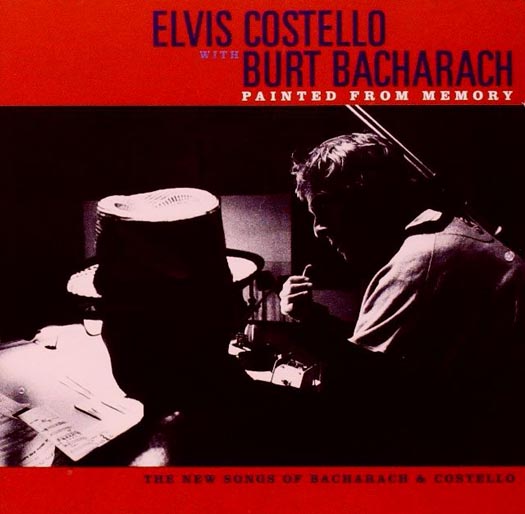
Music Sundays | Sorrowfulness | Burt Bacharach & Elvis Costello

Elvis Costello and Burt Bacharch's heartbreaking 1998 collaboration, Painted From Memory.jpg

The perfectly matched, heartbreaking, heavenly collaboration between Elvis Costello and Burt Bacharach, Painted from Memory, the pop-music masterpiece, was released on the 29th of September 1998 — slightly old-fashioned, yet insistently clear and capable of flooding the heart with all the awful beauty of love’s highs and lows … mostly lows … “In the darkest place,” it all begins, “I know that is where you’ll find me” — remains to this day one of my favourite albums ever, one I go back to again and again.

The people we meet on the album who move through these 12 perfect pop songs aren’t teenagers tasting first-love tears.
They’re grownups who know what they’ve done to themselves, their hearts broken, who are now enveloped in a realm we’ve all visited from time to time, a dimension where time ticks away just a bit more slowly and the world passes by at a remove. They are displaced and disconnected, seen only in fine silver frames, distant cities or watching from afar. They live in empty houses, waiting for sleep to come to take them somewhere else, and all this they do to music meticulously crafted by two experts of the form.

Neither producer Burt Bacharach nor composer Elvis Costello is a stranger to collaboration, but together they are a singular pairing, as Costello brings discipline and edge to Bacharach’s lush melodic outpourings, while Bacharach returns the favour by setting Costello’s exacting progressions and taut wordplay in soundscapes that are both intricate and silky smooth.
Take, as a spectacular example, the gorgeous ballad What’s Her Name Today?, a Costellian pondering on the ruin brought about by those in pain that’s not so much backed by Bacharach’s purposeful grand piano as admonished — you’re a fool it declares, before sweeping up the whole affair into a whirlwind of strings and human wreckage.

Other times, they’re more sympathetic, deploying Bacharach’s famous mellow trumpet to harmonize with the vocals on the tricky tale of infidelity Toledo, or winking at the conceit of The Sweetest Punch by threading the tune with chimes, a lovely instrument you have to hit, with mallets.

In the song above, the horns say a little prayer, below … the bells chime.

The sum of this artistic one + one is more than strictly musical. By coming together when they did, each man underwent a kind of recalibration whereby the sheen of kitsch acquired by Bacharach’s body of work since his ’60s heyday was stripped away, and Costello, then in his mid-40s, shed the last lingering remnants of his image as an angry young man.
In turn, Painted from Memory itself became a bridge, connecting classic works of love and loss — think Frank Sinatra’s ninth studio release, 1955’s concept album, In the Wee Small Hours — to the wave of pop-jazz new schoolers (Norah Jones, Michael Bublé) that followed closely in its wake.

Costello and Bacharach know that opening yourself up to the sentimental side of life exposes you to its cruelties as well; it takes courage, so Painted from Memory concludes with a plea for fortitude and grace.
God Give Me Strength — which they wrote over the phone lines — is the first of the pair’s dual efforts and it remains one of the best, an achingly gorgeous last-stand waltz through the end stages of grief. “That song is sung out,” it concedes, “this bell is rung out.” Except that it isn’t, because there’s something in all of us, the part Painted from Memory renders so well, that will always wait for the bell to ring. That damned, beautiful bell.