
Category Archives: News

#USElection2020 | U.S. Long National Nightmare Will Soon Be Over

trump-cries.gif

The old tricks aren’t working. The October Surprise surprised no one. Junior says nobody’s dying. And the low whine of panic emanating from Trump, and his terrible children — Don Jr. mansplaining the pandemic, while Ivanka’s campaign “tea parties” try to convince suburban women that daddy doesn’t want you to die, just everyone else — well, it’s all coming to an end, perhaps as early as 7:30pm Pacific time Tuesday night, when all the Florida votes — including mail-in ballots — will have been counted.
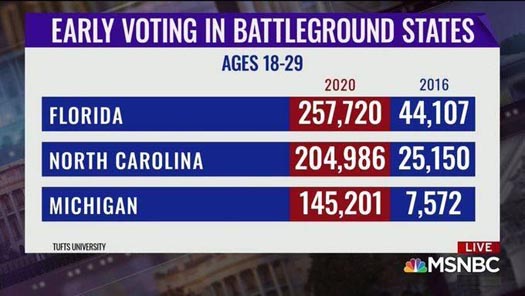
Voting by young people aged 18 - 29 in the 2020 U.S. election will be exponentially greater than in 2016

The graphic above was published by MSNBC two weeks ago. For the past two plus years, American activist Emma González — the high school senior who survived the horrific February 2018 Stoneman Douglas High School shooting in Parkland, Florida — and her fellow Parkland student, David Hogg, have joined with tens of thousands of other youth across the U.S. to change gun laws, and work to vote Trump and the Republicans out of office.

In 2015, young voters by the millions across Canada cast a ballot for Justin Trudeau, in numbers previously unimagined, driving overall voter turnout across Canada from 60% in 2011 to 70% in October 2015. In the process, the overwhelming youth vote turnout gave Trudeau a majority government.
As pollsters tend to under count young voters — because, as can be seen in the 2016 MSNBC figures in the graphic above, more often than not those 18 – 29 years of age don’t get out to vote — given that in 2016 Donald Trump won the Electoral College (but not the popular vote) by the mere combined vote of 107,000 American votes in just three states: Wisconsin, Michigan and Pennsylvania — out of a total combined U.S. Presidential vote of 128,838,342, with 65,853,514 votes cast for Hillary Clinton, and 62,984,828 for Donald Trump — and given the unprecedented strength of the 2020 student Get Out the Vote campaign, dedicated to mobilizing the largest early vote and the largest overall student and young persons vote in American history, and given their success to date in driving the vote of young people across the U.S., in every state, by anywhere from ten to fifty times their number in 2016, and given that pollsters haven’t properly accounted for the young vote — young people are notoriously difficult to reach by pollsters — the youth voter turnout in the 2020 election will prove the difference maker, and come the late evening of Tuesday, November 3rd, it’s gonna be a rout, and not just a nailbiter, for Democrat Joe Biden.

Don’t take VanRamblings word alone, though — listen to what seasoned political operatives, strategists and journalists in Canada, and across the U.S., have to say about Tuesday’s consequential Presidential election.

Slate's Poltical Gabfest panel, David Plotz, Emily Bazelon and John Dickerson

Slate’s Political Gabfest is my favourite American political podcast — every Thursday is a joy, when the podcast is published late in the afternoon.
The podcast is hosted by the cantankerous and recently divorced American journalist, David Plotz — the former CEO of Atlas Obscura, past editor-in-chief of Slate, longtime co-host of the Slate Political Gabfest and founder of City Cast, who lives with his three children in Washington, D.C. —&#32and Gabfest co-hosts, Yale University professor and legal scholar, and writer with New York Times Magazine, Emily Bazelon, and correspondent with CBS’ 60 Minutes, the humble, good-natured, engaging and oh-so-erudite John Dickerson — who in the embedded podcast below of their latest Political Gabfest episode weigh in on the U.S. election, in an informed, easy-to-listen-to and accessible manner that will give you a greater insight into what is likely to occur tomorrow night than you’ll hear anywhere else.

The members of The Herle Burly podcast — left-of-centre federal and provincial Liberal Party strategists, David Herle and Scott Reid, and former four-time Stephen Harper Conservative party campaign manager and right-of-centre political strategist (a supporter and advisor to U.S. President, Donald Trump) — also weigh in on the November 3rd, 2020 U.S. election.

The PBS Newshour’s regular Friday political panel, moderated by Newshour anchor Judy Woodruff, the panelists, moderate Republican, sober New York Times columnist and acknowledged Trump-disparager, David Brooks, and 83-year-old, left-of-centre American political columnist and commentator, Mark Shields, together discuss tomorrow’s inductive 2020 U.S. election.

Now, it would hardly be fair if VanRamblings didn’t allow you to hear from FiveThirtyEight’s Nate Silver, the most trusted aggregate pollster in the United States. Up until 2008, Silver was a statistical sports analyst, whose track record predicting team and tournament wins garnered him an almost startling following among bookies, bettors, and those in the sports field.
As a lark, in 2008 Nate Silver decided to apply his statistical methodology to the U.S. election, both the Presidential and the congressional elections. Long story short, come election night, Tuesday, November 4th, Nate Silver’s prediction that Barack Obama would become the next president — having broken down the predicted vote in every county, in ever state across the U.S., and predicting with 100% accuracy, transformed Silver from a full-time sports analyst (an activity in which he and his colleagues on fivethirtyeight are still engaged) — and transformed him into the most trusted pollster in the United States. Here’s a bit of Silver on the election.


Nate Silver's aggregate polling website fivethirtyeight predicts an 89% chance Biden wins the U.S. Presidential election

Just click on the graphic above to be taken to fivethirtyeight’s 2020 election forecast


Today, we’ll leave you with this Joe Biden campaign ad, on decency

VIFF 2020 | Canada’s National Film Board Shines With 2 Great Docs

Jennifer Abbott's devastating climate change documentary, The Magnitude of All ThingsThe Magnitude of All Things, director Jennifer Abbott’s devastating NFB co-production about personal and planetary grief, premièred at VIFF’s Vancity Theatre, with Abbott and co-producers Shirley Vercruysse and Andrew Williamson in attendance. #VIFF2020.

The Magnitude of All Things (Canada). Truth telling, a call to action, and gorgeously filmed by cinematographer Vince Arvidson, Sundance and Genie award-winning director Jennifer Abbott (The Corporation) offers viewers an intimate and emotional punch-in-the-gut with her new documentary.
The Magnitude of All Things draws intimate parallels between the experiences of grief — personal for the filmmaker in coming to terms with the passing of her sister, and planetary, as Magnitude takes us across the globe to witness planet Earth in crisis: from the catastrophic fires Australia suffered at the end of 2019, to the devastating role our current climate emergency has played in destroying a southern hemisphere eco-system, the bleaching of the Great Barrier Reef, the rising sea levels drowning the Pacific Island nation of Kiribati, to the destruction of the Amazon rain forest arising from the grievous policies of Brazilian and Ecuadorian presidents Jair Bolsonaro and Lénín Moreno, the struggles of the Indigenous peoples who are waging a desperate battle against oil and mining extraction and, at home, how the melting ice in the autonomous Newfoundland and Labrador Inuit community of Nunatsiavut has permanently altered the landscape.
Lest you believe The Magnitude of All Things to be a polemic, didactic filmmaking regurgitating what you’ve heard before, allow this writer to assure you that is not at all the case. Rather, Magnitude is a film about battles waged, lamentations of loss, and raw testimony that coalesces into an extraordinary tapestry, woven together with raw emotion and staggering beauty, a film that transform darkness into light, and grief into action.

The Magnitude of All Things. A film by Jennifer Abbott. An NFB & partners production.

star.jpg star.jpg star.jpg

John Ware Reclaimed, an NFB documentary from filmmaker and historian, Cheryl Foggo.

John Ware Reclaimed (Canada). A genealogical exploration of the life of 19th century Alberta cowboy, John Ware, that seeks to reclaim the narrative of his life, filmmaker and historian Cheryl Foggo expands on the work she undertook in mounting her 2012 award winning play, John Ware Re-imagined, as she re-examines the history of Alberta’s famous early black folk hero and Prairie cowboy, who was rugged, independent & black.
From a story written by Omayra Issa for CBC Saskatchewan …

“It is a history that has been erased,” says Foggo. Both sets of her maternal grandparents came to Saskatchewan from the U.S. at the turn of the 20th century. Three generations lived in the province before moving to Alberta, the family eventually spanning across the 3 Prairie provinces.

Foggo’s ancestors were among the 1,500 to 2,000 African American farmers who came from the southern U.S. from 1905 to 1911 in search of a better life and a place that was less hostile and dangerous than Jim Crow America. They established five small pioneering communities: one in Saskatchewan and four in Alberta. Their story is steeped in slavery, racial segregation, and the fierce desire for emancipation.

Foggo has been reclaiming her family history for decades. More recently, she has been doing the same for an iconic Black figure on the Prairies, John Ware.

Ware proved himself to be a charismatic man and a highly skilled rancher. He owned two ranches, ultimately reaching one thousand head of cattle. He also pioneered irrigation in the region. Legends of his talents as a horseman were known in Indigenous communities on Treaty 7 territory, where he was close friends with chief Crowfoot of the Siksika First Nation.

John Ware’s story is a fundamental Prairie story and an indelible thread in the Canadian narrative. “It is important to connect John Ware to the Black history that was here in his time, carried on, and has been here from that time forward,” Foggo told CBC Saskatchewan journalist, Omayra Issa.

Saving the Environment | Fast Fashion vs the ‘Thrift’ Economy

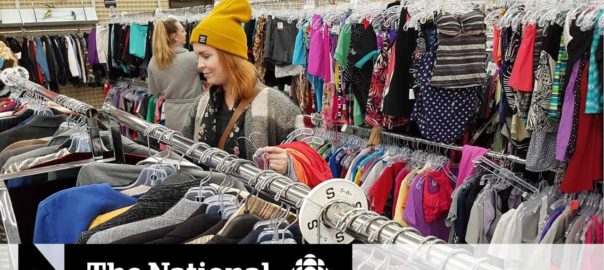
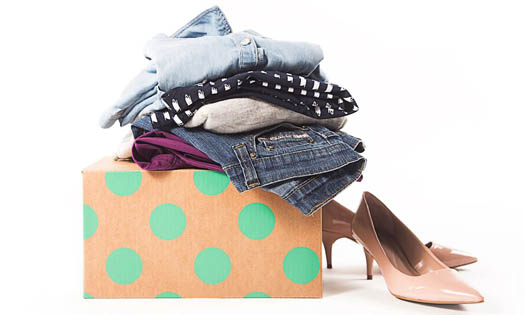
Consignment clothes shopping as a thrifty means to save the environment

Fashion is today the second most polluting industry in the world, following only the oil business.
For altruistic and ecological reasons, the shopping attitude of Canadians towards second-hand clothes has been changing, and consignment stores are bustling with their newfound clientele, and consequent increased sales.
What was once a $12 billion North American market only a few short years ago is now a thriving $24 billion consignment clothing market, with the marketplace expected to top $50 billion by the middle of the next decade.
In other words, the ‘second hand economy’ is thriving.

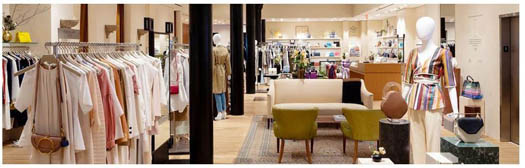
A consignment clothing shop

Consignment stores are not what they used to be, offering quality like never before, carefully curated collections, and an elevated shopping experience for their burgeoning customer base.
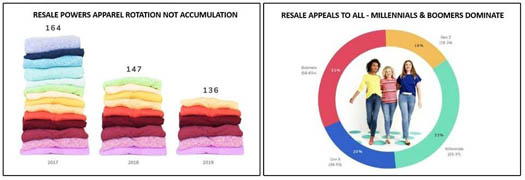
A recent published study shows that in 2018, 64% of women and men were willing to buy pre-owned consignment store clothing — clothing which often has never been worn, and acquired from businesses which have gone bankrupt — up from 45% in 2016. The clothing retail industry believes that by 2028, up to half of the clothes in women’s and men’s wardrobes are likely to be ‘secondhand’. Fashion circularity, a new term referring to the recycled life of a garment, as indicated above is projected to reach $51 billion in five years, up from the current $24 billion.
In discussion with consignment store operators across Vancouver, proprietors told VanRamblings that where there was once “a stigma attached” to purchasing consignment store clothing — conjuring images of the yellow sweat patches, clothes strewn casually and confusingly hung (if at all) and emotional baggage people often associate with used clothing …
“Now, thankfully, purchasing clothing from consignment stores is not just acceptable — it’s cool and has completely captured the fashion zeitgeist,” one consignment clothing proprietor recently told us.
A recent study published by the Raymond James Financial Centre reports that 56% of women and men aged 18-29 prefer the consignment second hand market over conventional retailers of new clothing. Shopping in a thrifty manner guarantees shoppers the uniqueness of their own style. Most of the pieces in a consignment clothing shop are one of a kind, and allow endless possibilities of matching and styling in a creative and unique way.
All of which is to say, no longer is there a taboo about consignment clothes shopping. The rise of the sharing economy has also helped — it’s taken the stigma out of resale and removed the need to own something forever.

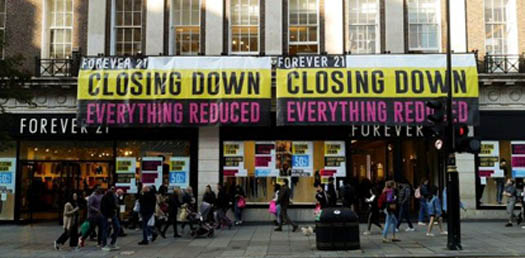
Forever 21 fashion retailer closes its doors

In September, fast fashion chain Forever 21 announced it was closing all its international locations, including 44 stores in Canada, amid flagging sales.
According to a recent interview conducted with the CBC finance guru Diane Buckner, British Columbia retail consultant Bruce Winder told her fast fashion’s target market — young, style-conscious shoppers on a budget — are also among those most concerned about the health of the planet.

“The younger millennial specifically, along with Gen Z, are incredibly environmentally conscious,” he said. “And they look at every brand and every product in terms of what is the impact on society, but also what is the impact on the employees and the environment.”

Not only do consignment stores benefit from the fact that the city’s stylish set are clearing out their closets like never before, a return to quality over quantity in the minds of most shoppers means visits to consignment stores for quality designer goods that will last (i.e. not end up in a landfill) and not break the bank will only continue to rise.

One third of millennials do the vast majority of the clothes shopping at thrift and consignment shops

How does consignment clothing store shopping save the environment while also saving you money? Thrift shopping at consignment stores offers a viable solution for anyone looking to help out the environment.

  • Saving Money. Thrifted clothing is far more affordable than new clothes of comparable quality.

  • Smarter Buys. You tend to spend more time looking over each item instead of buying it outright.
  • Unique Finds. It’s highly unlikely that anyone else is walking around in the same clothes as you.
  • Creative Potential. You might be inspired to try new combinations, or even some DIY reconstruction!

If that isn’t enough incentive, as promised above, here are seven ways Erich Lawson writes thrifting helps the environment …

1. Consignment clothing shopping lowers your carbon footprint. A great deal of energy goes into clothing manufacture, right from the transportation of raw materials to the production process. Then, there’s the energy required to transport clothing to stores, and dispose of unwanted pieces. When shoppers buy from consignment stores, we prevent wastage of energy & resources on production of new clothes.

2. Aiding in Water Preservation. In addition to energy, water consumption is extremely high at every stage of clothing production. For instance, growing one kilogram of cotton requires 5,300 gallons of water, while wet processing and printing use 18 and 21.6 gallons respectively, per pound of cotton. Manufacturing, packaging and transportation processes add to this cost as well.

3. Reducing Chemical Pollution. The production of cotton is highly pesticide-intensive, causing soil acidification and water contamination. Textile manufacturing processes also involve the use of harmful dyes, caustic soda and crude oil by-products. These chemicals are generally dumped into areas around manufacturing units, contaminating surface and ground water through soil runoff.

4. North Americans throw out anywhere from 60 to over 80 pounds of textile waste annually, and only about 10% of this makes it to consignment stores. If more people start shopping for consignment clothes, less fabric ends up being dumped in landfills. That’s not all. Packaging material is also reduced, keeping plastic, paper and metal out of the waste stream.

5. Inspiring Green Living. Thrifting is an essential part of green living, in more ways than one. When you buy consignment clothing, you keep them from being sent to a landfill and reduce manufacturing demand as well. Also, by donating consigning clothes you no longer wish to wear, you encourage others simply by giving them something they can use.

6. Boosting Community Development. Shopping at consignment stores means support for local business instead of multinational corporations. Consignment stores provide employment in retail outlets, creating more jobs and boosting the local economy. Many hire disabled workers and support local community programming projects as well.

7. Encourages Recycling. Did you know that recycled cotton clothing uses less than 3% of the energy that would have gone into producing new clothes? When you reuse or recycle clothes, you’re decreasing the demand for production & encouraging sustainabity. It may not seem like much, but every item that doesn’t end up in a landfill counts as a win!

In the 1990s, when VanRamblings was charged with training Statistics Canada employees on how to conduct the annual Survey of Household Spending, during the role play portion of the training exercise, in answer to the question as to how much we spent on clothing and shoes each year, we responded with: $500. Senior staff at Statistics Canada guffawed loudly when VanRamblings offered this bit of information, saying to us at days’ end, “Raymond, suggesting that you spend only $500 a year on clothing and shoes is the funniest thing I think I’ll ever hear. How clever of you. Good for you. It brought lightness to the day’s proceedings.”

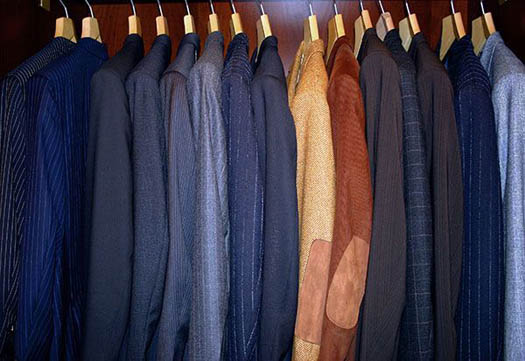
Men's jackets to be found at a consignment clothing shop

Little did senior staff know that, in fact, VanRamblings was acquiring most of our clothing from Arthur’s for Men on West 1st Avenue just west of Burrard Street, where fashionable wool sweaters could be had for $15, shirts and pants for $10, and jackets and shoes for $25, or less.
VanRamblings’ children had long encouraged shopping at consignment stores.

“Dad, not only are you colour blind, you have no fashion sense. In the past, you’ve bought your clothing at The Bay, and you’ve tended to shop for the store brands. You are much better off shopping for name label clothing at a consignment store: those clothing items are priced less expensively than what you’re buying now, the clothes are of invariably better quality — and will hold their nap in a way your current shirts, sweaters and pants will never do, meaning the clothing will last longer.”

“Buying name label consignment clothing assures quality, assures — at least in most cases — proper colour and design that will match the remaining items in your wardrobe, and as long as you shop at Arthur’s for Men, the owners will know what clothing items you have in your wardrobe at home, because they have a list of what you’ve purchased, so will be able to recommend complementary items.”

And now to the present.
Recently, we purchased an Italian suede jacket we’d seen at a neighbourhood Italian clothing boutique that had now gone out of business.
The jacket was retailing for $380.
When Turnabout (our consignment clothing shop of choice, these days) purchased almost the entire stock of the bankrupt Italian clothing boutique, that $380 suede jacket was put on sale for $40!

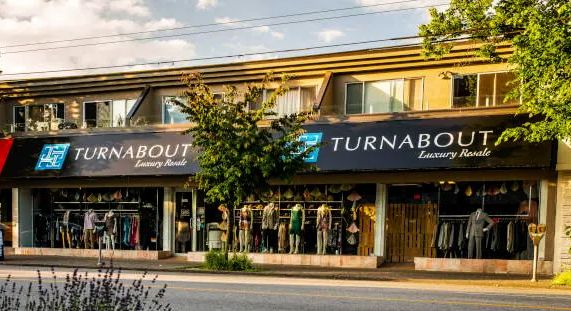
Turnabout Luxury Clothes Consignment Shop on West Broadway in Vancouve

When walking into the store the morning the jacket was put on sale, staff approached me to say, “Mr. Tomlin, we’ve just put a jacket out on the floor that we think you’ll love,” directing me to the suede jacket. “You’d better buy it now, or it’ll be gone by noon.”
So, we did — and enjoy wearing it today!

One third of millennials do the vast majority of the clothes shopping at thrift and consignment shops

Now, it may be a lark that our former employers at Statistics Canada thought our voiced annual clothing expenditure to be a laugh, but in our current scarce and uncertain economy, if sales at the consignment store we most often attend is any indication — where only a decade ago, we could wait for an item to drop 80% in price were we to wait six to eight weeks — when an item we like now appears in the shop, we purchase it immediately, because if we don’t, it’s almost a certainty that it’ll be gone the next day.

Holiday Season Gift Giving | Hacking Amazon to Save Big Bucks

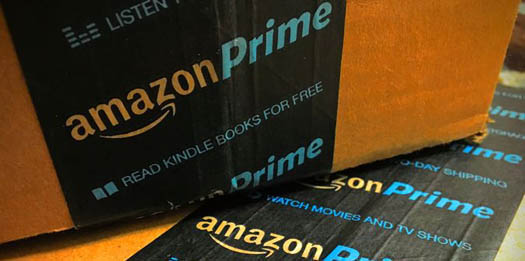
Amazon Prime delivery boxes

With the holiday season coming up, gift giving is on the minds of a great many people, gifts for family, friends and colleagues, and gifts for oneself.

Given the uncertain nature of the economy and the scarce dollars available to most folks, a bargain is always appreciated — and make no mistake, with Black Friday coming up on November 29th and Christmas sales at the ready across our land to entice you to spend, there’ll be plenty of bargains to rein in whatever disposable income you’ve set aside for gift acquisition.

Retail online sales, if projections are correct, will top $40 billion Canadian this holiday season, with total world sales expected to exceed $3.5 trillion for 2019 — most of which monies will be spent acquiring products made available on the Amazon website (or app, as the case may be). Latest figures published by Statistics Canada indicate that 3 out of 5 Canadians do most of their non-food shopping on the Amazon.ca website — cuz it’s less expensive than the retail stores as well as reliable, and if you’ve acquired an Amazon Prime membership, goods delivery is free within 12 – 36 hours.

Amazon Warehouse categories

If you’re not in the market for anything in particular — say you’re just looking for gift ideas or killing time during your lunch break — you can get to the Amazon Warehouse Deals landing page by heading to Amazon.ca and search for “Amazon Warehouse” or “Warehouse Deals.” From there you can browse the categorized listings just as you would at any online retailer.

Amazon Warehouse Deals

Most people who shop on Amazon, though, know exactly what they’re looking for. If you already have something specific in mind but want to see if there’s a discounted Amazon Warehouse option available, this is where your sleuthing, money-saving skills come into play, saving you up to 50%.

The bottom line: why pay full retail when there’s a perfectly fine — and much cheaper — alternative?

In much the same way that VanRamblings does most of our clothes and shoe shopping at consignment stores (Turnabout is our current favourite, where we save up to 80% on new sweaters and jackets), the Amazon Warehouse has perfectly fine ‘used’ goods at 50% off or better savings.

Dash Compact 1.2 Litre (2 Quart) Air Fryer

For instance, we recently acquired a Dash 1.2 L Compact Electric Air Fryer (which we’ll write about later in the month) for $42, when the retail price on Amazon.ca and at Walmart was a much steeper $101.67, plus tax. The Dash Air Fryer arrived in the original box, in pristine condition, in 48 hours.

All we did when arriving on the Amazon web page for the Dash Air Fryer was scour the page, keeping our eyes peeled for words like “New & Used,” “Buy Used,” “New & Used Offers” or just plain “Used” — and with the click of a couple of buttons, our ‘new’ Dash 1.2 Litre Compact Air Fryer was on its way, at a cost saving of pretty darn close to 60 per cent.

Why’s Amazon Warehouse stuff so cheap? Just like other major retailers such as Walmart or Costco, Amazon takes in a lot of customer returns, which it can no longer sell as new-in-box, regardless of why the buyer sent the item back or whether it’s even been opened.

That’s why everything Amazon Warehouse sells is listed as used, even if the product itself has never been touched. Regardless of its condition, used stuff is just worth less — sometimes a lot less. And that, most often, is very good for you.

Amazon delivery box

Amazon has five different grades it assigns to items it resells. Here they are with brief explanations of what Amazon means by them.

Renewed: This is the highest grade an Amazon Warehouse item can receive and is on par with what other companies might call “refurbished.” Renewed items have been closely inspected and tested and determined to look and function like new and come with a 90-day replacement or refund guarantee.

Used, Like New: No noticeable blemishes or marks on the item itself, although the packaging may be damaged, incomplete or missing all together. All accessories are included, and any damage to the package will be described in the listing.

Used, Very Good: Item has been lightly used, with minor visible indications of wear and tear, but otherwise in good working order. Packaging might be damaged, incomplete or the item repackaged. Any missing accessories will be detailed on the listing.

Used, Good: Item shows moderate signs of use, packaging may be damaged or the item repackaged and could be missing accessories, instructions or assembly tools.

Used, Acceptable: Very well worn, but still fully functional. Major cosmetic defects, packaging issues and/or missing parts, accessories, instructions or tools.

How to choose the right grade? If there are multiple listings with different grades available for the product you want to buy, think about what you’re going to use it for. If it were something purely functional and you couldn’t care less about its cosmetic condition, like hair clippers or a cordless drill, our suggestion: go with the cheapest option, period.

Honestly, a low enough price on just about anything can woo most folks into dealing with some scratches or scuffs. Not to mention, Amazon tends to err on the side of caution, marking items as Good or Acceptable that the average person would consider Very Good or Like New. One of the benefits of purchases made through Amazon Warehouse is that

Amazon’s standard 30-day replacement or refund return policy applies, which comes in handy if you wind up with a lemon. Amazon does caution that because these products are considered used they don’t come with the manufacturer’s original warranty — but you can, in fact, register the product online with the manufacturer for the full two year, or better, warranty.

And remember: Amazon Prime members still get free shipping. Subscribing to Amazon Prime won’t get you a bigger discount on Amazon Warehouse Deals, but you’ll get free shipping just as you would for any other Prime-eligible item, which is why it remains a good deal, at $90 Canadian a year to sign up for Amazon Prime (which also gives you access to Amazon Prime TV, for most folks a pretty good deal when you get right down to it, and applicable to all Amazon Warehouse purchases, as well).

As above, most stuff you buy through Amazon Warehouse ships and arrives within the same one- to two-day window you get with new items, although some orders do take longer to fulfill. If that’s the case, the extra handling time is usually indicated on the listing, so you know what to expect.

Of course, Amazon will be participating in this year’s big Black Friday and Cyber Monday sales too, with some deals starting as early as Nov. 22nd, with all current Amazon.ca Black Friday deals available here.