Category Archives: Jude and Megan

Stories of a Life | Raymond & Cathy Marry 50 Years Ago Today

Raymond Tomlin and Cathy McLean on the days leading up to their marriage, December 19th, 1970

Cathy Janie McLean and Raymond Neil Tomlin were married at Pilgrim United Church in North Edmonton, the church Cathy had attended with her family since moving to Edmonton to begin high school, on a near frozen Edmonton Saturday, December 19th, 1970 afternoon, at 1:30 p.m.
Outside the sun shone, the weather a nippy but not unseasonable -35°. There were several in attendance who expressed their dismay that the sun was streaming into the church during the ceremony, something which I never quite understood. For me, it was like being blessed by God.
The marriage occurred almost a year-to-the-day since I had first met a bedraggled dirty-blonde, long-haired Cathy, very much a hippie, huddling with her friend and University of Alberta roommate, Joy, who were at the Royal Towers Hotel in New Westminster, as we waited for the Greyhound bus to transport us into Vancouver. Long story short, Cathy and I, and Joy and my friend Charles, hung out over the next few days, prior to Cathy and Joy returning to Edmonton. In the spring of 1970, I hitchhiked out to Edmonton, without any prior notice to Cathy of my intention to do so, and stayed with Cathy for a week, when we made love for the first time.
Cathy travelled out to Vancouver with her mother that summer in 1970, and rather than return home with her mother, Cathy remained in Vancouver. By mid-August the two of us were living together. Four months later, on Saturday, December 19th, 1970 the two of us were married.


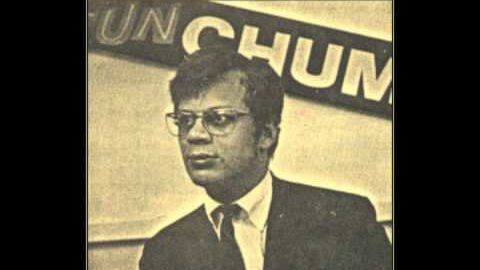
Bren Traff, CKLG, 1967

The best man at my wedding was Bren Traff. Here’s a very brief, 6-second clip of Bren recorded in 1967, as he was starting off his CKLG 20-20 newscast. Later Bren would take over weekend CKLG-AM mornings, and later still, with almost every other deejay in town, move to a renewed CFUN — which had dropped its money-losing CKVN, Vancouver’s Voice of News format, returning to a tried-and-true rock ‘n roll format in the 1970s. Bren had been my best friend from 1966, right through until February 1972, which is a story to be told on VanRamblings another day.

In addition, another friend of mine, Hal Weaver — who, at the time, was the morning rock jock at CKVN — asked if he could be a co-best man at the wedding; I asked Cathy if that was alright with her, and she said it was fine. At some point, I’ll write about the last show, on CJOR from midnight to 6 a.m. Hal performed, a show he called Sunday Morning Coming Down, flat out the best radio programme in all of Vancouver radio history.
Hal Weaver is considered by many to have been one of the best, straight ahead Canadian-born rock jocks — a title he shares with others, including Daryl B. and Terry David Mulligan. Hal had a dynamic personality and voice to match. In 1968, J. Robert Wood hired him at CHUM Toronto, where he stayed for two years before moving to Vancouver’s CKVN in 1970. Hal died of throat cancer at the age of 28 in December, 1971, in Surrey, B.C. At the time Hal asked to be a co-best man, he’d already been diagnosed.

Cathy mother’s Myrtle insisted that Cathy stay at her home, just down the street from the church, in the days leading up to the wedding, while Hal, Bren and I stayed at a nearby hotel. The only time Cathy and I saw one another in the week leading up to our wedding, was when we met with the church pastor to talk about our vows, and our commitment to one another. Most of those meetings with the pastor had Cathy and I arguing with one another — if I recall correctly, the arguments were a consequence of an utter lack of maturity (not to mention, quite a bit of insecurity) on my part.
Cathy also insisted on changing the vows to read, “As long as we both shall love“, from “As long as we both shall live,” a change the pastor opposed, but Cathy dug in her heals on the issue, and of course got her way. That particular changing of the vows should have been the first hint I recognized that this was a marriage not to last for the long term — but I was so head over heels in love with Cathy that the thought never occurred to me.
[A digression. I would like to present photos of our wedding at this juncture in today’s story, but I have no photographs of the wedding in my possession — when we divided up our belongings in the early 1980s, Cathy took possession of the wedding photos, more to please her mother than for any other reason … my children tell me she still has the wedding album]
Nonetheless, Cathy and I were married, spending our wedding night at a fancy downtown Edmonton hotel, a gift from her mother (along with a brand new car she’d bought the two of us — recently, I’ve written about my daughter being a little too bourgeoise for my tastes; that well-practiced bougie aspect of how Megan presents herself to the world, and lives her life, comes directly from her mother & grandmother, the latter a Southam).
As you can see in the photo atop today’s column, I was pretty much smitten with Cathy (I think the only other person I know who looks at his wife as I do in the photo above is Seth Klein, when he looks at his wife, Christine Boyle). Once at the hotel, Cathy and I did what we usually did — we got stoned, which was a major feature of our life together during my university years in the early 1970s, along with a very active sex life.
Together, the two of us watched a Peter Sellers movie (although he had only a small part), The Wrong Box, on TV, snuggling with one another on the bed. About half an hour into watching the show, and nicely buzzed, Cathy retreated to the washroom, emerging in a blue, diaphanous and very short silk negligee — which, as you might imagine, did not remain a part of her dress for very long. We woke up the next morning very tired, indeed.
The marriage was a tempestuous one, not troubled exactly, but demanding at times, and overall for the first seven years, a great deal of fun, filled with love, betrayal, travel, an immense amount of sex (five times a day, every day for a decade, sometimes more), and on my part, a great deal of learning on how to be a productive and influential person in this world, as for all the years we were married, Cathy dressed me (“This is what you’re wearing today.”), edited my essays and other writing, and transformed me from an east side slum dwelling kid devoid of social skills into a presentable, and sometimes erudite young man. No Cathy, no Raymond Tomlin, at least not the Raymond Tomlin you have all come to know.

Stories of a Life | When Megan Was 7 Years of Age | Marriage

Megan Jessica Tomlin at age 7 in 1984, black and white photo
Unless I’m mistaken, and I don’t think I am, the photo of Megan above was taken by her mother, when Cathy was taking a photography class she very much enjoyed. As you can see in the photo, Megan is a distinct personality. Look at those wondrous eyes of hers.

When out for a walk in our Kitsilano neighbourhood when Megan was 7 years of age, as we were walking down the street heading towards Jericho Beach, Megan stopped and turned to me, and said in a matter-of-fact and portentous manner, “Dad, when I grow up, I’m going to get married.”

“Good for you,” I said to Megan in response.

As we were nearing McBride Park on that sunny summer 1984 Saturday afternoon, Megan pulled me over to sit on the grass opposite the tennis courts to begin a discourse on her thoughts on marriage …

“I could marry a poor boy, and I would love him, and he would love me, and we would have children together, and be as happy as happy could be every moment of our lives together, for many, many years of wedded bliss, happily raising our children together, all of us loving one another.”

“On the other hand, I could marry a rich boy, someone with whom I could love with all my heart, and we would have children, and love our children as much as it possible for a parent to love their children — which, if you and mom are any indication as to how much love there is to be given to their children, is a huge love, one of immense and sustaining proportion.”

“Now, if I was to marry the rich boy, and we were to have children together, as we most assuredly would, each of the children would have their own bedroom, and my husband and I would have ours. My children would not want for anything, ever, we could travel, and every day of our lives together would be filled with joy untold, our love for one another carrying us through all of our days, in a life of immense satisfaction and happiness, in comfort and without concern to distract from our lives.”

“Y’know, Dad, if I have a choice, I am going to marry the rich boy.”

Megan’s extemporaneous but thoughtful treatise on marriage was surprising for a number of reasons, the most prominent being that her mother and I were in the midst of an overtly contentious and very ugly divorce and custody battle that had gone on for some years — which both Jude and Megan found themselves precipitously and distressingly in the middle of — so I found it to be a bit more than surprising she would ever want to marry, given what she was experiencing with her own parents, that she had quite obviously given the matter some thought, and how pragmatic she was about whom she might choose to marry, and the — forgive me for saying so, but somewhat mercenary — criteria she had set for her future intended, and the tenor of the married life she felt assured would follow.

Make no mistake, Megan was raised as a feminist and a socialist — at least by me, her mother’s “politics” post marriage reverting to the conservative politics of her parents, and the peers of her distinctly privileged youth.

Over time, Megan and I returned to the topic of her future marriage — still many, many years away — as I took pains to impress upon Megan the necessity of agency, that she should always be true to herself and to her values of compassion and contribution, that love must be a part of her life always, but not if it were to come at the expense of her independence and place in society as a difference maker striving to make ours a better and more just world for all. From time to time, Cathy would catch wind of my philosophizing and say to me, “Stop lecturing the kids. They don’t like it!”

There is so much more that I would wish to write on the subject I’ve begun to explore above, but perhaps I’ll save that for another day.

And Megan?

Yes, Megan married the “rich boy”, the two very happy together, their children perhaps not quite so much (children, as we all know can be, and often are, rebellious, as Megan was with her mother most of the time she was growing up, and as she often was with me — honestly, it’s to be expected), although her children (and her lovely and successful husband, Maz) love her to distraction, Megan in “middle age” quite the sophisticated (if too bourgeoise for my tastes, if I might be so bold as to say so) woman of 43 years of age, her life not having taken the path of her best friend growing up, Kasari Govender (she/her/hers, who took office as B.C.’s first independent Human Rights Commissioner on September 3, 2019), but for Megan, her life still one of meaning and substance, if not quite the degree of societal contribution for which she possesses an unparalleled aptitude.

Stories of a Life | The Ties That Bind Daughters and Fathers

Fathers and daughters

When Megan Jessica Tomlin was born on a Saturday night, March 26th, 1977, at Burnaby General Hospital at 10:26pm, given that she was a breach birth, the hospital room was filled with a harried collection of nurses and doctors & an anesthesiologist who’d been called to assist with the birth.
As a medicated Cathy lay peaceful, laying stock still on her white-sheeted hospital bed — given that she was infused with anaesthetic drugs to aid in the birth, to keep her sedated for what turned out to be her second, very difficult birth — upon delivery, a nurse gathered my new daughter, Megan, and brought her over to me, as I stood to Cathy’s left, just behind where her head lay, and handed my hushed newborn daughter into my arms.
For the 10 minutes that followed, a seeming lifetime of remembrance and love, Megan her eyes all blue peered directly into my eyes and deep into my soul, and for those few brief moments I into hers, as my daughter imprinted on me as the father who would become in her early years, and in succeeding years through to her late teens, the single most transformative person in her life, a father she trusted & loved with all her generous heart.
In the weeks that followed Megan’s birth, the wheels began to fall of the bus that was my marriage to Cathy, as Cathy seemed to lose herself, quitting her job at the Ministry of Human Resources office, drinking, staying out all night long, and otherwise engaging in self-destructive behaviour.
Why?

The British Columbia Teachers' Federation logo

Given my position as the British Columbia Teachers’ Federation Learning and Working Conditions Chair for the Interior, and my long years of work previous with the Federation, and the great relationship I’d developed with Linda Shuto — working with her to form the first Status of Women office within an NGO anywhere on the continent — as well as BCTF President Jim McFarlane and, more especially with BCTF VP Don Walmsley, as you might well expect from a Federation comprised of mainly older members, Executive plans were afoot for Federation generational leadership change — and I targeted as the person who would become a future BCTF President.
Don Walmsley visited Cathy and me multiple times throughout 1977, in our newly acquired Interior home, to advise the both of us that plans were in process to, at the spring BCTF AGM in 1978, run me as a second vice-president of the Federation, with an eye to soon becoming BCTF President.
Here’s how the Federation saw it, Don explaining to the both of us: my organizing bona fides in the Interior had gained provincial attention, Cathy and I were a young couple “from the Interior” (the left on the Federation liked the idea of running candidates from rural areas), Cathy was a professional, was sophisticated and presented well, we had two children — we were, as far as the Federation was concerned, “the perfect couple”.
Here’s what Don Walmsley told Cathy and I …

“Next year, Raymond, we’ll run you for 2nd VP. Cathy, you can run as a Board of Education COPE trustee candidate for Vancouver School Board. Raymond, we’ll find you a job in Vancouver, find you a house, and Cathy we’ll make sure you’re employed, as well, finding you a job in the city similar to what you’re doing up here. Next year (1978), once you’re on the Executive, Raymond, and have moved down to the city, you’ll be closer to the Federation offices. In 1979, we’ll run you for 1st VP, and depending on how the election goes for President of the Federation, if our candidate loses, we’ll run you for President in 1980. If our candidate wins, and serves a three year term, we’ll run you for President in 1983.”

Sounded good to me — and not so good to Cathy, as elucidated above.
Once Don had left our home, Cathy told me that she had no intention of having the next 20 years of her life being planned by the teachers’ federation, nor was she enamoured of the idea of living in my shadow.
Understandable.
You know how when you’re watching an awards show on TV, and the winner is (almost invariably) a man, the first person he thanks, whom he gushes over, is his wife, saying ardently, “I couldn’t have done it without her — she’s been my rock, and has stood by my side throughout the entire journey that has led to tonight. I will love you for always, my beloved.”
Believe me when I write: Cathy was having none of that arrant palaver.

Two-year-old Jude Nathan Tomlin, baby Megan Jessica, and dad, Raymond, in June 1977

Long story short, by early 1978, I had been awarded custody of both Jude and Megan, Cathy was off gallivanting around the globe with a drinking & carousing rock ‘n roll band — and I was left to raise two infant children.
From the outset, Megan was a bright and engaged child, far ahead of her milestone maturational markers — walking at 9 months, speaking at age 1, reading at 18 months — and by the time she was two years of age, as in control of her environment as any 11-year-old child of my acquaintance.
Where Jude — 21 months Megan’s senior — wanted to be out and about all the time, one of the friendliest, most gregarious and social children you’d ever want to meet, Megan was quiet, reserved, pensive and thoughtful, as big a “daddy’s girl” as could possibly be imagined, by my side throughout the day, and separated from me only when she was in daycare, or asleep.
As Cathy and I often remarked to one another as Megan was growing up, “Whose child is this, anyway? Megan certainly can’t be ours — she’s just so much brighter & more capable than either of us, or both of us combined.”
For me, there has never been anyone to whom I have been closer, who has understood me and “had my number”, with whom my relationship has proved more loving & honest than has long been the case with Megan & I.

We acknowledge — as if we have known each other across many lifetimes — that we have found one another on this Earth, in this lifetime, and as I josh Megan by referring to her as her very own diety, in this life the two of us take succour in the knowledge that we love one another, know one another, that as we live lives that are separate, Megan now married with children, and me in my west side home spending hours each day writing stories just like this, that as we run across one another from time to time, as we often do in my Kitsilano neighbourhood, that the first words each of us will utter will be, “I love you” — as we set about to continue our day.

</ br>The knowing glance tells you everything you need to know about fathers & daughters

Stories of a Life | Megan, Jude & Me and Movies | 80s and 90s

Cinema | Megan and Jude Tomlin, and their dad, love cinema, love the movies, stories of a life

Film has always been a central, organizing force in my relationship with both my daughter, Megan, and my son, Jude.
Our collective love of the cinema, attending film festivals and discussing what we saw following the various screenings we attended (usually at the Fresgo Inn on Davie, which was alive no matter the time of night or early morning) was, over the years, a central feature of our relationship — the relationship between son and daughter, and dad — that allowed us to delve deep into discussions of the meaning of life, and our collective responsibility to work towards creating a fairer and more just world for everyone.
Heart and deep caring for humanity was at the centre of our love of film, and at the centre of our loving familial relationship, informing the choices we made about how we would conduct ourselves in the world, and the projects and causes to which we would devote our time and our energies.

In the 1980s, when Cathy and I were going through a rancorous divorce, film brought us together. When in Seattle — which we visited frequently, always staying on the non-smoking 33rd floor of the Weston twin towers — in 1984, we took in a screening of Garry Marshall’s The Flamingo Kid — the story of a working class boy (Matt Dillon) who takes a summer job at a beach resort and learns valuable life lessons. Megan was seven years of age, and Jude 9 — both were uncertain about the efficacy of our trip south (without their mother’s permission — we called her upon arriving at our hotel), but the screening alleviated and, finally, repaired any of their concerns, and all went well that weekend. Fortuitously, too, upon our return, the divorce proceedings inexplicably moved forward into a more reasonable and thoughtful direction, reflective of all our collective concerns.
Whenever there was “trouble” in our relationship — generated, most usually, by their mother — film served to salve the wounds of dysfunction, allowing us to find our collective centre while healing the wounds that rent all of our lives during a decade-long, million dollar custody dispute.
Film spoke to us, made us better, took us out of the drudgery of our too often protean daily and, more often, troubled lives, and engaged us while putting our lives into a broader and more human scale perspective. Never once was there a film that we saw together when we didn’t come out of the screening feeling more whole, and more at one with ourselves & the world.

Such was true, at the screenings of Glenn Close and John Malkovich’s Dangerous Liaisons over the holiday period in 1988, or months later at the screening of Kevin Costner’s Field of Dreams, which we took in at the Oakridge Theatre, a favourite and comforting cinema haunt of ours.
When Megan wanted some “alone time” with me, it almost always revolved around watching a film together, although as Megan matured (and as her love for film matured), Megan made it plain that she was present in the theatre to watch the film, not “share time” with me, choosing always to sit in a whole other section of the theatre (it drove her crazy in the times that we were sitting together in a theatre that I would check in occasionally with her, looking at her to determine how she felt about the film — talking during a film was an unforgivable sin, so that was never going to happen).
Some days, Megan would call and say, “Dad, take me to a film.” And because I was a film critic at the time, and had a pass to attend at any cinema in North America, off the two of us would traipse to see Kathy Bates’ Fried Green Tomatoes (1991) or Johnny Depp’s Benny & Joon (1993) at the old 12-theatre complex downstairs in the Royal Centre mall.
Other times, post dinner and after Megan had finished her homework, I’d say to Megan out of the blue, “I’m heading out to attend a screening of a film. Do you want to come along with me?” Megan would ponder my question for a moment before asking, “Which film?”
In 1991, one very long film screening we attended was Kevin Costner’s directorial début, Dances With Wolves, about which we knew nothing other than it starred one of our favourite actors, and off the two of us went.

At screening’s end (Megan and I actually sat together at this particular screening, which took place in the huge Granville 7 Cinema 7, cuz the preview theatre screening room was just packed), Megan turned to me, and said, “Dad, I knew this was going to be a great film.” And it was. “And, you know what else? It’s going to pick up a raft of Oscars this year, too, and be considered one of the, if not the best, films of the year.”
Jude and Megan also attended film festival screenings with me.
Almost inevitably, Vancouver International Film Festival founder, and co-owner of Festival Cinemas Leonard Schein was present with his wife Barbara, and at a screening’s end, Megan would make her way over to wherever Leonard and Barbara were sitting to enquire of him whether or not he intended to book the film into either the Varsity, Park or Starlight.

Following screenings of Neil Jordan’s 1992 putative multiple Oscar award winner, The Crying Game or, that same year, Baz Luhrmann’s Strictly Ballroom, Megan marched right over to Leonard, and asked him boldfacedly, “Well, what did you think?” When Leonard indicated that he thought the films were not quite his cup of tea, that both films would have difficulty finding an audience, and that it was unlikely he’d be booking either film into one of his cinemas, Megan lit into Leonard with a passion and an anger that I had rarely observed as coming from her, saying, “Are you out of your mind? Strictly Ballroom (or, The Crying Game) is a wonderful film, and just the sort of film that not only should you book, but that you MUST book — these are both groundbreaking films that will only serve to reinforce your reputation as an arts cinema impresario, but will also make you a tonne of money, and we all know that you’re all about the money. Either you book these films into The Varsity, or believe me when I tell you that there’ll be hell to pay when you see me next.”
And with that, Megan marched off.

At the 1990 Vancouver International Film Festival, I’d caught a screening of Whit Stillman’s directorial début, Metropolitan, in preview, and knew that this would be a film that Megan would just love (and be astounded by, at the revelation of one of the characters, mid-film). I made arrangements to pick Megan up from University Hill Secondary at 3pm sharp on the day of the festival screening, we drove downtown, found a parking spot, and rushed over to The Studio Cinema on Granville to catch the 4pm screening of Metropolitan — which as I had predicted, Megan just loved.
In early December 1993, on a particularly chilly and overcast day, at 10am in Cinema 2 at the Granville 7 theatre complex, I caught a screening of Jonathan Demme’s groundbreaking new film, Philadelphia — a film about which I knew little, and a film that knocked me out (along with the handful of film critics in attendance at the theatre for the screening). Emerging from the theatre just after noon, making my way onto Granville, I looked for the nearest telephone in order that I might call Megan at school.
I called the office at University Hill Secondary, and asked them to find Megan and bring her to the phone. When Megan asked, “Dad, is everything all right?”, I told her about the film I had just seen, and that when it opened in January, I wanted to take her and Jude to a screening at the Granville 7. We talked about the film for a few minutes, with her saying about 10 minutes in, “I’m holding up the school phone, and calls coming in. Let’s get together after school. Come and pick me up, and we can continue our conversation. I’ll see you then, Dad. I love you.”
There are gifts we give our children. From my parents, it was what would emerge as a lifelong love for country music. For Jude and Megan, my gift was a love of music, a love of the ballet, and an abiding love for film.