
Category Archives: Jude and Megan

Stories of a Life | Redux | The Ties That Bind Daughters and Fathers

Fathers and daughters

When Megan Jessica Tomlin was born on a Saturday night, March 26th, 1977, at Burnaby General Hospital at 10:26pm, given that she was a breech birth, the hospital room was filled with a harried collection of nurses and doctors and an anesthesiologist who’d been called to assist with the birth.

As a medicated Cathy lay peacefully, stock still on her white-sheeted hospital bed — given that she was infused with anaesthetic drugs to aid in the birth, to keep her sedated for what turned out to be her second, very difficult birth — upon delivery, a nurse gathered our new daughter, Megan, and brought her over to me, as I stood to Cathy’s left, just behind where her head lay, and handed my hushed newborn daughter into my arms.

For the 10 minutes that followed, a seeming lifetime of remembrance and love, Megan her eyes all blue peered directly into my eyes and deep into my soul, and for those few brief moments I into hers, as my daughter imprinted on me / bonded with me as the father who would become in her early years, and in succeeding years through to her late teens, the single most transformative person in her life, a father she trusted & loved with all her generous heart.

In the weeks that followed Megan’s birth, the wheels began to fall off the bus that was my marriage to Cathy, as Cathy seemed to lose herself, quitting her job at the Ministry of Human Resources office, drinking, staying out all night long, and otherwise engaging in self-destructive behaviour.

Why?

The British Columbia Teachers' Federation logo

Given my position as the British Columbia Teachers’ Federation Learning and Working Conditions Chair for the Interior, and my long years of work previous with the Federation, and the great relationship I’d developed with Linda Shuto — working with her to form the first Status of Women office within an NGO anywhere on the continent — as well as BCTF President Jim McFarlane and, more especially with BCTF Vice-President Don Walmsley, as you might well expect from a Federation comprised of mainly older members, Executive plans were afoot for Federation generational leadership change — and I was targeted as the person who would become a future BCTF President.

Don Walmsley visited Cathy and me multiple times throughout 1977, in our newly acquired Interior home, to advise the both of us that plans were in process to, at the spring BCTF AGM in 1978, run me as a second vice-president of the Federation, with an eye to soon becoming BCTF President.

Here’s how the Federation saw it, Don explaining to the both of us: my organizing bona fides in the Interior had gained provincial attention, Cathy and I were a young couple “from the Interior” (the left of the Federation liked the idea of running candidates from rural areas), Cathy was a professional, was sophisticated and presented well, we had two children — we were, as far as the Federation was concerned, “the perfect couple”.

Here’s what Don Walmsley told Cathy and I …

“Next year, Raymond, we’ll run you for 2nd VP. Cathy, you can run as a Board of Education COPE trustee candidate for Vancouver School Board. Raymond, we’ll find you a job in Vancouver, find you a house, and Cathy we’ll make sure you’re employed, as well, finding you a job in the city similar to what you’re doing up here. Next year (1978), once you’re on the Executive, Raymond, and have moved down to the city, you’ll be closer to the Federation offices.

In 1979, we’ll run you for 1st VP, and depending on how the election goes for President of the Federation, if our candidate loses, we’ll run you for President in 1980. If our candidate wins, and serves a three year term, we’ll run you for President in 1983.”

Sounded good to me — and not so good to Cathy, as elucidated above.

Once Don had left our home, Cathy told me that she had no intention of having the next 20 years of her life being planned by the teachers’ federation, nor was she enamoured of the idea of living in my shadow.

Understandable.

You know how when you’re watching an awards show on TV, and the winner is (almost invariably) a man, the first person he thanks, whom he gushes over, is his wife, saying ardently, “I couldn’t have done it without her — she’s been my rock, and has stood by my side throughout the entire journey that has led to tonight. I will love you for always, my beloved.”

Believe me when I write: Cathy was having none of that arrant palaver.

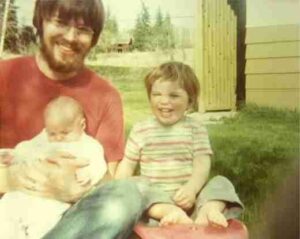
Two-year-old Jude Nathan Tomlin, baby Megan Jessica, and dad, Raymond, in June 1977
The summer of 1977, when Megan was a few months old, and Jude was two years of age

Long story short, by early 1978, I had been awarded custody of both Jude and Megan, Cathy was off gallivanting around the globe, drinking and carousing with a rock ‘n roll band she’d joined — and I was left to raise our two infant children.

From the outset, Megan was a bright and engaged child, far ahead of her milestone maturational markers — walking at 9 months, speaking at age 1, reading at 18 months — and by the time she was two years of age, as in control of her environment as any 11-year-old child of my acquaintance.

Where Jude — 21 months Megan’s senior — wanted to be out and about all the time, one of the friendliest, most gregarious and social children you’d ever want to meet, Megan was quiet, reserved, pensive and thoughtful, as big a “daddy’s girl” as could possibly be imagined, by my side throughout the day, and separated from me only when she was in daycare, or asleep.

As Cathy and I often remarked to one another as Megan was growing up, “Whose child is this, anyway? Megan certainly can’t be ours — she’s just so much brighter & more capable than either of us, or both of us combined.”

For me, there has never been anyone to whom I have been closer, who has understood me and “had my number”, with whom my relationship has proved more loving & honest than has long been the case with Megan & me.

We acknowledge — as if we have known each other across many lifetimes — that we have found one another on this Earth, in this lifetime, and as I josh Megan by referring to her as her very own diety, in this life the two of us take succour in the knowledge that we love one another, that as we live lives that are separate, Megan now married with children, and me in my west side home spending hours each day writing stories just like this, that as we run across one another from time to time, as we often do in my Kitsilano neighbourhood, that the first words each of us will utter will be, “I love you” — as we set about to continue our day.


The knowing glance tells you everything you need to know about fathers & daughters.

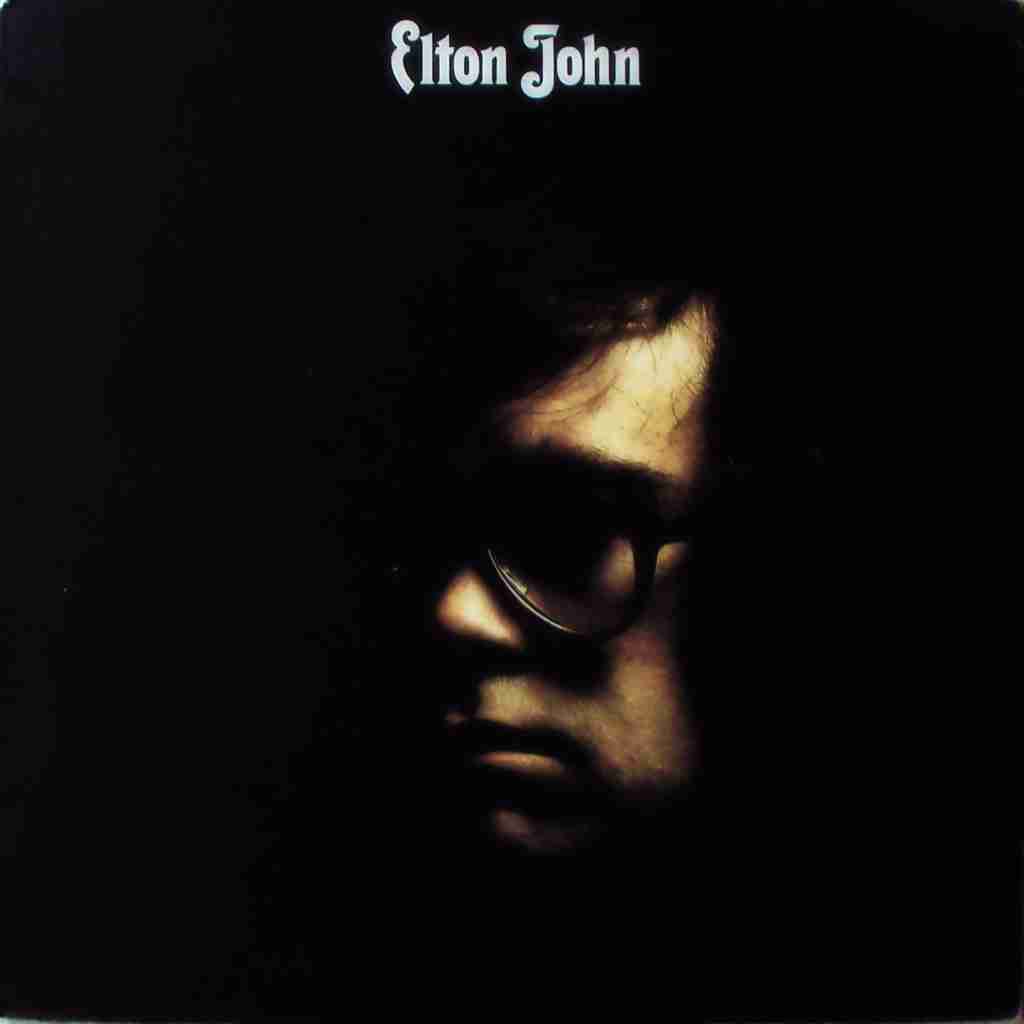
Sunday Music | Elton John | 1970 | Eponymous Album

Each summer, from the late 1960s through the 1980s, legendary broadcaster Terry David Mulligan traveled to Great Britain, in search of new music, breaking artists, and the “next big thing.”

In 1970, the next big thing was Reginald Kenneth Dwight aka Elton John.


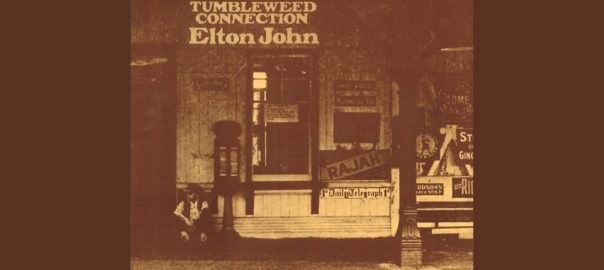
Love Song, side2, track 7, my favourite Tumbleweed Connection song, that got lots of radio play from me

Elton John’s self-titled début constituted his introduction to North American audiences. Tumbleweed Connection was his first British release, and went on to (lesser acclaim than his 1970 album) become his second North American album release.

At the time, Terry was employed by CKVN (that station had been, and would be again, be CFUN, a giant of pop radio in Vancouver).

Arriving back in Vancouver, Terry was excited to spin Elton John’s disc for all the jocks at the station, who — in the main — were as enamoured with the then unknown Elton John, as was the case with a gregariously enthusiastic TDM.

The number one smash hit off the album was Your Song, which became a staple at weddings of the era — including mine to Cathy, on December 19, 1970.

To this day, Elton John’s eponymous début remains my favourite Elton John album, a serious, incredibly well-composed, almost operatic album, much at variance with the more pop-oriented albums and songs Elton John would compose and release — with lyrics by Taupin — over the next 50 years.

“The album which I am quite proud of is the very first one [I did with Elton]. The ‘black album’ was all done in a week. If I could go through that week again, I would just love it to death.”

Gus Dudgeon, Producer

Elton John is a classic, Top 100  album in the pantheon of rock music.

John and lyricist Bernie Taupin’s songwriting had an immediacy ingrained in the music, sharper and more diverse than Tumbleweed Connection, or any music the two released after 1970.

Taupin is all about American mythology and old men’s regrets. Elton likes his harps and harpsichords. Together they gaze beyond England.

Listen to the music. Elton and Taupin clearly have their hearts in the South.

Take Me to the Pilot, a rocking gospel piece where John’s driving piano takes centre-stage over the strings may not make much sense lyrically, but John’s good sense ground its willfully cryptic words with a catchy blues-based melody.

Next to the increased sense of songcraft, the most noticeable change on Elton John is the addition of Paul Buckmaster’s grandiose string arrangements.

“It only took the first hearing for me to call Elton’s manager and express my enthusiasm. I heard the potential of what he and Bernie had written. I had already begun to hear what I was going to do with Your Song, for a start. It was the sort of thing that I was dying to have a go at.”

Paul Buckmaster

Buckmaster’s orchestrations are never subtle, but they never overwhelm the vocalist, nor do they make the songs schmaltzy.


First Episode At Hienton, one of my favourite songs on Elton John, one I often sing to. I know that I am still alive and thriving, when  I can hold the extended note (wwwooooommmaaannnn) at 4:13 in.

Instead, they fit the ambitions of John and Taupin, as the instant standard Your Song illustrates.

Even with the strings and choirs that dominate the sound of the album, John manages to rock out on a fair share of the record. Though there are a couple of underdeveloped songs, Elton John remains one of his best records.

In a rather uneventful period in rock music, John’s music emerged as so staggeringly original that it wasn’t obvious that he was merely operating within a given musical field (such as country or blues or rock) but, like Randy Newman and Laura Nyro among others, creating his own field, borrowing from country, rock, blues, folk and other influences, but mixed in his own way.

Aretha Franklin would hardly have covered Border Song — a great gospel tune with a bombastic arrangement — if she’d sensed an artificiality.

The resulting songs are so varied in texture that his music defied classification.

While his voice, in those days, mostly resembled Jose Feliciano, there were also detectable touches of Leon Russell and Mick Jagger.

Sitting behind his own piano, with Nigel Olsson on drums and Dee Murray on bass, John’s new sound was much earthier than his earlier work, even if there was an essential sweetness to his heavily orchestrated North American début album.

All these years later, in 1970 and fifty-four years on, with Elton John’s arrival on the music scene, the sense existed then that in Reginald Kenneth Dwight here was a legendary artist destined to play a featured role in the history of rock ‘n roll.

Stories of a Life | Redux | Jude, Megan and Me | Movies | 80s and 90s

Cinema | Megan and Jude Tomlin, and their dad, love cinema, love the movies, stories of a life

Film has always been a central, organizing force in my relationship with both my daughter, Megan, and my son, Jude.

Our collective love of the cinema, attending film festivals and discussing what we saw following the various screenings we attended (usually at the Fresgo Inn on Davie, which was alive no matter the time of night or early morning) was, over the years, a central feature of our relationship — the relationship between son and daughter, and dad — that allowed us to delve deep into discussions of the meaning of life, and our collective responsibility to work towards creating a fairer and more just world for everyone.

Heart and deep caring for humanity was at the centre of our love of film, and at the centre of our loving familial relationship, informing the choices we made about how we would conduct ourselves in the world, and the projects and causes to which we would devote our time and our energies.

In the 1980s, when Cathy and I were going through a rancorous divorce, film brought us together.

When in Seattle — which we visited frequently, always staying on the non-smoking 33rd floor of the Weston twin towers — in 1984, we took in a screening of Garry Marshall’s The Flamingo Kid — the story of a working class boy (Matt Dillon) who takes a summer job at a beach resort and learns valuable life lessons.

Megan was seven years of age, and Jude 9 — both were uncertain about the efficacy of our trip south (without their mother’s permission — we called her upon arriving at our hotel), but the screening alleviated and, finally, repaired any of their concerns, and all went well that weekend. Fortuitously, too, upon our return, the divorce proceedings inexplicably moved forward into a more reasonable and thoughtful direction, reflective of all our collective concerns.

Whenever there was “trouble” in our relationship — generated, most usually, by their mother — film served to salve the wounds of dysfunction, allowing us to find our collective centre while healing the wounds that rent all of our lives during a decade-long, million dollar custody dispute.

Film spoke to us, made us better, took us out of the drudgery of our too often protean daily and, more often, troubled lives, and engaged us while putting our lives into a broader and more human scale perspective. Never once was there a film that we saw together when we didn’t come out of the screening feeling more whole, and more at one with ourselves and the world.

Such was true, at the screenings of Glenn Close and John Malkovich’s Dangerous Liaisons over the holiday period in 1988, or months later at the screening of Kevin Costner’s Field of Dreams, which we took in at the Oakridge Theatre, a favourite and comforting cinema haunt of ours.

When Megan wanted some “alone time” with me, it almost always revolved around watching a film together, although as Megan matured (and as her love for film matured), Megan made it plain that she was present in the theatre to watch the film, not “share time” with me, choosing always to sit in a whole other section of the theatre (it drove her crazy in the times that we were sitting together in a theatre that I would check in occasionally with her, looking at her to determine how she felt about the film — talking during a film was an unforgivable sin, so that was never going to happen).

Some days, Megan would call and say, “Dad, take me to a film.”

And because I was a film critic at the time, and had a pass to attend at any cinema in North America, off the two of us would traipse to see Kathy Bates’ Fried Green Tomatoes (1991) or Johnny Depp’s Benny & Joon (1993) at the old 12-theatre complex downstairs in the Royal Centre mall.

Other times, post dinner and after Megan had finished her homework, I’d say to Megan out of the blue, “I’m heading out to attend a screening of a film. Do you want to come along with me?” Megan would ponder my question for a moment before asking, “Which film?”

In 1991, one very long film screening we attended was Kevin Costner’s directorial début, Dances With Wolves, about which we knew nothing other than it starred one of our favourite actors, and off the two of us went.

At screening’s end (Megan and I actually sat together at this particular screening, which took place in the huge Granville 7 Cinema 7, because the preview theatre screening room was just packed), Megan turned to me, and said, “Dad, I knew this was going to be a great film.” And it was. “And, you know what else? It’s going to pick up a raft of Oscars this year, too, and be considered one of the, if not the best, films of the year.”

Jude and Megan also attended film festival screenings with me.

Almost inevitably, Vancouver International Film Festival founder, and co-owner of Festival Cinemas Leonard Schein was present with his wife Barbara, and at a screening’s end, Megan would make her way over to wherever Leonard and Barbara were sitting to enquire of him whether or not he intended to book the film into either the Varsity, Park or Starlight.

Following screenings of Neil Jordan’s 1992 putative multiple Oscar award winner, The Crying Game or, that same year, Baz Luhrmann’s Strictly Ballroom, Megan marched over to Leonard, and asked him boldfacedly, “What do you think?”

When Leonard indicated that he thought the films were not quite his cup of tea, that both films would have difficulty finding an audience, and that it was unlikely he’d be booking either film into one of his cinemas, Megan lit into Leonard with a passion and a vehemence I had rarely observed coming from her, saying …

“Are you out of your mind? Strictly Ballroom and The Crying Game are wonderful films, and just the sort of films that not only should you book, but that you MUST book — these are both groundbreaking films that will only serve to reinforce your reputation as an arts cinema impresario, but will also make you a tonne of money, and we all know that you’re all about the money. Either you book these films into The Varsity, or believe me when I tell you that there’ll be hell to pay when you see me next.”

And with that, Megan marched off.

At the 1990 Vancouver International Film Festival, I’d caught a screening of Whit Stillman’s directorial début, Metropolitan, in preview, and knew that this would be a film Megan would just love (and be astounded by, at the revelation of one of the characters, mid-film).

I made arrangements to pick Megan up from University Hill Secondary at 3pm sharp on the day of the festival screening, we drove downtown, found a parking spot, and rushed over to The Studio Cinema on Granville to catch the 4pm screening of Metropolitan — which as I had predicted, Megan loved.

In early December 1993, on a particularly chilly and overcast day, at 10am in Cinema 2 at the Granville 7 theatre complex, I caught a screening of Jonathan Demme’s groundbreaking new film, Philadelphia — a film about which I knew little, and a film that knocked me out (along with the handful of film critics in attendance at the theatre for the screening).

Emerging from the theatre just after noon, making my way onto Granville, I looked for the nearest telephone in order that I might call Megan at school.

I called the office at University Hill Secondary, and asked them to find Megan and bring her to the phone. When Megan asked, “Dad, is everything all right?”, I told her about the film I had just seen, and that when it opened in January, I wanted to take her and Jude to a screening at the Granville 7. We talked about the film for a few minutes, with her saying about 10 minutes in, “I’m holding up the school phone, and calls coming in. Let’s get together after school. Come and pick me up, and we can continue our conversation. I’ll see you then, Dad. I love you.”

There are gifts we give our children. From my parents, it was what would emerge as a lifelong love for country music. For Jude and Megan, my gift was a love of music, a love of the ballet, and an abiding love for film.

Stories of a Life | Redux |
A Mexican Adventure

Simon Fraser University in the 1970s

I loved university. In the 1970s, I loved attending classes at Simon Fraser University, talking hours on end with classmates sharing obscure insights into arcane literature, or why anarchism is the most humanist political philosophy, or spending hours in the library, or finding some quiet corner to type out the dozens of essays that were due each semester.

I was so curious about the world around me, so committed to learning everything I could on any given subject presented to me by my various approachable and erudite professors and radicalized teaching assistants, in the books I was reading or from folks in the pub at whatever stage of their university career, who over a beer would good-naturedly engage with me in philosophical arguments, whatever the topic of the moment.


Louis Riel House family student residence at Simon Fraser University on Burnaby Mountain, circa 1972

Attending classes and living at Louis Riel House — sometimes not leaving Burnaby Mountain for months on end — attending Simon Fraser University was for me the happiest and most rewarding time of my life.

Not so much for Cathy, my long-suffering wife.

Cathy made no secret of the fact that she wanted to get away, to explore new lands, to be adventurous and anonymous thousands of miles away.

In February 1972, I was enrolled in my 5th consecutive semester at SFU, having identified my areas of interest for my studies — political science, sociology and anthropology, part of SFU’s radical PSA department — as well as English literature.

Much to my astonishment, I was achieving straight A’s in school, my grade point average past my first year 4.0, and in this fifth semester I was on a roll, most of my course work completed by early February, as I prepared to ready myself with the reward of five more A’s, bursaries and scholarships, and further down the academic road enrollment in a Master’s programme.

Arriving home mid-afternoon Tuesday, February 8th, 1972, opening the door and walking into our student apartment, Cathy standing in the living room, rather than approaching me to give me a kiss, she stood stock still, looking down, then looking up and directly at me, and said,

We’re leaving for Mexico next Monday, for two months.

Get your head around it.”

Cathy and I traveling along the Oregon coast on our way to Los Angeles, and then Mexico
Cathy and I traveling along the Oregon coast, headed to California, and then Mexico

I knew there was no arguing with her about her dictum. Cathy had sacrificed so much for me that it was quite clear: it was her turn now.

The next Monday morning we jumped into our 1970 Datsun 510 — a wedding gift from her mother. Hours later we found ourselves barrelling down the coast of Oregon heading towards Los Angeles, where arrangements had been made to stay with our friend, Bachi — with whom I had attended almost all my classes my first four semesters, and who was my best friend, Manuel Vittorio Esquivel, handsome, swarthy, adventuresome, and the best friend anyone could wish for.


While in Los Angeles, Cathy  and I listened to KRLA, southern California’s rock ‘n roll giant

Cathy didn’t like driving, so I drove the entire 1500 miles (I love driving!) to our L.A. destination, arriving two days after we’d left our Burnaby Mountain home, as we found our way to the Chicano area of Los Angeles, a Latino and Latina East L.A. of boom boxes and low-riders, a vibrant Mexican community with which we fell in love, as we did Bachi’s mother’s cooking — eating mole chicken and lime-cilantro rice for the first time while consuming gallons of fresh-squeezed orange juice available at farmer’s markets in two quart containers, for only a dollar, driving along the freeways in the jasmine-scented night air, KRLA radio at full volume blasting into the warm night air, free and in love, and enjoying the time of our young lives.

Santa Monica, California
The sunny open air shopping mall located in wealthy, beach-fronted Santa Monica

All was not perfect, though.

One afternoon while awaiting dinner and sitting in the living room, Bachi’s 18-year-old sister, Maria — one of the most beautiful and self-possessed young women I’d ever met, who was enrolled in her second semester at a nearby college, and who worked as a sales clerk at a department store in a mall in the wealthy Santa Monica neighbourhood to help pay for her tuition — came home crying, sobbing, inconsolable, wracked with pain, broken and disconsolate, collapsing onto the sofa, curled up into a heaving ball of sobs and pain, bereft of hope, for the moment not of this world, not of any world, alone and withdrawn.

Maria worked in the shoe department at Macy’s. Earlier that afternoon, a wealthy woman in her early 30s had arrived at the shoe department, miserable, abusive, racist, on the attack and demanding service — pointing at Maria — to “that dirty Chicana over there, who oughta be sent back to where she came from, but if she’s gonna be here, she damn well better serve me, and get her ass over here. Now!

The manager stood nearby, but didn’t come to Maria’s aid, instead directing the abusive woman over to where Maria stood, now quivering, saying to the irate-for-no-good-reason shopper, “Of course, ma’am. Maria is here to serve you. She will find you anything you need. Now hop to it, Maria.”

The situation devolved from there, with Maria finding one pair of shoes after another for this abusive woman, responding to the demands of the woman to …

“Get down on your knees, don’t look at me, put those shoes onto my feet now, don’t look up, and you better be careful when fitting those shoes, or I’ll have your job.”

The woman remained in the shoe department for an hour, loudly and abusively making Maria’s life a hell on earth, before finally leaving the department store harrumphing, having made no purchase. Maria finished her shift, and drove home.

Once home, after her mother intervened, Maria spent the rest of the evening in her bedroom, while Bachi, Cathy and I left his home, leaving Maria — whose young life had been a litany of the kind of abuse she had suffered that afternoon — in the care of her mother, as the three of us drove to a nearby drive-in for a burger and fries, staying away until late.

That evening, Cathy and I decided we would leave for Mexico the next day.

After an early breakfast of heuvos rancheros prepared by Bachi’s mom, Maria still in her bedroom, not wishing to join us at the kitchen table, leaving our car in the garage attached to Bachi’s home, Bachi drove us in his own vehicle to the Mexican border, just north of Tijuana.

Cathy had mapped out our journey, which involved us taking a bus to Mexicali, where we would board a train for the 2,000 kilometre journey to Guadalajara.

Train travel in Mexico, in the 1970s, a rickety old wooden car
The above, very much like the train Cathy and I traveled on throughout Mexico

Both Cathy and I, once we’d boarded the train in Mexicali for the first leg of our Mexican adventure — we were planning on staying in Guadalajara for a few days, then planned to make our way over to the west coast, and come back to Guadalajara before heading to Mexico City.

Ours was, though, a largely unplanned adventure, where we both felt secure that we’d meet good folks, and learn something about a country about which knew little — were surprised that there were 20 young Americans traveling in the same car as us, hippies who’d shorn there hair, as I had, in order to get a visa, the men letting their hair and beards grow once we’d made it across the border.

As is almost always the case when traveling in a group — not that any one of us knew one another, or anyone else in our car — one of our 20 ‘fellow travelers’, in this case a gaunt young man with an adventurous spirit who had traveled to Mexico previously, suggested to us all that upon arriving in Guadalajara, we immediately make our way over to La Peñita, along the coast, 72 kilometres north of Puerto Vallarta, where we could stay for a dollar a day, swim, get to know the townspeople, and enjoy ourselves away from the hubbub of Puerto Villarta.

Sounded good to all of us — we now had a destination.

Now, traveling as a financially itinerant train and bus traveler in the 1970s was fraught with adventure. Why fraught?

Well, because revolution was the order of the day, throughout Europe, throughout central and South America, and most certainly in Mexico, where guerilla groups fought with the Mexican army, farmers led by ex-teacher Lucio Cabañas fighting against landholder impunity and oppressive police practices in rural Mexico, the guerillas carrying out ambushes of the army and security forces, and blowing up train tracks throughout northern Mexico — as proved to be the case on the first leg of our collective journey into the heart of Mexico.

A contemporary photo of Benjamin Hill, in the in the Mexican state of Sonora
Above, a contemporary photo of Benjamin Hill, in the northern Sonora state of Mexico

Upon arriving in Benjamin Hill, in the northern Mexico state of Sonora, approximately 714 kilometres south of Mexicali, the train conductor informed us that there would be a day or two layover in Benjamin Hill, as the tracks 30 kilometres to the south had been blown up by guerillas. When we arrived in Benjamin Hill, midday, the sun was bright, the day sweltering.

We all alighted from the train to take a look around at the dusty little village.

We debated whether or not we’d each rent a room in one of the mud shacks off the main street. One of our companions, who had kept a close watch on me since we’d boarded the train in Mexicali, a ‘sexual freedom leaguer’ traveling with her boyfriend, she a stunningly gorgeous young Asian woman, her boyfriend a nerdy-looking, quiet guy, looked at me and looked at Cathy, and then set about to announce to everyone gathered around in the boldest possible fashion …

“I want to fuck him,” then looking at me said, “I want to fuck you. Let’s go find a room in that building over there.”

I looked over at Cathy, who was rolling her eyes, looking heavenward, then looking at me, exclaiming …

“You want to fuck her, go ahead.

I’m not fucking her boyfriend, though.”

Me, I’m not good in situations such as the one I was now being confronted with.

Would I liked to have gone off with this beautiful young woman for a sweaty afternoon of sexual frolic?

Sure — but that would mean leaving Cathy behind, and I wasn’t prepared to do that, so I just said, “You’re invitation is very kind, and I appreciate it, but I’m going to stay with Cathy,” at which statement the young sexual freedom leaguer grabbed her boyfriend’s hand, marching off to rent a room in a sun-baked mud building.

As it happens, the twenty-two of us remained in Benjamin Hill for only about six hours, as the authorities had identified an alternative route to get around the tracks that had been destroyed. By late evening, we were all on our way again, the night chill, Cathy wrapped securely in my arms, under a blanket we’d purchased in town for about three dollars.

Two days later, we arrived in Guadalajara, the twenty-two of us alighting from the train, seeking food and drink. “No water,” our appointed leader told us — “Stay with Coke, you’ll be better off. You can trust it because it’s bottled by Americans under strict standards. Drink the water, or anything washed in local water, and you’re going to find yourself in trouble.”

So, we found a street food cart — all along the way from Mexicali to Guadalajara, we’d fed ourselves from the food carts at stops along our journey south.

We looked for, and found the bus station, all of us purchasing tickets to La Peñita for the five-hour, 262 kilometre pilgrimage to our coastal village destination, arriving around 7pm,  night and dark, although the near full moon above shone bright.

Once in La Peñita, we secured our accommodation — spacious houses about 200 yards back from the beachfront water, several of us staying in each of three houses we rented for what would be our one-week stay in the rural village, our new home.

Having left our pack sacks in our new domiciles we all went back into town, where we were accosted by a group of 6, 7, 8 and 9-year-old boys who wanted us to play foosball with them, for a peso a game — if they won, we gave them a peso (equivalent to about one cent), the game free to play.

The first game I played was with one of the 6-year-old boys, who wasn’t tall enough to even see the top of the foosball table. “This is gonna be easy,” I thought to myself, “Poor kid.” I meant to win, and show this boy how it’s done — although I’d never played foosball before. Five minutes in, the game was over, I hadn’t scored once, the boy’s facing beaming, looking up at me saying, “De nuevo, señor, de nuevo.” Over the course of the next hour, I played each of the boys, as did the men in our group, losing each game successively more quickly, as was the case with each of my companions, now 20 pesos poorer than when I’d begun the night, the women standing nearby by shaking their heads, going off to look at the “shops” nearby (stalls, really), the young boys now gleeful.

Going for a naked night swim under a near full moon in the tiny village of La Peñita, in Mexico

Our leader, the gaunt young American man, rounded us all up, and said, “Let’s go for a swim,” and we did, some of the women going back to our new homes to find blankets to lay on the sand, but not swim suits, as this was to be a naked swim in the ocean, all twenty-two of us running toward and splashing in the warm, sparking water, the moon above glistening in the purple night sky, the light of the moon reflecting off the gentle waves of the ocean water.