Category Archives: Canada

Decision Canada | Politics | Final Pre-Election Week Wrap-Up

2019 Canadian federal election outcome projection | Final Pre-Election Week Wrap-Up

At some point over the course of the next nine days, Prime Minister Justin Pierre James Trudeau will attend at Rideau Hall in Ottawa, the home of Canada’s 29th Governor General, the Right Honourable Julie Payette, to recommend to the Crown that a federal election be called. In 2019, under Canadian law, the election period may be no less than 36 days, which gives the Prime Minister until Sunday, September 15th to “drop the writ”.

One week, or so, from the commencement of the 43rd Canadian general election, how are the five major political parties, and their leaders, faring as Canadians head into the five week long election period?
The Conservative Party

Canada. Andrew Scheer, Conservative Party leader.

Six weeks out from the October 21st federal election, Andrew Scheer’s Conservative Party has emerged as the only Canadian federal political party to have nominated candidates in all of Canada’s provinces and territories which comprise the 338 ridings that constitute the Parliament of Canada.
The Conservative Party goes into the election with the largest fundraising total for any federal political party with $28 million in the coffers to run both the national and the riding-by-riding campaigns, outstripping their four rival Canadian political parties. If elections could be bought, Andrew Scheer would become Canada’s 24th Prime Minister.
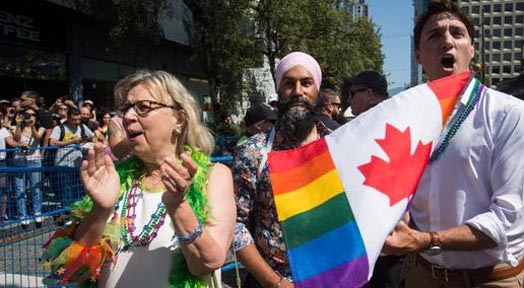
Elizabeth May, Jagmeet Singh and Justin Trudeau march in the 2019 Vancouver Pride ParadeGreen Party Elizabeth May, New Democratic Party leader Jagmeet Singh, and Prime Minister Justin Trudeau march together in the 2019 Vancouver Pride Parade.

Sad to say for the Conservatives, though, the pre-election period has hardly been kind to either Andrew Scheer, or his struggling Conservative party. A couple of weeks back, Mr. Scheer found himself in hot water for failing to participate in any LGBTQ2+ Pride Parades across Canada — when Prime Minister Justin Trudeau, Green Party leader Elizabeth May and NDP leader Jagmeet Singh were front-and-centre walking arm and arm at the Vancouver Pride Parade — after which (in a series of challenging and ultimately failed press interviews), Mr. Scheer failed again to enunciate a position on LGBTQ2+ issues acknowledging that as Prime Minister he would represent all Canadians, not just right-of-centre Canadians.
On top of that, Conservative party leader Andrew Scheer found himself in hot water arising from the release of a 2004 Canadian Parliamentary video where he rose in the house to decry same sex marriage. And, finally, in the 14-day-old contretemps, Mr. Scheer failed to assure Canadians that he would forbid Conservative MPs from putting abortion on the political agenda in a Conservative Party led Canada — concerning, given that Conservative party members who are also “anti-abortion activists are planning to win 50 ridings for their cause in the upcoming federal election.”
This past week, in his bid to fear monger — a traditional right-of-centre political party tactic — Mr. Scheer sought to scare the bejeezus out of Canadians by suggesting the government of Justin Trudeau would allow infamous child-murderer Jon Venables’ move to Canada after being released from prison in England. Scheer’s post caused widespread controversy. To make matters worse for Andrew Scheer, the British Justice Ministry stated Britain has no intention sending Venables to Canada.
As further confirmation that Scheer’s post was categorically false, and was indeed ‘fake news,’ Immigration, Refugees and Citizenship Canada also added that some people are “inadmissible” to the country under Canada’s immigration law, particularly if they have a criminal record or could pose a risk to Canada’s security. Meaning that even if Venables was headed towards Canada, he would probably struggle to get though immigration.
The Liberal Party
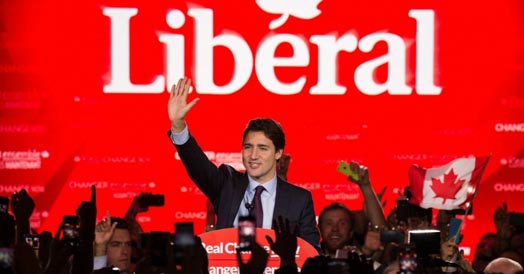
Justin Trudeau wins the 2015 Canadian federal election
Meanwhile, the government of Prime Minister Justin Trudeau has gotten out of the way of the train wreck that has become the Conservative party 2019 bid for government, while making a record 5500 spending announcements this summer totaling $15+ billion, in ridings across Canada, ranging from transit and affordable housing to the environment and infrastructure, with the unstated caveat that all of the commitments made by his government would be cut were Andrew Scheer to become Canada’s next Prime Minister.
The New Democratic Party
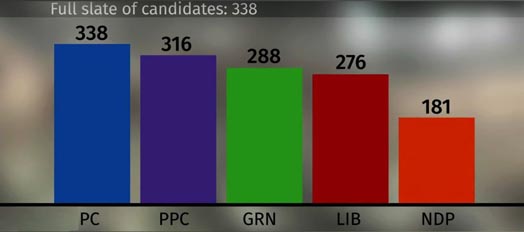
Nominated candidates as of September 5 2019 by each party in the 2019 Canadian federal election

Take a look at the graphic above. As of Thursday evening, September 5th, the federal New Democratic Party has nominated candidates in only 54% of ridings across Canada, with no nominated candidates in the provinces of New Brunswick and Prince Edward Island. Furthermore, the NDP goes into the 2019 federal election with a $4.5 million debt from the 2015 election, and less than a quarter of the money raised by either the Conservative or Liberal parties with which to present their case to the Canadian people.
For the first time since the party was formed in 1961, the New Democratic Party will have no campaign plane to take the leader, and the press entourage, across the country, in order that campaigning might take place more readily in all provinces and territories across the country.
According to Éric Grenier’s CBC Canada Poll Tracker, an aggregation of all publicly available polling data, the New Democrats are at 9.4% support in the province of Québec. That places them in fifth place, behind the leading Liberals (32.8%), the Conservatives (23.5%), the Bloc Québécois (18.5%) and the Greens (11%). The very real prospect exists that the NDP may be wiped out in Québec, losing all 15 of the current seats held in the province.
(VanRamblings wouldn’t count out Ruth Ellen-Brosseau in the riding of Berthier-Maskinongé, a popular hard-working NDP member of Parliament.)
On Tuesday, New Brunswick’s Green Party announced the defection of 15 NDP candidates to the federal Green Party. Turns out, though, that eight of the so-called NDP dissidents knew nothing about their defection to the Greens, forcing federal Green Party leader Elizabeth May to backtrack, and restate the number of defections at only seven, while the other eight members of the New Brunswick NDP went on record stating they would remain loyal members of the NDP, and knew nothing about the decision to defect to the Greens. In a CBC interview, federal NDP Leader Jagmeet Singh said Green Party Leader Elizabeth May “has a lot to answer for.”
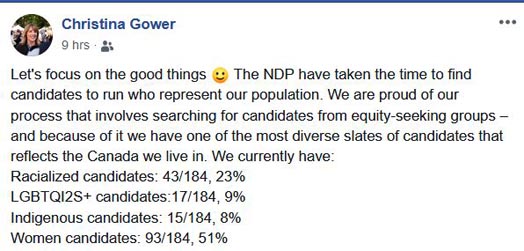
Federal NDP nominated candidates represent a broad, diverse spectrum of the Canadian population

Meanwhile, British Columbia and much of southern Ontario remain NDP strongholds, with a popular John Horgan NDP government holding power in Victoria, and a strong presence with Andrea Horvath’s NDP, who elected 40 MPPs to the Ontario legislature in the 2018 provincial election.
In British Columbia, Vancouver East MP Jenny Kwan is a lock to hold onto her seat, as is the case with Don Davies in Vancouver Kingsway and Peter Julian in New Westminster-Burnaby. Jagmeet Singh, we predict, will hold on to his seat in Burnaby South. Svend Robinson looks to make a welcome comeback in Burnaby North-Seymour. Yvonne Hanson is running a first rate NDP environmental campaign in Vancouver Granville, as is the case with community activist Christina Gower in Coquitlam-Port Coquitlam — both novice candidates could very well win their respective ridings.

CBC’s At Issue panel podcast | Thursday, September 5 2019 | Upcoming election

The Green Party

Green Party of Canada
Canadians most frequently score Green Party Leader Elizabeth May as the most ethical among her federal counterparts, according to a series of Nanos Research and other surveys conducted over the past 12 months. The Greens will have nominated candidates in all federal ridings by this time next week, and according to recent polling stand a good chance of gaining official party status (12 seats) in Parliament, post the October 21st election.
In the final week of the pre-election period, according to the latest polls, the federal Green Party could elect 5 members to Parliament representing ridings on Vancouver Island, a member or two in Ontario, as well as Québec, and a sturdy contingent of Green Party MPs in the Maritimes.
The fortunes of the Greens rely on the benevolent affability of Ms. May.
Should Ms. May acquit herself well at the Canadian Museum of History in Gatineau, Québec (just across the Ottawa River from Parliament Hill) during the course of the October 7th federal leaders’ debate, she could very well consolidate support for the Green Party of Canada, and assure official status for the party in Parliament following the October 21st election.
Please find below an episode of The Herle Burly, one of the finest podcasts to come out of Canada, fascinating always, the interviews conducted and conversations led by longtime Liberal Party apparatchik David Herle. In the episode below, you’ll hear Mr. Herle’s recent, fascinating, wildly informative and revealing interview with Elizabeth May. Very much worth a listen.


People’s Party of Canada
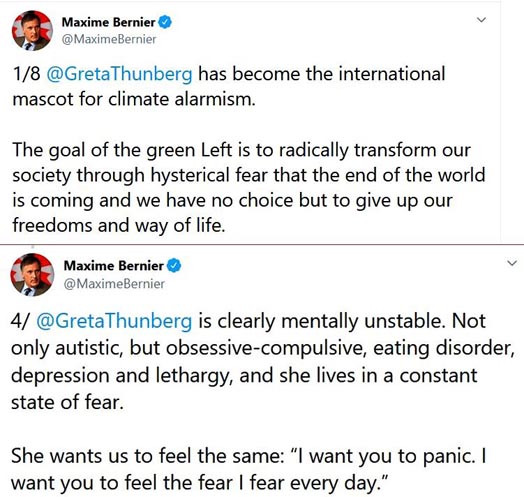
People's Party of Canada leader Maxime Bernier on climate change activist Greta Thunberg

Currently polling at 2.9% across Canada, Maxime Bernier and his band of racist, transphobic and xenophobic supporters don’t have a chance in hell of electing anyone to Parliament. Mr. Bernier will not be included in the leaders’ debates. The less said about this group of reprobates the better.

star.jpg star.jpg star.jpg

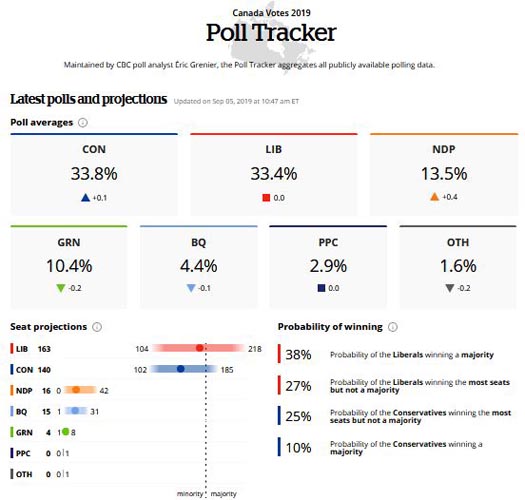
CBC Poll Tracker, September 5 2019, has the Liberal Party winning the most seat

Taxpayer vs Citizen | Responding to Right Wing Propaganda

Taxes

The suffering hero of our times is, we are told, the tormented taxpayer.

Conservative politicians mount campaigns to protect the taxpayer, editorial writers evaluate politicians and their policies on whether they will increase or decrease the “burden” to taxpayers, and some self-described taxpayers have formed faux, corporate-funded organizations to plead their cause & lament their plight. Thus, you have the Canadian Taxpayers Federation.

Toni Morrison, American novelist, essayist, editor, teacher and professor emeritus at Princeton University.
Nobel prize winning author Toni Morrison, in her New York apartment. Photo | Tim Knox

At a speaking engagement, a few years back, at a New Yorker festival, Pulitzer Prize winning American novelist, essayist, editor, teacher and professor emeritus at Princeton University, Toni Morrison, offered insightful commentary on topics about race, gender, writing, and other issues. One particular observation made by Ms. Morrison was quite memorable …

The complexity of the so-called individual that’s been praised for decades in America somehow has narrowed itself to the ‘me’. When I was a young girl we were called citizens — American citizens. We were second-class citizens, but that was the word. In the 50s and 60s they started calling us consumers. So we did — consume. Now they don’t use those words any more — it’s the American taxpayer, and those are different attitudes.

The phrase “taxpayer’s money” is almost always propaganda — that must be rejected and resisted by all of us who support progressive politics.A better phrase is “public money”.

So, why do so few in the news media, if any at all in these times of corporate-owned media, refuse to use the term public money, replacing it instead with the far from benign word taxpayer?

Public money is the property of the entire public, not of taxpayers.

Taxes are a way to pool our resources and develop common infrastructure that can have a positive impact on us all. They build our roads and bridges, pay for our police and firefighters, our system of justice, offer support for raising children and contribute to reducing child poverty, provide income security and housing for people who are in need, contribute to foreign aid, and help to ensure our environment is clean and safe. All of these things are much cheaper and effective when we pay for them collectively.

The taxes paid by previous generations benefits us today, and the taxes we pay hopefully act to benefit the generations of tomorrow.

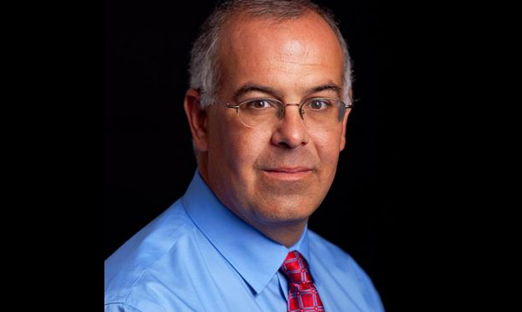
David Brooks, conservative political pundit and commentator, and New York Times columnist
David Brooks. Toronto-born American centre-right, self-described “moderate centrist” political pundit and cultural commentator who writes for The New York Times

In 2016, New York Times columnist and PBS political commentator David Brooks wrote about the difference between taxpayers and citizens …

You can be a taxpayer or you can be a citizen. If you’re a taxpayer your role in the country is defined by your economic and legal status. Your primary identity is individual. You’re perfectly within your rights to do everything you legally can to look after your self-interest.The problem with the taxpayer mentality is that you end up serving your individual interest short term but soiling the nest you need to be happy in over the long term.

A healthy nation isn’t just an atomized mass of individual economic and legal units. A nation is a web of giving and getting. You give to your job, and your employer gives to you. You give to your neighbourhood, and your neighbourhood gives to you. You give to your government, and your government gives to you.

If you orient everything around individual self-interest, you end up ripping the web of giving and receiving. Neighbours can’t trust neighbours. Individuals can’t trust their institutions, and they certainly can’t trust their government. Everything that is not explicitly prohibited is permissible. Everybody winds up suspicious and defensive and competitive. You wind up alone at 3 a.m. miserably tweeting out at your enemies.

And this is exactly the atomized mentality that is corroding North America.

Years ago, David Foster Wallace put it more gently …

“It may sound reactionary, I know. But we can all feel it. We’ve changed the way we think of ourselves as citizens. We don’t think of ourselves as citizens in the old sense of being small parts of something larger and infinitely more important to which we have serious responsibilities. We do still think of ourselves as citizens in the sense of being beneficiaries — we’re actually conscious of our rights as citizens and our nation’s responsibilities to us and ensuring we get our share of the American pie.”

This is where the Canadian Taxpayers Federation comes in, a shady, secretly-funded (who are, in fact, funded by right wing elements within Canada’s corporate culture), unrepresentative organization that sells itself as a populist “citizens advocacy group” looking to cut waste and ensure accountability in government, when such couldn’t be further from the truth.

Income tax

Larry Haiven, a professor in the faculty of management at Saint Mary’s University in Halifax, says most of CTF’s stances on issues — and particularly their relentless calls to lower taxes — are …

“the most simplistic garbage. It assumes that nothing that is purchased with our taxes is of any use for us. Despite CTF’s anti-tax, spending-is-out-of-control rhetoric, taxes are lower now than they’ve been in decades, leaving governments struggling to provide essential services.

Provinces and the federal government have been cutting taxes frenetically, frantically, for the past 25 years. Governments across Canada are taking in about $250 billion less than they did 15 years ago. You have to weigh that against everything the Taxpayers Federation says.”

Yet night in, night out the Canadian Taxpayers Federation is given a platform on the corporate-owned and operated evening news, with folks on Shaw-owned Global TV, anchors like Chris Gailus and Sophie Liu, and Bell Media CTV Vancouver hosts Scott Roberts and Mi-Jung Lee fulfilling their supplicant role as handmaidens to their corporate bosses & not on our side.

The Canadian Taxpayers Federation media presence is truly remarkable when you consider it has a membership of five people.

You read that correctly: five.

money.jpg

Writes Dougald Lamont for CBC News Manitoba

This might come as a surprise, but the Canadian Taxpayers Federation is not now, nor has it ever been, a grassroots, member-based organization where anyone can pay $10 to sign up (or sign up free) and have a say in how the organization is run.

Instead, it has supporters — about 90,000 of them, who, like followers on Facebook, can like, comment, answer surveys and make donations, but they have no actual say in how the organization is run.

While the CTF’s mandate is to hold elected officials to account, who holds the CTF’s five members to account? Each other. Who decides who else can become a member? They do. It should be no surprise that the Canadian Taxpayers Federation has, as a result, faced accusations of being an Astroturf organization — a fake grassroots organization.

Writing in The Tyee, journalist David J. Climenhaga says the following …

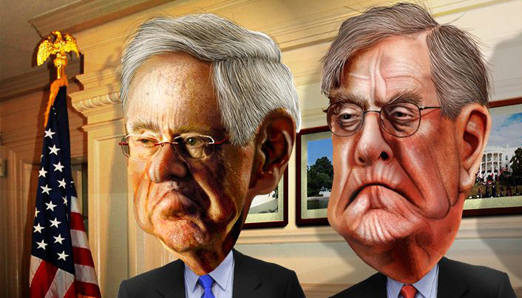
Charles and David Koch, right-wing American billionaires
Right-wing billionaires Charles and David Koch are among the funders of the international Atlas Network, a Canadian Taxpayers Federation partner. Photo credit: DonkeyHotey.

The Canadian Taxpayers Federation,” writes Climenhaga, “a self-described non-partisan tax watchdog and taxpayer advocacy group once headed by Alberta Premier Jason Kenney, has always been tight-lipped about the sources of its own funding and support. This may be mildly ironic, given its vocal demands for transparency in government policy.”

Since the 1980’s and the rise of the Koch brothers in the U.S. and the Canadian Taxpayers Federation in Canada, there has been a deliberate effort to reframe citizens as “taxpayers” and public spending as “taxpayers’ money,” as if taxpayers are shareholders. CBC’s Dougald Lamont writes …

Journalists and politicians in every political party routinely use these terms without considering that this framing is anti-democratic. That is because politicians are elected by citizens, not just taxpayers. The word “taxpayer” is not in the constitution; the word “citizen” is.

All citizens are equal. Taxpayers are not.

It is self-evident that you can contribute to the economy and society without paying taxes. Many citizens don’t pay income taxes, notably children, the working poor and a few millionaires and billionaires. Charities, churches and places of faith are all tax-exempt.

Defining taxpayers as the only people who matter has real and serious consequences for policy. It is not a politically neutral position: it is a radical right-wing ideology that drives inequality by making the rich richer while neglecting the poor.

That is why the Canadian Taxpayers Federation’s real membership of five people matters, as does its ideology. We don’t have to care what they think, but we should be clear on just where they are coming from.

So the next time you hear British Columbia’s new wicked witch of the west, CTF spokesperson Kris Sims, blathering on your TV about how your “taxpayer dollars” are being wasted, remember: Kris Sims and the Canadian Taxpayers Federation could give a damn about you as a citizen of the province of British Columbia, and could care even less about what our provincial government is doing to alleviate child poverty, build urgent care centres to serve the 780,000 British Columbians without a family doctor, build truly affordable housing for seniors and working people across the vast expanse of our province, create affordable $10-a-day child care for working families, while funding our public safety and justice, education, transportation and infrastructure, agriculture and fisheries, climate action and environment, social development and poverty reduction, indigenous relations and reconciliation, and jobs, training, trade and technology ministries of government to better serve your interests, and the interests of your family, your neighbours, your co-workers, and your friends.

And while you’re at it, ignore Kris Sims when you see her next on your TV!

#VanPoli Civic Politics | Faith Groups + Affordable Housing | Part 4

City of Vancouver affordable housing graphic

Joming Lau, a City of Vancouver Planning Analyst and member of Vancouver city’s Community Serving Spaces Team, and his colleague James O’Neill, a Cultural Planner with the city, working in the Cultural Spaces and Infrastructure Division of the Planning Department — and also a member the city’s Community Serving Spaces Team — have been kind in posting to VanRamblings the core document informing the conduct of the Tuesday, May 7th, 2019 affordable housing forum held at CityLab, at Cambie and West Broadway, the document in question, the Community Serving Spaces Place of Worship [pdf] presentation paper on the development of affordable housing and community service spaces on the sites of places of worship.

In an April 1, 2019 article in the Vancouver Sun / Province / PostMedia, migration, diversity and religion writer Douglas Todd asked the question, “Can Metro Vancouver churches plug the dire housing gap?”, going on to ask a second, related question, “How big a dent will re-developing scores of places of worship into housing make in a metropolis that ranks as one of the most unaffordable in the world?”, quoting Andy Yan, director of Simon Fraser University’s city programme as saying …

“Hopefully, the redevelopment (of places of worship) is one of the steps of creating a stairway to housing nirvana in Metro Vancouver. But the scale of trying to house those on local incomes affordably is almost biblical.”

Mr. Todd goes on to report that Christian and Jewish religious groups are together adding hundreds of units each year to the region’s rental and housing market, their annual contribution sometimes exceeding 1,000 new homes, a relatively small portion of the roughly 20,000 to 28,000 homes being constructed each year across Metro Vancouver, but still an invaluable contribution of low cost, affordable housing across our region.

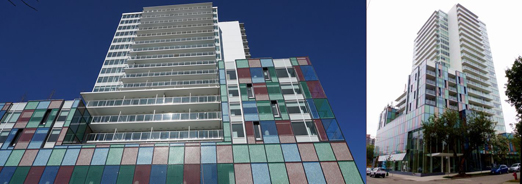
BOSA affordable housing development at 1155 Thurlow Street, with 45 social housing and 168 secure rental units
Approved by Vancouver City Council in 2014, completed in 2018, a partnership between Central Presbyterian Church and Bosa Properties.

In collaboration with the city, Bosa Properties and Central Presbyterian Church, at 1155 Thurlow in downtown Vancouver, set about to provide 45 social housing homes that would be owned by the church, allowing Bosa Properties to build 168 secured rental homes that would be owned by Bosa, the project including the construction of a new church (and child care centre) built for the church by Bosa — at no expense to the church — and still owned by the church, the very much needed social housing homes and the child care centre creating an ongoing revenue stream for the Central Presbyterian Church. A win-win for all concerned: city, developer & church.


Don't Miss Any of VanRamblings Must-Read Content. Click On This Graphic for More

The role of the city? To collaborate with the places of worship to secure funding — from private sources, from the federal or provincial governments through their affordable housing programmes, or in some cases through access to the city’s Community Amenity Contribution programme, which secures in-kind or cash contributions from property developers in exchange for re-zoning of the property — which pays for the entire cost of construction, the city liaising with the place of worship to establish a relationship with a non-profit or for-profit property developer / builder.

Further, the city expedites the development permit process.

From first contact with a place of worship to final completion & occupancy, an average of three years transpire, with the end result: the creation of affordable rental housing, low cost social housing, and much needed community serving spaces, such as the aforementioned child care centre.

Catalyst Community Development Society, Vancouver

The most common phrase enunciated at the Community Serving Spaces for Places of Worship forum last week was, “Robert Brown can’t do it all.”


Don't Miss Any of VanRamblings Must-Read Content. Click On This Graphic for More

Mr. Brown, the founder of the Catalyst Housing Development Society is the President of our province’s largest non-profit real estate developer, he and his team responsible for the development of more affordable rental homes on the Lower Mainland and across our province than any other British Columbia developer, allowing faith groups to unlock the value of their real estate assets, while reinvesting that value back into communities for the benefit of families, and a revenue creation stream for places of worship.


Don't Miss Any of VanRamblings Must-Read Content. Click On This Graphic for More

A key piece of altruistic advice Mr. Brown provided to faith groups at last week’s affordable housing forum: retain ownership of your property.

Catalyst Community Development located at 2221 Main Street, in the city of Vancouver

Here’s the bottom line: there are 364 land rich, cash poor places of worship across the Vancouver landscape. The City of Vancouver, as part of the city’s Healthy City Strategy, has set about to work with faith groups to create the conditions necessary that would result in the construction of much needed low cost, affordable housing on the under developed properties owned by faith group congregations, providing a no cost renovation or reconstruction of the aging church, synagogue or other place of worship infrastructure, while also creating a revenue stream for the faith group membership, to ensure that our city’s places of worship will continue to thrive, while serving the social and community interests of neighbourhoods across our city.

#VanPoli Civic Politics | The Death of Cynicism | Part 4 of 4

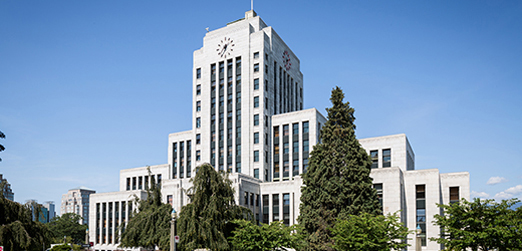
Vancouver City Hall

From a diehard VanRamblings reader (and friend and associate, who holds VanRamblings to account), a former Park Board Commissioner, longtime politico, keen observer of Vancouver’s civic political scene, a well-respected local architect and designer, a city-builder, world traveler, husband and father, and sometimes, just sometimes, a bit of a curmudgeon

“Not sure why you think these Councillors are doing such a great job!

In addition to being overly swayed by staff, these novice Councillors continue to sit back and leave the Vision Vancouver agenda intact, an agenda which got Vision un-elected, decimated, and an agenda that has resulted in so much damage to our City. As well, in each of your examples in your series this week on our City Councillors, the initiatives you think are so wonderful are contradicted by other decisions they have made.

In particular, Councillor Boyle’s energy shift sounds great if it is meant only to be read. But, think about how each of these ideas can be realized. She wants all neighbourhoods to be walk / bike / transit-friendly, and to use wood frame construction, and yet she voted to support the Skytrain SUBway, and it’s greenhouse gas-spewing green glass concrete towers, unfriendly to neighbourhoods, our seniors’ population and young families.

If Councillor Christine Boyle was really as good a listener as you suggest she is, as a first term Councillor she could have taken advice from knowledgeable people (think: Patrick Condon) that the two approaches are not compatible. Only Councillors Colleen Hardwick and Jean Swanson seem to have their heads screwed on straight on the transit file.

I am surprised (and disappointed), as well, to learn that Councillor Adriane Carr continues to support bonus density policies that have long proven to be and are destructive to neighbourhoods. Meanwhile, her Green seatmate on Council, Pete Fry, is trying to get everybody to drive no faster than 30kph when the most energy efficient speed is 38-40kph. While that gets him media coverage, is that sensible Green policy?

Perhaps a better sum up of Council’s performance to date is a ‘hmmm‘”.

- Bill McCreery, architect, VanRamblings reader, politico, keen city observer.

Much of what Bill McCreery writes in indisputable; he, like many across our city, is frustrated at the slow pace of change at City Hall and the cumbersome nature of decision-making, not to mention an unbecoming naïveté and acquiescence to staff, masked as the defining, seemingly newfound ethos at City Hall, now guided by “being respectful of others.”
There’s a lot of that going on at Vancouver School Board, as well - which not only makes for dull politics, it makes for unproductive, unfocused politics, politics too often in the sway of an entrenched bureaucracy, with the decision-making that takes place not for the people, but rather at the expense of the interests of the very people who elected our city officials into office, responding to a campaign of hope for better, when all we’re getting now is the same ol’ same ol, an utterly unacceptable status quo.
The lack of action thus far in civic governance is frustrating, maddening.
Swept into office on a wave of optimism and the belief that change, change for us, for parents & for children, for seniors & for renters, for the disenfranchised, for the struggling single mother and all the struggling families across our city was possible, and as assiduously as our electeds apply themselves to their work at City Hall, day-by-day, and week after frustrating week, the hope the electorate felt emboldened by last October fades into the miasma of an “I’m alright, Jack” ethos that has set our well-heeled civic officials apart from the “hoi polloi” who thrust them into office.

Sadhu Aufochs Johnston, the City Manager of Vancouver, British Columbia, in effect the CEO. Sadhu Aufochs Johnston, the City Manager of Vancouver, British Columbia, the CEO.

When Mayor Gregor Robertson and his majority Vision Vancouver Council assumed office at City Hall in December 2008, the first order of business for the fledgling party was to appoint a new City Manager to carry out the programme the party had announced, run on and committed itself to during the course of their thirty-day (and night) winning campaign for office.
From 1999 until 2008, when she was unceremoniously turfed from City Hall, Judy Rogers was the city manager for the City of Vancouver, our city’s first female city manager. At the time of her dismissal by the new Council, Ms. Rogers had worked for the city of Vancouver for 25 years, spending 10 years in the role of city manager, after having become assistant city manager in 1994, and deputy city manager in 1996. She started her new employment as Vancouver City Manager on New Year’s Day in 1999.
In 2008, within one week of Vancouver Mayor Gregor Robertson taking office, Rogers was fired by Robertson to be replaced by Dr. Penny Ballem — who had only recently voluntarily left her role as Deputy Minister in the province’s Ministry of Health — as the new head of Vancouver’s civic administration, to provide a “fresh start” for Robertson’s and Vision Vancouver’s agenda. Ms. Rogers received $572,000 severance pay.
The catchphrase around Vancouver City Hall from late 2008 until September 15, 2015, when Mayor Robertson announced that Dr. Ballem’s service had “concluded” and Sadhu Aufochs Johnston would be her replacement was “get ‘er done.”
Dr. Ballem well understood her role: fulfill Vision Vancouver’s agenda, don’t second guess the decision-making of the new Vision Vancouver Councillors and Mayor, pave the way for substantive change and remove any impediments to change, and under no circumstance, ever, ever, ever use the word “no” when addressing Vision Vancouver Councillors, and the Mayor, during Council meetings, or when Council was in session at City Hall.
Finally, though, the people of Vancouver (and the Vision Vancouver Council) had had enough of Dr. Ballem’s strong-armed tactics, as the years went by her loyalty to her “masters” proving increasingly counterproductive to the carrying out of the Vision Vancouver agenda. Mayor Gregor Robertson all but promised the electorate during his 2014 campaign for office that he’d get rid of the cantankerous, and to many off-putting, Dr. Ballem — and after a 10-month delay, on Sept. 15, 2015 he proved true to his word.
Dr. Ballem received $556,595 in a severance package when she left Vancouver City Hall.
On September 1st, 2009 Dr. Penny Ballem announced that Sadhu Johnston would be hired as Deputy City Manager to lead the city’s environmental efforts. Note should be made that Mr. Johnston’s hiring was not that of Dr. Ballem, but of Mayor Gregor Robertson and the Vision Vancouver braintrust, who had come to know and like Sadhu Aufochs Johnston through their mutual association at Cortes Island’s Hollyhock “Lifelong Learning Centre”, which a few reporters have inferred is a “cult”, as Georgia Straight reporter Shannon Rupp wrote in an article published in The Straight on March 28th, 1996, with Rupp writing that the …

“… artificial feeling of love & acceptance is what people are paying for, but I have to admit I find these get-togethers oppressive. Perhaps the most annoying aspect of Hollyhock is its culture of conformity — Goddess forbid anyone should question anything. After five days here, I’ve found Hollyhock is really two places: the site itself is delightful, but the half-baked spiritual and psychological concepts it peddles make me uneasy.”

Over the course of the past six months as the new Mayor and eight novice Councillors have settled into their term of office and their newfound responsibilities at City Hall, as VanRamblings has attended or watched City Council and committee meetings, we have observed city manager Sadhu Johnston consistently, egregiously and unremittingly turning into “Dr. No.”
When Vision Vancouver were in power, telling the Mayor and Vision Vancouver Councillors that they couldn’t do something they had their minds set on, or even implying that there was a “no” in his address to Vision Vancouver electeds would have been tantamount to a tendering of his resignation — Sadhu Johnston was kept on at City Hall after the dismissal of Dr. Penny Ballem, to carry out Vision’s agenda, which he does these days every time he speaks at Council, and every time he scolds a Councillor with a near denunciation of their naïveté, that his is “the way things are done.”

Malcolm Bromley, General Manager of the Vancouver Park BoardMalcolm Bromley, General Manager of Vancouver Park Board since July 2010

The time is nearing for our current City Council to put their stamp on civic governance in the city of Vancouver.
More than one Councillor — and dozens of VanRamblings’ readers — has expressed a concern about how, as Bill McCreery puts it at the outset of today’s post, that some Councillors have been “overly swayed by staff” and that a change of city staff will be required in order that our new Council might fulfill their campaign commitments to the people of Vancouver.

“There are those of us who’d like to see a change at the top,” various Councillors have told VanRamblings, “but having to pay more than $550,000 in severance pay to the city manager, or the $1.2 million Vision Vancouver paid out in severance money to 11 employees in 2016 is just not palatable, to Councillors or the public.”

VanRamblings is not suggesting that Sadhu Johnston be fired or dismissed, rather that the accomplished Mr. Johnston be transitioned into another position of authority at City Hall, while maintaining his current salary.
Vancouver’s Mayor and Council need a leader at the top of the City Hall bureaucracy who will carry out their agenda, and not the defeated Vision Vancouver agenda. Who would that person be to replace Sadhu Johnston?
Take a look at the photo above — that is Malcolm Bromley, the current General Manager of the Vancouver Park Board, who is one of the most passionate persons with whom VanRamblings is acquainted about city-building. Most of the members of Council are familiar with the many accomplishments of Mr. Bromley, his commitment to democratic engagement, and finding a path that will enable the electeds to carry out their commitment to the citizens who elected them to office.
Councillors Melissa De Genova, Sarah Kirby-Yung and Michael Wiebe sat on Park Board when Mr. Bromley was GM. In 2014-15, when Sarah Kirby-Yung was Park Board Chairperson, Malcolm Bromley was instrumental in helping Ms. Kirby-Yung fulfill her commitment (and it was her commitment to the people of Vancouver, and not to her Non-Partisan Association party) to ban cetaceans (whales and dolphins) in captivity in Stanley Park.
VanRamblings has written previously that UBC’s Patrick Condon, Park Board’s Malcolm Bromley, and the Green Party of Vancouver City Councillor Pete Fry are the finest minds in our city on the topic of city-building, the three seasoned urban geographers familiar and admiring of the work of each member of the triumvirate VanRamblings has identified above.
Fiscal responsibility is always a concern in governance. Transitioning Malcolm Bromley from Park Board General Manager to the role of city manager, while maintaining his current salary (although he’s due for a raise), perhaps transitioning Sadhu Johnston into the role of GM of Environmental Innovation, while maintaining his salary, downsizing City Hall’s bloated communications department, would mean savings in staffing costs — and a better run city, with a bureaucratic governance in place that will facilitate the agenda of Mayor & Council, rather than appear to impede.
As we say above, “the time is nearing for our City Council to put their stamp on civic governance in the city of Vancouver,” to let the public know that they’re in charge and ready to get to work on the people’s business.

2019 Vancouver City Council | Building The City We Need | Activists With Purpose and Heart

The Death of Cynicism,” the name VanRamblings has assigned to this week’s series?
As VanRamblings has suggested throughout the week, the electorate of Vancouver displayed their unerring wisdom on Oct. 20 2018 in electing the finest group of change makers ever to sit around our city’s Council table.
Last year, when writing about the incoming Council, we wrote that it would take a year and half for our new Councillors to “find the bathrooms,” a metaphor for how long it would take new Councillors to begin to implement their agenda. And so it is, and is proving to be. Only by shaking up the bureaucracy at Vancouver City Hall, putting their own senior staff in place to carry out the new Council’s agenda, will this Vancouver City Council achieve their goal of creating a healthier, fairer and more just city for all.
VanRamblings remains confident that our new Council will usher in generational change, and that by 2022 the vast majority of the electorate will come to view governance in our city differently, knowing that the Mayor and all 10 Councillors are on their side, working for them, while achieving and putting into practice the change that will serve us all, each and every one of us, on the road to the death of political cynicism and the renewal of hope in our city, in every neighbourhood, across every diverse community.


Don't Miss Any of VanRamblings Must-Read Content. Click On This Graphic for More


Don't Miss Any of VanRamblings Must-Read Content. Click On This Graphic for More


Don't Miss Any of VanRamblings Must-Read Content. Click On This Graphic for More