All posts by Raymond Tomlin

About Raymond Tomlin

Raymond Tomlin is a veteran journalist and educator who has written frequently on the political realm — municipal, provincial and federal — as well as on cinema, mainstream popular culture, the arts, and technology.

#Holidays | Bah Humbug! | 2021 Christmas Lights Tour

When VanRamblings began our first annual Christmas Lights Tour 50 years ago, the residences along every block of the city of Vancouver and the whole of the Lower Mainland was alight in Christmas light decorations, whole stretches of blocks where every homeowner had strung lights on the balconies around their homes, and on their lawns, competing with their next door neighbours and the neighbours across the way to take the community prize for best residential light display.

That was then, this is now. Much has changed.

Over the past 50 years, fewer and fewer homeowners have taken the time and trouble to put up Christmas light displays around their home. Back in the day, there were no Christmas LEDs available, so putting up residential Christmas decorations proved to be a costly seasonal expense, often topping $1000. For the past 20 years or so, LEDs have been all the rage — more environmentally sound, and much less costly — yet fewer light displays.

In 2021, VanRamblings’ recommendation to our readers: take a walk, or a drive, around your neighbourhood, and you’re likely to see a surprising number of residential light displays — which is what we found to be the case this year, across all 23 Vancouver neighbourhoods.

                                             Sutton Place Christmas tree

As in past years, our Christmas Lights Tour begins with the downtown hotels.

The photo above of a decorated Christmas tree was taken at the Sutton Place Hotel on Burrard Street. In the 1990s, when the hotel was named Le Meridien, and the General Manager was the diehard romantic, Louis Daniel, the hotel went out of its way to create a festive environment in the hotel.

Each year, the chef created an entire chocolate village in the front lobby, featuring a huge chocolate village table, and a continuation of the chocolate village all along the south wall at the entrance to Le Meridien. The remaining area in the lobby and the seating area north of the lobby was filled with a riot of lustrous Christmas trees.

That was the 90s, this is now. No more chocolate displays, no ‘huge’ trees, and many fewer of them. Even before COVID this was the case. One supposes fiscal times were tough even pre-COVID, and the first things to go were the chocolate villages, and the riot of huge Christmas trees. Alas.

  Hyatt Regency Hotel Gingerbread display, located at the entrance to the lobby

Next, it was a stroll down an almost deserted Burrard Street (amidst the supposed hustle and bustle of the Christmas shopping season) to the Hyatt Regency Hotel at Georgia Street, to see if the hotel had come through with their annual Metro Vancouver public and private school-created Gingerbread villages. As was the case last year, again this year, aside from the gingerbread display you see above — created by Hyatt Regency staff, one would suspect — there were no gingerbread village displays to be found. Must be this new Omicron variant that’s been spreading so wildly this past week, or so.

Hotel Georgia Christmas tree in the lobby of the hotel. Don’t miss the optical illusion art on the wall.

Next it was to the Hotel Vancouver, and then to the Hotel Georgia. In the past, the Hotel Georgia set up a free hot chocolate bar every visitor to the hotel might enjoy. Not this year, or last. There’s still the optical illusion art work on the wall in the lobby area to admire, and the trees you see in the photo above.


View of Stanley Park, from the concourse of Canada Place. Don’t miss the Woodwards window displays.

Next on the gloriously sunny and clear-skied Thursday, December 16th, it was to Canada Place to see the Woodwards window displays, and to admire the view from the concourse. VanRamblings could continue to bah hug! our way through this portion of the tour, and comment on the fact that neither the Pan Pacific Hotel nor the Fairmont Hotel had bothered to create any kind of festive atmosphere in their hotels, and once again this year there were no 25′ decorated corporate Christmas trees in the Canada Place open area — but we won’t do that, because we’re in an upbeat and festive mood!

As always, the Woodwards windows — which VanRamblings enjoyed as a child — were spectacular if, as our friend commented, “more than a bit colonialist in their presentation.” Still and all, free, something to behold, and a must-see.

We got back into our comfy and spacious EVO sedan car (with heated seats!) — although we had tried to secure one of EVO’s fleet of Kia Niro EV’s, of which there are only four in a fleet of 2500 EVO vehicles, but were unsuccessful. Next year maybe.

As the Christmas Lights Tour is supposed to be a free event, as we drove by the Christmas Market at Jack Poole Plaza we noticed the line was long, and entrance to the Market was fiscally dear — so we drove on to see the row houses in the 100 block of Victoria Drive that were all lit up last year. Not this year.

We drove to Victoria Park, where last year we noticed that the entire 1800 block of houses along Kitchener Street were lit up with Christmas decorations galore. Not in 2021. The same proved true along Victoria Drive from East 3rd Avenue south — with no light display surrounding the house at 12th and Semlin Drive, either. A minor disappointment, as we made the decision to drive along the residential streets of Grandview Woodland, from Victoria Drive and East 2nd through to East 8th Avenue, and up to Nanaimo Street. There were  in the neighbourhood a pleasing number of residential Christmas light displays, so our festive holiday lights needs were more than met, we found.

We next drove through East Vancouver (see photos above), along Kitchener Street, up Rupert Street to Price Street, then over to Ontario Street just west of Main Street, and finally to Canuck Place west of Granville Street.

We continued our Christmas Lights Tour drive through Vancouver, as we drove through Vancouver’s neighbourhoods towards Canuck Place (always a delight!) — although, this year, there is no entrance to the grounds, as in past years —  but we did run across the home pictured above that was not on our Lights Tour last year. In fact, we found that the entire 3200 block of West 14th Avenue was completely lit up. There are also a great number of holiday light displays west of Waterloo Street, from West 11th Avenue to West 14th Avenue.

We continued our drive, now over to the Royal Vancouver Yacht Club light display, then to Granville Island, and downtown past the St. Paul’s Hospital Lights of Hope display, to English Bay, and then on to the Bright Nights display — which we were disappointed to find this year requires a purchased-in-advance $13 ticket that both gains you entrance into the Firefighters Holiday Lights Display, and a ride on the Christmas train. VanRamblings is of a parsimonious nature (we had our $10 in hand to donate to the Firefighters Burn Fund), and given that by this time we were famished, we decided to drive over the Lion’s Gate Bridge towards the Cactus Club at Park Royal, where we both enjoyed nutritious bowls of goodness.

Preparing for our drive out to Horseshoe Bay along Highway 1 — which affords an eagle’s eye view of Metro Vancouver — we first ‘stopped in’ at the 800 block Eyremount in the British Properties, where we were wowed by the Christmas Lights Display. On the way back from Horseshoe Bay along the lower road of Marine Drive, right next to the water and then along and through Dundarave, we next decided to take in the lights of North Vancouver, which may be found in the Google Maps display just below.

Traveling over the Ironworkers Memorial Bridge we took the turn off, and headed towards Hastings Street where the street was all lit up.

As the hour was late, and my Lights Tour companion was fading — with Google Maps on his smartphone, he had acted as the navigator throughout, and did a darn fine job — prior to heading home we stopped in for a late night hot chocolate at Timmie’s, after which we returned to our respective homes.

When conducting the Christmas Lights Tour from the mid-1980s through the mid-1990s, Megan (VanRamblings’ very decided ‘knows her own mind, knows what she wants’ daughter, 8 years of age in 1985), along with her brother Jude decided that the Christmas Lights Tour would begin at 3pm, when they were let out of school, and last until the wee hours of the next morning, usually around 4 a.m., when we took in not just the whole of Vancouver, but the entirety of the North Shore, Burnaby, New Westminster, the Tri-Cities, and then over the Port Mann bridge to Surrey — the ability to get by on only four hours sleep a night, and get a second wind to take us through the night, but one salutary feature inherited from their loving and devoted papa.

If you wish to go further afield than what we’ve outlined above, take a look at the second half of VanRamblings’2020 Christmas Lights Tour guide.

On a final note, should you click on the 2020 Christmas Lights Tour guide, you’ll find the following festive home in Surrey, near Guildford.

Flavio Marquez, the homeowner of 16468 104 Avenue, in Surrey, wrote to VanRamblings awhile back to say …

In 2021, my family has built an even larger holiday lights display, with many more lights and more lawn decorations than last year. During the holiday season in 2020, we raised over 1,400 lbs of food and almost $1,800 in cash donations. With the support of your readers — who we would very much like to see visit our home this year — we hope to do even better in 2021!

Again this year, my family has created a Facebook photo album (click on preceding link) that will provide your readers with even more insight into what we’ve been able to achieve.

Hoping your family, and all of your readers’ families, enjoy the merriest of Christmas seasons. Merry Christmas, and may the New Year fulfill all of your fondest wishes.

Thank you, Flavio! And thank you to all VanRamblings readers. Wishing you a very Merry Christmas, and the happiest & most rewarding holiday season.

#VanPoli | Code of Conduct | Elected Office | Trust, Grace, Duty & Deportment

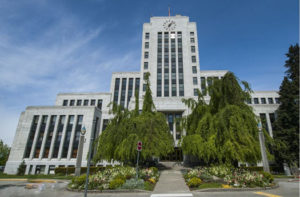
A Code of Conduct is a set of rules around behaviour and comportment that serves to define, in the instance today, the political arena of municipal governance and the culture of the institution, that seeks to clarify the core values and principles on display at City Hall, the Code of Conduct setting out to define the expected conduct of elected officials, staff, and all those citizens who present to City Council.

Having a Code of Conduct provides elected officials, city staff, and citizens a structure to follow, reducing the potential for untoward conduct when issues of contention arise, in order that there should be no ambiguity when it comes to Code of Conduct expectations, should lines of conduct be blurred, or rules broken.

As such, a municipal Code of Conduct sets the benchmarks for behaviour at City Hall — and in Vancouver’s case, Park Board — for all those who are involved in civic governance, elected officials, staff, and citizens, a guideline set for all to live up to.

During the final term of governance for the Vision Vancouver administration at City Hall, public demonstrations became a common feature, with — on several occasions, increasing frequency and deliberate intent — members of the rightfully aggrieved public taking over Council Chambers at Vancouver City Hall, ejecting the Mayor and City Councillors, and senior members of city staff from the Chambers.

Meanwhile, over at Vancouver Park Board — the only one of its kind on the continent —  avid follower of all things Vancouver Board of Parks and Recreation, the late Eleanor Hadley, who attended each and every meeting of Park Board, was calling out the Park Board Commissioners, and on this particular late autumn evening in 2015, the Vision Vancouver Park Board Committee Chairperson, Sarah Blyth.

Whether it was the late Jamie Lee Hamilton — the self-styled Queen of the Parks — or Ms. Hadley, repeatedly and often throughout the conduct of Park Board meetings, both would call out the Commissioners, the stewards of Vancouver’s parks and recreation system, while they were conducting Park Board business.

At Vancouver City Hall, Park Board General Manager Malcolm Bromley met with Vancouver City Manager Sadhu Johnston, with the two senior staff deciding that the drafting of a Code of Conduct was in order. In late 2016, the Park Board was the first civic body to adopt an official — and strictly enforced —  Code of Conduct.

Mr. Johnston spoke with the then Vision Vancouver Mayor, Gregor Robertson, about Council adopting their own Code of Conduct, but the idea was put off. Only when a new Council was elected in late 2018, did City Manager Sadhu Johnston once again raise the spectre of the adoption of a Code of Conduct at Vancouver City Hall, an idea newly-elected Mayor Kennedy Stewart went on to champion.

Here’s a bit of background on the adoption of a Code of Conduct at City Hall.

“In response to a Council resolution in late 2019 that asked City staff to review and update the City’s code of conduct, staff undertook an analysis of the current code.

Based on this review, staff identified shortcomings in the current Code of Conduct and recommended that a new code of conduct be drafted for Council and Advisory Committees, separate from the code of conduct that applies to City staff.

In response to legislation enacted in the Provinces, municipalities across Canada have recently enacted or revised their Codes of Conduct and retained independent ethics advisors. British Columbia does not have any requirements for a municipal Code of Conduct, or the implementation of an Integrity Commissioner.”

Arising from the fact that Vancouverites elected an almost wholly novice Council, who took a long while to get their feet underneath them, and arising from a packed Vancouver City Council agenda that invariably proved contentious and was frought with hours long amendments to amendments to amendments, and the subsequent onslaught of the COVID-19 pandemic, it took two full years for Vancouver City Council to adopt a new and much revised Code of Conduct.

On January 21, 2021, Council adopted a new and revised Conduct of Conduct.

Vancouver City Hall and That Damnable Code of Conduct

When on October 30, 2017, Green Party of Vancouver Board of Education trustee Janet Fraser was elected by her fellow trustees as Vancouver School Board Chairperson, Dr. Fraser set out as her …

“First priority is to build the culture of respect and then we must address the teacher recruitment and retention challenges that we’re seeing here in Vancouver. There are challenges across the province, but I think they’re particularly acute in Vancouver as we have additional challenges with affordability and teachers leaving, choosing to leave to work in other districts.”

VanRamblings celebrated Dr. Fraser’s tenure as Board of Education Chair.

The next year, following the 2018 Vancouver municipal election, when Dr. Fraser’s Green Party colleague Adriane Carr was re-elected to a third term in office, and was appointed by Vancouver Mayor Kennedy Stewart as Chairperson of Council’s powerful Committee on Policy and Strategic Priorities, Ms. Carr decided to take a page from Dr. Fraser’s ‘book’ on how to run a reasonable and respectful civic meeting.

In her newfound role as Chairperson of Council’s Committee on Policy and Strategic Priorities, here’s how Vancouver City Councillor Adriane Carr set about to interpret Vancouver’s old, and then new, Vancouver City Hall Code of Conduct

      • Vancouver City Councillors will treat each other with the utmost respect. A Vancouver City Councillor may not impugn, or be seen or heard to impugn, the integrity of a fellow Councillor, nor employ clever use of language, nor tone of voice, nor any other untoward mechanism of engagement that might be seen to bring disfavour to a member of Council. At all times in the Council Chambers, Councillors must interact with their fellow Councillors in an always respectful manner.
      • Failure to interact with one’s fellow Councillors in a manner consistent with ‘accepted norms’ of good governance, will see the imposition of sanctions on such member or members, ranging from the issuance of an order of an immediate apology to the aggrieved Councillor, to an ordered withdrawal from Chambers, and / or the laying of a formal Code of Conduct complaint against the offending Councillor.
      • No Councillor will ask a question of a staff person presenting to Council that would seem to hold the staff person in disrepute. Councillors must not, and will not, ever question staff information or data presented to Council. Should a Councillor present information and data contrary to the information and data presented by staff, that Councillor will be sanctioned by the Chair, have their microphone shut off, and be chastised by the Chair for engaging in untoward and unparliamentary conduct, or be ordered to withdraw forthwith from Council Chambers.
      • Citizens presenting to Council must observe the Code of Conduct as laid out for Councillors, and must not ever present information contrary to the information and data presented by staff. Citizen conduct must be respectful, whether addressing the City’s professional staff, or elected members of Council. Citizen failure to adhere to the Code of Conduct will result in the citizen’s address to Council being terminated, their microphone shut off, and their removal from the Council Chambers.
      • Note. Only the Mayor will be saved harmless from the above provisions of  Vancouver City Hall’s Code of Conduct.

      Thus this term of Vancouver City Council, none of the past entertainingly raucous engagements of Councillors with one another — Melissa De Genova or Andrea Reimer’s in-Council ‘attacks’ on one another that defined Vision Vancouver’s final term in office, nor COPE Councillor Harry Rankin’s cleverly infamous attacks on his Non-Partisan Association counterpart, George Puil, which was good-natured theatre of the first order, allowing both Councillors to make their respective points to maximum effect for public consumption and erudition — was countenanced.

      Instead at Vancouver City Council this term Vancouverites seem to have elected a mealy-mouthed, ‘go along to get along’ contingent of City Councillors who appear, for all the world, to be deep in the pockets of staff, who themselves — in some good measure — seem to be ‘in the pocket of’ or at least beholden to the developers who contribute hundreds of millions of dollars in Community Amenity Contributions to City Hall that, in effect, pays the salaries of senior City Hall staff.

      A couple of weeks ago, VanRamblings commented on Vancouver City Councillor Melissa De Genova, in a headlined column titled #VanPoli | Melissa De Genova | Fighting for You on Vancouver City Council, where we wrote …

      During the current term of office Councillor De Genova has transformed from a fighter into a pussy cat, a ‘can barely stand on her legs’ kitten.

      These past three years, what has happened to Vancouver resident champion and fighter for all that is right and good, challenger of her opposition colleagues, and ruthless yet still humane Council combatant, a woman who takes no truck nor holds any prisoners, the Melissa De Genova who calls out dissembling, self-righteous virtue signaling nonsense when one opposition Councillor or other makes a statement so ludicrous and offside that it all but demands a response from Vancouver’s warrior City Councillor.

      The answer, obviously, is quite clear: Councillor Adriane Carr’s and Mayor Kennedy Stewart’s anti-democratic interpretation of Vancouver’s damnable Code of Conduct, that serves at all times to limit debate at Council, the questioning of staff, and squelch many of the community voices who regularly present to City Council.

#VanPoli | Taxes | Downloading the Tax Burden to Municipalities

In a disparaging VanRamblings story published last week on this site —  titled Vancouver City Council To Raise Property Taxes a Whopping 6.35% — we took Vancouver City Councillors to task for raising property taxes in our city beyond what most homeowners, small businesses, and landlords could reasonably afford.

Now, as it happens, VanRamblings is a big fan of taxes which, in good measure, pay for: our schools, from kindergarten through university post-graduate work; roads, highways, bridges and other transportation infrastructure (including public transit); our judicial and public safety systems (the courts, police, fire firefighters, paramedics, prisons); ‘social programmes’ including all aspects of child care (encompassing children in the care of the province, when family structures have broken down); all aspects of our vibrant health care system; and much, much more.

To be fair to Vancouver Mayor Kennedy Stewart, and the five Vancouver City Councillors who voted in favour of the 6.35% property tax increase in 2022 — that would be the three Green Party of Vancouver City Councillors, Pete Fry, Adriane Carr and Michael Wiebe, OneCity Vancouver’s Christine Boyle and COPE’s Jean Swanson —  as is our wont, today we’ll publish one of our infrequent “history lessons” to explain, at least in part, the rationale as to why the Mayor and five City Councillors cast their vote in favour of a  6.35% property tax increase for 2022.

In 1984, Conservative Party leader Brian Mulroney was elected as Canada’s 18th Prime Minister, supplanting a Liberal Party of Canada that had been in power for 21 consecutive years, Canada’s 33rd Parliament in the autumn of 1984 consisting of 202 Tories, 135 Liberals, and 31 New Democrats. During Mr. Mulroney’s nine years in power, his government had many successes, on the environment and on the trade front, negotiating a groundbreaking free trade agreement with the United States. Contrary to billing, more often than not, Conservatives in power tend to be spendthrifts, all while cutting taxes for corporations and the wealthy, and failing to keep an eye on the federal budget.

In the midst of a deepening recession, when Mr. Mulroney stepped down as Prime Minister of Canada on Friday June 25, 1993, apart from and in spite of the then wildly unpopular 7% Goods and Sales Tax (GST) his government had brought in, Mr. Mulroney left his successor, Kim Campbell, with the legacy of a multi-year $42 billion annual budget deficit — a grim sum absolutely unheard of in those days.

Only four short months later, on Monday, October 25th, 1993 Joseph Jacques Jean Chrétien was elected as Canada’s 20th Prime Minister. First order of business? Appoint a Finance Minister, and commit to not only eliminating the egregious annual deficit, but cut the accumulated $840 billion long term Mulroney legacy debt in half. Who would perform that masterful fiscal feat? The head of Canada Steamship Lines, from 1988 forward the Member of Parliament for the southwestern Montréal riding of LaSalle-Émard, and Prime Ministerial aspirant, Paul Martin.

In Canada, long ago the federal government negotiated what became known colloquially as a tax rental agreement with the provinces. The federal government would collect income taxes from Canadians, take a portion for federal coffers, while transferring the majority of the federal tax income collected back to the provinces. For years, back to 1945, the agreement worked well for all levels of government — until 1996, when Finance Minister Paul Martin “changed the game”.

In the 1995 federal budget Jean Chrétien’s Liberal government abandoned any pretense of federal financing of post-secondary education, changing what was known as the Canada Social Transfer into the renamed the Canada Health and Social Transfer(CHST), cutting a total of $3.5 billion in the CHST for the 1996/97 fiscal year. The total cuts to the provinces in the first five years Jean Chrétien was in power: $7.6 billion in transfer payments that would otherwise have gone to the provinces, or a devastating decline of 40.7% in health, education and other transfer payments to the provinces by the 1999-2000 federal fiscal year.

All of a sudden, the provinces were made almost entirely responsible for the largest provincial budget item: health care, and entirely responsible for funding post-secondary education, federally-funded programmes that had been in place since as far back as the end of World War II.

The good news for the federal government: by 2003 federal Liberal Finance Minister Paul Martin had not only eliminated any notion of an annual federal budget deficit — instead, creating a yearly surplus —  but had, as well, paid down $440 billion in long term debt, cutting the federal debt in half as Jean Chrétien had promised a decade earlier. The bad news for the provinces: provincial Premiers and their Finance Ministers had to come up with funds to make up for the lost / eliminated “tax rental agreement” revenue that funded provincial programmes.

Provincial governments made up for the lost federal revenue by creating, or dramatically raising, provincial sales taxes, instituting or raising fees for every imaginable service, from driver’s licenses to camp ground fees, along with instituting bridge and road tolls while looking to any other sources of revenue provincial Finance Ministers could come up with to make up for lost federal funding.

The major source of newfound provincial revenue: municipalities. If the federal government had download responsibility to the provinces for health care, housing, and post secondary education, provinces sought to gain revenue from the towns, villages and cities that filled the landscape of their provinces. All of a sudden, cities, towns and villages were almost entirely responsible for the provision of affordable and social housing, social programmes, child care, road construction and maintenance, and other infrastructure (sewers, provision of clean water), and any number of programmes previously almost the sole responsibility of the provinces.

Where senior levels of government may run deficit budgets, cities, towns and villages, school boards, and Vancouver’s Park Board are required to run an annual balanced budget. With responsibility for programmes previously funded by the province now the responsibility of municipalities, cities, town and villages scrambled to find the required revenue, which translated into: skyrocketing parking rates and extended paid parking hours, dramatically increased parking fines, and skyrocketing development permit fees for homeowners and developers alike — and, what is known as Community Amenity Contributions by developers paid to the city to fund child care centres, neighbourhood recreation centres, as well as social and affordable housing, and a variety of arts and other programmes.

Here, then — as may be seen in Councillor Boyle’s tweet above — was the dilemma faced by Mayor Kennedy Stewart and our City Councillors when, last week, together our elected civic leaders voted for a 6.35% property tax increase for 2022, to fund not just core programmes, but the programmes that determine the livability of our city, and also fulfill the election commitments made by the Mayor, the three Green Party City Councillors, and our OneCity and COPE Councillors. Last week, for Mayor Stewart and five of our Councillors, conscience won out over fiscal restraint.

#VanPoli | Vancouver City Council To Raise Property Taxes a Whopping 6.35%

In a contentious, multi-hour meeting of Vancouver City Council, in a split vote along party lines, with COPE’s Jean Swanson, OneCity Vancouver’s Christine Boyle, all three Green Party of Vancouver City Councillors — Pete Fry, Adriane Carr, and Michael Wiebe — voting to raise property taxes in the City of Vancouver in 2022 by a whopping 6.35%, with dissenting votes coming from the former Non-Partisan Association electeds on Council — Sarah Kirby-Yung, Lisa Dominato, Colleen Hardwick, Rebecca Bligh and Melissa De Genova —  arguing that Council should hold the line at a previously promised five per cent increase, at the end of a long and arduous day on Tuesday, reason and fiscal prudence did not win the day.

Next year’s highest in Metro Vancouver property tax increase will see much of the burden borne by small business owners as part of their triple net lease responsibilities, as well as landlords, and the much-put-upon homeowners across the city.

Among the more contentious parts of the debate was an amendment by Councillor Adriane Carr in which she introduced an additional $9 million per year in taxation to fund a variety of the city’s climate emergency goals.

It includes more money for more electric vehicle infrastructure, planting trees, and improving active transportation infrastructure, and comes two months after Council narrowly voted against funding similar measures through a new parking permit system. Councillor Rebecca Bligh said she supported the initiatives, but expressed concern only “some Council members” had been consulted in advance.

“It’s not popular not to support this (climate change measure), we’re likely to be called out on Twitter for not supporting this, and being called climate [change] deniers,” she told the media.

“The people who are going to vote for this, were engaged ahead of this meeting, and the people that likely are not going to vote for this, were not engaged at all.”

Vancouver City Council budget meeting on Tuesday, December 7 2021. Photo by Jason Payne /PNG

As Vancouver Sun civic affairs reporter Dan Fumano writes today

“Property taxes will rise 6.35% in the city of Vancouver after Council narrowly approved a 2022 budget on Tuesday. After a day of debate, Council passed a $1.747 billion operating budget, with a property tax increase higher than the five per cent proposed in last month’s draft budget. Most of the additional money goes to the police, fire department and climate measures.

On a proposed $9 million fund for the climate emergency measures, the five Councillors elected in 2018 with the Non-Partisan Association — Rebecca Bligh, Melissa De Genova, Lisa Dominato, Colleen Hardwick, and Sarah Kirby-Yung — voted no. It was one of several times Tuesday the five voted together. Four  have long since quit the NPA, citing concerns about its Board of Directors. Only De Genova is still with the NPA.

The other six Councillors, including the three Greens, one from OneCity, one COPE, and the independent mayor voted for the extra climate measures funding, with Stewart accusing the opponents of ignoring the climate emergency so evident in B.C. this year.”

Councillor Sarah Kirby-Yung reflecting on the shenanigans going on at Council’s budget meeting

In the hour prior to the taking of the final vote on the 2022 budget, VanRamblings was afforded the opportunity to speak with Councillor Kirby-Yung.

“All members of Council are dedicated climate change activists, recognize our climate emergency, and to date every member of Council has voted in favour of meaningful climate change policy when it has come before Council,” Kirby-Yung told VanRamblings.

“To, at the last minute, add a $9 million climate measure to a City budget already stretching at the seams — when tens, and over the years working in concert with senior levels of government, hundreds of millions of dollars has been set aside as the City’s response to our climate emergency represents for me, the height of fiscal irresponsibility, and as such emerges as a disservice to the already overtaxed residents of Vancouver.”

Non-Partisan Association City Councillor Melissa De Genova also weighed in.

Late Tuesday evening, Councillor Kirby-Yung tweeted out these thoughts …

Councillor Rebecca Bligh less than pleased with the ‘game playing’ of some of her Council colleagues (Photo courtesy of CBC photographer, Ben Nelms, and CBC civic affairs reporter Justin McElroy)

As CBC civic affairs reporter Justin McElroy writes

“Despite repeated motions in the last two years to try and keep the average property tax increase at five per cent or below, the $1.7 billion budget passed has an increase of 6.3 per cent. That works out to $72 for the average detached condo in the city, or $178 for the average home, not including parts of the property tax bill not under municipal control.”

Councillor Colleen Hardwick looks askance at a Council colleague during budget debate

Mr. McElroy then quotes Vancouver City Councillor Colleen Hardwick …

“The stark reality is we are just going ka-ching, ka-ching, ka-ching, ka-ching, and taking it not out of the one per cent, but of the middle-class people who are trying to afford to continue living in this city.” Hardwick said at one point. “I’m choked as I continue to see us add more and more. It was bad enough that we were looking at five per cent.”

Other than the climate measures included in the 2022 budget, some of the other increases that were not originally included in the draft budget included an extra $3.1 million to Vancouver Fire and Rescue Services for more firefighters, $670,000 for enhanced street cleaning, $1.2 million to fund the newly created Auditor General’s office, and additional funding to the Vancouver Police Department, allowing them to fill current vacancies and fund recent salary arbitration decisions.