All posts by Raymond Tomlin

About Raymond Tomlin

Raymond Tomlin is a veteran journalist and educator who has written frequently on the political realm — municipal, provincial and federal — as well as on cinema, mainstream popular culture, the arts, and technology.

VIFF 2014: Opening Night Gala, Film, and the Festival is Underway

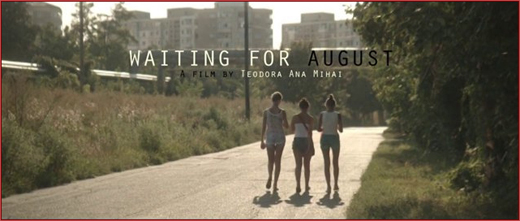
Waiting for August, the Hot Doc award-winning film by Teodora Ana Mihai

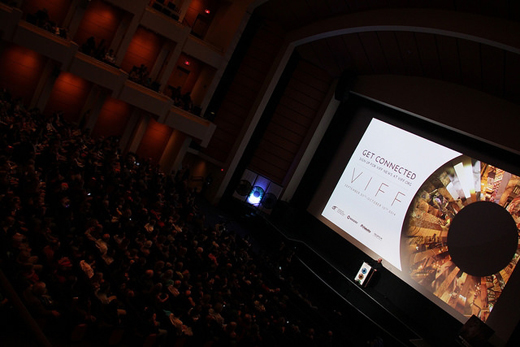
The first couple of days of the wonderfully overcast, and cooly-inviting 33rd annual Vancouver International Film Festival brought everything and more that had been promised: great cinema of consequence offering cinephiles a window on the world, seamless entry into the cinemas, a couple of glitches here and there (the subtitles for the films screening at The Rio on Friday night were out of sync), the well-attended Opening Gala screening of Jean-Marc Vallée’s Wild (rumour has it that Matt Damon was in the audience) going off without a hitch — screening at 3pm today for a final time at The Centre for the Performing Arts on Homer Street, plus there’ve been enthusiastic conversations galore while waiting in the lineups full of tales of shared memories and enthusiastic analyses of the films on offer.
Waiting for August (Grade: A+): My favourite film the first couple of days at VIFF was the very first film I saw at 10 a.m. on Thursday morning at The Cinematheque, Waiting for August — Teodora Ana Mihai’s Karlovy Vary / Hot Doc’s Fest best doc winner, the intimate, wondrous, fabulously humane slow-boil Romanian social non-fiction feature about a 15-year-old girl who cares for her six siblings while her mother earns a living abroad.
At its essence, Waiting for August is a film that examines the Christian doctrine of original sin, and the true nature of man. The film poses the question: will the seven young children left to fend for themselves and their own devices become feral, or will a finer sense of humanity and the collective interests of the family predominate? The defining characteristics of the nature of the siblings’ relationship that emerges? Love, and honour.

Alone in the world except for one another, the three girls and four boys in the family arise each morning for breakfast, attend to their hygiene, dress well in togs sent to them from their mother living in Italy, and attend school (except the youngest) — where they do well, socialize and have friends — all set amidst the safe and caring community of Bacau, within one of the Romania’s poorest provinces. Sleeping collectively on a large mattress placed on the floor, the bodies of the children tangled together possesses the innocence of puppies all snuggled together in blissful repose.
An incredibly lovely film full of hope and charity, there are two more screenings of Waiting for August: today at 4pm, and next Thursday, Oct. 2nd at 9:15pm, both times at Cineplex International Village, Cinema 8.

star.jpg star.jpg star.jpg

VanRamblings is on record as liking this year’s free, glossy film fest guide.
Despite VanRamblings’ salutary appreciation of the guide: a smattering of folks (some getting on in years, which is a category — one supposes — into which we would seem to fit these days) much preferred last year’s full catalogue “book”, with its larger print, more expansive content, and fuller presentation of information on the 350+ films screening at VIFF.
Here’s what Curtis Woloschuk, Editor and Publications Co-ordinator for this year’s VIFF programme had to say on the matter, when we approached him on Thursday: last year’s VIFF programme catalogue did not sell well enough to warrant this year’s publication of another VIFF programming “book” — research indicated, as well, that most patrons depended on the free VIFF guide that was distributed three weeks prior to fest kick-off. Note should be made that the type font in this year’s programming guide, Curtis told us, is a font-size larger than last year’s free preview guide.
Still and all, Curtis took note of the concern, and committed to us that at fest’s end, as senior festival staff are conducting their annual administrative review of the festival, the issue raised above will be given due consideration.
Some pics of VIFF’s 2014 Opening Gala, + VIFF videos
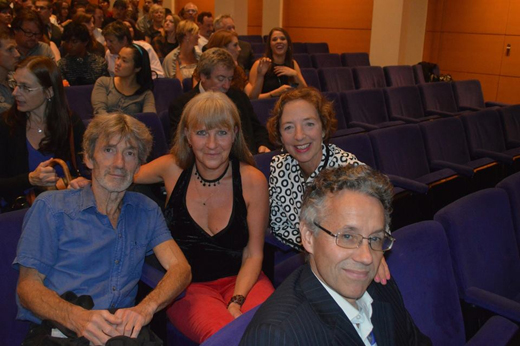
viff-gala1.jpgFilmmakers Laurence Keane, Elvira Lount, and Sandy Wilson, with VIFF’s Alan Franey

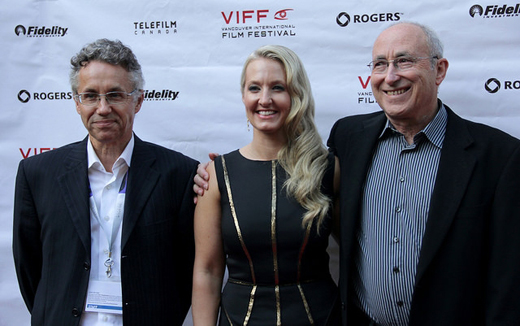
VIFF's Alan Franey and Jacqueline Dupuis, with VIFF co-founder, Leonard ScheinVIFF’s Alan Franey and Jacqueline Dupuis, with VIFF co-founder, Leonard Schein

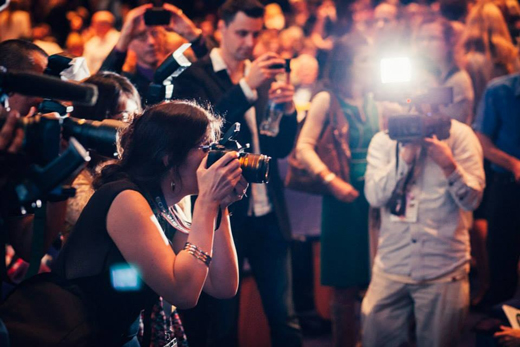
viff-gala3.jpgHey’s it opening night at the 33rd annual glorious Vancouver International Film Festival

viff-gala4.jpg

Back to the Future: A Brief History of Vancouver, Pre-War to Now

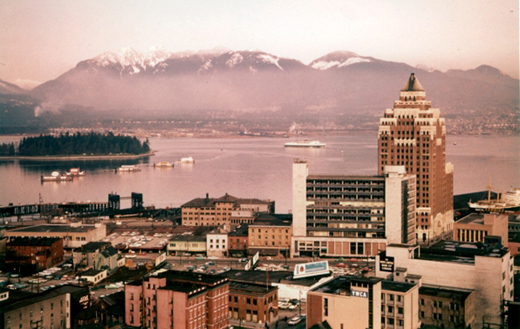
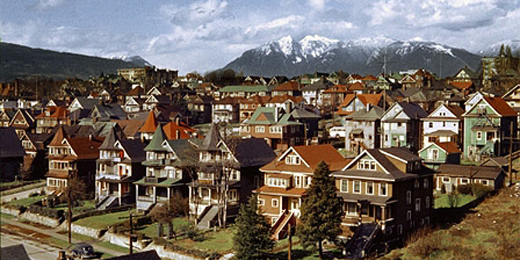
A photo of Vancouver in 1950

Prior to the outbreak of World War II, 83% of Canadians lived in the rural areas of Canada, mostly as members of farming families, leaving only 17% of the population to reside in hub cities like Montréal, Toronto & Vancouver, with much lesser populations in the prairie cities, and provincial capitals.

Following the end of the overseas conflict, with the industrial heartland of Germany, not to mention a great swath of Europe, and the production capitals of Japan leveled by the ravages of war, North America soon became the industrial heartland, and the bread basket, for the world.

Soldiers arriving home from Europe, rather than choosing to return to the farming communities from whence they had come prior to the outbreak of the conflicts in Europe and Japan, remained in the cities, many of them choosing to marry. The late 1940s and 1950s witnessed an unprecedented mass in-migration of highly-skilled, mostly European, industrial workers to populate the factory floors, and run the means of production.

In the 1950s, with a burgeoning population requiring housing, Vancouver became one of the three major Canadian cities to experience a building boom, a boom that has not been equaled since on our shores. The form of development chosen? The single-detached family dwelling. Apartment buildings were few and far between, the Vancouver economy thrived, and new homes were offered on the market at a $2000 price point, or less.

In Vancouver, as was the case across the North American continent, the populace adopted the much-ballyhooed economic notion of “a car in every garage” (requiring that a house be attached to that garage). With personal motor vehicles all the rage, the population was encouraged to consider streetcars as a relic of the past, an outmoded means of transportation.

In the mid-1950s, the Interurban streetcar service — a service that had been inaugurated in 1891 to transport British Columbians across the southwest region of our province — was moth-balled, the entire service dismantled, track-by-track, the invaluable, inexpensive and well-utilized Interurban streetcar lines seemingly gone forever.

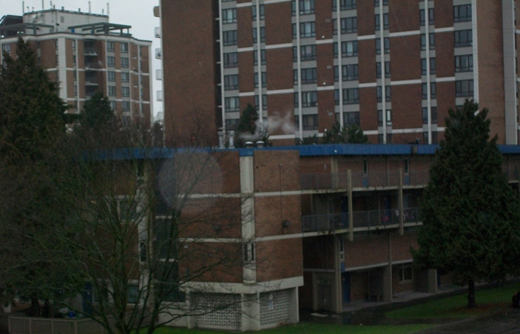
Vancouver's Raymur Housing Project, 1970
Vancouver’s Raymur Housing Project — social housing in Vancouver, circa 1970

In the 1950s, provincial government social planners spanning the nation, in concert with their federal government counterparts, set about to create “urban social housing complexes” to house the provinces’ poorest citizens. In doing so, Canadian provinces adopted the multiple family dwelling, or “apartment”, model as the housing form to shelter the indigent population. In U.S. cities like Detroit and Chicago, we are much more apt to call these “urban social housing complexes” by a more colloquial name: ghettos.

In Toronto, the constructed, soon-to-be-crime-ridden, concrete tower neighbourhood was named Regent Park. In Vancouver, the new community to house the poor was named The Raymur Project, with residents from across British Columbia brought to Vancouver to live in the newly-conceived, virtually free urban social housing complex.

As is so often the case with our current gentrifiers without a heart Vision Vancouver civic administration, folks already resident in the neighbourhood were displaced when the construction of Raymur commenced — an estimated 860 full-time residents of the downtown eastside neighbourhood were left to the vagaries of 1950s Vancouver to find alternate accommodation on their own, over half of their number longtime residents of the community, of Chinese descent.

Both social housing projects failed in their initial iterations, developing into crime-infested urban ghettos, as had been the American experience.

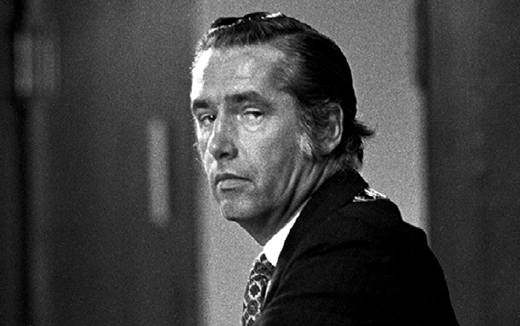
Tom Campbell, Mayor of Vancouver, 1966 - 1972
Tom ‘Not So Terrific’ Campbell, controversial Vancouver mayor, in office from 1966 to 1972

In 1966, running as an independent, a brash and confrontational Tom Campbell defeated sitting NPA mayor, Bill Rathie, to become Vancouver’s 31st mayor. From the outset, Campbell’s ascension to the Mayor’s office heralded a pro-development ethos that would make even Vision Vancouver blush, in the process advocating for a freeway that would cut through a large swath of the downtown east side, require the demolition of the historic Carnegie Centre at Main and Hastings, and bring about the construction of a luxury hotel at the entrance of Stanley Park, as well.

Vancouver's West End, 1960s, pre high-rise development
Vancouver’s West End neighbourhood, 1960, pre-high-rise construction. Photo, Fred Herzog.

In the West End, where Campbell — a wealthy, successful developer — owned substantial property, the newly-elected Mayor all but ordered the demolition of almost the entirety of the well-populated West End residential neighbourhood — housing mostly senior citizens in their single detached homes — as he set about to make way for the rapid construction of more than 200 concrete high-rise towers, transforming the West End forever.

All of these “changes” augered wild controversy among large portions of the Vancouver populace, leading to regular, vocal and sometimes even violent protests throughout Campbell’s treacherous tenure as Mayor, finally leading to his defeat at the polls in the November 1972 election.

star.jpg star.jpg star.jpg

Density For Whom, and in Whose Interests?
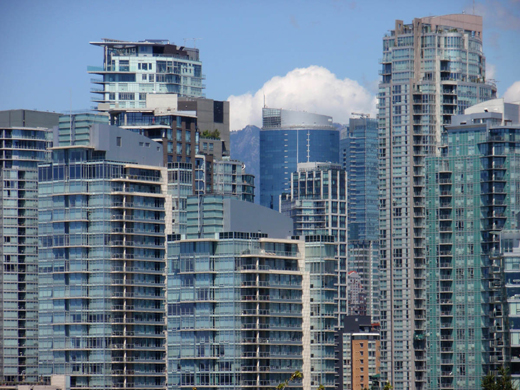
Vancouver highrise landscape, circa 2014
What our beloved city will look like in every neighbourhood, if Vision Vancouver is re-elected

VanRamblings would suggest that there are parallels to be drawn between Tom Campbell’s leadership, and that of Mayor Gregor Robertson, and his majority Vision Vancouver administration.

  • Under Vision Vancouver, five blocks on either side of every arterial in the city has been re-zoned for mid-rise building construction, with the potential to upzone to highrise towers across every one of the 23 neighbourhoods that comprise our beloved city. Hell, if you didn’t know better (then, maybe again, you do), you’d almost think that Mayor Gregor Robertson is Tom Campbell reborn with a somewhat more handsome visage, given the “development-at-all-costs” ethos that his Vision Vancouver civic party has initiated and carried through all throughout their development on speed six-year tenure in city government. Tom Campbell would be proud of Gregor Robertson;;
  • In the next term of government, with a Vision Vancouver administration in place, the approved multi-tower Oakridge development will pale when compared to the proposed scale of the planned re-development of the Langara Gardens neighbourhood, the area situated between 54th and 57th Avenues, just west of Cambie. And let’s not forget, either, that Gregor Robertson tried to hive off half of the Langara Golf Course for a massive condo tower development, depleting Vancouver’s already diminishing green space (yet another attack on the collective interests of Vancouverites, under Vision Vancouver), attending solely to the pecuniary interests of their development community masters;
  • Under a Vision Vancouver administration, our current sitting civic majority party ignored the concerns of neighbours respecting Wall Corp’s out-of-proportion to the neighbourhood redevelopment of Shannon Mews, approving an almost four-fold increase of units (from 200 to 700) in the massively re-developed housing project, proving once again that Vision Vancouver is dedicated to serving the interests of their development masters, with nary a consideration for the livability of our neighbourhoods, whatever area of the city in which we may live;;
  • And while we’re on the subject of Wall Corp., do you recall reading, above, of the 860 residents who were displaced when The Raymur Project began construction? Vision Vancouver, too, likes to displace longtime residents from their neighbourhood when they approve development — and, gosh, wouldn’t you know that it’s not social housing that Vision would intend to build when they displace residents, but fancy condominiums to cater to … Take a moment to remind yourself of the controversy surrounding the sale of three tracts of land at 955 East Hastings that displaced 200 longtime, low-income residents — also left to fend for themselves. That’s gentrification under Vision Vancouver, for ya. We’ll write about Wall Corp.’s massive Wall Centre Central Park development at Boundary and Kingsway — another day; that development requires a full column to properly explore;
  • Subway. Let’s talk about transportation for a moment. Vision Vancouver wants to build a subway down Broadway. Gee, one wonders why a “subway”, when cities across North America have adopted the low-cost, virtually greenhouse gas free, inexpensive to maintain, neighbourhood-reviving streetcar system? Gosh, it couldn’t have anything to do with the “town centres” that developers would build (and make a fortune on) at each subway station along the route — the city of Vancouver expropriating the four blocks surrounding each station, at Clark, Fraser, Oak, Arbutus, Macdonald, Alma and Blanca streets — all to serve the interests of their developer masters.Patrick Condon, University of British Columbia Chair of Urban Design and Landscape Architecture, likes to refer to this transportation-centred, town centre development style as “gleaming glass towers spread like beads on the string, disconnected from the surrounding communities they overshadow, sentencing neighbourhoods between stations to a future of slowly aging residents, gradually shrinking populations, more empty classrooms, restricted access for young families, fewer commercial services, and an increased dependence on the car to get around”;
  • No re-development proposal in Vision Vancouver’s last term was more controversial than the Grandview Woodland development plan, which all but ignored the initial report of the City of Vancouver planner charged to consult with Grandview Woodland residents, and develop a plan the neighbourhood could live with, the report almost completely re-written by staff in the Mayor’s office. Vision Vancouver demanded from the neighbourhood the realization of tower-driven “town centres” at both Clark & Commercial and Broadway, as well as 8+-storey towers along the entire expanse of Nanaimo and Hastings streets;
  • In their next term of government, a Vision Vancouver administration would demolish the Georgia and Dunsmuir viaducts, turning over the land beneath the viaducts to large-scale developers, Concord Pacific and Polygon. With the viaducts gone, without saying so in so many words, Vision Vancouver proposes to complete the highway through the east side that many of us fought against more than 40 years ago, driving a six-lane freeway through Strathcona and Trillium parks, as well as two, cherished community gardens;
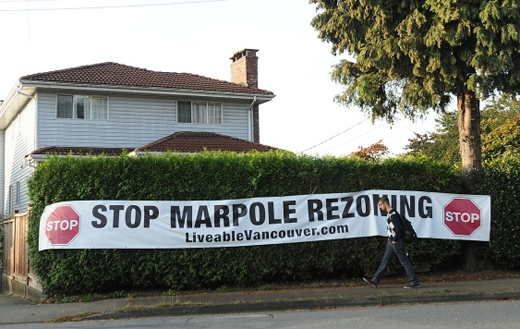
  • And let us not forget, either, that under a Vision Vancouver administration, the Marpole neighbourhood has been transformed as Vancouver’s least expensive, largely rental-driven neighbourhood, to a developer’s paradise of tower-driven condo highrises, mostly catering to a wealthy — and often, offshore — elite.

Stop Marpole Re-Development

In 2014, over the course of the past six years, Gregor Robertson has conducted the affairs of City Hall, and the re-development of our city neighbourhoods, as if he is a more contemporary, perhaps somewhat handsomer, yet equally oleaginous, venal, and even more corrupt version of Tom Campbell, objectively, Vancouver’s worst mayor ever.

Come this November 15th, Vancouver voters will face the same question as voters faced in 1972. Do those of us who live in Vancouver want to see continued, untrammeled high-rise development in our neighbourhoods, or do we want livable, sustainable neighbourhoods across our city, where we can raise our families, get to know our neighbours, and preserve the peace and prosperity of the Vancouver that we have all come to know and love?

The choice is yours. Make sure you get out to the polls, 48 days from now.

VIFF 2014: 355 Films, 65 Countries, the Festival Begins Today!

2014 Vancouver International Film Festival

For lovers of cinema, happy, happy days are here once again!
Yes, the spectacular, gorgeous, incredibly moving 33rd annual Vancouver International Film Festival commences today for a glorious 16-day run of the world’s best cinema, brought to our shores by a first-rate programming team, headed by longtime VIFF Artistic Director, Alan Franey.
More than ably aided by well-experienced Programme Manager and Senior Programmer, PoChu AuYeung, and her programming colleagues, the Vancouver International Film Festival once again presents more than 350 films, from more than 65 countries across our globe, and as you have read above: the very best in world cinema has been brought to our shores.

As VanRamblings has reported previously, the Vancouver International Film Festival is a much-changed film festival in its 2014 iteration. The Georgia Straight’s Craig Takeuchi would seem to agree (ahem, supplemented by some commentary from me), writing about VIFF’s …

  • Digital revolution: “This is the first year in our history that we’re not actually showing a film,” Franey announced. In 2014, none of the selections will be presented on celluloid — all the films are digital.
  • Festival guide: In previous years, a free, brief preview guide was released prior to the official print guide, which was available for purchase. This year, the two have been amalgamated into one free, glossy guide, available all across Metro Vancouver.
  • Marketing: Have you seen that knockout ‘sizzler’ ad above highlighting the 33rd annual Vancouver International Film Festival? And wait til you see the BC Spotlight sizzler video below. The film festival is marketing itself like never before — and that’s all to the good. I’m willing to bet that those ‘ads’ translate into a much-increased box office for the Festival in 2014.
  • Best New Director award: For 20 years, the Dragons and Tigers Award for Young Cinema was given to an emerging director from Pacific Asia who had not yet won significant international recognition. This year, that award has been expanded to the Best New Director (International) award.
  • VIFF Industry: A re-branded and revamped VIFF Film and Television Forum, a singularly important industry conference that coincides with the fall festival each year that will in 2014 engage more with the local film industry, including Vancouver’s booming visual effects and animation industry. The four-day VIFF Industry Conference offers professional development for registered participants, and wide-ranging industry-relevant topics, from content creation and financing, to marketing and direct distribution, to storytelling and audience engagement. Betcha NPA mayoral candidate Kirk LaPointe will be interested in knowing more about the re-imagined VIFF Industry.
  • Style series: VIFF Executive Director Jacqueline Dupuis announced that a new series, Style in Film, will showcase six films covering the themes of fashion, style, art, iconoclasts, and aesthetics. VIFF will partner with Eco Fashion Week to produce Q&As and events, such as a VIP post-event screening at Holt Renfrew (October 5).
  • Gala films and special events: From the wow, wow, wow Opening Gala Film, the Reese Witherspoon-starring Wild (yes, we’re talking Academy Award nominations here), to the closing Gala Film, Whiplash, the film that took the Sundance Film Festival by storm earlier this year, to the incredibly moving Special Gala presentation of The Vancouver Asahi (about which we will write again very soon), VIFF 2014 has absolutely outdone itself this year in booking films of special merit that will resonate with filmgoers like mad!

In 2014, how is the Vancouver International Film Festival the same?
Venues are the same this year as last (nine screens, 7 venues, including the 1727-seat Ford Centre for the Performing Arts across from the Vancouver Public Library, on Homer). Full venue information is available here.

The festival will run 16 days as per usual — kicking off today and running through until late night, Friday, October 10th. There are 355 films from 65 countries, in a programme that includes 26 non-fiction (documentary) features, 9 films in the Spotlight on France series, 27 films in the Dragons & Tigers (Cinema of East Asia) series, with more Canadian and U.S. films than ever in 2014, and a first-rate BC Spotlight film series, with 14 features.
As always, there are all sorts of ticket options: from single tickets at $13 to a range of ticket packs. Call the VIFF Info line at 604-683-FILM (3456) for more information. You can also get more info, and buy your tickets, online. Ticket acquisition is generally easy peasy, nice and easy.

star.jpg star.jpg star.jpg

What are the highlights in 2014, films that are must-sees?

Leviathan: The single most talked about film at Cannes this year, the film that took the critics by storm, Andrei Zvyagintsev’s extraordinary tragic drama of corruption and intimidation in contemporary Russia is the must-see of VIFF 2014, and not just because Jeff Wells loved it, writing …

It’s a drop-dead brilliant, awesomely-composed-in-every-respect melodrama and moral tale that concurrently serves as a microcosm of (or metaphor for) a morally compromised, ruthlessly malevolent, bare-knuckled Russia. Vladimir Putin will love it! (Kidding.) Political corruption, lust and infidelity, way too much vodka, blackmail and thuggery, gunshots, bromide-dispensing priests who kowtow to powerful scumbags, huge whale skeletons, crashing waves, rotting ships — this puppy has it all plus the aura of a majesterial art film plus opening and closing musical passages by Phillip Glass plus the most beautifully lighted, handsomely composed widescreen photography (by Mikhail Krichman) I’ve seen in a long time.

Or, because The Guardian’s Peter Bradshaw gave Leviathan a paltry five stars, writing that the picture is “full of extraordinary images and magnificent symmetry, a film acted and directed with unflinching ambition. Leviathan is a forbidding and intimidating work, and a film of magnificent ambition, scope and grandeur.” Aw, shucks. Me, I’m taking in the Friday night, October 3rd, 9pm screening at The Playhouse. See ya there!

The Wonders. Alice Rohrwacher’s Cannes Grand Prix winner, the film which I’ve most looked forward to seeing, and the picture I’d prayed to the gods (and to Alan Franey) to please, please bring to 2014’s Vancouver International Film Festival, will indeed screen at VIFF 2014! VanRamblings absolutely loved Rohrwacher’s début film, 2011’s exquisite, resonant, melancholy, tremendously lovely, authentic, quiet and beautifully observant Corpo Celeste. The Wonders in Vancouver — I am in heaven! See you at Friday night’s 9pm screening at The Rio!
[Digression: yes, yes, it’s true. My entire year revolves around the film festival. I am in love with the film festival, in love with the volunteers, in love with the administration and staff, in love with the films that screen at VIFF, in love with my fellow filmgoers, cannot wait to shed buckets and buckets of tears, and feel more emotionally-wrenched during the 16-day run of the film festival than I am at any other time of the year (no wonder I am so crazy in the lead up to, and during, our annual Vancouver International Film Festival — I am in love, completely, utterly out-of-control, as if I am 19-years-old again, and I am in love with the love of my life!)]
Oh yes, where was I?
Here’s a quick rundown of the films that are at the top of my list as must-see five-star films screening at VIFF 2014, each of these films garnering immense praise and recognition from the critic cognoscenti

  • Nuri Bilge Ceylan’s Cannes Palme D’Or winner Winter Sleep
  • Argentinian director Damian Szifron’s marvelous satire Wild Tales (an overwhelming favourite at Cannes this year)
  • Ruben Ostlund’s finely observed Force Majeure
  • Mike Leigh’s Cannes Best Actor (Timothy Spall) winner, Mr. Turner
  • The Dardennes brothers’ intimate new drama that plays with thriller-like intensity, Two Days, One Night (stars the peerless Marion Cotillard).

And, oh yes, my two favourite films in VIFF preview, also rush-right-out and get your tickets must-sees, two of the most unusual, groundbreaking each in their own way, moving and gratifying films at VIFF 2014: Uberto Pasolini’s wondrous Still Life, and the doc (well, kind of “the doc”) of the festival thus far for me, Hope and Wire, about the aftermath of the Christchurch, New Zealand 6.7 earthquakes in 2010 and 2011. Me, if I am brought to tears while watching a film, if I am pulled in that much, I am sold, the film goes into my memory bank forever and forever — a feat achieved by both these films, as was the case with Ishii Yuya’s entirely magical The Vancouver Asahi, which is a must-see for baseball fans, and anyone who professes to — and really does — love the city of Vancouver.

Of course, there are many more films about which I could write — but you’ll just have to wait til Saturday (this year, in a departure from past practice, I will cover the Vancouver civic election one day, and VIFF the next).
I’ll see fewer films this year, it’s true, but there’s a job to be done to save the city (I’m not kidding) — the 2014 Vancouver civic election is a critical election that will determine Vancouver’s future.
Do you want a city consisting almost solely of green-glass towers, energy-inefficient, soon-to-crumble highrises that cater only to the (often non-resident, sorry to say) wealthy, or do you want a livable, sustainable city for the rest of us, and our families? That’s what it’s all about in 2014.
Make no mistake. The 2014 Vancouver civic election is a legacy election.

Decision 2014: Giving the Lie to the Campaign’s Defining Narrative

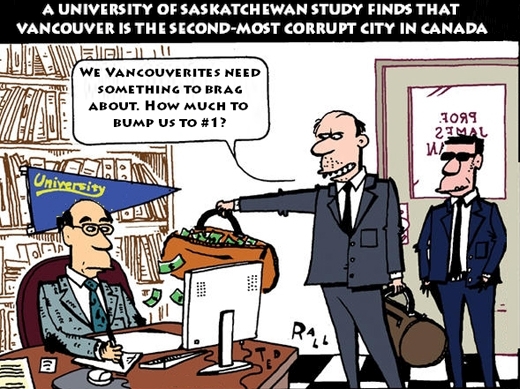
Opposition accuses Vision Vancouver and the Non-Partisan Association of being in the pocket of developers

The defining narrative of the 2014 Vancouver civic election revolves around the notion that voters have a choice to make: either we can vote for “the developer parties” (Vision Vancouver and the Non-Partisan Association), or we can vote for the “good guys” … Vancouver First, the Cedar Party, the Greens, or COPE, those municipal parties that do not accept donations from the development companies which operate in the city of Vancouver.
At best, this “good guys” vs “bad guys” narrative is simplistic.
At its worst, this untoward and unnecessary narrative is a vicious, wholly unwarranted and degrading condemnation of those fine potential public servants who choose to run with the so-called “developer parties.”
As if, somehow, the narrative suggests, principled and hard-working Vision Vancouver Council candidates like Niki Sharma and Andrea Reimer, or equally meritorious Non-Partisan Association Council candidates Suzanne Scott and Melissa DeGenova, upon being elected this next term, would sit up nights scheming to do the business of developers while subverting the interests of the electorate — all the while stuffing their pockets with loot secured from the likes of Ian Gillespie at Westbank, Michael Audain at Polygon, Wall Corp’s Bruno Wall, and Terry Hui at Concord Pacific.
What a harmful, destructive, libelous, slanderous and soul-destroying deceit to perpetuate — utterly unique to the political maelstrom on Canada’s west coast, for you will hear this narrative nowhere else — and how demeaning to the democratic interests of the political process.
And, it’s not as if either Vision Vancouver or the Non-Partisan Association can venture a considered response to this syllogistic argument based on false premises — lest they risk lending credence to the logically fallacious and destructive argument by very dint of deigning to offer a response.
To make matters worse for all of us, rather than encouraging the voting electorate to get out and cast their ballot for the “non-developer-funded parties”, instead this destructive, ultimately counter-productive narrative serves only to suppress and depress voter turnout, fitting conveniently, as it does, into a narrative myth often promoted in our news media, in the films we watch in our local multiplex, and on our television screens at home: that all politicians are corrupt, there’s nothing that can be done to change that circumstance, that politicians run for office simply to pad their own pocket, are “in it” solely for self-aggrandizement, and while in office consciously mean to do barbarous, malicious harm to the public good.
Little wonder that turnout at the polls in 2008 was a paltry 30.79% (there were only 124,285 recorded ballots from 403,663 registered voters) in what was a crucial municipal election, a figure hardly bettered in 2011 with only 34.57% of eligible voters choosing to cast their ballot in that election.
As Non-Partisan Association candidate for mayor, Kirk LaPointe, has been wont to point out, “All of us feel quite comfortable in the idea we’ve got rich, fertile territory to criticize policy …” — which is as it should be.
In recent weeks, Vision Vancouver has enunciated a transportation policy that commits the party to working with senior levels of government towards the construction of a subway down Broadway. Just yesterday, the NPA announced a plan to appoint an independent Ombudsperson at City Hall to ensure accountability and transparency, and protect citizens’ rights.
Nowhere in Vision Vancouver or the Non-Partisan Association’s declaration of either party’s platform tenet did I read a criticism of the “underfunded parties running in this election who don’t have a hope in hell of getting elected.” I mean, they could have, but they didn’t — and they won’t.
Why? Because the Non-Partisan Association and Vision Vancouver are remaining true to their commitment to run an issues-based municipal election campaign, giving the people of Vancouver a choice between two distinctly different competing visions on how our great city might move forward into the future, should one or the other party triumph at the polls when the ballots are counted on Saturday evening, November 15th.
In 2014, is it necessary that the smaller, competing parties engage in the shopworn cliché of the “developer parties” vs. the forces of good that are the other parties seeking office at Council, Park Board and School Board?
Surely there are a plethora of civic issues out there to engage the attention of voters. Is it necessary to continue to peddle a simplistic, and I would say ultimately offensive to voters, myth of those dastardly “candidates for the developer controlled parties”? There must be, there has to be, a better way.
Fortunately, the Coalition of Progressive Electors mayoral candidate, the principled Meena Wong, has chosen the higher road in enunciating hers and COPE’s vision for the future of Vancouver — a realistic vision that includes setting a $15-an-hour minimum wage in Vancouver, and charging a surtax on “empty homes” bought for speculative purposes, which tax money would be applied to the construction of social housing in Vancouver.
The Green Party of Vancouver, as well, has mostly kept to the issues — green issues, as you might imagine, that have much appeal to Vancouver’s voting electorate, as Vancouver’s nascent political party strives to hold the balance of power at city council in this next term of office. The Cedar Party has taken research in this election to new and glorious heights — rooting out a “secret development” at the north end of the Granville Street bridge.
Let’s make the 2014 Vancouver civic election about the issues: openness and transparency in municipal government, development of a workable strategy that will ensure the provision of affordable and social housing in the city of Vancouver, form of development (high-rise vs low-and-mid-rise) in our neighbourhoods, a transportation strategy that will meet the needs of all residents (a $4.2 billion subway down Broadway vs a network of at-grade light rail / streetcars across our city), a return to a long-held city policy of 2.75 acres of park space for every 1000 residents, and robust consultation and people-centred planning, among a raft of other issues.
Vancouver does not have to be the wild west of municipal politics. Let’s strive for something better, something finer. Let’s conduct a municipal election in Vancouver that will engage the interest of voters, and ensure a record turnout of the Vancouver electorate at the polls this November.