All posts by Raymond Tomlin

About Raymond Tomlin

Raymond Tomlin is a veteran journalist and educator who has written frequently on the political realm — municipal, provincial and federal — as well as on cinema, mainstream popular culture, the arts, and technology.

Arts Friday (well, sort of) | Radio Ratings | Whither Thou Goest

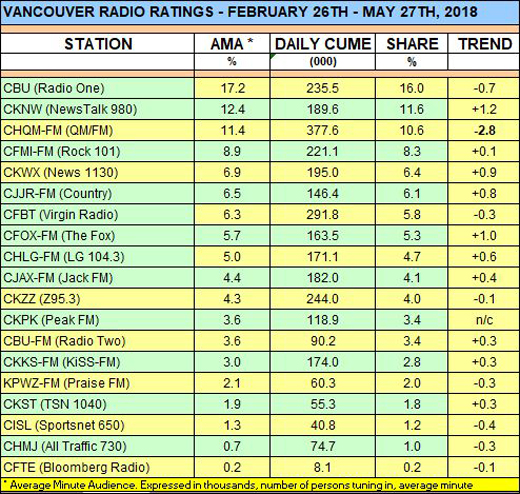
Vancouver Radio Ratings, February 26th to May 27th 2018One in six people are listening to CBC Radio One in Vancouver at any given time

As I have written previously, in 1957 I received a transistor radio on August 11th, the date of my 7th birthday, which gift not only engendered a love for radio, but changed my life in significant ways.
By the time the mid-1960s rolled around, I had been hired as a rock ‘n roll deejay at the pop radio station of the day, CFUN 141, where I worked the occasional on-air shift, and read the news as directed by the news director, the late Jim Neilsen — who would go on to become British Columbia’s first environment minister, in the Socred government of Bill Bennett — as well as producing the Sunday evening foreground programming.
In 1966, a young upstart pop radio station sprung up in Vancouver — that had adopted a ‘hot clock’ format created by programme director Bill Drake for the lowest-rated radio station in the Los Angeles market, KHJ. Within three months of adopting what was called the ‘Drake format’ — which was also often referred to as Boss Radio — KHJ shot from last place to first in a Los Angeles radio market with over 70 radio stations.
Drake exported his Boss Radio format to hundreds of radio stations across North America, including 730 CKLG Vancouver. Within six months of adopting the BOSS radio Drake format, 730 CKLG shot from last place to second place in the Vancouver market, just behind powerhouse CKNW 98.
Within a year, CFUN was no more, converting to CKVN, the Voice of News.

A 1968 CKLG aircheck of J.B. Shayne, and various Boss radio station jingles. Hint: you’re gonna want to listen to the KRLA jingle (it’s the last one), which I acquired in 1972 from KRLA afternoon announcer, the legendary Shadoe Stevens. The jingle was played at the beginning of each announcer’s show, every three hours, from 6 a.m. til midnight.

All the jocks at CFUN left for CKLG, and LG-FM, including me: Terry David Mulligan, Don Richards, Daryl B., Fred Latremouille, and John Tanner, just to name a few. J.B. Shayne was already employed at the station, as he’d been hired in 1965 to do overnight on Lions Gate radio, playing classical music — which was, as you might imagine, a joy for the inimitable Mr. Shayne (not!). After adopting the Boss Radio format, Shayne remained at the station, continuing on overnights, becoming a Vancouver radio legend.
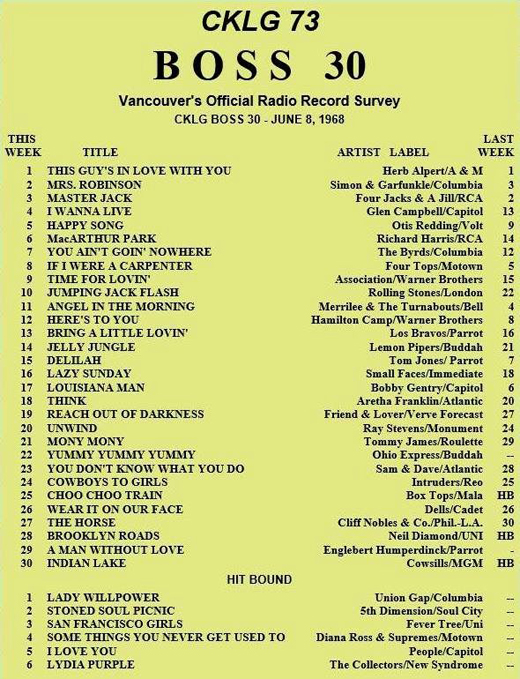
CKLG 73 Vancouver, BOSS 30, June 8 1968Courtesy of Ricardo Zborovszky. What has always impressed me about Top 30 music charts from the 1960s is the diversity of the music that was being played on radio, everything from Motown to pop, middle-of-the-road music for parents from Englebert Humperdinck, to trippy local psychedelia from The Collectors and their 1968 hit Lydia Purple to blues rock from the Rolling Stones & Americana folk from Simon & Garfunkel

In time to come, in VanRamblings Stories of a Life feature, I’ll write about my days in radio, including the very public broadcast throughout the entire Kootenay region of the loss of my virginity, a fond memory even to this day.
Vancouver radio station ratings, February 26th to May 27th 2018

Believe it or not, there are actually people who listen to radio in this day and age of iPhones and iPods, loaded with 128GB of your favourite music downloaded onto your smartphone device with thousands of songs available at the call of Siri or Google Assistant, bluetooth, and streaming music services like Spotify, Apple Music and SiriuxXM — and, heck, it’s not all old fogeys like the publisher of this blog, either, who listen to radio.

CBC Radio One Vancouver host of The Early Edition, Stephen Quinn dominates the morning radio market

Host Stephen Quinn dominates the radio market mornings Monday to Friday in Vancouver, on CBC Radio One’s The Early Edition, having taken over from longtime host Rick Cluff, when after some 20+ years, Mr. Cluff retired to his West Vancouver home during the holiday season that ended 2017, as it did Mr. Cluff’s 40+ year celebrated history in public radio.
If you want to know what’s going on in our city, our region and the province of British Columbia, you tune into Quinn’s The Early Edition, over the lunch hour on BC Today with Michelle Eliot, or Gloria Mackarenko’s re-invented On The Coast afternoon show — any and all issues of interest and concern are addressed on these three locally-produced broadcasts, featuring interviews with the broadest range of political figures, commentators, academics, and activists in our region and our province.
Little wonder that CBC Radio One dominates Vancouver’s radio market.
Although, CKNW comes in second in the Vancouver radio market in this last ratings “book,” the audience for that station is mainly 55+, hardly the demographic the advertisers want to reach, or so we keep being told.
QM/FM, although it’s ratings dropped a bit from the last time ratings were calculated, Vancouver’s oldest and most reliable music station continues to dominate the traditional radio market, as has been the case for more than 30 years, with its playlist of soft rock and classic radio favourites, with the occasional middle-of-the road contemporary song thrown into the mix.
Otherwise, Virgin Radio, Z95.3 and and KiSS Radio continue to compete for the ears of young listeners, a job they’re mostly successful at achieving.


Courtesy of Broadcast Dialogue magazine, David Bray, June 7th 2018
Vancouver: CBC Radio One continues its dominance of the Vancouver radio market, grabbing the #1 spot for A12+ with a 15.3% share of hours tuned (down from 15.7%). Taking the top spot for F25-54, QM-FM, posting a 16.5% share (down from 19.6% last book). FOX grabs the lead for M25-54 listeners, delivering a 13.8% share (up from 11.4%). The FOX is out in front for M18-34 with a 22.0% share of hours tuned (up from 15.8%). Women 18-34, QM-FM dominates, taking top spot with a 16.8 % share.


Even given its low ratings, TSN 1040 dominates the radio market, men aged 25 – 44, and 45 – 64, so for advertisers who want to reach that target market, TSN 1040 is the station that they’ll turn to more often than not.
Well, that’s it for this sort of Arts Friday VanRamblings post. Feels good to take a bit of break from the ever-so-satisfying maelstrom of local politics.

Vancouver Votes 2018 | Celebration for a City of Reconciliation

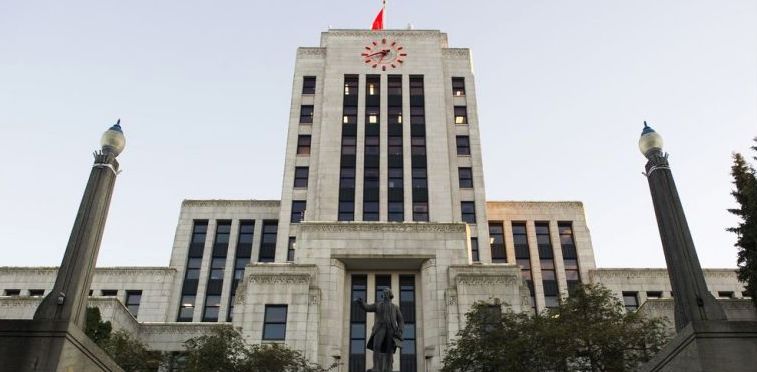
Vancouver City Hall, June 6, 2018, a day that will go down in Vancouver civic history

Some days you arise from your slumber, and from the time you open your eyes, you know it’s going to be a great day. Today is one such day.
At a regularly scheduled Vancouver City Council Finance & Services Committee meeting yesterday afternoon, our City Councillors voted unanimously in favour of a motion brought forward by veteran, and soon to retire, Vision Vancouver City Councillor Tim Stevenson, that would prohibit businesses from operating within the City of Vancouver that would seek to provide services or counseling intended to change a person’s gender identity or sexual orientation.
In unanimously passing the motion at the Council table and in Council chambers, our elected Vancouver city councillors’ decision to ban conversion therapy makes our city the first city in the country to do so.

On June 6th, 2018 Vancouver City Councillors voted unanimously to ban businesses engaged in so-called "conversion therapy" — meant to change a person's sexual orientation — from operating in the City of VancouverConversion therapy can lead to depression, anxiety, drug use, homelessness & suicide

An essay published by the Human Rights Campaign says this about conversion therapy …

So-called “conversion therapy,” sometimes known as “reparative therapy,” is a range of dangerous and discredited practices that falsely claim to change a person’s sexual orientation or gender identity or expression. Such practices have been rejected by every mainstream medical and mental health organization for decades, but due to continuing discrimination and societal bias against LGBTQ people, some practitioners continue to conduct conversion therapy. Minors are especially vulnerable, and conversion therapy can lead to depression, anxiety, drug use, homelessness, and suicide.

Peter Gajdics, the driving force behind the banning of conversion therapy, and himself a survivor, said he’s proud to see the city take this stance, nearly crying when he saw all Councillors voting in favour of the motion.

“I feel victorious. I actually didn’t think it was going to happen; I kept thinking something was going to get in the way,” Gajdics said. “This is huge for Vancouver to take this position,” as he went on to say that he wasn’t expecting such a move, “I was overwhelmed and thrilled that they changed it from minors to adults. I had wanted it to be adults cause I was an adult when it happened to me,” he said, his voice quivering. “I think they will not only have set a precedent, they will really draw the attention of jurisdictions for this reason.”

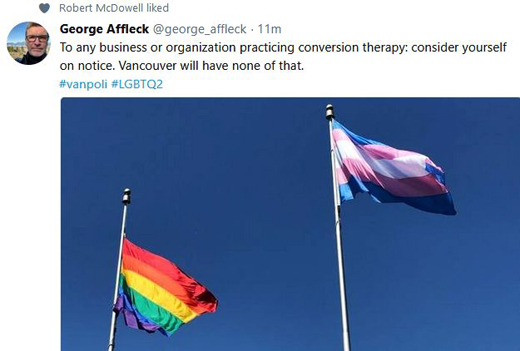
The bylaw was initially written to protect minors from conversion therapy, but a last-minute amendment by Vancouver Non-Partisan Association Councillor George Affleck made it apply to people of all ages.

Vancouver Non-Partisan Association City Councillor George Afflecik moved an amendment to a motion presented at Council, seeking to ban the operation of businesses in the City of Vancouver that would propose to conduct so-called conversion therap, Councillor Affleck's amendment to Vision Vancouver City Councillor applying to all persons, and not just minors, as first proposed by Councillor StevensonNPA City Councillor George Affleck serves notice to conversion therapy businesses

Again, note should be made that it was Vancouver Non-Partisan Association Councillor George Affleck who sought to amend Councillor Stevenson’s initial motion that would apply to minors only, to extend to all persons.
Note should also be made that NPA City Councillors Melissa De Genova, Elizabeth Ball and Hector Bremner all voted to support both Councillor Affleck’s amendment, and Councillor Stevenson’s initial motion to ban conversion therapy. Much is made of how “right wing” are the NPA City Councillors, and of how they mean ill for our city. Yesterday’s unanimous approval of the banning of conversion therapy businesses within the City of Vancouver gives the lie to the notion that our elected NPA Councillors are not social justice warriors. Make no mistake, they are — along with their Green Party and Vision Vancouver colleagues on Vancouver City Council.

Vancouver City Council votes to introduce a randomized ballot for the 2018 civic election

Vancouver A, B, C Elections To Be a Thing of the Past
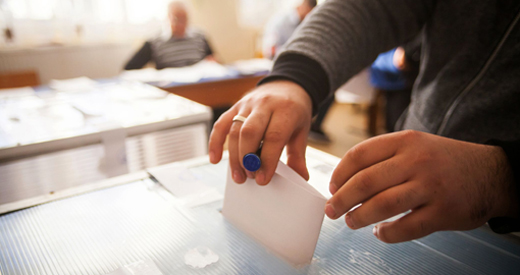
On voting day, you arrive at the polling station, register and sign in, and are then given a ballot, the names of the candidates for City Council listed alphabetically by surname. Easy peasy nice and easy. Not in 2018, though, when you arrive at the advance polls, or go about casting your ballot on E-Day, Saturday, October 20th. And a good thing it is, too.
In Vancouver, voters tend to take a look at the ballot, and vote a, b, c.
During last autumn’s Vancouver School Board by-election, the top vote-getters: Joy Alexander, Fraser Ballantyne, Carrie Bercic, Ken Clement, Lisa Dominato — do you notice a pattern there? I recall my friend Michael Klassen — now a very fine civic affairs columnist with the Vancouver Courier, and the go-to Global TV guy for all things civic affairs — grousing to me on election night 2005, “Raymond (ed. note, I like being called Raymond, cuz that’s my name — being called ‘Ray’, not so much), look at the results tonight: Suzanne Anton, Elizabeth Ball, David Cadman, Kim Capri, George Chow, Heather Deal,” after which I believe I heard him collapse. Michael had campaign-managed Valerie Jenkinson’s bid for a seat on City Council — he thought she was just great, bright, socially aware, knew tonnes about municipal governance and all the issues that she would face as an elected civic official, dedicated, hard working, and one of the most accomplished people he’d ever met. But her last name started with the letter “J”, and her ascension to Vancouver City Council was not to be.
Alas.
So, Michael (he calls himself Mike now, but I like to call him Michael) oughta be thrilled with the ground-breaking decision taken by Vancouver City Council yesterday to adopt a randomized ballot, about which Michael’s fellow Vancouver Courier journalist, Naoibh O’Connor writes, “The City of Vancouver will switch from an alphabetical to a randomized name order on the ballot for the 2018 civic election.”

Of course, not all Vancouver City Councillors were on board for the motion to adopt a randomized ballot, the initiative passing seven to four. Strange thing that those opposed were: Elizabeth Ball, Adriane Carr and Melissa De Genova. Imagine. I wonder why? Couldn’t have anything to do with the fact their surnames represent b, c & d on the ballot. Could it? Nah, perish the thought. You can read Naoibh O’Connor’s Vancouver Courier column to read what the three dissenting Councillors have to say on the matter, and the wrong-headedness involving the adoption of a randomized ballot.
Meanwhile, responding to retiring City Councillor Andrea Reimer’s good-natured poke, the Vancouver School Board elected officials are indeed taking a look at — or “mulling”, as Vancouver Courier reporter John Kurucz wrote in a column yesterday — adopting a randomized ballot, although as Mr. Kurucz notes in his story, “Seven of the nine board trustees have last names that start within the first seven letters of the alphabet. Only Green Party trustee Judy Zaichkowsky and Vision’s Allan Wong fall outside of the first third of the alphabet.”

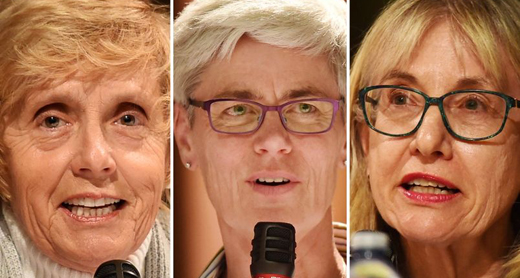
Vancouver School Board mulling the idea of adopting a randomized ballot in 2018 civic electionJoy Alexander has no problem with a move to randomization, Janet Fraser hasn’t made her mind up yet, and Judy Zaichkowsky thinks the change would be “chaotic.”

At the VSB, you can already tell who’ll like the idea of a randomized ballot: OneCity Vancouver’s Carrie Bercic (not least because it’ll help give her OneCity colleague Jennifer Reddy — who’ll run alongside Ms. Bercic — a better shot at gaining a seat on Vancouver’s Board of Education, both of which 2018 civic election candidates will be joined by Erica Jaaf on seeking a seat on the 2018 – 2022 Vancouver School Board — casting a ballot for these three accomplished women of principle, an absolute necessity for all those going to the polls), Ms. Bercic’s Vision Vancouver colleagues Joy Alexander (who will not seek another term on School Board — recovering one’s sanity after the past four years of B.C. Liberal provincial government shenanigans is sort of important, don’t you think?), colleague and progressive Ken Clement, and the incredibly wonderful veteran School Board trustee, the one, the only — I wouldn’t have made it through my cancer battle without him, he was so incredibly good to me — Allan Wong.
Except for Vancouver School Board Green Party of Vancouver trustee Dr. Judy Zaichowski (who also won’t be running again) — who is, unsurprisingly, opposed — we have no idea how the others will vote on the issue. Over to you Lisa Dominato, Fraser Ballantyne & Estrellita Gonzalez.

In 2018 Vancouver resident go to the polls in early October for advance polls, and on election day, Saturday, October 20th

Municipalities across British Columbia and in other parts of Canada — including Calgary, Winnipeg, White Rock, Dawson Creek, Fort St. John and Langley Township — long ago adopted a randomized ballot, with little fuss or muss, or distress to voters. No doubt, there’ll be some confusion at the polls this autumn — as such, Council assigned an additional $235,000 to the office of the Election Returning Officer at City Hall to inform and help citizens adjust to the newly-adopted randomized election ballot.

An amusing and informed 2018 early June Vancouver civic election Twitter dialogue

Yesterday afternoon, Vancouver Non-Partisan Association City Councillor George Affleck, TeamJean 2018 community activist and Coalition of Progressive Electors Board of Directors member, Tristan Markle, eastside community activist, Jak King and your favourite VanRamblings blogger, among other participants, found ourselves involved in a lively, respectful and good-natured cross-partisan Twitter dialogue, a portion of which is available here, a response to yesterday’s VanRamblings column on the VDLC negotiated progressive “coalition” electoral settlement. Worth a gander, if you’re interested in how politics is done in this town.

Vancouver Votes 2018 | Brokered Progressive Deal Set

Stephen Von Sychowski, President of the Vancouver & District Labour Council | Deal brokered with five Vancouver progressive civic parties | No left vote-splittingVDLC President Stephen Von Zychowski announces a quintet of left-of-centre Vancouver civic parties have reached a brokered agreement-in-principle, that would see them work together to avoid vote splitting in the upcoming October municipal election.

On March 17th of this year, Vancouver & District Labour Council President Stephen Von Zychowski announced that the labour group that has has long played a role in local politics, would attempt to broker an arrangement among Vancouver’s five progressive parties — OneCity Vancouver, the Green Party of Vancouver, the Coalition of Progressive Electors, Vision Vancouver, and TeamJean 2018 — as to how many candidates each progressive civic party would run, with the aim of keeping the traditionally right-leaning Non-Partisan Association from winning power at City Hall.
On May 5th, representatives from the five Vancouver progressive civic parties met at the Croatian Centre — at an event called the Crossroads Conference — to see if it might be possible to hammer out a deal where combined Vancouver’s progressive parties would run no more than 10 candidates for Council, 9 candidates for School Board, and 7 candidates for Park Board, which represents the number of open seats on each civic body.
Last evening, the Vancouver & District Labour Council announced a brokered deal had been negotiated with the five progressive civic parties.
Anna Chudnovsky, a co-chairperson of OneCity Vancouver, said her party had agreed to limit the candidates it would run to two for Vancouver City Council, and three for Vancouver School Board.
Hypothetically, had an agreement not been reached, OneCity may have decided to run more candidates, she told Sun reporter Matt Robinson.
The purpose of the deals Ms. Chudnovsky told the Sun reporter was …

” … to indicate to voters that it is possible to defeat the NPA and other emerging right-wing forces in the city, and that voters can do that by following the recommendations of the Labour Council.”

Michael Haack, a Vision Vancouver co-chair, called the agreements a great deal both for his party as well as for progressive voters across the city. He said Vision had agreed to limit its candidates to five for Council, three for school board and two for parks.

“This agreement is really important because the issues that are facing Vancouverites are big enough that we need to keep working together to solve them with bold and progressive leadership,” Haack said.

The brokered deal came the day after the right-of-centre Non-Partisan Association members chose local entrepreneur Ken Sim to represent the party as its mayoral candidate in the upcoming October civic election.
If prospective Vision Vancouver mayoral aspirant Ian Campbell is nominated on June 19th to carry the party’s banner, and should he win the Vancouver civic election race, the party would retain control City Hall.
One would imagine that Vision Vancouver retaining a stranglehold on city governance likely won’t sit well with members of Vancouver’s four other progressive parties, but for the moment no left-of-centre civic party is weighing in on the prospect.
In a phone interview with Georgia Straight civic affairs reporter Carlito Pablo, the Green Party of Vancouver’s Pete Fry told The Straight that his party’s agreement with the VDLC involves three Green candidates each for council, school board, and park board.
Current Vancouver City Councillor Adriane Carr, Mr. Fry and Michael Wiebe, recent Park Board Chair, and current Commissioner, are widely expected to emerge as the Green Party’s candidates for Vancouver City Council.

TEAMJEAN | The City We Need | Vancouver | Get Involved | Be the Change

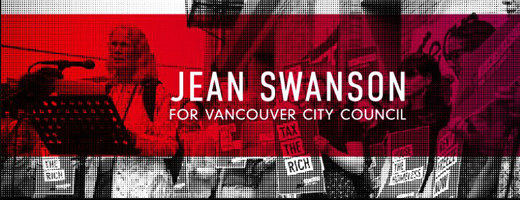
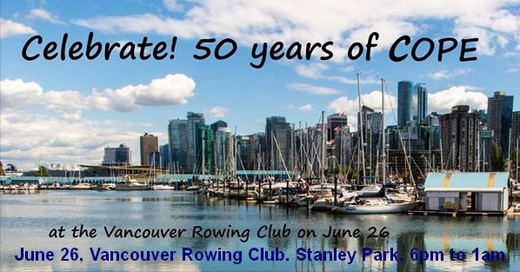
In addition to Vision, OneCity and Green Party, the Coalition of Progressive Electors (COPE), celebrating its 50th anniversary this year, and the TeamJean 2018 activist group — named for 2017 Vancouver by-election candidate and community activist, Jean Swanson — are expected to sign respective agreements with the VDLC following meetings with members.
Informed sources tell VanRamblings that COPE will run two candidates for each of Council, Park and School Board, while TeamJean 2018 will run only a single Council candidate, likely Jean Swanson.
Seeking COPE nominations as Park Board candidates are SFU lecturer John Irwin and Gwen Giesbrecht, president of the Britannia community services centre’s board of management. Looking to run for school board are indigenous advocate Diana Day, and retired teacher Barb Parrott.
UBC planning professor Patrick Condon will likely make a run for Mayor, joining a crowded left-of-centre field that includes former Vision Vancouver board member Shauna Sylvester, now former Burnaby South NDP MP Kennedy Stewart, and Vision Vancouver mayoral nominee Ian Campbell. The Greens’ Adriane Carr is not expected to announce a run for Mayor.
The VDLC negotiated agreement will allow candidates for the five progressive civic parties to criticize one another.

Vancouver's Coalition of Progressive Electors will celebrate their 50th anniversary at a fundraiser to be held at the Vancouver Rowing, on June 26thTickets, at $100, for COPE’s 50th anniversary celebration are available here.

Vancouver Votes 2018 | NPA Choose Their Mayoralty Candidate

Novice political candidate Ken Sim Chosen as 2018 NPA Mayoral candidate

Ken Sim, The Once and Forever Saviour | Part 1
Forever Cagey Peter Armstrong Chooses NPA Mayoral Hopeful
Results of the Non-Partisan Association Mayoral nominee contest …

1. Ken Sim: 977 votes;

2. John Coupar: 602 votes;

3. Glen Chernen: 379 votes.

There were 2 spoiled ballots.

Novice political candidate Ken Sim chosen as 2018 NPA Mayoral candidateNovice political candidate Ken Sim chosen as 2018 NPA Mayoral candidate

Tomorrow, Tuesday, June 5th, VanRamblings will explain what the sub-headlines above mean for the Vancouver Non-Partisan Association, for Vancouver’s progressive parties, and for the voters of Vancouver.
On Tuesday, at the top of the column, we’ll also run newly-chosen Non-Partisan Association Mayoralty candidate Ken Sim’s victory speech.
Today, we’ll post the speeches for the three candidates vying for the Vancouver Non-Partisan Association Mayoral nomination. Order selected alphabetically, by surname, first up: Glen Chernen, who while dressed to the nines gave one of the best speeches we’ve ever heard him give. Not good enough for a victory, nor anything close to it, garnering only 20% of the nearly 2,000 votes cast, chances are Mr. Chernen will get to be the disruptor he wants to be as a Non-Partisan Association candidate for Vancouver City Council, where he’ll shake things in his inimitable fashion.
Introduced by NPA Board of Directors President, Gregory Baker …

3. Glen Chernen ask NPA party members to select him as their Mayoral nominee

Next up was the Vancouver Non-Partisan Association establishment candidate — not necessarily a bad thing, Mr. Coupar our favourite of the three NPA nomination Mayoral nominees, and the only one who spoke about affordable housing, the homeless, a culture policy for the city and support for the arts, and continuing the progressive initiatives undertaken by the current civic administration, while returning services to the people for which monies were either cut or eliminated, as a class issue of prominence for all persons of conscience, proper funding of renewal of our community centres, construction of pools, and ensuring more park space.
VanRamblings apologizes for the shaky camera work in the John Coupar video below. We’ll acquire a tripod soon to ensure steadier recordings of the 2018 municipal candidates for Vancouver civic office, going forward …

John Coupar seeks support from NPA members to become party’s Mayoral nominee

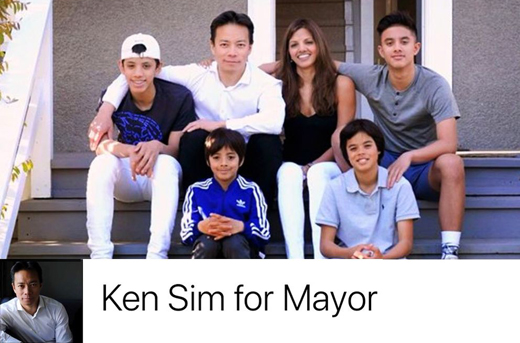
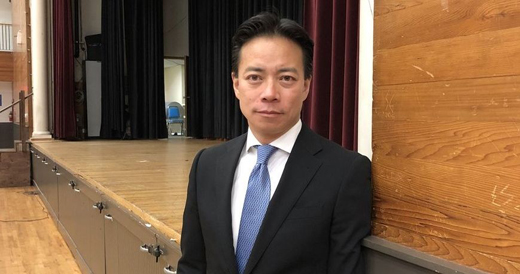
And here he is, the successful, winning candidate for the Vancouver Non-Partisan Association mantle for the party’s 2018 Mayoral nominee, Ken Sim, a novice candidate for political office, but an astute businessman, family man, life long Vancouver resident, who by this time next month will emerge as the single most-informed candidate for Mayor ever, after a series of tutoring sessions by 2014’s NPA Mayoral candidate Kirk LaPointe, current Park Board Commissioners and in both cases likely Vancouver City Council candidates, John Coupar and Sarah Kirby-Yung, and a raft of NPA electeds and veteran party political politicos, who will turn Ken Sim into the winningest NPA candidate for Mayor this century.

Businessman Ken Sim emerged as the NPA’s 2018 Mayoral candidate, on June 3rd 2018
See ya back here tomorrow for analysis of what Mr. Sim’s win means.