All posts by Raymond Tomlin

About Raymond Tomlin

Raymond Tomlin is a veteran journalist and educator who has written frequently on the political realm — municipal, provincial and federal — as well as on cinema, mainstream popular culture, the arts, and technology.

Vancouver Votes 2018 | COPE Selects Candidates for Civic Office

Coalition of Progressive Electors (COPE) candidates in the 2018 Vancouver civic electionCoalition of Progressive Electors (COPE) candidates for office in the 2018 Vancouver civic election. Clockwise, starting top left, activists & persons of conscience all: Jean Swanson, Anne Roberts, John Irwin, Gwen Giesbrecht, Barb Parrott, Diana Day, and Derrick O’Keefe

As part of the deal struck with the Vancouver & District Labour Council (VDLC), the Coalition of Progressive Electors (COPE) selected three candidates for Vancouver City Council at a nomination meeting held at the Holy Trinity Anglican Church, at 12th and Hemlock, this past Sunday afternoon, as well as two candidates for School Board and two candidates for Park Board, all of whom will be supported by the VDLC, and can reasonably expect to secure the votes of the 50,000 union members in the city of Vancouver. The “deal” and the fine candidates above represent a breakthrough for COPE — celebrating its 50th birthday this year — who are looking to elect their first candidate to office since the 2008 civic election.
COPE’s 2018 Vancouver City Council Candidates
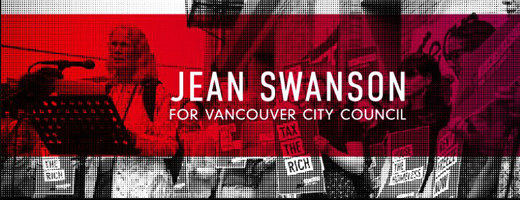
COPE candidates for Council | The City We Need | Vancouver | Get Involved | Be the Change

Heading up COPE’s 2018 Council slate is Order of Canada recipient and veteran community and anti-poverty activist, Jean Swanson, who launched her campaign this past Saturday, as part of a raucous, enjoyable, fun and serious-minded reminder of what the core issues are that constitute “the city we need,” the banner under which Ms. Swanson is seeking office …

  • A four-year rent freeze, including the outlawing of renovictions;

  • Building the affordable and social housing we need across the city;
  • Working toward universal free transit, starting with students & low income workers, while also working to institute a city carbon tax to expand transit, and supporting car and bike share programmes;

  • Protecting the environment, including stopping Kinder Morgan, banning styrofoam and plastic bottles, and turning office lights off at night;

  • Universal child care, including making Vancouver a pilot city for universal $10/day child care, creating 7,500 new early child care spaces and 10,000 new after-school care spaces to meet need, and prioritizing provision of indigenous-centred child care.

Jean Swanson and COPE’s Council platform summary is available here.

Derrick O’Keefe, a prominent analytical voice on Vancouver’s left wing, as The Georgia Straight has described him, has officially entered politics, in the 2018 civic election.

COPE Council candidate, Anne Roberts, launching her campaign for civic office, Saturday

Of course, as we have written previously, Anne Roberts and Jean Swanson constitute two members of Vancouver’s holy trinity of progressive political figures and persons of conscience in our city, who mean to give us The City We Need (the other member: OneCity Vancouver’s Christine Boyle), and as such represent three must-votes in this autumn’s Vancouver municipal election. In respect of Mr. O’Keefe, we will publish a column soon on what his near-revolutionary candidacy represents for Vancouver civic politics.
COPE’s 2018 Vancouver School Board candidates
COPE's 2018 Vancouver School Board candidates, Diana Day and Barb Parrott

2018 represents a 3rd time Diana Day has sought a seat on School Board.
The accomplished Diana Day, an Indigenous First Nations from the Oneida Nation, who graduated with an Honours B.A. in Psychology from the University of Windsor, and has worked as a leader in Aboriginal health, public education and community engagement over the past decade, and sat as Chair of the Vancouver Technical Secondary Schools’ Parent Advisory Council (PAC), when her daughter Angeline attended this east side school (and VanRamblings alma mater), graduating as an honours student.
Diana has broad support in the community, and in last autumn’s by-election came within only 900 votes of taking a seat on Vancouver School Board.
Diana also has friends who have great things to say about her …

“I have had the privilege of working alongside Diana Day in her capacity as executive on the Vancouver District Parent Advisory Council and want to ask you to save a vote for her as a 2018 COPE Vancouver School Board candidate. Ms. Day is a skilled facilitator with a passion for equity and looking out for our most vulnerable students and families. She brings a warmth and humour to her position while being firm, clear and focused. Diana Day is an effective advocate and an empathetic listener and will make an excellent Trustee.”
Claudia Ferris, Vancouver District Parent Advisory Council (DPAC) Media Coordinator

The single most frequent issue to come before the Vancouver School Board? Aboriginal education. Funding, resources, preservation or expansion of existing programmes for First Nations students enrolled in the Vancouver school system, liaison with the federal and provincial governments, First Nations student achievement (that while improving continues to be regrettably and woefully low), and protection of the interests of indigenous children enrolled in Vancouver’s school system, among a myriad of other concerns and interests. There is no more passionate and informed advocate of and voice for First Nations students than Diana Day — a vote for COPE Vancouver’s Diana Day on October 14th is an absolute imperative.
All of us need to hear Diana’s voice at the Vancouver School Board table.

COPE's Barb Parrott, a veteran BCTF activist and 2018 candidate for Vancouver School BoardBarb Parrott, a veteran BCTF activist & 2018 COPE candidate for Vancouver School Board

A former Vancouver Elementary School Teacher’s Association 1st Vice-President and BCTF Annual General Meeting Chairperson, Barb Parrott has worked her entire adult life in support of public education. In the coming days and weeks, VanRamblings will interview the accomplished Ms. Parrott, and publish the interview on this site. Clearly, as a staunch defender of public education, Ms. Parrot represents a must-vote for Vancouver School Board this upcoming autumn electoral season.
COPE’s 2018 Vancouver Park Board candidates

Former COPE Park Board Chairperson Anita Romaniuk introduces Park Board platform

Flat out, Gwen Giesbrecht — a veteran member and recent Chairperson of the Britannia Community Centre on Vancouver’s eastside — is one of our favourite people on the planet, and the person who during the 2017 Women’s March in Vancouver, when I marched even though I was seemingly at death’s door, helped to define for me all that had occurred with me in the months prior to the march during my arduous, seemingly terminal — and determinedly inoperable — cancer journey, saying to me …

“Raymond, both you and I are opinionated people, and when you’re as opinionated as we are sometimes you get to thinking, ‘People must really hate me.’ But what you’ve discovered these past months is what I discovered only a short while ago — as opinionated as we are, activists in our community respect and even love us. With the 400 persons of conscience, from across the political spectrum, who have come to your aid, clear-headed and strong-minded, and made a difference in your life, giving it a meaning that has sustained you during this very difficult, even tragic, time in your life, perhaps the outpouring of love you’ve felt will not only sustain you during your illness, but give you a new life, and a second chance at life.”

And so it was, as only two months later, my cancer not only went into remission, but disappeared entirely, a miracle (although, I still attend at the B.C. Cancer Agency for MRIs and CT scans, as I will do later this month, and next). Now, what do you think the chances are that I’ll be supporting Ms. Giesbrecht’s bid for a seat on Vancouver Park Board? Just could be that I’ll be talking about little else in the coming months! Vote Gwen Giesbrecht!
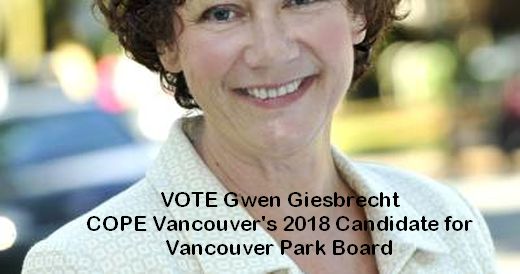
Gwen Giesbrecht, a must-vote for Vancouver Park Board in the 2018 municipal election

Dr. John Irwin, a respected professor of geography at Simon Fraser Univerisity, specializing in sustainable urban development, has sat as a member of COPE’s Parks & Recreation Committee for the past three years, and is one of the architects of the 2018 Park Board platform. Dr. Irwin is a director of the Society Promoting Environmental Conservation (SPEC), a Vancouver environmental organization that protects urban green space and promotes community gardens across the city, and a founding member of the South East False Creek Working Group that helped develop the sustainable community and foreshore park that is now rising along the south shores of False Creek. Dr. Irwin has also worked as a policy analyst for the Tenants Rights Action Coalition and the British Columbia office of the Canadian Centre for Policy Alternatives.
In the coming weeks and months, VanRamblings looks forward to interviewing Dr. Irwin on what he sees as the priorities for the Vancouver Board of Parks & Recreation in the coming term, where he stands on the contentious VanSplash proposal, and on the currently proposed and extremely contentious asphalt bike path the city seems wedded to implementing through Kitsilano Beach Park — both of which issues will come before Park Board next February for final determination.

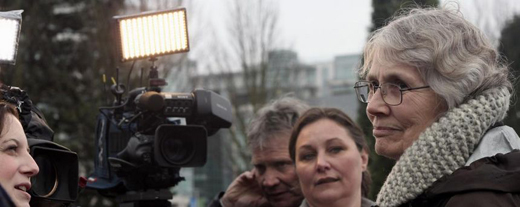
Vancouver Votes 2018 | TeamJean’s Winning Team | Jean Swanson

Jean Swanson launches her 2018 campaign for Vancouver City Council, on June 9th

Perhaps the most heartening development in Vancouver civic politics over the course of the past year is the emergence of veteran community activist Jean Swanson as a viable — and necessary — candidate for civic office.
Surrounded and supported by a team of sophisticated community activists, who have come to identify themselves as TeamJean, in last autumn’s Vancouver civic by-election #TeamJean activists catapulted Jean Swanson to a rousing and hopeful second-place finish in the October 19th Vancouver City Council by-election to fill a seat left vacant by Vision Vancouver City Councillor Geoff Meggs, who had resigned his position on Council to take on the job of Chief of Staff to, then, newly-elected NDP Premier John Horgan.

Jean Swanson at a rally in 2012 speaking out on behalf of residents of the Downtown EastsideJean Swanson at a rally in 2012 speaking out on behalf of resident of the DTES

Most people’s first impression of Jean Swanson relates to how much she doesn’t sound like a radicalized and vitriolic rabble-rouser, her manner of speech and presentation quiet, respectful, self-deprecating, warm and engaging. As our region’s leading anti-poverty activist, Jean Swanson has spent a lifetime sparring with property developers, SRO-managers and politicians — more often that not emerging victorious in her struggle to ensure our region’s most vulnerable citizens are cared for, their interests championed, and the quality of their homes and their lives improved.

Jean Swanson, the must-elect for Vancouver City Council in 2018Jean Swanson, the must-elect for Vancouver City Council in 2018. Vote Jean Swanson!

Little wonder, then, that Jean Swanson was invested into the Order of Canada last year by then Govenor General David Johnston during a ceremony that was held in Ottawa this past Friday, August 25th, 2017.

“It’s a little higher echelon than I’m used to hanging out with, that’s for sure,” Swanson said, adding she was pleased to sit beside the “amazing” Tanya Tagaq, a fellow Order of Canada inductee and award-winning Inuk throat singer from Nunavut, during the ceremony. Swanson said she “helped get me through the whole thing.”

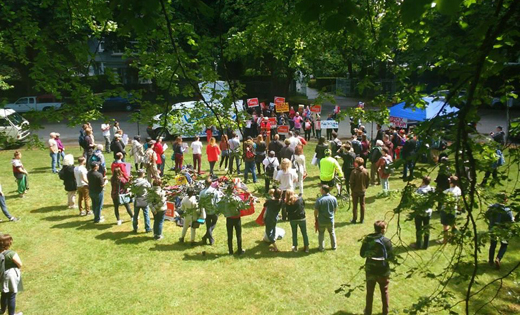
On Saturday afternoon, June 9th, in a raucous, fun yet serious-minded and wildly successful bit of political theatre — of which we see far too little in our town — Jean Swanson launched her absolutely necessary for the people of Vancouver 2018 bid for a seat on Vancouver City Council come the evening of Saturday, October 20th.
On Sunday, Jean Swanson’s candidacy for City Council was acclaimed at a Coalition of Progressive Electors Nomination meeting. Ms. Swanson will be running alongside her able COPE Council candidates, community activist and writer, Derrick O’Keefe and former COPE City Councillor, Anne Roberts.

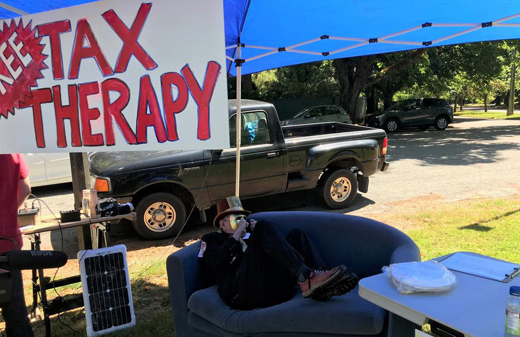
Jean Swanson launches her 2018 bid for Vancouver City Council offering tax therapy for the wealthyJean Swanson launches her bid for City Council, offering tax therapy for the wealthy

In the days and weeks and months to come, VanRamblings will provide intensive coverage of Jean Swanson’s run for Vancouver City Council, about whose candidacy we feel as strongly about as we do that of OneCity Vancouver’s Christine Boyle — about whom we have written in the past numerous times, as will be the case with Jean Swanson going forward, Jean Swanson, Christine Boyle and Anne Roberts constituting the ‘holy trinity’ of people-oriented progressive politics in Vancouver, absolutely necessary candidates for Vancouver City Council in 2018, and absolutely necessary members of Vancouver City Council, 2018-2022, creating the city we need.


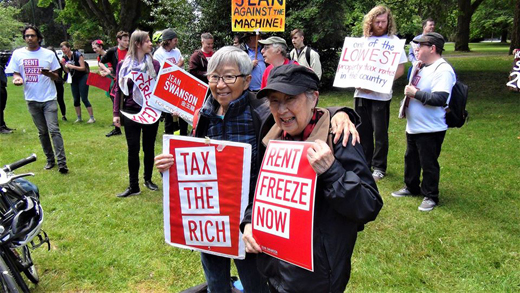
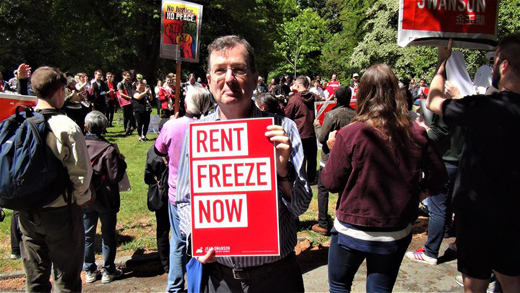
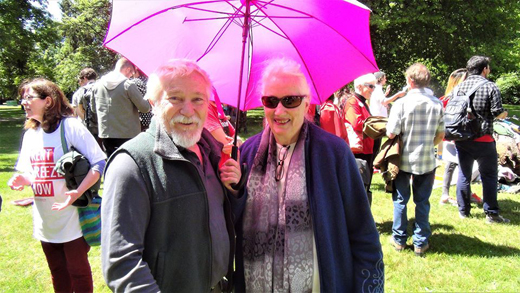
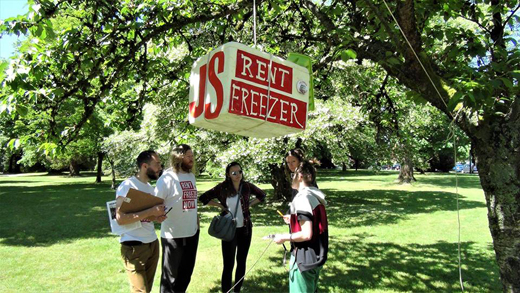
A few photos taken at the TeamJean campaign launch
Photos provided by the kind folks affiliated with the Jean Swanson campaign

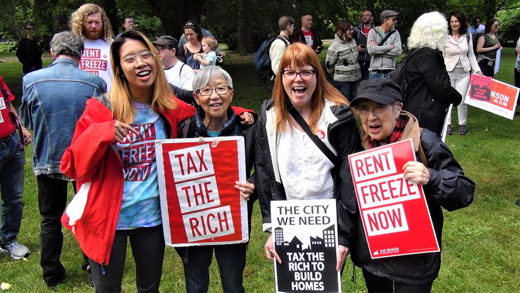
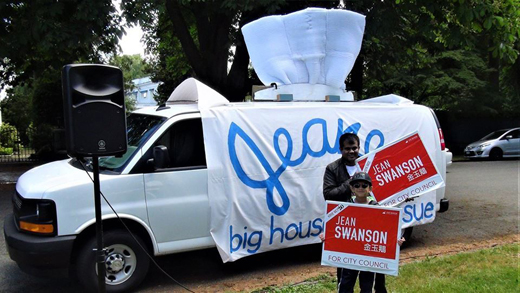
Team Jean Campaign Launch photos, taken at The Crescent, in Vancouver's wealthy Shaughnessy neighbourhood, on Saturday afternoon, June 9th, 2018Photo credit: Duncan Martin. TeamJean 2018. For the Jean Swanson campaign.

The following photos taken by Sid Chow Tan.

Team Jean Campaign Launch photos, taken at The Crescent, in Vancouver's wealthy Shaughnessy neighbourhood, on Saturday afternoon, June 9th, 2018

Team Jean Campaign Launch photos, taken at The Crescent, in Vancouver's wealthy Shaughnessy neighbourhood, on Saturday afternoon, June 9th, 2018

Team Jean Campaign Launch photos, taken at The Crescent, in Vancouver's wealthy Shaughnessy neighbourhood, on Saturday afternoon, June 9th, 2018

Team Jean Campaign Launch photos, taken at The Crescent, in Vancouver's wealthy Shaughnessy neighbourhood, on Saturday afternoon, June 9th, 2018

Team Jean Campaign Launch photos, taken at The Crescent, in Vancouver's wealthy Shaughnessy neighbourhood, on Saturday afternoon, June 9th, 2018

Team Jean Campaign Launch photos, taken at The Crescent, in Vancouver's wealthy Shaughnessy neighbourhood, on Saturday afternoon, June 9th, 2018

Team Jean Campaign Launch photos, taken at The Crescent, in Vancouver's wealthy Shaughnessy neighbourhood, on Saturday afternoon, June 9th, 2018

TEAMJEAN | The City We Need | Vancouver | Get Involved | Be the Change

Vancouver Votes 2018 | Child Poverty, Wont and Need

For VanRamblings the core election issue in Vancouver’s upcoming civic election, as it is across our province, our nation Canada, and the developed & developing world is simple to identify: child poverty, wont and need.
All of the other issues of importance that we as voters will see addressed over the course of the next five months, the issues that we care about that will serve to determine how we cast our ballot at the polls, stem from the core family issue of child poverty: the construction of affordable housing, inclusion, and social and economic justice for all of our fellow citizens.
Not to mention, the promotion of active transportation through the construction of more bike lanes and inviting pedestrian walkways, the renewal of our access to all community centre system and the proper, well-funded husbandry of our parks system across the city — because, just in case you didn’t know, parks are the backyards for tens of thousands of our fellow citizens in our little paradise by the sea, and more importantly, for the children living in condominiums, apartments or townhouses, or who live in the more economically disadvantaged neighbourhoods across our city and who call Vancouver home — as well as for human-scale development over development geared to please offshore buyers, who see our city as a commodity market, and not our most cherished and beloved home.
Compassion vs selfishness and greed. Children who go hungry, and who live in sub-standard housing vs the provision of a childhood for our most vulnerable citizens, and governance that works to eliminate wont and need while seeking to provide access to and equality of opportunity for all the children who live in our city, in every one of our 23 neighbourhoods.
Pretty simple calculus, huh?
Think with your heart as well as your mind, look to the future, ensure the protection of our environment and the livability of our city for all — and come Saturday, October 20th you’ll know which candidates to vote for.

Stories of a Life | An Impromptu Trip to Mexico | February 1972

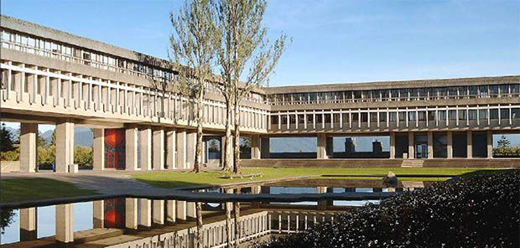
Simon Fraser University in the 1970s

An early 1970s Mexican Adventure, Part 1 of 4
Simon Fraser University to Los Angeles, then Mexico
I loved university. In the 1970s, I loved attending classes at Simon Fraser University, talking hours on end with classmates sharing obscure insights into arcane literature, or why anarchism is the most humanist political philosophy, or spending hours in the library, or finding some quiet corner to type out the dozens of essays that were due each semester.
Surprising myself, I was so curious about the world around me, so committed to learning everything I could on any given subject presented to me by my various approachable and erudite professors and radicalized teaching assistants, in the books I was reading or from folks in the pub at whatever stage of their university career, who over a beer would good-naturedly engage with me in philosophical arguments, whatever the topic of the moment. Attending classes and living at Louis Riel House — sometimes not leaving Burnaby Mountain for months on end — attending Simon Fraser University was for me the happiest and most rewarding time of my life.
Not so much for Cathy, my long-suffering wife.
Ever since we had met, and as would remain the case for years to come, there was no disappointment to be found in our love-making, when we arose from our overnight slumber, between classes or when I came home for lunch. Before and after dinner. And, of course, before bed, which was always the longest period we dedicated to connubial bliss. Quite simply, we couldn’t get enough of one another. And that was good, for the both of us.
Still, after Cathy left her employment at Grayce Florists, and although Cathy worked with me and our friends publishing weekly at The Peak, where I was the Arts & Entertainment Editor, writing 10,000 words each and every week, in addition to my regular daily afternoon radio programme on CKSF, and all those classes, and tutorials, and essays, Cathy often attending classes with me, attending protest rallies and reviewing my essays before I handed them in — given that Cathy had consciously chosen not to re-enroll in school, to continue her university into its third year, there was something missing in her life and in her wanderlust nature.
Travel.
Cathy made no secret of the fact that she wanted to get away, to explore new lands, to be adventurous and anonymous thousands of miles away.
In February 1972, I was enrolled in my fifth consecutive semester at SFU, having early on identified my areas of interest for my studies — political science, sociology and anthropology, part of the radical PSA department at SFU, as well as English literature.
Much to my astonishment, I was achieving straight A’s in school, my grade point average past my first year 4.0, and in this fifth semester I was on a roll, most of my course work completed by early February, as I prepared to ready myself with the reward of five more A’s, bursaries and scholarships, and further down the academic road enrollment in a Master’s programme.
Arriving home mid-afternoon Tuesday, February 8th, 1972, opening the door and walking into our student apartment, Cathy standing in the living room, rather than approaching me to give me a kiss, she stood stock still, looking down, then looking up and directly at me, and said, “We’re leaving for Mexico next Monday, for two months. Get your head around it.”

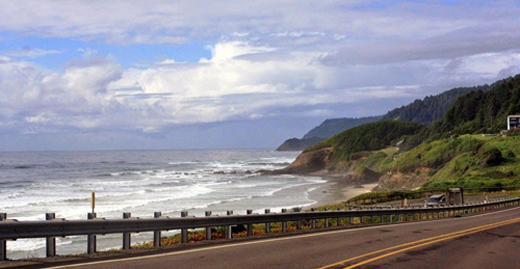
Cathy and I traveling along the Oregon coast on our way to Los Angeles, and then MexicoCathy and I traveling along the Oregon coast, headed to California, and then Mexico

I knew there was no arguing with her about her dictum. Cathy had sacrificed so much for me that it was quite clear: it was her turn now. The next Monday morning, early, we jumped into our 1970 Datsun 510 — a wedding present from her mother — and only hours later we found ourselves barrelling down the coast of Oregon heading towards Los Angeles, where arrangements had been made to stay with our friend, Bachi — with whom I had attended almost all my classes my first four semesters, and who was my best friend, Manuel Vittorio Esquivel, handsome, swarthy, adventuresome, and the best friend anyone could wish for.

While in Los Angeles, Cathy & I listened to KRLA, southern California’s rock ‘n roll giant

Cathy didn’t like driving, so I drove the entire 1500 miles (I love driving!) to our L.A. destination, arriving two days after we’d left our Burnaby Mountain home, as we found our way to the Chicano area of Los Angeles, a Latino and Latina East L.A. of boom boxes and low-riders, a vibrant Mexican community with which we fell in love, as we did Bachi’s mother’s cooking — eating mole chicken and lime-cilantro rice for the first time while consuming gallons of fresh-squeezed orange juice available at farmer’s markets in two quart containers, for only a dollar, driving along the freeways in the jasmine-scented night area, KRLA radio at full volume blasting into the warm night air, free and in love, and enjoying the time of our young lives.

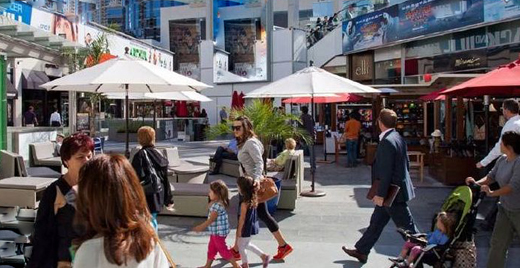
Santa Monica, CaliforniaThe sunny, open air shopping mall located in wealthy, beach-fronted Santa Monica

All was not perfect, though. One afternoon while awaiting dinner and sitting in the living room, Bachi’s 18-year-old sister, Maria — one of the most beautiful and self-possessed young women I’d ever met, who was enrolled in her second semester at a nearby college, and who worked as a sales clerk at a department store in a mall in the wealthy Santa Monica neighbourhood to help pay for her tuition — came home crying, sobbing, inconsolable, wracked with pain, broken and disconsolate, collapsing onto the sofa, curled up into a heaving ball of sobs and pain, bereft of hope, for the moment not of this world, not of any world, alone and withdrawn.
Maria worked in the shoe department at Macy’s. Earlier that afternoon, a wealthy woman in her early 30s had arrived at the shoe department, miserable, abusive, racist, on the attack and demanding service — now pointing at Maria — to “that dirty Chicana over there, who oughta be sent back to where she came from, but if she’s gonna be here, she damn well better serve me, and get her ass over here. Now!
The manager stood nearby, but didn’t come to Maria’s aid, instead directing the abusive woman over to where Maria stood, now quivering, saying to the irate-for-no-good-reason shopper, “Of course, ma’am. Maria is here to serve you. She will find you anything you need. Now hop to it, Maria.”
The situation devolved from there, with Maria finding one pair of shoes after another for this racist and abusive early-30s woman, responding to the demands of the woman to, “Get down on your knees, don’t look at me, put those shoes onto my feet now, don’t look up, and you better be careful when fitting those shoes, or I’ll have your job.” The woman remained in the shoe department for an hour, loudly and abusively making Maria’s life a hell on earth, before finally leaving the department store harrumphing, having made no purchase. Maria finished her shift, and drove home.
Once home, after her mother intervened, Maria spent the rest of the evening in her bedroom, while Bachi, Cathy and I left his home, leaving Maria — whose young life had been a litany of the kind of abuse she had suffered that afternoon — in the care of her mother, as the three of us drove to a nearby drive-in for a burger and fries, staying away until late.
That evening, Cathy and I decided we would leave for Mexico the next day.
After an early breakfast of heuvos rancheros prepared by Bachi’s mom, Maria still in her bedroom, not wishing to join us at the kitchen table, leaving our car in the garage attached to Bachi’s home, Bachi drove us in his own vehicle to the Mexican border, just north of Tijuana. Cathy had mapped out our journey, involving us taking a bus to Mexicali, where we would board a train for the 2,000 kilometre journey to Guadalajara.

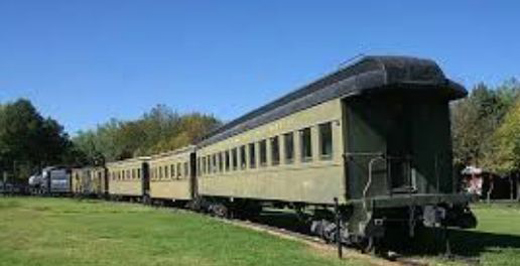
Train travel in Mexico, in the 1970s, a rickety old wooden carThe train above, very much like the train Cathy and I traveled on throughout Mexico

Both Cathy and I, once we’d boarded the train in Mexicali for the first leg of our Mexican adventure — we were planning on staying in Guadalajara for a few days, then planned to make our way over to the coast, and come back to Guadalajara before heading to Mexico City, but it was still a largely unplanned adventure, where we both felt secure that we’d meet good folks, and learn something about a country about which knew little — were surprised that there were 20 young Americans traveling in the same car as us, hippies who’d shorn there hair, as I had, in order to get a visa, the men letting their hair and beards grow once we’d made it across the border.
As is almost always the case when traveling in a group — not that any one of us knew one another, or anyone else in our car — one of our 20 ‘fellow travelers’, in this case a gaunt young man with an adventurous spirit who’d traveled to Mexico before, suggested to us all that upon arriving in Guadalajara, we immediately make our way over to La Peñita, along the coast, 72 kilometres north of Puerto Vallarta, where we could stay for as little as a dollar a day, swim, get to know the townspeople, and enjoy ourselves away from the hubbub of the tourist trap to the south.
Sounded good to all of us — we now had a destination.
Now, traveling as a financially itinerant train and bus traveler in the 1970s was fraught with adventure. Why fraught? Well, because revolution was the order of the day, throughout Europe, throughout central and South America, and most certainly in Mexico, where guerilla groups fought with the Mexican army, farmers led by ex-teacher Lucio Cabañas fighting against landholder impunity and oppressive police practices in rural Mexico, the guerillas carrying out ambushes of the army and security forces, and blowing up train tracks throughout northern Mexico — as proved to be the case on the first leg of our collective journey into the heart of Mexico.

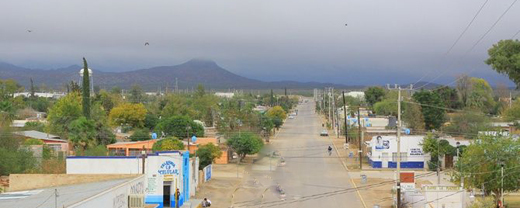
A contemporary photo of Benjamin Hill, in the in the Mexican state of SonoraAbove, a contemporary photo of Benjamin Hill, in the northern Sonora state of Mexico

Upon arriving in Benjamin Hill, in the northern Mexico state of Sonora, approximately 714 kilometres south of Mexicali, the train conductor informed us that there’d be a day or two layover in Benjamin Hill, as the tracks 30 kilometres south had been blown up by guerillas. When we arrived in Benjamin Hill, midday, the sun was bright, the day sweltering. We all alighted the train to take a look around at the dusty little village.
We debated whether or not we’d each rent a room in one of the mud shacks off the main street. One of our companions, who had kept a close watch on me since we’d boarded the train in Mexicali, a ‘sexual freedom leaguer’ traveling with her boyfriend, she a stunningly gorgeous Asian woman, her boyfriend a nerdy-looking, quiet guy, looked at me and looked at Cathy, and then set about to announce to everyone gathered around in the boldest possible fashion, “I want to fuck him,” then looking at me said, “I want to fuck you. Let’s go find a room in that building over there.”
I looked over at Cathy, who was rolling her eyes, looking heavenward, then looking at me, exclaimed, “You want to fuck her, go ahead. I’m not fucking her boyfriend, though.”
Me, I’m not good in situations such as the one I was now being confronted with. Would I liked to have gone off with this beautiful young woman for a sweaty afternoon of sexual frolic? Sure — but that would mean leaving Cathy behind, and I wasn’t prepared to do that, so I just said, “You’re invitation is very kind, and I appreciate it, but I’m going to stay with Cathy,” at which statement the young sexual freedom leaguer grabbed her boyfriend’s hand, marching off to rent a room in a sun-baked mud building.
As it happens, the twenty-two of us remained in Benjamin Hill for only about six hours, as the authorities had identified an alternative route to get around the tracks that had been destroyed. By late evening, we were all on our way again, the night chill, Cathy wrapped securely in my arms, under a blanket we’d purchased in town for about three dollars.
Two days later, we arrived in Guadalajara, the twenty-two of us alighting the train, seeking food and drink. “No water,” our appointed leader told us — ”Stay with Coke, you’ll be better off. You can trust it because it’s bottled by Americans under strict standards. Drink the water, or anything washed in local water, and you’re going to find yourself in trouble.” So, we found a food cart along the street — all along the way from Mexicali to Guadalajara, we’d fed ourselves from the food carts at stops along our journey south.
We looked for, and found the bus station, all of us purchasing tickets to La Peñita for the five-hour, 262 kilometre pilgrimage to our coastal village destination, arriving around 7pm, by which time it was night, although the near full moon above shone bright. Once in La Peñita, we secured our accommodation — spacious houses about 200 yards back from the beachfront water, several of us staying in each of three houses we rented for what would be our one-week stay in the rural village, our new home.
Having left our pack sacks in our new domiciles we all went back into town, where we were accosted by a group of 6, 7, 8 and 9-year-old boys who wanted us to play foosball with them, for a peso a game — if they won, we gave them a peso (equivalent to about one cent), the game free to play.
The first game I played was with one of the 6-year-old boys, who wasn’t tall enough to even see the top of the foosball table. “This is gonna be easy,” I thought to myself, “Poor kid.” I meant to win, and show this boy how it’s done — although I’d never played foosball before. Five minutes in, the game was over, I hadn’t scored once, the boy’s facing beaming, looking up at me saying, “De nuevo, señor, de nuevo.” Over the course of the next hour, I played each of the boys, as did the men in the group, losing each game successively more quickly, as was the case with each of my companions, now 20 pesos poorer than when I’d begun the night, the women standing nearby by shaking their heads, going off to look at the “shops” nearby (stalls, really), the young boys now gleeful.

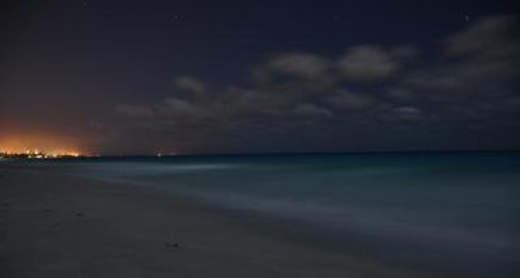
Going for a naked night swim under a near full moon in the tiny village of La Peñita, in Mexico

Our leader, the gaunt young American man, rounded us all up, and said, “Let’s go for a swim,” and we did, some of the women going back to our new homes to find blankets to lay on the sand, but not swim suits, as this was to be a naked swim in the ocean, all twenty-two of us running toward and splashing in the warm, sparking water, the moon above glistening in the purple night sky, the light of the moon reflecting off the water.