Monthly Archives: May 2004

Iraq: The Prisoner Abuse Scandal
How the Abu Ghraib Photos Got Out


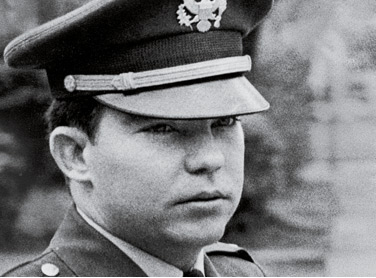
COURT-MARSHALL: Lieut. Calley was convicted in 1971 for murder at
My Lai in the last high-profile court-martial of an American soldier.


According to a story published in the New York Times, the father of Ivan Frederick, one of the prison guards now charged with Iraqi prisoner abuse, fearful that his son would be a scapegoated, contacted his brother-in law, William Lawson, who contacted “retired Colonel and muckraker David Hackworth,” who put the father in touch with the ‘60 Minutes II’ producers.

The irony, Mr. Lawson said, is that the public spectacle might have been avoided if the military and the federal government had been responsive to his claims that his nephew was simply following orders. Mr. Lawson said he sent letters to 17 members of Congress about the case earlier this year, with virtually no response, and that he ultimately contacted Mr. Hackworth’s Web site out of frustration, leading him to cooperate with a consultant for “60 Minutes II.”

60 Minutes II says: “We heard about someone who was outraged about it and thought that the public should know about it.”
And as has been reported througout the weekend, reports indicate that there’s more to come: “Officials said that the photographs showing psychological or physical abuse numbered in the hundreds, perhaps more than 1,000, with Mr. Rumsfeld hinting Friday that more may come out.”

Iraq: The Prisoner Abuse Scandal
What Happened to Bush’s Dream Team?


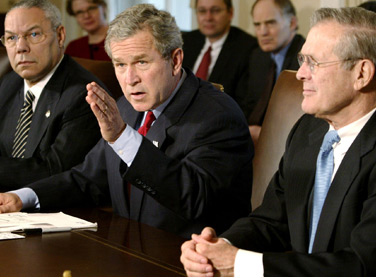
DREAM TEAM: President Bush speaks to the press about establishing an
independent investigation into intelligence failures in Iraq on February 2,
2004 in Washington, D.C. Bush is surrounded from left to right, Secretary of
State Colin Powell and Defense Secretary Donald Rumsfeld.

Up until the beginning of last week, the Bush administration pretty much had its way with the American media. Whatever policy position President Bush enunciated to the American public through the press, whatever spin on events the White House promoted on any given event, was pretty much reported verbatim — without comment, philosophical reflection, or investigation as to the veracity of the information — by the American press and was printed, or broadcast, untrammeled, and edited in such as way as to preserve the imperial nature of the Presidency.
No more.
With the publication, last Monday, of the Abu Ghraib pictures of Iraqi prisoners being tortured by American troops internecine warfare began to break out in the once closed ranks of the Bush administration.
In the latest issue of Time, the magazine’s Washington-based reporters report that those who surround Bush are finding it increasingly difficult to present a positive message, as finger-pointing has taken the place of “keeping on message.”

Top Bush officials griped about what one called Rumsfeld’s “destructive arrogance.” Says the adviser: “You have no idea what it’s like to deal with the United States of Rumsfeld.” Colin Powell’s closest aides, like chief of staff Larry Wilkerson, were quoted in GQ magazine, saying that Powell was weary of fighting ideological “utopians” in the Administration and being forced to do “damage control” and “apologizing around the world.” Powell’s foes, perhaps in retaliation, blamed him for being slow to decide to travel to the Middle East to help quell the furor over the abuse scandal. Says a senior Bush official of the open warfare: “It is not very conducive to a healthy working environment.”

The White House will surely try to regroup, but it is appearing increasingly obvious that a wholesale purge of the senior ranks of the Bush administration will become necessary if Bush is to have any reasonable chance at a second term in office.

VanRamblings Out of Service For Past 29 Hours


TELUS


As Telus, the Internet Service Provider which allows VanRamblings consistent access to the Internet, has been ‘down’ since late Saturday morning, VanRamblings has been off the ‘Net and unable to post items.
Okay, okay: we could have ‘borrowed’ a friend’s ‘Net access, or trucked on down to the local Internet cafĂ© … but we didn’t, and, of course, there was no Unbelievable Truth last evening. Oh well.
Now we’re back, though.
Unfortunately, much of the rest of Sunday looks to be particularly busy (being Mother’s Day, and all), so posting will have to hold off til later tonight, Pacific Daylight Savings time. We’re back, and will post.

Elvis Mitchell: ‘I Just Said I Had to Leave’

Memo from New York Times executive editor Bill Keller
Colleagues:
I’m sorry to inform you that Elvis Mitchell has decided to leave The Times. Despite what you may have read elsewhere, it is an amicable parting on both sides, a little wistful but not acrimonious. In the years since he joined The Times, Elvis has brought our readers (and shared with his colleagues) a profound knowledge of film, an original and exciting voice, and a great deal of fun. As one of the editors who hired Elvis, I will miss him a lot, and so will everyone who worked with him.
Bill


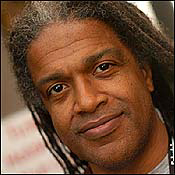
ELVIS-MITCHELL


Elvis Mitchell (Photo credit:
Jeremy Harmon/WireImage)


After joining the New York Times as lead film critic in late 1999 ago — arguably, the most influential film reviewer position in American media — Elvis Mitchell has resigned his position with the paper. Sean Elder, at Salon, wrote this piece, in 1999, about the appointment of Mitchell, and fellow reviewer A.O. Scott, to the Times’ movie section.
Richard Prince, at the Maynard Institute, reports that “Mitchell resigned after (cultural news editor Steven) Erlanger appointed colleague A. O. Scott the lead film critic.”
New York magazine’s Metro section suggests that Mitchell’s resignation may have something to do with “how unfriendly a place the New York Times is for blacks,” or, perhaps, the consternation that was felt when Mitchell accepted a job as a visting lecturer in the Department of African and African American Studies at Harvard (“He took another full-time job while he was working here as a film critic?”).