Monthly Archives: April 2004

Web Inventor Wins Top Technology Prize


BERNERS-LEE


Tim Berners-Lee

Tim Berners-Lee, the MIT scientist credited with inventing the world wide web, this week became the first recipient of the Millennium technology prize. The Finnish award, which comes with a $1 million (U.S.) cash prize, is among the largest of its kind.
In awarding the prize, committee members acknowledged Berners-Lee’s contribution “for an innovation that directly promotes people’s quality of life, is based on humane values, and encourages sustainable economic development,” underlining the importance of the scientist’s decision to never strive to commercialize or patent his contributions to the Internet technologies he developed.
Berners-Lee is credited with creating the world wide web in the early 1990s while working for the Cern Laboratory, the European centre for nuclear research near Geneva, Switzerland. His graphical point-and-click browser, World Wide Web, was the first client that featured the core ideas included in today’s web browsers.
Future prizes will be awarded every two years.

Does the Great White North Deserve Its Green Reputation?


LOGGING-JOHN-HOLT-ESSAY


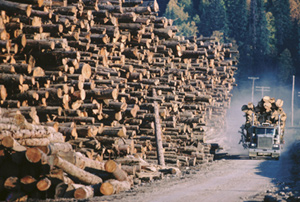
Logging trucks thunder down Canadian highways,
helping transport nearly eight billion board feet of
timber per year.

Canada ranked an impressive fourth of all countries rated in the Environmental Sustainability Index, while our neighbour to the south placed a dismal 45th, “but when it comes to allowing extractive industries to run rampant, Canada may be king,” writes E/The Environmental Magazine’s John Holt, an American who seeks to dispel the myth that Canadian developers and raw-material extractors have no blood on their hands. Holt states that coalminers and loggers are doing to some of the last great wilderness on Earth what’s already been done to states across the U.S.


FISHING-JOHN-HOLT-ESSAY


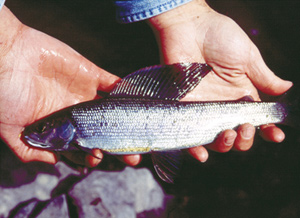
Indigenous Arctic grayling are threatened by the
ravages of extractive industries

Food for thought: Three-hundred million acres of Canadian forest (one-and-a-half times the size of some Midwestern U.S. states) are slotted for timber production even though these fragile lands are home to two-thirds of the country’s 300,000 wildlife species. Canada’s forests cover an area nearly three times the size of Europe, or 10 percent of the world’s forest cover, but only 5.5 percent of this is under some form of legal protection or constraint related to logging. “This is some of the most productive forest in terms of biomass in the world,” Holt states. But “if present trends continue, all of Canada’s suitable forest will harvested within 30 to 35 years.”


DEREKS-JOHN-HOLT-ESSAY


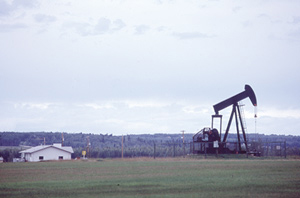
Oil pumpjacks are a common sight in
western Canadian backyards.

Holt includes his own personal observations, mourning the metamorphosis of Rocky Mountain House, Alberta, once a “rather sedate town of a few thousand sometimes impoverished souls who enjoyed life on the bluffs above the North Fork of the Saskatchewan River,” which has succumbed to “a riot of oil rigs, logging trucks, related workers, and the destructiveness that comes from too much money deposited in a local economy way too quickly.”
Holt summarizes: “The continual boom-and-bust cycle of the West is at play in Canada. Ten, maybe 20 years of feast, then complete collapse … while the oil, coal, and timber companies are long gone, searching for the next valley to plunder.” It’s an old, destructive story, now being played out.

TV on Steroids: So Long To Analog, Hello To Digital


DIGITAL-ERA-TV


There’s a tectonic shift happening in television that will profoundly transform the way we receive news, the news we see, and our ability to access the news of our choice. Benefits for the public have been slow in coming, but suddenly “multicasting” — that’s the hot new word — is on the lips of everybody in TV land.
In this new digital era, the so-called analog, one-channel version of television will soon be as archaic as a 1950 Studebaker. Besides local 24-hour all-news and all-weather channels, over-the-air broadcasters will be able to devise local versions of programming we currently find only on cable.
Programmes covering provincial legislatures and city councils, public hearings, community board meetings, court trials, school board sessions, school lunch menus, school closings, public event schedules, updates on terror alert levels, and disaster warnings, along with documentaries on issues of local concern, free airtime for office-seekers, children’s news and educational shows, and almost anything else station owners can dream up — with simultaneous translation into other languages for the benefit of local non-English-speaking minorities, will be readily available.
Then there’s the datacasting of text: stock market quotes, sports statistics, classified advertising, radio and TV programme schedules, and even electronic newspapers.
Public interest and other advocacy groups are keeping a close eye on the changes, and have expressed concern about the inability, thus far, of broadcasters to promote a variety of news voices, and points of view. In an era when over-the-air television is one of the most potent forces shaping public opinion, a process involving more democratic access to the airwaves will prove an absolute necessity if the collective interests of our communities is to be maintained.

Moving Image: A Photo Mosaic of Soldiers Who Have Died in Iraq


BUSH-MOSAIC-OF-SOLDIERS


Making the rounds on the Internet, the photo mosaic above is composed of the photos of the American service men and women who have died in Iraq. If you click on the photo, you can see every face.
Created by Joe Broadhurst at the American Leftist weblog, as the original creator had maxed out of bandwidth, the photo is mirrored at several other sites, including that of Dan Shannon at !blog, who writes,

My eyes burn a little as I think about this. Some of these men stare into the camera with a smile, some with determination, some with fear or sadness at being taken from their families to fight a barely-justified war halfway across the world. They all have one thing in common: they’re not coming back.
There are 610 of them now. 610 brothers and sisters, fathers and mothers, sons and daughters. They died in a war for oil and empire. I hope that President Bush sees this picture sometime.

Mr. Broadhurst has titled the image above, “The War President”.