ABC Vancouver’s dominance is fading. Can the city’s fractured left, or a new centrist movement, seize the moment?
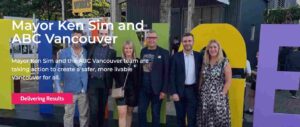
The photo above taken from ABC Vancouver current website, sans the inclusion of Lisa Dominato, while including Rebecca Bligh, who was summarily dismissed from the party on February 14th of this year.
In 2022, Ken Sim’s ABC Vancouver party swept into office with an historic landslide. Running seven candidates for City Council, and Ken Sim for Mayor, they won every seat on City Council they hoped to win, winning six of seven seats on Vancouver Park Board, and a majority on Vancouver School Board, promising common-sense government, a laser focus on public safety, and quicker housing approvals.
But with just 14 months to go until the next election, voters are asking …

The 42nd Vancouver municipal election, scheduled for October 17, 2026, is shaping up to be a political reckoning. With Ken Sim’s approval ratings plummeting, discontent brewing across the city, and ABC’s tight grip on power loosening, the stage is set for a dramatic shift at Vancouver City Hall.
Sim, once seen as a unifying figure, is now struggling to defend an agenda that many feel has fallen short. His decision to dissolve the elected Park Board — a move even former supporters called authoritarian — sparked public backlash and legal wrangling. His housing policies, largely perceived as developer-friendly, haven’t improved affordability. And his law-and-order push has drawn criticism for sidelining mental health support.
Now, his former campaign manager and chief strategist, Kareem Allam, is turning on him — and starting a new party to challenge ABC’s dominance.
Enter the Vancouver Liberals

Allam’s departure from City Hall was barely cold when he launched the Vancouver Liberals, a new municipal party aiming to fill what he calls a “common-sense, centrist vacuum.”
A political strategist with a spotless electoral record, Allam hasn’t lost a campaign he’s managed. His new party could pull in disillusioned ABC supporters, business-friendly moderates, as well as progressives, given the pivotal role Allam played in helping British Columbia’s New Democrats form government following the 2025 provincial election.
If Allam’s slate is credible and his message resonates, the Vancouver Liberals could do more than just act as spoilers. They might end up forming the next civic government at Vancouver City Hall — or, at the very least, hold the balance of power.
A Fractured Left with a Chance
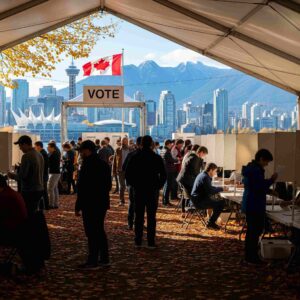
All of this presents a major opportunity for Vancouver’s progressive parties — if they don’t trip over each other first.
The Greens, now reduced to a single Councillor in Pete Fry, were hit hard by the retirement of Adriane Carr earlier this year. But with strong roots in neighbourhood planning and environmental policy, they remain viable in eco-conscious areas like Kitsilano and Grandview-Woodland.
OneCity Vancouver, meanwhile, may be poised for a breakout. Their only sitting Councillor, Lucy Maloney, won a 2025 by-election following the resignation of Christine Boyle, who successfully ran for MLA and now serves in Premier David Eby’s Cabinet as Minister of Housing and Municipal Affairs.
With Boyle’s higher profile lending the party fresh legitimacy, and housing remaining the city’s top concern, OneCity could expand its presence if it runs a focused, well-co-ordinated campaign.
Then there’s COPE, once written off as a political relic. But in the April 2025 by-election, long-time anti-poverty activist Sean Orr won handily, topping the polls. His unapologetically populist, tenant-first platform connected with voters — especially across Vancouver’s Eastside and among younger renters.
Don’t count them out. If COPE runs a strong ground game, they could snag another two or three seats.
TEAM’s Second Wind?
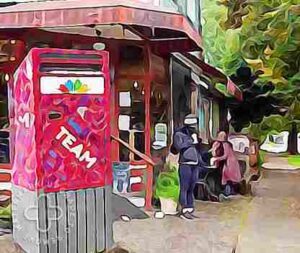
On the centre-right, TEAM for a Livable Vancouver, led by former Councillor Colleen Hardwick, is regrouping after a total wipeout in 2022. Armed with more funding, refined messaging, and a neighbourhood-first approach, they may have a shot with homeowners uneasy about the city’s rapid development.
But TEAM’s challenge is two-fold: distancing itself from conspiratorial politics and defining what a “livable Vancouver” actually means to voters across the city, in language Vancouver voters can better hear and process.
The Big Issues That Must Be Addressed in the 2026 Vancouver Civic Election

Housing will dominate this election. Rents remain sky-high, the vacancy rate is low, and voters — especially renters and young families — are frustrated with the status quo. Despite ABC’s promises, the housing crisis has only deepened.
Public safety is also a flashpoint. The ABC administration’s heavy emphasis on policing has stirred debate, especially from those calling for more mental health funding and community-led solutions.
And climate? The clock is ticking. Extreme weather events — atmospheric rivers, heat domes — are now routine. Voters want real infrastructure investment and green planning, not slogans.
Labour’s Role and the Path to Power

The Vancouver & District Labour Council (VDLC) will again play a crucial role. The VDLC’s endorsement often determines who gets the progressive vote and which campaigns get boots on the ground.
If it can unite OneCity, the Greens, and COPE behind a shared slate, a progressive majority is possible. But if those parties divide the vote — as they often have in the past — the advantage goes to whichever centrist party has momentum.
Right now, that may be Kareem Allam’s Vancouver Liberals.

With less than 14 months to go, the outcome is far from certain. ABC Vancouver is in decline, its dominance shattered. OneCity and COPE are rising. TEAM is regrouping. And the Vancouver Liberals are storming into the race with the backing of one of the city’s sharpest political operatives.
What happens next depends on whether the left can co-operate, whether voters are ready for a centrist alternative, and whether Ken Sim can salvage his legacy.
But one thing is clear: after four years of single-party rule, Vancouver is ready for change.
