In Vancouver, the politics of personal destruction has long been stock and trade for those running for office. In a city where political competition is fierce and civic identity is fragmented across 23 neighbourhoods, campaigns often take the shape of contests not about ideas, but about the destruction of personalities.
For instance, on March 20th, 2020, when Mayor Kennedy Stewart called for a cessation of in-person meetings in Vancouver City Hall’s Council chambers, due to the outbreak of COVID-19, Councillor Pete Fry allegedly tweeted out an untoward comment about a fellow Councillor. This alleged tweet was allegedly directed at then City Councillor Colleen Hardwick.
When VanRamblings’ friend Joseph Jones filed a formal complaint with the office of the City Manager respecting Councillor Fry’s alleged injudicious “mean” tweet, the City replied in an e-mail that, as a third party, he did not have any standing, and therefore his complaint could not be accepted, nor acted upon.
Vancouverites know well the stories of politicians torn apart not by their policies or their vision, but by narratives manufactured and circulated for the purpose of ensuring their defeat. Former Vancouver City Councillor Colleen Hardwick is the candidate for office most often subject to personal attacks by her political opponents. In these latter days of his time as Mayor, Ken Sim runs a close second.
The politics of personal destruction is not new. Its roots can be traced back through centuries of democratic life, from pamphleteers in the 18th century to the tabloids of the 20th. Yet in recent years, the vitriol has intensified.
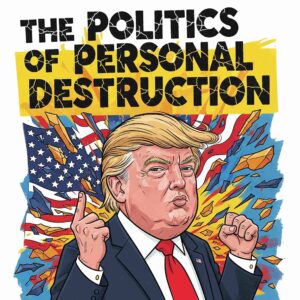
Donald Trump’s entrance into politics a decade ago supercharged a cultural shift: insult, ridicule, and character assassination became normalized as the central tools of political combat. What began as spectacle in the United States has since migrated north, settling into Canada’s civic politics with troubling force.
Vancouver, far from immune, has absorbed this toxin into its bloodstream.

The dynamic plays out in every election cycle. Local media, amplified by social media platforms, frame candidates in terms of their weakest or most controversial qualities. What might once have been a gaffe becomes a defining feature. A poorly worded sentence becomes a character flaw. A photo from decades past resurfaces as proof of hypocrisy or malice. The candidate’s ideas are eclipsed; the person becomes the story. And in a political environment as fragmented as Vancouver’s, where candidates often win office with a fraction of the vote, tearing down opponents is more effective than inspiring broad-based support.
The consequences are corrosive. At the civic level, Vancouver faces enormous challenges: a housing affordability crisis, an opioid epidemic, climate pressures, and deepening inequality. Addressing these issues requires serious debate, collaboration, and — above all— public trust in political leadership.
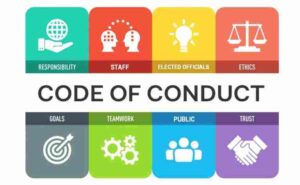
Yet when the political arena becomes consumed by personal attacks, trust evaporates. Politicians no longer seem like public servants but more like caricatures, defined only by the accusations lodged against them. Voters, in turn, grow cynical and disengaged. Democracy shrinks when citizens come to see politics not as a space for collective problem-solving but as a blood sport where the only winners are those most adept at tearing others down.
This dynamic does more than corrode public trust; it also drives away talent.
Who, knowing the ferocity of political campaigns, would willingly step forward?
For every candidate who accepts the risks, there are others who quietly decline.
Community leaders, business people, academics, and activists who might bring fresh perspectives to City Hall weigh the costs of public humiliation against the potential rewards of civic leadership — and they walk away.
The result is a narrowing of the pool of candidates, leaving the field to those willing to endure or even to participate in destructive politics. In this way, the politics of personal destruction perpetuates itself.
The media plays an undeniable role. The incentive structures of journalism reward conflict, scandal, and controversy. A headline about a candidate’s vision for neighbourhood development rarely generates as much attention as one about a candidate’s personal misstep. Social media amplifies the dynamic, rewarding the sharpest, most caustic takes with likes, retweets, and viral circulation.
In Vancouver’s polarized civic politics, with factions aligned around housing, development, and ideological identity, these attacks are not just tolerated but often celebrated by supporters eager to see opponents discredited.
Yet the responsibility does not lie solely with media or candidates. Citizens, too, play a role in perpetuating the culture of personal destruction. By consuming, sharing, and rewarding negative content, voters enable the very dynamics that undermine our democracy. It is easier, in some ways, to join the pile-on than to engage thoughtfully with the complexities of policy.
The digital age has made outrage a form of social currency, and too often Vancouverites spend it freely.
But the politics of personal destruction is not inevitable.
Cities like Vancouver thrive not when they are divided, but when they are connected — when residents and leaders alike focus on building bridges rather than tearing one another down. The challenges Vancouver faces are collective ones, and they demand collective solutions.
The housing crisis will not be solved by discrediting the character of those who hold office; it will be solved by debate, compromise, and innovative policy. The overdose crisis will not be solved by mocking the missteps of political leaders; it will be solved by compassion, evidence-based strategy, and political will.

Towards building a better society, our job as citizens, as political candidates, and as journalists ought to be to resist the destructive instincts that have come to plague politics. We must choose instead to elevate the conversation. That means expecting better of our leaders, but also of ourselves. It means seeking common ground in our city’s diverse neighbourhoods, acknowledging difference without demonizing those who hold it. It means holding candidates accountable for their ideas and actions, not for caricatures drawn by their opponents.
If Vancouver is to be a city worthy of its promise, it must move beyond the politics of personal destruction. It must embrace politics as an act of community-building, not community-breaking.
Each of the 23 neighbourhoods that make up our city deserves leadership that is respected, even when it is contested. Each citizen deserves a politics that invites them to participate, not one that drives them away in disgust.
The politics of personal destruction has been with us for too long, but it need not define our future. In Vancouver, a city of breathtaking landscapes and vibrant communities, our city by the sea, we can and must choose a different path: one of conscience, common ground, and collective purpose.
