Stories of a Life | Megan, Jude & Me and Movies | 80s and 90s

Cinema | Megan and Jude Tomlin, and their dad, love cinema, love the movies, stories of a life

Film has always been a central, organizing force in my relationship with both my daughter, Megan, and my son, Jude.
Our collective love of the cinema, attending film festivals and discussing what we saw following the various screenings we attended (usually at the Fresgo Inn on Davie, which was alive no matter the time of night or early morning) was, over the years, a central feature of our relationship — the relationship between son and daughter, and dad — that allowed us to delve deep into discussions of the meaning of life, and our collective responsibility to work towards creating a fairer and more just world for everyone.
Heart and deep caring for humanity was at the centre of our love of film, and at the centre of our loving familial relationship, informing the choices we made about how we would conduct ourselves in the world, and the projects and causes to which we would devote our time and our energies.

In the 1980s, when Cathy and I were going through a rancorous divorce, film brought us together. When in Seattle — which we visited frequently, always staying on the non-smoking 33rd floor of the Weston twin towers — in 1984, we took in a screening of Garry Marshall’s The Flamingo Kid — the story of a working class boy (Matt Dillon) who takes a summer job at a beach resort and learns valuable life lessons. Megan was seven years of age, and Jude 9 — both were uncertain about the efficacy of our trip south (without their mother’s permission — we called her upon arriving at our hotel), but the screening alleviated and, finally, repaired any of their concerns, and all went well that weekend. Fortuitously, too, upon our return, the divorce proceedings inexplicably moved forward into a more reasonable and thoughtful direction, reflective of all our collective concerns.
Whenever there was “trouble” in our relationship — generated, most usually, by their mother — film served to salve the wounds of dysfunction, allowing us to find our collective centre while healing the wounds that rent all of our lives during a decade-long, million dollar custody dispute.
Film spoke to us, made us better, took us out of the drudgery of our too often protean daily and, more often, troubled lives, and engaged us while putting our lives into a broader and more human scale perspective. Never once was there a film that we saw together when we didn’t come out of the screening feeling more whole, and more at one with ourselves & the world.

Such was true, at the screenings of Glenn Close and John Malkovich’s Dangerous Liaisons over the holiday period in 1988, or months later at the screening of Kevin Costner’s Field of Dreams, which we took in at the Oakridge Theatre, a favourite and comforting cinema haunt of ours.
When Megan wanted some “alone time” with me, it almost always revolved around watching a film together, although as Megan matured (and as her love for film matured), Megan made it plain that she was present in the theatre to watch the film, not “share time” with me, choosing always to sit in a whole other section of the theatre (it drove her crazy in the times that we were sitting together in a theatre that I would check in occasionally with her, looking at her to determine how she felt about the film — talking during a film was an unforgivable sin, so that was never going to happen).
Some days, Megan would call and say, “Dad, take me to a film.” And because I was a film critic at the time, and had a pass to attend at any cinema in North America, off the two of us would traipse to see Kathy Bates’ Fried Green Tomatoes (1991) or Johnny Depp’s Benny & Joon (1993) at the old 12-theatre complex downstairs in the Royal Centre mall.
Other times, post dinner and after Megan had finished her homework, I’d say to Megan out of the blue, “I’m heading out to attend a screening of a film. Do you want to come along with me?” Megan would ponder my question for a moment before asking, “Which film?”
In 1991, one very long film screening we attended was Kevin Costner’s directorial début, Dances With Wolves, about which we knew nothing other than it starred one of our favourite actors, and off the two of us went.

At screening’s end (Megan and I actually sat together at this particular screening, which took place in the huge Granville 7 Cinema 7, cuz the preview theatre screening room was just packed), Megan turned to me, and said, “Dad, I knew this was going to be a great film.” And it was. “And, you know what else? It’s going to pick up a raft of Oscars this year, too, and be considered one of the, if not the best, films of the year.”
Jude and Megan also attended film festival screenings with me.
Almost inevitably, Vancouver International Film Festival founder, and co-owner of Festival Cinemas Leonard Schein was present with his wife Barbara, and at a screening’s end, Megan would make her way over to wherever Leonard and Barbara were sitting to enquire of him whether or not he intended to book the film into either the Varsity, Park or Starlight.

Following screenings of Neil Jordan’s 1992 putative multiple Oscar award winner, The Crying Game or, that same year, Baz Luhrmann’s Strictly Ballroom, Megan marched right over to Leonard, and asked him boldfacedly, “Well, what did you think?” When Leonard indicated that he thought the films were not quite his cup of tea, that both films would have difficulty finding an audience, and that it was unlikely he’d be booking either film into one of his cinemas, Megan lit into Leonard with a passion and an anger that I had rarely observed as coming from her, saying, “Are you out of your mind? Strictly Ballroom (or, The Crying Game) is a wonderful film, and just the sort of film that not only should you book, but that you MUST book — these are both groundbreaking films that will only serve to reinforce your reputation as an arts cinema impresario, but will also make you a tonne of money, and we all know that you’re all about the money. Either you book these films into The Varsity, or believe me when I tell you that there’ll be hell to pay when you see me next.”
And with that, Megan marched off.

At the 1990 Vancouver International Film Festival, I’d caught a screening of Whit Stillman’s directorial début, Metropolitan, in preview, and knew that this would be a film that Megan would just love (and be astounded by, at the revelation of one of the characters, mid-film). I made arrangements to pick Megan up from University Hill Secondary at 3pm sharp on the day of the festival screening, we drove downtown, found a parking spot, and rushed over to The Studio Cinema on Granville to catch the 4pm screening of Metropolitan — which as I had predicted, Megan just loved.
In early December 1993, on a particularly chilly and overcast day, at 10am in Cinema 2 at the Granville 7 theatre complex, I caught a screening of Jonathan Demme’s groundbreaking new film, Philadelphia — a film about which I knew little, and a film that knocked me out (along with the handful of film critics in attendance at the theatre for the screening). Emerging from the theatre just after noon, making my way onto Granville, I looked for the nearest telephone in order that I might call Megan at school.
I called the office at University Hill Secondary, and asked them to find Megan and bring her to the phone. When Megan asked, “Dad, is everything all right?”, I told her about the film I had just seen, and that when it opened in January, I wanted to take her and Jude to a screening at the Granville 7. We talked about the film for a few minutes, with her saying about 10 minutes in, “I’m holding up the school phone, and calls coming in. Let’s get together after school. Come and pick me up, and we can continue our conversation. I’ll see you then, Dad. I love you.”
There are gifts we give our children. From my parents, it was what would emerge as a lifelong love for country music. For Jude and Megan, my gift was a love of music, a love of the ballet, and an abiding love for film.

VIFF 2020 | An Introductory Column To VIFF’s Virtual Film Festival


The 2020, 39th annual Vancouver International Film Festival

As of today, we are less than two weeks away from the glorious start of the 39th annual Vancouver International Film Festival as tremendously engaging, moving, and humane an event as occurs on Vancouver’s arts calendar each year, easily as absorbing, gripping, engrossing and captivating as all of VIFF’s previous festival iterations, representing the culmination of a year’s dedicated and devoted work by VIFF’s utterly humane and talented group of programmers, who working with their formidably talented and hard working support staff once again this year bring you films that will move, fascinate, educate, mesmerize, entreat, bewitch and, in many cases, change you forever for the better, where by festival’s end you will come to see yourself as a citizen of the world, working relentlessly to realize a fairer and a more just world for all of us.
In the midst of our current pandemic, the good folks at VIFF have made some necessary changes to this year’s film festival: for the most part, VIFF 2020 will be a virtual film festival, a festival where you will be afforded the opportunity to watch the more than 100 films on offer in the comfort of your home — no frustrating lineups for tickets this year, no having to wait in the pouring rain as the previous screening to the film you’re waiting in line to see is running late, no having to rush to get the seat you want. Nope, this year, the good folks at VIFF perform the extraordinary, bringing our much cherished international film festival to you, in your comfy home.
And you know what else? Yep, VIFF 2020 is available to British Columbians across the province. So, if you’ve got friends, or children / grandchildren in the far flung towns, cities and villages across our great province, for the very first time, our annual Vancouver International Film Festival will be available to kith and kin, wherever they reside across our belle province.
What’s that I hear? Enough of this palaver? Get down to brass tacks, you say, give us the information we need to engage with VIFF 2020?

The 2020, 39th annual Vancouver International Film Festival, tickets and subscriptions

First up, you’re going to want to buy tickets for individual films, or — and this is a much, much better deal — you’re going to want to purchase a subscription, so that you can see as many films as you can squeeze into the two-week running time of VIFF 2020.
Individual tickets for screenings go for $9, but the much, much better deal is to purchase either a VIFF Connect Festival Subscription, for the low, low price of $50, which will afford you the opportunity to watch any VIFF film on offer, as well as take part in any online Creator Talk, while the VIFF Connect Gold Subscription, at $95, allows you to watch any VIFF 2020 film, as well as offering you a free VIFF+ Gold Membership valid for one year (worth $240), and a free year-round subscription to VIFF Connect (worth $60), cuz let’s face it, folks, this pandemic thing ain’t ending any time soon, so if you want to catch the best in international cinema over the course of the next 12 months, the VIFF Connect Gold Subscription is the way to go.
Now, about this streaming thing. All your questions are answered here.
That said, here’s the bit of info you’re really going to need.
As the good folks at VIFF suggest, you’re gonna need a streaming platform.

  • Apple TV (4th Generation or newer)

  • Roku
  • Amazon FireStick
  • Chromecast (where you can stream films thru the Chrome browser).

As above, your laptop or desktop computer, via your preferred web browser, when you log onto the VIFF site with your account will allow you to stream any of the VIFF 2020 films, may / will be necessary. Yes, yes, we know, it all sounds sort of intimidating. It’s not. Rather, you’ll find — once you get over your initial jitters — that it’s easy peasy, nice and easy.
As an experiment, VanRamblings logged onto the VIFF site, and played a couple of VIFF trailers through our iPhone’s Chromecast app. Soon, the VIFF Connect app will be available. For the festival, we’re probably going to “cast” VIFF films on the Chrome browser through our Chromecast “dongle” right onto our 4K TV, as we did during the recent DOXA film festival, after the National Film Board’s Katja De Bock (we just love that name!) cajoled us into purchasing Chromecast (which we picked up at Best Buy for $35). Chances are, though, that we may also use one of our iPads or the iPhone to stream VIFF 2020 films through our iOS Chromecast app.

The 2020, 39th annual Vancouver International Film Festival, Panorama

What about the films, we hear you ask? Not to worry, we’ve got you covered. Beginning next week, three (or perhaps more) times a week, VanRamblings will publish “previews” of three or more films each day, replete with the trailers for the films, as well as a round-up of the over-the-moon reviews the films garnered when these films screened at Sundance, Berlin, Tribeca, Taipei, Locarno, Hong Kong, Venice, Toronto or New York.
As is VanRamblings usual practice, we will identify 20 films that are worthy of your time, so that by the time the festival commences on Thursday, September 24th — when you can start streaming films at home — you’ll have some idea as to what the more recommendable films are that are set to screen at VIFF 2020, films such as Viggo Mortenson’s directorial début.

The 2020, 39th annual Vancouver International Film Festival logo

In 2020, VanRamblings find ourselves able to bring you VIFF’s annual press conference, where board chair Lucille Pacey and (interim) executive director Kyle Fostner introduce you to VIFF’s fine programming staff, names you may have heard but this year with faces that you can put to those names, including VIFF’s winsome associate director of programming, Curtis Woloschuk who, along with Tammy Banister and Rylan Friday, provide insight into the twenty-four acclaimed Canadian films VIFF has on offer this year, as well as VIFF’s director of creative engagement and live programming, Ken Tsui, who introduces this year’s Talks and Masterclasses series (there’s so much more available than you’ll find in the previous link that you’ll simply just have to set about to explore), and Totally Indie Day, a day of online panels dedicated to the next generation of filmmakers.
And saving the best for last, VIFF programme manager and senior programmer, PoChu AuYeung, and the heart of the festival since it’s inception in 1981, director of international programming, Alan Franey, who at the outset of his address speaks about a Belgian film he saw earlier in the year, My Voice Will Be With You, before moving on to introduce another Belgian film, this time a documentary titled I Am Not a Hero, the first film made about COVID-19. Alan then talks about the winner of this year’s top prize (the Golden Bear) at February’s Berlin Film Festival, There Is No Evil, while PoChu introduces films by three emerging female filmmakers from Taiwan, Hong Kong and Korea — you’ll just have to watch the press conference to discover the titles of those award-winning Asian films.
Other buzz films set to screen digitally at this year’s festival: Ecuador’s Yellow Sunglasses, Danish master Thomas Vinterberg’s Another Round, Sundance Grand Jury and Audience Award winner The Reason I Jump, the B.C. première of The New Corporation: The Unfortunately Necessary Sequel by Joel Bakan and Jennifer Abbott, the international première of Japan’s The Town of Headcounts, the North American première of Anerca, Breath of Life, and the Annecy International Animation Film Festival official selection Beauty Water, from South Korea.
Christian Petzold’s Undine also arrives at VIFF with good buzz, as is the case with VIFF favourite François Ozon’s look back at the mid-80s, Summer of 85, a romantic, sexy, and ultimately tragic coming-of-age tale.
VIFF’s opening film — which will screen in 50 cinemas across B.C. on September 24th — Monkey Beach, Loretta Sarah Todd adaptation of Eden Robinson’s beloved novel also arrives at VIFF to much acclaim.
As in past years, VIFF will offer full programmes of shorts, including animated gems and the female-focused Tell Us About Her Life compilation, which will be available beginning September 24th.
For those willing to take the risk, VIFF 2020 has planned 54 in-cinema screenings at the Vancity and the Cinematheque, providing the only opportunity for patrons to see two of the year’s most buzzed about films: The Father, starring Anthony Hopkins, and Ammonite, a 19th century set film starring Kate Winslet and Saoirse Ronan, both of which films will be Oscar bound early next year.
Here, for your edification and enjoyment, the one, the only, the official …
VIFF 2020 Press Conference

The 2020 | 39th annual Vancouver International Film Festival Press Launch, on Vimeo.

Arts Friday | Vancity Theatre To Screen the Best Films of 2019

The Best Films of 2019 will screen at Vancouver's Vancity Theatre over the holiday season

VanRamblings absolutely loves lists. As the year nears its end, we are in list heaven — best albums, best books, best tech and, most important of all and much to our delight, best films, for which lists galore may be found.
Just this week, the National Board of Review critics association released their list of the best films of 2019, awarding several films of distinction in the process. The very next day, the prestigious New York Film Critics Circlecomprised of most of the continent’s finest film critics — released their list of 2019’s best films, conferring awards on actors, directors and films. In both instances, Martin Scorsese’s epic film The Irishman won Best Picture.

The Vancouver International Film Festival's Vancity Theatre, in the evening

With the above in mind, Vancouver International Film Festival programmer Tom Charity put his list of the year’s best together — and, fortunate for us, all of those films will get a screening at the comfiest, most welcoming cinema venue in town, VIFF’s year ’round home, the cozy Vancity Theatre.
VIFF’s Best of 2019 gets underway on Friday, December 20th with …

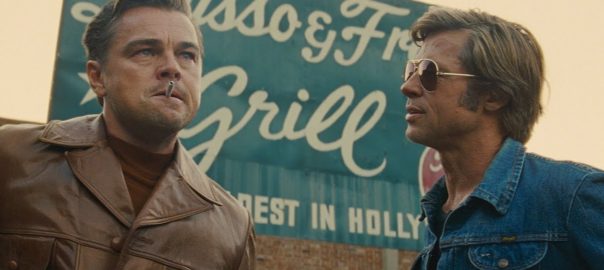
Once Upon a Time in … Hollywood. Friday, December 20th, 7:45pm, Vancity Theatre.

Jordan Peele’s Us, starring NYFCC Best Actress winner, Lupita Nyong’o. Screens only once, on Saturday night, December 21st, 7:45pm, at the Vancity Theatre, on Seymour Street.

nîpawistamâsowin: We Will Stand Up. Sunday, December 22nd, 8pm, Vancity Theatre.

Clicking on any of the title links above and below, will take you to the film title’s VIFF page, where you will see a full description of the film, and where you may purchase tickets for the screening. Individual tickets, $11 (VIFF membership required). A discount three-ticket pack is available for $30.

Multiple award winner Monos will screen Monday, Dec. 23rd, 7:45pm, Vancity Theatre.

star.jpg star.jpg star.jpg

Next up, VanRamblings’ nominee as the best film of 2019, urgent, intimate, subtle, moving, the only truly wrenching, punch in the gut film of the year we’ve seen, an absolute must-see, Elle-Máijá Tailfeathers and Kathleen Hepburn’s tour-de-force The Body Remembers When the World Broke Open — set in and around Stamps Place (once called the Raymur Housing Project), on Vancouver’s eastside. As Sarah-Tai Black writes in the Globe and Mail, The Body Remembers When the World Broke Open is “transforming, striking, gentle, impactful, world-affirming, utterly remarkable, essential, heartrending, tender … and wholly authentic.”

The Body Remembers. Boxing Day, Thursday, December 26th, 7:45pm, Vancity Theatre.

The Farewell will screen on Friday, December 27th, 7:20pm, at the Vancity Theatre.

Honeyland will screen on Saturday, December 28th, 7:20pm, at the Vancity Theatre.

And screening immediately following the luminous & utterly unforgettable, award-winning documentary Honeyland, Australian director Jennifer Kent’s controversial follow-up to The Babadook, the unrelenting horror pic …

The Nightingale screens on Saturday, December 28th, 9pm, at the Vancity Theatre.

And on Sunday, December 29th, 7pm at the Vancity Theatre an international film feature double bill that will knock your socks off: Spain’s auteur filmmaker Pedro Almodóvar’s best film in years, with a Cannes Best Actor award-winning performance by Antonio Banderas at its centre, Pain and Glory — which will screen at the Vancity Theatre on Sunday, December 29th at 7pm — offers mature, understated and evocative filmmaking of the first order, combining a deep sense of humanity with a touch of erotic beauty, an emotional rendering of a person that is at once gentle and naked, hushed, agonizing and dazzling, full of life, electric, heart-wrenching and as piercing and deeply intimate a reflection on what it means to grow old as you’ll ever see on film, Pain and Glory is the filmmaker’s best and most personal movie in years, a cinematic momento full of indelible moments, redolent with a meditative force that will knock you sideways, a tragicomic swirl of heartbreak and joy, and an utter triumph. A must-see.

And at 9pm, following the screening of Pain and Glory, Mati Diop’s stunner Atlantics, about which at one time lead Globe and Mail film critic Liam Lacey wrote, “A magic realist fantasy, a ghost story, a love story and political allegory, a film of tactile intimacy and teeming energy, about women’s autonomy, migration and corruption, vital and realist, a world-shattering film about unspeakable tragedy, Atlantics packs a deceptive amount of complexity into its 104 minute running time, offering a narrative perspective about class and post-imperialism that is touching, romantic, impressively nuanced and an expertly rendered tour-de-force.”

A World Cinema Dramatic prize winner at Sundance earlier this year, director Joanna Hogg’s best film yet, The Souvenir, is an instant British classic. The New York Times’ A. O. Scott writes, “The Souvenir feels like a whispered confidence, an intimate disclosure that shouldn’t be betrayed because it isn’t really yours,” while Guy Lodge writes in Variety, “Achingly well-observed in its study of a young artist inspired, derailed and finally strengthened by a toxic relationship, it is at once the coming-of-age story of many women and a specific creative manifesto for one of modern British cinema’s most singular writer-directors.”

The Souvenir screens on Monday, December 30th, 7:45pm, at the Vancity Theatre.

There are four more films that are screening as part of the Vancouver International Film Festival’s Best of 2019 film series — at least two of which will vye for a Best Picture win at the Oscars on February 9th, but you’ll just have to click here for the titles of those films, and the date and time that each will screen at the Vancity Theatre. Enjoy your film-going holidays.

Best of 2019 | Video created by Cindy Shi for the Vancouver International Film Festival.

On the Left = Daily Activism Towards a Fairer, More Just Society

Seeking Justice, and Working Towards a Fairer and More Just Society

If You Ain’t Marchin’ at Rallies For Causes You Support, Working Within Your Union (or Organizing a Bargaining Unit in a Non-Union Place of Employment) and Are On The Union Executive, If You Haven’t Joined a Left-of-Centre Political Party (Municipally, Provincially and Federally — Parties to Which You Donate Monies Each Month), Are Not Actively Engaged in the Fight Against Racism & Intolerance, If You’re Not Engaged in the Fight for LGBTQ Rights and Offering Your Active Support To Members of Our Transgender Community, If You Are Not Championing UNDRIP and Offering Your Active Support For The Right to Self-Determination for Members of Indigenous Communities — And Do Not Acknowledge That You Are Living On Stolen Land — If You Ain’t Fighting Together With Your Neighbours, and With A Broad Cross-Section of Members of Our Community Towards Achieving a Fairer, More Just Society for All — And Are Not Actively Engaged in That Fight — You Ain’t a Leftist.

Colten Boushie rally, Vancouver, February 10, 2018Rally held in Vancouver, Feb. 10, 2018 protesting wrongful death of 22-year old Colten Boushie of the Cree Red Pheasant First Nation fatally shot on a rural Saskatchewan farm.

Approximately a year and a half ago, in the lead up to the 2018 Vancouver civic election, a former neighbour contacted me to ask if I would be open to discussing with her the latest article by noted left wing journalist and documentarian, John Pilger, on the continuing genocidal debacle in Syria.
As was the case with another former neighbour, Marion had experienced a late in life conversion to leftist politics, dedicating herself to reading Noam Chomsky, John Pilger, Naomi Klein, Owen Jones, Irshad Manji and others.
During the course of our conversation, I asked her how she would involve herself in the upcoming municipal election, which civic party or parties and which candidates for those parties she would be supporting and working to get elected, which groups she had aligned herself with, and what for her were the key issues that drove her commitment to moving the societal agenda forward towards the realization of a fairer and more just society.

Politics and activism, Martha Gellhorn

“Oh, there’s no one in the city who’s as left as I am, no one with whom I would affiliate, and no political party that reflects the approach I believe needs to be taken to tear down the old order, and build a new and more democratic society,” Marion told me. “I would never join the NDP — they’re neoliberal collaborators, every single one of them — and there are no other parties on the left who reflect my values, municipally or otherwise.”
I asked her if in the past she had ever worked on a New Democratic Party provincial or federal campaign, or worked in Vancouver’s left leaning, sometimes thought to be Communist, Coalition of Progressive Electors, with whom she had affiliated herself, and with whom she had worked urgently towards the realization of the societal change she felt critical and essential.
The answer: no one, ever, on any issue, ever, never worked with anyone.

Protesting the Kinder Morgan pipeline

Calling Yourself Left Wing Means Unequivocal Community Activism
Words without action accomplishes nothing. One cannot describe oneself as progressive or a leftist without working with others towards social change. Activism is not ever a solitary activity, change does not occur in isolation.
If you’re going to call yourself a progressive, a leftist or a socialist, here are the pre-conditions necessary to adopt that nomenclature …

Join the BC NDP

Join a political party. During the course of the 2017 British Columbia election, more than 400 volunteers joined the Re-Elect David Eby campaign, out daily door knocking, participating in burmashaves, delivering NDP literature to constituents across the Vancouver Point Grey provincial riding, out on the streets daily, including teachers who lived in Kitsilano but taught in Coquitlam, Delta, Langley and Surrey — but there they were every day, picking up literature, receiving instruction and their assignment from David’s inspiring (and organized) volunteer co-ordinator, Danika Skye Hammond. The 400 number doesn’t account, either, for the 200 inside volunteers working the phones from 9 a.m. til 9 p.m. seven days a week.
The same energy and passion David Eby’s volunteers brought to his 2017 re-election campaign — and aren’t you glad that David is British Columbia’s Attorney General & Minister of Justice? — an equal number of enthusiastic volunteers brought to Mable Elmore’s campaign in Vancouver-Kensington, Adrian Dix’s re-election campaign in Vancouver Kingsway, and to every BC NDP campaign in every riding across the province of British Columbia. Cuz getting out to actively support and contribute to your candidate’s campaign for office is what democratic socialist / leftist politics is all about.
Gaining friends. Feeling isolated in your community? See people on the street in your neighbourhood, and think to yourself, “I bet they’d be interesting to get to know” — but you’re hardly going to walk up and start a conversation with a complete stranger, someone you don’t even know. Joining with other like-minded members of your community in an important political endeavour that will help to bring about the necessary change you want to see and know needs to occur sooner than later serves to break down the pervasive sense of isolation that plagues contemporary society.
Campaigns for left-of-centre parties rely on volunteers — they can’t raise, and in most cases don’t want, the corporate funds that the Liberals and Conservative parties hoover up in the millions. All of which means: the federal NDP, the BC NDP, COPE and OneCity Vancouver — if you live in Vancouver — need you to contribute whatever funds you can afford.

Little Mountain rally in Vancouver in support of providing social housing on Litte Mountain siteAt 11am, this upcoming Saturday, November 30th, hundreds of members of our community will rally at what was once the Little Mountain social housing site, at 33rd and Ontario in Vancouver, to protest the utter lack of progress over the past 12 years in building social and moderate rental housing on the Little Mountain site — rallying, as well, to encourage the provincial government to re-acquire the site sold to Holborn Properties Ltd. in 2007 by the B.C. Liberals, in order to immediately begin the development of social and moderate rental housing, and co-operative and co-housing projects, on the site.

Rallies. If you’ve never attended a rally, or do not regularly attend rallies — on climate change, indigenous issues, tenant’s rights, affordable housing, anti-racism, in support of public education, or any of the myriad issues of societal concern — you are neither a progressive nor a leftist. Rather, you’re a couch potato, or as George Orwell wrote in 1984, a prole:

… a member of the lowest rung of society, of society’s bottom class, those who are only educated to a basic degree and in consequence perform routinized tasks or perform menial labour that requires little thought or engagement, those in society who are utterly without power and who are given over almost entirely to hedonistic pursuit, to drinking and carousing and sex, to attendance at mass sporting events, and those who live in society without any sense of a social conscience or an understanding of the nature of the state, and who simply ‘don’t want to know’ because it taxes their brains, or keeps them away from their hedonistic pursuits — allowing them not to think or engage in common cause with others, or find any meaning in their regrettable, pitiless lives.

Academic studies have shown that only four per cent of the population is at all engaged in the life of society, have joined a political party, are actively involved in their union, have ever attended a march or a rally, or ever engaged with others to bring about societal change towards the realization of a fairer and more just society. That lamentable circumstance must change if we are to survive as a species, if the quality of our lives and that of our children, our friends, colleagues and our neighbours are to prevail.

Unions Make Us Strong

Being a Union member
Unions have a substantial impact on the compensation and work lives of both unionized and non-unionized workers.

1. Unions raise wages of unionized workers by roughly 20% and raise compensation, including both wages and benefits, by about 28%;

2. Unions reduce wage inequality because they raise wages more for low- and middle-wage workers than for higher-wage workers, more for blue-collar than for white-collar workers, and more for workers who do not have a college degree;

3. The most sweeping advantage for unionized workers is in the benefits that are afforded. Unionized workers are more likely than their non-unionized counterparts to receive paid leave, are approximately 18% to 28% more likely to have employer-provided health insurance, and are 23% to 54% more likely to be in employer-provided pension plans;

4. Unionized workers receive more generous health benefits than non-unionized workers. They also pay 18% lower health care deductibles and a smaller share of the costs for family coverage. In retirement, unionized workers are 24% more likely to be covered by health insurance paid for by their employer;

5. Unionized workers receive better pension plans. Not only are they more likely to have a guaranteed benefit in retirement, their employers contribute 28% more toward pensions;

6. Unionized workers receive 26% more vacation time and 14% more total paid leave (vacations and holidays).

Unions play a pivotal role both in securing legislated labour protections and rights such as safety and health, overtime, and family/medical leave and in enforcing those rights on the job.
All the gains that union membership affords — increasingly, for all of us, union members as well as (to a lesser degree) non-union members — have not occurred as part of a befuddingly magical process. All of us live in an increasingly just society arising from the hard work of union members over many, many decades, marching on picket lines, and placing themselves in harm’s way facing down intransigent employers given to violence against their employees (more a feature of the past, although it still occurs today).
If you are a member of a union: your union needs you, needs your energy, your passion and your compassion. Take the training and become a shop steward. Run for a position on your union executive. Get to know your fellow union members, build community, build solidarity of purpose and intent — and, as above, in joining a political party — break down your sense of community isolation while working towards building relationships full of meaning that will enhance the quality of your life, gain new friends, and know that when you go to sleep at night that you’ve made a difference.

Activism: working with others towards societal change beneficial to the majority of the population

As a leftist, you are perforce an activist — which means you are working actively with others towards the realization of a fairer, more just society.
Other than working with political parties and working within your union, supporting causes that are important to you, marching and rallying with others to bring attention to the issues that require our immediate attention, how else might you address yourself to the issue of societal change?

1. Attend a meeting of your local City Council, School Board, and in Vancouver, the Park Board meetings — find out what the core issues are that these elected bodies area attempting to address, see democracy in action, get yourself on the speaker’s list at Council or Park Board.

Get involved!

2. If you live in Vancouver, make application to be a member of one of the city’s 33 advisory committees that help determine city policy. Every community provides opportunities for citizen involvement in the decision-making process in civic government. Get involved. Make a difference;

3. Attend talks & seminars on diverse topics. Thursday night, November 28th at 7pm, for instance, there’s a seminar, deemed a “conversation,” at SFU Woodwards, 149 West Hastings Street on the topic, Shaping Vancouver 2019: Conversation #4: What’s Happening to Heritage?

4. Change-makers to follow on social media. If you’re not following, regularly reading and interacting with community activists Derrick O’Keefe and housing activist Stephanie Allen — currently, VanRamblings’ favourite, make a difference, live every moment of their lives with integrity, community activists — you can’t honestly say you know what’s going on in our city. Vancouver and District Labour Council President Stephen (pronounced Stefan) Von Sychowski on Facebook is a must-follow, as is recent Coquitlam-Port Coquitlam federal NDP candidate, Christina Gower — my favourite friend find on Facebook in three years, her every post on social media compelling, humane and full of compassion and wit — and former / almost won Vancouver False Creek 2017 NDP candidate and community and transgender activist, Morgane Oger on Twitter — if you aren’t following all five you don’t know what you’re missing. A lot!
The same is true for public education activist, Patti Bacchus — VanRamblings’ favourite non-elected political figure in the province, if not all of Canada, an honest, unafraid truth teller of the first order.

The persons whose names are listed above are agents of change.

Social activism towards a fairer and more just society

To reiterate: leftist politics requires activism and engagement. Activists work for necessary, meaningful change, and do not in any way hinder it.

Activism: working with others towards societal change beneficial to the majority of the population

There are two more features to left politics, caring and empathy.

Women's Rights Are Human Rights

Those who are working on the left are involved in selfless endeavour, requiring not just a little bit of caring, but rather the capacity for immense caring, and activism: we fight with people who for too long have been voiceless in the decision-making affecting their lives. Men fight together with women towards the creation of a fairer, much safer society for our distaff population of partners and spouses, sisters and children.

Empathy

More than caring, even immense caring, we require throughout our day, every day, empathy for all those around us, for all those persons with whom we come into contact, and on behalf of whom we engage in activism towards a fairer and more just society.
What is required of us always is empathy, of which commodity there is too little in our world, be it at our current city council or school board or, for far too many, in the daily machinations of our lives.
If you are white and middle class, before you speak, put yourself in the position of others — be they persons of colour, indigenous persons, immigrants or refugees, or members of the LGBTQ community — listen to what members of these minority communities have to say about their life experience, and the discrimination they face — and, for good measure — acknowledge your white privilege, that just by very dint of your skin colour, chances are that your experience of life is so very much easier than those who are members of a minority community.
And act accordingly.

Cover of the UNDRIP - United Nations Declaration on the Rights of Indigenous Peoples

Fight, along with our indigenous peoples and our federal and provincial governments for reconciliation — just yesterday, our provincial legislature unanimously endorsed UNDRIP, the United Nations Declaration on the Rights of Indigenous Peoples, the first province in Canada to do so.
If our governments — municipally, provincially and federally — are committed to reconciliation with our indigenous peoples, that reconciliation has been acknowledged as a core Canadian value, then it is incumbent upon each and every one of us to do all that is in our power to support reconciliation with our indigenous population, to ensure that centuries of genocide are acknowledged, and a commitment to a just reconciliation with our indigenous peoples is atop the social and political agenda.
And, finally, on the topic of empathy, this quote from Joshua Halberstam …

Joshua Halberstam, author of Everyday Ethics. "It's not easy doing a life."