Decision Canada 2019 | Reflections on a Shit Election, Part 4

Importing Fear and Hatred into Canadian Poli
The Implications of a Conservative government
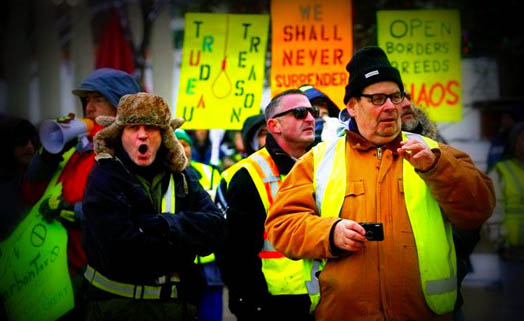
Yellow vest movement in Canada, a far right, oil pipeline and anti-immigrant promoting extremist groupAndrew Scheer and the Conservative party appropriated France’s “yellow vest” movement, and brought it to Canada as a pipeline promoting, anti-immigrant extremist movement whose sole purpose was to rile up angry, right-of-centre Canadian voters.


In considering whether the Liberals or Conservatives will form a minority government, Canadians need only to look south to Donald Trump’s Ukraine scandal and the formal House impeachment hearings, to Britain and Boris Johnson’s anti-democratic parliamentary manoeuvering to crash Great Britain out of the European Union without a workable deal, or to Doug Ford’s wildly unpopular, regressive government in the province of Ontario.
The reason Canadians need to look closely at the present state of affairs in the United States, Great Britain and Ontario is that each jurisdiction is run by a right wing, populist government, with mirror image policies to those espoused by Andrew Scheer and the Conservative Party of Canada.

  • Andrew Scheer opposes the proposed Liberal party ban of assault weapons such as the AK-47, the weapon used in mass shootings in the U.S. and the Christchurch, New Zealand mosque shootings on March 15th of this year, killing 51 innocent citizens, severely injuring 49 more.

    Andrew Scheer also opposes giving city mayors the right to introduce legislation that would ban handguns;

  • Andrew Scheer opposes abortion, and women’s body autonomy and reproductive rights — although he has said an Andrew Scheer government would not seek to ban abortion in Canada. Still, come Monday evening, the Conservatives will elect 50 members to their caucus who are staunch pro-life advocates, who have stated that they will introduce legislation that will limit women’s reproductive rights;
  • Andrew Scheer has, over the years of his political life, worked to oppose LGBTQ rights, opposed the same sex marriage bill when it was introduced into Parliament in 2004, and in 2019 was the only leader of a major Canadian political party who chose not to march in a Pride parade to support members of the LGBTQ community.

What a right wing Conservative government means for Canada.

Conservative Party leader Andrew Scheer appearing on extremist Faith Goldy's Rebel Media show.Tory leader Andrew Scheer appearing on Faith Goldy’s far-right Rebel Media show.

In recent years, Canada has seen the emergence of two blocks of voters.

“One block consists of people rooted in a specific place or community, socially conservative, often less educated, mainly male, mainly but not necessarily exclusively older and white,” says respected Canadian journalist, essayist and academic Michael Valpy. “This is Canada’s right-wing populist voting block, who make up 34% of the voting populace, whether in Canada, the United States or Great Britain.”

“The other, much larger block of Canadians voters consists of socially liberal, often university educated Canadians, who more often than not live in Canada’s urban areas, as well as visible minority populations, including immigrants and refugees, and members of the LGBTQ community.”

Michael Valpy sees Canada’s political parties orienting themselves around these two distinct blocks of divergent voters, with the Conservative Party attracting the vast majority of right wing populist voters, as well as far right extremists, and the three other major political parties splitting the more socially liberal, visible minority and LGBTQ / gender variant voting block.
The polarization between these two distinct groups of voters have created two irreconcilable polities in western politics, two irreconcilable Great Britains, two irreconcilable U.S. citizen groups, and now, two Canadas.
Mr. Valpy points out that the number of Canadians being drawn into the right-wing populist camp are not noticeably increasing. While that may be the case, he also cautions that:

“It’s not the populist numbers — about 34% per cent of the adult population in Canada, around he same as that in the United States — it’s the extreme polarization exhibited by those swept into the populist vortex: the depth of their feeling, their anger and their passion. Plus, in the last few years they’ve become politicized, drawn almost entirely into one political party, a new, far right-of-centre Conservative party.”

In a study reported by New York Times columnist Thomas B. Edsall, academic researchers and political scientists Michael Bang Petersen, Mathias Osmundsen and Kevin Arceneaux reported that …

“In response to three statements related to a preference for chaos in politics the results were staggering: 24% agreed that society should be burned to the ground; 40% concurred with the statement that, ‘When it comes to our political and social institutions, I cannot help thinking ‘just let them all burn’; and 40% also agreed that ‘we cannot fix the problems in our social institutions, we need to tear them down and start over.'”

The two studies analyzed the values of the right-wing, populist voting block in slightly different ways, but there is no question that they are talking about the political values of the same large block of voters.
In a similar, recent Canadian academic study, the same populist, right wing Canadian voters who were identified in the United States and Great Britain were seen as sharing similar nihilist values, and who overwhelmingly stated their support for Andrew Scheer’s Conservative Party — which, as you might well imagine, has critically important implications should the Conservatives form a government after the October 21st federal election.

Conservative Party of Canada Andrew Scheer's far right-of-centre, extremist senior staff

At the root of the problem is that while the majority of Canadians may reject the right-wing populism now represented by Scheer’s Conservatives, the progressive vote is spread across four centre-left political parties, while the right-wing populist vote falls almost entirely within the ranks of the Conservatives. That is why their political influence is so pronounced during this election — they are keeping the Scheer Conservatives in the race.
Like the populist base of Donald Trump’s Republican Party and that of Boris Johnson’s Conservative Party in the United Kingdom, the right wing, populist base supporting the Conservative Party of Canada is mistrustful of the “mainstream” media, facts, science, experts (including the civil service), and actively opposes any notion of our current climate emergency.
Most importantly, the right wing voting block — whether in the U.S., Britain or Canada — prefer to base their policy preferences more on a policy’s gut appeal than on evidence. These voters also reflect the values and cultural norms of Stephen Harper’s “old stock Canadians“, and are fearful respecting the growth of visible minorities in urban areas across Canada.
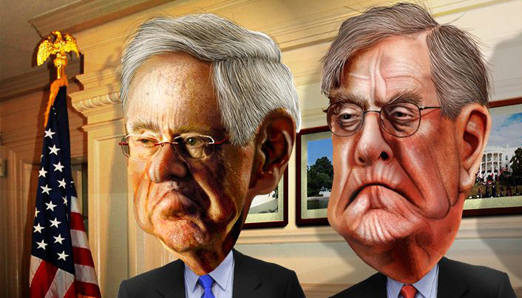
Charles and David Koch, right-wing American billionairesRight-wing billionaires Charles and (the late) David Koch fund the Atlas Network, which works against environment groups in Canada, and supports of the oil industry, as well as funds right-of-centre extremist groups who support Andrew Scheer’s Conservative party.

Perhaps not surprisingly, the Conservatives are also almost universally supported by Canada’s wealthy, often self-defined upper class.
Michael Valpy and pollster Frank Graves report that Andrew Scheer’s Conservatives have a huge lead among wealthy Canadians, who support the Conservatives because they strongly believe that a Conservative party government’s actual, implemented policies will serve their class interests.
Canada’s rich and powerful elite (who are extremely knowledgeable about the specific policies of the main political parties) are swinging strongly behind Andrew Scheer’s Conservatives because they support a policy agenda consisting of cuts to social programmes that serve the interests of the vast majority of Canadians, while they also offer support to a Conservative regime that would reduce corporate taxes for business and the wealthy, strip down the size of government, implement a deregulation regime, weaken unions, allow privatization, and seek to keep wages low.
The central argument of today’s VanRamblings’ column is this: the Conservative Party of Canada and Doug Ford’s Ontario Progressive Conservative Party are not anything like the Liberals, NDP or Greens.
The Conservative Party is different not because it is more market oriented, would kill the carbon tax or because it supports the traditional conservative, small government policy agenda. Whether one agrees with such policies or not, they constitute a legitimate programme for a right-of-centre party.
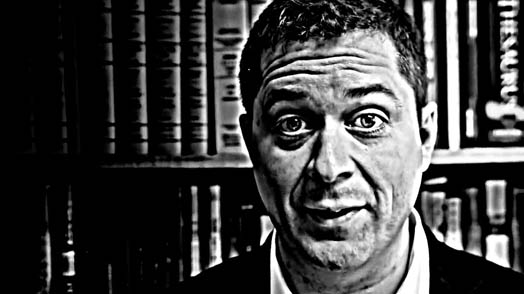
Conservative Party of Canada, far right of centre leader, Andrew Scheer

Rather, what separates the Conservative Party from the other mainstream parties is that they are captive to a minority, populist voting block that distrusts expertise and hard facts, is viscerally afraid of change, and tends to be homophobic, transphobic, xenophobic and racist, as expressed through their profound discomfort with immigration, with allowing refugees into Canada, and the growth of our visible minority Canadian population.

  • Andrew Scheer plans to spend $100 billion on a national energy corridor that, like Trump’s wall, will never get built. Author Margaret Atwood weighs in on the sheer stupidity and wrongfulness of a project that will be in the courts for years, and would defeat any notion of responding to our current climate emergency;

  • Andrew Scheer plans to cut $35.4 billion in infrastructure spending, which means provinces and Canadians mayors can forget about having a partner to build bridges, light rail transit, or affordable housing. Little wonder that Vancouver Mayor Kennedy Stewart weighed in the other day on what a disaster an Andrew Scheer-led Conservative government would mean not just for the environment, but for harm reduction, our current opioid crisis, and transit projects about to get underway;

  • Andrew Scheer has stated that he rejects the science behind the new Canada food guide, which no longer places an influence on the consumption of meat, milk and bread as staples of the Canadian diet, indicating that like his Conservative predecessor, his government would reject science if it doesn’t adhere to his voter constituency orthodoxy.

But what is most disturbing about this right-wing, populist voting block is its indifference to the health of our democratic institutions and practices. Again as described in the study cited above, this voting block has a “preference for chaos in politics” (e.g. 40% of the respondents in the study support the statement that “When it comes to our political and social institutions, I cannot help thinking ‘just let them all burn'”). The implications of this “preference for chaos” are on full display in the United States and Great Britain, where Trump and Johnson are playing to this base, as Andrew Scheer has done since the outset of the election.
What can’t be emphasized enough is that this far right, extremist voting block of Canadians is — as is the case in Donald Trump’s U.S. — fearful and angry, with a tendency towards violence, hate and destructive acting out, and that Canada’s Conservative Party is increasingly beholden to them.
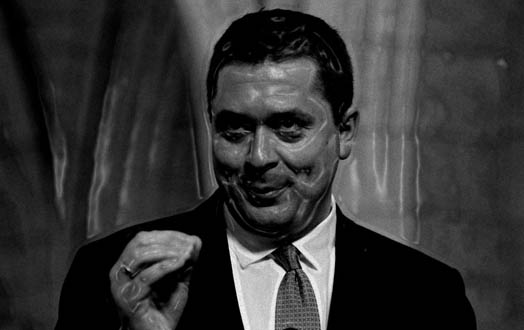
Conservative Party of Canada, far right of centre leader, the oily Andrew Scheer

Even more concerning is the fact that it is in the Conservative Party’s interest for this voting block to become even angrier and more fearful because the angrier and more fearful this segment of the population becomes, the more likely they are to vote this upcoming Monday, on October 21st. The Conservatives need a high turn-out from these voters, and a low turnout of dispirited progressive voters and young voters 18 – 34, if they are going to succeed in assuming government post election.
The twisted irony of all this is that while conservative political parties created the right-wing, populist voting block described in today’s VanRamblings’ post, they have now become prisoners of it. As Donald Trump has made clear these past three years, right-wing, extremist populist leaders will do and say anything to energize their minority base.
Donald Trump’s supporters (like the supporters of Ontario Premier Doug Ford, British Prime Minister Boris Johnson, and Andrew Scheer himself) see Trump as someone who raises a middle finger to propriety, to elites and to the establishment. They like him because they see his populist conservativism as his being “one of us, taking on the elites on our behalf.”
Of course, these right wing, populist political leaders are not “one of us”.
If Trump’s Republican Party in the United States and the Conservative Party in Britain (e.g. Boris Johnson’s anti-democratic Brexit antics, etc.) are any indication, this will mean that the practice of the Conservative party’s right-wing populism in Canada will become more and more extreme. Remember, we are now talking about a Conservative government in control of the full machinery of the Canadian state — not just an opposition party limited to rhetorically whipping up its base. Make no mistake: a vote for Andrew Scheer is a vote for Donald Trump, and all the harm Donald Trump brings.
Democracy in exile

When fear, opportunism or miscalculation leads established parties to bring extremists into the mainstream, democracy is imperiled.
Once a would-be right-wing populist makes it to power, democracies face a second critical test: will the autocratic leader subvert democratic institutions or be constrained by them?
Institutions alone are not enough to rein in elected autocrats. Constitutions must be defended — by political parties and organized citizens but also by democratic norms. Without robust norms, constitutional checks and balances do not serve as the bulwarks of democracy we imagine them to be. Institutions become political weapons, wielded forcefully by those who control them against those who do not.
This is how elected autocrats subvert democracy — attacking the press, the courts and the opposition, as Stephen Harper did during his 10 years in power, and weaponizing our democracy while rewriting the rules of politics to tilt the playing field against opponents.
The tragic paradox of this electoral route to authoritarianism and despotism is that democracy’s assassins use the very institutions of democracy — gradually, subtly, and even legally — to kill it.
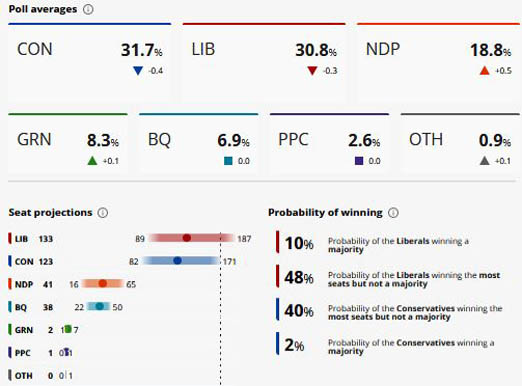
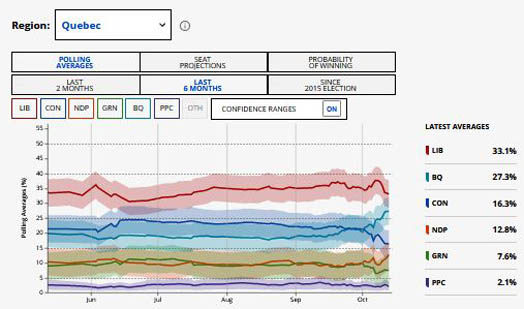
Decision Canada | CBC Poll Tracker | Quebec | October 18, 2019Click here for the latest publication of Eric Grenier’s polling aggregate CBC Poll Tracker, which will continue to be updated over the weekend.

Current polling suggests that the 2019 federal election is heading towards the formation of either a hung Parliament or an unworkable and unstable minority government, in which the Liberals or the Conservatives will have to come to some sort of agreement with one or more of the smaller parties, in order to form government. The potential for a Conservative Party-Bloc Québécois co-operative agreement is, unfortunately, great, tragic and unthinkable for what it portends for the majority of Canadians who support progressive values, and who are committed to fighting climate change.
Should the results of next Monday’s election result in a hung Parliament, the Liberals, NDP, Greens and the Bloc need to talk honestly about what the next government of Canada will look like if no party wins the 170 seats needed for a majority. There is just too much on the line not to do so.
And they’ll need to begin that discussion first thing on Tuesday morning.

Decision Canada | 2019 Canadian federal election

Decision Canada coverage from earlier in the week …
Reflections on a Shit Election, Part 1, The 2019 federal election turns around in its final week, leaving the door open to the hoary prospect of an Andrew Scheer-led regressive Conservative government;
Reflections on a Shit Election, Part 2, A defense of Justin Trudeau as a progressive, and electing him to a second term of office, in a minority government, propped up by Jagmeet Singh’s NDP and Elizabeth May’s Greens (which would be the best of all possible election outcomes);
Reflections on a Shit Election, Part 3, The increasing popularity of New Democratic Party leader, Jagmeet Singh, and the prospects that the NDP may hold the balance of power come late Monday evening, October 21st.

star.jpg star.jpg star.jpg

Campaign and longtime senior political activists David Herle, Scott Reid and Jenni Byrne, in their final pre-election day podcast weigh in on the 2019 federal election campaign, with Mr. Herle and Mr. Reid predicting a (heartening) progressive outcome come late night Monday, October 21st.
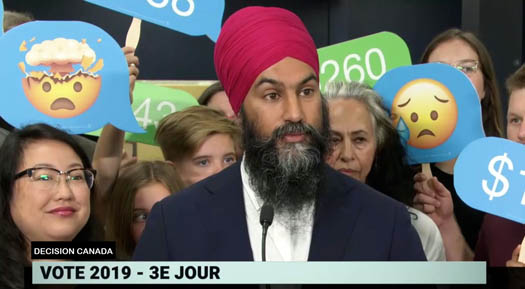

Decision Canada 2019 | Reflections on a Shit Election, Part 3

NDP leader at a press conference during the course of the 2019 Canadian federal election

When delegates to the New Democratic Party convention held on a mid-April weekend in April 2016 relegated then federal NDP leader Tom Mulcair to the scrap heap of history, with 52% of delegates voting in favour of naming a new leader, anyone who follows Canadian politics knew that change was on the way for Canada’s 84-year-old social democratic party.
On Sunday, October 1st 2017 sitting Ontario MPP Jagmeet Singh overwhelmingly won the leadership of the federal New Democratic Party, the wishes of the 124,000 party members who had cast a ballot realized, to return the NDP to its historical grassroots advocacy for the interests of working people — a repudiation of the centrist, neoliberal leadership of Tom Mulcair — that a revitalized New Democratic Party was reborn.
Tom Mulcair left Mr. Singh and the NDP with a $4.8 million deficit from the 2015 campaign, and a dispirited, much reduced caucus of 44 members in the House of Commons. Jagmeet Singh had his work cut out for him …

1. Commence an immediate fundraising drive to rid the party of its debilitating deficit, and work towards raising the ten to twelve million dollars the party would need to run an effective campaign in 2019;

2. Set up an office in Ottawa, and work with the caucus to establish a new vision for the NDP that he and the sitting NDP Members of Parliament would enunciate to the Canadian public;

3. Establish a communications strategy that would introduce him to the Canadian public, as the articulate, charismatic, open and authentic leader of a renewed social democratic party members knew him to be, the only federal party truly on the side of Canadians, and not corporate interests;

4. Visit every far flung burgh across Canada, in every province and territory, to introduce himself in person to Canadians.

Sad to say, Jagmeet Singh did not do any of those necessary things.
At no point, prior to the dropping of the writ in the 2019 election did Mr. Singh visit any of the Maritime provinces. When he appeared on TV, most particularly with Rosemary Barton on CBC Newsworld’s Power and Politics, he was argumentative, refusing to answer even the simplest of questions put to him by the moderator. For two years, fundraising appeared to be nowhere on Mr. Singh’s agenda, resulting in a decision by the party executive to, post-election, sell the party headquarters building in Ottawa, to both pay off the 2015 campaign debt, and fund the current campaign.
When the writ was dropped on Wednesday, September 11th, the party was almost broke, 100 candidates had yet to be nominated, and the party lacked infrastructure at the grassroots level, resultant from the lack of funding necessary to run winning and effective local campaigns.

Jennifer Howard, federal NDP campaign director and chief of staff to leader Jagmeet SinghJennifer Howard, NDP 2019 federal campaign manager & Jagmeet Singh’s chief of staff

When Jennifer Howard, a longtime party stalwart and former Manitoba NDP Minister was hired as the federal NDP’s campaign director in late 2018, on her first day as chief of staff to Mr. Singh, she found a party mired in sagging morale, and a woebegone caucus, 11 of whom had announced they would not run again for a seat in Parliament.
As Nick Taylor-Vaisey wrote in an August 8, 2019 article in Macleans

The NDP had stalled below 15% in popular support. And the party’s fundraising machine was sputtering: Conservatives had raised $7.4 million in the last quarter of 2018 and Liberals had raked in $6.4 million. New Democrats managed just shy of $2 million, slightly ahead of a resurgent Green party which raised a record $1.5 million. There were quiet murmurs that Singh wasn’t up to the job.

“We were nine months out from an election, and we frankly needed somebody who could take the position from a standing start and get the job done. There was no time for a learning curve,” says Kathleen Monk, a principal at Earnscliffe Strategy Group who worked for Layton and watches the party closely. “Job one: ensuring Jagmeet got elected.”

In 2018, Mr. Singh had hired party stalwart Michael Balagus, a former chief of staff to two Manitoba premiers and a veteran of NDP campaigns stretching back to the ’80s, as his right hand, who was replaced by Ms. Howard in late 2018, when Mr. Balagus returned to his day job as chief of staff to Ontario NDP leader Andrea Horwath (he stayed on as a “special adviser” to Mr. Singh and the party, though, and continues in that role).
Mr. Singh’s inexperience on a national campaign was coupled with a second frustration for Ms. Howard and Mr. Balagus: many Canadian voters didn’t know what he stood for. Still, senior party appatchiks remained convinced that he was likeable, authentic, engaging and more than up to the task of running an effective national campaign — as has proved to be the case.

“We knew that Canadians didn’t know much about him,” says Monk. “When they had the opportunity to meet him, talk to him or see him, inevitably they were engaged, and found that they really liked him.”

To make up ground, Ms. Howard, Mr. Balagus and Ms. Monk decided that Mr. Singh had to focus on affordability issues: “jobs and job creation, pharmacare and health care, policy ideas that are the core of New Democratic strength,” says Monk, who adds that Singh’s likeability draws a sharp contrast to both Andrew Scheer and Justin Trudeau.
By July 2019, eight months into Howard’s run as chief of staff, the party remained solidly in third place (and even fourth in the occasional poll). Its second-quarter fundraising was still dismal: $1,433,476 from 14,936 donors, a fraction of the Tories’ $8.5 million haul from more than 50,000 Canadians — and behind even the Greens, who raised about $4,000 more than the New Democrats.

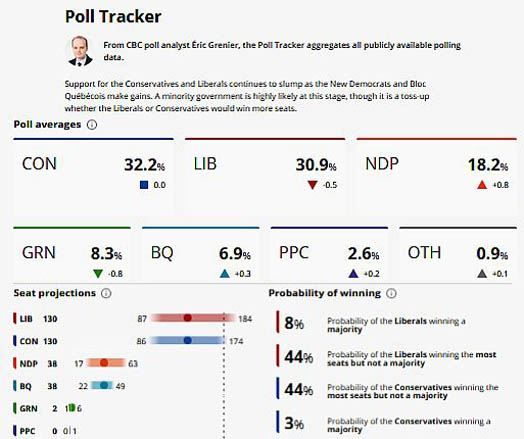
Decision Canada | CBC Poll Tracker | Quebec | October 16, 2019Click here for the most recent update of Eric Grenier’s federal election CBC Poll Tracker.

But that was then, and this is now.
According to the latest CBC Poll Tracker (above), Jagmeet Singh and the NDP are set to win 38 seats in the House of Commons, and should Mr. Trudeau manage to raise his seat total to 134, the federal Liberals and the New Democratic Party working together would constitute a comfortable majority, with Mr. Singh holding the (so-called) whip hand, allowing the NDP to work with the Liberals to implement its six priorities: universal pharmacare and universal dental care just two of the NDP’s priorities.
Despite a lack of the NDP’s traditional on the ground campaign structure, the people of Canada have decided that they like the cut of Mr. Singh’s jib, and seem prepared to elect enough federal NDP candidates to Parliament to allow Mr. Singh to hold the balance of power in Ottawa.
All of which has to be heartening news for beleaguered NDP candidates running for office in Ottawa. And in British Columbia, most particularly, incumbents Don Davies (Vancouver Kingsway), Jenny Kwan (Vancouver East) and Peter Julian (New Westminster-Burnaby) in Metro Vancouver (Jagmeet Singh is all but guaranteed to hold on to his seat in Burnaby South), and on Vancouver Island, Randall Garrison (Esquimalt-Saanich-Sooke), Gord Johns (Courtenay-Alberni), Alistair MacGregor (Cowichan-Malahat-Langford) and Rachel Blaney (North Island-Powell River), not to mention Kootenay NDP incumbents Wayne Stetski (Kootenay-Columbia), and Richard Cannings (South Okanagan-West Kootenay).

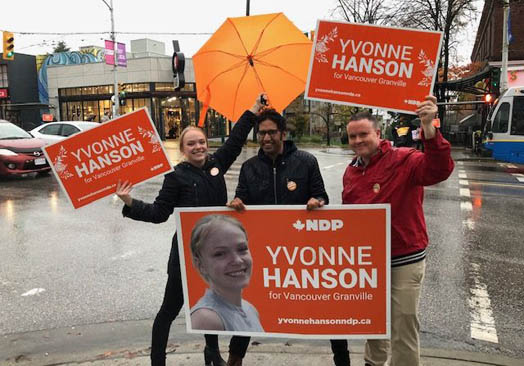
Yvonne Hanson, Vancouver Granville NDP candidate in the 2019 Canadian federal electionEnvironmental activist and hard-working, work around the clock Vancouver Granville New Democratic Party candidate Yvonne Hanson out campaigning on Kitsilano’s West 4th Avenue, with her dedicated and experienced co-campaign managers, Riaz Behra and Derrick O’Keefe (“we could come up the middle and win this thing,” says Derrick!).

Eric Grenier’s CBC Poll Tracker has the NDP winning as many as 19 seats across the province of British Columbia come the evening of Monday, October 21st, which has to be heartening news for the campaigns being run by the entirely necessary to elect to the NDP caucus in Ottawa, Christina Gower (Coquitlam-Port Coquitlam), Taylor Bachrach (Skeena-Bulkley Valley), campaigner extraordinaire Svend Robinson (Burnaby North-Seymour), Bonita Zarrillo (Port Moody-Coquitlam), environmental activist Yvonne Hanson (Vancouver Granville), Leigh Kenny (Vancouver Quadra), and Breen Ouelette (Vancouver Centre), and over on the Island, Bob Chamberlin (Nanaimo-Ladysmith), who could take the seat away from Green incumbent, Paul Manly — given that the NDP campaign is on the ascendancy, while the Green campaign is — as has been the case since the writ was dropped — in free fall, with Elizabeth May (as wonderful a person as she is) running one of the most unfocused & confusing (“we don’t whip our candidates”) national electoral campaigns in Canadian political history.
All will be revealed late in the evening of this upcoming Monday.

Decision Canada | 2019 Canadian federal election

Decision Canada coverage from earlier in the week …
Reflections on a Shit Election, Part 1, The 2019 federal election turns around in its final week, leaving the door open to the hoary prospect of an Andrew Scheer-led regressive Conservative government;
Reflections on a Shit Election, Part 2, A defense of Justin Trudeau as a progressive, and electing him to a second term of office, in a minority government, propped up by Jagmeet Singh’s NDP and Elizabeth May’s Greens (which would be the best of all possible election outcomes).
C’mon back tomorrow for Reflections on a Shit Election, Part 4.

Decision Canada 2019 | Reflections on a Shit Election, Part 2

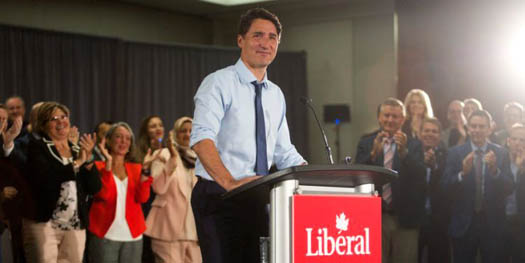
Justin Trudeau speaking to a crowd in Fredericton New Brunswick during Election 2019

In one of his many election commitments in 2015, Justin Trudeau promised Canadian seniors that by 2024 the minimum amount of money low income seniors would receive was $2000 per month, further committing to keep the retirement age at 65 (Stephen Harper stated he would raise the retirement age to 67 and, later, age 70), and immediately upon election raising seniors’ monthly payment by $100. Note should be made that one-third of Canadian seniors then lived on less than $17,000 annually.
Even now, half of all Canadian seniors live on less than $26,000 a year — and if you’re not living in social housing or a housing co-op, where you pay only 30% of your income for housing, you’re pretty much hooped.
As of September 2019, minimum pension payments to individual Canadian seniors — Canada Pension, Old Age Security plus the federally mandated Guaranteed Income Supplement — had risen to $1835.30 monthly, or a thirty-one per cent increase from the miserly $1400 minimum payment afforded Canadian seniors by the Stephen Harper government. In other words, four years after the election of a Justin Trudeau-led Liberal government, low income Canadian seniors are receiving $5,223.60 more in their bank accounts annually from the Canadian government, raising the annual payment from $16,800 in early 2015 to $22,023.60 in 2019.
Earlier this year, the Trudeau government announced that eligible seniors and their spouses can earn up to $5,000 a year each before the government starts rolling back their GIS benefits (an increase of $1500). The Trudeau government has made it clear they care about the welfare of seniors, and accept the responsibility of ensuring the health, financial and otherwise, of our low income seniors population. The Conservatives? Not so much. Well, to be perfectly honest — not at all (cuz they care only about the wealthy … it’s a dog eat dog world Andrew Scheer and his ilk believe, and “if you ain’t planned for your retirement then that’s on you buster!).
And you know what, during the course of the 2019 federal election campaign voters haven’t heard word one from the Liberal campaign on how the Liberal government needs to continue their work lifting the one-third of Canadian seniors living solely on Canada pensions out of poverty.
Why — given that seniors tend to get out to the polls in droves — the Liberal campaign hasn’t brought this entirely encouraging fulfillment of their pension election promise to the attention of all Canadians befuddles this reporter. Perhaps Liberals believe it unbecoming to sing one’s own praises, that the Trudeau government is prepared to just run on their record ???
In the final week of the election campaign, the focus of the mainstream press in its coverage of the election, as well as the other five federal political parties has set about to obfuscate about the achievements of Prime Minister Justin Trudeau, and his generally progressive Liberal government.

Conservative party attack ad on Justin Trudeau: He's Over His Head

On Sunday, Georgia Straight editor Charlie Smith took a look at Justin Trudeau’s record as Prime Minister. Weren’t none too complimentary. Today, VanRamblings will offer a perspective on Mr. Trudeau that is at variance with Mr. Smith’s conclusion on Mr. Trudeau’s continued fitness for office.

As an example: in October 2015, when Justin Trudeau was elected to government, he appointed 31 Ministers of the Crown, for the first time ever comprised of fifty per cent women and fifty per cent men (could you imagine Tom Mulcair doing such a thing? uh, no), and as broad a cross-section of Canadians as could possibly be imagined, from 29-year-old Afghan refugee Maryam Monsef — first as Canada’s Minister for Women and Gender Equality, and in 2019 as Minister for International Development — to 35-year-old community organizer Bardish Chagger, first as Minister of Small Business, Export Promotion and Tourism, and since 2018 Government Leader in the House of Commons.

Generational change: the youngest Cabinet in Canadian history, hard charging, competent, and the most accomplished Cabinet in a generation.

Once sworn into office, Prime Minister Justin Trudeau’s first act in office was to cancel both the TransCanada and the East-West pipelines, and ban tanker traffic along the coast of British Columbia. A Prime Minister Andrew Scheer would reverse the ban, and has announced he would seek to work with the oil industry to build a raw bitumen carrying pipeline from Alberta to Kitimat, and then have the bitumen tankered down B.C.’s west coast.

And then there’s this: over the course of the past four years, 900,000 Canadians — 300,000 of whom are children — were lifted out of poverty through policies set by the Justin Trudeau-led Liberal Party of Canada.

Meanwhile, the Justin Trudeau administration has invested in green public transit, investing billions of dollars to extend light rail lines in Canadian cities: Calgary, Edmonton, Vancouver, Ottawa and Montréal, and more.

  • Marijuana is now legal in Canada, after Uruguay becoming one of only two countries across the globe to legalize possession and use of recreational cannabis.

  • In late 2015 through mid-2016, the Canadian government settled more than 40,000 Syrian refugees. In 2018, Canada accepted 28,100 refugees from war torn countries for permanent resettlement in our country.

Addressing our climate change emergency emerged as a top priority for the Trudeau administration. According to Mark Jaccard, a professor of sustainable energy at Simon Fraser University’s School of Resource and Environmental Management …

“While global experts agree that the (Trudeau government’s) national carbon tax is impressive, they are equally impressed with several other climate policies: the government’s phased closure of coal plants; co-ordinating electricity decarbonization with increasing its use in vehicles, buildings and industry — which comes fully into force in two years, only if the Trudeau government is re-elected.

The government’s pending regulation on methane emissions is another example of a policy of global significance that is unknown in Canada. Flexibility provisions in the policy will ensure that emitters such as the oil and gas industry can choose the least-cost options to reduce these emissions. Again, other countries are studying this policy.

Rather than avoiding industrial regulation altogether, like some jurisdictions, Canada is innovating a model of growing interest to policy-makers in developed and developing countries. In just four years, these and other policies have transformed Canada from a global pariah under the Harper government to a model for climate action under Trudeau. In climate policy, experts agree that Canada is finally a global leader.

I wonder if enough climate-concerned Canadians will recognize this, before it’s too late.”

The long-form census is reinstated. About which Peggy Taillon, former head of the Canadian Council on Social Development — which led the charter challenge to save the census — said “this move will have a lasting impact on Canada’s ability to measure the effectiveness of government policy and hold those who make these decisions to account.”

  • A majority of senators are now Independents. In 2014, as then-leader of the third party, Trudeau removed all Liberal senators from the national Liberal caucus, and since becoming prime minister he has embarked on creating a non-partisan Senate, with a new and independent advisory board to recommend Senate appointments.

    The Senate’s increasing independence has provided a new dynamic rarely seen in past Parliaments: amendments to government bills. What was once seen as a rare and dramatic occurrence happened 30 times this Parliament. There were 38 pieces of government legislation that the Senate sent back to the House with changes, and in 35 of those the government accepted some of the suggested alterations, according to the facilitator of the ISG, Yuen Pau Woo.

  • The Canada Child Tax Benefit provides thousands of dollars more to 9 out of 10 Canadians families, lifting many families out of poverty;
  • Tax cuts for middle class families, not the wealthy, have benefited 9 million Canadian families each year for the past four years;
  • Unmuzzled government scientists. By unmuzzling government scientists and allowing them to share their expertise, the Liberal government worked to restore science’s important role in national policy.

After 16 years of the British Columbia Gordon Campbell and Christy Clark provincial administrations, and 10 years of Stephen Harper muzzling scientists in the Environment and Fisheries and Oceans departments, while catering to the interests of the salmon farming industry, the Trudeau administration reversed Harper dictum (as did John Horgan’s government provincially, reversing Campbell and Clark policy). Federally, over the past four years, Trudeau administration Fisheries and Ocean Ministers Dominic LeBlanc and Jonathan Wilkinson have worked within the Trudeau government to invest hundreds of millions of dollars into restoring British Columbia’s west coast fisheries, and the environment — for instance, by the hiring of 135 new aquatic scientists and new research partnerships, an important part of protecting Canada’s oceans, waterways, and fisheries.

  • New and increased funding for women’s shelters;

  • An historic $120 billion investment in infrastructure over 10 years;
  • Launching the National Inquiry into Missing and Murdered Indigenous Women and Girls Inquiry, to put an end to this national tragedy;
  • Through the introduction of Bill C-14, introducing legalized medical assistance in dying, offering Canadians the choice to die with dignity to patients who are suffering intolerably;

Re-opening the Kitsilano Coast Guard base; helping m
ore than 350,000 students by increasing Canada Student Grants by 50%; reopening and staffing 9 Veterans Affairs service offices across the country — and all of the above is just for a start.
Canadians are being fed a line of malarkey that Prime Minister Justin Trudeau is not a progressive Prime Minister — a statement which couldn’t be further from the truth.
According to the latest polls, Canadians are on the verge of electing a regressive Andrew Scheer-led federal government that will undo all of the myriad progressive accomplishments of the Justin Trudeau-led federal administration over the past four years. Don’t let that happen!

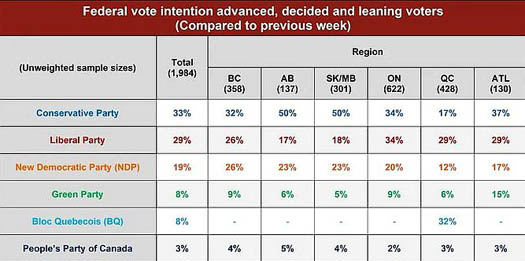
Canadian federal election | Angus Reid poll, October 15, 2019October 15, 2019. Angus Reid Poll. Andrew Scheer’s Conservative Party currently leading in every province across Canada, except Québec, where the Bloc Québécois is leading.

Decision Canada 2019 | Reflections on a Shit Election, Part 1

Decision Canada | CBC Poll Tracker | October 14, 2019

The term “shit election” was coined by Liberal Party apparatchiks Scott Reid and David Herle, and Conservative Party eminence gris Jenny Byrne (no mean feat being an eminence gris at only 42 years of age), although, for the sake of propriety, the title of that particular episode of The Herle Burly podcast — where for the past month and more all three have weighed in on the current federal election —&#32eventually was titled The Seinfeld Election, “where the various political parties offering candidates in the 43rd Canadian federal general election are throwing the kitchen sink at the public and at each other, effectively turning the race into an episode of Seinfeld: an election about nothing.” And so this election has proven to be.

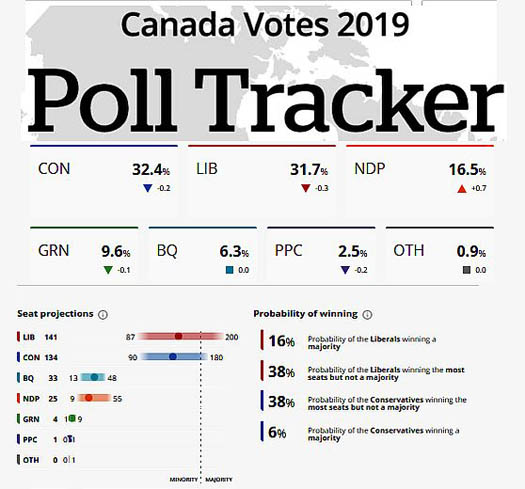
If you look at CBC’s poll tracker above, the intentions of the electorate have barely shifted since the writ was dropped on Wednesday, September 11th. The two leading parties have been stuck at 33% for the past five weeks, while the NDP have inched up a couple of points, as have the fortunes of the Bloc Québécois. Elizabeth May’s Green Party has failed to move the needle at all, as is the case with Maxime Bernier’s People’s Party of Canada.
Chances are that for the first time in a decade, Canadians face the prospect of a hung Parliament, with no Canadian federal party emerging with enough seats to form anything other than a precarious minority government. If, as the poll above suggests, the Liberals garner 140 seats, the NDP 25 and the Greens 4, together the three parties would not have enough votes to pass a budget or any legislation in the Parliament of Canada. If the Bloc outdoes expectations and garners 40 seats, Bloc leader Yves-François Blanchet could effectively align himself with Andrew Scheer and the Conservatives, for a non-coalition / “working agreement” majority — a very real prospect.
Up until a week ago, it looked as if Justin Trudeau would be able to form a government of around 154 seats (170 seats constitutes a majority) with the support of Jagmeet Singh’s NDP and Elizabeth May’s Green Party — and all would be right with the world. Canada would continue to have progressive government, both domestically and on the world stage.
One week ago, the Liberals were leading in all provinces across Canada, except on the Prairies (the base of support for the Conservatives), with 40% of the vote wrapped up in the three largest, and most seat rich, provinces: British Columbia, Ontario and Québec, and the prospect of 154 to 164 seats in Parliament. But, alas, no more. Bloc leader Yves-François Blanchet — with his message of “Québec for Québecers, we’re not interested in federal politics, we’re interested only in representing the interests of Québec” — has decimated prospects in Québec for both the Liberals and, more particularly for, the Conservatives.

Decision Canada | CBC Poll Tracker | Quebec | October 14, 2019

In Québec, Liberal support has dropped 6 points to 33.1%, the Conservatives dropping from 23% to 16%, the NDP on the rise at 12.8% (up 3 points), and the Greens a non-factor (again, as is the case with the People’s Party of Canada). Only a week ago, the Liberals were looking to win between 50 and 60 seats in Québec (out of 78 seats). But no more. The Liberals will hold on to only 30 – 33 of their current 40 seats, the Conservatives will be decimated, winning maybe 2 seats (down from 11 in the last Parliament), the NDP could hold on to a half dozen Québec seats, while the Bloc Québécois will pick up the rest, with 40 seats or more.
In 2019, no federal party policy platform, no issue, and no federal party leader has fired the imagination across a cross-section of the electorate.
In 2015, cannabis legalization brought out hundreds of thousands of new voters, Canadians who would otherwise have stayed home, a commitment by the Liberals to raise minimum pension payments for seniors to $2000 a month by 2024 (more on that tomorrow), a return to sanity in Ottawa — with Justin Trudeau committed to holding regular press conferences, as well as regular town halls across the country, in contrast to a secretive and elitist Stephen Harper government, which hadn’t had a press conference since 2006 — a commitment to a child tax credit for families that would make life easier and more affordable for young families, a commitment to proportional representation, to building transit infrastructure and affordable housing across Canada, allowing scientists to speak freely and openly on issues respecting the environment, and the introduction of assisted dying legislation saw a record number of Canadians going to the polls.
In 2019: nada, nothing, zilch — aside from a commitment from Andrew Scheer to gut infrastructure spending, gut foreign aid, and a commitment to do nothing on the climate change file. And the electorate yawns.
As we write above: a “shit election” — when there is so much on the line.