Stories of a Life | Events of Summer 1957 | Failing Grade One

Lord Nelson Elementary School, on Vancouver's east side, circa 1957

In November 2017, I wrote of a signal event of my life — a 7th birthday present from my mother of a transistor radio, on August 11th, 1957.
The acquisition of the leather-encased transistor radio — I was the first boy in my neighbourhood to own one — so influenced my life that I developed not only a lifelong love of pop culture as a consequence of receiving the present, but a lifelong love for radio, which less than 10 years later would see me working at CFUN — then Vancouver’s rock ‘n roll giant — studying with Red Robinson (at the time, the programme director), producing the station’s Sunday night programming, and occasionally going on the air.

CKNW radio in Vancouver, circa 1957

The gift of the transistor radio also meant that after going to bed at my usual bedtime of 8pm, I could turn the radio on to CKNW and listen to the classic radio programmes of the 1940s and 1950s: The Shadow, Our Miss Brooks, the Jack Benny – a favourite – and Red Skelton shows, and George Burns and Gracie Allen, and The Charlie McCarthy shows.
Summer 1957 also had a darker aspect.
For the first five years of my life, I didn’t speak. I sang, but I didn’t speak. Early childhood trauma, I expect — neglect, a lack of love, and darker goings on I won’t write about today, but there was joy in my young life — the Sunshine Bread truck that would situate itself in the park at the end of Alice Street, over by Victoria and 24th, providing the young children who lived in the neighbourhood an opportunity to ride on the tiny merry-go-round on the back of the truck, the children running home to their mothers saying, “Mom, oh mom, you’ve got to buy some Sunshine Bread.”
During this period, though, and throughout my life, there was not a mother at home for me to run to. My father, too, was absent; I’m not sure where he spent his days, all I knew was that he didn’t have work — my parents argued about it all the time — and neither was he a fit parent, as he proved time and time again. There were nannies at home, recent immigrants from Germany, mostly, from whom I acquired my love of warm & filling oatmeal for my breakfast in the morning, for there wasn’t much food in my home, and often that oatmeal breakfast would constitute my meal for the day.
At age five, I began to speak, first haltingly and then in full sentences. For anyone who knows me, they’d probably say that for many years now, I have been making up for the lost words of the first five years of my life.

Mother reading her son a bedtime story

In my home, there were no bedtime stories. Not that either of my parents were inclined to read to my sister and I. My father had a Grade One education, and couldn’t read. My mother had a Grade Three education, and she could read — but not to either me or my sister. Not that she was ever around the house long enough to read stories to us, even if she was so inclined — which she wasn’t.
My mother was the breadwinner in my family.
From the earliest years of my life, through all the years of my maturational growth, my mother always worked three jobs — for many years she worked days at Bonor and Bemis, just off Strathcona Park, a factory job where she worked in the part of the factory responsible for making paper bags; afternoons saw my father lifting my sister into the back seat of the car to pick my mother up from work, to drive her to Lulu Island and the Swift Meat Packing Plant, after which my father, sister and I traveled home in our 10-year-old Plymouth, the car barreling down Victoria Drive, with my sister far too often opening the back door of the car, spilling out onto the roadway, as my father’s car sped away down the street, me screaming, “Dad, dad — Linda’s jumped out of the car!” at which point he would stop, turn the car around and head back to where my sister lay in the middle of the road, a car having stopped so he wouldn’t run her over, holding up traffic, my father rushing over to pick up my sister to take her home.
In any one of those incidents, my father never thought to take Linda to the hospital. Sometimes the driver of the car that had stopped — to prevent himself from driving over Linda — would repair to my home, on Alice Street, or East 2nd Avenue, with me screaming at my father or the man or men who were standing around in the kitchen of my house, Linda laying bruised and bleeding on the hard melamite kitchen table, me now screeching at the adults gathered around my sister, men hands held to their chin, doing nothing, my screaming at them to take her to the hospital.
But they never did.

Class picture, Grade One class, Lord Nelson Elementary School, Vancouver's east side, circa 1957

In September 1956, I entered Grade One. My mother was actually present to enroll me my first day of school at Lord Nelson Elementary, at Templeton Drive and Charles. Miss Pugh was my Grade One teacher. The only memory I have of her involves asking the children in class to put our heads down on our desks when her boyfriend would come to visit, as I peeked toward the front of the class, where I would see the two of them kissing — the only affection between adults I had ever witnessed to that point in my life.
Grade One was, for me, a blur.
I was, I suppose, unmanageable, full of life, although I don’t have any strong memories of my attendance at Lord Nelson Elementary school, from September 1956 through June of 1957 — I had never been socialized, no one had ever made demands of me in regards of my conduct, although I would receive hard spankings if I got out of line, although it was always difficult to determine what “getting out of line meant,” as there were no boundaries around my conduct that I can recall having been set for me.
I enjoyed my pre-school days (read: before I attended elementary school), and I suppose I enjoyed school, my memory of playing marbles at recess acute. Quite honestly, though, I can’t remember anything else of my first year of school — apart from the kissing at the front of the class, from time to time, between my teacher and her boyfriend. As my mother was working three jobs — 16 hours a day, six days a week, 24 hours on the 7th day, the unskilled factory jobs paying, early on, about 25 cents an hour, climbing to 35 cents by 1957 — I was lost, there were no governors in my life, no love, no affection, I felt alone, and more often than not, full of dread and fear.
My most cogent memories of September 1956 to June 1957 are this …

  • Walking to school alone through billowy white fog, so thick you couldn’t see your hand in front of you, arriving at school on time, and settling into a day where I would learn nothing;
  • Running to Joy and Louise’s house after school, and playing with them for 2 hours, their parents at work, just the three of us at home playing make believe;
  • Spending occasional afternoons at my best friend John Pavich’s home, his mother with fresh-baked, warm cookies at the ready, a glass of milk on the table. I would often stay for only a half hour, after which I would walk down Charles Street in the rain, towards Nanaimo, rumbling thunder and lightning in the steel blue skies a wondrous delight for me.

I have always felt most secure in overcast weather. Clouds in the sky, particularly the dark billowy clouds that covered the sky on those most overcast of days, offered me a secure and reassuring blanket, a security I lacked in every other aspect of my life, my love of darkened — some would say, forboding, but not me — a feeling that lives in me still.
I love the rain, I love leaden skies, I love the security that those overhead clouds continue to provide me, as if nothing bad can or will happen to me — and in a life, as far back as my pre-school days, an ever more present and necessary feeling as I glided through my Grade One year, untouched, unaware, when I raised myself alone (who knew where my sister was?), the clouds in the sky offering me the only security that was available to me.

Raymond Tomlin on his bike, spring 1957, at 2165 East 2nd Avenue, in VancouverSix-year-old me, Raymond Tomlin, on my bike, outside my home, in the spring of 1957

As the school year was ending, the sports day complete, the warm summer days having now just begun, on the last day of school in June 1957, I received my report card, taking it directly to my home as instructed by my Principal and my teacher. There was no one home. I played make believe all on my own. I left my report card on the kitchen table. Alone, I felt fatigued, and went to bed early on that June 30th afternoon, unsure of what the summer would bring, and what life held in store for me.
Early the next morning, following 12 hours of fitful sleep, upon opening my eyes, I was surprised to see my mother standing over my bed. She looked at me, seething, her lips pursed and tight, her face purple with rage — next thing I knew, she hit me across the face, hard. “You failed Grade One. No son of mine is going to fail Grade One. You are in for a summer of hell!”
And so it proved to be.
For the only time in all the years I lived at home, my mother left her employment, staying home with me through July and August, the renters in the downstairs suite evicted that summer, my days of hell beginning at 8am, tied to a chair in the kitchen of the downstairs suite, from 8am til 8pm Monday through Friday of each week of summer 1957, for near on 60 days — save my birthday, on August 11th, when I was given a day off — I was beaten, the rope tying me to the chair cutting into my skin, the early part of the summer finding me screaming in fear and in pain.
Hour upon hour upon hour.
Of course, in those days, there was no definiing concept of child abuse, no such thing as a Ministry of Human Resources or Ministry of Children and Family Development, no one to look after the welfare of children. A child screaming, most parents — at least in my east side Grandview-Woodland neighbourhood — thought the child probably had it coming to them.
Over the course of the thirty-one days of July 1957, something of a miracle occurred amidst the tears, and the now lessening screams of the day: I learned to read. I learned arithmetic. I learned to print. I learned everything I had not learned in ten months of enrollment in Grade One.
By summer’s end — as would soon be discovered, I knew how to print and to write in cursive longhand, my arithmetic skills progressing far beyond basic addition and subtraction into fractions, and elementary algebra and geometry. I learned to read, I read for hours every day.
I memorized the small dictionary my mother had purchased for the express purpose of teaching me language. I learned the meaning of thousands of words, and I learned to spell those words correctly — lest I be beaten, or slapped hard across the face. That summer I learned to love learning.

Children lined up, ready to go into the school to begin their day, circa 1957

On the first day of school in September 1957, my mother — as you may have gathered, a force of nature — marched me into the school office, confronting the Principal, an anger in her that had transmogrified into rage, my mother fierce and unrelenting in a barrage of hate-filled words that filled the room, fear and dread also filling the room, the Principal clearly unsettled, teachers running towards the office to see what this mad woman who had taken control of the office wanted, was demanding.
“My son is ready for Grade 2,” my mother screamed at my Principal, whose complexion now was ruddy, his face shuddering, his eyes wary, wide, concern – perhaps for his safety, perhaps for me – spilling out of his eyes.
“But Mrs. Tomlin, your son can’t read, he doesn’t even know the letters of the alphabet, and he doesn’t know how to do even the most basic addition and subtraction, not even one plus one equals two. I cannot place your son in Grade Two, just because you wish it to be so.”
My mother looked around the office. There was a large plaque on one of the walls, with 20 or so lines of print on the plaque.
Turning to me, pointing to the plaque, she bellowed, “Read it.” And I did. While I was reading the dozens of words on the plaque, my mother looked around the office, spotting a Grade 5 Math book.
Handing the Math book to the Principal, her eyes now in a squint, she demanded of the Principal, “turn to any page, ask him to solve any problem on that page. Now!” The principal did as he was instructed to do by my mother, asking me one question after another, as he flipped through page after page of the Math book. I answered every question correctly — and quickly, as I had been instructed in my basement dungeon at home.
The Principal turned to me and said, “Wait here son, take a seat over there. Mrs. Tomlin, please come with me to my office.”
Twenty minutes later I entered Mrs. Goloff’s Grade Two class, in a portable outside along Charles Street, beginning what would be one of the best years of my life. The school had spelling bees. I won every time, not just for Grade 2, but for the whole school. I breezed through Grade 2. Somehow, over the summer, I had gained a love of learning that resides in me still, and informs my life each and every day. I loved to read, spending hours in the school library reading whatever I could get my hands on.
I loved challenging myself, my facility with math always not just functional, but acute. And memory — looking back on it, I suppose the summer of 1957 was when I acquired my near photographic memory. I loved challenging myself to remember facts and information, discovering a way to achieve near perfect recall by inventing context through narrative. I suppose, too, that the summer of 1957 was when I first gained my love for narrative — as a tool and as a means to create recall and meaning, and a feature of how I would bring myself to the world, from my years in radio having to memorize how long the “musical beds” were for hundreds of songs, so that I could speak over the musical beds right up to the beat just before the lyrics to the song would kick in, or when in high school, taking the lead in school plays, and learning three hours of dialogue with ease.
The summer of 1957. A pivotal summer in my life, not just my young life, but the whole of my life, the most impactful summer of my near 68 years on this planet. In retrospect, looking back on that summer of what began as misery and pain, and what it has meant to me over the course of the next 60 years of my life — I love my mother for what she did for me.
As I have written previously, and as I will write again, I am who I am because of the tough, caring women who have come into my life, who have been demanding of me to be my best, to give all that I can give.
As is the case with most of the women with whom I have shared my life, my mother was a tough, bright, brooked no nonsense and driven woman, someone you did not want to cross, ever, who was also — not to put too fine a point on the matter — crazy (a consequence of childhood trauma), but a survivor nonetheless, and was in her own way, loving, but in terms of the woman who was supposed to raise me, in large measure and for the most part, absent — save one particular summer, the summer of 1957.

13 Reasons Why | 2 | Surprising, Engaging, Honest, Unblinking

13 Reasons Why, Season 2 | Netflix | Friday, May 18th, 2018

13 Reasons Why | Season 2 | Netflix | May 18
Far and away the most groundbreaking television series to début in 2017.
By far, the most well-conceived cable / streaming television series since Mathew Weiner’s Mad Men first wowed audiences on July 19th, 2007 — the most heartwrenching and heart-rending, honest, emotional, well-acted, absolutely compelling to watch, you didn’t want it to end, watching the series fucked you up, made you feel human, created characters of unending depth, humanity and emotional resonance …

The always moving, episode by episode devastating soundtrack, the most knowing, authentic, compelling, gripping, near apocalyptic, controversial, compulsively and obsessively watchable, tragic, mournful, awkwardly sensitive, and vital binge-watchable streaming wonderment ever to début on the must-have and essential Netflix platform …
Almost needless to say, the woefully overlooked television series adjudicated by the ageist and increasingly irrelevant television academy …

13 Reasons Why returns next Friday, May 18th, for it’s sure-to-be spectacular, you won’t be able to leave the house, you better set aside next weekend putting all else to the side, or on the back-burner, reason why you won’t be answering the phone, posting e-mails or otherwise engaging with the outside world Season 2 début …
Because you won’t be able to get off the sofa, or talk to anyone, or feel anything other than you better lay in a supply of cotton handkerchiefs Clay Jensen / Dylan Minnette, and where did she come from 17-year-old Hannah Baker / Katherine Langford, the beautiful girl who commits suicide …
Leaving behind 13 audacious audio tapes — yes, legacy media — each chapter dedicated to a person behind one of the reasons why, and we’re about find out more, if you can handle it, if we can somehow handle it, make sure your therapist’s telephone number is on speed dial, reason why you will be alone or with a loved one next Friday, Saturday and Sunday.

Vancouver Votes 2018 | An Open Letter to Members of the NPA

Hector Bremner makes accusation of racists motives in rejecting his NPA bid for MayorHector Bremner alleges racist intent as reason for NPA rejection of his mayoral bid

As VanRamblings wrote yesterday, the Board of Directors of Vancouver’s longest serving civic party, the Non-Partisan Association, on Monday informed NPA Vancouver City Councillor Hector Bremner that his bid to become the party’s mayoral candidate had been rejected by the Board.
And, as we also wrote …

As you might well expect, Mr. Bremner, his family and his many supporters — both inside and outside of the party (sitting Vancouver School Board trustee, Lisa Dominato, is one such supporter) — were devastated at hearing the unwelcome news from their party’s Board of Directors.

Throughout the day Tuesday, VanRamblings heard reports that since hearing the unwelcome news Mr. Bremner was devastated, despondent and angry. Would Mr. Bremner simply sit back, and take the slight to his reputation as par for the course in political life, run once again for Council and live on to fight another day, or would he come out guns a blazing at what he considered to be the unfair decision of the NPA Board of Directors?
Late last evening, Vancouver politicos’ answer to that question came in the form of a blistering column penned by Susan Lazaruk for the Vancouver Sun, in which he accused the Non-Partisan Association Board, and the party itself, of lacking transparency, being stuck in an old “backroom boys mentality” and — most damaging of all to the NPA’s prospects of winning government at City Hall this upcoming October — ”displaying an anti-immigrant bias”, both in the selection and the vetting of their candidates for public office. Bremner’s allegations are explosive and unprecedented in the history of Vancouver municipal political internal party struggles.
VanRamblings will hold off on weighing in on the current NPA contretemps until Monday, when we will publish an expansive piece as response to the allegations being made by Mr. Bremner, and others, and the as yet undisclosed reasons why Mr. Bremner’s mayoral candidacy was rejected which, we understand, are quite as explosive as Mr. Bremner’s untoward allegations of racist bias in the operation of the internal mechanisms of decision-making within the windward Vancouver Non-Partisan Association.
For the record, as we wrote to well-known political operative Mark Marissen late last evening …

You know, Mark, I like a fair fight.

Whoever wins, wins. Sometimes the playing field isn’t level, sometimes the game is rigged, the outcome pre-determined and the result not fair. Sort of like the great Canadian game, hockey.

But, you know what? Life isn’t fair. We’ve both lived on this planet long enough to know that.

While I appreciate your linking to Dan Fumano’s April 27th article in The Sun, and I very much appreciate what Wade Grant has to say: for the record, I do not believe that (NPA Board of Directors Chair) Gregory Baker, (Park Board Commissioners) John Coupar, Sarah Kirby-Yung and Casey Crawford, (sitting NPA City Councillors) George Affleck, Elizabeth Ball and Melissa De Genova, (NPA School Board trustees) Lisa Dominato and Fraser Ballantyne, (current NPA mayoral nominee hopeful) Glen Chernen, and my friends Christopher Richardson and Robert McDowell — not to mention good and socially conscious folks like Kirk LaPointe and Peter Armstrong, despite the fact that they are all white, are racists.

Neither do I believe that the Vancouver Non-Partisan Association is a racist party and organization — the NPA may be many things the so-called “progressive forces” in Vancouver don’t like, but racist?

That’s not only an untoward suggestion, it is an outrageous — and we would suggest to you — completely and utterly unwarranted charge, based on the inclusive history of the NPA in selecting and championing the interests of their diverse candidates — Erin Shum, Jay Jagpal, Ken Low and Sandy Sharma running as NPA candidates in 2014, with Bill Yuen and Frances Wong running strong NPA campaigns for office in 2011 — and all of the other fine candidates representing the spectrum of communities that make Vancouver, Vancouver, civic election after civic election.

Based on what I know and what I have observed first hand — and, I bet, you have experienced and know about the members of the NPA, as well — the members of the various NPA Boards of Director, the members of the party, and the NPA candidates running for office comprise, as a group, and as a political organization, not only some of the finest political minds who have gifted Vancouver’s political landscape, but some of the finest, most heart-filled, and socially forward-thinking persons it has been my privilege to get to know.

I sleep better at night, and I enjoy my life more each and every day, knowing that fine folks like the ones whose names are mentioned above play a key role in the governance of our city.

I heard from various sources earlier (yesterday), that you — as Hector’s campaign manager — were acting as a moderating force to keep Hector’s worst instincts (sort of like keeping Trump’s worst instincts) at bay, that you had convinced Hector to play the long game, to live to fight another day (stacking the NPA Executive with your own people is a tried-and-true political tactic to gain control of an organization), that Hector would run in 2018 as a Council candidate, and come back guns a blazin’ in 2022 to take the Vancouver Non-Partisan Association by storm, take the Mayoral slot in a landslide, and go onto civic victory in October of that year.

I guess not. Not if you read the Vancouver Sun article.

Take a breath. As I wish that everyone on the so-called “progressive” side of Vancouver’s political landscape might get it together, and run candidates for office in some sort of informal ‘progressive coalition’, to forward their civic agenda.

Almost needless to say, and as you might well imagine, I wish the same thing for the nominally right-of-centre folks in the NPA and those who once saw the NPA as their political home.

Time to stop the infighting. Everyone involved in the current NPA fiasco — inside and outside the party — should seek to find peace and resolution, and mount a campaign that best serves the interests of the citizens of Vancouver. I mean, after all, isn’t that why you — and every one else you know who is politically engaged — dedicate yourself to public life?

VanRamblings writes about politics — municipally, provincially and federally, and in every other forum (our housing co-op governance has long driven us just crazy for its lack of true and respectful democratic engagement) — because we care desperately about democracy, and the right of the people to be truly engaged in the life of their city, province and nation.
The current internal political shenanigans troubling the Non-Partisan Association ill serve the interests of democracy. Oh sure, to seasoned politicos, the NPA’s political adversaries, and even to the casual observer, the current NPA contretemps all seems like so much fun and game playing in the old political corral, a perverse and voyeuristic look inside the malodorous internal workings of a political party riven with dysfunction.

Gerry McGeer, Mayor of Vancouver, in the 1930s and 1940s

Not to VanRamblings it doesn’t — not when there are life and death issues on the line: homelessness; maltreatment and the underserving of the interests of our most vulnerable citizens; continuing rampant poverty in our city that drains hope from those living in wont, and sees one in five children going to school hungry each day; a lack of affordable housing that constitutes a crisis in our city for tens of thousands of our citizens.
A transit and active transportation system that requires our close attention; the all-too-frequent displays in our city of racism and bigotry towards our Jewish population, and towards persons of colour and our immigrant and refugee populations; and perhaps most egregiously of all in 2018, a still seemingly unbreakable glass ceiling for women who live in our city, women who are still not safe walking alone in neighbourhoods in our the city, and on Vancouver streets whatever the time of day, whatever the circumstance.
Vancouver Non-Partisan Association: you’re better than this. Mr. Bremner and Mr. Marissen, you’re better than this. Seek to bridge the chasm that now separates you. Perhaps Board Chair Greg Baker needs to consider appointing an independent third party to look into Mr. Bremner’s allegations, the concerns of Mr. Grant, and others. The roiling battle within the NPA does no one any good, neither Mr. Bremner, nor your party.
As a political party offering candidates in the critically important 2018 Vancouver municipal election, you’re supposed to be our leaders, you’re supposed to be focused on making life better for those whom you propose to serve while elected to public office. The NPA’s internal dissension not only ill-serves your party, it ill-serves the interests of Vancouver’s citizenry.

Follow The Bouncing Ball, Where It Lands Nobody Knows

Vancouver voters go the polls in October of this year, E-Day October 20th determining the victors

The evening of Monday, May 7th, 2018 was hardly a salutary one for Hector D. Bremner, sitting NPA Vancouver City Councillor, elected to office in a by-election to fill the vacant seat of Geoff Meggs (now Premier John Horgan’s Chief of Staff) on October 19th, 2017. Monday night, Mr. Bremner was informed by Gregory Baker, the President of the Vancouver Non-Partisan Association (NPA) Board of Directors, that despite his candidacy passing muster with the party’s Greenlight Committee — as Mr. Bremner states in his Facebook post below, the NPA Board rejected his candidacy, Mr. Baker stating to the MetroStar civic affairs reporter Jen St. Denis that he “disputed (Mr. Bremner’s) version of events.” (Baker) said the committee had serious reservations about Bremner, which the committee communicated to the board verbally. “They (the Greenlight Committee) discussed them at the board, and the board voted on them, and that was that,” he said. Mr. Bremner’s Mayoral candidacy was no more.

May 7 2018 | REJECTED | Current NPA Vancouver City Councillor, Hector Bremner's Mayoral candidacy, has been REJECTED by his party, the Vancouver Non-Partisan Association (NPA)

May 7 2018 | Hector Bremner NPA Mayoral candidacy | REJECTED

Mr. Bremner has accused the board of kneecapping his bid.
Hector Bremner has stated that an unnamed candidate had “stacked” the board (ed. note, one would have to think that Mr. Bremner is referring to his mortal enemy, Glen Chernen, whose NPA Mayoral candidacy is moving forward) and that even though the NPA’s Greenlight Committee agreed to move his name forward, “the board rejected their advice.”

“My team has tried to do the right thing at every step to keep moving forward in a positive direction, and signed up the most members to the NPA of all of the candidates, with over 2,000 supporters.”

But, again, Gregory Baker, disputes Mr. Bremner’s version of events. He continued to aver that “the committee had serious reservations” about Bremner, which the committee communicated to the board verbally. Mr. Baker has refused to expand on what “serious reservations” constitutes, and explain to the press, or to Mr. Bremner, what, exactly, that means.

“They discussed them at the board, and the board voted on them, and that was that,” he told the MetroStar’s Jen St. Denis.

Still, Mr. Bremner vows to fight on — what form that will take is yet to be decided — as he indicates in a Facebook post published Tuesday morning …

May 8 2018 | REJECTED | Current NPA Vancouver City Council, Hector Bremner's Mayoral candidacy, with today REJECTED BY his part, the Vancouver Non-Partisan Association (NPA)

May 8 2018 | Hector Bremner NPA Mayoral nomination | REJECTED

As you might well expect, Mr. Bremner, his family and his many supporters — both inside and outside of the party (sitting Vancouver School Board trustee, Lisa Dominato, is one such supporter) — were devastated at hearing the unwelcome news from their party’s Board of Directors.

May 7 2018 | REJECTED | Current NPA Vancouver City Council, Hector Bremner's Mayoral candidacy, REJECTED by his party, the Vancouver Non-Partisan Association (NPA)

While Hector Bremner’s Mayoral candidacy would have proved a potent threat to victory for Vancouver’s progressive forces, in this year’s critically important civic election — given Mr. Bremner’s youth, his well-practiced Kennedy-esque presentation and his diversity marriage — a Hector Bremner Mayoral candidacy would have presented a similarly potent threat to the Vancouver Non-Partisan Association and the brand the NPA attempted to promote in the 2014 election and will again in 2018, that of the New Progressive Association, a socially forward municipal party still bent on lower taxes while providing service to the public — Hector’s ‘in the pocket of developers’ supply, supply, supply ethos and his, how do we say this, thickheadedness, would have proved death for a civic party doing its best to emerge from the electoral weeds, and resume power at City Hall.

John Coupar could very well be Vancouver's next Mayor come the evening of October 20th, 2018

John Coupar could very well become Vancouver’s next Mayor, come October 20th

That smiling face you see above (nice picture, by the way, John and City Councillor, George Affleck, who is John’s Mayoral campaign manager) is John Coupar, a current (and dare we say, outstanding) two-term member of Vancouver’s invaluable and necessary to the people of Vancouver, Park Board, on whom VanRamblings has written glowingly about, previously.
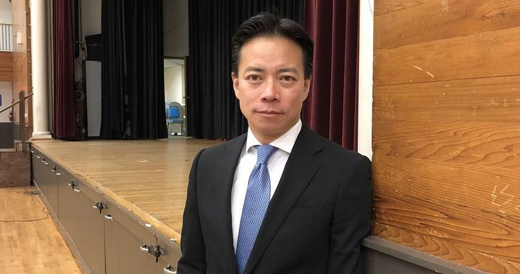
As the headline in Travis Lupick’s story published yesterday morning in The Straight states, the “NPA greenlights three potential candidates for mayor and rejects two others.” Once there were five, now there are three: the aforementioned Mr. Coupar; Glen Chernen (who if you didn’t click on the link on his name above, you should click here to learn a bit more about Mr. Chernen; and the corporate-backed businessman, and virtually unknown quantity (who we will seek to interview next week), Ken Sim, who — again for the record — still does not have a campaign website. Puh-leeze.
John Coupar, who is a nominally right-of-centre political figure, would relieve Vancouver’s often beleaguered “natural governing civic party” of their relatively recently-acquired reputation as a civic political party comprised of fire-breathing troglodytes, intent in locking up the homeless, throwing up towers willy nilly in your neighbourhood, and in the pocket of developers and foreign national interests who see Vancouver as the resort town of their dreams, the next Monte Carlo and a playground for the rich.
John’s candidacy, then, would provide the NPA with the opportunity to put their best foot forward, offering a Mayoral candidate of much wit and no little compassion — as we’ve written previously about Mr. John C. Coupar.

Campaign kickoff event for Vision Vancouver School Board candidate, Aaron Leung

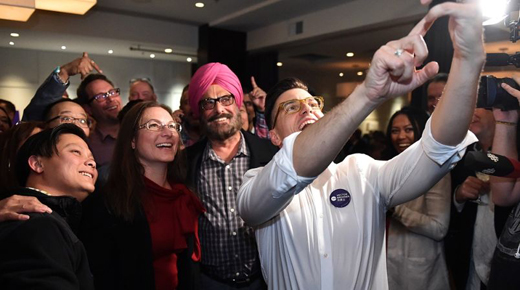
Campaign launch for Vision Vancouver School Board candidate, Aaron Leung

On Monday evening, at the kick-off for Vision Vancouver Aaron Leung’s sure-to-be-winning campaign for School Board, even former Vision Vancouver Park Board Commissioner and political adversary, Trevor Loke, had good things to say about the accomplished John C. Coupar.

“I like John,” Trevor Loke told VanRamblings Monday. “When we were on Park Board together, he worked hard, was passionate about parks & recreation issues, and the life of our city. We may be on opposite sides of the political fence, but I possess a great deal of respect for the man.”

As such, then, if you’ve visited John Coupar’s campaign website, and watched the video on the front page of his website introducing his campaign, and if you’ve read the VanRamblings piece, must suggest to you that a John Coupar Vancouver Non-Partisan Association Mayoral candidacy would present the greatest impediment for victory on October 20th, for whoever it is that emerges as Vancouver’s progressive parties’ — COPE, OneCity, TeamJean, Greens, Vision Vancouver — ”unity Mayoral candidate.”
Oh, did we forget to mention that John Coupar has a lock on the Vancouver Non-Partisan Association nomination, come Tuesday evening, May 29th at the Hellenic Hall (hey, Peter Armstrong, want to see what you can do about making sure there’s going to be some great food there that night)?
Or, that John Coupar’s and George Affleck and team’s sign-up of existing and new members, according to the affable Mr. Affleck, went swimmingly well, and much to the satisfaction of Mr. Coupar, Mr. Affleck, and now certain-to-be NPA Council nominee, a generational nominally right-of-centre candidate, current Park Board Commissioner, soon-to-be Vancouver City Councillor, and a future Premier of the province (we know, we know — we weep, too, that the BC NDP won’t always hold power in Victoria — but if it ain’t gonna be the NDP’s John Horgan or David Eby as British Columbia’s Premier, it darn well better be a real Liberal, or at least progressive Red Tory conservative, and populist of the first order, not to mention a person of principle, that you would find we would have in …) Sarah Kirby-Yung.
In terms of debate, and a reasonable and fruitful electoral discussion of where Vancouver is heading — at least in the near future, what the issues are that the opposing Mayoral candidates will prioritize during their term in office, and who will emerge as the political figure who best reflects the concerns of Vancouver voters clamouring for change — the shenanigans that occurred Monday evening and yesterday concerning Hector Bremner’s rejected NPA Mayoral candidacy, will at the end of the day prove to serve the best interests of Vancouver voters who’ll be heading to the polls this upcoming October autumn, with John Coupar as the Vancouver Non-Partisan Association Mayoral candidate, and whoever in heck will emerge as Vancouver’s progressive party ‘coalition’s’ much-desired “unity candidate.”