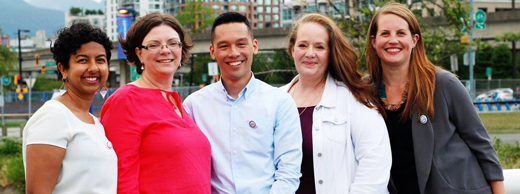
On a warm and pleasant Tuesday evening, a friend and I were walking through my old stomping grounds, the Grandview-Woodland neighbourhood where I was raised, proselytizing about COPE – The Coalition of Progressive Electors and OneCity Vancouver, the only two civic political parties where all five of the City Council candidates — from COPE, Order of Canada recipient Jean Swanson, must-elect rabble-rouser Derrick O’Keefe, and his principled running mate and well-experienced City Councillor, Anne Roberts, to OneCity’s must, must-elect Christine Boyle, and her indefatigable running mate, Brandon Yan — are committed to a massive public sector housing construction programme, ensuring that the concerns of the 18,000 families in Vancouver who are paying more than 35% of their income for housing will be addressed through ready availability to affordable housing in public, purpose-built housing co-ops, co-housing & truly affordable rental housing.
Make no mistake: the 2018 Vancouver civic election is about one issue and one issue alone: the provision of affordable housing, housing as a human right that will guarantee to each and every one of us that we will not have to move elsewhere because housing in Vancouver is the preserve only of the wealthy, a Vancouver where families of every description may be assured that if living in truly affordable housing is a necessity for themselves and their family, comfortable, well-constructed housing which will require no more than 35% of their income to put a roof over their heads, in safe, secure, warm and inviting public housing — you know, a place you can call home, your home, where you can grow a garden, paint your walls, and sleep each evening in comfort and security, surrounded by neighbours and within a community that truly cares for you, is on its way.
A pipe dream, you say? “Unrealizable, not going to happen,” you’re thinking to yourself. Just because life, and providing a safe, secure home has been hell these past few years doesn’t mean that will always be the case.
Certainly the candidates running with OneCity Vancouver and COPE — for whom it is mandatory you cast a ballot on October 20th — don’t think it’s a pipe dream — they’ve got their heads screwed on straight, and have a plan.
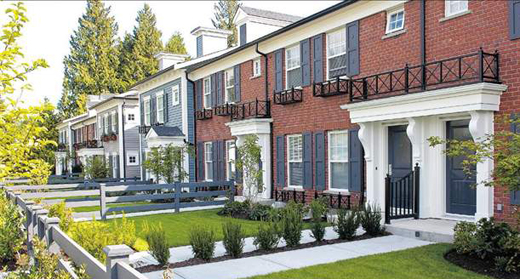
Here’s how it works: Vancouver has $15 billion of city-owned property in their much-ballyhooed Property Endowment Fund (established by the TEAM civic administration of Mayor Art Phillips, in the early 1970s) — parks, school grounds, City Hall and industrial lands, as well as leased commercial, office and retail properties — $1.7 billion of which is available on a leasehold basis for development of affordable housing co-ops, co-housing and rental housing. Factor in the Crown land owned by the provincial and federal governments, and their commitment to turning over Crown land for the development of affordable housing, and you have a land bank of billions of dollars all set and ready on which to construct affordable housing.
Cost to citizens of acquiring lands to construct affordable housing: zero.
Construction cost to citizens to build affordable housing? Nada, nothing, zero, zilch. Read on and we’ll tell you why.
Each time a Vancouver developer — you know, big-time real estate developers like Terry Hui’s Concord Pacific, Michael Audain’s Polygon Properties, Ian Gillespie’s Westbank Projects, Andrew Grant’s PCI Developments, Robert Fung’s Salient Group, the Aquilini Investment Group, BOSA Properties, Peter Wall’s Wall Group, Peter and Ron Toigo’s Shato Holdings, just to name a few of Vancouver’s more prominent real estate developers — each time any developer builds a massive tower or two, the city is due what is termed a “community amenity contribution (or ‘CAC’)”.
Here’s a recent example of a community amenity contribution made by a developer: upon approval of the Reliance Development of the Jimmy Pattison-owned property at Drake and Howe / Burrard and Drake, Reliance / Pattison were required to pay the city $42.6 million in CACs, monies that should have been applied to the construction of social and affordable housing — but wasn’t, because Vision Vancouver’s Mayor Gregor Robertson and Councillor Kerry Jang actually had the temerity to suggest that there was “no shortage of affordable housing in the West End” — although a new community centre, child care centres, the Jim Deva Plaza, among other necessary amenities contributory to the livability of our city were built.
Much the same thing occurred when the Amacon and Onni Group built the Brava condominium development at Davie and Seymour — part of their CAC required them to construct the Vancouver International Film Centre, home to our annual film festival, and the much-beloved Vancity Theatre.
All of the CAC information provided directly above is in aid of answering your next question. If the properties on which affordable housing — housing co-ops, co-housing, rental housing — are provided “free” on a leasehold basis, who pays for the materials & housing construction? The answer? Easy, peasy, nice & easy: the developers do, out of their CAC.
Let us be very clear here: there is no impediment to building affordable housing NOW in Vancouver. We have the city-owned and Crown land available, on a 66-year leasehold basis. Construction costs would be paid out of developers’ community amenity contributions. And, the city would not charge either development permit application fees for the construction of this public housing, or assess any property tax on public housing either.
Where does the money go, then, that is collected by the City in rental, mortgage and housing charges?
Again the answer is easy: 5% of the monies are set aside to pay for a salaried property manager, and staff; 10% of monies collected are set aside for ongoing annual maintenance of the housing, while another 15% is set aside in a “replacement reserve fund” for — some years down the road — major structural renovations, replacement of boilers, flooring, appliances, kitchen counters and cabinetry, windows and doors, as well as roofing, inner courtyards and balconies, among other items requiring replacement.
And in the interests of democratic engagement, the decisions as to how the monies would be spent on annual maintenance and replacement reserve would be left to the members resident in the affordable co-op, co-and-rental housing, providing them a say & power in the livability of their home.
Remaining monies would be turned over to the City housing department to be applied toward the construction of supportive social housing.
The market could continue to build single family housing with basement suites and coach houses, and market rental would continue to be the purview of the development community. Those persons in our community intent on achieving the “American dream” — private home ownership, and increased equity in their property — would be free to carry on as they wish.
And, the rest of us, who live by the credo, “each according to her need?”
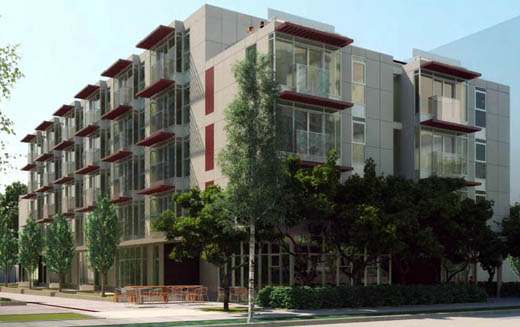
We’d be living with our families in safe, secure housing — with security of tenure, where we’d pay no more than 35% of our income for our housing, where if we were living in a condominium style building, seniors living on a fixed income, persons with disabilities and those on income assistance would pay only the shelter portion of their income for housing, while one third of the members comprising middle income workers and the creative community would pay much under the “low end of market” rate as determined by the annual Canada Mortgage and Housing Market Survey, while those earning $55,000 or more in 2018 income would pay a “low end of market” CMHC rate of $1100 for a bachelor, $1300 for a one-bedroom, $1600 for a 2-bedroom, and $2100 for a 3-bedroom, a median market charge that although dear is still much under the current market rate.
Surely, every person that my garrulous and engaging friend Daryl Morgan, and a shy and surprisingly reserved me spoke with during our two-hour plus walk through Grandview-Woodland — the woman who is moving back to Montreal with her boyfriend at month’s end because $2780 plus utilities is too much for them in their rental home, even if they’re sharing that home with a single parent friend, and even if they realize $2780 is good rent for a home in this market, leaving that friend wondering where she’ll find housing for herself and her daughter; or the young, professional woman we met along Semlin Drive who is paying $1150 for a tiny bachelor-style, barely livable basement suite, who loves the city and her access to the mountains for hiking, skiing, downhill mountain bike riding and all the outdoor sports that keep her healthy and sane in a city she loves but can’t afford, where hope for a better place to live lies nowhere on her horizon — would love to see Christine Boyle, Derrick O’Keefe, Jean Swanson, Brandon Yan and Anne Roberts elected to Council to ensure the construction of affordable housing that would allow them to live in the city they love.
The woman moving to Montreal, having a yard sale at her home on East 8th Avenue, had the song Billy, by Drama Duo, a dark and passionate musical collaboration between Na’el Shehade & Via Rosa, playing on the stereo. I love, love, love discovering new music!
But you know what? These exceptionally bright, well-educated and engaging women of substance, wit, toughness and élan, and all the persons Daryl and I spoke with on our sojourn through my old neighbourhood were utterly and disconcertingly unaware that there was a civic election underway, had never heard of COPE or One City, never mind Christine, Brandon, Anne, Derrick or Jean. How do we reach out to this community of despair who are COPE’s and One City’s natural allies and constituent base, to let them know that the way things are is not the way things have to be?
Fortunate for those persons of conscience among us, we have folks like Sara Sg, Chanel Ly, Fiona York, Maddie Andrews, Duncan Martin, Selina Crammond, Riaz Behra, Luis Porte Petit, Ngaire Leach, Shawn Vulliez, Aiden Sisler, Darlene Alice Bertholet, Beverly Ho, Devin Gillan, Alex Kennedy, Ishman Bhuiyan, Jorj Tempul, Qara Maristella and a host of others in COPE, and the incredibly wonderful Alison Atkinson, Paul Finch, Anne Chudnovsky, R.J. Aquino, Cara Ng, Tyler Michaels, Nadja Kom, the ever-inspiring Thea Dowler, and the hope of our future Adi Pick (which appellation also applies to Stefan Avlijas) in One City, and many others, all of whom are possessed of energy, great insight and an unparalleled commitment to the public good, who in 2018 constitute the most spirited and tirelessly hard-working — not to mention, friendly, outgoing, engaged and engaging — cadre of difference makers VanRamblings has encountered in more than 45 years.
In 2018, we can count on Vancouver candidates for City Council Jean Swanson, Anne Roberts, Christine Boyle, Brandon Yan and Derrick O’Keefe to rock the vote, and rock the world for the better of Vancouver’s woebegone citizens of despair, to let them know that hope lies close on the near horizon, a better day awaits, and working with all of the fine individuals whose names were mentioned in the previous paragraph, and many, many, many others in COPE, One City and the Greens’ Pete Fry and Adriane Carr, in 2018 our lives will be transformed, and we will achieve …