Vancouver Votes 2018 | Humility and Electoral Politics

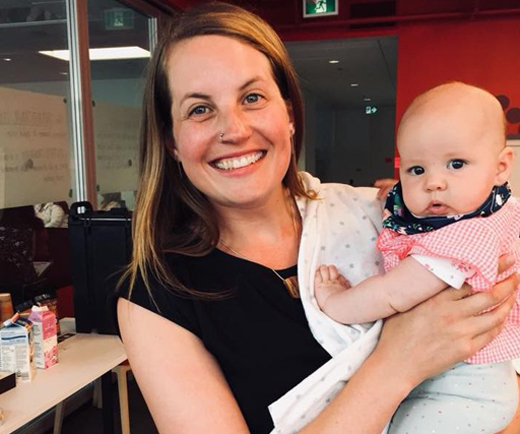
Vancouver City Council candidate Christine Boyle does more on the campaign trail that kiss babies - she provides child care!

OneCity Vancouver candidate for City Council Christine Boyle doesn’t just shake hands and kiss babies, she will offer to provide child care, in this case for friend, colleague and new baby mama, Tasha Diane - which, as Ms. Diane writes, “Christine’s respect for women and mothers will translate to her advocacy for equitable social policy once elected to Vancouver City Council. We are on Team Christine Boyle! You should be, too!”

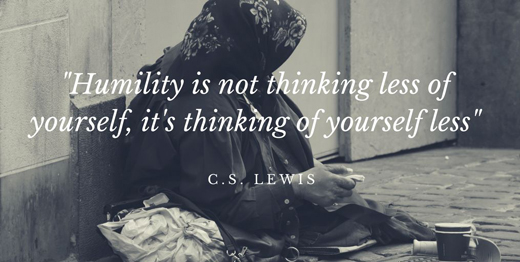
The attribute of OneCity Vancouver’s Christine Boyle we most admire is her humility, the bedrock foundation of her hopeful candidacy for City Council.
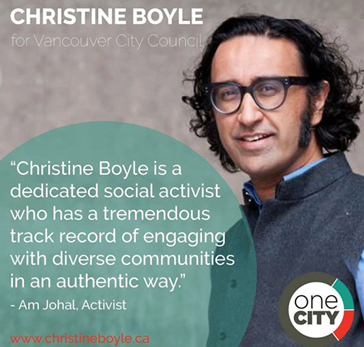
While what community activist Am Johal has to say about the socially just Christine Boyle is true, as Ms. Boyle herself has written on her campaign website reflects her values and commitment to our city, that …

“It’s time to tackle Vancouver’s deepening wealth gap, ensure that homes are for housing people rather than profits, and strengthen community and democracy, to change the direction Vancouver is headed, and make ours a city where people can live and belong for generations to come”…

Am Johal, Simon Fraser University Director of Community Engagement at SFU Woodward's Cultural Unit endorses Christine Boyle for City Council

… what is also true is that she is not alone in her recognition of the role humility plays, if one is to both achieve elected office and prove an effective community leader. Note should be made that humility is not a decision made by a political aspirant to gain success, but rather an essential part of the very nature of those who are seeking, or already hold political office, an essential element to their success in the common weal of public life.

Humility is essential to electoral success, and a life well-lived.

In the era of Trump, humility has become so out of fashion as to almost have been forgotten. Nonetheless, it is worth articulating why humility is an essential attribute of civic life. Genuine humility and good governance is defined by grace and an intense interest in the lives of others, and if such is the case, the perspective of the public, our neighbours, must be always be taken into account in the taking of decisions in the public realm.
If we in Vancouver have suffered in the civic domain these past 10 years, with an otherwise recommendable civic administration of conscience, the central failure of governance in our city has occurred as a consequence of an unremitting arrogance, and a certitude that what is being done is right and in the collective interest, whether or not community consensus has been achieved, and whether or not the voices of our neighbours have been heard, and the decisions taken by our elected officials in City Council chambers having incorporated the wants, needs and wishes of the public.

Brenhill Development: Rejected by BC Supreme Court Justice, January 27, 2015January 27, 2015 | B.C. Supreme Court Justice Mark McEwan threw out a major development in downtown Vancouver over a flawed public hearing process that had ignited criticisms over transparency and fairness at City Hall.

Such perspective was elucidated in the ruling of The Honourable Mr. Justice Mark McEwan in his January 27th 2015 ruling in The Brenhill Development Limited case (the proposed 36-story tower to be built on city land located north of Emery Barnes Park at Helmcken & Richards), a development voted on in favour by the majority Vision Vancouver City Council, and which controversial development proposal was overturned by Justice McEwan arising from the fact that elected officials did not listen to the public, mislead the public as to the scope of the project, and did not incorporate into the final development proposal the input received from the public.
As Justice McEwan wrote in his reasons for judgement …

(120) It is, however, also obvious that, despite this, the public hearing should be a kind of counterweight, and as fair, open and transparent as the nature of the overall project dictates. To be fair, it cannot be conducted on the basis that the public will get just enough information to technically comply with the minimum requirements of a public hearing. The desire of those who have brought the project along to get past the approval stage cannot be allowed to truncate the process. A public hearing is not just an occasion for the public to blow off steam: it is a chance for perspectives to be heard that have not been heard as the City’s focus has narrowed during the project negotiations. Those perspectives, in turn, must be fairly and scrupulously considered and evaluated by council before making its final decision.

(121) I have concluded in this case that the public hearing and the development permit processes were flawed in that the City has taken an unduly restrictive view of the discussion that should have been permitted to address the true nature (of the Brenhill project).

(132) The procedure the City adopted was unfairly restrictive, in presenting the public with a package of technical material that was opaque … in limiting comment on the integrated nature of the project, and in failing to provide an intelligible … financial justification for it.

Vancouver Sun civic affairs reporter Jeff Lee provided further insight into the reasons for judgement, while Green Party Vancouver City Councillor Adriane Carr quite rightly weighed in with …

“With allegations of cosy dealings & large donations from major developers to Vision Vancouver at the base of citizen complaints about a lack of transparency, the judge’s ruling reinforces those concerns,” said Carr. “Unfortunately, that is what many members of the public believe, and it was raised during the election,” she went on to say. “When there is that kind of suspicion, that’s bad for democracy.”

Unsurprisingly, perhaps, given the conservative nature of the Court of Appeals, and unfortunate for the interests of the public — and despite the fealty to her old civic party, Vision Vancouver, and the “joy” 2015 Vancouver Centre federal NDP candidate Constance Barnes felt at the Court of Appeals ruling that were contrary to the public interest and the New Yaletown appellants — on April 23rd, 2015, the B.C. Court of Appeal overruled Justice McEwan’s groundbreaking democratic and public-engaging ruling, siding with the City and the developer. And tears fell from the heavens.

Let us be very clear here: we as a voting public in Vancouver do not want more arrogance in civic governance of our city. We do not want holier-than-thou elected civic officials, whether they are with the so-called “progressive coalition” or the nominally right-of-centre Vancouver Non-Partisan Association dictating what is best for us, and ignoring our voices. We’ve had 10 years of that, and 10 years is more than enough.
In Vancouver, to be a respected, successful and admired politician, one must know what one stands for and what one is fighting for — but it is absolutely critical that the electoral aspirant must know how to go about achieving the ends promised to voters during the course of a campaign for office, how to work with others, to listen to the public — all members of the public — and be a voice for change for the better, and always, always remember that theirs is a life of service, one sometimes admittedly with little reward other than the knowledge one is doing good and performing their very best, all the while keeping deep within them a humble nature, in recognition that no matter the inducements of office, that it was humility and perseverance that elected them to office, and humility that will sustain them, and provide the foundation for their service.
But damn it all, if you’re going to be an elected official, you better darn well listen to the public, bring them along with you, and not find yourself sitting back on your high horse telling the public …

“Oh, deary, I know what’s best for you. Oh sure, I know you think you know what’s best for you, but believe me, I know better than you what’s good for you. Just trust me. And even if you don’t trust me, I’m going to go ahead and do what I damn well please, anyway.”

That’s a recipe for electoral disaster, and a very pissed off public — and if you’ve got any caring, compassion and humility at all, you don’t want that. Take heed candidates. Should you fail to do so, you proceed at your peril.

BC NDP | David Eby, MLA | Accomplishing What He Set Out To Do

David Eby, MLA, BC Attorney General & Minister of Justice, On Accomplishing What He Set Out to Do

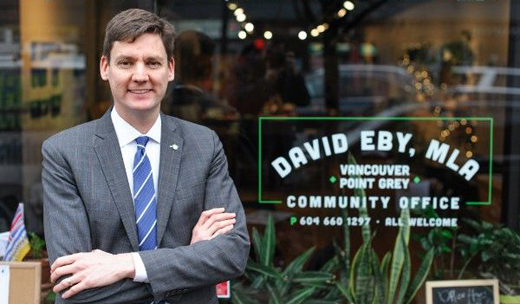
David Eby, British Columbia’s Minister of Justice and Attorney General — the latter portfolio making Cabinet Minister David Eby, the Minister Responsible for the administration of our criminal justice system in British Columbia, including family law, court services, gaming policy and enforcement, liquor control and licensing, and the British Columbia Lottery Corporation — in his role on the government’s Executive Council, Minister David Eby also the Minister Responsible for ICBC, BC Ferries and the BC Human Rights Tribunal … well, as you can see, it’s all la-di-da for Minister Eby, not busy at all, not a whole lot on his plate, gosh its a good thing he needs only three hours sleep a night … and did I mention what a good and moral and principled man Mr. Eby is, and that he is kind and generous of his time, and probably B.C.’s single hardest working MLA, most sensitive to the needs of his constituents — with an almost beyond belief coterie of constituency assistants, competent, passionate, informed, their lives almost solely dedicated to serving the needs of those of us who live in Kitsilano, or the Point Grey neighbourhood on the west side of Vancouver, and out at the University of British Columbia and the University Endowment Lands.
On a regular basis, David Eby posts a newsletter to his constituents, meant for those whose interests he represents in the British Columbia Legislature. In the interest of openness and transparency, and without having secured the permission of the good Minister and unbelievably great MLA of service to Kitsilano, Point Grey and UBC / UEL — I’ll wait to be given heck by David’s unbelievably great constituency staff, the spectacularly wonderful Dulcy Anderson, Nicolas Bragg and Thea Dowler (who somehow find a way to put up with me, not an easy chore for any of you who know me) today on VanRamblings please find below, the expansive and informative June newsletter from Vancouver-Point Grey MLA, the indefatigable David Eby.
(Note: the photos and — hopefully helpful — links have been added by me)

David Eby, MLA, BC Attorney General & Minister of Justice, On Accomplishing What He Set Out to Do

Dear Neighbours:
The legislature has officially wrapped up and I’m back from Victoria for the summer and September. It’s great to be home with my family and back in our neighbourhoods on a daily basis.
For our family, June has meant that Cailey has wrapped up her epic medical school journey at UBC and will be starting her residency in family medicine on Canada Day — July 1st! I’m trying to get some time with her and our son at home this month before she’s back to an extended full time schedule as a new doctor, so my apologies in advance if you have to wait a little longer than expected for a face-to-face meeting with me.

David Eby, MLA, BC Attorney General & Minister of Justice, On Accomplishing What He Set Out to Do

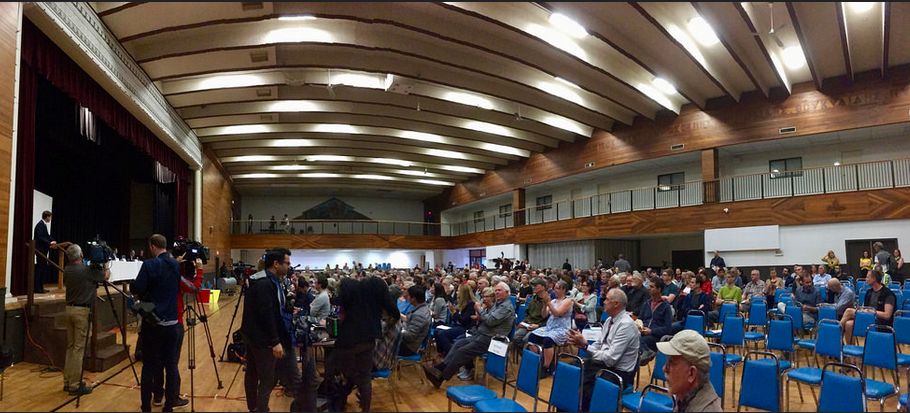
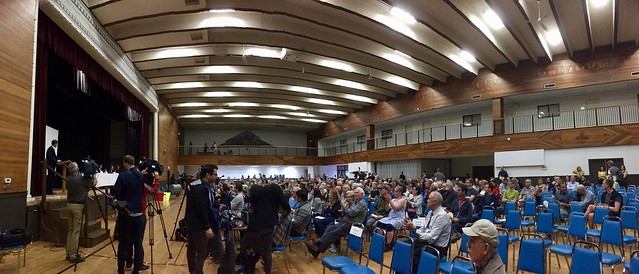
As you may have heard, watched on Facebook live, or seen in person, our second run at holding our townhall meeting, this time at the Hellenic Community Centre, was a great success. Hundreds of you came out and had your voices heard, and we had five outspoken community experts and advocates share their opinions on where the government has succeeded, and where we need to continue to do work to improve.

David Eby, Housing Townhall at the Hellenic Centre, June 6, 2018 | Photo credit, Elvira LountDavid Eby, Housing Townhall, Hellenic Centre, June 6, 2018 | Photos credit, Elvira Lount

More than 50 volunteers came out from the community to staff our meeting and ensure our event was, as intended, for constituents first, and that everyone felt welcome to share their thoughts and opinions. A special thank you to those volunteers, and to my hard working staff Dulcy, Nic and Thea who worked overtime to organize this meeting on the very first Monday after the legislative session wrapped up.

Generation Squeeze author and University of British Columbia professor Paul Kershaw speaking at David Eby’s June 6th 2018 Housing Townhall 2.0, held at the Hellenic Hall in the Arbutus Ridge neighbourhood, a well-attended event comprised of activist and involved citizens of conscience spanning the political spectrum.

The school tax debate was a big part of the evening, and I’d like to thank those on both sides of the discussion who ensured that the meeting was as constructive as possible. We even arranged a venue with enough room for the school tax protesters who came to our community event to make their voices heard! I had a very anti-school tax protester come up to me after our town hall and thank me for organizing the event, even though she clearly disagreed with the government’s position on this policy.

Housing Townhall 2.0 June 4, 2018

It might seem strange to hear given the controversy of the last couple of months, but I have never been more hopeful about the future of our community, more confident in the importance of the work you sent me to Victoria to do, and more sure that the results we will achieve will be a legacy for our children’s children.

Under B.C. Liberal government, the economy and real estate made British Columbia "the wild west"

It is a bit hard to remember, but in March of 2016 we hosted another townhall in the very same Hellenic Community Hall on the same topic — housing. Back then we were having a very different discussion than we are now. We had a broken political system where unlimited donations from the wealthy and well connected bought access to the province’s leadership at private and secretive dinner parties. Our system was so broken that BC was featured on the cover of the New York Times as the “Wild West“, where a premier could collect a second salary paid for entirely out of corporate donations to her political party, and her MLAs would defend it in the legislature as the cost of democracy.
These donations, which brought us a government sponsored in no small part by those profiting from the housing and the climate crisis, were surely a consideration when rather than taking action, the Premier and her then housing minister told those feeling the pressure of the out-of-control housing market in Metro Vancouver to stop complaining and move to Fort St. John or Prince Rupert.
In March of 2016, many people showed up to tell me, and the then government, that you would no longer be put off. You wanted real action.
Well, you now have a new government, and real action.
There have been a lot of changes — both big and small — in a short period of time, and not just on housing. A recent CBC analysis showed we’ve delivered on, or made significant progress on, more than 75% of our platform commitments in less than one year in government. For those of you who couldn’t make it to the town hall, I’d like to share our progress with you.

David Eby, MLA, BC Attorney General & Minister of Justice, On Accomplishing What He Set Out to Do

First, the big. Those donations featured in the New York Times as so egregious are now illegal. No more union or corporate donations. No personal donations in excess of $1,200 are permitted. There are new rules restricting lobbying by former government insiders, banning them for two years from lobbying government, and ending the rotating door between lobby shops and government in BC.
We are introducing legislation to impose an innovative new tax on real estate speculators with vacant homes in the parts of the province hardest hit by the housing crisis, including Metro Vancouver. We’re building a beneficial ownership registry so we know exactly who owns property in our province, not numbered companies, but what real people own property. We’re tracking, and reporting to the Canada revenue agency, the activities of people flipping pre-sale condos, with a brand new law passed last session.

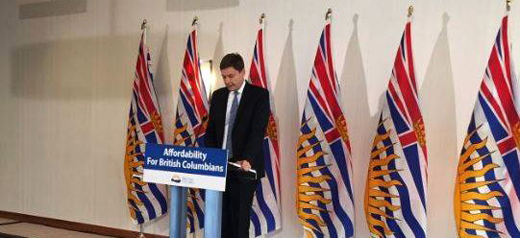
David Eby and the BC NDP deliver on affordable housing for British Columbians

We’re making the largest investment in housing supply in BC’s history, $7bn, which includes (but is not limited to) direct funding for 37,000 affordable rental units; a housing hub at BC housing to build more affordable homes that has already announced a blockbuster deal with the United Church to build affordable rental housing; increased rental assistance for seniors and working families through the SAFER program; the opening of over 2,500 modular housing units with badly needed services for those living outside or in tent cities; and, 1,500 new transition and long-term housing units for women and children fleeing domestic violence.
I haven’t forgotten that many of you raised concerns with me about conditions in our classrooms during the campaign. Our government is hiring 3,700 new teachers, reducing class sizes and getting kids the support they need to succeed. Parents don’t have to fundraise for playgrounds anymore – they’re considered part of a new school and funded by government.

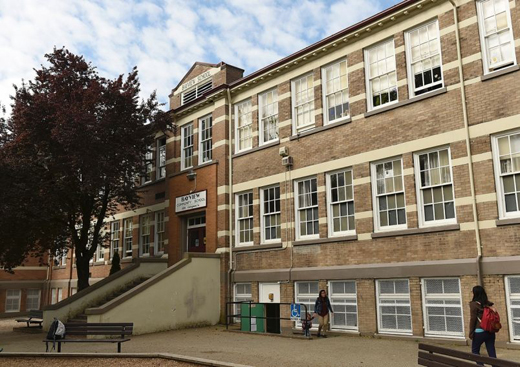
David Eby, MLA, Commitment Kept to Replace Bayview School, in his Vancouver-Point Grey Riding

On that note, we’re investing $2bn to maintain and replace schools in our communities across the province that desperately need it. Here, in our community, our government green lit the Bayview Elementary replacement, to the delight of the Parent Advisory Committee there. These parents were sick and tired of sending their kids to an under-maintained school that waited, and waited, and waited for seismic repairs that never came. Instead of working on collecting and delivering petitions to my office, the PAC is now working on planning out a brand new school.
Many renters asked for better protection from out of control rents. We closed the fixed term lease loophole, and the geographic increase loophole, giving renters more protection from unfair evictions and rent increases. Instead of asking my office for help that is impossible to deliver, these renters can now focus on their work, school and families.
Many parents struggle with the cost of childcare in our community, and many have for the first time seen their childcare bills go down, not up, because of the largest investment in childcare in BC’s history, providing monthly savings of up to $350 per month per family. As of today, 37,209 families are receiving these monthly savings, including many hundreds of families in our community at local childcare facilities. In September, the second half of the program, the enhanced direct benefit to families, will be rolled out.

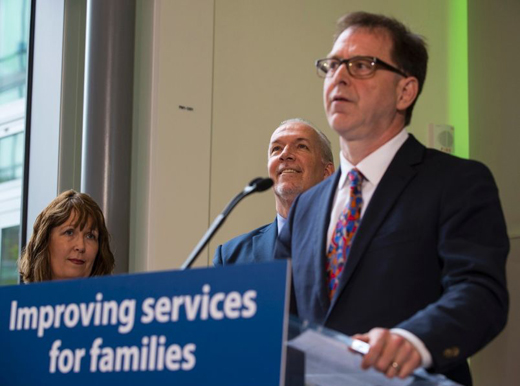
BC NDP Minister of Health Adrian Dix announces of primary care centres across British Columbia

We’re partnering with the federal government to build out the biggest transit investment in BC history, with rapid transit on Broadway, and in Surrey, and three new express B-Lines.
For other community priorities, we’ve responded strongly to the overdose crisis, making life-saving naloxone kits available free at community pharmacies for those likely to witness an overdose, and launching 18 community action teams to spearhead local responses in the hardest hit areas.
Many of you wrote in to my office to celebrate when Minister Doug Donaldson signed the order that ended the grizzly bear hunt, to protect BC’s iconic bears.
We’ve passed comprehensive new laws to ensure ICBC and the car insurance rates paid by British Columbians are sustainable, to begin the work of putting out that financial dumpster fire left for us by the previous government.
We’ve also used every tool in the toolbox to protect BC’s interests in relation to the Trans Mountain Heavy Oil Pipeline project, and the massive expansion in heavy oil shipments by rail as well. We need to know we can clean up the mess when spills happen, and that someone will pay for the cleanup. Too many BC jobs in fisheries and tourism rely on our reputation for a pristine coastline.
In reading all of the above, you may remember that you were told by the previous government that British Columbia couldn’t make these long-needed changes without sinking our economy.
That information was, as we have pointed out for a long time, incorrect.

David Eby, MLA, BC Attorney General & Minister of Justice, On Accomplishing What He Set Out to Do

BC currently has the lowest unemployment rate in Canada, and we have maintained our top rating with all three international credit rating agencies. Showing confidence in our future, big tech companies like Amazon have announced massive expansions in Vancouver – most recently, 3,000 new jobs – backed by hundreds of new post-secondary spaces in engineering, science, technology and math. Smaller companies have also followed suit.
In the meantime, you are all doing the incredible work you do to make this a better place. You are coming in to talk to me about starting not for profit organizations that reduce plastic waste, organizing neighbours to make and learn more about art, assisting refugee families who have joined our community, creating vibrant local sports organizations, doing academic research on transportation planning that you hope to use to make our streets safer, campaigning for better schools and better childcare, bringing your kids in to show us their amazing achievements in science and math competitions, and coming to talk to me about how you want our government to keep improving. So many of you give back and participate in our democracy. Thank you for making Vancouver Point Grey a special place in British Columbia.
Yours truly,

David Eby, MLA, BC Attorney General & Minister of Justice, On Accomplishing What He Set Out to Do

David Eby
MLA, Vancouver Point Grey

Stories of a Life | 1978 | A Lone Activist Voice for Children

Universal Child Care is Possible | The Fight for Universal, Publicly-Funded Child Care Continues

At the outset of 1978, Cathy and I moved from the Interior to Vancouver, in order for me to begin a Master’s programme in Education at Simon Fraser University, the Master’s a requirement for me to assume the job of Principal at the school where I’d been teaching for the previous 2½ years.
For Cathy, life in the Interior had proved challenging. While I taught school during the day — my life all but consumed by my teaching and involvement in the politics of the British Columbia Teachers’ Federation — although for a time Cathy had worked at the Ministry of Human Resources in town, it had become increasingly clear that life in a small, Interior rural town was not for her; Cathy wanted what life could offer in a thriving metropolitan centre.

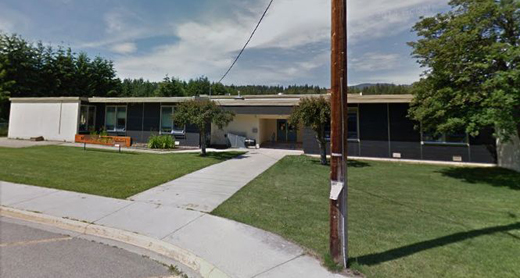
Teaching in a rural community in the Interior of the province of British Columbia

Leaving my job in the middle of the school year was not easy — for the children in my class, for the kids’ parents, for my teacher colleagues and for our friends, all with whom I had become close. If we were to preserve our marriage, though, a return to Vancouver is what was required. For many years, Cathy had sacrificed much for me — now it was her turn.

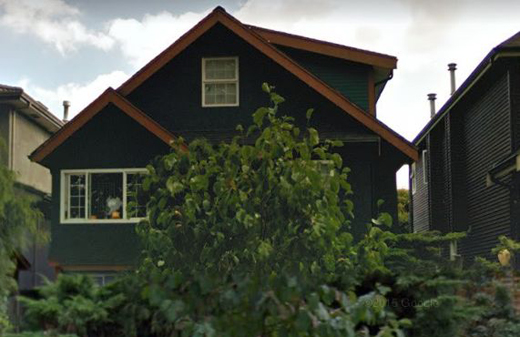
2182 East 2nd Avenue, in the Grandview Woodland neighbourhood of Vancouver2182 East 2nd Avenue, in the Grandview Woodland neighbourhood of Vancouver

My father had found us a house at 2182 East 2nd Avenue, right across the street from my childhood home, and nearby Garden Park. Our furniture was moved down in two big trucks. I left in the first truck, Cathy in the second truck a few days behind, as she wrapped up our affairs where we had lived for the previous 2½ years. The second truck arrived at our home on East 2nd Avenue on January 1st, our belongings were disgorged from the truck, and preparations were made to set up home in our new surroundings.
Odd thing, though: Cathy never moved into that home on East 2nd Avenue.
Megan was all of eight months old at that time, while Jude was 2½ years. Cathy took Megan, who was still nursing, and moved in with a friend. I was left with Jude. Now, Cathy had a history of long standing for leaving for weeks at a time, only to return home as if she’d never been gone, our relationship returning to the bliss that had almost always been the case.
Although we weren’t living together, we still communicated every day.

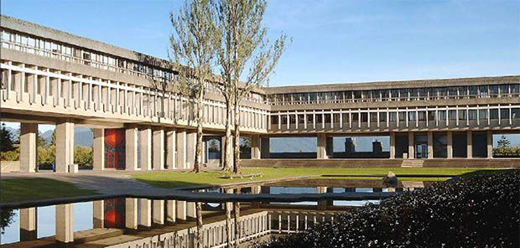
Simon Fraser University in the 1970s

Before returning to Vancouver, Cathy had enrolled me in classes at Simon Fraser, and in early January despite the upset of Cathy’s and my unusual relationship, I began school. Cathy was unwilling to care for Jude, would keep Megan only because Megan was still nursing, Cathy advising me to find child care for Jude. I was unable to secure child care for Jude up at SFU, but was able to find child care at nearby Grandview Terrace DayCare (not the child care centre in Grandview Woodland that goes by that name today), on East 7th Avenue, just north of Vancouver Community College. I would drop Jude off at 8am, head off to classes on Burnaby Mountain, returning to pick him up at 5pm. The routine worked, and we were fine.
A couple of weeks into my new school year, and Jude’s tenure in his first child care centre, when picking him up from daycare one afternoon, upon entering the child care facility, I became aware of the supervisor of the centre roughly manhandling a crying three year old boy, and was even more startled to see her slamming the distraught young boy against a wall.
I immediately moved to intervene on the boy’s behalf, expressing grave concern to the daycare supervisor on her rough treatment of the boy. The supervisor turned to me and told me to “Fuck off,” threatening that if I didn’t step back that my own son would be subject to similar treatment.

Early Childhood Education, Faculty of Education, Simon Fraser University

An aside, in addition to holding a Bachelor’s degree in Political Science, Sociology and Anthropology, I also have a Bachelor of Education, with a specialty in Early Childhood Education, and was granted and held a daycare supervisor’s certificate, awarded automatically to all those graduating with an ECE BEd. I knew what I saw was wrong. I had noticed rough treatment of the children earlier, while dropping Jude off in the morning, but nothing as injurious and alarming as I’d witnessed that chilly, unnerving afternoon.
As I was preparing Jude to leave, putting on his coat and galoshes (it was winter, after all), I witnessed the daycare supervisor pulling a small chair out from under a young girl, and saw the same supervisor kick, yell at and threaten another child. Again, I intervened on behalf of the abused children, and again was told to “Fuck off” by the supervisor. A couple of parents present to pick up their children, and two other child care workers saw both the conduct of the supervisor, our interaction, and her response.
Jude and I exited Grandview Terrace DayCare as quickly as we could.
Upon arriving home, I called Cathy and told her of what had happened that afternoon at Jude’s daycare centre. Here’s what Cathy had to say …

“Pull him out of that daycare, don’t go back there again. Find him new child care.” I expressed concern to Cathy about the welfare of the other children enrolled at Grandview Terrace, to which Cathy responded, “It’s none of your business. You’re always tilting at windmills, looking for problems to fix. You have this ‘save the world’ complex that, although I found it moral in the early years of our marriage, I now find it tiresome. Pull Jude out of Grandview Terrace, find him new child care, and leave it at that. Get on with your life, go to school, and let someone else fix the problem. Jude’s not going back there, so it’s no longer your concern.”

I was dumbfounded at Cathy’s instruction — as my wife of nearly a decade, and given my activism on child care issues, she had to know that I wouldn’t just walk away; it simply wasn’t then and isn’t now and to this day in my nature to walk away when any person, child or otherwise, is in jeopardy.
Within 48 hours I’d secured new child care arrangements for Jude, at Hastings Townsite Child Care, run by a young woman named Sue Stables.
Contrary to Cathy’s instruction to me, I did not forget what I’d witnessed three days previous at Grandview Terrace, on East 7th Avenue. I made arrangements to speak with the Grandview Terrace supervisor, meeting with her one afternoon. Upon entering the facility, I again witnessed her abusing a child, in fact several children, before moving over to meet with me. Again, I expressed a concern respecting her “handling” of the children, and again I was told to “Fuck off.” An unsatisfactory response all around.
I had a list of the Grandview Terrace parent phone numbers, and a Board of Directors membership list. I contacted the President of the Board that evening, and made arrangements to meet with the Board later in the week. I met with the Board, told them of what I had witnessed, expressing concern as to the welfare of their children. The Board members listened intently, with the Board President, a man, finally speaking up, asking …

“What do you want us to do about it? Sometimes children get out hand. Sometimes children need a little bit of rough justice. We know how the supervisor approaches her job, and we approve. Quite obviously, you don’t, and you’ve pulled your child from Grandview Terrace. As a parent group, and speaking on behalf of the Board, we’re quite happy with the existing circumstance, and will do nothing to respond to your concerns, because they are not concerns that we share. Now, if you could just leave so that we can get on with other business, we’d all appreciate it.”

I spoke with Cathy that evening, told her that I’d met with the Grandview Terrace Board, to which she responded angrily, “I told you, it’s none of your business. If the parents are happy with what’s going on, let it go.”
Anyone who knows me would know that I would not “let it go,” never have, never will. Children’s well-being was in jeopardy, and I wasn’t going to walk away. The very next day, I made arrangements to meet with the supervisor of Daycare Information, an office operated by the Ministry of Human Resources. As it happened, I knew the supervisor, a woman with whom I’d worked closely in the co-operative movement some years earlier, and with whom I’d worked toward creating child care in British Columbia.
My friend and former colleague listened to what I had to say, and after asking me a few follow-up questions, she committed to the conduct of an investigation into my concerns. Over the coming months, the two of us kept in touch, working together from time to time. The results of the investigation were published, and made public, in November 1978.

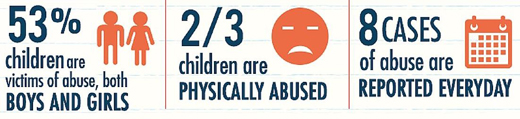
child-abuse.jpg

Note should be made that there was no reporting legislation on issues related to child abuse, and the Socred administration of the day was not about to bring in any such legislation. People turned a blind eye to child abuse, including teachers, who throughout the 1970s (and earlier), 1980s and early 1990s in British Columbia were not allowed to report child abuse, or intervene on behalf of a child, as instructed by district administrators, arising from a fear of suit being brought against school districts by irate parents. The same discouraging ethos existed in the realm of child care.
In point of fact, it wasn’t until 1993 in British Columbia that a BC NDP government made it the law that adults witnessing, or who were aware of, child abuse would be compelled by law, and under penalty, to report it.

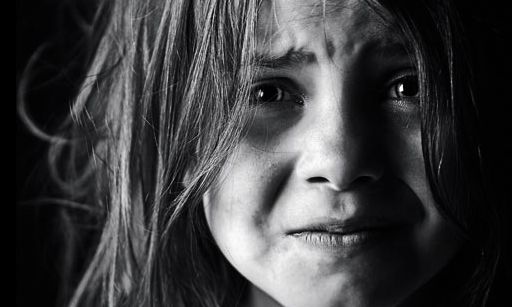
Child abuse often goes unreported, which was particularly so prior to the 1990s

Here’s what occurred from the time of my reporting to Daycare Information on what I had witnessed at Grandview Terrace Daycare

1. A Daycare Information staff person was sent to meet with the supervisor, her staff, and members of the Board at Grandview Terrace. Each denied any wrongdoing, and were unco-operative with the Daycare Information staff person, as was recorded in the final report;

2. An undercover investigator was assigned to work at the Grandview Terrace, as a “student” from Langara’s Child Care Programme on a work practicum. The investigator brought both audio and video equipment with them. Over a period of six weeks, video was filmed of the ongoing abuse of the children enrolled in the centre by all three child care staff, as well as by parents;

3. By April, Daycare Information secured a Court Order removing the daycare supervisor and child care staff from the centre, as well as the members of the Board of Directors. An administrator was assigned to run the affairs of the child care centre, and a new supervisor and staff were hired and installed;

4. The Vancouver Police Department and the Ministry of Human Resources worked together to further investigate what had been occurring at Grandview Terrace;

5. In June, the Crown charged the daycare supervisor with child abuse, and child endangerment; the child care staff were charged with child endangerment.

The case was brought to Court in September, the outcome of which was this: the supervisor was found guilty on both charges, but given a conditional discharge and a probationary period of five years. The lawyer for the daycare supervisor and the Crown made a joint recommendation to the Court on the conditional discharge that would stipulate that the supervisor would never again work in any capacity with children, not as a child care worker, a teacher or in any other capacity in which she might come into contact with children. The judge so ordered.
The abusive and unrepentant child care supervisor continued to maintain that she had done nothing wrong, and proved as verbally abusive to investigators as she had been with the children. At no point did the supervisor admit wrongdoing, or come anywhere close to accepting responsibility for placing the safety interests of children in jeopardy.
The two other child care staff were given an absolute discharge, and instructed that they could return to work in child care only if they were to complete a one-year child care course at Langara College, under the strict supervision of the administrator of that programme.
The Ministry of Human Resources apprehended three children who had been enrolled at Grandview Terrace, agreeing to return the children to their parents on the condition that the parents enroll and complete a three-month parenting course provided by the Ministry, their children to be returned only on the satisfactory completion of the course. Such was ordered by the Courts, and it was carried out in full I was to learn later.
The remaining parents who had been aware of what had transpired at Grandview Terrace but had done nothing to intervene to maintain the welfare of the children enrolled at the child care centre were also ordered to take the parenting course, the order also stipulating that each of these latter parents must meet with a social worker from Daycare Information once a week in each of the coming three months.
Throughout the entirety of the process above, Cathy was adamant that, as she said … “You stuck your nose where it didn’t belong,” adding, “I don’t know what it is with this complex you seem to have where you feel the need to rescue the world, but I’m sick and tired of it.”
In the early years of our marriage, the refrain I heard daily from Cathy …

“You are the best person I have ever known. You are kind, and honourable and a good person. I know that anything that you set out to do will be the right thing, the moral thing. I trust your judgement in all matters, I love you, and I will always support you in whatever you do, whatever cause you champion.”

I sometimes think that for the years of our marriage, Cathy created something of a monster, someone who truly believed he could do no wrong — which, as we all know, is impossible, because all of us are fallible, all of us no matter our good intention are likely to commit an act, however unwittingly and however unintended the consequence, will cause someone else anguish and pain, and will disrupt their lives in ways that are hurtful.

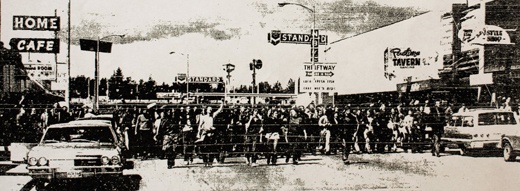
Yippies protesting on the streets of Vancouver in the 1970s

As for my activist and leftist friends, none were in the least supportive throughout the entire investigatory process and my involvement in it, as they were focused more on the “bigger picture” of social change and not, as they explained to me, “the picayune concerns of one child care centre.”
And so it is, most often with some activists on the left — it is ideology over practical concern of remediation respecting the lives of individual persons, even children, and their personal circumstance, and their personal pain.
In November, I was contacted by Daycare Information and was told that I was to be given a Humanitarian Award at the Annual General Meeting of the Early Childhood Educators Association, arising from my activism for child well-being. In fact, I was awarded the next month, in early December, where I was called a “hero” by the President of the ECE Association.
Let me be clear: there’s no heroism involved when an activist simply sets out to do the right thing, the moral thing, whatever the trying conditions that might accompany the fight for what is humane and proper, and that which serves the human interests of an individual or groups of persons.
Upon hearing of the proposed award, Cathy was no more happy with me than she had been at the outset, critical and, as it happened, well on her way to divorcing me, now leaving me with custody of both Jude and Megan.
As to my friends there was, as I expected there would be, a round of, “I knew you were doing the right thing. I’m glad to have stood by your side to offer you the support you needed these past months,” which declaration was a re-imagining of the truth, and what had actually transpired.
In the coming years, I would continue to advocate for the interests of children, both on a global scale, and as an educator working in classrooms across Metro Vancouver, often at much expense to myself, and rarely if ever with the support of my contemporaries, nor with Cathy’s support, nor for that matter the support of administrators in school districts in our region.
Throughout my life, I have always sought to do the moral thing, whatever the cost to myself — and, often, it has proved to be at great cost to me.

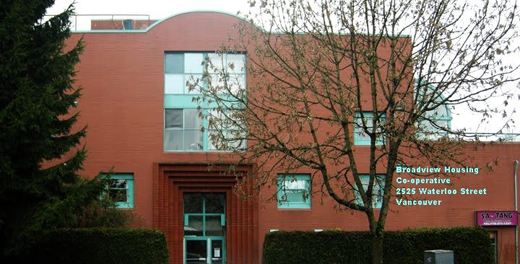
Broadview Housing Co-operative, 2525 Waterloo Street, in Vancouver BC | Kitsilano

At month’s end, with great reluctance I will cut back on my ongoing coverage of the 2018 Vancouver civic election, in order that I might work on the correction of a circumstance that has long been of grave concern to me. Once again, I expect little or no support for my endeavours — save, perhaps, that of my friends David Eby and Spencer Chandra Herbert, two of the most moral men I know, good and great on issues of societal concern, and much beloved by many, and just as good on issues relating to personal crises. Both are amazing men of grit and compassion, and I am fortunate to have both men “on my side” — which, as you surely must be aware if you know me at all, is not an easy task, nor one which is entered into lightly.
Tragedy on the Ironworkers Memorial Bridge | June 17, 1958

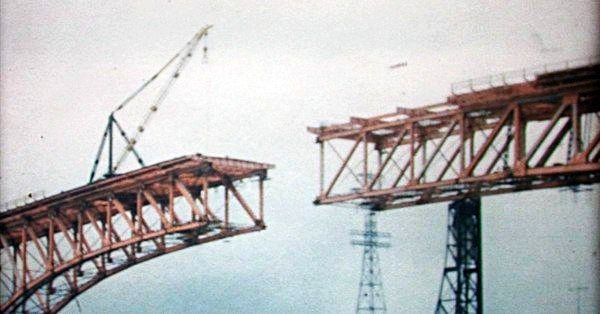
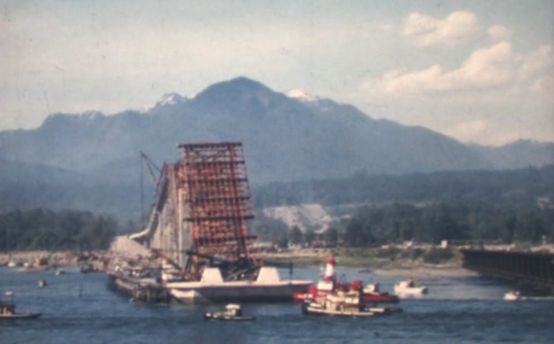
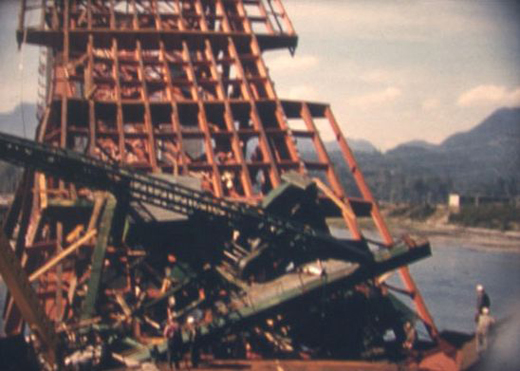
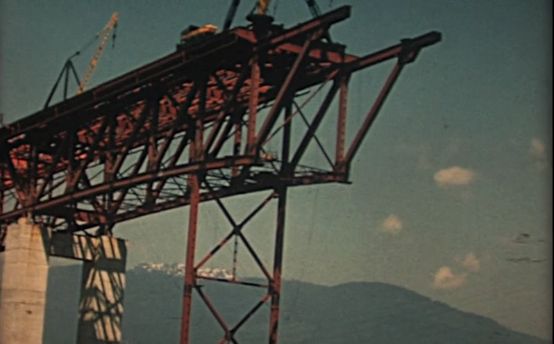
Ironworkers Memorial Bridge | June 17, 1958 | The Collapse of the Second Narrows Bridge

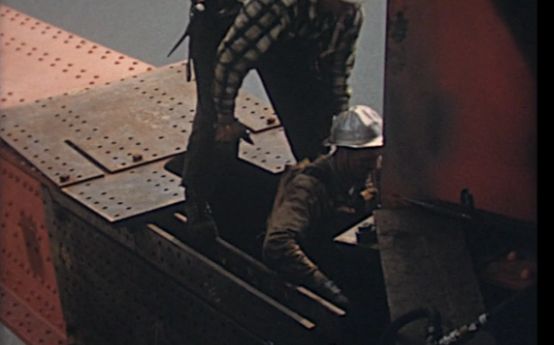
This past Sunday, June 17th, marked the 60th anniversary of one of the most tragic construction accidents in British Columbia history, the collapse of the Second Narrows bridge spanning Burrard Inlet. The tragedy claimed the lives of 18 workers that day, who plunged 200 feet into the swirling, twisted steel-engorged waters below, a 19th man, a diver, dying later while searching for the souls who perished that devastating Tuesday afternoon.

Sixty years on, pretty much all that remains of Vancouver’s worst industrial accident are old faded photographs, and a sign declaring the structure as the renamed, “The Ironworkers Memorial Second Narrows” bridge.
For me, my memory of that day will reside in me always.
Just after 3pm, I had left Mrs. Goloff’s Grade 2 class, situated in a portable along Charles Street, outside Lord Nelson Elementary School proper, to return to my home at 2165 East 2nd Avenue. Of course, as per usual, there was no one home, so I decided to stay outside and play, at what I don’t recall — but as it turned out, it didn’t matter.
Because at 3:30pm on that sunny Tuesday afternoon, rumbling thunder could be heard reverberating throughout the city, a calamitous — and, to me, frightening — earthquake shaking the ground beneath me. I recall that day as clearly as I recall my first day of school, or the passing of President John Fitzgerald Kennedy, as one of the signal events of my young life.

Ironworkers Memorial Bridge | June 17, 1958 | The Collapse of the Second Narrows Bridge

Respected documentarian George Orr’s new must-see documentary on the tragedy, The Bridge, features never-before-seen, virtually pristine full colour footage of the bridge during its construction phase up until June 17th, and the immediate aftermath of the collapse, chronicled through the 16mm film coverage shot by engineer and novice filmmaker Peter Hall, a draftsman who had been hired by the Dominion Bridge Company to document the construction of the Second Narrows bridge. Up until a year ago, the footage shot by Mr. Hall lay dormant, untouched and preserved on the shelves in the study of Mr. Hall’s Vancouver Island home.
Until, that is, the day documentarian George Orr came calling on Mr. Hall.

As Ken Eisner wrote in his review of The Bridge in The Georgia Straight

In any case, Hall’s footage — burnished by time but still lively with rich, rose-hued colours — is unfailingly gorgeous. It does credit to the men who lived and died on the project, subsequently renamed the Ironworkers Memorial Second Narrows Crossing (not in common parlance, regardless of what CBC great Rick Cluff insists here). But the movie best comes to life at the very end, when the talking stops and snippets of his material are married to a Stompin’ Tom Connors song recalling the event.

Following two sold-out June 17th screenings of The Bridge at the Vancouver International Film Festival’s Vancity Theatre, programmer Tom Charity — responding to public demand — scheduled six additional screenings of Mr. Orr’s efficacious, illuminating and at all times moving documentary …

  • Sunday, June 24, 2018 at 12:30pm;

  • Saturday, July 7, at 1.30pm & 2:50pm;
  • Sunday, July 8, at 3.30pm & 5pm, and
  • Tuesday, July 10, at 8.40pm.

Tickets for the upcoming screenings of The Bridge are available here.

Ironworkers Memorial Bridge | June 17, 1958 | The Collapse of the Second Narrows BridgeHonestly, you must see George Orr’s The Bridge. You owe it to yourself.

Ironworkers Memorial Bridge | June 17, 1958 | The Collapse of the Second Narrows Bridge

Ironworkers Memorial Bridge | June 17, 1958 | The Collapse of the Second Narrows BridgeJune 17th, 1958, 18 workers died when, at 3:30pm, the under construction Second Narrows bridge collapsed into the waters of Burrard Inlet below. You owe it to the memory of the workers who perished that day, and to yourself, to take in one of the remaining Vancity Theatre screenings of George Orr’s moving documentary, The Bridge.