
Decision Canada | Consult. Ask Questions. Listen. Decide.

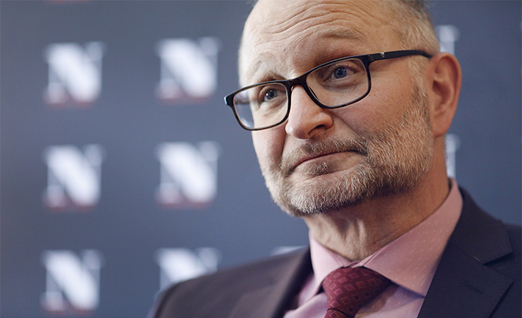
David Eby, Attorney General and Minister of Justice, British Columbia

That good looking man you see above is David Eby, member of the British Columbia legislature representing the riding of Vancouver Point Grey, the province’s Attorney General and Minister of Justice, otherwise known as the man for whom sleep is a foreign concept, and the hardest working member of the British Columbia New Democratic Party government.
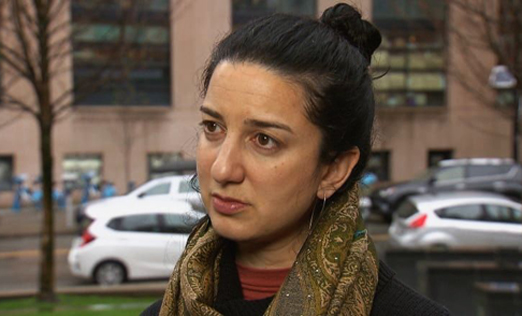
Kasari Govender, Executive Director, West Coast LEAF (Women's Legal Education and Action Fund)Kasari Govender, West Coast LEAF (Women’s Legal Education and Action Fund)

At present, West Coast LEAF (Women’s Legal Education and Action Fund) Executive Director Kasari Govender is acting as co-counsel on a suit filed against Mr. Eby, as B.C.’s Attorney General, on behalf of the Single Mothers’ Alliance BC. Ms. Govender is currently arguing in the British Columbia Supreme Court that B.C.’s legal aid scheme violates the Canadian Constitution by failing to provide adequate support for vulnerable women and their children fleeing violent relationships.
Meanwhile, the Trial Lawyers Association of British Columbia argues that “years of underfunding and shifting political priorities have taken their toll on the range and quality of legal aid services, and especially on the people who need them. One of the fundamental problems is that legal aid has been starved for funding for many years by successive governments, and there’s been a lot of political interference in legal aid over the years.”


Don't miss Part 1 of the series on former Attorney General Jody Wilson-Raybould's fitness for office

Try to imagine, if you will, what it must be like for David Eby, father, husband, feminist, and outstanding person of principal and integrity to be sued by one of his valued and cherished constituents (Ms. Govender), and the oversight body of which he has long been a member. Imagine how many conversations Mr. Eby has had with the Premier, members of his caucus, members of the Cabinet, the lobbyists in Victoria working on behalf of both of the above mentioned advocacy organizations, staff in his Victoria office, his constituents, women’s advocacy organizations, and a myriad of other advocacy organizations, as he works to develop a plan to once again return proper funding to legal aid in the province of British Columbia.
And try to imagine, as well, David Eby running to the press to decry “interference” by Premier John Horgan or his Chief of Staff, Geoff Meggs, or Finance Minister Carole James, or even B.C. Liberal party leader Andrew Wilkinson, for encroaching on the autonomy of the office of the Attorney General by dint of simply speaking to him on a matter, when all each sought to do was bring a new and perhaps compelling perspective to an issue before the Attorney General for consideration, with a chuffed Mr. Eby subsequently painting himself in a 2000-word published screed on his BC NDP MLA website, calling out his colleagues in the BC NDP as miscreants, he as the only principled elected official in the BC New Democratic Party provincial government, on the side of God and all that is right and proper.
Perhaps you don’t know David Eby, but we’re here to tell you that the above untoward scenario would never unfold. Mr. Eby simply has too much integrity and grit to ever allow such a discordant circumstance to occur.
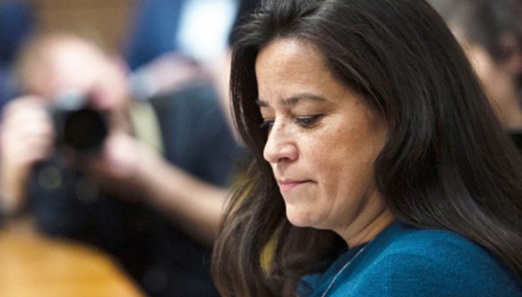
Jody Wilson-Raybould, former federal Attorney General and Minister of Justice

From everything Canadians have read this past three months, and according to the woman herself, former federal Attorney General Jody Wilson-Raybould would consider the ‘par for the course’ interactions David Eby takes for granted daily as part of the business of being the province’s Attorney General, as interference with her autonomy.


Don't miss Part 2 of the series on former Attorney General Jody Wilson-Raybould's fitness for office

As we pointed out in yesterday’s column, when Prime Minister Justin Trudeau and members of the PMO proposed that Ms. Wilson-Raybould meet with the most distinguished lawyer in Canada, the former chief justice of the Supreme Court of Canada, the Honourable Beverley McLachlin, she refused. “Interference” with her autonomy, don’thca know.
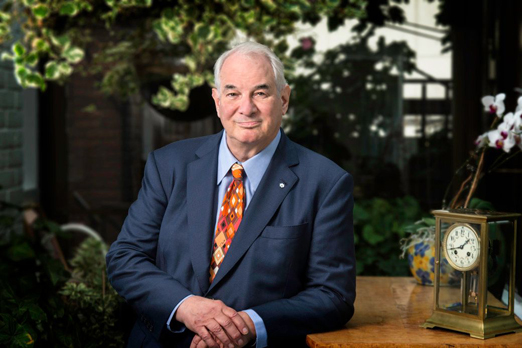
Clayton Ruby, leading Canadian lawyerClayton Ruby, civil rights advocate, and one of Canada’s most well-respected lawyers

Clayton C. Ruby is one of Canada’s leading lawyers, an outspoken proponent of freedom of the press, and a prominent member of the environmental community, who specializes in criminal, constitutional, administrative and civil rights law, who has devoted his professional career to ensuring that those who are underprivileged and those who face discrimination are given equal access to the legal system of this country, in an April 12th article in The Star, wrote …

I think I know what advice she (Wilson-Raybould) might have gotten from McLachlin. And that explains why she didn’t want, and never accepted, that offer of legal advice.

She would have been told that over the last number of years the courts of Canada, including the Supreme Court of Canada, have pretty consistently been striking down mandatory minimum penalties in criminal sentencing because they give a judge no choice about the sentence. The law under which anyone is punished must allow sufficient discretion by the trial judge to give justice to offenders.

The law that would apply to SNC-Lavalin if they were convicted provides … no discretion to lower the 10-year prohibition on bidding for government contracts in Canada …

Mr. Ruby goes on to argue that the penalty of a 10-year ban “would be cruel and unusual and a violation of section 12 of the Canadian Charter of Rights and Freedoms, and be deemed to be disproportionate.”
Yet, then Attorney General Jody Wilson-Raybould demanded her ‘autonomy’ be respected, refused to consult, asked no one any questions on the state and impact of the law concerning mandatory minimum sentencing, refused to listen to outside advice, and set about to make her decision to proceed with a prosecution of SNC Lavalin as a “matter of principle” — when in fact there was little or no chance that SNC Lavalin would be convicted, or that the case would even make it to court — which is to say, the matter would be settled out of court, with severe and proper penalty for SNC Lavalin.
Arising from Wilson-Raybould’s intransigence, our government is in crisis.
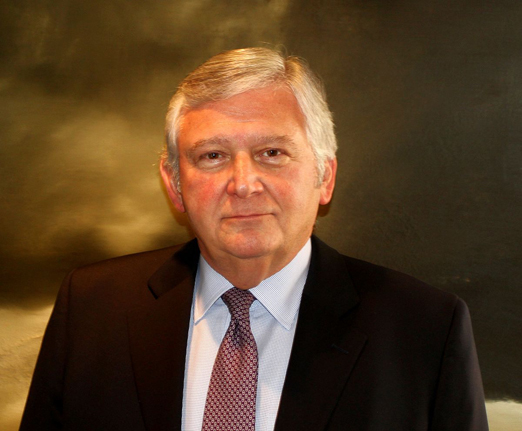
Brian Greenspan, respected Canadian lawyer and founding chair of the Canadian Council of Criminal Defence LawyersBrian Greenspan, well-respected criminal defence attorney, graduate of Osgoode Hall

In a well-reasoned article written by past president of the Criminal Lawyers’ Association and founding chair of the Canadian Council of Criminal Defence Lawyers, Brian Greenspan (pictured above), and published in the Globe and Mail on April 17th, Mr. Greenspan argues that Jody Wilson-Raybould did not understand her role as Attorney General and Minister of Justice …

In a free and democratic society, the prosecutorial function does not operate in a vacuum, in isolation and immune from debate, discussion and, indeed, persuasion. Isolation breeds tyranny. Access to justice requires those who administer justice to be accessible, to be open to advocacy on behalf of clients and causes. Advocacy in the adversarial process does not undermine independence. In fact, the public interest is best served by ensuring that the decision-maker has meaningfully examined the conflicting positions and has been exposed to a comprehensive review of all relevant considerations.

Mr. Greenspan goes on to argue …

An Attorney General can receive vigorous advocacy and remain objective — her objectivity can most assuredly withstand collegial conversations with government colleagues and bureaucrats, in which they share their views and opinions on the merits of a prosecution. Thoughtful reconsideration and sober second thoughts do not threaten the independence of the Attorney General, nor do they jeopardize the integrity of our justice system.

Ms. Wilson-Raybould has expressed the position that any intervention by the Attorney General with the decision of the Director of Public Prosecutions (DPP) would have been automatically suspect, and that it would risk calling into question prosecutorial independence and the rule of law. The DPP, in fact, fulfills her responsibility under and on behalf of the Attorney General, and the act which governs her authority empowers the Attorney General to assume carriage of a prosecution or to direct the director. The Attorney General’s power to superintend prosecutions is an important aspect of our system. The former Attorney General treated the DPP as essentially unreviewable. Politically accountable oversight in ensuring that the public interest is properly taken into account isn’t anathema to the rule of law. The Attorney General’s power to superintend prosecutions is an integral part of our justice system.

VanRamblings will allow Mr. Greenspan’s words to ring in your ears.
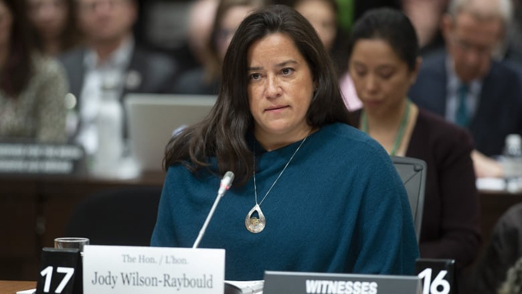
Jody Wilson-Raybould testifies before House of Commons Justice Committee

The above testimony concludes VanRamblings’ three-part series on how Jody Wilson-Raybould failed Canadians, threw our government into an unnecessary, untenable and divisive constitutional crisis, did not fulfill her mandate, and failed to properly administer Canada’s justice system.
VanRamblings will publish a wrap-up column on the series tomorrow, where we will ask as we did yesterday, “Is Jody Wilson-Raybould a quisling?”
For now, we’ll leave you with the following re-creation of a conversation between Prime Minister Justin Pierre James Trudeau, and JWR aka Puglaas

Decision Canada | Wilson-Raybould’s Failed Tenure as AG? Part 2

Jody Wilson-Raybould, Canadian Minister of Justice and Attorney General, 2015 - 2019

Former Prime Minister Stephen Harper’s relationship with the Canadian judiciary was, to say the least, conflicted.
In many ways, Harper’s troubled history with the Canadian judicial system mirrors what Americans are experiencing down south, with a President who rarely misses an opportunity to attack the judges and the courts for rulings with which he disagrees. President Trump learned much from Stephen Harper, who has emerged as a key & valued advisor to the U.S. President.
Prime Minister Stephen Harper’s frustration with the courts came to a head in 2014 when his appointment of Marc Nadon to the top bench was rejected by a six-to-one decision, a majority of justices on the top court ruling that Nadon didn’t qualify to join them on the court, the Supreme Court of Canada ruling that its composition is constitutionally protected, and the Stephen Harper government’s attempt to change the Supreme Court Act through a budget bill was unconstitutional. Now retired Supreme Court Justice Thomas Cromwell, the most conservative member of Canada’s Supreme Court, was the lone dissenting vote on the ruling of the Court.
Note should be made it was retired Supreme Court Justice Thomas Cromwell that Jody Wilson-Raybould turned to for advice when she resigned from the Trudeau cabinet, having consistently refused to meet with retired Chief Justice of the Supreme Court Beverley McLachlin, as the Prime Minister, Cabinet, and members of the Liberal caucus implored her to.
Note should also be made that in 2014, Harper accused Supreme Court Chief Justice Beverley McLachlin of making “inadvisable and inappropriate” attempts to reach him on the issue, an episode author John Ibbitson describes as the “nadir” of his time in power, also creating a constitutional crisis. “Not only did he lose the fight; he tarnished his reputation and damaged what should be the sacrosanct separation of powers between executive and judiciary,” Ibbitson wrote in his book, Stephen Harper.
When Justin Trudeau came to power in 2015, he sought to repair the federal government’s frayed relationship with the courts, and assigned his new Attorney General Justice, Jody Wilson-Raybould, to do just that.


Don't miss Part 1 of the series on former Attorney General Jody Wilson-Raybould's fitness for office

VanRamblings contends Jody Wilson-Raybould failed in this aspect of her mandate, about which we will go into in some great detail below.
When Stephen Harper lost government to Justin Trudeau and the Liberals, he left an unprecedented 48 provincial and territorial Supreme Court Justice vacancies to fill, with 11 vacancies in British Columbia, and 14 vacancies in Alberta, alone. The Tories had filled 43 vacancies in June 2015, mostly in Ontario and the Maritimes.
Filling the remaining 48 vacancies, in order to preserve the integrity of the administration of the Canadian judicial system, was job one for the newly-installed Attorney General, Jody Wilson-Raybould. Over time, the Honourable Minister failed to fulfill this critical aspect of the mandate established by the Prime Minister for the office of the Minister of Justice.
On August 11th, 2016, Chief Justice of Canada’s Supreme Court, Beverley McLachlin, hammered the government for failing to fill the remaining 45 judicial vacancies — including one at Canada’s Supreme Court.

“There is something deeply wrong with a hiring scheme that repeatedly proves itself incapable of foreseeing, preparing for and filling vacancies,” McLachlin said. “The perpetual crisis of judicial vacancies in Canada is an avoidable problem that needs to be tackled and solved. Without a full complement of judges, and an efficient system for anticipating and filling vacancies, delay will continue to be a feature of our justice system.”

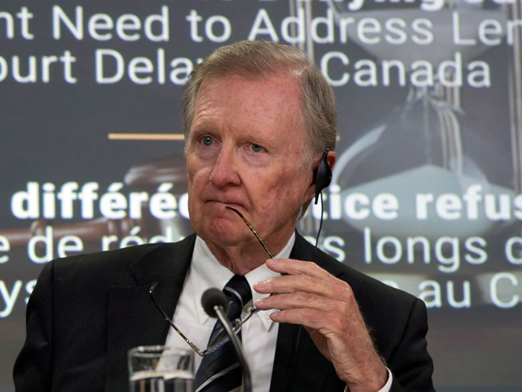
Bob Runciman, senator, Canadian senatorSenator Bob Runciman releases a committee report on court delays in Canada during a news conference in Ottawa, Wednesday June 14, 2017.

In this June 14, 2017 front page story in the National Post, titled “Tens of thousands of criminal trials may be tossed if delays not addressed, Senate report warns”, Post journalist Brian Platt writes …

A damning report from the Senate warns of a loss of public confidence in the justice system due to unreasonable trial delays, and that tens of thousands of criminal cases may be thrown out of court starting next year if action isn’t taken.

The Senate standing committee on legal and constitutional affairs, which toured the country and interviewed 138 witnesses, says the federal government needs to provide judges with other ways to deal with lengthy trial delays beyond a stay of proceedings.

It also says the justice minister (Jody Wilson-Raybould) must address the chronic lag in appointing judges to vacant positions.

The issue of trial delays escalated last summer, when a Supreme Court of Canada ruling known as the Jordan decision, in a ruling read by Chief Justice Beverley McLachlin, established a firm timeframe for when a trial must be completed after a charge is laid: 18 months for a provincial court, and 30 months for a superior court.

“Clearly it hasn’t been approached as an urgent matter,” said Sen. Bob Runciman, the committee’s chair, and former Ontario Solicitor General. He said there were 43 vacancies on the release of their interim report in August 2016; there were 48 on this report’s release.

“We’re almost two years into this government,” he said. “It’s perplexing to us with respect to the snail-like pace.”

A July 6, 2017 CBC story states that, “More than 200 criminal cases across the country have been tossed due to unreasonable delays — including murders, sexual assaults, drug trafficking and child luring, all stayed by judges because the defendant’s constitutional right to a timely trial was infringed” — due to Jody Wilson Raybould’s failure “to speed up Canada’s sluggish courts” by appointing Supreme Court Justices to fill the remaining 48 vacancies across the country.
This Global News story states that, “A shortage of judges … is ‘choking’ Alberta’s court system, a defence lawyer said after a judge threw out a first-degree murder case because it took too long to get to trial.”
Keith Fraser’s December 22, 2017 story in the Vancouver Sun states that, “The shortage of judges on the B.C. Supreme Court remains persistently high, creating ongoing concerns about access to justice.”
For four years, the same story was told over and over again, in every province and territory across Canada, yet Jody Wilson-Raybould didn’t listen, failing to appoint Supreme Court Justices to fill vacancies, bringing the administration of the Canadian justice system into disrepute.

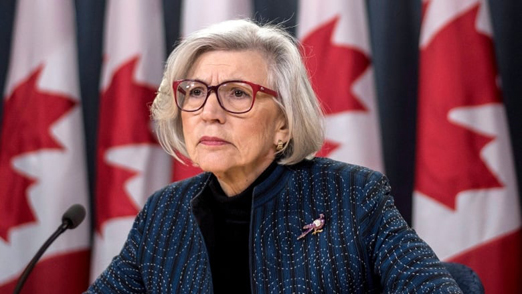
Retired Chief Justice of the Canadian Supreme Court, Beverley McLachlinRetired Chief Justice of the Canadian Supreme Court, the Honourable Beverley McLachlin.

During his time in power, Stephen Harper implemented “mandatory minimums legislation,” tying the hands of the courts to rule on a case by case basis. Justices did not look favourably on the legislation.
As part of her mandate, Attorney General Jody Wilson-Raybould was required to introduce legislation that would undo mandatory minimum sentencing, such legislation similar to that recently approved by President Donald Trump, the U.S. Senate and Congress. Readers will not be surprised to learn that the Attorney General failed to introduce such legislation.
We had stated above that the Prime Minister, and members of the PMO, had requested of Jody Wilson-Raybould that she meet with the retired Chief Justice of the Canadian Supreme Court, the Honourable Beverley McLachlin, in order that Ms. McLachlin might explain the relationship between the mandatory minimum legislation, and the reluctance of the courts to rule on cases requiring a mandatory minimum. In fact, in order to avoid having to impose a mandatory minimum sentence, Beverley McLachlin would have told Jody Wilson-Raybould in 98% of cases where a mandatory minimum was involved, those cases were settled out of court, with the remaining 2% finding the defendant not guilty rather than impose an unjust sentence.
The crux of the SNC-Lavalin case was just that — the courts were always going to encourage the parties to settle out of court, resulting in a fine in the billions of dollars and, perhaps, a three-year period when SNC-Lavalin could not bid on contracts let by the federal government.
But Jody Wilson-Raybould thought she knew better, and barreled on ahead.
Tomorrow, VanRamblings will explore in some detail how Ms. Wilson-Raybould injudiciously failed to meet the responsibilities of an Attorney General to seek a variety of opinions, from a broad cross-section of sources, before deciding on a course of action — which, of course, Ms. Wilson-Raybould consistently and insistently failed to do during her tenure.
Kyla Lee | Jody Wilson-Raybould Did A Poor Job As Justice Minister
Kyla Lee, Vancouver lawyer, with Acumen LawKyla Lee, criminal defence lawyer at Acumen Law Corporation in Vancouver.
Kyla Lee, who you probably recognize from her frequent appearances on the evening news, and for her articles in The Huffington Post, published a recent blog post in the HuffPo, on April 6th, taking Jody Wilson-Raybould to task for failing to properly administer the system of justice during her tenure as Canada’s Attorney General and Minister of Justice …

“Yes, Wilson-Raybould did champion a bill to create a process for medically-assisted dying (ed. note. Although Jane Philpott “didn’t exactly claim credit” for the assisted dying legislation, she did work with Ms. Wilson-Raybould on the drafting of the bill, referencing her work on the legislation — as a correspondent / colleague relates to VanRamblings — as “a point of pride, in her resignation letter.”). However, that legislation is already the subject of challenges before the courts in large part because it arguably doesn’t address the concerns raised by the Supreme Court of Canada in the Carter case. This case found that the ban on physician-assisted death was unconstitutional.

And yes, cannabis was legalized under Wilson-Raybould’s auspices. Or at least, some cannabis was legalized for some people. Meanwhile, medical cannabis was then subject to taxes, sentences increased for certain cannabis-related offences, and access to legal cannabis became very difficult shortly after legalization.

Along with cannabis legalization, Wilson-Raybould brought in legislation that eliminated Charter protections for those accused of impaired driving offences. This, arguably, puts vulnerable people at risk of further interactions with police. It has also been the subject of criticism for the manner in which it will disproportionately affect Indigenous and racialized people.

Other legislation introduced by Wilson-Raybould, such as Bill C-51, reverses the disclosure obligation in criminal trial to an accused person and exposes that person to cross-examination by the complainant. This fundamentally undermines our entire concept of justice in this country.

In Bill C-75, Wilson-Raybould sought to eliminate a right of cross-examination of police witnesses in criminal trials, while also attempting to remove preliminary inquiries from most serious criminal cases and prohibiting peremptory challenges in jury trials.

Remember, too, that while the mandate letter directed Wilson-Raybould to put an end to solitary confinement, under her direction the Department of Justice defended several Charter challenges to the practice of solitary confinement. And when the overuse of this method was struck down by the courts, the Department of Justice filed an appeal and sought a stay of the order permitting them to continue to use solitary confinement while the appeal was pending.

Wilson-Raybould was supposed to oversee the creation and completion of an inquiry into missing and murdered Indigenous women and girls. The inquiry that has occurred has been the subject of numerous scandals, with the resignations of several prominent figures, and timeline extensions well beyond the original two-year deadline. This means that justice and closure for those families, as well as an action plan to prevent further harm to Indigenous women and girls, was significantly delayed under Wilson-Raybould’s watch.

In addition to the above, let us not forget that Jody Wilson-Raybould sought to appoint a conservative justice of Manitoba’s Queen’s Bench into the position of Chief Justice of the Supreme Court of Canada, a justice about whom Mi’kmaq lawyer, professor, activist and politician Dr. Pamela D Palmater stated during a CBC interview … “it is egregious that Canada’s current Minister of Justice would seek to appoint a Chief Justice of the Supreme Court with an appalling record of rulings on reproductive rights, LGBT issues and indigenous issues. What was she thinking?”
Prime Minister Justin Trudeau apparently agreed with Dr. Palmater, when he rejected Wilson-Raybould’s conservative pick for high court.

“Well-placed sources say the former justice minister’s choice for chief justice was a moment of “significant disagreement” with Trudeau, who has touted the Liberals as “the party of the charter” and whose late father, Pierre Trudeau, spearheaded the drive to enshrine the Charter of Rights and Freedoms in the Constitution in 1982.”

Prime Minister Justin Trudeau was well within his rights to seek to move Jody Wilson-Raybould from the position of Minister of Justice and Attorney General, for obvious good reason.
The Prime Minister did offer to make Jody Wilson-Raybould Minister of Indigenous Affairs, asking that she undo the harm of the Indian Act, and fundamentally redefine the relationship of Canada’s indigenous people’s to the state, and the state to our indigenous peoples, working with her friend, the Honourable Jane Philpott to achieve such end.
Ms. Wilson-Raybould emphatically refused such entreaty.
Despite all, Mr. Trudeau wished to keep Ms. Wilson-Raybould in Cabinet, as the only indigenous member of Cabinet, and a woman who he believed was possessed of talent, despite her failings as Attorney General. Mr. Trudeau appointed Ms. Wilson-Raybould as Minister of Veterans Affairs, a position she held for only one week before resigning, one might say in a fit of pique (tinged with a soupçon of arrogance), resigning from the Trudeau Cabinet, while making scurrilous accusations of “interference” by the PMO during her, now truncated, tenure as Minister of Justice and Attorney General.
Tomorrow, on VanRamblings, in Part 3 of this week’s Decision Canada series (there’ll be a fourth part on Thursday) we’ll explore the validity, or lack thereof, of Wilson-Raybould’s untoward contention, as stated above.

Decision Canada | Dancing With the One That Brung Ya, Part 1

Jody Wilson-Raybould, 2019

Loyalty is a scarce commodity in politics.
When an individual decides that they’re going to go into politics, generally there’s both a fair bit of ego and ambition involved.
A novice candidate first has to secure the nomination, which takes organizational ability, and an energized, experienced and crack team behind her or him. Once the nomination is achieved — no mean feat, that — there’s a whole campaign team that needs to be put into place, competent, organized professionals who know how to get the candidate’s message out.
A bit of history concerning Justin Trudeau

Justin Trudeau as a University of British Columbia student in 1996Justin Trudeau, age 24 in 1996, as a student at the University of British Columbia

After attaining a bachelor of arts degree in literature from Montréal’s McGill University at age 22 in 1994, Justin Trudeau traveled to British Columbia — the province where his mother was raised, continues to live, and where he had spent a great deal of time with his mother’s family — to enrol in the University of British Columbia’s Faculty of Education, where he went on to attain a Bachelor of Education degree in 1998, and a teaching certificate, securing employment post graduation at the West Point Grey Academy, where he taught both French and math, later going on to employment with the Vancouver School District, as a much-beloved teacher and colleague at Winston Churchill Secondary, in Vancouver’s Oakridge neighbourhood.
Active always in politics, and long committed to a reconciliation process with Canada’s indigenous peoples, Mr. Trudeau first met Jody Wilson-Raybould when both were students at UBC, continuing their relationship when he was teaching school in our city, and after passing the bar in 2000, she was employed as a provincial Crown prosecutor in Vancouver’s Main Street criminal courthouse for three years, from 2000 to 2003.
Colleagues of Ms. Wilson-Raybould, like respected criminal defence lawyer Terry La Liberté described Ms. Wilson-Raybould as a smart, fair, and a skilled prosecutor, who treated defendants with compassion, saying …

“She has actually talked to the people who are affected. She has worked with these people and made choices about their future in a really meaningful way.”

In respect of the federal Liberal party, after almost a decade in the wilderness, when newly-elected Liberal Party leader Justin Trudeau ran to become Canada’s 23rd Prime Minister in the 2015 federal election, in the lead up to the election, he made it a point to approach and speak several times with Jody Wilson-Raybould, asking her to consider running as a candidate in the newly-created riding of Vancouver-Granville, promising that he would put the full weight of the Liberal party campaign apparatus behind her campaign to secure her run for office.

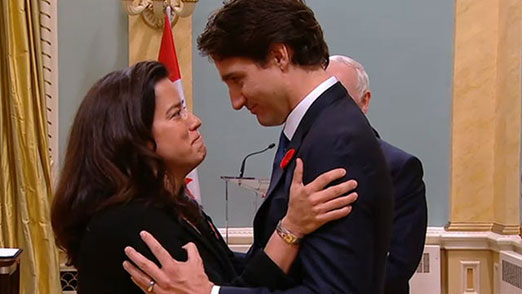
Jody Wilson-Raybould and Justin Trudeau, November 4 2015, swearing in ceremony

Mr. Trudeau made it clear to Ms. Wilson-Raybould, on numerous occasions, that he believed it was past time that a Prime Minister elevate an indigenous woman into a federal cabinet, which was exactly what he did when he appointed his first Cabinet on Wednesday, November 4th, 2015, appointing Jody Wilson-Raybould as Minister of Justice & Attorney General.
At present, Justin Trudeau is Canada’s Prime Minister. Let’s take a look at those two latter words: Minister, means Mr. Trudeau is a Minister of the Crown. In respect of the word Prime, according to the Oxford dictionary, prime means primary, chief, principal, foremost, first, paramount, major, dominant, supreme, overriding, cardinal, pre-eminent and number one.
Politically, it is understood federally that Cabinet Ministers serve at the pleasure of the Prime Minister, and in the case of provinces, the Premier.
Read what Sonya Savage — a star candidate for Alberta’s United Conservative Party and respected Calgary lawyer, with a master of laws in environment and energy, who has worked in senior positions with Enbridge and the Canadian Energy Pipeline Association, the MLA-elect for Calgary-North West and the likely choice to take on the energy portfolio — has to say in this CBC article on who will make the cut when Alberta Premier-elect Jason Kenney announces his cabinet tomorrow morning …

“You serve at the pleasure of the premier-elect and I’ll be happy to serve in any capacity,” Savage said on Wednesday. “First and foremost is to represent the people who elected you.”

Exactly. Should Ms. Savage make Jason Kenney’s first Cabinet, as is likely, she will serve at the pleasure of the Premier, as all of the Ministers of the current British Columbia NDP government serve at the pleasure of Premier John Horgan. That is Politics 101. Canada’s is Justin Trudeau’s government. British Columbia is John Horgan’s government, plain and simple.
Baleful that Jody Wilson-Raybould never grasped this basic political precept, in place across every government, in every country across the globe.

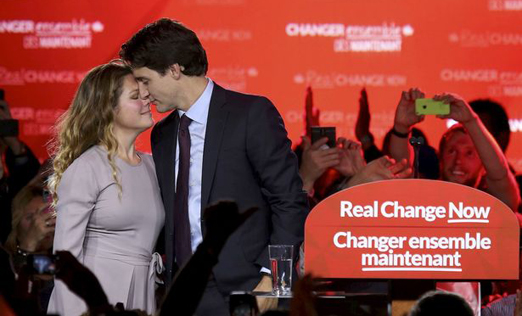
Justin Trudeau shares a moment with this wife Sophie Gregoire on election night 2015Justin Trudeau shares a moment with this wife Sophie Gregoire on election night 2015

On October 19th, 2015, the Justin Trudeau-led Liberal Party won 184 seats in the 338 Parliament, gaining an unexpectedly large majority government. One of those seats belongs to Mr. Trudeau. When it came to appointing his first cabinet, Mr. Trudeau had an embarrassment of riches from which to choose, of the 183 returning or newly-elected Members of Parliament in Canada’s 23rd national government, ambitious and accomplished all, and possessed of the belief that s/he would make a superb Minister of the Crown and serve the people of Canada well in such capacity, 153 of whom were to be sorely disappointed when Mr. Trudeau announced his cabinet.
Note should be made that Canadians heard no whinging or public gnashing of teeth from the 153 Liberal members of Parliament who failed to make Justin Trudeau’s first cabinet.
At least for most Liberal Members of Parliament, loyalty to the party under whose banner they ran, and the Prime Ministerial candidate they had committed to support and (they did, and with the exception of Jane Philpott, Jody Wilson-Raybould and Celina Caesar-Chavannes) still do, remains of paramount importance, as does loyalty to the Prime Minister.

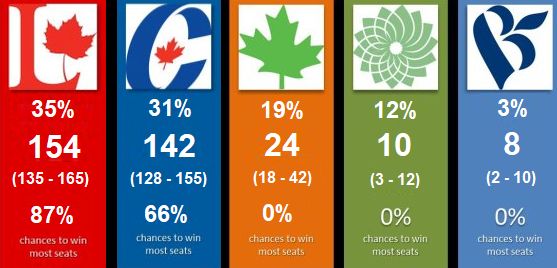
2019 Canadian federal election outcome projection | April 23 2019VanRamblings’ studied & informed supposition as to the outcome of this year’s election

Prime Minister Justin Trudeau is the leader of the country, and the leader of the Liberal Party, the political figure who offers the Liberal Party of Canada, its many thousands of members, the sitting and supportive Members of Parliament and the people of Canada, the best opportunity to retain government, to continue to work on behalf of all Canadians, even if the win this coming October 21st is to result in a reduced majority, the latter thanks to the imprecations of Jody Wilson-Raybould, a sentiment of condemnation many members of the Liberal caucus, in every province and territory, have expressed to attentive and heedful members of the press.

Canada's federal Attorney General and Minister of Justice, David Llametti

Let’s take a look at the qualifications of Canada’s current Attorney General and Minister of Justice (pictured above), the Honourable David Lametti …

Prior to his recent appointment, Dr. Lametti was a full, tenured Professor in the Faculty of Law at Montréal’s McGill University (Mr. Trudeau’s alma mater), specializing in property, intellectual property as well as private and comparative law. He was also a member of McGill University’s Québec Research Centre of Private and Comparative Law and a co-founder and member of the McGill Centre for Intellectual Property Policy. He served as the Associate Dean (Academic) of the Faculty of Law, McGill University, from 2008 to 2011. Multilingual, Minister Lametti has taught at the university level in French, English, and Italian.

In addition to his responsibilities as a professor, Dr. Lametti was a member of McGill University’s Senate and a Governor of the Fondation du Barreau du Québec, as well as president of the governing board for his children’s — André, Gabrielle, and Dominique’s — school.

Dr. Lametti holds a Bachelor of Arts in Economics and Political Science from the University of Toronto, a Bachelor of Civil Law and Bachelor of Laws from McGill University, a Master of Laws from the Yale Law School, and a Doctor of Philosophy in Law from Oxford University. Prior to starting his doctoral studies in law, he served as a Law Clerk to Justice Peter deCarteret Cory of the Supreme Court of Canada.

Clearly, Minister Lametti is a piker, and unqualified to become, and now serve as, Canada’s Attorney General and Minister of Justice.
When Justin Trudeau appointed his first cabinet, did he appoint the accomplished Dr. Lametti as Canada’s new Attorney General and Minister of Justice? Nope, he didn’t. He appointed a former junior Crown Counsel, Jody Wilson-Raybould, who went on to believe that she had the divine right to serve in that capacity for as long as she remained interested in doing so.
Humility and forbearance, thy name is not Jody Wilson-Raybould.
Part 2 of 3 of Dancing With the One That Brung Ya, tomorrow.

Music Sundays | Ani DiFranco | Vancouver Folk Music Festival

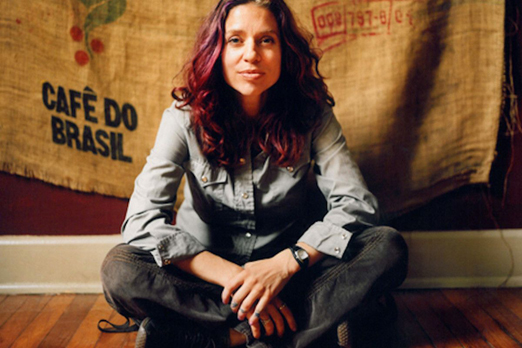
Ani DiFranco first played the Vancouver Folk Music Festival in 1992, a 22-year-old up-and-coming singer-songwriter who drove herself from concert to concert across the North American continent, billing herself as the “Little Folksinger” (Ms. DiFranco is 5’2″ tall), in the process creating her own record label, Righteous Babe, allowing her significant creative freedom.
Through the Righteous Babe Foundation Ms. DiFranco, long a political and cultural activist, has backed grassroots cultural and political organizations supporting causes including reproductive rights, gay, lesbian and women’s issues, in 2004 touring Thai and Burmese refugee camps to learn about the Burmese resistance movement and the country’s fight for democracy, in recent years lending her voice and presence to the Women’s Lives Marches in Washington, DC, tangibly demonstrating her belief that the personal is, now and forever, political.

2019 Vancouver Folk Music Festival

When she first appeared on the various Vancouver Folk Music Festival stages, she immediately connected with the rapturous festival audiences, and that grassroots connection has endured here and far beyond.
Over the years, Vancouver’s Folk Music Festival stages have also been gay-friendly: in addition to Ani DiFranco, Canada’s own k.d. lang, the Indigo Girls, Nanci Griffith, Holly Near, Janis Ian, Tret Fure, Melissa Ferrick, Toshi Reagon, Jill Sobule, Cheryl Wheeler, Patty Larkin (and dozens more) have graced festival stages, and delighted and moved audiences.

Ani DiFranco, 2015

When she first emerged in 1990, Ani DiFranco had an immediate appeal to misfits. After débuting her eponymous solo album that year, she followed it up with six more in rapid succession, taking only a brief one-year breather in between 1996’s Dilate and 1998’s best-selling Little Plastic Castle.
Ms. DiFranco’s folk-punk aesthetic (complete with staccato finger pickings and spoken word spun into song) was especially exciting to queer women, who rarely had the opportunity to sing along with inclusive lyrics like Ms. DiFranco’s. Not only was she a poetic lyricist, she had a handful of songs that were explicitly about other women, using female pronouns.
Success has been somewhat bittersweet, though, for the folk-punk feminist and rabble-rousing storyteller.
Early on, Ms. DiFranco was open about her bisexuality (she’s married to producer Mike Napolitano, with whom she has two children), but in 2015, she told the LGBT blog GoPride.com she’s “not so queer anymore, but definitely a woman-centered woman and just a human rights-centered artist.” This didn’t sit too well with the lesbian and otherwise queer fanbase she’d drawn from the beginning.

Ani DiFranco - No Walls and the Recurring Dream

Ani DiFranco is set to release a memoir entitled No Walls and the Recurring Dream, recounting her early life from a place of hard-won wisdom, combining personal expression, the power of music, feminism, political activism, storytelling and philanthropy, while chronicling her rise to fame with an engaging candor, a frank, honest, passionate, touching and humorous tale of one woman’s eventful coming of age story and radical journey, defined by her ever-present ethos of fierce independence.
Viking Press will release Ms. DiFranco’s book next month, on Tuesday, May 7th, a week from this coming Tuesday.