Decision Canada | Taking a Stand Against the New Barbarism

Taking a Stand Against the New Barbarism
Modern barbarism is a malodorous umbrella concept.
Underneath the umbrella are a great many fetid phobias, isms and other behaviours: Islamophobia, homophobia, xenophobia, semi-fascism, scapegoating, stereotyping, bullying, libeling and an aggressive intolerance of everything & everyone who is not to the liking of the modern barbarian.
Over the past two decades we have witnessed the rise of nationalism across the globe, and the rise of anti-environmentalism, nativism, anti-globalization, protectionism, and opposition to immigration.
From the 1990s on, right-wing barbaric populist parties have established themselves in the legislatures of democracies across the globe, ranging from Australia, the Czech Republic, Denmark and Estonia to France, Germany, Romania and Sweden; entered coalition governments in Austria, Belgium, Bulgaria, Chile, Finland, Greece, Italy, Israel, Latvia, Lithuania, the Netherlands, New Zealand, Norway, Slovakia and Switzerland; and led governments in Japan, Brazil, Colombia, India, Turkey, Hungary and Poland.
The “radical right” in the U.S. is also closely linked to barbaric populism, with its roots in the modern Republican party, led today by Donald Trump.
Since the great recession of 2008, barbaric right-wing populist movements, such as Marine Le Pen’s National Rally (formerly the National Front) in France, Matteo Salvini’s far right League party in Italy, Geert Wilders’ ultranationalist Party for Freedom and Thierry Baudet’s anti-immigrant Forum for Democracy party in the Netherlands, Frank Franz’s National Democratic Party (formerly Reich Party) in Germany, and Nigel Farage’s UK Independence (now Brexit) Party have only grown more vibrant in voter popularity and strength at the polls, in large measure arising from their avowed opposition to immigration from the Middle East and Africa.
In the U.S., Donald Trump’s political views can best be summarized as right-wing populist, nationalist, Islamophobic, transphobic, xenophobic, and based on an aggressive intolerance of anyone or anything not to his liking.

Jagmeet Singh (NDP), Elizabeth May (Greens), Justin Trudeau (Liberals)

In Canada, we have three left-of-centre, progressive parties from which to choose in the upcoming October 21st federal election: Jagmeet Singh’s New Democrats, Elizabeth May’s Greens and Justin Trudeau’s Liberals.

Canada. Andrew Scheer, Conservative Party leader. Maxime Bernier, People's Party.

On the right side of the spectrum we have the neo-barbaric, Andrew Scheer led, Trump-embracing Conservatives, and Maxime Bernier’s far right-of-centre, anti-immigrant, climate-change denying, nationalist People’s Party.
Whether we look south to the Trump admininistration or the far right administration of Jair Balsonaro in Brazil, to Prime Minister Narendra Modi in India, or Japan’s Shinzo Abe, Heinz-Christian Strache’s Austrian Freedom Party, Hungarian Prime Minister Viktor Orbán, or Polish Congressional leader Michal Marusik, every day we live with the reality of the new barbarism of our modern age, a political philosophy reliant on nativism, the promotion of division and fear of the other, barbarism as adhered to by the cheering and jeering hate-filled, reactionary and revolting masses of the unthinking, undereducated and disenfranchised we see in rallies across the globe, best referred to by their correct name: the modern barbarians.
What’s on the line in this year’s upcoming federal election?
If we vote for one of the right wing parties in Canada (not to put too fine a point on the matter): chaos, catastrophe, ultra-right wing nationalism, the decimation of social and economic norms and programmes in order that the interests of a wealthy elite might be best served, an attack on culture, a war against our most vulnerable citizens, political decay and ultimate disintegration, rage, alienation, anomie, the propagation of extremism, demagoguery, a crisis in leadership, and the atomization of our society.
Hyperbole, you say?
Don’t think it can’t happen here. Andrew Scheer’s Conservatives are not the Progressive Conservatives of Robert Stanfield, Pat Carney, Dalton Camp, Joe Clark, Kim Campbell, Hugh Segal or, even, Brian Mulroney. The modern Conservative party (a contradiction in terms) realized by Stephen Harper is a disingenuous, far right nativist party (there are exceptions in caucus, Red Tory MPs such as Lisa Raitt, Michael Chong and Michelle Rempel), undeserving of your vote — lest you would wish to have the Trumpian nightmare than has much of the U.S. in its grip visited upon Canada.
Again, just look south, to the United States or Brazil, or to the other side of the Earth, to the European countries written about above. There exists a thin line between order and chaos. As in every election, much is on the line.
In 2019, the stakes are high. Choose which side you’re on.
VIFF 2019 | Award Winners & More at This Year’s Film Festival

VIFF 2019 award winning films set to screen at the 38th Vancouver International Film Festival

In the 11½ months between the annual Vancouver film festivals, festival programming staff spend their year attending film festivals across the globe identifying for patrons the best in world cinema to bring to our shores, the vast majority of scheduled films set to screen each year only two or three times in Vancouver, never to be seen again in local cinemas. The Vancouver International Film Festival, then, affords appreciative audiences with the singular opportunity to participate in a venture that, during the 16-day running time of the festival, provides viewers with an utterly unique and gently humane window on the world, a not-to-be-missed artistic endeavour.

Contemporary World Cinema set to screen at the 2019 Vancouver International Film Festival

Synonyms, Golden Bear and FIPRESCI Prize winners at the 2019 Berlinale Film Festival

VIFF 2019’s Contemporary World Cinema programme this year is composed of 47 films from 28 countries, and as the programme suggests, represents:

” … a sprawling collection of award winners, new discoveries, and noteworthy premières, be they offbeat comedies, deeply humane dramas or progressive cinema that pushes both boundaries & buttons, this series is a showcase of the best new work from international filmmmakers.”

Today, four award-winning films worthy of your consideration, films that will screen at the 38th annual Vancouver International Film Festival in 2019, sometime between Thursday September 26th and Friday, October 11th …

Rigorously charting the fracturing of a grieving former police detective’s world as he comes to suspect that his late wife, who died in a strange car accident, was having an affair with a younger colleague, this deeply unsettling and grimly hypnotic second feature by Icelandic writer-director Hlynur Palmason, A White White Day won both the Louis Roederer Foundation Rising Star Award and Critics’ Week prize at Cannes 2019.
As Lisa Nesselson writes in her review of the film in Screen Daily

A White White Day is an exquisite, complex, visually arresting and emotionally rewarding film, the tug of the splendidly varied landscape in this film both internal and external in a manner that would be hard to pull off in a dense urban setting, the pleasingly off-kilter string score a plus, and the trajectory of the film percolating from tender — the protagonist’s relationship with his granddaughter — to robustly no-nonsense, offering the viewer throughout with a flesh and blood catalogue of ways to be masculine, to be human, and how to grieve.

The film’s title refers to an Icelandic proverb suggesting that on days so “white” that the earth meets the sky, the dead can communicate with those still living.


Winner of the Golden Bear (the top prize) as well as the FIPRESCI Prize (the critics prize) at Berlinale 2019, in early February of this year …

Nadav Lapid’s third feature, Synonyms, emerged (as critics wrote) as …

… deliriously unpredictable, brilliant, maddening, enthrallingly impenetrable and breathtaking in the way it careens from one scene to the next in a whirlwind of personal and political meaning, the film an excoriation of Israel’s militant machismo and a self-teasing parody of Parisian stereotypes, embodied by actor Tom Mercier in this nakedly hypnotic and astonishingly audacious début, which sees Mercier often naked, clothes only a superfluity, his raw physicality the only pure expression of control as he see-saws the imbalance between power and helplessness.

A sui generis work of tormented genius, Synonyms is not to be missed.

This year’s Cannes’ prestigious Un Certain Regard winner, here’s what VIFF 2019’s programme has to say about The Invisible Life of Eurídice Gusmão:

Karim Aïnouz’s (Madame Satã) stylish, colour-saturated “tropical melodrama” tells the story of two sisters, proper Eurídice (Carol Duarte) and freedom-loving Guida (Julia Stockler), in 1950s Rio de Janeiro who are divided by their father’s duplicitous misogyny. Pure pleasure for the eyes and told from a decidedly feminist slant, this is a tale of “high emotion articulated with utmost sincerity and heady stylistic excess, all in the perspiring environs of midcentury Rio de Janeiro.”

Thus far, then, contemporary, award winning cinema from Iceland, Brazil and France / Israel. Let’s now take a look at Queen of Hearts, the Denmark / Sweden co-production that won the Audience Award in the World Dramatic Competition at the Sundance Film Festival earlier this year.

Director and co-writer May el-Toukhy offers a master class in how to shoot a blossoming physical attraction. From shy touching while trying to find the perfect spot for the “world’s smallest tattoo”, to the frankly explicit sex that actually seems sexy … to confuse matters, though, Queen of Hearts explores the inappropriate relationship involving a middle-aged lawyer’s twisting, highly-charged sexual tryst with her troubled teenage stepson, the film on the one hand an impossibly glamorous, sexually charged and immoral melodrama and on the other a subtle Sirkian, almost Hitchcockian tragedy that explores the wages of familial sin and deceit, all while peeling back the veneer of ultra-civilized Scandinavian society. Not to be missed.

star.jpg star.jpg star.jpg

VIFF 2019 | Late Summer Early Autumn Film Festival Season

IndieWire coverage of the Telluride Film Festival, with Editor-at-Large Anne Thompson, and chief film critic and deputy editor, Eric Kohn.

VIFF 2019 | Late Summer Early Autumn Film Festival Season

Autumn 2019 film festivals

Although many believe that the Oscar season begins in mid-May at the Cannes Film Festival, in fact the Oscar race officially kicks off at the end of August with the Telluride (Aug. 30 – Sept. 2), Venice (Aug. 28 – Sept. 7), Toronto (Sept. 5 – 15) and, at the end of September, both the New York Film Festival (Sept. 27 – Oct. 13) and our very own homegrown film festival (VIFF 2019, Sept. 26 – Oct. 11), where most of the upcoming Oscar contenders will make their auspicious and much-anticipated débuts.

Winner of the Jury Prize at Cannes this year, Ladj Ly’s Les Misérables — débuting at VIFF 2019 as part of the Spotlight on France series — emerged as one of Jeff Wells’ (Hollywood Elsewhere) favourite films at Cannes this year, a film he describes as “explosive, urgent, furious, riveting, breathless and impactful,” and about which VIFF’s festival guide says …

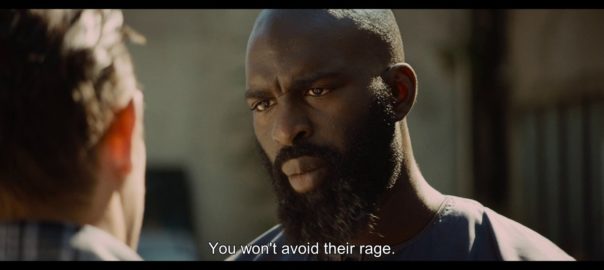
Set in the same suburban Paris neighbourhood, Montfermeil, used by Victor Hugo as the location for the Thénardiers’ Inn in his Les Misérables, débuting director Ladj Ly’s gripping, incendiary police-thriller gives us a young cop, Stéphane (Damien Bonnard), who joins an Anti-Crime Squad team led by loose cannon Chris (co-writer Alexis Manenti, superb) and is soon immersed in a world of poverty and internecine power struggles. When images of police brutality start circulating, the shit hits the fan…

The full VIFF 2019 festival guide will be online two weeks from today, on Friday, September 6th, on the same day the glossy cover programme will be available at libraries and various other outlets across Metro Vancouver.
With the summer silly season of dreaded movie sequels having drawn to a close, with box office down 19% this summer over last, the failed popcorn blockbusters are about to give way to the more serious fare all cinephiles cherish, all of which are ready to elbow their way into the Oscar derby.
At the various film festivals that will unspool future Oscar award winners over the course of the next month and a half, new films from Pedro Almodóvar, Noah Baumbach, Terrence Malick, Edward Norton, and more will launch into the awards season or fizzle out.
In respect of VIFF 2019, as more information about the 38th annual Vancouver International Film Festival becomes available, we’ll publish our idiosyncratic take and insight into the information with which we’re provided. In the meantime, take a look below for films that will début at one or more of the above-mentioned film festivals, including our own illustrious Vancouver International Film Festival

Writer-director-producer Edward Norton has transplanted the main character of Jonathan Lethem’s best-selling novel Motherless Brooklyn from modern Brooklyn into an entirely new, richly woven neo-noir narrative: a multilayered conspiracy that expands to encompass the city’s ever-growing racial divide, set in 1950s New York.


Portrait of a Lady on Fire

On the cusp of the 19th century, young painter Marianne travels to a rugged, rocky island off the coast of Brittany to create a wedding portrait of the wealthy yet free-spirited Héloise. An emotional and erotic bond develops between the women in Céline Sciamma’s Cannes-awarded subversion of the story of an artist and “his” muse.

In this richly burnished, occasionally harrowing rendering of the persistent scars of war, two women, Iya and Masha (astonishing newcomers Viktoria Miroshnichenko and Vasilisa Perelygina), attempt to readjust to a haunted post-WWII Leningrad.

Noah Baumbach’s new film is about the rapid tangling and gradual untangling of impetuosity, resentment, and abiding love between a married couple — played by Adam Driver and Scarlett Johannson — negotiating their divorce and the custody of their son. It’s as harrowing as it is hilarious as it is deeply moving.

Pedro Almodóvar taps into new reservoirs of introspection and emotional warmth with this miraculous, internalized portrayal of Salvador Mallo, a director not too subtly modeled on Almodóvar himself and played by Antonio Banderas, who deservedly won Best Actor at this year’s Cannes Film Festival.

A searing exploration of the consequences of upholding one’s convictions in a time of terrifying upheaval, this latest work from Terrence Malick (The Tree of Life) mines the themes of spirituality and engagement with the natural world that have permeated so much of the American auteur’s late-period renaissance. Set in Austria during the rise of the Third Reich, A Hidden Life movingly relays a little-known true story of quiet heroism.

Music Sundays | Angus and Julia Stone | Sibling Folk

The Australian folk duo, Angus and Julia Stone

Julia Natasha Stone was born on the 13th of April 1984 in Sydney Australia.
Julia’s parents, Kim and John Stone, were both well-regarded Australian folk musicians who played locally. Two years later, on April 27th 1986, her brother Angus was born. At family gatherings, it was not uncommon to see the two siblings perform — all was well until, in 2000, their parents split.
After finishing secondary school and while on a holiday with her brother in South America, Julia was impressed by her brother’s musical talent, “Angus was writing amazing songs … he had shown me how to play guitar when we were traveling in Bolivia, and those songs had gotten me through that year (Julia had, earlier that year separated from her boyfriend, from all reports a turbulent relationship, which left Julia emotionally devastated)”.
Within a year, in 2004, Julia began writing her own songs.
By 2005, and back in Sydney, Angus and Julia began to play gigs at open mic nights, with Angus performing backing vocals for Julia, as in time Julia did for Angus, on the songs he wrote. Finally, in 2006, the two formed a duo, Angus and Julia Stone. In March of that year the pair recorded their début extended play, Chocolates and Cigarettes, a remarkably chill amalgam of songs written and recorded live at home.
The EP, released in August, went on to win the ARIA (Australian Recording Industry Association) 2006 Best Album award, with Angus and Julia also taking home the Best New Group prize. The rest, as they say, is history.

Chocolates & Cigarettes directed by Angus and Julia Stone — from their 2006 début EP.

Angus and Julia Stone’s second album, Down the Way (March 2010), débuted at number one on the ARIA Albums Chart and was certified 3x platinum in 2011, It was the highest-selling album by an Australian artist for 2010. At the 2010 ARIA Music Awards the duo won ARIA Album of the Year for Down the Way and ARIA Single of the Year for Big Jet Plane, attaining the number-one position in the Triple J Hottest 100 in 2011, as voted on by radio station listeners across Australia.

Angus and Julia Stone last played in Vancouver on November 28th 2017, to a sold-out audience of 1280 fans at The Vogue.