#VanPoli Civic Politics | Faith Groups + Affordable Housing | Part 1

Oakridge Lutheran Church affordable housing development, Vancouver
The Oakridge Lutheran Church affordable housing development | 5688 Ash Street, west of Cambie on 41st | a 6-storey, mixed-use building, retail at street level, a new church and community space on the 2nd floor, and four levels of affordable rental housing above the church | Occupancy, Autumn 2019 | Catalyst Community Developments Society

Working with the B.C. Assessment Authority, the Community Services Division within Vancouver City Hall’s Planning Department have identified 364 places of worship in the City of Vancouver that — with the assistance and co-operation of Vancouver City Council, and the provincial and the federal governments — could become prime development sites for the provision of seniors and affordable rental housing, and a plethora of community service spaces, including child care centres and seniors centres.

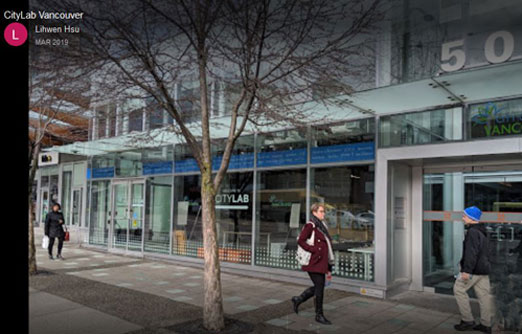
CityLab Vancouver, northwest corner Cambie and West Broadway

On Tuesday of this past week, representatives from almost every department at Vancouver City Hall met at CityLab, on the northwest corner of Cambie and West Broadway, with representatives from across Vancouver’s religious landscape, including Baptists, Catholics, Anglicans, Presbyterians, Buddists and Mennonites, as well as a representative cross-section of members of the Jewish, Islamic, Sikh, Salvation Army, Lutheran & United Churches across our city to continue a dialogue with Vancouver’s faith groups on the redevelopment potential of their places of worship.

Located on the Burrard Peninsula, with water surrounding two-thirds of our city’s urban landscape, development potential for affordable housing and community spaces is limited by the dearth of developable land on which to provide below market housing, and community services. Since the 1960s, the development ethos in our city has been “build up”, such that skyscrapers not only dot the landscape, in areas such as the West End and northeast False Creek almost smother Vancouver, all in service of densification, long our city’s informing planning & development buzzword.

With the growing shortage of community spaces on which to provide needed community services, such as child care centres — largely due to increasingly out-of-control development pressures, leading to skyrocketing land costs and increasing income inequality — the city is turning to faith groups across Vancouver to partner with the three levels of government to help alleviate economic disparity and our city’s unaffordable housing crisis.

The City, in partnering with the faith community, is looking not only to build low-cost and below market housing on lands owned by the places of worship, but partner with faith groups, as well, in providing community gardens and food programmes, community clinics (tax, ESL), addiction workshops and support services, job training, performance spaces, active living programmes & child care centres, in the hope of fostering community.

In Tuesday’s VanRamblings we’ll discuss the issues of declining membership in our city’s places of worship, the dilemma of aging infrastructure and the dearth of funds available for physical maintenance, and the attendant and inherent consequences places of worship face in attempting to fulfil their mandate of service not just to their membership, but to the community.

In Wednesday’s instalment of this week’s faith group / affordable housing / community services series, VanRamblings will explore the role of the Metro Vancouver Alliance, which has partnered with city staff and faith groups across our region — as well as with members of Metro Vancouver’s development community — towards the provision of affordable housing.

In addition, VanRamblings will seek to provide insight into why Vancouver’s underutilized places of worship may very well emerge as a critical component in our city’s plan to build community, to address income inequality and the attendant issues of access & succour encompassing the vast majority of our city’s socially and economically beleaguered residents.

Music Sundays | Allison Moorer | Transcending Tragedy

Sisters and successful country artists Allison Moorer and Shelby Lynne share the pain of tragedySisters & country musicians Shelby Lynne (l) & Allison Moorer share the pain of tragedy

When Allison Moorer was but a young strip of a girl, just turned 14 years of age and in Grade 9 at Theodore High School in Mobile, Alabama, and her older sister, Shelby Lynne, who was at age 17 preparing for the prom and her upcoming graduation, their estranged father, Vernon, an itinerant musician and English teacher at the girls’ school, turned up at their home.
Outside the house, he and the girls’ mother, Laura Lynn Smith — who had long had an intensely loving yet troubled relationship with Vernon — became involved in a heated squabble. Vernon wanted to return to the family home, a prospect Laura Lynn told him she was unwilling to consider.
Meanwhile, with their mother ordering the two girls to stay in the house, with Shelby and Allison now cowering inside their home just by the bay window looking out onto the front lawn, Vernon pulled out a gun and shot their mother dead, turning the gun on himself and taking his life, as well.
It’s the kind of horrifying loss that, as Moorer has said, some teenagers might not have survived. But Moorer and Lynne did more than survive. Both went on to successful careers in the music industry, becoming huge names and best-selling progressive artists most closely associated with the country music genre, each with their own, distinctive & stellar solo careers.

Progressive country music artist Allison Moorer still going strong at age 46.

Allison Moorer, 46, is hardly the first artist to emerge from Nashville with songs defined by darkness and desperation; one recalls the brief lives of Hank Williams, addicted to painkillers & booze, dead at 29; and Patsy Cline (‘Oh Lord, I sing just like I hurt inside’) who at 30 died in a plane crash.
With the help of her grandparents and her sister, Allison Moorer completed high school, going on to attend college at the University of South Alabama, where she graduated with a B.A. in Communications in June of 1993.
Having grown up in a musical family, where she started singing harmony as early as age 3, throughout her time at university Moorer earned tuition and living expenses by working as a backup singer to various Nashville artists, along the way meeting and falling in love with a guy, Doyle “Butch” Primm, who became her collaborator, co-writer, co-producer, and husband.

In 1998, with Doyle producing, Allison Moorer recorded her début album, Alabama Song, which went on to become the best-selling progressive country album of the year, the first song released from the album, A Soft Place to Fall, chosen by writer / director / actor Robert Redford as feature song on the soundtrack of his Oscar-nominated film, The Horse Whisperer.
Subsequently, the best-selling A Soft Place to Fall went on to a receive an Academy Award nomination for Best Original Song, with Moorer singing her hit song on the Oscar telecast in March 1999, trying not think about the then one billion people who were tuned in to watch the Academy Awards.
Over the years, both Allison Moorer and Shelby Lynne have found a place of significance in my music collection, for nigh on 20-plus years now.

Stories of a Life | 1988 | The Love of My Life | VCC | Pt. 2

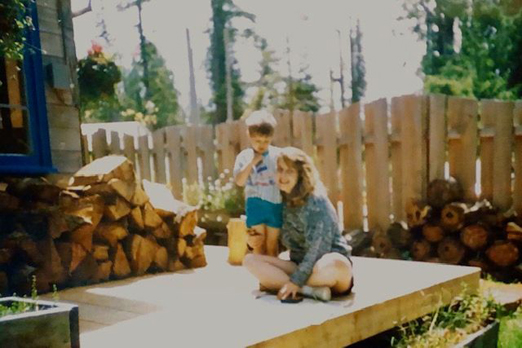
Lori McHattie and her son Darren, August of 1998, at our Chesterman Beach cabin near Tofino

The woman you see pictured above is the love of my life.

In the summer of 1988, Lori and her son Darren, and my two children, 11-year-old Megan and 13-year-old Jude, travelled over to the west coast of Vancouver Island, where we rented a cabin near Tofino, and where we enjoyed the time of our lives, a memory that resides deep in me still.

This will not be the last time I write about Lori — today’s Stories of a Life will focus only on the first four days of our acquaintanceship.

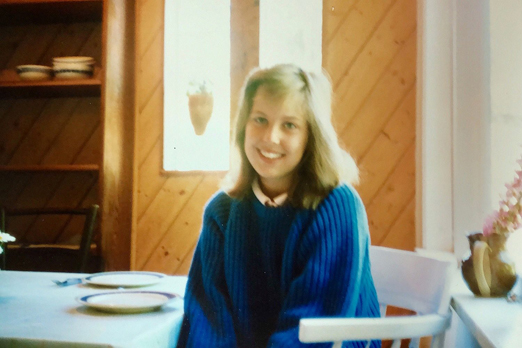
Megan Tomlin, age 11, photo taken at the cabin where she, her brother Jude, and Lori (and her son, Darren) stayed in August, 1988
Photo of Megan Tomlin, taken at the cabin near Tofino where we stayed in August 1988

As the children were growing up, given that (for the most part) during the first few years of their lives I was the sole custodial parent, sharing custody with Cathy as the children grew older, my relationship with my children was close. We talked about everything, and as far as was possible I answered every question put by them to me, as honestly and as fully as I could.

While Jude was an energetic boy of the world, making friends with anyone and everyone, full of joy and laughter, out and about in the neighbourhood and across the city (and in the mountains), skateboarding and skiing and as athletic as he could possibly be, Megan was a much quieter child, no more reflective than Jude, just more prone to staying close to me, and wanting always to converse on the broadest range of topics, and anxious to learn as much about the world (and all its complexities) as she could.

Megan was curious about the state and nature of the world, about politics and political structures, about the nature of governmental decision-making, both children attending the peace marches with me each year, as well as meetings of the progressive, left-of-centre Coalition of Progressive Electors Vancouver civic party, and various of the NDP meetings, and otherwise as engaged as she could be as a budding young feminist & community activist.

Megan, as with my mother, was also possessed of a preternatural ability.

Vancouver Community College, East Broadway campus, photo taken from the park
Photo, Broadway campus, Vancouver Community College, taken from Chinacreek Park

Over the years, as we shared our lives with one another, both Jude and Megan were always curious about my “work”, what I was up to when I wasn’t with them. Arising from that interest on their part, I always sought to make them a part of my work life, taking them to the places of each of my employments, to my office in SFU’s Faculty of Education when I was working on my Masters, to attend in the elementary school classes where I taught (when they were on a ProD day), at Vancouver Community College, and later in my work at Pacific Press (which paid phenomenally well for very little work, allowing me to continue work as an arts and entertainment editor, and later, Director of Special Projects at Vancouver Magazine).

Early in the 1988 summer semester at Vancouver Community College (which I wrote about last week), Megan attended my first Monday class, sitting quietly near the back, erudite and well-read as always (better read than me, true then, true still), interjecting only occasionally to clarify some bit of information, for me or for one of the students in my English Literature class, unassuming and friendly, but clearly informed.

Midway through the three-hour class, we took a 15-minute break, most of the students leaving the classroom, with Megan standing with me outside my office, opposite the classroom, when the following occurred …

“Daddy,” said Megan, “do you see that woman standing just on the other side of the glass doors, the blonde-haired woman leaning on the railing?” Then a pause & the proffering of a question, “What day of the week is it?

“Monday,” I replied.

“Hmmm,” she said, looking somewhat quizzical. “Monday, huh?” At which point, she seemed to find herself lost in thought for a moment, then turned to me to say, “By Thursday, the two of you will be living together.”

“Megan,” I protested, “I don’t even know who that woman is. And besides, she seems much younger than me.”

And at that, we dropped the subject, shortly after returning to the classroom, where she set about to correct me on aspects of my teaching presentation style, and information that I had imparted that she felt was not clear enough, and should have been better clarified by me, adding …

“Given who these students are, you seem not to be taking into consideration that they’ve been out of school for awhile. Your use of language, the words you choose could be better chosen to impart your message. And, oh yeah, you were telling the students that they would be expected to write papers during the semester. I want to be present when you’re grading those papers, and I want to read the papers you’re unsure as to what grade you will give. Overall, I trust your judgement — I’m just not sure I feel all that confident that your command of what constitutes good essay writing is as well-developed as it could be.”

The class was over at 9pm, I met with a handful of my students, some in the classroom, others in the hallway, and a couple in my office (with Megan waiting outside in the hallway, engaging with some of my students).

When the class had come to an end, I reminded the students Tuesday’s class would take place downtown, at a venue where a play I’d be teaching was currently being performed; student attendance was mandatory.

Megan and I left the campus around 9:30pm, stopping off at Mike and Edith’s (friends of ours) Cheesecake, Etc. on Granville Street, near the south end of the Granville Street bridge, where Megan enjoyed a piece of cheesecake topped with fresh, organic strawberries, and I had my usual fresh-baked, and toasted, baguette with butter and jam.

Both VCC Broadway campus English Literature classes attended the performance of the play, which took place upstairs from what is now part of the Vancouver Film School. My class sat close by me, while students who were taking my colleague Peter’s English Lit class sat nearby him, except …

When the lights went down, and the play began, I felt a warm hand move over my right hand, and looked over to see an absolutely radiant, beautiful young blonde woman, with her arm rubbing up against mine. I thought to myself, as I am wont to do in similar situations (which always come as a surprise me, having occurred quite frequently throughout my life) …

“Raymond, it’s a figment of your imagination. There’s no one sitting next to you, and most certainly, no one has their hand on top of yours.”

I didn’t give it another thought, returning my attention to the play.
On the Wednesday, I taught my Writing class (grammar! … I am the last person you would want to have teach you grammar … I am capable of doing it … grammar just seems so restrictive to me … but I suppose you need to know the rules, before you can break them).

Thursday I returned to teach my English Literature class.

After classes were over, and after meeting with a few of my students, a blonde-haired woman walked up to me — who I may, or may not, have been made aware of earlier in the week — saying to me …

“I’m working on a paper on apartheid, and have been told you might be of assistance in helping point me in the right direction to research the paper, and provide me as well with how I might best formulate my argument.

I’ve heard that you like to walk, particularly along the stretch of beach over by Spanish Banks. I was wondering if we might walk and talk, which would afford you an opportunity for some fresh air after three hours in a stuffy classroom? It is, after all, a lovely full moon night, don’t you think?”

I thought the idea of the walk was a good idea, and (as anyone who knows me soon realizes, I am more than voluble about conversing on issues of interest to me). I grabbed my coat out of my instructor’s office, and the two of us headed off in the direction of my car.

But I was famished.

I asked her if we might stop in for a brief moment at Cheesecake, Etc. on the way to the beach — we could discuss her paper over a bite to eat. When we arrived at Cheesecake, Etc., after consulting with her, when Mike came up to take our order, I requested two orders of the toasted baguette with jam. “Oh, you mean the usual,” said Mike. Both Mike and Edith flitted around this woman and I for the half hour of so we were in the restaurant, with Mike taking a break to begin singing at his piano, his songs seemingly directed at this young woman and I.

Just before 10pm, this young woman and I left the restaurant, climbed back into my car, and headed towards the beach, traveling down West Broadway, during which glide along the street, she turned to me to say, “You live near here, don’t you? I noticed it’s getting kind of chilly. I was wondering if you might have a sweater I could wear?” Within a couple of minutes, I pulled up in front of my housing co-op, turning to her saying, “I’ll grab you a sweater and be right down,” with her responding, “I’ll come up with you, if that’s alright, to find the sweater best to my liking.”

Upon entering my apartment, while she stood in my living room, I entered my bedroom to look on the shelving where I kept my two dozen sweaters (what can I say, I’m a sweater person). Upon returning to the living room, holding up a warm sweater I thought she would like, standing opposite her she approached me, and standing on her tippy-toes, she kissed me.

Once again, I thought to myself, “Raymond, she didn’t kiss you. That’s just a false projection. You just better give her the sweater, and head off to the beach.”

While I was having this inner dialogue with myself, she once again stood on her tippy toes, pulling my face closer to hers, and kissed me again, a long, luxurious kiss, a kiss unlike any other I’d ever experienced.

Lori and I moved into together that night.

Arts Friday | Netflix and the Death of the Theatrical Experience

Netflix and the Death of Hollywood

With movie theatre attendance at a two-decade low and profits dwindling, with revenues hovering slightly above $10 billion, Hollywood is on the verge of experiencing the kind of disruption that hit the music, publishing, and related cultural industries a decade ago and more.
Hollywood once ruled the world with must-see movies that would entice people to head to the nearest cinema every weekend. But movie crowds have been declining as more people opt to “Netflix”, and chill at home.
Like other industries, entertainment is feeling the shock of technology and scrambling to adapt to sharply shifting economics. Studios are increasingly banking on big-budget franchise films to bring in bucks. But is that enough?
Wall Street Journal reporter Ben Fritz considered those issues in his book, The Big Picture: The Fight for the Future of Movies.

“Netflix is having a massive impact on Hollywood,” Fritz writes. “They’re disrupting all the traditional economics of television and movies. It’s inescapable how much Netflix has become the TV diet for so many people. Now it’s happening to movies.”

“The movie industry is going through what the record industry has gone through. Subscription streaming is changing the movie business. The music business has had to adapt to people streaming, and that’s going to happen in the movie business. A lot of traditionalists are saying, ‘No, a movie is made to be seen in a theatre.’ That may be what Hollywood wants, but that is not what a lot of consumers want.”

As we wrote in a column published in 2018, in recent years Hollywood has been gun shy about producing romantic comedies.

Netflix, though, has proven just how durable the romcom formula is.
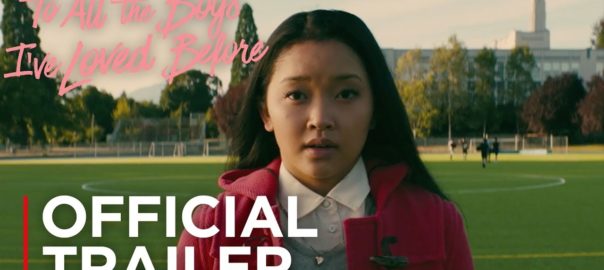
When Lara Condon and Noah Centineo’s To All the Boys I’ve Loved Before débuted last August, it set Netflix streaming records, with over 45 million viewers tuning in. Needless to say, a sequel will be released later this year, as is the case with Joey King’s breakout hit, The Kissing Booth.
Meanwhile, Rose McIver’s The Christmas Prince also spawned a much-anticipated sequel on Netflix this past holiday season.
In 2019, Netflix is set to spend around $18 billion on original programming, most of which is slated for movie production and documentaries, consisting of a 121 movie and documentary slate. Warner Bros.will release 23 films this year, while Disney (Hollywood’s most profitable studio) will début a mere 10. All the Hollywood studios combined in 2019 won’t spend $18 billion on production, and will release only a mere fraction of Netflix’s titles.
Looking into the financial crystal ball, investment firm Goldman Sachs predicts that Netflix could have an annual spending budget of $22.5 billion in 2022, a staggering number that would see Netflix far outstrip the total spending by all of the Hollywood movie studios combined.
With Netflix boasting 139 million subscribers, and growing by millions every month, according to tech mogul Barry Diller, a former senior member of the executive team at Paramount and 20th Century Fox and current Chairman of the Expedia group, “Hollywood is now irrelevant.”

The rise of Netflix may spell the end of the theatrical experience, and trips to your local multiplex

Having disrupted the model for TV broadcasters by making schedules extraneous and grabbing millions of viewers at the same time, Netflix is now making a run at Hollywood. “I think it’s going to be fascinating to watch,” says US journalist Gina Keating, author of Netflixed: The Epic Battle for America’s Eyeballs.
Netflix’s deep pockets have lured Hollywood stars such as Will Smith (Bright), Joel Edgerton, Sandra Bullock (Bird Box), Ben Affleck (Triple Frontier), Kevin Costner and Woody Harrelson (The Highwaymen), Anne Hathaway, Robert DeNiro, Al Pacino and Harvey Keitel, the latter three of whom will star in Martin Scorcese’s $150 million epic, The Irishman, arriving day and date on Netflix and a handful of theatres across the continent this upcoming autumn season, just in time for the Oscars.
And talking about the Oscars, Netflix’s Roma won a slew of Oscars this past Ocotber, winning Best Director, Cinematographer and Foreign Language Film for Alfonso Cuarón, while Period, End of Sentence won Best Documentary. Both films have been available on Netflix since December.
Although Netflix has been around for over two decades, the company’s rise to the top of Hollywood happened in a remarkably short period of time.
House of Cards, Neflix’s first foray into original content, débuted only six years ago. By expending monies to produce more shows and movies, it has managed to grow so rapidly that even its own executives are surprised.

“We’ve outperformed the business in a way we didn’t predict,” David Wells, Netflix’s (now former) chief financial officer, told The Hollywood Reporter in late February, after the company announced that its subscriber base had increased by over seven million in the first two months of 2019, its largest increase ever.

While Hollywood could take control of its fate, it’s very difficult for mature businesses — ones that have operated in similar ways for decades and where the top players have entrenched interests — to embrace change.
One can imagine the future looking something like this: You come home (in a driverless car) and say aloud to Alexa, Siri, Google Home or some A.I. assistant that doesn’t exist yet, “I want to watch a comedy with two female actors as the leads.” Alexa responds, “O.K., but you have to be at dinner at 8pm. Should I make the movie one hour long?” “Sure, that sounds good.” Then you’ll sit down to watch on a screen that resembles digital wallpaper.
At the Consumer Electronics Show this year Samsung débuted a flexible display that rolls up like paper.
There are other, more dystopian theories which predict that film and video games will merge, and we will become actors in a movie, reading lines or being told to “look out!” as an exploding car comes hurtling in our direction, not too dissimilar from Mildred Montag’s evening rituals in Fahrenheit 451.
When we finally get there, you can be sure of two things.
The bad news is that many of the people on the set of a standard Hollywood production won’t have a job anymore. The good news?
You’ll never be bored again.