The Board of Variance. A History and Background.
Since the mid-1950s, every village, town & city elected body / City Council on the North American continent with a population of 10,000, or more, has been required by law to empower a quasi-judicial body of its citizens to constitute a Board of Variance, a lay body of five or more persons who are vested with the authority, and required under the provincial or state Act governing their conduct, to review — and should Board members deem it necessary, make changes to or even reject — any development application that in its conception requires a relaxation of the existing zoning bylaw applicable to the zone or neighbourhood where a developer, or homeowner, has made application for development or re-development of a property.
In Vancouver, as in most jurisdictions, the Board of Variance also oversees all applications concerning parking, signage, and tree matters, as well as — on occasion — licensing of a business for proper use.
As such, as an independent lay body overseeing all development in, say in this case, the City of Vancouver, the Board of Variance is seen by City Council, and the development services and planning departments at City Hall, as well as developers and homeowners requiring a relaxation of an existing zoning bylaw, as the most powerful creature of City Hall.
In point of fact, there are few Boards of Variance that are not regularly sued by the city or town government relating to a decision made by the Board to which city councillors, and more often administrators in development services or planning, have taken umbrage.
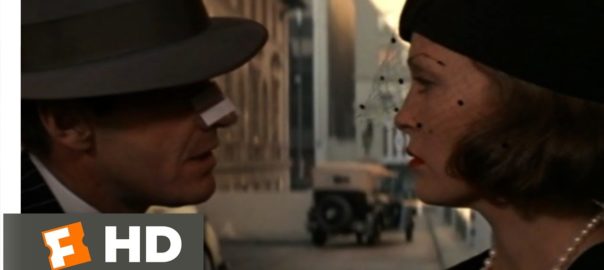
If you’ve seen the Oscar award-winning 1975 film Chinatown, which showed development decisions taking place behind closed doors and in smoke-filled rooms — more often than not with payoffs to elected officials, or city administrators — you can see why Canadian and U.S. Courts ruled that state and provincial governments must enact legislation empowering an open to the public and utterly transparent lay body, called the Board of Variance, to review all development decisions requiring a zoning relaxation.
The Board of Variance. A Raymond Tomlin Tale. Part One.
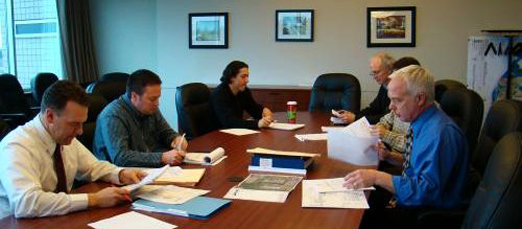
In early 2005, Aaron Jasper, Gary Kennedy, Quincey Kirschner and I had taken on the position of co-campaign managers / organizers on Mel Lehan’s Vancouver Point Grey provincial NDP campaign.
Terry Martin, a contractor and longtime NDP member, had — in provincial and federal NDP campaigns, and in municipal Coalition of Progressive Electors campaigns — taken on the task of building a workable office for campaigns, creating a volunteer phone bank centre, as well as taking responsibility for creating the office, locating desks, filing cabinets and all the materials required to run a functioning political campaign.
Over a number of weeks in January, February & March 2005, Terry and I became friends. One March afternoon, Terry informed me that he was a member of Vancouver’s Board of Variance, explaining what the Board did and his role on the Board, informing me that a Board vacancy was upcoming and he would like me to apply to fill the vacancy. Terry was very complimentary about how he saw me as a person of integrity, an individual committed to social justice, and someone with whom he would like to work on the Board of Variance. After some persuading, I filed my application.
At the time, there were three members of Vancouver City Council who constituted the Selection Committee responsible for filling all vacancies on the 33 advisory committees to Council, including the Board of Variance: the late Jim Green, then COPE Councillor Tim Louis, and NPA Councillor Sam Sullivan. As it happened, I knew them all. Terry arranged for me to meet with Jim and Tim, separately, to promote my application to the Board (there were 200 applicants, most more qualified than I). Both Jim Green and Tim Louis (the latter to whom I became very close for the next decade, and to the present) were welcoming of my application to fill the vacant Board of Variance position, and told Terry and I each would cast a ballot in my favour to fill the vacancy. I knew Sam Sullivan through friends — we spoke, and I’m given to understand that he, too, cast a ballot in favour of my, now successful, application to the Board of Variance.
[Side note. At present, the Chairperson of Vancouver City Council’s Selection Committee is OneCity Vancouver Councillor Christine Boyle, who is joined her Council colleagues, the Non-Partisan Association’s Rebecca Bligh, and the Green Party of Vancouver’s Michael Wiebe.)
Long story short, my time — what would turn out to be truncated tenure on the Board, as all members were fired by Mayor Sam Sullivan on July 1, 2006 (a story for another day) — on the Board of Variance remains one of the highlights of my life. There is not one block in the city on which the Board of Variance on which I sat did not make a life-changing decision, for homeowners, for developers, and more importantly, for citizens.
Terry Martin, Jan Pierce, Quincey Kirschner and Bruce Chown were, and remain to this day, the finest, most thoughtful, hardest working people of wit, intelligence, conscience & integrity with whom I have worked in the collective endeavour of city building, in the interest of Vancouver citizens.
Each member on the Board of Variance on which I sat was a rugged individualist committed to the common good, and responsible conduct that best served the interests of citizens — and we were damn good at our job.
As chaired by Terry Martin, the meetings — which began Wednesday afternoon at 1:30pm — often lasted until two or three the next morning. Twelve to fourteen hour Board of Variance meetings were not uncommon — the public wanted to be heard, and we heard them. Of course, at the time the Board was empowered to hear Third Party Appeals, empowering any citizen in a neighbourhood where the development was taking place the opportunity to be heard before the Board — and citizens, often strumming guitars, singing, putting on little skits and otherwise addressing the members of the Board — appeared in droves. Everyone was heard, and all decisions were citizen driven, in the finest, most celebratory act of respectful citizen engagement in which I have ever been a participant.
The Board of Variance. A Raymond Tomlin Tale. Part Two.
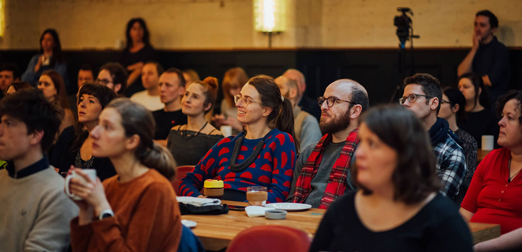
Here’s how the Board worked, the standard process for decision-making:
The Board of Variance met to adjudicate appeals every second Wednesday. On the Friday before the Board meeting, a 300-page binder was delivered to each of the Board members’ homes, containing all the relevant materials from the 30 appeals that would be heard the following week.
Much of the Board member’s weekend was spent reading the documentation contained in the binder, and performing whatever research tasks a Board member felt was relevant to the taking of a fair and just decision. On the Tuesday, at noon the day before the Board of Variance meeting, the five members of the Board met with the Secretary to the Board, Louis Ng (who still acts in that position) at the bottom of the steps at the back of City Hall, whereupon we all climbed into a van acquired from the City by Louis, to ferry the Board members around to the sites of applicant appeals, with Louis providing a narrative concerning each appeal, the history of the appeal, the position of both the Planning and Development Services departments at City Hall respecting the appeal, answering any and all proper and judicious questions put to him by Board members. The “drive around” was generally completed by 7pm.
The Board met the next day at 1:15pm in Committee Room 1 — the largest meeting room on the third floor at City Hall, situated in the southeast corner of that floor. As Board members were forbidden to discuss any appeal prior to its hearing, we greeted one another, and place our binders in front of us, as well as any relevant materials we felt necessary for us to properly take a decision on any given appeal. Each Board member had a sheet in front of them listing the order in which all the appeals would be heard, with a suggested time frame for the hearing of each appeal.
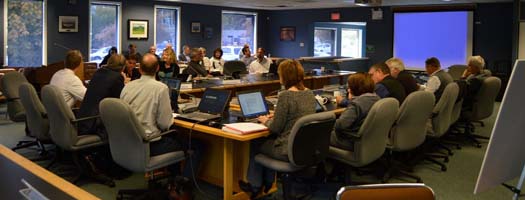
The Board of Variance meeting began on time at 1:30pm, with Board members situated around the east end of the massive oak Board table, with a citizens gallery on the west end of the Board room. Louis Ng introduced each appeal, stating the technical facts. Representatives from development services and planning, sitting on chairs in the southeast corner of the Board table presented the position of their departments on the efficacy of the appeal, giving indication as to whether the City opposed or approved of the applicant’s appeal. Once the City had been heard, the appellant was asked to take a seat at the far west end of the Board table & begin their appeal.
Within the first minute of being heard, most (okay, okay — make that all) applicants burst into tears, inconsolable, and more often than not fearful of the process, and / or the position taken by the City opposing their appeal.
Once the appellant was calmed, the appeal continued. Upon completion of the statement / presentation of the appeals applicant, as well as input from neighbours and citizens opposed to the appeal, at the end of each statement by appellant or neighbour / citizen, the Board members were provided the opportunity to ask questions of the appellant, or the citizens opposed to the appeal. The focus of the meeting was then returned to the City, where administrative development and planning staff assigned to present the City’s position on an appeal re-iterated their position on the appeal. Each Board member queried city staff on issues that had arisen during the appeal — with City staff very much wanting their way, and Board members uncertain as to whether the enunciated position of staff best served the interests of Vancouver citizens, and just city building.
More often than not, the members of the Board of Variance voted contrary to the wishes of city staff — not because Board members harboured any ill will towards city staff, almost all of whom were dedicated and accomplished civil servants, with years of experience in city building, and advanced Masters, PhDs, urban planning and architectural and engineering degrees.
As lay citizens dedicated to an open and transparent development appeals process, the members of the Board — again, among the finest and most accomplished persons with whom I have ever had the opportunity to work — cast a vote, separately, individually and without any external pressure exerted on the Board decision makers, votes that we as citizens believed best served the interests of those of us who reside in Vancouver, and who are committed to a fair and just city, a livable city, a city that serves the interests of all. I will write another day on a few of the decisions taken by the Board, for which all Board members remain justly proud today.
The Board of Variance. Raymond finally gets to the point. Why it is important for Vancouver City Councillors to read the following …
One particular spring afternoon in 2006, the senior administrator in development and planning with the City, a particularly avuncular fellow, always smiling, always of good cheer, a sort of Wilford Brimley type, clearly a very bright and accomplished man, a good-natured but no nonsense type of fellow, the second in command in development and planning services at City Hall, and for very good reason one would have to think upon meeting him. There was about this fellow, as well, something … well, sinister, nothing you could put your finger on, but you knew upon meeting him that you wouldn’t want to get on his bad side, or some night find yourself in a dark alley with him — now, that’s a prospect no one would look forward to.
The particular day in question, this senior City official turned up at the Board meeting to present the City’s position on an appeal by a developer — an appeal that the City made abundantly clear they were in full support of. The developer presented drawings for a 90-foot high, 25-foot wide backlit “blade sign” that was to be placed above the parking entrance next to the Starbucks in the Paramount Centre / the Scotiabank Theatre complex.
From the tenor of the questions put to the developer respecting this massive backlit sign, and more specifically to the avuncular senior City official speaking in support of the sign, indication was Board members’ were in strong opposition to the sign, which it became clear in its “massive scale” was inappropriate for the downtown neighbourhood, or any city neighbourhood. But me being me, I came into these sorts of appeals with an open mind, even more so because I believed in the integrity of the City official — there must be a reason he supported the appeal.
I wanted to know why. Our give & take dialogue went something like this …
Me. Mr. (Avuncular), I would like to welcome you to this Board of Variance meeting. Your attendance at our meetings is rare, and I want to go on record as stating that I am pleased that a senior City official is taking time out of his busy day to spend a half hour with the members of the Board of Variance.
Mr. A. Mr. Tomlin, I am always pleased to meet with the members of the Board, although as you say, my schedule is often very busy, and I am not afforded the opportunity as often as I would like to attend at the very important Board of Variance meetings.
Me. Mr. A, you speak very much in favour of the appeal, and I am wondering from where the genesis of your support arises. As I sit around the Board table this afternoon, I wonder about your prior involvement with the developer, if any, and whether such involvement, if such is the case, plays any role in your support of the appeal, as presented to the Board today.
Mr. A. I assure you, Mr. Tomlin, that the only reason I am here today to present the appeal arises from an opening in my schedule this afternoon, and my heartfelt desire to sit in this sun-filled room with you and your Board colleagues, to spend an afternoon with people for whom I hold the highest regard, and arising as well from my commitment to the democratic process, particularly as it is practiced by the very fine members of the Board of Variance, present here today.
Mr. A. then went on to elucidate the specific reasons why he found himself speaking in support of the “blade sign”, a downtown design element, he suggested in no uncertain terms, that would enhance the cultural and design integrity of a downtown core in the midst of change, the blade sign a bold and, in his estimation, beautiful, design forward and architecturally sound sign element entirely consistent with the City’s design guidelines.
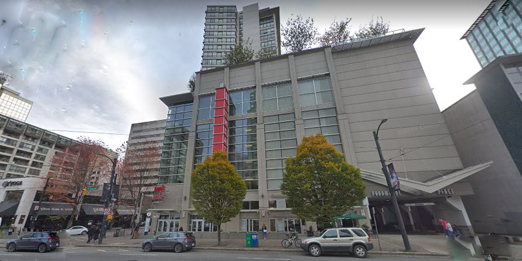
Mr. A. assured me that prior to that afternoon, he had no involvement with the developer, or anyone else associated with Paramount building, that he was absentis, si rem (absent of interest) in respect of the sign — he simply thought it was beautiful, and on a personal level looked forward to seeing the sign mounted, should the Board see fit to cast their vote in favour.
At the completion of his statement, the Chair called for a vote on the appeal respecting the sign: four opposed, one in favour.
I was the one who voted in favour, my vote based on the eloquent presentation of the senior City official.
After the meeting, my fellow Board members shook their heads at me, wondering what I was thinking in voting to approve “that godawful sign that would have lit up the West End, and caused countless hours of unrest to citizens living nearby.” Still, and all, the Board members stood by the integrity of the Board’s decision-making process, acknowledging that we often voted differently from one another, and taking solace in the fact that the “blade sign” application had been refused.

Now, here’s where the story begins to get interesting.
At the time, and even still, I believe myself to be much like our current City Councillors — a person of integrity and good will, a person with a steadfast belief in humanity, and a respect for accomplished persons of character, most particularly the hard working and dedicated individuals who toil on our behalf at Vancouver City Hall, and around the City.
Who am I to question the integrity of accomplished persons who have long dedicated their energies, and the better part of their professional lives, to the process of city building in Vancouver.
In the weeks that followed I learned the following: the senior development services and planning official who presented the Paramount “blade sign” appeal had appointed himself the point person on the development from its inception, some six years prior. This avuncular City official had worked closely with the developer to move the development expeditiously forward through City Hall, and as far as was possible, champion the development in the offices, committee rooms and hallways at Vancouver City Hall.
I learned, further, that this senior City official had some years previous presented to the Vancouver Planning Commission on his support for the Paramount development, and in particular the “blade sign”.
Even more, I learned that this senior City official had chaired the Development Permit Board that had approved the development, a development for which he stated he was in full support (as could be attested to in a reading of the minutes of the DP Board).
I presented the “evidence” of which I was now aware to the Board Chair. Terry just shook his head, and rolled his eyes. “Raymond, Raymond, Raymond,” he said, “let this be a lesson to you. Do your research, don’t let your good nature and your insistent and heartening belief in the humanity of all get in the way of good and proper decision-making at the Board.”
In weeks subsequent, I had opportunity to meet and speak with Mr. A., our conversation going something like this …
Me. Do you recall the appeal on the blade sign that you presented to the Board some weeks ago?
Mr. A. Yes, and despite my loss at the Board, I appreciated your support of the appeal, and the opportunity with which I was provided to spend part of a productive afternoon with you and your Board colleagues.
Me. I recently became aware that, contrary to the information you presented to me at the Board meeting that afternoon that you, 1) Were involved with the Paramount development from its outset, and had championed the development in the offices, committee rooms and hallways of City Hall, and 2) That not only had you presented to the Planning Commission some years back in support of the Paramount development, that you were the Chairperson of the Development Permit Board that had approved the Paramount development, and at that time had spoken specifically about your support for the blade sign.
I am left to wonder, “A”, why is it you mislead me that sunny afternoon in Committee Room 1?
Mr. A. Well, Raymond, I think it is important that you know that any time a member of my department presents on an appeal to the Board, that we come in to the Board meeting with an agenda: we want what we want, and we’re going to do everything in our power to ensure that the position of development services and planning is not only heard, but successful in its adherence to the heartfelt desires of senior staff at City Hall. Your job is to be informed and to do your homework, and to never ask a question to which you do not already know the answer.
My job is to champion the interests of my department, to do whatever it takes to ensure that we — the civil servants charged with the responsibility of city building — and the arguments we make carry the day, to do whatever it takes to ensure our success, given our heartfelt belief that we, as professionals, know what is best for the citizenry. Sometimes we’re successful before the Board, most times I would say, and sometimes we’re not. That’s life.
Great speaking with you, Raymond. I look forward to presenting to the Board at sometime again in the near future.”
Following my conversation with Mr. A, did I emerge a different person than I was before the conversation? The short answer: no.
I continue to believe in the goodness of humanity.
Still and all, subsequent to my conversation with Mr. A, I became ever more diligent in my decision-making, ever more dedicated to conducting in-depth research into the appeals the Board would hear, and for as much as I respected the city staff who presented to the Board, I was now much more acutely aware that city staff presented to the Board with an agenda, that city staff had been sent to the Board by senior staff to get what the planning staff wanted — for a city staff person to consistently fail at the Board was to jeopardize her or his employment, and potential for advancement in the structure of city decision-making.
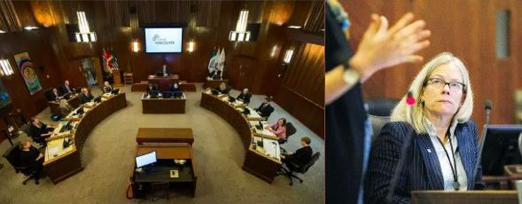
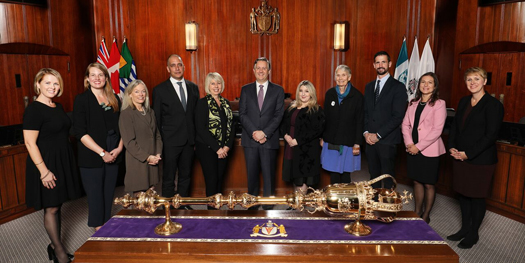 Vancouver City Council, l-r: Councillors Rebecca Bligh, Christine Boyle, Colleen Hardwick, Pete Fry, Adriane Carr and Mayor Kennedy Stewart, and Councillors Melissa De Genova, Jean Swanson, Michael Wiebe, Lisa Dominato, and Sarah Kirby-Yung
A word to the wise to our accomplished City Councillors is in order: keep your eyes open, do your research, remember that you are on Council to champion the interests of the electorate, and not necessarily the interests of the city staff who present to you. More often than not, I think you will come to find, the interests of citizens and the interests of city staff are at odds, the interests of city staff while well-intentioned more often than not inconsistent with the interests of the citizenry, with the city staff in need of a good-natured “nudge” (direction) from our elected officials.
Going forward, it is critical that our Vancouver City Councillors reclaim the City for the citizenry, and put behind us aspects of 10 years of top down decision-making by the previous civic regime, that while serving the interests of developers, too often ill-served the interests of citizens.
You, our most beloved City Councillors, were elected on a wave of change for the better. The work of Vision Vancouver, and the senior city staff who were appointed to carry out the wishes of the previous civic party in power, were soundly rejected at the polls last October.
We, the citizens of Vancouver, want change, change for the better.
For our City Councillors to focus on the #1 priority identified by the electorate, and to which you committed yourselves to addressing: relief from the affordable housing crisis that imperils our city and the lives of too many of our citizens, and the recognition of housing as a human right.
Almost everything else you do, however well-intentioned, is a distraction from the job you are meant to achieve, not years down the road, but now.
Your responsibility as City Councillors is to set the agenda — and have city staff carry out that agenda. There are many in our community who believe you are in sway to our city staff, that you are quiescent in the face of change, that as some have written that you are Vision 2.0, perhaps the worst thing that may be said about you, our new Council, by people who voted for change for the better & called upon you to achieve that change.